
Contractual Warranty Boundaries for Undisclosed Recycled Polymeric Content in Resin
Undisclosed recycled content invalidates virgin resin warranties when analytical testing proves melt flow or thermal deviation beyond contractual tolerance.
Undisclosed recycled content invalidates virgin resin warranties when analytical testing proves melt flow or thermal deviation beyond contractual tolerance.

Resolving jurisdictional divergence in additive carrier definitions requires harmonizing HS code classifications, melt flow rates, and chemical registration limits.

Calculating polyolefin landed arbitrage viability demands evaluating cracker co-product yield spreads against comonomer properties and freight tariffs.

Polyolefin pricing follows naphtha via yield multipliers and co-product credits, requiring lagged pass-through contract terms and strict incoming melt index audits.

Multi-party moisture disputes depend on ISO 15512 Method C baseline sampling at loading and container dew point tracking before silo transfer.

Erucamide migration above 0.22 µg/cm² on polyethylene sealant layers suppresses chain interdiffusion during welding, elevating SIT and causing adhesive heat seal failures.

House blending recycled resins causes melt viscosity drift and crosslinked gel contamination that disrupts mold filling and degrades part mechanical strength.

Incoming resin qualification mandates physical sampling, melt rheology auditing, and CoA validation to prevent off-spec polymer from entering production.

Customs polyolefin entry relies on spectroscopic quantification of monomer mass fractions after deducting non-polymeric additive mass from the total matrix.

Quantifying interfacial adhesion in recycled polyolefins requires measuring essential work of fracture and domain size to set compatibilizer dosage.

Provisional billing under M-1 index mechanics creates floating balance sheet exposure when European monthly polymer contract price settlements delay.

Compatibilization efficiency in PP PE recyclate compounds is quantified by measuring sub-micron droplet size reduction and low-frequency storage modulus plateaus.

Calculate downtime penalties by summing unabsorbed press hourly burden, loaded labor, scrapped resin mass, purge cycles, and hot runner clearing expenses.

Verifying imported mass balance polyolefins demands yield-adjusted attribution ledgers and chemical contaminant screening to validate chain of custody claims.

Polymer indexation contracts align resin invoices to monomer shifts via stoichiometric yields, formulation fractions, and published benchmark settlements.

Headspace Karl Fischer titration requires temperature optimization between desorption and polymer decomposition to measure true moisture without pyrolytic errors.

Polyolefin slip kinetics depend on additive supersaturation, where migrating fatty acid amides form nanometer-scale boundary layers to balance friction and seal integrity.

Melt flow rate fails to catch high-shear viscosity drift in dynamic feedstocks, requiring capillary rheology and inline pressure monitoring to control scrap.

Post-consumer HDPE sourcing relies on batch melt testing, DSC thermal screening, and mass balance audits to prevent factory scrap and field failure.

Dynamic shear lowers thermal degradation thresholds in recycled polyolefins, demanding intake screening of residual stabilizer levels and dynamic viscosity.

An unconditioned melt flow value lacks physical meaning without its test load, temperature, and standard protocol specified.

Verify polymer monomer ratios via NMR before entry to prevent retroactive antidumping cash deposit assessments and customs continuous bond collateral inflation.

Polyethylene specific gravity arbitration requires converting disputed density claims to a standardized thermal baseline using ISO 17855-2 Method B annealed plaques.

Reactor grade polypropylene copolymers absorb sub-zero impact energy through ethylene-propylene rubber domain crazing and interfacial cavitation down to minus forty.

Calibrating high-shear capillary rheology via Bagley and Weissenberg-Rabinowitsch corrections prevents off-spec polyolefin lot processing failures.

High vacuum twin screw devolatilization of rPET removes VOCs down to food contact limits by maximizing melt surface renewal at sub millibar pressures.
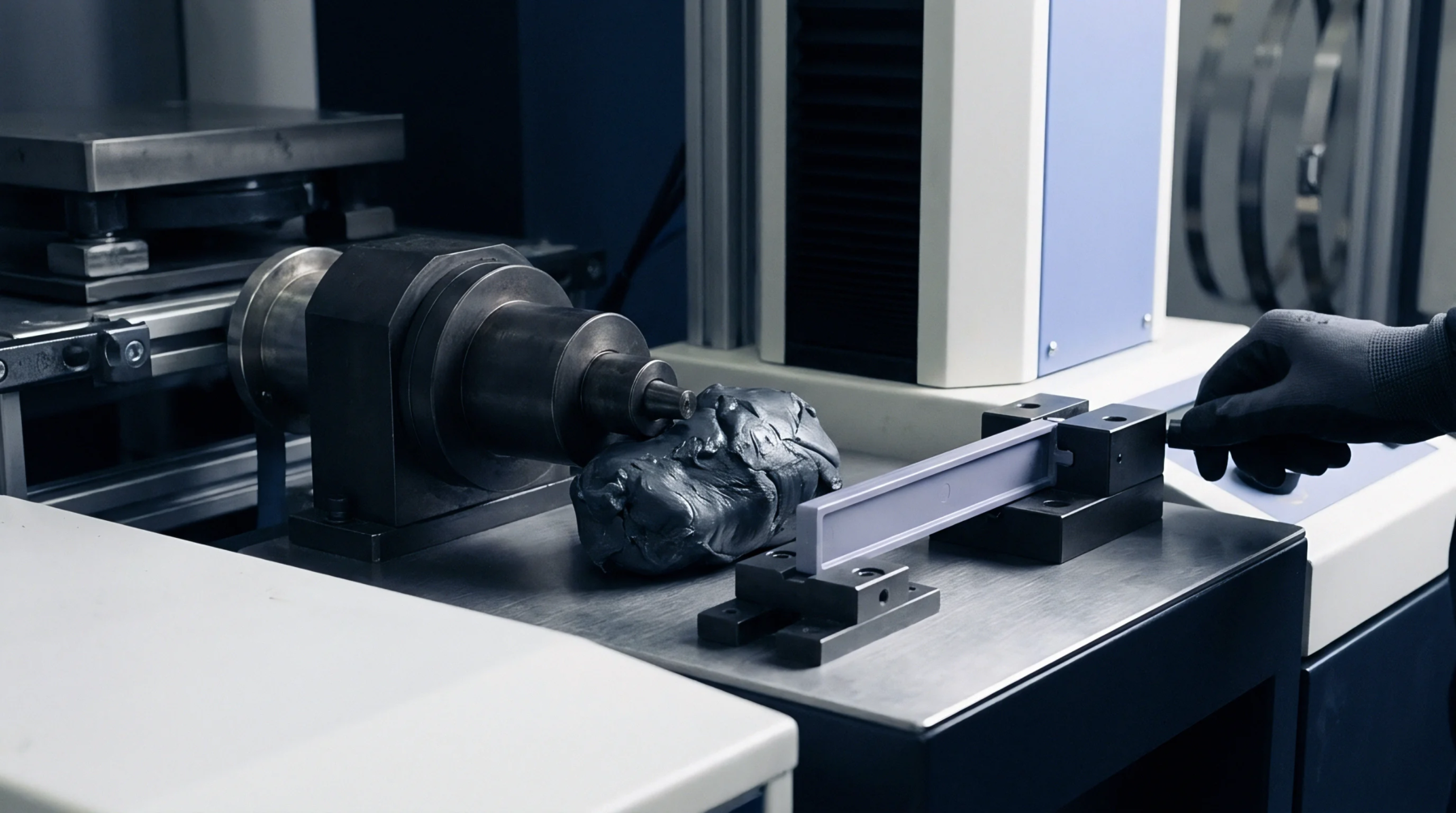
Bimodal HDPE shear thinning variations alter die swelling and sag resistance, forcing wall thickness adjustments and increasing landed pipe cost.

Specifying exact standard test loads and flow rate ratios in polyethylene procurement contracts prevents costly processing failures and off-spec resin disputes.

Controlling thermal and hydrolytic degradation in polyhydroxyalkanoates requires drying under 200 ppm water, active vacuum devolatilization, and targeted carboxyl scavenging.

Deactivate metal catalysts and neutralize acid traces with targeted additives to stabilize viscosity drift and optimize landed cost per good recycled part.
Expertise is a utility, not a secret. sentiention™ publishes its working knowledge as open reference: intelligence layer covering the materials it sources, the markets it enters, and the reference that serves both.