Non Equilibrium Volatile Organic Desorption Kinetics during High Vacuum Twin Screw Devolatilization of Post Consumer Polyester
High vacuum twin screw devolatilization of rPET removes VOCs down to food contact limits by maximizing melt surface renewal at sub millibar pressures.

Partition
Post-consumer polyethylene terephthalate recovered from municipal recycling streams carries volatile contamination concentrations ranging between 150 and 2200 parts per million by mass. These contaminants represent a broad chemical spectrum, including aliphatic aldehydes from thermal degradation, terpene flavor compounds like limonene absorbed during prior package shelf life, aromatic cleaning solvent residues, and low molecular weight polyester oligomers generated during original melt processing. Devolatilization inside intermeshing co-rotating twin-screw extruders relies on driven mass transfer across the liquid-gas interface to strip these volatile species down to food-contact threshold levels, with volatile desorption following diffusion laws and melt temperature dictating molecular mobility.
In laboratory evaluations of post-consumer polyester flake, limonene concentration profiles exhibit non-linear decay curves during dynamic thermal treatment.
Thermodynamic Phase Behavior in Liquid Polyester
Dissolved organic contaminants inside liquid polyester exist as a homogenous solution governed by activity coefficients. At concentrations below 0.1 percent by weight, volatile species adhere to Henry’s Law, where the vapor phase partial pressure above the polymer melt correlates directly with the liquid-phase mass fraction through a temperature-dependent Henry’s Law constant. For a binary system comprising a volatile solute and a molten polyethylene terephthalate matrix at processing temperatures between 270 and 290 degrees Celsius, equilibrium partial pressure correlates with liquid concentration according to the fundamental thermodynamic relation:
P_i = H_i x_i gamma_i
where P_i represents the partial pressure of volatile component i, H_i is the temperature-dependent Henry’s Law solubility parameter, x_i is the mole fraction of component i dissolved in the molten matrix, and gamma_i is the activity coefficient at infinite dilution. The activity coefficient reflects the degree of thermodynamic incompatibility between the polar polyester backbone and the non-polar or moderately polar volatile migrant. Highly non-polar species such as alkanes exhibit elevated activity coefficients ranging from 15 to 45 in polyethylene terephthalate at 280 degrees Celsius, which increases their equilibrium partial pressure and drives rapid phase separation into the vapor boundary layer.
Polar migrants like ethylene glycol and diethylene glycol interact strongly with carboxyl and hydroxyl end groups, resulting in activity coefficients approaching unity and drastically suppressing equilibrium vapor pressure.
Thermodynamic solubility parameters for common post-consumer contaminants vary significantly based on molecular mass and polarity. Acetaldehyde displays a Henry’s Law constant of 142.5 bar at 280 degrees Celsius, facilitating fast evaporation under moderate vacuum conditions. Limonene, a major terpene contaminant responsible for off-odors in recycled resin, demonstrates a Henry’s Law constant of 18.4 bar at identical temperatures, reflecting its higher boiling point of 176 degrees Celsius and stronger dispersion interactions with aromatic terephthalate rings.
Departure from ideal solution behavior intensifies as temperature rises, following an Arrhenius relationship where the Henry’s Law constant increases exponentially with reciprocal temperature. Elevated melt temperatures increase the theoretical thermodynamic driving force for devolatilization, though this advantage is bounded by hydrolytic and thermal chain scission kinetics that degrade polymer molecular weight.

Mass Transfer Driving Force under Non Equilibrium Conditions
The rate of chemical species movement across the gas-liquid interface depends directly on concentration gradients established between bulk liquid and vapor boundaries. Twin-screw devolatilization operates far from thermodynamic equilibrium due to short melt residence times within individual degassing zones, typically ranging from 1.5 to 6.0 seconds per vent stage. Under these dynamic processing conditions, the liquid surface concentration instantly reaches thermodynamic equilibrium with the surrounding gas phase pressure, while the core of the thin polymer film retains its bulk volatile concentration.
This spatial imbalance creates an unsteady-state diffusion boundary layer described by Fick’s Second Law for transient mass transfer:
dC_i / dt = D_i (d^2 C_i / dz^2)
where C_i is the instantaneous concentration of volatile component i at distance z from the exposed surface, t is the exposure time, and D_i is the binary diffusion coefficient of the volatile species within the molten polymer matrix. Diffusion coefficients in high-viscosity polymer melts are exceptionally small, typically spanning 10^-9 to 10^-11 square meters per second at standard extrusion temperatures. The functional magnitude of D_i depends heavily on the kinetic diameter of the diffusing molecule and the free volume fraction of the polyester melt.
Free volume increases linearly with temperature above the melting point (255 degrees Celsius) and inversely with intrinsic viscosity, as shorter polymer chains offer reduced steric hindrance to migrant translation.
| Volatile Species | Molecular Mass (g/mol) | Atmospheric Boiling Point (°C) | Henry Law Constant (bar) | Binary Diffusion Coefficient (m²/s) |
|---|---|---|---|---|
| Acetaldehyde | 44.05 | 20.2 | 142.5 | 3.8 × 10⁻⁴ |
| Limonene | 136.23 | 176.0 | 18.4 | 4.2 × 10⁻¹₀ |
| Chlorobenzene | 112.56 | 131.6 | 28.1 | 7.1 × 10⁻¹₀ |
| Phenylcyclohexane | 160.26 | 240.0 | 5.2 | 1.9 × 10⁻¹₀ |
| Benzophenone | 182.22 | 305.4 | 1.8 | 8.5 × 10⁻¹¹ |
When absolute pressure inside the devolatilization vent housing drops below the equilibrium vapor pressure of dissolved volatiles, localized supersaturation occurs within the melt film, creating a thermodynamic potential for micro-cavitation and bubble nucleation. Homogeneous bubble nucleation requires supersaturation ratios exceeding 100-fold, which rarely occurs in high-viscosity polyester melt streams containing less than 1000 ppm total volatiles. Heterogeneous bubble nucleation occurs on suspended solid particulates, such as residual catalyst residues, titanium dioxide delustrants, or insoluble micro-gel fragments.
Bubble formation significantly increases total gas-liquid interfacial area, transforming transport from pure surface diffusion to convective expansion where volatile species diffuse across a rapidly expanding spherical boundary layer surrounding growing vapor bubbles.
At 280 degrees Celsius, the binary diffusion coefficient of limonene in polyethylene terephthalate melt equals 4.2 times ten to the minus tenth square meters per second.
Non-equilibrium desorption kinetics dictate that the mass flux of volatile species leaves the polymer surface at a rate proportional to the local mass transfer coefficient multiplied by the non-equilibrium driving force. The flux equation expresses this transport mechanism:
J_i = k_L (C_bulk – C_surface)
where J_i represents mass flux in kilograms per square meter second, k_L is the liquid-phase mass transfer coefficient in meters per second, C_bulk is the volatile mass concentration in the unmixed bulk melt, and C_surface is the instantaneous liquid surface concentration dictated by the vent housing partial pressure. Because C_surface approaches zero under absolute pressures below 1.0 mbar, the magnitude of mass flux becomes controlled by the rate at which molecular diffusion can resupply volatile molecules from the interior of the film to the depleted surface layer. High melt viscosity retards molecular motion, causing rapid surface depletion and a steep decline in instantaneous flux unless the polymer surface is mechanically replaced.
Whether the non-linear interaction between residual ethylene glycol and aromatic migrant molecules alters the activity coefficient at concentrations below ten parts per million remains an open empirical question for high-purity recycled resin processors.

Renewal
Twin-screw extruders generate continuous interfacial area inside devolatilization zones through rapid mechanical deformation of the polymer melt. Co-rotating intermeshing screw geometries redistribute liquid layers by wiping the barrel wall, transferring material between screw flights, and passing the melt through narrow inter-lobe clearance gaps. Screw speed dictates the frequency of this surface renewal, which directly drives overall mass transfer.
Evaluating twin-screw devolatilization zones under high vacuum involves tracking the residence time distribution using tracer injection techniques. This mechanical wiping breaks up stagnant boundary layers, submerging depleted surface films into the bulk pool while drawing volatile-rich melt from screw roots to the exposed gas interface.
Penetration Dynamics and Film Generation Mechanics
Higbie diffusion theory describes transient transport across short exposure intervals where liquid boundary layers remain extremely thin. Higbie’s surface penetration model assumes that individual fluid elements sit exposed at the melt surface for a uniform time duration, t_e, before being replaced by fresh fluid elements from the bulk pool. Integrating Fick’s Second Law over this exposure duration yields an expression for the average liquid-phase mass transfer coefficient, k_L:
k_L = 2 sqrt( D_i / (pi t_e) )
The penetration depth of the volatile diffusion front during a single surface exposure duration spans a distance equal to twice the square root of the product of the diffusion coefficient and exposure time. For limonene diffusing in polyester melt with an exposure time of 0.1 seconds, the penetration depth equals approximately 0.23 micrometers. This demonstrates that only an extremely thin surface skin participates in mass transfer during a single mechanical rotation of the screw.
Penetration theory reveals that doubling the surface renewal frequency increases the overall mass transfer coefficient by a factor of 1.414, establishing screw rotational speed as a primary process variable for enhancing volatile stripping kinetics.
Danckwerts modified Higbie’s penetration theory by introducing a random surface age distribution function, accounting for non-uniform mixing and fluid element residence times inside the devolatilization barrel segment. The Danckwerts mass transfer coefficient incorporates a fractional surface renewal rate, S, defined as the fraction of surface area replaced per unit time:
k_L = sqrt( D_i S )
In intermeshing co-rotating twin-screw extruders, the fractional surface renewal rate S correlates directly with screw rotation speed, N, and the number of screw flights, n_f, according to the geometric relationship S = 2 n_f N phi, where phi is a mixing efficiency factor determined by barrel fill level and flight geometry. Operating at elevated screw speeds increases S, accelerating volatile extraction without requiring higher barrel temperatures that would induce molecular weight loss.
| Screw Element Type | Surface Generation Rate (m²/s) | Mean Exposure Time (s) | Liquid Mass Transfer Coefficient (m/s) | Specific Mechanical Energy (kWh/kg) |
|---|---|---|---|---|
| Deep-Flighted Conveyance | 0.14 | 2.10 | 1.6 × 10⁻⁴ | 0.022 |
| Neutral Kneading Block 45 Degree | 0.48 | 0.85 | 3.9 × 10⁻⁴ | 0.065 |
| Reverse Pumping Restrictor | 0.82 | 3.40 | 2.0 × 10⁻⁴ | 0.110 |
| Multi-Lobed Wiping Segment | 1.25 | 0.32 | 6.4 × 10⁻⁴ | 0.048 |

Screw Element Profile and Residence Time Distribution
Intermeshing co-rotating shafts transport viscous fluid using specialized flight geometries and staggered mixing blocks. The physical configuration of the screw assembly within the devolatilization zone dictates both the degree of barrel fill and the specific interfacial surface area generated per unit length. Partially filled screw channels are mandatory within degassing sections to prevent molten polymer from rising into the open vent port and clogging the vacuum manifold.
Operating with channel fill factors between 0.15 and 0.35 maximizes the exposed free surface area of the liquid pool rolling along the pushing flight of the screw, while maintaining a wiped thin film on the inner barrel surface.
Thin film deposits formed on the barrel wall by passing screw flights measure between 50 and 200 micrometers in thickness, depending on flight clearance gap, melt viscosity, and rotational velocity. Mass transfer occurs simultaneously from two distinct physical regions: the active rolling melt bank situated in front of the pushing flight and the stationary thin film deposited on the barrel wall. The thin film contributes up to 70 percent of total volatile removal due to its high surface-to-volume ratio and rapid penetration renewal each time a trailing screw flight passes over the barrel surface.
Kneading blocks arranged with staggering angles of 45 or 90 degrees disrupt laminar streamlines, generating intense extensional shear fields that promote distributive mixing throughout the liquid channel. Forward-conveying flight elements accelerate melt transport through the vent zone, shortening residence time but reducing channel fill levels. Reverse-pumping elements placed immediately downstream of the devolatilization vent create a dynamic melt seal, fully filling the screw channels over a brief axial distance to isolate the high-vacuum vent zone from adjacent processing sections at higher ambient pressures.
- Melt Pool Vent Plugging occurs when localized gas velocities exceed five meters per second, entraining low-viscosity liquid into the overhead vacuum exhaust piping.
- Thermal Shear Degradation develops when excessive kneading block staggered angles generate localized viscous dissipation, driving intrinsic viscosity down by more than 0.08 deciliters per gram.
- Channel Short-Circuiting manifests when wide screw flight clearances allow unstripped melt fractions to bypass active thin-film exposure zones.
- Saturated Vapor Stagnation happens when low screw rotational speeds reduce film generation frequency below two hertz, collapsing effective mass flux.
The total residence time distribution inside the partially filled devolatilization section governs the overall conversion efficiency of volatile extraction. A narrow residence time distribution ensures that all fluid elements experience uniform exposure to the vacuum interface, preventing under-processed polymer fractions from carrying volatile contamination into the final pelletized output. Peclet numbers calculated for partially filled twin-screw conveyance sections range from 8 to 22, indicating a flow regime dominated by axial convection with moderate back-mixing.
Adjusting the ratio of throughput rate to screw rotational speed controls channel fill, allowing process engineers to tune exposure frequency independently of mass flow rate.
Increasing screw rotational speed sharpens the concentration gradient at the gas-liquid interface by constantly replacing depleted surface film with fresh bulk liquid.
Mass transport modeling in twin-screw devolatilization incorporates the overall volumetric mass transfer coefficient, k_L a, where ‘a’ represents the specific interfacial area per unit volume in square meters per cubic meter. In standard co-rotating geometries, specific interfacial areas range from 800 to 2400 m^2/m^3 inside degassing zones. Maximizing the k_L a product requires balancing high screw rotation speeds with optimized melt channel fill factors, ensuring continuous film generation without inducing excessive shear heating that accelerates thermal degradation of the polyester matrix.
Maintaining thin polymer films through high surface generation rates removes volatile contaminants far more effectively than extending total residence time inside a flooded extruder barrel.


Depressurization
Operating deep vacuum zones below one millibar fundamentally shifts gas phase transport from viscous continuum flow to molecular Knudsen diffusion. Atmospheric pressure stripping allows residual volatile molecules to re-condense onto the liquid surface due to high ambient partial pressures within the vent manifold. Vacuum degassing lowers the equilibrium surface concentration C_surface toward zero, maximizing the concentration gradient that drives cross-phase migration and accelerating volatile extraction.
At sub-millibar absolute pressures, the mean free path of desorbed volatile gas molecules exceeds the internal dimensions of the vacuum vent port housing, changing the flow dynamics within the exhaust system.

Can High Vacuum Pressure Eliminate Heavy Organic Surrogates?
Lowering vent manifold operational density to sub-millibar levels enhances desorption rates for elevated boiling point migrants like benzophenone. High molecular weight organic contaminants possess low intrinsic vapor pressures at standard polyester extrusion temperatures of 280 degrees Celsius. For example, benzophenone exhibits an equilibrium vapor pressure of approximately 2.4 mbar at 280 degrees Celsius.
If the ambient vacuum system operates at an absolute pressure of 10 mbar, the partial pressure of benzophenone cannot exceed the surrounding system pressure, preventing flash evaporation and restricting mass transfer to slow liquid diffusion. Operating the devolatilization vent at 0.5 mbar establishes an absolute system pressure far below the contaminant equilibrium vapor pressure, inducing instantaneous flash evaporation at the gas-liquid boundary.
Flash evaporation converts dissolved volatile molecules into high-velocity gas plumes that expand rapidly into the evacuated vent housing. The driving force for flash devolatilization correlates directly with the pressure differential across the liquid surface film. When the absolute vent pressure drops below the thermodynamic bubble point of the dissolved volatile mixture, micro-foaming occurs within the thin polymer film deposited on the barrel wall.
Micro-foaming expands the specific interfacial area ‘a’ by a factor of 3 to 10, dramatically increasing the overall volumetric mass transfer rate k_L a.
Deep vacuum conditions alter the effective binary diffusion coefficient through pressure-dependent solubility effects. While molecular diffusion inside the condensed polymer melt phase is virtually independent of gas-phase absolute pressure, the rate of gas-phase clearance away from the liquid surface depends on ambient total pressure. High residual pressure in the vent port causes gas-phase boundary layer resistance, where vaporized contaminant molecules build up near the liquid surface and re-dissolve into the polymer melt.
Maintaining deep vacuum pressures below 1.0 mbar ensures rapid convective removal of desorbed vapors, eliminating gas-phase mass transfer resistance so that liquid-phase molecular diffusion remains the sole rate-limiting step.
- Lower operating pressure inside devolatilization vent domes below 1.5 millibars to maximize non-equilibrium mass flux.
- Adjust screw rotation speed to maintain liquid film surface exposure frequencies above three hertz.
- Maintain polymer melt temperatures between 275 and 285 degrees Celsius to balance diffusion rates against thermal degradation.
- Install multi-stage Roots blowers upstream of dry screw vacuum pumps to ensure continuous vapor removal.
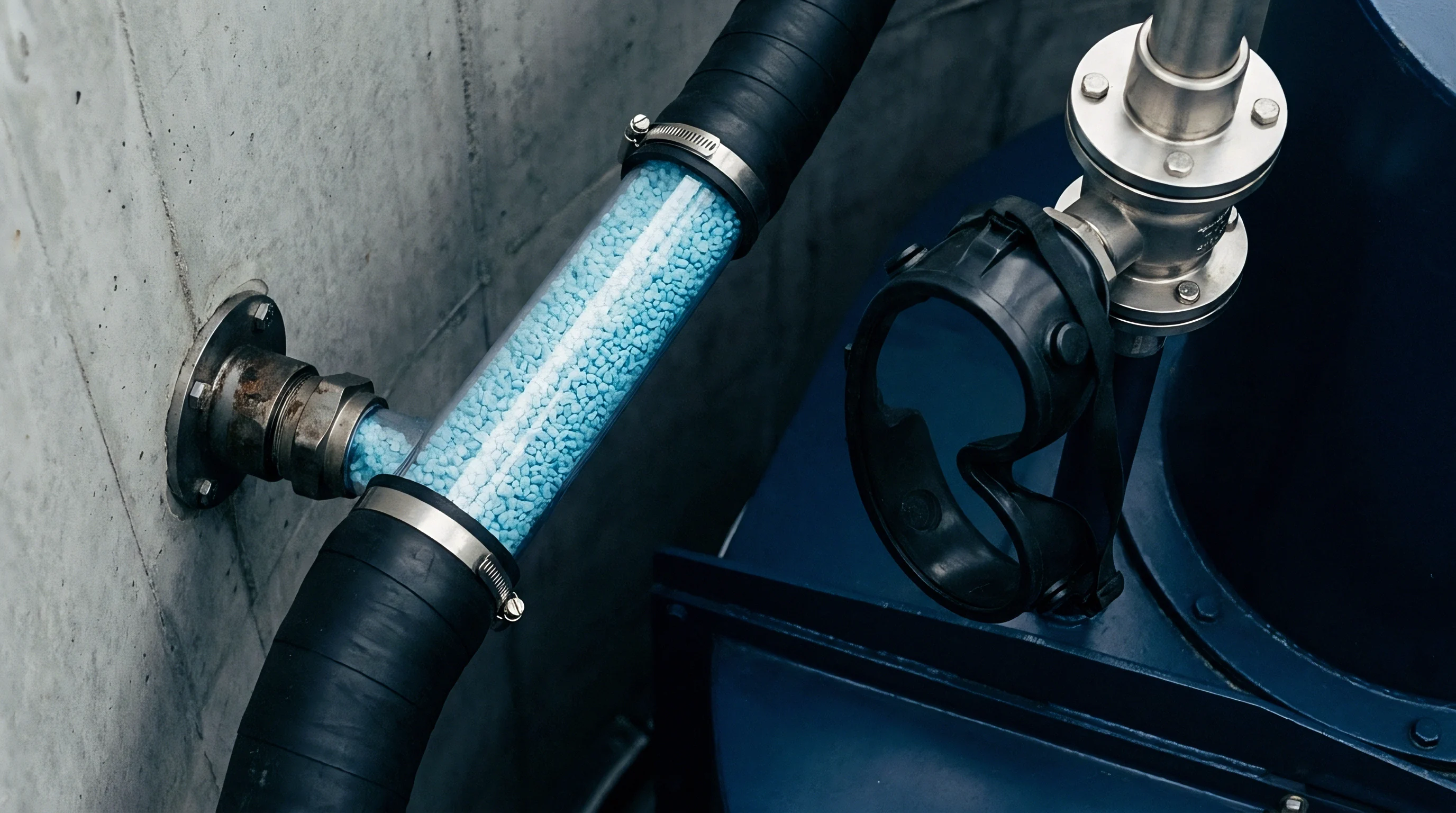
Vapor Phase Choked Flow and Condenser Dynamics
Volumetric extraction capacity at ultra-low pressures determines whether stripping rates are restricted by pipe dimensions. As absolute pressure drops, volumetric gas flow rate expands exponentially according to the ideal gas law. A volatile mass evaporation rate of 1.0 kilogram per hour of limonene generates an actual volumetric gas flow rate of 0.14 cubic meters per hour at 1000 mbar, but expands to 142 cubic meters per hour at an absolute vacuum pressure of 1.0 mbar, and 1420 cubic meters per hour at 0.1 mbar.
Exhaust piping and vacuum vent domes must be sized with broad cross-sectional areas to accommodate these massive volumetric vapor flows without exceeding sonic gas velocity limits.
Choked flow restricts vacuum pipe capacity. When gas velocity inside the vacuum vent throat reaches the local speed of sound, the volumetric flow rate reaches a choked limit, causing pressure to build up inside the extruder vent dome even if the downstream vacuum pump continues to operate at lower pressures. Localized pressure buildup elevates C_surface, collapsing the mass transfer driving force and halting volatile stripping.
Vent ports designed for high-vacuum devolatilization utilize wide, tapered transitions with aspect ratios engineered to maintain vapor velocities below Mach 0.3, avoiding compressibility effects and pressure drop penalties.
Purchasing contracts specifying food-grade recycled resin mandate compliance with European Food Safety Authority regulations prohibiting non-food contaminant levels above ten parts per billion in final packaging.
Condensing volatile organic species prior to entry into mechanical vacuum pumps is essential for protecting pump fluids and maintaining system vacuum stability. Heavy organic molecules like limonene and benzophenone condense readily at temperatures between 10 and 40 degrees Celsius under high vacuum. Multi-stage surface condensers positioned between the extruder vent ports and the vacuum pump inlet trap these volatile fractions, preventing contamination of pump oil or mechanical wear on dry-running screw lobes.
System design must account for the vapor pressure curves of condensed volatile mixtures to prevent condensate re-evaporation within the cold trap assembly.
Failing to maintain operating pressures below two millibars leaves high molecular weight contaminants inside the polymer matrix, resulting in food-contact compliance failure and total batch rejection at the converter.

Surveillance
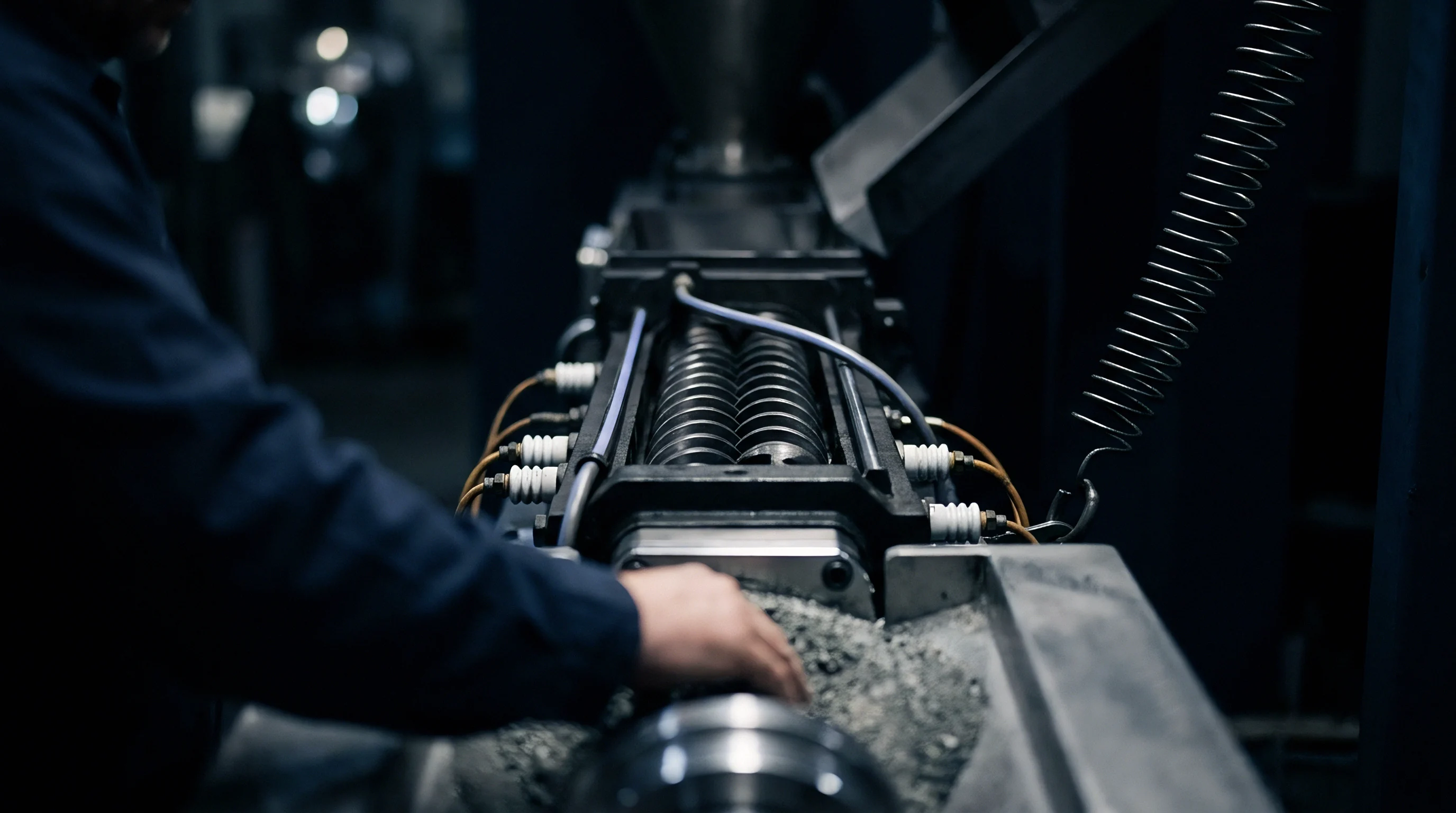
Analytical testing programs for recycled polyester rely on challenge experiments using model chemicals across predefined exposure parameters. Reclaimed resin intended for direct food-contact packaging must demonstrate decontamination performance that satisfies criteria enforced by international regulatory authorities, including the United States Food and Drug Administration and the European Food Safety Authority. Challenge testing involves intentionally spiking post-consumer polyester flake with high concentrations of standardized chemical surrogates possessing varied molecular weights, polarities, and boiling points, followed by extrusion devolatilization to measure residual contamination removal efficiency.
During analytical challenge testing on recycled resin batches, residual volatile contaminants are measured down to parts per billion concentrations.

Challenge Test Methodologies and Surrogate Selection
Polymer evaluation guidelines established by regulatory agencies dictate model compounds representing diverse polarity and volatility spectrums. Standard challenge suites include volatile non-polar compounds (toluene), volatile polar compounds (chlorobenzene), non-volatile non-polar compounds (tetradecane or phenylcyclohexane), non-volatile polar compounds (benzophenone), and natural flavor components (limonene). Flake matrix spiking targets initial surrogate concentrations between 100 and 1000 ppm for each chemical species, establishing a worst-case contamination scenario far exceeding typical post-consumer recycling inputs.
Decontamination efficiency calculation follows a logarithmic reduction framework comparing initial surrogate concentration C_in to final extruded pellet concentration C_out:
Eta = (1 – (C_out / C_in)) 100
Regulatory approval for unrestricted food-contact application demands removal efficiencies exceeding 99.9 percent for volatile surrogates and 99.5 percent for heavy non-volatile surrogates like benzophenone. Achieving these stringent decontamination thresholds requires continuous optimization of vacuum levels, screw rotation speed, and barrel temperature profiles across all twin-screw devolatilization stages.
| Model Surrogate Chemical | Molecular Mass (g/mol) | Initial Challenge Level (ppm) | Target Residual Limit (ppm) | Minimum Removal Efficiency (%) |
|---|---|---|---|---|
| Toluene | 92.14 | 500 | 0.05 | 99.99 |
| Chlorobenzene | 112.56 | 600 | 0.05 | 99.99 |
| Limonene | 136.23 | 1000 | 0.50 | 99.95 |
| Phenylcyclohexane | 160.26 | 450 | 0.05 | 99.99 |
| Benzophenone | 182.22 | 350 | 0.05 | 99.99 |

Gas Chromatography Methods for Volatile Trace Quantities
Automated headspace extraction coupled to mass spectrometry provides extreme sensitivity for measuring minute chemical residual levels. Multiple Headspace Extraction (MHE) coupled with Gas Chromatography and Mass Spectrometry (GC-MS) or Flame Ionization Detection (GC-FID) represents the primary reference methodology for quantifying residual VOCs in devolatilized polyester pellets. MHE eliminates matrix suppression effects caused by the high-viscosity polyester melt by performing repeated equilibrium extraction steps on a single sealed sample vial held at elevated temperatures (typically 150 to 180 degrees Celsius) for precise total volatile determination.
Using representative surrogate chemicals to model real contamination, chromatographic techniques quantify these trace volatile residues. Direct thermal desorption (TD-GC-MS) allows rapid screening of solid pellet samples without chemical solvent dissolution steps that introduce background contamination. Pellets undergo heating to 200 degrees Celsius inside a helium-purged quartz tube, driving volatile organics directly into a cryo-focussed cold trap prior to injection onto a capillary gas chromatography column.
Lower detection limits reach 0.01 ppm (10 ppb) for volatile species and 0.05 ppm (50 ppb) for heavy aromatic surrogates.
- Surrogate Dosing Verification uses liquid chromatography profiling to confirm uniform distribution of challenge chemicals throughout raw flake matrices prior to processing.
- Gas Flow Rate Monitoring measures carrier gas velocity across headspace analytical chambers using thermal mass flow sensors to ensure consistent extraction parameters.
- Blank Matrix Baseline Establishment establishes zero-level background interference by evaluating virgin resin samples under identical chromatographic conditions.
- Extraction Recovery Validation evaluates calibration curve linearity across three orders of magnitude to guarantee accurate quantification of trace volatile residues.
End-use package migration modeling applies conservative diffusion equations to calculate potential human exposure levels based on residual pellet volatile concentrations. Regulatory frameworks assume a standard food packaging ratio of 6 square decimeters of package contact area per kilogram of food, establishing maximum allowable migration limits of 10 ppb total non-evaluated substances into food simulators over standard shelf-life durations. Demonstrating compliance through analytical surveillance validates the operational safety of high-vacuum twin-screw devolatilization equipment for post-consumer resin conversion.
Headspace gas chromatography coupled with mass spectrometry detects residual volatile contaminants down to parts per billion sensitivity.
High vacuum devolatilization is often described as achieving complete chemical decontamination regardless of incoming flake contamination spikes, while off-spec pellet batches are attributed to uncalibrated analytical instrumentation.


Economics
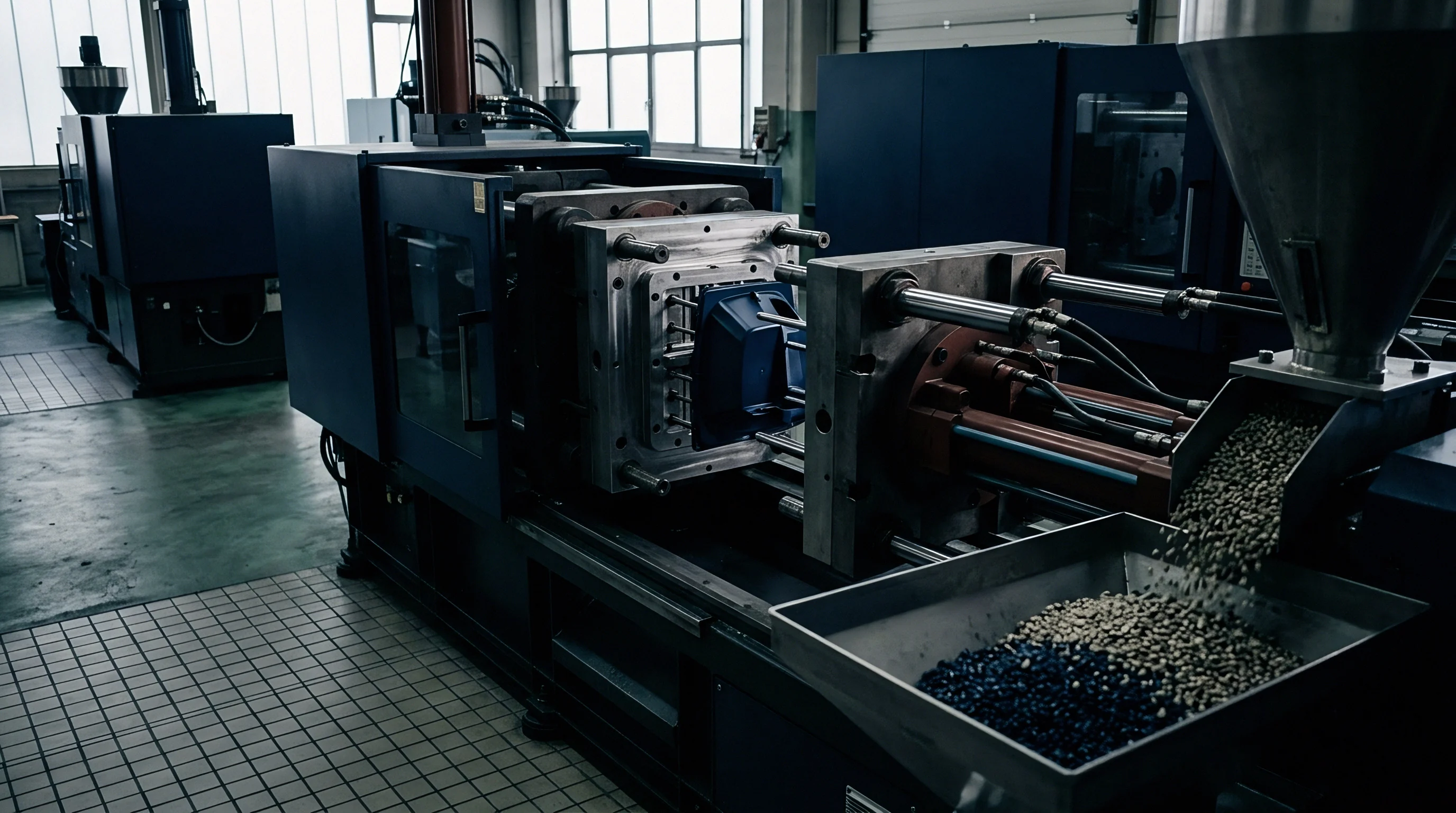
Capital investment in multi-vent twin-screw extrusion equipment balances specific electrical power against yield losses during thermal stripping. High-vacuum devolatilization lines represent substantial capital expenditure, with specialized co-rotating twin-screw extruders equipped with multi-stage vacuum systems, high-torque gearboxes, and automated water-ring pelletizers costing significantly more than conventional single-screw recycling extruders. Because decontamination efficiency dictates resin grade and pellet pricing, operational costs are largely driven by energy consumption.
Assessing extruder operating costs across multiple recycling facilities requires comparing specific energy consumption figures against landed pellet prices.

Energy Consumption and Specific Mechanical Energy Balance
Total electrical power requirements for devolatilization lines combine mechanical drive motor power with thermal heating bands and vacuum pump capacity. Specific Mechanical Energy (SME) input expresses the mechanical energy delivered to the polymer melt per unit mass throughput, calculated via the equation:
SME = (2 pi N tau) / (60 m_dot)
where N represents screw rotation speed in revolutions per minute, tau is applied motor torque in Newton-meters, and m_dot is polymer mass flow rate in kilograms per hour. Standard devolatilization processing of post-consumer polyester requires SME inputs ranging between 0.18 and 0.28 kilowatt-hours per kilogram. Higher SME inputs enhance surface renewal rates and volatile desorption kinetics, but increase thermal heat dissipation within the polymer melt, demanding auxiliary barrel cooling to prevent thermal degradation.
Vacuum system electrical power represents an additional specific energy requirement, typically adding 0.03 to 0.06 kWh/kg depending on operating pressure levels and pump technologies. Multi-stage Roots blowers backed by dry screw pumps operate with higher energy efficiency than traditional liquid ring pumps, while eliminating contaminated seal-water waste streams that demand costly wastewater disposal. Total specific energy consumption for high-vacuum twin-screw devolatilization averages 0.32 to 0.42 kWh/kg of finished food-grade resin pellets.
Yield Loss and Intrinsic Viscosity Management
Thermal exposure and hydrolytic chain breakage inside extruder barrels cause molecular weight reductions that lower output material valuation. Polyethylene terephthalate undergoes rapid hydrolytic degradation in the presence of trace melt moisture at temperatures above 240 degrees Celsius. Each ester bond cleavage lowers intrinsic viscosity (IV), weakening mechanical properties and reducing melt strength for downstream packaging conversion.
An IV drop from 0.80 dL/g down to 0.72 dL/g reduces commercial pellet value by 120 to 180 Euros per metric tonne in European food-grade packaging markets.
Preventing IV loss requires integrating high-efficiency pre-drying systems upstream of the extruder inlet, or applying ultra-high vacuum in the initial extruder melting zone to extract moisture before thermal cleavage occurs. Under deep vacuum conditions (
Material yield losses during devolatilization arise from volatile gas extraction, oligomeric wax condensation, and filter screen-changer purges. Volatile loss accounts for 0.15 to 0.45 percent of total mass throughput, while oligomeric wax generation deposits low molecular weight species in vacuum vent traps, representing an additional 0.20 to 0.50 percent mass loss. Combining energy costs, yield losses, maintenance overhead, and capital depreciation yields an average devolatilization conversion cost of 140 to 210 Euros per metric tonne of finished resin.
Incorporating a guaranteed maximum residual volatile content clause set at five parts per million total organics into resin purchasing contracts shifts financial liability for off-spec packaging batches directly to the compounder.