Melt Viscosity Degradation and Processing Penalties in Bio Polyester Compounds
Melt viscosity loss in bio-polyesters stems from moisture hydrolysis and shear; maintaining under 200 ppm moisture and tight processing thermal windows prevents severe scrap penalties.

Hydrolysis
Aliphatic bio-polyesters carry ester linkages in their backbone that react rapidly with absorbed moisture at processing temperatures. Water molecules attack carbonyl carbons nucleophilically, cleaving high-molecular-weight chains into shorter acid and alcohol oligomers. This directly reduces weight-average molecular weight.
Because zero-shear melt viscosity scales with molecular weight to the power of 3.4, a ten percent drop in chain length cuts melt resistance to flow by over thirty percent. Polylactic acid, polybutylene succinate, and polyhydroxyalkanoates degrade within seconds inside an extrusion barrel whenever residual moisture exceeds critical thresholds.
Degradation accelerates once carboxyl end groups form. These acidic terminals act as internal catalysts, speeding up subsequent hydrolytic cleavage in an autocatalytic loop. Standard aliphatic polyesters processed without thorough drying undergo immediate thermal and hydrolytic chain scission, turning a stable melt into an erratic, low-viscosity fluid.
Polylactic acid compounds with residual moisture above two hundred parts per million lose over thirty percent of zero-shear viscosity within three minutes at two hundred degrees Celsius.
Compounding operations face distinct failure modes when moisture levels interact with melt temperature and shear stress during melt processing:
- Autocatalytic Chain Cleavage occurs when free carboxyl groups generated during initial hydrolysis lower the activation energy for subsequent ester bond scission, rapidly multiplying low molecular weight species across the melt.
- Transesterification Side Reactions rearrange polymer chains at elevated temperatures, broadening molecular weight distribution and altering crystallization kinetics during cooling.
- Volatile Gas Generation liberates water vapor, monomer lactide, or cyclic oligomers, creating microscopic voids, surface splay, and structural bubbles in extruded profiles.
- Rheological Shear Thinning Instability reduces melt strength under high shear rates, causing severe parison sag in blow molding and melt bank instability in film lines.
Why Does Melt Viscosity Drop Faster in Polylactic Acid than in Polybutylene Adipate Terephthalate?
Ester group concentration along the macromolecular chain dictates the rate of cleavage during thermal processing. Polylactic acid contains a high density of hydrophilic ester bonds protected only by methyl side groups, which offer minimal steric hindrance against water molecules. Polybutylene adipate terephthalate incorporates flexible aliphatic adipate units alongside rigid aromatic terephthalate rings.
The aromatic structure sterically shields ester links and distributes electron density, suppressing nucleophilic attack by water. Consequently, polylactic acid demands moisture levels below two hundred parts per million, whereas polybutylene adipate terephthalate tolerates up to five hundred parts per million under identical processing conditions before showing equivalent viscosity drops.
Thermal Depolymerization Mechanics and Unzipping Reaction Routes
Thermal cleavage in bio-polyesters occurs through random chain scission alongside end-group unzipping reactions above peak melting temperatures. At temperatures exceeding two hundred and ten degrees Celsius, polylactic acid undergoes intramolecular transesterification, producing cyclic lactide dimers that act as internal plasticizers. These plasticizers depress the glass transition temperature and lower melt viscosity irreversibly.
Polyhydroxyalkanoates degrade through a distinct cis-elimination mechanism involving a six-membered cyclic transition state. This reaction splits macromolecular chains into crotonic acid and oligomers without requiring water, creating an abrupt loss of melt integrity when barrel temperatures exceed one hundred and seventy-five degrees Celsius.
Brief exposure to elevated temperatures may leave the nominal melt flow index within broad datasheet limits, but it destroys the narrow molecular weight distribution necessary for thin-wall processing.
Screw
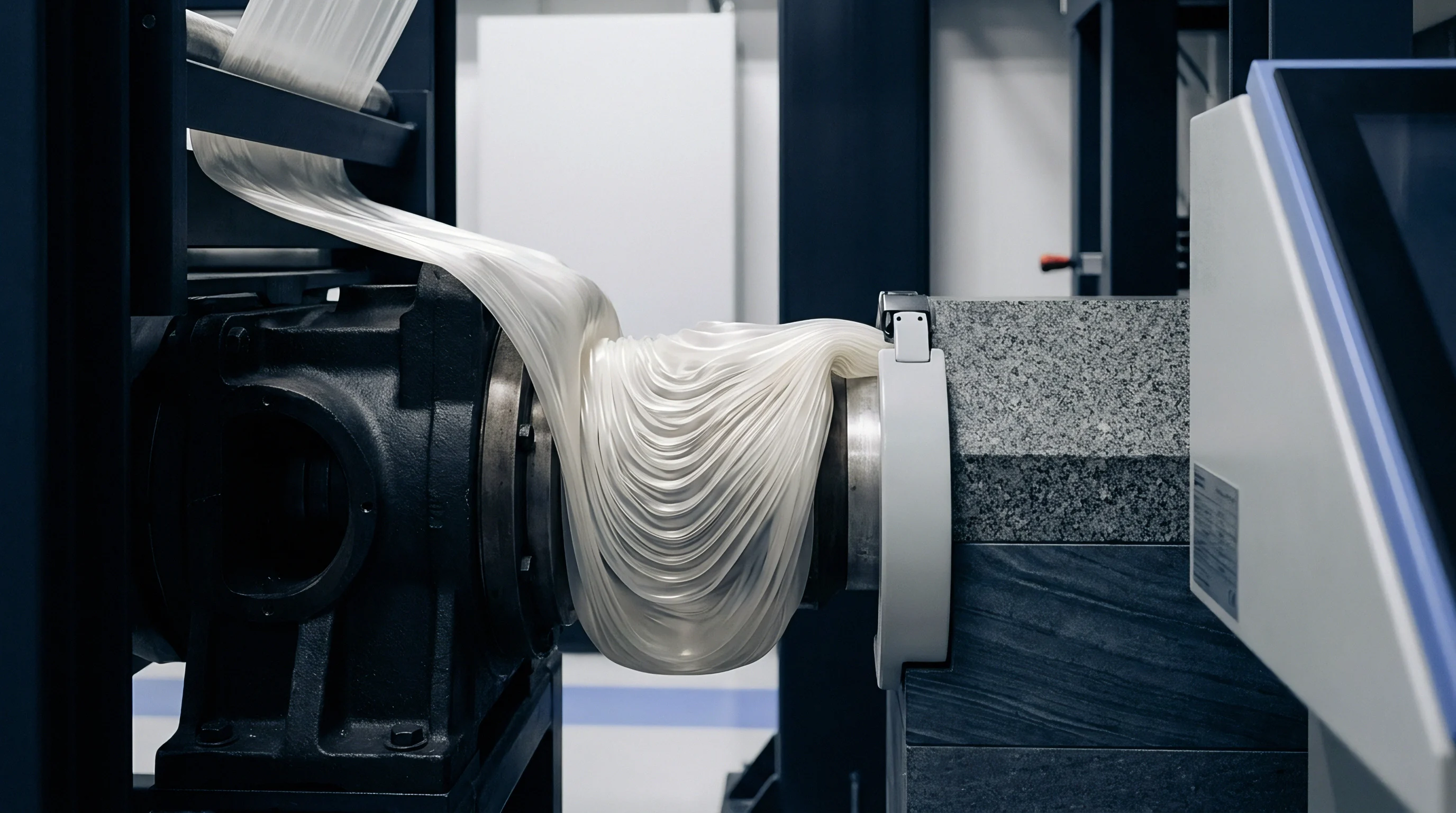
Mechanical energy from high-shear flight geometries drives local melt temperatures above barrel setpoints in milliseconds. Shear heating in barrier screws and dispersive mixing elements generates localized hot zones that accelerate thermal degradation. Bio-polyesters have lower thermal conductivity than polyolefins, which hinders dissipation of shear heat into barrel cooling zones.
Excessive shear stress mechanically cleaves long polymer chains, amplifying the degradation already driven by heat and moisture.
Screw design largely determines whether a bio-polyester retains its target viscosity or degrades before leaving the die. Deep flight depths in the feed section prevent aggressive mechanical compaction, while low compression ratios limit shear stresses through the melting zone. Dispersive mixing elements engineered for polyolefins routinely cut bio-polyester molecular weight too early in the process.
Residence Time Distribution and Thermal Exposure Windows
Barrel retention time governs the cumulative thermal dose experienced by bio-polyester compounds prior to mold injection or die discharge. Long residence times at elevated temperatures degrade the polymer matrix even in fully dried resins. The critical thermal exposure limit defines the duration a melt can dwell at processing temperature before its melt volume-flow rate doubles.
For unmodified polylactic acid, this exposure limit is under five minutes at two hundred and ten degrees Celsius. Stagnant zones inside barrel adapters, hot runner manifolds, and check valves accumulate degraded gel fragments that contaminate the main melt stream.
Moisture Dew Point Control in Hopper Feed Throat Zones
Inlet ambient air entering the throat causes instant water absorption on pre-dried resin pellets. Bio-polyester pellets exiting desiccant dryers at minus forty degree dew points reabsorb atmospheric humidity rapidly when exposed in open hoppers. Throat condensation creates a continuous source of hydrolysis right at the screw feed zone.
The following sequence establishes full thermal and moisture control across the plasticizing unit:
- Dry incoming resin pellets in a desiccant hopper dryer until moisture content measures under one hundred and fifty parts per million using Karl Fischer titration at one hundred and sixty degrees Celsius.
- Seal the hopper loader system with dry air purge lines maintaining a continuous dew point below minus forty degrees Celsius.
- Equip the extruder feed throat with a water-cooled jacket set precisely to forty-five degrees Celsius to prevent premature pellet softening without causing atmospheric condensation.
- Configure barrel temperature profiles with an ascending slope from one hundred and sixty degrees Celsius at the feed zone to one hundred and ninety degrees Celsius at the transition zone, keeping die zones five degrees lower.
- Limit screw rotation speeds to maintain barrel shear rates below five hundred reciprocal seconds.
- Measure melt temperature directly in the adapter stream using an exposed-junction thermocouple to verify that shear heat does not exceed setpoints by more than five degrees Celsius.
Operating an unpurged hopper in humid ambient conditions degrades resin in the screw feed section, producing flash and short shots downstream.

Extenders
Multifunctional chain-linking additives rejoin broken polymer chains by forming covalent bonds across severed terminal carboxyl and hydroxyl groups. Epoxy-functionalized acrylic copolymers and bis-carbodiimides serve as reactive bridges during melt compounding. These additives rebuild molecular weight, broaden molecular weight distributions, and introduce long-chain branching.
Long-chain branching substantially increases low-shear melt viscosity, restoring the melt strength needed for film blowing, foam extrusion, and thermoforming sheet.
Chain extension reactions require precise stoichiometry, melt temperature, and mixing time inside the extruder. Insufficient additive addition leaves unreacted acid groups that accelerate further hydrolysis. Excessive chain extender loads yield gel particles, cross-linked networks, and unprocessable rheological spikes.
Standard ISO 1133 test procedures require drying bio-polyester test samples at eighty degrees Celsius under vacuum for twelve hours before measuring melt volume-flow rate.
Formulators select reactive additives and fillers based on specific processing targets and mechanical end-use demands:
- Epoxy-Based Acrylic Oligomers react with both carboxyl and hydroxyl terminal groups, forming stable ether and ester linkages that build high melt strength and branch density.
- Aromatic Bis-Carbodiimides consume free carboxylic acids exclusively, producing ureido structures that stop autocatalytic degradation without generating volatile byproducts.
- Polyfunctional Isocyanates link hydroxyl-terminated oligomers rapidly in polybutylene succinate melt streams, building linear molecular weight during short barrel residence times.
- Micro-Milled Calcium Carbonate neutralizes residual acid species surface-chemically while providing nucleation sites that speed up crystallization during cooling cycles.
- Silane-Coupled Wood Flour stiffens bio-polyester matrices but introduces bound surface water, demanding high concentrations of carbodiimide extenders to prevent severe interface hydrolysis.
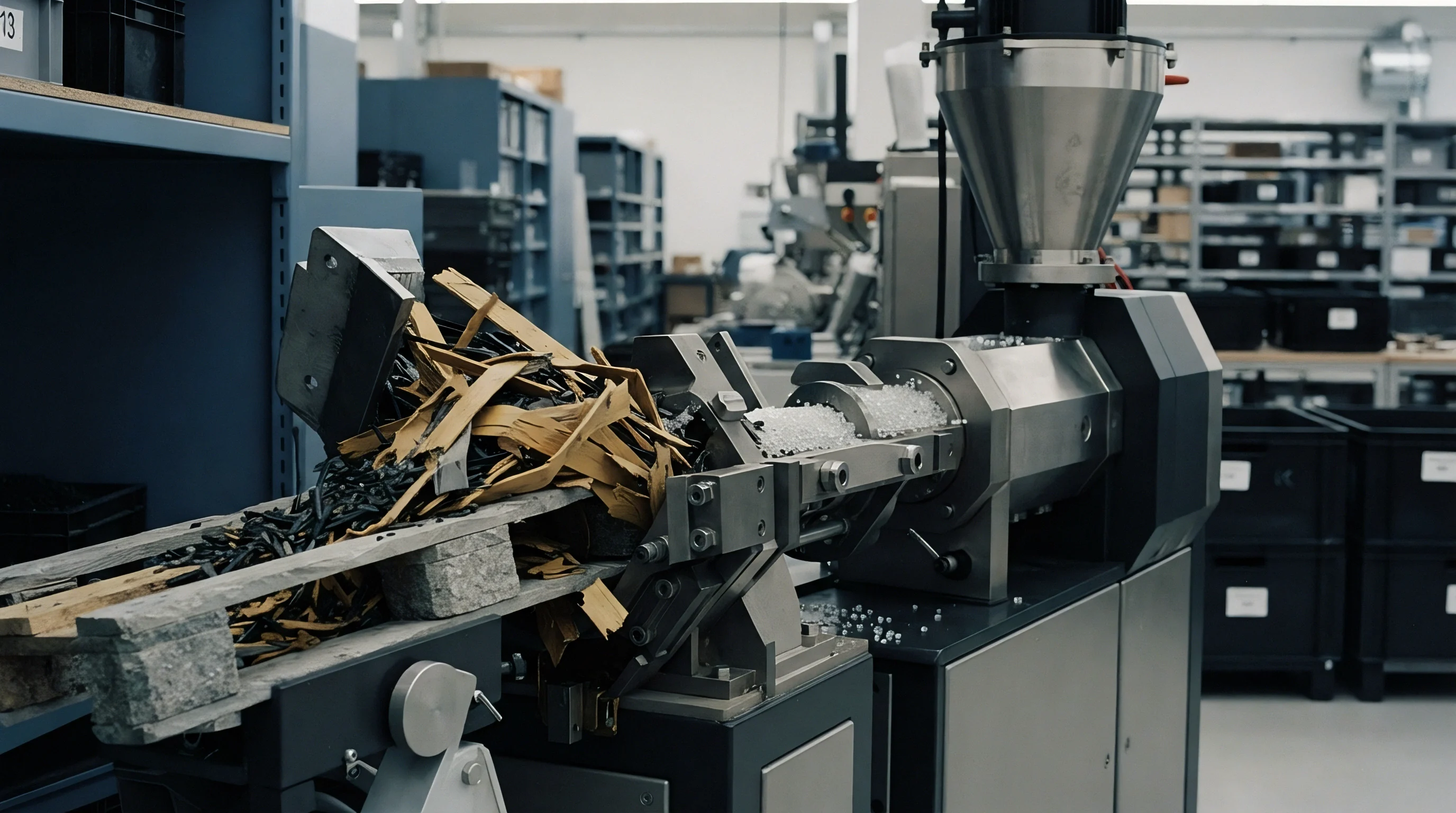
Epoxy and Carbodiimide Coupling Dynamics
Chain reconstruction agents react with terminal acid groups to stop autocatalytic degradation during melt processing. Epoxy rings open under shear at one hundred and ninety degrees Celsius, bonding to carboxylic acids to form hydroxy-esters. This reaction restores linear chain length and introduces branch points when using multifunctional epoxy molecules.
Carbodiimides react directly with carboxyl groups to yield stable N-acylurea links. This reaction consumes acidic species that would otherwise catalyze hydrolysis, effectively stabilizing the melt viscosity against repeated thermal cycles.

Particulate Fillers and Bio-Composite Rheology Modification
Natural fibers, micro-milled wood flour, and calcium carbonate particles alter the wall-shear response of bio-polyester melts. Hydrophilic bio-fillers release bound moisture at processing temperatures, accelerating polymer matrix scission unless thoroughly dried below five hundred parts per million. Filled compounds show increased pseudoplasticity, where melt viscosity drops sharply under shear but rises rapidly at low shear rates.
This high zero-shear viscosity resists sag in sheet extrusion, but elevated filler loads increase entrance pressure losses in injection molds, requiring higher melt temperatures that risk further thermal degradation.
| Additive Class | Active Chemistry | Dose Level (wt%) | MFR Change (%) | Zero-Shear Viscosity Impact |
|---|---|---|---|---|
Supply agreements specifying chain-extended bio-polyester grades must include an upper limit on cross-linked gel content measured via solvent filtration under ASTM D2765.

Molding
Melt viscosity loss shows up during injection filling as unexpected pressure drops and premature runner freeze. Viscosity degradation converts high-molecular-weight polymers into low-viscosity fluids in the barrel. The degraded melt fills tool cavities faster than programmed, causing hydraulic pressure spikes, flash at parting lines, and tool fouling.
Reduced molecular entanglement leaves molded components brittle, warped, and deficient in impact strength.
Parting line flash forces operators to reduce holding pressure, which introduces sink marks and internal voids in thick part sections. Melt viscosity variations alter cushion volume consistency, causing shot-to-shot weight fluctuations that exceed dimensional tolerances.

Flashing Warpage and Cycle Time Extension Penalties
Low-molecular-weight melt fractions escape through microscopic parting-line gaps under standard clamp tonnage. Lowering barrel temperatures to control flash often prevents high-crystallinity bio-polyesters from melting completely, leading to unmelts that plug gate nozzles. Lower molecular weight also slows crystallization in semi-crystalline resins like polybutylene succinate and polylactic acid.
Molded parts remain soft at standard ejection temperatures, forcing cycle extensions from twenty seconds to thirty-five seconds that erode production margins.
| Defect Mode | Rheological Root Cause | Operational Penalty | Direct Cost Vector |
|---|---|---|---|
Melt viscosity shifts exceeding fifteen percent between pellet lots require immediate readjustment of injection speed profiles and holding pressure schedules.
Viscometry
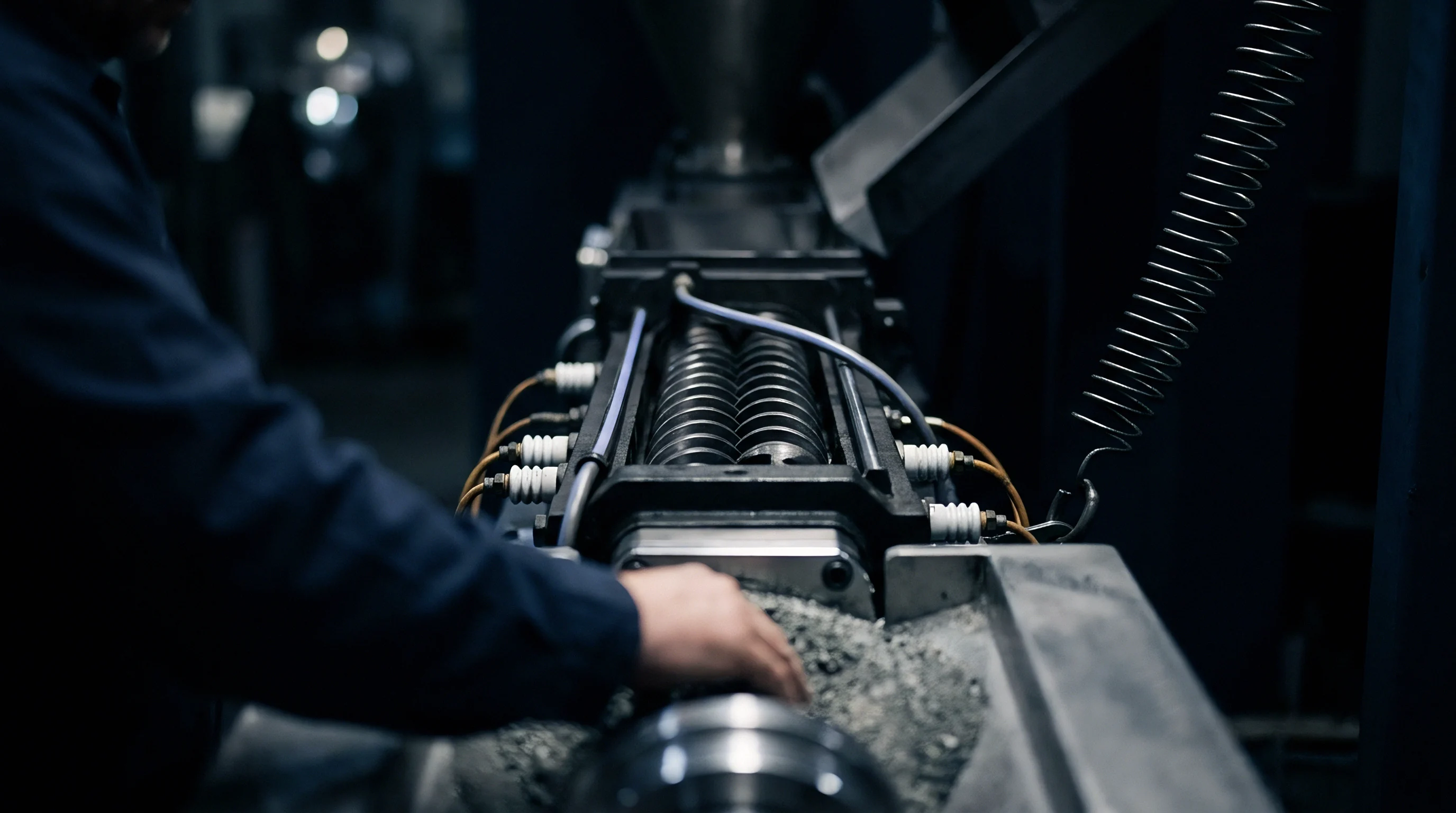
Rheological verification relies on strict adherence to standard test conditions to produce actionable lot acceptance data. Melt flow rate testing provides a single-point measurement that reflects overall processability, but fails to capture shear-dependent viscosity changes occurring inside an injection mold or die. Capillary rheometry measures melt behavior across three decades of shear rate, revealing dynamic shear thinning, wall slip, and melt fracture thresholds.
Intrinsic viscosity testing via dilute solution viscometry remains the primary standard for determining absolute molecular weight degradation without thermal interference during testing.
Single-point melt flow rate figures can mislead quality control teams. A chain-extended resin with long-chain branching can display the same melt flow rate as an unmodified linear resin, yet behave entirely differently during film blowing or thermoforming.
Melt flow rate testing carried out without stringent vacuum drying yields artificially elevated flow values that reflect testing moisture rather than true resin quality.
Quality control teams execute strict verification procedures on incoming resin lots before discharging silo trucks or committing compound bags to production lines:
- Sampling Protocol requires pulling three representative core samples from sealed packaging units across the top, middle, and bottom of each pallet.
- Moisture Verification utilizes moisture-specific coulometric Karl Fischer titration at one hundred and sixty degrees Celsius, setting a hard pass-fail limit at two hundred parts per million.
- Melt Volume-Flow Rate Measurement follows ISO 1133 Procedure B at specified load and temperature, recording displacement over fixed time intervals to calculate melt density.
- Solution Intrinsic Viscosity dissolves resin samples in chloroform or phenol/1,2-dichlorobenzene mixtures to measure efflux times in Ubbelohde capillary viscometers at twenty-five degrees Celsius.
- Gel Permeation Chromatography separates polymer chains by hydrodynamic volume, measuring absolute weight-average molecular weight, number-average molecular weight, and polydispersity index.

Standardized Testing Parameters across Bio-Polyester Grades
Melt flow rate evaluations require precise load and temperature assignments mapped to specific polymer structures. Polylactic acid grades are evaluated at two hundred and ten degrees Celsius under a 2.16 kilogram load according to ISO 1133-1 Condition D. Polybutylene adipate terephthalate compounds require testing at one hundred and ninety degrees Celsius under a 2.16 kilogram load. Testing a polylactic acid grade at two hundred and thirty degrees Celsius thermalizes the polymer rapidly, breaking chains in the test barrel and generating false high flow readings.
Quality control certificates must list the exact pre-test drying protocol, test temperature, load weight, and barrel dwell time alongside the reported melt flow value.
| Polymer Type | Standard Test Method | Test Temp (°C) | Applied Load (kg) | Moisture Limit (ppm) |
|---|---|---|---|---|
Single-point melt flow rate data cannot reliably predict thin-wall molding performance once high shear rates trigger shear thinning in branched bio-polyesters.
Yield
Cost models for bio-polyester compounding depend heavily on scrap rates and allowable regrind ratios. Virgin bio-polyester prices range from three thousand to five thousand dollars per metric tonne, well above standard polyolefins. That material cost makes processing scrap particularly expensive.
Viscosity loss during initial molding limits regrind usage, because re-extruding degraded runners accelerates breakdown across the entire blend and produces out-of-spec parts.
Ignoring melt viscosity loss raises the finished part cost across the board. Scrap, slower cycles, and lower regrind ratios quickly erode margins on bio-polyester processing lines.

Scrap Re-Use Limitations and Landed Cost Arithmetic
Reintroducing sprues and runners into virgin feed adds cleaved chains into the melt stream. Each thermal cycle lowers the weight-average molecular weight further, pushing the blend’s melt flow rate outside the usable process window. Adding twenty percent once-molded polylactic acid regrind can raise melt flow index by forty percent, causing unstable injection pressures and flash.
Plants must restrict regrind to under ten percent or add chain extender masterbatch to compensate, raising material costs on every processed kilogram.
Evaluating total landed cost requires analyzing virgin resin input, additive loading costs, energy consumption during extended drying, scrap generation, and cycle time penalties. A ten percent increase in injection molding cycle time combined with a five percent scrap rate caused by viscosity degradation increases the effective conversion cost per good part by over twenty-two percent. Sourcing practices protect project economics by specifying tight viscosity windows, requiring batch-specific certificates of analysis, and enforcing strict incoming moisture verification at the factory floor.