Karl Fischer Titration Interference Mechanisms in Recycled Polyester Flake Qualification
Karl Fischer moisture testing of recycled PET flake requires thermal desorption at 170 C with methanol-free reagents to eliminate volatile interference.
Bench
Polyethylene terephthalate flake moisture analysis determines whether post-consumer resin can undergo melt processing without severe hydrolytic cleavage. Water trapped within amorphous regions or adsorbed onto flake surfaces reacts rapidly with ester bonds at extrusion temperatures above 260 degrees Celsius. Measuring this water accurately dictates whether a recycled lot requires four hours of desiccant drying or extended vacuum processing before compounding.
Direct drying loss tests fail on post-consumer recycled flakes because volatile organic residues, washing surfactants, and retained aromas evaporate alongside water, inflating calculated moisture values.

Direct Titration Limitations in Recycled Polyester
Standard volumetric iodine titrations executed directly on ground polymer particles frequently generate inaccurate hydration figures. Ground flake matrices do not dissolve readily in standard ambient Karl Fischer solvents such as methanol or chloroform at room temperature. Attempting direct titration without complete dissolution leaves water molecules trapped inside thick flake structures, yielding false low moisture readings.
Increasing solvent temperatures inside the titration cell to accelerate polymer dissolution introduces solvent evaporation challenges and accelerates secondary chemical reactions between the titrant and non-polymer impurities.
Thermal desorption Karl Fischer titration isolates residual moisture from non-volatile polymer contamination during recycled flake testing.
Standardized Testing Frameworks for Recycled Flake
ASTM D6869 and ISO 15512 Method B specify thermal desorption combined with coulometric iodine generation to isolate moisture from the polymer matrix. An oven unit heats the recycled flake sample in a sealed glass vial, volatilizing moisture into a stream of dry nitrogen carrier gas. The carrier gas transports the water vapor into a reaction vessel containing an iodide, sulfur dioxide, and an amine buffer dissolved in an alcohol mixture.
Electrolytic oxidation generates iodine at the anode in direct stoichiometric proportion to the water carried into the cell.
When incoming quality verification relies on uncorrected volumetric titration figures, labs clear wet flake lots for production. Unchecked moisture levels above 50 parts per million during extrusion hydrolyze the polymer backbone, dropping intrinsic viscosity below minimum packaging performance thresholds and causing melt strength failure at the die.
Chemistry
Karl Fischer moisture determination relies on the quantitative oxidation of sulfur dioxide by iodine in the presence of water and an amine buffer. The reaction follows a strict two-step sequence where an alcohol reactant, historically methanol, reacts with sulfur dioxide and an amine base to form an intermediate alkylsulfite salt. Iodine then oxidizes the alkylsulfite salt to an alkylsulfate salt, consuming exactly one mole of water for every mole of iodine oxidized.
When post-consumer polyester flake samples undergo thermal desorption, secondary volatile chemical species enter the reaction vessel alongside water vapor and disrupt this stoichiometric equivalence.

Interfering Species from Recycled Flake Contaminants
Post-consumer bottle washing leaves alkaline surfactant residues that elevate the sample matrix pH above the buffering capacity of standard titration reagents. Karl Fischer reactions maintain precise quantitative stoichiometry only within a pH range of 5 to 7. Alkaline species carried into the cell raise the pH above 8, accelerating the oxidation of sulfur dioxide by iodine without consuming water.
This pH shift causes continuous reagent consumption, endless titration endpoints, and falsely elevated moisture calculations. Conversely, residual acidic contaminants from industrial flake streams drop the cell pH below 4, slowing the reaction kinetics so drastically that the instrument misinterprets delayed iodine consumption as an end of titration.

Side Reactions of Degradation Products
Acetaldehyde and ethylene glycol generated during thermal processing react directly with methanol-based titrants. Acetaldehyde reacts with methanol inside the reaction vessel to form acetals, liberating stoichiometric water molecules during the reaction. Ethylene glycol reacts with sulfur dioxide and iodine independently, consuming free iodine and creating a massive positive moisture bias.
Volatile low-molecular-weight PET oligomers, specifically cyclic trimers, volatilize at elevated oven temperatures and deposit inside cold carrier gas delivery lines, absorbing moisture and altering baseline drift values.
The table below details primary chemical interferences encountered during indirect Karl Fischer analysis of post-consumer polyester flake.
| Interfering Compound | Contamination Source | Reaction Pathway with Reagents | Interference Threshold | Moisture Bias Direction |
|---|---|---|---|---|
| Ethylene Glycol | Thermal polymer degradation | Direct iodine oxidation in methanolic media | 175 C oven release | False Positive (+30 to +150 ppm) |
| Acetaldehyde | PET melt breakdown byproduct | Acetal formation with methanol liberating H2O | 140 C oven release | False Positive (+20 to +80 ppm) |
| Sodium Hydroxide | Caustic flake washing washline | Neutralizes acid buffer, elevates cell pH above 8 | Residual wash solids | False Positive (Endless Titration) |
| Cyclic PET Trimers | Inherent polymer oligomers | Condenses in gas lines, adsorbs carrier moisture | 190 C volatilization | False Negative (Tailing Peaks) |
| Limonene Residues | Post-consumer flavor retention | Consumes iodine via unsaturated double bonds | 130 C volatilization | False Positive (+10 to +45 ppm) |
Quantifying the precise contribution of secondary organic oxidation versus true moisture extraction remains difficult when processing variable post-consumer flake lots. Non-volatile organic residues collect in the electrolyte solution over repeated runs, continuously shifting background reagent oxidation kinetics. Analytical labs must determine whether chemical interference mechanisms can be fully suppressed through solvent modification or if physical separation methods are required to protect the electrolyte cell.
The following failure modes represent primary contamination vectors that skew titration accuracy during recycled flake qualification:
- Ethylene glycol oxidation consumes free iodine independently of stoichiometric water concentration, resulting in artificially high moisture calculations above 180 degrees Celsius.
- Acetaldehyde acetal formation reacts with methanolic carrier solvent to liberate stoichiometric water molecules, shifting baseline drift upward throughout the analysis cycle.
- Alkaline wash residues neutralize the acidic sulfur dioxide buffer complex, forcing the titrator endpoint detector to continuously generate iodine without reaching drift stability.
- Cyclic trimer volatilization condenses inside transfer tubing, restricting carrier gas flow rates and causing erratic peak broadening during high-temperature desorption.
Whether specific specialized amine additives can selectively neutralize non-water iodine consumers without altering the fundamental Bunsen reaction balance remains a open inquiry in analytical polymer science.
Oven
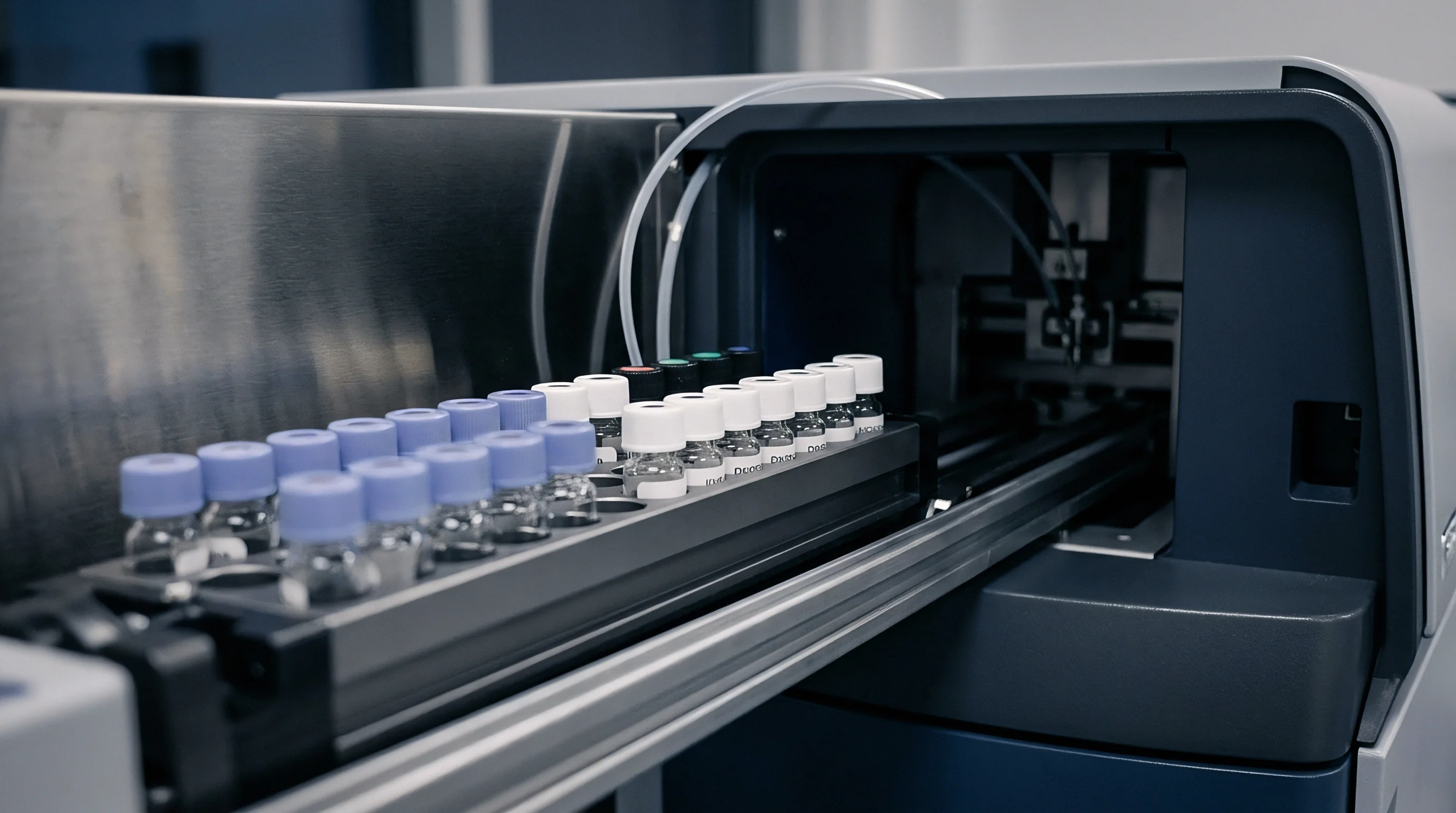
Thermal desorption units extract water molecules from within the crystalline matrix of recycled flakes before carrier gas sweeps the vapor into the titration chamber. Heating the polymer sample provides the energy necessary to overcome hydrogen bonding between trapped water and ester linkages. Proper temperature control ensures that water desorbs rapidly while thermal degradation of the PET backbone remains minimal.
Selecting an incorrect desorption temperature either leaves bound water inside the flake matrix or thermally degrades the resin, generating interfering volatile compounds.
Vaporization Temperature Selection and Matrix Stability
Heating post-consumer flake to 170 degrees Celsius releases surface and internal moisture while avoiding the thermal breakdown of low-molecular-weight PET fractions. Operating below 150 degrees Celsius results in incomplete moisture extraction, requiring excessively long heating cycles that cause baseline drift integration errors. Raising the oven temperature above 190 degrees Celsius initiates chain scission of degraded post-consumer oligomers, releasing ethylene glycol and volatile aldehydes directly into the carrier gas stream.
The optimal temperature window balances complete moisture desorptions within five to eight minutes against the onset of polymer pyrolysis.
Oven extraction at 170 degrees Celsius under a 150 milliliter per minute nitrogen carrier gas flow prevents thermal degradation of recycled polyester flakes.

Carrier Gas Quality and Flow Rate Control
Dry nitrogen gas streams pass through molecular sieve moisture traps to maintain background dew points below minus sixty degrees Celsius. Carrier gas entering the thermal desorption vial at 100 to 150 milliliters per minute creates stable sweep efficiency without cooling the heating chamber. Excessively high gas flow rates reduce carrier gas residence time inside the sample vial, causing incomplete heat transfer and condensation in transfer lines.
Low flow rates allow desorbed moisture to re-condense on cold vial rims before reaching the titration vessel. Heat-traced transfer lines kept at 130 degrees Celsius prevent moisture condensation and oligomer deposition between the oven and the titration cell.
The following sequence outlines the standard operational calibration for thermal desorption sample extraction:
- Purge the sample manifold with dry nitrogen at 150 milliliters per minute for twenty minutes until background drift stabilizes below 5 micrograms of water per minute.
- Heat a sealed empty glass vial to 170 degrees Celsius to determine the blank moisture contribution of the glass matrix and atmospheric air prior to sample loading.
- Weigh approximately two grams of recycled flake into the pre-baked vial using a calibrated analytical balance with a precision of 0.1 milligrams.
- Transfer the sealed vial into the heating block and initiate carrier gas flow, recording the cumulative water mass over an eight-minute extraction window.
- Deduct the system blank value from the calculated mass to isolate the true moisture content of the polymer sample.
Elevated moisture readings during indirect titration may reflect unevaporated processing additives rather than water, though incomplete pre-drying remains a frequent confounding factor in converter laboratory protocols.

Cell
Coulometric reaction vessels contain an anolyte solution, a catholyte solution, and platinum indicator electrodes that detect unreacted iodine through voltammetric indication. Anode oxidation converts iodide to iodine continuously until all desorbed water swept from the oven unit reacts. Electrochemical titration measuring current consumption provides absolute microgram-level water measurement without requiring titrant titer factor standardization.
Physical vessel design and chemical reagent selection dictate whether the cell tolerates volatile organic species carried over from recycled flake samples.
Diaphragm against Diaphragmless Vessel Designs
Fritless reaction chambers eliminate ceramic porosity issues where volatile organic impurities accumulate and degrade background stability. Diaphragm cells use a porous ceramic frit to separate the anode and cathode chambers, preventing generated iodine from migrating back to the cathode. Volatile glycols and aldehydes from recycled flake pass through ceramic frits, decomposing into carbonaceous deposits that clog pore channels and increase electrical resistance.
Diaphragmless cells utilize specialized catholyte formulations that prevent cathode reduction of iodine without requiring a physical barrier, ensuring long-term drift stability when analyzing post-consumer materials.
Can Methanol Free Reagents Eliminate Flake Oligomer Interference?
Replacing methanolic solvent mixtures with ethanol or long-chain alcohol formulations prevents side-reactions with volatile aldehyde species in post-consumer flakes. Methanol-free reagents utilize 1-propanol or ethylene glycol monoethyl ether as primary solvents to suppress acetal formation. These modified anolytes alter the dielectric constant of the medium, slowing secondary iodine-consuming side reactions while preserving rapid stoichiometric oxidation of sulfur dioxide.
Using halogenated hydrocarbon additives alongside ethanol further improves the solubility of entrained hydrophobic contaminants, preventing matrix precipitation inside the cell.
The table below outlines structural and performance distinctions between standard and interference-resistant Karl Fischer cell configurations.
| Cell Parameter | Standard Diaphragm Cell | Diaphragmless Cell Design | Methanol-Free Anolyte Cell |
|---|---|---|---|
| Primary Solvent Media | Methanol based | Methanol based | Ethanol / 1-Propanol blend |
| Fritted Barrier Present | Yes (Porous Ceramic) | No | Optional |
| Aldehyde Side-Reactions | High (Acetal formation) | High (Acetal formation) | Suppressed (< 5% impact) |
| Baseline Drift Stability | Degrades after 20 samples | Stable over 100+ samples | Stable over 80+ samples |
| Recommended Flake Mass | 0.5 to 1.0 grams | 1.5 to 3.0 grams | 2.0 to 5.0 grams |
| Reagent Exchange Frequency | High (Frit fouling) | Moderate (Capacity limits) | Low (High interference tolerance) |
Side-reaction suppression reagents maintain accurate baseline current limits long after standard methanolic anolytes fail.
When background drift baseline doubles between consecutive sample runs, the electrolyte charge is depleted and requires immediate replacement.

Proof
Analytical validation establishes whether moisture values derived from thermal desorption Karl Fischer titration reflect true water content or secondary chemical noise. Quality control teams in compounding facilities run structured verification series using primary water standards to confirm system performance. Without rigorous calibration protocols, laboratory staff cannot prove whether a 20 ppm shift in reported moisture represents actual flake drying or variable chemical interference from washing plant surfactants.

Water Standard Spiking and Recovery Metrics
Sodium tartrate dihydrate crystals containing exactly 15.66 percent water by weight serve as the primary reference standard for thermal desorption efficiency. Technicians weigh 10 to 20 milligrams of sodium tartrate into the oven unit at 170 degrees Celsius to verify system recovery. Acceptable analytical performance requires cumulative water recovery figures between 97 percent and 103 percent of theoretical values.
Pure water micro-capillary injections delivered directly into the titration cell calibrate anode current efficiency independently of oven sweep mechanics.
ISO 15512 Method B compliance prevents misclassification of residual moisture in contaminated post-consumer flake shipments.

Loss on Drying Correlation Protocols
Vacuum oven drying at 120 degrees Celsius for twenty-four hours provides a secondary gravimetric benchmark for heavily contaminated flake lots. Comparing indirect Karl Fischer results against loss on drying measurements highlights severe chemical interference errors. When indirect Karl Fischer figures exceed gravimetric vacuum loss by more than 30 parts per million, volatile non-water contaminants are actively reacting with cell reagents.
Lab personnel then adjust carrier gas flow, drop oven desorption temperatures, or convert to aldehyde-resistant anolytes to restore measurement accuracy.
The following decision checklist defines acceptance criteria for validating recycled flake moisture testing setups:
- Blank drift baseline remains below 10 micrograms per minute prior to introducing flake samples into the thermal extraction chamber.
- Standard recovery percentage falls between 97 percent and 103 percent when injecting 1.0 milligram of pure water or sodium tartrate dihydrate.
- Reagent exhaustion tracking triggers automated cell purging once total cumulative water titration exceeds 100 milligrams in a 100 milliliter anolyte charge.
- Sample mass scaling increases from one gram to three grams when testing target moisture levels below 50 parts per million to maintain signal accuracy above background noise.
Purchase contracts specifying ISO 15512 Method B compliance obligate suppliers to provide documented recovery standard data alongside shipment moisture certifications.

Cost
Inaccurate moisture determination during incoming material qualification directly alters the economic yield of recycling extrusion lines. Processing post-consumer flake containing unmeasured residual water causes hydrolytic chain cleavage, permanently reducing polymer chain length and melt viscosity. Conversely, misidentifying chemical interference as excess moisture leads to unnecessary extended pre-drying cycles, wasting electrical power and degrading flake color through thermal oxidation.
Precision in moisture qualification protects both conversion machinery and resin property margins.

Hydrolytic Chain Scission Financial Loss Calculations
Extruding polyethylene terephthalate with an undetected 100 parts per million water excess degrades intrinsic viscosity from 0.80 deciliters per gram down to 0.72 deciliters per gram. This structural breakdown reduces bottle burst strength, forces increased wall thickness specifications, and elevates process scrap rates during blow molding operations. Hydrolysis occurs rapidly inside the extrusion barrel within two minutes of melting at 280 degrees Celsius.
Consider a twin-screw compounding line processing 5000 kilograms per hour of recycled polyester flake. Operating at a target intrinsic viscosity of 0.80 deciliters per gram commands a resin market value of 1,450 USD per metric tonne. If incoming moisture misqualification allows flake containing 120 ppm undetected water into the extruder, hydrolytic degradation drops output quality to 0.70 deciliters per gram, reducing realized material value to 1,200 USD per metric tonne.
Over a 24-hour production run, this quality drop generates a direct value loss of 30,000 USD on 120 tonnes of processed resin. Added power costs for running desiccant dryers two hours longer than necessary consume an extra 450 kilowatt-hours per line shift, further eroding compounding margins.
Undetected excess moisture during extrusion causes rapid hydrolytic cleavage of polyester polymer chains.
Landed Cost Adjustments for Flake Misqualification
Compounding facilities enforcing tight moisture qualification protocols reject non-compliant recycled lots before processing losses occur at the pelletizer. Clear moisture specifications built into supply contracts establish immediate price penalty deductions or lot return triggers when incoming material fails qualification steps. The table below details operational financial losses linked to specific Karl Fischer measurement errors on a commercial recycling line.
| Measurement Defect | Physical Cause | Process Impact | Property Degradation | Financial Loss per 100 Tonne Lot |
|---|---|---|---|---|
| False Low Moisture (50 ppm hidden) | Incomplete oven desorption at 140 C | Melt surging, barrel hydrolytic cleavage | IV drop from 0.80 to 0.73 dL/g | 15,000 USD (Grade Downgrade) |
| False High Moisture (100 ppm offset) | Aldehyde side-reaction with methanol | Excessive drying cycle time (+3 hours) | Flake yellowing (b value +2.5) | 2,800 USD (Energy & Throughput) |
| Uncaught Alkaline Contamination | Washline caustic carryover | Cell drift failure, unverified processing | Extreme IV drop down to 0.64 dL/g | 25,000 USD (Scrap Rejection) |
| Carrier Condensation Error | Unheated transfer lines | Delayed moisture release signals | Inconsistent melt viscosity profile | 4,200 USD (Regrind Re-processing) |
Contractual framework definitions specifying precise Indirect Karl Fischer testing parameters ensure that feedstock valuation accurately reflects true moisture content. Incoming flake shipments accompanied by rigorous indirect titration dossiers carrying verified standard recovery metrics avoid costly processing failures during commercial compounding runs.