Resolving Saturated Polyolefin Hydrocarbon Oligomer Interference in Mineral Oil Migration Dossiers
Polyolefin oligomer co-elution requires epoxidation clean-up and GCxGC deconvolution to prevent false mineral oil failures in migration dossiers.
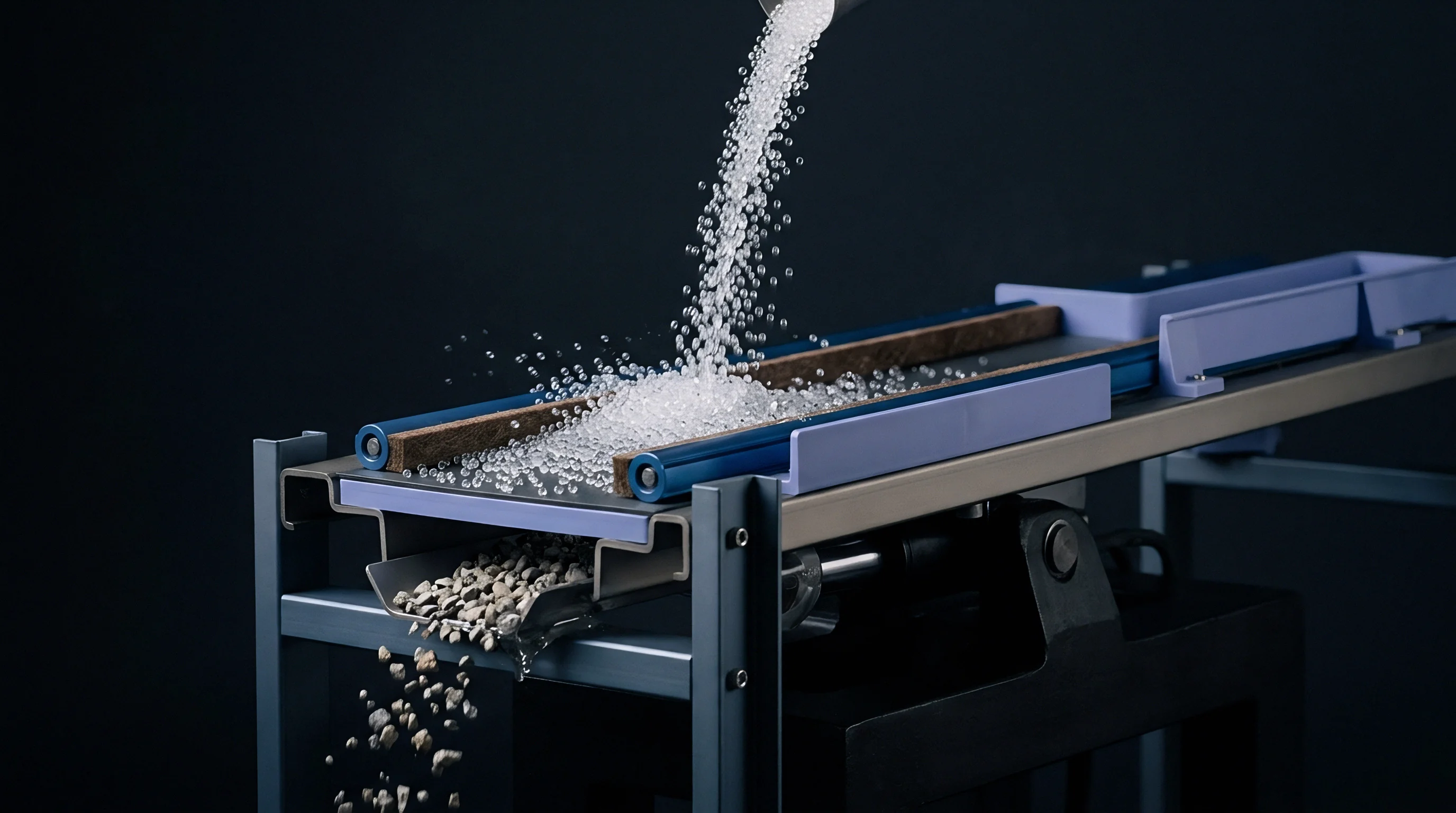

Overlap
Polyolefin packaging materials regularly release saturated hydrocarbon oligomers during migration testing that register as mineral oil saturated hydrocarbons on automated gas chromatography systems. Polyethylene and polypropylene polymers contain low molecular weight chains, termed polyolefin oligomeric saturated hydrocarbons, generated during polymerization or thermal processing. When an analytical laboratory subjects a flexible polyolefin film or rigid container to migration testing using food simulants or solvent extracts, these oligomers partition into the test medium alongside any mineral oil fractions originating from printing inks, lubricants, or recycled fiber components.
Online coupled liquid chromatography with gas chromatography and flame ionization detection serves as the standard analytical protocol for mineral oil quantification in European food contact enforcement. The liquid chromatography column separates saturated fractions from aromatic fractions based on polarity. Both mineral oil saturated hydrocarbons and polyolefin oligomeric saturated hydrocarbons pass through this silica gel clean-up without retention, entering the gas chromatograph as a single fraction.
Flame ionization detection yields a response proportional to total carbon mass but possesses no chemical selectivity to distinguish branched or cyclic mineral alkanes from synthetic polyolefin oligomers.
The flame ionization detector quantifies total organic carbon across the retention window without discriminating between synthetic polymer backbones and petroleum distillates.
The resulting chromatogram displays a broad unresolved complex mixture, commonly designated as a hump, spanning the carbon number range from C10 to C50. Polyolefin oligomers produce an identical chromatographic hump in the C16 to C35 region. When a compliance report evaluates this area against specific migration limits, such as the draft German Mineral Oil Ordinance threshold of 0.6 milligrams per kilogram of food for mineral oil saturated hydrocarbons, the uncorrected integration includes the synthetic oligomers.
Standard polyethylene film structures frequently yield oligomer migration values between 2.0 and 15.0 milligrams per kilogram under ten-day contact conditions at forty degrees Celsius in iso-octane or vegetable oil simulants. Treating this signal as mineral oil contamination creates false positive failures in regulatory dossiers.
| Hydrocarbon Category | Carbon Range | LC Retention Behavior | FID Profile Shape | Origin in Packaging File |
|---|---|---|---|---|
| Mineral Oil Saturated Hydrocarbons | C10 to C50 | Unretained on Silica Gel | Continuous Broad UCM Hump | Lubricants, Inks, Recycled Pulp |
| Polyolefin Oligomeric Saturated Hydrocarbons | C12 to C45 | Unretained on Silica Gel | Regular Peak Series or UCM Hump | Polyethylene and Polypropylene Resin |
| Polyolefin Oligomeric Unsaturated Hydrocarbons | C12 to C45 | Retained or Partially Retained | Discrete Multiplet Series | Thermal Degradation and Polymerization Residue |
| Mineral Oil Aromatic Hydrocarbons | C10 to C50 | Retained on Silica Gel, Eluted on Aromatic Cut | UCM Hump with Alkylated Rings | Offset Inks, Crude Mineral Fractions |
Extruders frequently defend high hydrocarbon levels by claiming that all non-aromatic fractions originating from pure polyolefin resins are non-hazardous polymer residues exempt from mineral oil restrictions.

Foil
Flexible multilayer barrier materials combine functional polyolefin sealing layers with aluminum, polyamide, or ethylene vinyl alcohol cores to arrest chemical migration. The physical construction of the film dictates whether oligomer release reflects bulk resin extraction or surface contact phenomena. Direct contact between polyolefin sealants and fatty food simulants causes localized swelling of the polymer matrix.
Swelling accelerates the diffusion coefficient of low mass species, allowing oligomer fractions up to C35 to cross the surface layer during standard ten-day test windows at elevated temperatures.
Migration testing using dry food simulant poly(2,6-diphenyl-p-phenylene oxide), commercially known as Tenax, operates under vapor transfer mechanisms rather than solvent extraction. At sixty degrees Celsius for ten days, volatile oligomers below C25 evaporate from the inner ply and absorb onto the porous polymer collector. When testing a lamination structure featuring an outer polyethylene layer and an inner aluminum layer, physical defect points such as pinholes or pinhole arrays alter the transport rate.
Chromatographic profiles from pinhole-compromised structures display distinct, narrow oligomer bands rather than smooth baseline humps, reflecting localized mass flow through discrete geometric passages.
Thick film constructions show higher cumulative oligomer release than thin blown films of identical formulation. Extrusion processing history influences the total quantity of volatile saturated species available for transfer. High melt temperatures during film conversion break down primary polymer chains through beta-scission, generating new low molecular weight hydrocarbons in the C14 to C28 range.
A compliance auditor reviewing a technical dossier must evaluate the thermal profile of the conversion line alongside the resin manufacturer specification sheet.
Film structure modifications change the ratio between linear alkanes and branched oligomeric isomers. Linear polyethylenes yield regularly spaced doublets corresponding to alpha-olefins and n-alkanes across the chromatogram. Polypropylene materials produce complex patterns of highly branched isoprenoid-like structures due to repeating methyl side chains.
These chemical signatures determine which subsequent clean-up or fractionation technique successfully isolates mineral fractions from background packaging noise.
Polypropylene sealant layers generate branched oligomeric clusters that mimic cycloalkane humps found in refined mineral lubricating oils.
Polyolefin resins containing low molecular weight waxes or processing aids yield total extractable values that mask mineral oil levels until the physical film thickness and conversion parameters are held constant across test batches.


Sieve
Analytical separation of polyolefin oligomers from petroleum hydrocarbons requires physical and chemical clean-up steps before gas chromatography injection. Standard silica gel column chromatography fails to separate these two classes because both lack polar functional groups. Laboratories employ modified chemical preparation techniques to target structural differences between synthetic polymers and mineral distillates.
Epoxidation with m-chloroperbenzoic acid converts unsaturated species into polar oxirane derivatives. Polyolefin oligomer mixtures contain varying proportions of unsaturated chains, designated as polyolefin oligomeric unsaturated hydrocarbons. Reaction with m-chloroperbenzoic acid shifts these unsaturated components into polar retention windows during liquid chromatography, removing them from the saturated fraction.
Pure mineral oil saturated hydrocarbons lack double bonds and remain unaffected by epoxidation, allowing clean separation of unsaturated polymer interferences.
- Extraction Preparation Concentration of the food simulant or solvent extract under a gentle stream of nitrogen gas at thirty-five degrees Celsius to avoid loss of volatile hydrocarbons below C12.
- Epoxidation Reaction Addition of m-chloroperbenzoic acid solution in dichloromethane at room temperature for twenty minutes to functionalize double bonds in olefinic interferences.
- Liquid Chromatography Fractionation Transfer of the reacted extract onto an silver-nitrate impregnated silica gel column to hold back oxirane adducts and polar species.
- Gas Chromatography Separation Injection of the isolated saturated hydrocarbon cut into a two-dimensional gas chromatograph equipped with flame ionization and mass spectrometry detection.
- Mass Fragment Matching Verification of characteristic mass-to-charge ratios to identify residual polyolefin patterns versus naphthenic mineral oil signatures.
Silicic acid columns impregnated with silver nitrate exploit pi-complexation to isolate mono-, di-, and poly-aromatic hydrocarbons from saturated fractions. Silver ions form reversible complexes with double bonds, retaining unsaturated polymer oligomers while allowing saturated chains to pass through. Activated aluminum oxide columns, operated at controlled activity grades, retain heavy waxes and long-chain synthetic alkanes above C40, preventing column contamination during high-temperature gas chromatography runs.

Can Mass Spectrometry Disambiguate Polymer Oligomers Completely?
Comprehensive two-dimensional gas chromatography coupled with time-of-flight mass spectrometry provides the spatial resolution necessary to separate overlapping humps. The first dimension column separates compounds by volatility using a non-polar stationary phase. The second dimension column separates by polarity or polarizability using a mid-polar phase.
Polyolefin oligomers form structured, repeating pattern groups in two-dimensional space, appearing as discrete diagonal bands. Mineral oil saturated hydrocarbons contain complex mixtures of paraffinic and naphthenic ring structures that form a diffuse, unstructured background cloud.
| Analytical Clean-up Technique | Target Interference Removed | Chemical Mechanism | Method Specific Limit |
|---|---|---|---|
| mCPBA Epoxidation | Unsaturated Polyolefin Oligomers | Electrophilic Addition to Double Bonds | 0.1 mg/kg in Food Simulant |
| Silver Nitrate Silica Gel | Aromatic and Olefinic Species | Pi-Complexation with Silver Ions | 0.2 mg/kg in Extract |
| Activated Aluminum Oxide | Long-chain Polyolefin Waxes (>C45) | Size Exclusion and Surface Adsorption | 0.5 mg/kg in Polymer Extract |
| GCxGC-TOFMS Separation | Branched Saturated Oligomers | Two-Dimensional Retention Mapping | 0.01 mg/kg per Individual Peak Group |
What degree of residual mass spectral overlay remains unresolvable when polyolefin resins contain fully hydrogenated hydrocarbon tackifiers that match the naphthenic structure of mineral oils?

Exclusion
Regulatory dossiers require mathematical and analytical exclusion of proven polymer interference before declaring non-compliance. A test report that cites an elevated total saturated hydrocarbon figure without subtracting the demonstrated polyolefin oligomer baseline fails to reflect actual mineral oil contamination. Standard European methodology outlined in Joint Research Centre guidelines permits subtractive deconvolution when baseline structural markers confirm the origin of the signal.
Baseline subtraction relies on pattern recognition within the gas chromatography profile. Polypropylene oligomers display regular repeating triplet patterns with characteristic mass fragments at mass-to-charge ratios 57, 71, 85, and 113. Polyethylene oligomers exhibit doublet patterns corresponding to n-alkanes and terminal alkenes.
When these regular peak series sit atop a smooth mineral oil unresolved complex mixture, mathematical integration software calculates the area of the regular peaks and subtracts it from the total hump area.
Mathematical deconvolution requires verified chemical identity markers before subtracting integration area from compliance reporting profiles.
Correction factors derived from pure polymer extract profiles allow laboratories to calculate total oligomer contributions based on marker peaks. By measuring a single un-interfered oligomer peak at C20 or C24, the analyst applies a polymer-specific distribution factor to estimate the total polyolefin oligomer mass across the C10 to C50 integration range. This estimated mass is deducted from the gross flame ionization detector value, yielding a corrected mineral oil saturated hydrocarbon value.
Flawed baseline subtraction introduces significant legal risk into food contact compliance files. Underestimating the oligomer correction leaves false mineral oil values in the dossier, leading to unjustified commercial rejections and packaging material scrap. Overestimating the correction by subtracting actual paraffinic mineral oil fractions creates non-compliant packaging dossiers that expose importers to enforcement actions under European Regulation 1935/2004.
A technical dossier must archive the raw chromatographic data alongside the subtraction calculations. Auditing authorities reject compliance certificates that present only final corrected numbers without providing the baseline integration overlays, raw signal files, and explicit subtraction equations used by the testing laboratory.
Clause
Commercial contracts between resin manufacturers, converters, and food packagers use specific compliance clauses to allocate liability for hydrocarbon migration. Standard guarantees declaring compliance with food contact regulations often prove insufficient when test results show elevated baseline humps. Supply agreements require explicit definitions regarding how polyolefin oligomers are characterized and subtracted during lot release testing.
- Method Specification Clause Mandatory use of EN 16995 or JRC migration protocols with explicit requirements for epoxidation and silver nitrate clean-up steps.
- Oligomer Exclusion Threshold Permissible polyolefin oligomer interference background capped at 15 milligrams per kilogram prior to deconvolution, preventing the use of heavily degraded low-grade resins.
- Inter-Laboratory Verification Protocol Required re-testing mechanisms using two-dimensional gas chromatography time-of-flight mass spectrometry when flame ionization detection results exceed 0.5 milligrams per kilogram.
- Dossier Archive Obligation Supplier commitment to maintain raw chromatographic signal files and integration parameters for ten years post-delivery.
A buyer drafting an order specification incorporates mandatory laboratory standards to ensure testing uniformity. When a contract mandates that mineral oil testing must follow European Standard EN 16995, the testing protocol automatically includes online liquid chromatography coupling, but leaves advanced characterization of polyolefin oligomers optional. Adding a specific contract addendum forces the analytical provider to perform chemical clean-up steps whenever total saturated hydrocarbons exceed actionable limits.
Supply chain contracts specify financial remedies when false positive test results cause shipping delays. If an uncorrected test report triggers a customs hold or customer rejection, the supplier bears re-testing costs provided that subsequent two-dimensional gas chromatography proves the signal stemmed from polyolefin oligomers rather than mineral oil lubricants.
Standard Quality Agreement Addendum Paragraph 4.2 states that for all polyolefin-based contact layers, reported mineral oil saturated hydrocarbon values must explicitly exclude native polymer oligomers verified by mass spectrometry, and failure to provide raw chromatograms invalidates the certificate of analysis.

Discharge
Final regulatory clearance for packaging materials depends on the structural integrity of the complete migration dossier. The declaration of conformity, supported by analytical test reports, serves as the primary legal defense during market surveillance checks by national enforcement authorities. When an authority tests a polyolefin article and finds saturated hydrocarbon levels exceeding target guidelines, the economic operator must produce the technical documentation within days.
The technical documentation file must present a logical progression from raw material specification through converting parameters to final analytical verification. Demonstrating that an elevated chromatographic hump consists exclusively of polyolefin oligomers clears the packaging material under current European law, as polyolefin oligomers are evaluated under resin monomer and additive rules rather than mineral oil restrictions. Resin constituents listed in Regulation (EU) 10/2011 Annex I carry specific monomer migration limits or overall migration limits of 60 milligrams per kilogram, which apply to total polymer release rather than the strict sub-milligram thresholds proposed for mineral oil contaminants.
Proper dossier assembly integrates polymer chemistry data, processing logs, and advanced chromatographic clean-up results into a single defensive record. Importers placing packed goods on European markets retain full legal responsibility for migration compliance, making verified analytical subtraction of polyolefin interferences an indispensable requirement for landed inventory.
Customs authorities and food safety inspectors evaluate incoming shipments against declared chemical specifications. When official testing laboratories run routine screening, they utilize standard automated liquid chromatography coupled with gas chromatography without performing time-consuming two-dimensional characterization. Providing a pre-assembled technical file with complete baseline deconvolution data resolves enforcement queries at the port of entry, preventing shipment seizures, forced warehouse storage, and product recalls.