Selecting Substitute Simulants for Recycled Polyolefin Fatty Food Migration Verification
Selecting substitute simulants for recycled polyolefin fatty food verification requires matching swelling kinetics to prevent over-extraction while satisfying EN 1186 rules.


Fat
Verifying compliance for recycled polyolefins intended for contact with fatty foods runs into immediate analytical trouble when testing with Simulant D2 (vegetable oils such as olive, sunflower, or corn oil). Polyolefin resins, particularly recycled high-density polyethylene and recycled polypropylene, soak up lipophilic liquids during contact periods. The standard mass determination method relies on quantifying this absorbed oil to correct the overall migration figure.
In post-consumer recycled matrices, however, low-molecular-weight polymer fractions, degraded additive residues, and cross-linked gels leach out into the oil phase at the very moment the oil diffuses into the polymer structure. This coupled mass transfer breaks traditional gravimetry: the weight lost through resin extraction cancels out the weight gained from absorbed oil.
Measuring absorbed oil in recycled polyolefin samples via high-performance liquid chromatography or gas chromatography routinely fails in the laboratory. Thermal degradation products from post-consumer streams yield volatile oligomers that co-elute with fatty acid methyl esters derived from the simulant oil. That chromatographic interference produces severe analytical errors, regularly generating negative overall migration values or wildly inflated figures.
Because of these matrix interactions and analytical breakdowns, standardized protocols under EN 1186-1 and European Regulation EU 10/2011 permit the use of substitute simulants when vegetable oil testing proves technically unfeasible.
Olive oil absorption into recycled polyethylene matrices causes severe gravimetric interferences during ten-day contact at forty degrees Celsius.
An acceptable substitute simulant must match the extraction severity of vegetable oil without dissolving the polyolefin substrate. The primary recognized liquid media for fatty food simulation are ninety-five percent ethanol by volume in aqueous solution and pure isooctane. A third option, modified polyphenylene oxide (sold commercially as Tenax), serves as a dry solid simulant for high-temperature testing or dry fatty foods.
Choosing between the liquid organic substitutes depends on the polymer’s chemical architecture, its degree of cross-linking, and the contact conditions set by the intended food application.
Regulatory Framework for Alternative Testing
European standard EN 1186-1 lays down the specific conditions under which alternative media can replace vegetable oil. Test exposures using substitute simulants must reproduce the extraction capacity of vegetable oil under the assigned contact time and temperature. Regulation EU 10/2011 Annex III confirms that substitute testing is permissible whenever technical barriers prevent reliable measurement in Simulant D2, and it requires applying conventional correction factors to the resulting substitute values to align them with actual olive oil migration levels.
| Intended Food Contact Condition | Simulant D2 Standard Exposure | Isooctane Substitute Condition | 95 Percent Ethanol Substitute Condition | Polyolefin Reduction Factor Range |
|---|---|---|---|---|
| Refrigerated long-term storage | 10 days at 5 degrees C | 1.5 days at 5 degrees C | 10 days at 5 degrees C | 1 to 2 |
| Ambient room temperature storage | 10 days at 40 degrees C | 2 days at 20 degrees C | 10 days at 40 degrees C | 2 to 3 |
| Hot-fill applications | 2 hours at 70 degrees C | 0.5 hours at 40 degrees C | 2 hours at 60 degrees C | 3 to 5 |
| High-temperature heat processing | 1 hour at 121 degrees C | 4 hours at 60 degrees C | 4 hours at 60 degrees C | 3 to 5 |
Using substitute media requires strict adherence to severity equivalency. If an organic solvent extracts substantially more material than vegetable oil would under real service conditions, the test overstates migration. While overestimation provides a safety buffer for virgin materials, in recycled polyolefins it triggers false non-compliance failures by over-extracting benign post-consumer oligomers that would never migrate into actual fatty food.
The unresolved question is whether standardized reduction factors established for virgin polyolefins accurately reflect the diffusion resistance of heavily oxidized, re-extruded recycled networks over long storage periods.
Swell
Organic solvents attack the non-crystalline regions of polyolefin matrices. Isooctane penetrates low-density polyethylene within hours of contact, swelling amorphous domains and widening the space between polymer chains. This swelling depresses the glass transition temperature at the surface, driving up the diffusion rate of embedded low-molecular-weight compounds by orders of magnitude.
In recycled resins, where thermo-mechanical history has already severed polymer chains, solvent uptake proceeds faster than in pristine material.
Ninety-five percent ethanol behaves quite differently. Its higher solubility parameter relative to non-polar plastics like polypropylene restricts penetration into the matrix, limiting its action mainly to surface extraction unless temperatures approach the glass transition point. Consequently, when evaluating post-consumer recycled polypropylene, ethanol extractions yield markedly lower specific migration numbers for non-polar contaminants than isooctane extractions run for equivalent durations.

Matrix Interaction and Solvent Kinetics
The structural stability of recycled polyolefins during substitute simulant testing depends on several key properties that govern mass transfer:
- Crystallinity ratio dictates the volume fraction of accessible amorphous pathways where organic solvents can penetrate and dissolve mobile species.
- Branching density in recycled low-density polyethylene increases solvent retention within the polymer wall, prolonging extraction dynamics during testing.
- Oxidation index reflects the concentration of carbonyl and hydroxyl groups generated during secondary processing, which increases matrix affinity for polar solvents like ethanol.
- Contaminant molecular weight determines whether a compound migrates via standard Fickian diffusion or requires solvent-induced matrix swelling to liberate the molecule.
At elevated temperatures, isooctane exposure warps and curls thin-walled recycled polyolefin containers, distorting the surface-to-volume ratio during total immersion testing. Test protocols must rely on single-side contact cells whenever solvent-induced warping threatens specimen geometry, maintaining the standard contact ratio of six square decimeters per kilogram of food simulant.
Modelling diffusion through swollen matrices requires modifying Fick’s Second Law. The diffusion coefficient of a migrant in a solvent-swollen polyolefin incorporates a plasticization parameter directly proportional to the volume fraction of solvent taken up by the plastic.
Isooctane exposure at forty degrees Celsius increases the effective diffusion coefficient of polyolefin antioxidant degradation products by up to two orders of magnitude compared to vegetable oil.
When tests run at elevated temperatures to simulate long-term ambient shelf life, the solvent determines whether the resin stays below its thermal distortion threshold. Isooctane exposure above forty degrees Celsius risks melting crystalline regions in low-density polyethylene, shifting the mechanism from surface-controlled migration to wholesale extraction of the bulk polymer. Testing laboratories counter this by dropping test temperatures and extending contact times, preserving thermodynamic equivalence without destroying the specimen’s structure.
Substitute simulants that drive excessive matrix swelling produce conservative screening values that overestimate real-world exposure to fatty foods.

Assay
Verifying specific migration limits and screening for non-intentionally added substances in substitute extracts demands high-resolution chromatography. Liquid extracts from isooctane or ethanol exposures can be injected directly into gas chromatography systems paired with flame ionization detection or mass spectrometry. Unlike vegetable oil matrices, which demand laborious transesterification or solvent partitioning to strip out interfering triglycerides, volatile substitute media evaporate cleanly, permitting up to one-hundred-fold concentration without creating non-volatile background noise.
Gas chromatography coupled with time-of-flight mass spectrometry detects volatile and semi-volatile post-consumer contaminants such as limonene, oxidation fragments, synthetic ester lubricants, and residual printing ink solvents. For non-volatile oligomers and hindered amine light stabilizers, high-performance liquid chromatography coupled with electrospray ionization quadrupole time-of-flight mass spectrometry handles the separation. Lower detection thresholds in substitute extracts allow laboratories to verify specific migration down to zero point zero one milligrams per kilogram of food simulant, satisfying European requirements for unlisted post-consumer substances.
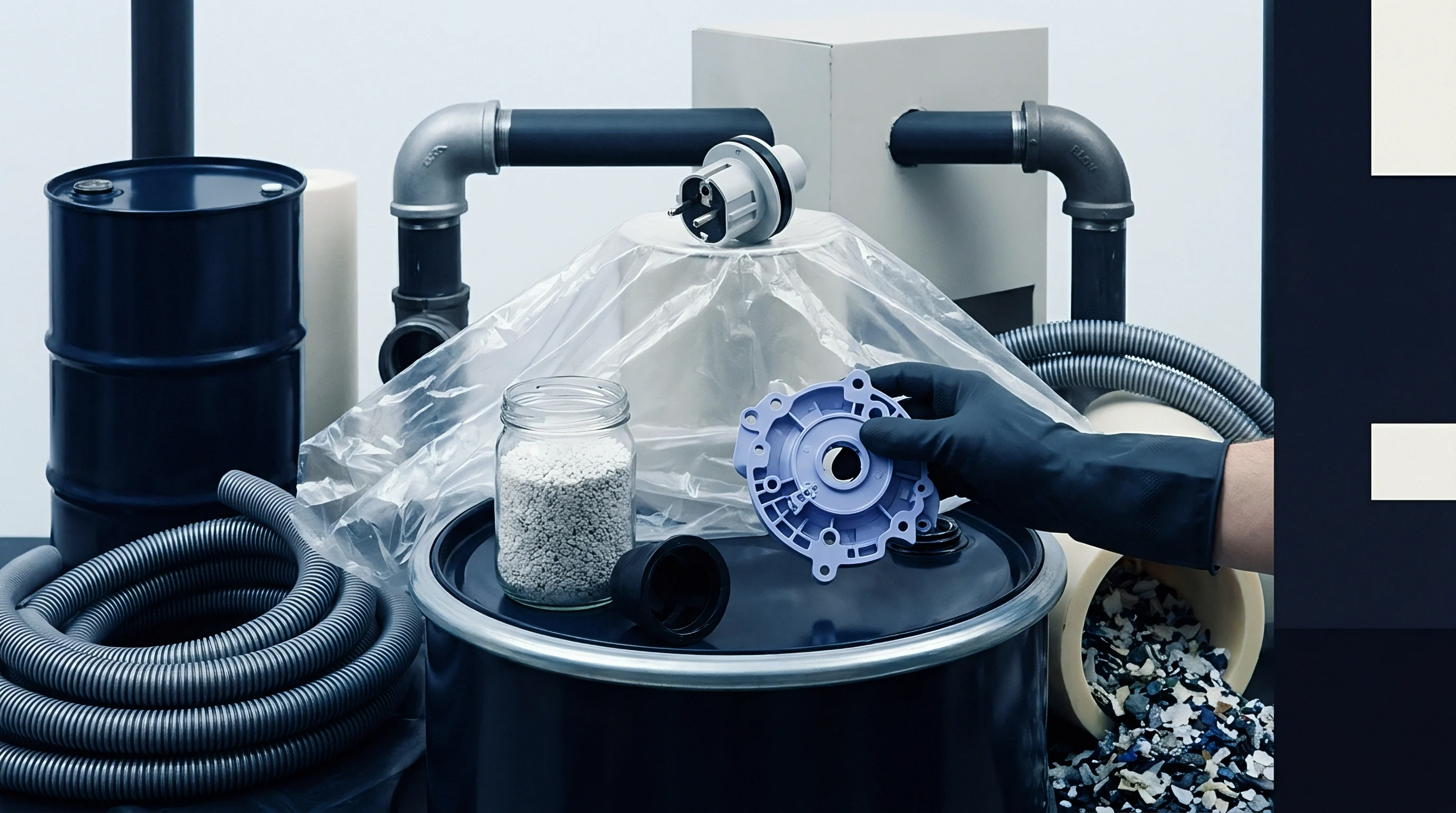
Which Solvent Exposes Post-Consumer Degradation Products?
The choice between isooctane and ninety-five percent ethanol dictates the profile of extracted non-intentionally added substances. Isooctane pulls out non-polar alkanes, olefin oligomers, and mineral oil fractions; saturated and aromatic mineral hydrocarbons from recycled board inks or industrial packaging partition heavily into it. Ninety-five percent ethanol, on the other hand, targets polar breakdown products, including oxidized oligomers, plasticizer remnants, and acidic fragments generated over repeated thermal processing cycles.
| Target Contaminant Class | Primary Chemical Source | Isooctane Extraction Efficiency | 95 Percent Ethanol Extraction Efficiency | Instrumental Analytical Method |
|---|---|---|---|---|
| Polyolefin oligomers (POSH) | Thermal degradation of PE/PP | High (90 to 100 percent) | Moderate (30 to 50 percent) | GC-FID with capillary column |
| Limiting volatile aromatics | Post-consumer consumer goods | High (85 to 98 percent) | High (80 to 95 percent) | Headspace GC-MS |
| Oxidized synthetic additives | Decomposed Irgafos 168 / Irganox 1010 | Moderate (40 to 60 percent) | High (90 to 100 percent) | LC-QTOF-MS |
| Mineral oil hydrocarbons (MOSH/MOAH) | Inks and industrial lubricants | High (95 to 100 percent) | Low (10 to 25 percent) | On-line HPLC-GC-FID |
Single-side articles must be tested in dedicated migration cells to isolate the food-contact surface from the exterior. In multilayer materials where a recycled polyolefin core sits behind a functional barrier, exposing cut outer edges to substitute solvents causes edge-wicking. Isooctane wicks through exposed edges up to ten times faster than real food, circumventing the barrier and yielding false positives for core contaminants.
Sealing edges with aluminium foil or mounting specimens in stainless steel migration cells ensures only the intended contact surface meets the solvent.
Single-side contact migration testing using cell exposure prevents edge-wicking solvent artifacts that bypass inner functional barriers in multilayer recycled structures.
Quantifying unknown post-consumer migrants requires internal standards that match the target chemical classes. Deuterated alkanes are used for mineral oil fractions in isooctane, while carbon-13 labelled plasticizers track polar recovery in ethanol. Analytical reports lacking documented internal standard recoveries in swollen polyolefin extracts risk formal rejection during compliance audits.
A substitute solvent that over-extracts matrix oligomers generates false non-compliance findings, blocking the commercial rollout of compliant recycled packaging lots.


Dossier
Documenting regulatory compliance for recycled polyolefin packaging intended for fatty food contact requires an exhaustive technical dossier. The Declaration of Conformity must clearly state the substitute simulants used, the contact times and temperatures applied, and the scientific justification for bypassing vegetable oil. Generic statements omitting specific test parameters do not withstand scrutiny during customs checks or food safety authority audits.
The importer or brand owner carries legal responsibility for demonstrating that laboratory substitute data reflects real service conditions.
A solid conformity file traces substitute test data directly back to individual resin lot numbers and decontamination batch records. Declarations relying on virgin polymer data or raw flake screening do not prove finished article compliance. The technical file couples mathematical migration modeling with physical substitute simulant test reports to verify that worst-case post-consumer migration stays within statutory limits throughout product shelf life.
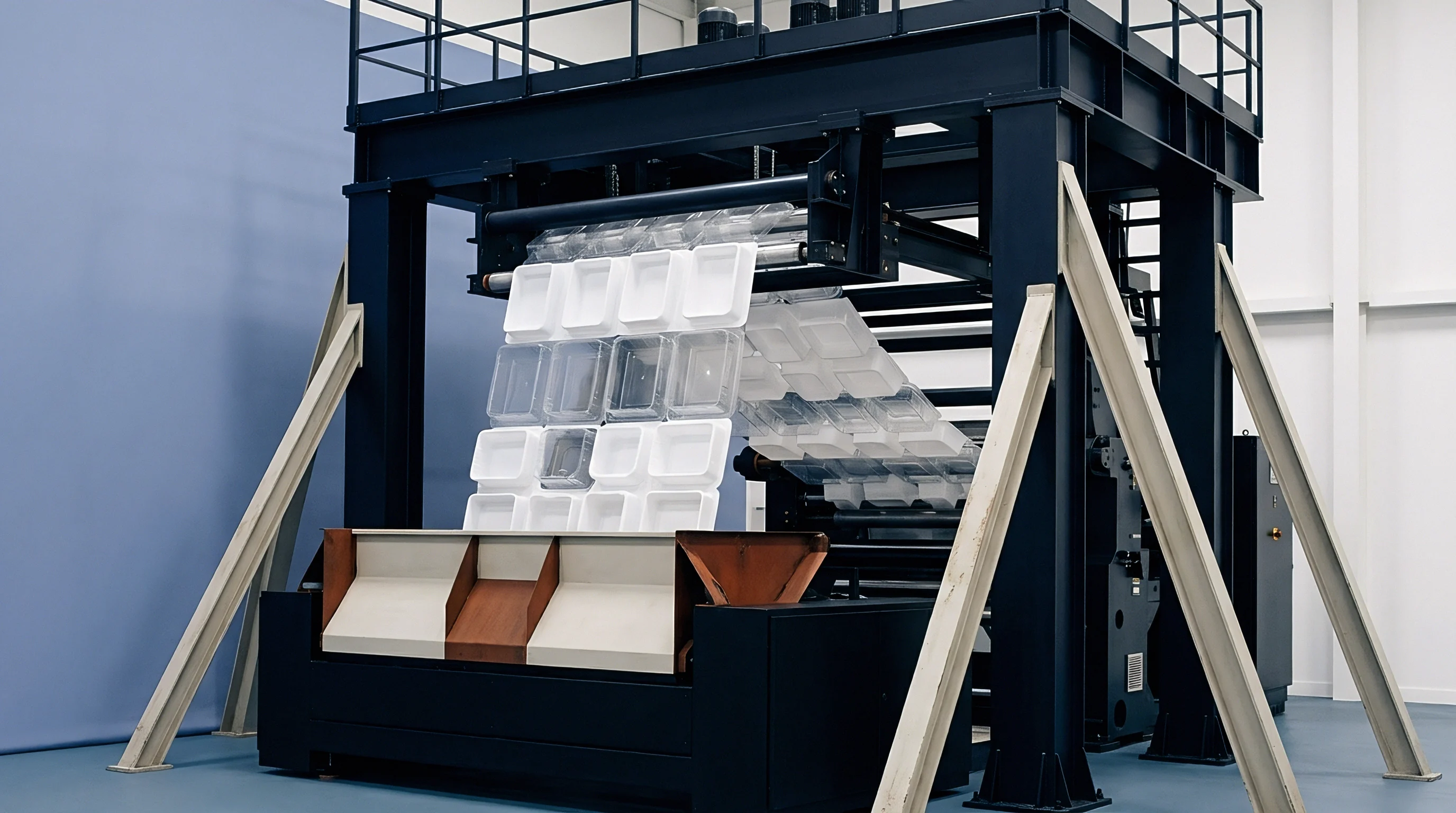
Required Technical File Components
A compliant technical file supporting fatty food contact for recycled polyolefin packaging must contain the following core evidence:
- Decontamination challenge test data proving the recycling technology reduces surrogate post-consumer contaminants below toxicological concern thresholds.
- Substitute simulant substitution justification detailing the technical grounds under EN 1186-1 for replacing vegetable oil with isooctane or ethanol.
- Analytical test reports from ISO 17025 accredited laboratories specifying contact surface-to-volume ratios, exposure durations, and solvent purity grades.
- Reduction factor calculations documenting the applied matrix-specific correction factors used to convert substitute extraction mass into equivalent olive oil migration figures.
- NIAS toxicological assessment evaluating unidentified chromatographic peaks exceeding zero point zero1 milligrams per kilogram using structural activity relationship software.
Testing must reflect worst-case exposure. Where a container holds multiple fatty food types, the technical file must draw on the substitute simulant that produces the highest overall extraction, or supply parallel datasets for both ninety-five percent ethanol and isooctane. Skipping dual-solvent testing on uncharacterized post-consumer streams leaves unassessed toxicological gaps in the declaration.
Substitute simulant migration values must be adjusted using legally recognized matrix reduction factors before claiming compliance against European specific migration limits.
Mathematical migration modeling using accepted diffusion algorithms, such as the Piringer model, supports laboratory substitute testing. The software calculates conservative migration values based on initial compound concentration in the plastic, migrant molecular weight, polymer density, and exposure temperature. When substitute simulant laboratory results conflict with modeled values, physical data from validated extractions takes precedence, provided matrix swelling effects are accounted for in the laboratory report.
Non-compliant substitute screening reports are frequently blamed on test conditions being overly harsh compared to real shelf life, but legally overruling the screening failure requires experimental olive oil verification data that is rarely supplied.

Cost
The choice of substitute simulant directly affects packaging qualification budgets and time-to-market. Standard ten-day vegetable oil migration testing via Simulant D2 costs considerably more per sample than solvent alternatives, driven by manual labor, complex chromatographic cleanups, and frequent re-tests caused by matrix interference. Direct substitute extractions with isooctane or ninety-five percent ethanol trim laboratory turnaround from four weeks down to five business days, speeding up batch release in continuous recycling facilities.
Financial risk climbs rapidly if non-compliant or improperly evaluated packaging reaches the market. Customs holds, recalls, and re-tooling costs easily eclipse testing savings. Choosing a substitute simulant that underestimates migration into fatty foods exposes brand owners to administrative fines, mandatory market withdrawals, and lasting commercial fallout.

Worked Financial Comparison of Testing Protocols
Consider a converter qualifying a 50-tonne production run of post-consumer recycled high-density polyethylene thermoformed trays for cold-cut meat packaging. The converter evaluates two verification paths to establish compliance for fatty food contact under Regulation EU 10/2011.
Path A utilizes standard Simulant D2 olive oil testing across five representative production samples. Laboratory testing charges run 1,800 euros per sample due to absorbed oil determination complexity, totaling 9,000 euros. The ten-day exposure plus extensive chromatographic cleanup requires 28 days total laboratory time.
Production lot storage charges during the testing hold cost 150 euros per day, adding 4,200 euros. Three samples return invalid chromatographic results due to oligomer co-elution, requiring re-testing of the lot under substitute media, adding an additional 3,500 euros in emergency lab fees. Total qualification cost reaches 16,700 euros with a 45-day delay to market.
Path B utilizes a dual substitute simulant protocol incorporating ninety-five percent ethanol and isooctane screening under EN 1186 conditions. Five samples subjected to dual-solvent exposure cost 750 euros per sample, totaling 3,750 euros. Analytical turnaround takes six business days.
Warehouse hold charges total 900 euros. The fast clearance allows immediate lot shipment. Total qualification cost lands at 4,650 euros with a seven-day lead time, yielding a net savings of 12,050 euros per production batch while establishing complete legal compliance.
To establish a reliable, low-risk substitute screening framework during supplier onboarding, procurement teams implement a structured sequential verification procedure:
- Request complete resin processing history and contamination screening records from the post-consumer polyolefin recycler prior to signing supply contracts.
- Commission single-side substitute simulant screening using ninety-five percent ethanol and isooctane on early trial moldings at an accredited third-party laboratory.
- Verify that the laboratory applies appropriate matrix reduction factors matching the intended food contact temperature profile.
- Audit the laboratory chromatographic traces to confirm all non-intentionally added substance peaks above zero point zero1 milligrams per kilogram carry toxicological clearance.
- Embed mandatory batch-level substitute simulant verification clauses into raw material purchasing specifications.
Supply contracts must spell out clear liability terms for matrix verification failures during substitute simulant testing. When a delivered recycled resin lot fails substitute migration limits due to unannounced feed changes, the resin supplier covers laboratory testing fees, batch disposal costs, and line downtime penalties.
Standard purchase agreements explicitly incorporate the clause that all recycled polyolefin resins supplied for food contact must demonstrate specific migration compliance in both ethanol and isooctane substitute simulants under EN 1186 conditions prior to invoice settlement.