Non Intentionally Added Substance Quantification Challenges in Recycled Polyolefin Packaging Supply Chains
Quantification of non-intentionally added substances in recycled polyolefins requires structural class calibration to overcome mass spectrometry response variances.


Pellet
Polyolefins recovered from post-consumer waste carry a wide variety of chemical residues picked up during original use, collection, sorting, and mechanical reclamation. High-density polyethylene and polypropylene absorb volatile organics, agrochemical residues, personal care ingredients, and industrial solvents over their packaging lifespans. These low-molecular-weight compounds migrate directly into the polymer’s amorphous phase and readily survive standard washing and melt extrusion.
Because polyolefins have higher diffusion rates and lower gas barrier properties than polyethylene terephthalate, non-intentionally added substances (NIAS) penetrate deep into the polymer matrix.
The thermal stress of mechanical recycling also produces new NIAS directly inside the extruder barrel. In polypropylene, thermal oxidation proceeds via free-radical chain scission at tertiary carbons, generating branched alkanes, alkenes, ketones, aldehydes, and cyclic alkanes. High-density polyethylene undergoes competing radical cross-linking and chain cleavage, yielding long-chain aliphatic aldehydes, alkyl-substituted furans, and carboxylic acids.
Hindered phenol antioxidants like Irganox 1010 and Irganox 1076 degrade under this thermo-mechanical load, breaking down into quinone methides, 2,6-di-tert-butylphenol, and partially oxidized fragments that stay trapped in the pellet matrix.
Sorbent polymers accumulate low-molecular-weight volatile contaminants through amorphous matrix absorption during post-consumer storage loops.
Sorting limitations routinely cause cross-contamination between food-contact and non-food packaging fractions. Automated near-infrared sorting systems cannot distinguish food-grade HDPE milk jugs from non-food detergent bottles blown from identical resin grades. As a result, non-food packaging introduces fragrance chemicals like limonene, linalool, alpha-pinene, and synthetic musks such as galaxolide, alongside plasticizer residues, flame retardants, and organophosphite breakdown products.
Hot washing with aqueous sodium hydroxide and surfactants fails to strip these contaminants from the flake.

Polyolefin Degradation and Oxidative Degradation Pathways
Extrusion temperatures above two hundred degrees Celsius accelerate polymer chain breakdown during compounding. Peroxide radical generation drives tertiary hydrogen abstraction, yielding hydroperoxides that decompose into alkoxy radicals. Subsequent cleavage of these alkoxy radicals causes chain scission, producing terminal alkenes and short-chain volatile organic compounds.
The resulting low-molecular-weight oligomer fraction ~ known as polyolefin oligomeric saturated hydrocarbons (POSH) ~ spans the molecular weight range from one hundred fifty to one thousand Daltons. Structurally similar to lipid chains, these oligomers migrate readily into fatty food contact matrices.
Sustained thermal exposure degrades secondary phosphite antioxidants like Irgafos 168. Oxidation converts tris(2,4-di-tert-butylphenyl)phosphite to its corresponding phosphate ester, which then hydrolyzes into 2,4-di-tert-butylphenol at rates dictated by ambient moisture levels in the flake hoppers. This byproduct is a persistent NIAS that migrates aggressively into alcohol and aqueous food simulants.
Downstream degradation also generates 1,3-di-tert-butylbenzene and tris(2,4-di-tert-butylphenyl)phosphate, both of which complicate chromatographic quantification during compliance screening.
Catalyst residues from primary polymerization promote degradation cascades during subsequent processing. Residual titanium, aluminum, and chromium compounds catalyze auto-oxidation at elevated melt temperatures, while equipment wear introduces trace transition metals that further shorten oxidation induction times. Recycled polypropylene samples frequently exhibit oxidation induction times below fifteen minutes at two hundred degrees Celsius, compared to ninety minutes for virgin prime resins.
This heightened instability continuously generates carbonyl compounds throughout downstream conversion.

Cross Contamination Sources in Post Consumer Scrap Loops
Post-consumer collection infrastructure exposes polyolefins to diverse non-polymeric chemical contaminants. Printing inks, adhesives, and label residues enter the recycling stream whenever separation stages fall short. Acrylate ester adhesives decompose during re-extrusion to yield acrylic acid, butyl acrylate, and volatile ester fragments.
Printing ink photoinitiators, including 2-isopropylthioxanthone and 4-methylbenzophenone, absorb into the flake matrix and easily survive washing due to favorable distribution coefficients between the aqueous wash bath and the polymer phase.
- Volatile Fragrance Compounds persist inside post-consumer polypropylene matrices after aqueous caustic washing, producing off-odors and elevated chromatogram baselines during headspace gas chromatography analysis.
- Oligomeric Oxidation Products arise from thermal backbone scission during secondary melt compounding, generating continuous homologous series of linear and branched alkanes across the ten to thirty carbon atom range.
- Antioxidant Transformation Products form through sacrificial scavenging of free radicals, creating oxidized quinones and phenolic breakdown products that migrate into fatty food simulants.
Converting solvents such as ethyl acetate, isopropyl alcohol, and methyl ethyl ketone cause local polymer swelling, opening micro-cavities within the amorphous phase and increasing mass transfer coefficients for low-molecular-weight contaminants. During subsequent storage, ambient chemicals diffuse deeper into the polymer walls. When recyclers process these mixed post-consumer lots, the deeply absorbed compounds bleed back out during migration testing, producing complex total ion chromatograms characterized by broad unresolved complex mixtures.
Secondary compounding lines sampled across twelve runs revealed persistent fragrance markers and antioxidant degradation products in every batch of post-consumer polypropylene recyclate. Processing parameters correlated directly with volatile removal: lowering vacuum degassing pressure from fifty millibars to five millibars reduced volatile aromatic hydrocarbon concentrations by forty-two percent. However, solvent retention remained high for compounds with molecular weights above two hundred Daltons, illustrating the thermodynamic mass-transfer limits of mechanical decontamination.
Secondary melt filtration combined with high-vacuum degassing reduces low-molecular-weight volatiles in post-consumer polyolefin pellets, but cannot reliably eliminate tightly bound matrix contaminants.


Ion
Quantifying non-intentionally added substances requires hyphenated mass spectrometry methods. Gas chromatography coupled with quadrupole time-of-flight mass spectrometry (GC-QTOF-MS) targets volatile and semi-volatile species up to five hundred Daltons, while liquid chromatography paired with high-resolution Orbitrap mass spectrometry identifies non-volatile compounds, polar degradants, and heavy oligomeric fractions up to one thousand two hundred Daltons. Sub-two-ppm mass accuracy on these high-resolution analyzers enables reliable molecular formula generation for unknown peaks.
Sample preparation procedures heavily influence non-target screening yields. Total immersion solvent extraction using dichloromethane or hexane swells the polyolefin matrix while extracting low-molecular-weight fractions. Complete dissolution followed by polymer precipitation with cold methanol isolates extractables while removing high-molecular-weight polymer chains that would foul chromatographic columns and ion sources.
Extraction temperature and duration determine whether these extractable species reach thermodynamic equilibrium between the resin and solvent phase.
Chromatographic baseline resolution remains difficult because polyolefin oligomeric saturated hydrocarbons elute as broad unresolved complex mixtures containing tens of thousands of overlapping branched alkane isomers. Matrix interference from these oligomers causes severe ionization suppression in electrospray ionization sources and electron impact mass spectrometry. Consequently, response factors for unknown peaks obscured by the oligomeric baseline cannot be assigned accurately without matrix-matched calibration standards.

Are Non Target Screening Limits Sufficient for Polyolefin Recyclates?
Screening protocols use surrogate standard calibration to assign estimated concentrations to non-targeted analytical peaks. Chemists select surrogate standards like deuterated naphthalene, octanoic acid-d15, and bis(2-ethylhexyl)phthalate-d4 to represent distinct chromatographic elution windows. Relative response factors between structural unknowns and surrogate standards vary by up to two orders of magnitude in electrospray ionization.
A compound with poor ionization efficiency produces a small chromatographic peak while present at elevated mass concentrations in the extract, creating false compliance determinations.
Electron ionization gas chromatography provides reproducible ionization efficiency across non-polar aliphatic species, keeping response factor variance lower than in liquid chromatography electrospray ionization. Molar response factors for linear alkanes remain consistent within fifteen percent across gas chromatography flame ionization detection runs. Gas chromatography with flame ionization detection yields more accurate semi-quantification for non-polar polyolefin oligomers than mass spectrometry detection.
Combining flame ionization detection quantification with quadrupole time-of-flight compound identification provides a reliable dual-detector workflow for volatile non-intentionally added substances.
| Analytical Platform | Target Compound Class | Mass Accuracy (ppm) | Relative Response Factor Variance Range | Limit of Detection in Polyolefin Matrix (mg/kg) |
|---|---|---|---|---|
| Headspace GC-MS | Volatile organic compounds, solvents | Unit Mass | 0.5 to 2.0 fold | 0.01 |
| GC-QTOF-MS | Semi-volatiles, additives, fragments | < 2.0 | 0.8 to 3.5 fold | 0.005 |
| LC-Orbitrap-MS (ESI+) | Polar additives, primary amines, photoinitiators | < 1.5 | 0.01 to 100 fold | 0.001 |
| LC-Orbitrap-MS (ESI-) | Phenolic antioxidants, acidic degradation products | < 1.5 | 0.02 to 50 fold | 0.001 |
Quantification limits for non-target screening are governed by background system noise and matrix blank cleanliness. A screening limit of ten parts per billion in the packaging material corresponds to an analytical detection limit of zero point zero one milligrams per kilogram. Achieving this sensitivity requires strict cleaning protocols for laboratory glassware, high-purity extraction solvents, and dedicated analytical equipment.
Blank contamination from laboratory plasticware, septa bleeding, and ambient air introduces phantom peaks that require rigorous subtraction routines during data processing.

Relative Response Factor Variances in Unknown Identification
Liquid chromatography electrospray ionization response factors depend heavily on molecular structure, functional groups, gas-phase basicity, and molecular size. Highly polar nitrogenous compounds ionize efficiently in positive mode electrospray, yielding intense signals at trace concentrations. Saturated aliphatic hydrocarbons and ester compounds show poor ionization efficiency, producing weak signals even at high mass concentrations.
Applying a single surrogate standard response factor across a complex liquid chromatography chromatogram introduces quantification errors exceeding one thousand percent for poorly ionizing non-intentionally added substances.
To mitigate response factor uncertainty, laboratories implement response factor grouping strategies. Compounds are categorized into structural classes based on high-resolution mass spectrometry fragmentation patterns and spectral database matching. Assigned structural classes use matched reference standards for calibration.
Phenolic transformation products are calibrated against oxidized BHT derivatives, while phthalate alternative plasticizers are quantified using ester-specific calibration sets. This structural class matching reduces semi-quantification variance from two orders of magnitude down to within thirty percent of true concentration values.
Data processing software utilizes automated peak-picking algorithms, spectral deconvolution, and library searching against NIST, Wiley, and METLIN databases. Unresolved complex mixtures obscure low-intensity peaks, causing peak deconvolution algorithms to miss hazardous compounds hidden beneath oligomeric baselines. High-resolution mass spectrometers must maintain mass resolution above thirty thousand at mass-to-charge ratio two hundred to separate polyolefin oligomer fragment ions from oxygenated degradation products with identical nominal masses.
Relative response factors in electrospray ionization vary by two orders of magnitude across structural compound classes, making single-surrogate semi-quantification unreliable for toxicological evaluation.
High-resolution mass spectrometry data evaluation requires significant manual curation by experienced analytical chemists. Automated identification software produces false positive compound identifications when matching experimental spectra against standard spectral libraries. Molecular structures generated through automated formula assignment must be verified using isotopic pattern fitting, nitrogen rule checks, and fragmentation pathway analysis.
Synthetic standard acquisition and retention time matching remain mandatory to convert tentative non-target identifications into confirmed structural assignments.
Evaluating response factor variations across twenty structural reference compounds in a recycled high-density polyethylene matrix extract showed significant ionization suppression. Co-eluting polyolefin oligomers reduced peak areas for polar analytes by up to sixty-eight percent during liquid chromatography electrospray analysis. Gas chromatography with flame ionization detection demonstrated signal response stability within nine percent across aliphatic analytes, proving its utility for accurate total mass balance calculations in polyolefin compliance files.
Reliably quantifying unidentified non-intentionally added substances below ten parts per billion requires an analytical workflow capable of managing response factors that vary across three orders of magnitude.


Vapor
Migration testing measures the mass transfer of non-intentionally added substances from polyolefin packaging materials into contact media. Commission Regulation EU 10/2011 specifies official food simulants and exposure conditions for testing compliance. Ten percent ethanol represents hydrophilic foods, three percent acetic acid models acidic media, twenty percent ethanol simulates alcoholic beverages, and vegetable oil acts as the fatty food simulant.
Polyolefins present testing challenges when evaluated against fatty food simulants like vegetable oil due to solvent absorption and matrix swelling.
Alternative fatty food simulants, including ninety-five percent ethanol and isooctane, replace vegetable oil in routine laboratory testing. Polyolefins absorb significant quantities of isooctane and concentrated ethanol at elevated temperatures. Isooctane absorption causes extensive swelling of the polyolefin crystalline lattice, altering internal chain mobility and accelerating contaminant diffusion rates.
Test conditions using substitute simulants must account for solvent-induced matrix modification to avoid overestimating migration under actual use conditions.
Tenax, chemically known as poly(2,6-diphenyl-p-phenylene oxide), serves as the official simulant for dry food applications. Tenax acts as a solid sorbent, capturing volatile and semi-volatile substances migrating from the packaging polymer surface. Mass transfer into Tenax occurs through gas-phase evaporation followed by sorbent adsorption.
Testing at elevated temperatures like sixty degrees Celsius for ten days can induce artificial thermal degradation in recycled polyolefins, generating continuous streams of fresh volatile aldehyde non-intentionally added substances that do not form under ambient storage conditions.

Matrix Swelling Dynamics under Volatile Solvents
Solvent uptake into high-density polyethylene and polypropylene follows Fickian diffusion behavior during early contact stages, transitioning to non-Fickian Case II transport as swelling progresses. Isooctane exposure at sixty degrees Celsius increases polyolefin matrix free volume, elevating migrant diffusion coefficients (DP) by up to three orders of magnitude compared to real food contact matrices. Test protocols must cap contact duration to prevent total structural disintegration of light-gauge recycled polyolefin films during immersion testing.
| Migrant Chemical Structure | Polymer Matrix | Simulant Exposure Condition | Calculated Partition Coefficient (KP,F) | Experimental Migration Concentration (μg/dm2) |
|---|---|---|---|---|
| 2,4-Di-tert-butylphenol | Recycled HDPE | 95% Ethanol, 10d at 40 °C | 120 | 4.2 |
| Limonene | Recycled PP | Tenax, 10d at 60 °C | 15 | 18.5 |
| Irgafos 168 Oxide | Recycled HDPE | Isooctane, 2d at 20 °C | 1450 | 0.8 |
| Benzophenone | Recycled PP | 10% Ethanol, 10d at 40 °C | 310 | 1.1 |
Partition coefficients (KP,F) govern the equilibrium distribution of non-intentionally added substances between the polymer phase and the contacting food simulant. Low partition coefficients indicate high thermodynamic favorability for migration into the contacting medium. Non-polar substances like alkanes and alkylbenzenes display low partition coefficients in fatty food simulants, driving complete extraction from thin packaging films.
Polar non-intentionally added substances display higher partition coefficients in polyolefin matrices, reducing their migration tendency into aqueous food simulants.

Diffusional Modeling Limitations for Cyclic Oligomers
Mathematical migration models based on Fick’s second law use conservative estimation parameters to predict migrant transfer rates into food. The US FDA and European Commission accept diffusional modeling using validated polymer-specific parameters (AP ) to demonstrate compliance. Standard diffusion models work well for linear alkanes and mono-substituted benzene derivatives with known molecular weights.
These models frequently fail for cyclic polyolefin oligomers and complex branched oxidation products due to inaccurate molecular volume calculations.
Piringer diffusion models rely on migrant molecular weight as the primary variable determining diffusional transport speed through the polymer matrix. Cyclic polyolefin oligomers possess compact three-dimensional spatial structures compared to linear alkanes of identical molecular weight. Compact cyclic structures diffuse through polyolefin amorphous regions significantly faster than predicted by standard Piringer equations.
Using default AP values for polypropylene oligomers underestimates actual migration concentrations by factors ranging from two to five.
Standard diffusional migration models using molecular weight variables underestimate cyclic polyolefin oligomer mass transfer due to compact molecular volume configuration.
Diffusion modeling requires precise knowledge of initial contaminant concentrations (CP,0) inside the polymer matrix. Determining initial concentrations of unidentified non-intentionally added substances requires exhaustive solvent extraction of the recycled pellet or film. Incomplete extraction leads to low CP,0 values, producing non-conservative migration predictions that underestimate exposure risks.
Analytical laboratories must validate total extraction yields using exhaustive micro-scale solvent extraction prior to running diffusion simulations.
Validation testing using ninety-five percent ethanol for ten days at forty degrees Celsius yielded total specific migration concentrations of two point three milligrams per kilogram for cyclic polypropylene oligomers from a batch previously modeled as compliant for fatty food contact. The mathematical diffusion model had predicted a migration yield of zero point four milligrams per kilogram. This discrepancy stemmed from solvent-induced polymer matrix swelling and underestimation of cyclic oligomer diffusion coefficients.
The supply agreement mandates that substitute fatty simulant testing shall be conducted exclusively using tenax sorbent media at temperatures not exceeding forty degrees Celsius for high-density polyethylene packaging files.

Mesh
Super-clean recycling processes remove volatile and semi-volatile contaminants from post-consumer polyolefin flakes to produce food-contact grade resins. Decontamination efficiency (Edecon) measures the percentage reduction of specific surrogate contaminants achieved by the recycling process. Process validation requires physical challenge tests using flakes artificially contaminated with high concentrations of model chemical surrogates.
Surrogates represent distinct chemical classes, molecular weights, polarities, and volatility ranges.
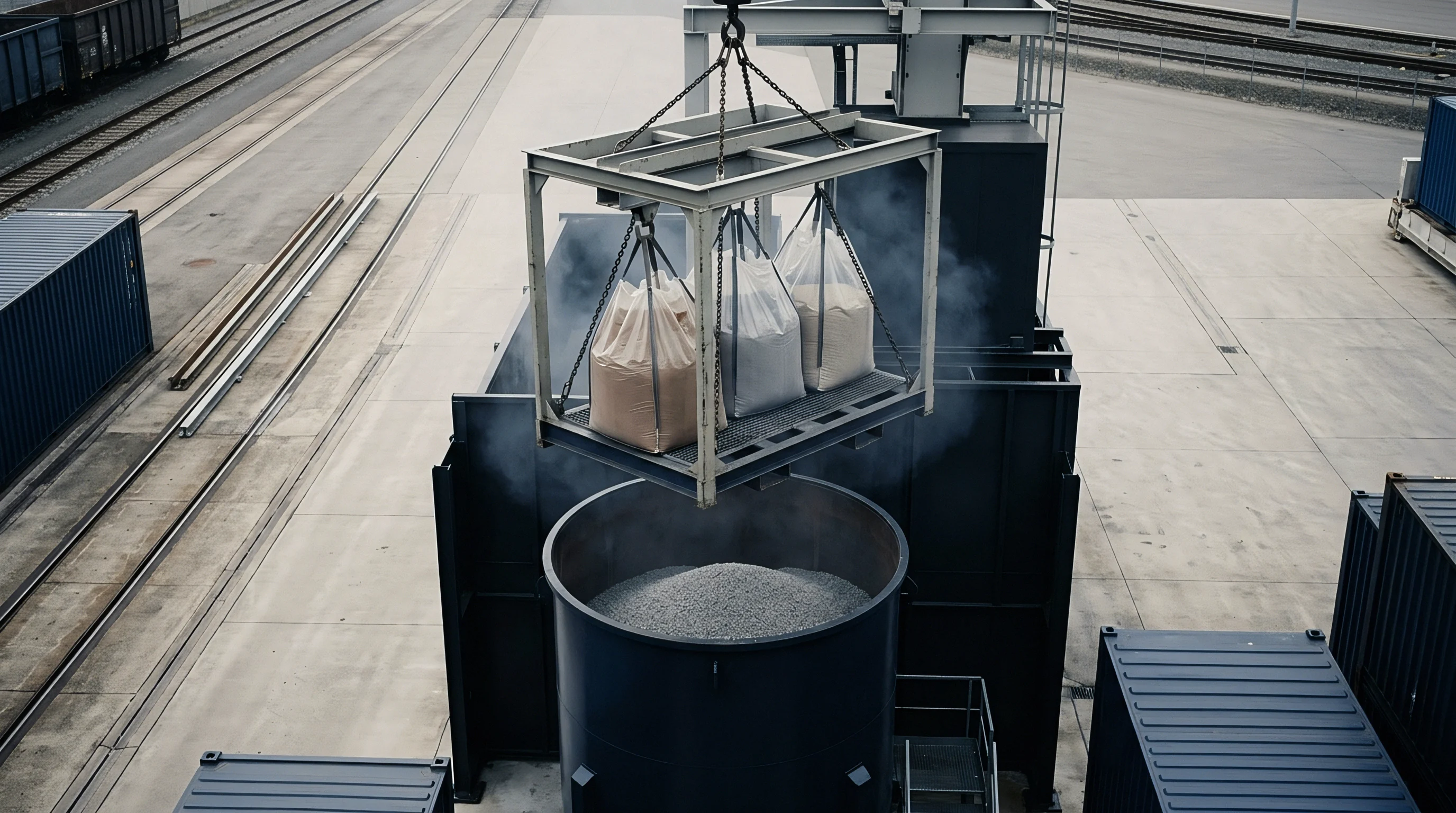
Challenge test surrogate sets include volatile non-polar compounds like toluene, volatile polar compounds like chlorobenzene, semi-volatile non-polar compounds like phenylcyclohexane, semi-volatile polar compounds like benzophenone, and non-volatile high-molecular-weight species like methyl stearate. Polyolefin flakes are exposed to surrogate mixtures until saturated, achieving initial concentrations between one hundred and one thousand milligrams per kilogram per surrogate. Saturated flakes pass through the industrial decontamination process under standard operational parameters.
Mechanical decontamination technologies for polyolefins rely on thermal vacuum stripping, hot gas purging, and solid-state polymerization reactors. Vacuum degassing units operating at temperatures between one hundred sixty and two hundred degrees Celsius under deep vacuum remove low-molecular-weight surrogates effectively. High-molecular-weight surrogates like methyl stearate and benzophenone resist vacuum stripping due to low vapor pressures and slow diffusion rates within high-density polyethylene crystallites.
Achieving decontamination efficiencies above ninety-nine percent for semi-volatile surrogates requires extended residence times at elevated process temperatures.
Challenge Test Protocol Execution for Super Clean Approval
Super-clean process validation protocols follow guidelines established by the European Food Safety Authority and the US Food and Drug Administration. Process validation requires precise determination of residual surrogate concentrations before and after decontamination processing. Analytical evaluation uses exhaustive extraction followed by gas chromatography with flame ionization detection or mass spectrometry.
Decontamination efficiency calculations account for losses occurring during secondary extrusion steps.
- Surrogate saturation involves immersing post-consumer polyolefin flakes in an organic solvent bath containing target model contaminants for fourteen days at forty degrees Celsius to achieve deep matrix absorption.
- Initial concentration quantification requires exhaustive extraction of saturated flakes using boiling dichloromethane followed by chromatographic analysis to establish baseline contaminant loadings.
- Industrial decontamination trial execution processes contaminated flake lots through commercial vacuum stripping extruders at maximum throughput speeds and minimum allowable residence times.
- Residual surrogate measurement extracts decontaminated output pellets to calculate decontamination efficiency percentages across each individual model contaminant class.
Decontamination efficiency depends directly on polymer crystallinity and flake thickness. High-density polyethylene possesses crystallinity levels between sixty and eighty percent, restricting contaminant absorption and migration to the amorphous regions. Polypropylene exhibits lower crystallinity, allowing deeper penetration of semi-volatile contaminants into the matrix.
Thicker flake fractions recovered from heavy-wall injection-molded containers require longer residence times during thermal degassing to achieve decontamination efficiencies equivalent to thin-walled packaging films.

Thermal Degradation Products Generated during Re Extrusion
Decontamination processing removes incoming post-consumer contaminants but introduces fresh secondary degradation products. Extended exposure to temperatures above two hundred degrees Celsius inside vacuum extruders induces hydroperoxide decomposition in recycled polyolefins. This thermal exposure triggers polymer chain cleavage, generating fresh volatile organic compounds, methyl ketones, and long-chain alkenes.
High vacuum levels strip low-boiling degradation products while leaving medium-chain thermal breakdown products inside the melt stream.
Re-extrusion of recycled polypropylene generates continuous series of unsaturated oligomeric hydro-carbons. Thermal scission at tertiary carbon sites produces alpha-olefins and internal alkenes spanning twelve to thirty-six carbon atoms. These thermo-mechanically generated oligomers were absent in the incoming flake feedstock.
High-shear zones within single and twin-screw extruders break down melt-stabilizer packages, rendering the finished resin vulnerable to rapid oxidative degradation during downstream converting operations.
Vacuum degassing efficiency declines when processing high-moisture polyolefin flakes. Moisture present in the melt stream vaporizes rapidly, causing pressure spikes inside degassing domes that interrupt deep vacuum performance. Water vapor reacts with hydrolytically unstable processing aids, generating volatile carboxylic acids and short-chain alcohol fragments.
Flake drying systems must reduce moisture content below two hundred parts per million prior to extrusion to maintain constant degassing efficiency.
Thermal decontamination processes operating at high temperatures remove incoming low-molecular-weight volatiles while generating fresh polymer degradation oligomers through mechanical chain scission.
Process qualification trials on a commercial high-density polyethylene super-clean recycling line demonstrated greater than ninety-nine point five percent decontamination efficiency for volatile surrogates like toluene and chlorobenzene. Semi-volatile benzophenone retention remained high, showing only seventy-eight percent removal efficiency under standard extrusion throughput rates. Achieving acceptable decontamination for semi-volatile species required reducing extruder throughput by thirty-five percent and raising barrel temperatures to two hundred twenty degrees Celsius, which increased polymer oxidation markers.
When degassing melt temperature rises, volatile contaminant removal increases while polymer chain scission rates double.


Hazard
Toxicological hazard evaluation converts non-intentionally added substance quantification data into consumer exposure risk determinations. The European Food Safety Authority requires safety evaluations for all migrating substances detected above specific analytical thresholds. When analytical chemistry identifies a migrant’s exact chemical structure, toxicologists reference public toxicological databases, REACH registration dossiers, and published feeding studies to establish tolerable daily intake levels or specific migration limits.
Unidentified non-intentionally added substances present severe compliance challenges because specific toxicological data cannot be retrieved without structural identification. Industry compliance frameworks utilize the Threshold of Toxicological Concern approach to evaluate safety for non-targeted analytical peaks. The Threshold of Toxicological Concern assigns safe human exposure thresholds based on chemical structure, functional group analysis, and toxicological potency distributions from historical animal testing data.
Cramer structural classification categorizes chemical structures into three broad hazard classes based on molecular features and metabolic fate predictions. Cramer Class I covers simple structures with low oral toxicity, assigning a human exposure threshold of eighteen hundred micrograms per person per day. Cramer Class II represents moderate toxicity structures, carrying a threshold of five hundred forty micrograms per day.
Cramer Class III contains complex structures, aromatic systems, and functional groups suggesting higher toxicity, assigning a threshold of ninety micrograms per person per day.
Threshold of Toxicological Concern Allocation for Structural Unknowns
Applying Cramer classification to non-targeted analytical peaks requires structural assignment derived from high-resolution mass spectrometry fragmentation spectra. Unidentified chromatographic peaks that cannot be assigned to a Cramer class must default to the lowest Threshold of Toxicological Concern threshold. The structural default threshold for unknown migrants lacking genotoxicity alerts is set at ninety micrograms per person per day, corresponding to a migration concentration of fifteen parts per billion in food based on standard daily consumption assumptions.
| TTC Assessment Category | Structural Characteristics and Exclusions | Human Exposure Threshold (μg/person/day) | Packaging Migration Limit (10 kg food/day standard) (μg/kg or ppb) |
|---|---|---|---|
| Genotoxicity Alert Limit | Aromatic amines, N-nitroso compounds, alkyl azoxy structures | 0.15 | 0.010 |
| Cramer Class III | Complex structures, aromatic systems, functionalized heterocycles | 90 | 15.0 |
| Cramer Class II | Unsubstituted aromatics, simple ketones, ester derivatives | 540 | 90.0 |
| Cramer Class I | Linear alkanes, simple aliphatic alcohols, monocarboxylic acids | 1800 | 300.0 |
Potential genotoxic carcinogens require much lower safety thresholds than non-genotoxic substances. Any non-intentionally added substance containing structural alerts for genotoxicity, such as aromatic amines, structural epoxides, or hydrazine derivatives, falls under the threshold of toxicological concern for genotoxic impurities. This threshold sets human exposure limits at zero point one five micrograms per person per day, translating to an analytical migration limit of zero point zero one parts per billion in food contact media.

Toxicological Profiling Gaps for Saturated Polyolefin Oligomers
Polyolefin oligomeric saturated hydrocarbons present unique toxicological hazard characterization problems. These fractions consist of complex structural isomer mixtures containing saturated linear, branched, and cyclic alkanes across carbon number ranges from ten to fifty. Toxicological studies show that low-molecular-weight alkanes between carbon numbers ten and twenty accumulate in human liver and mesenteric lymph node tissues, causing microgranuloma formation in laboratory animal models.
- Structural Identification Deficits impede toxicological assignment because current chromatographic separation methods cannot resolve individual oligomeric isomers within broad polyolefin hydrocarbon humps.
- Bioaccumulation Data Gaps persist regarding the tissue retention kinetics of highly branched cyclic polyolefin oligomers compared to linear alkane reference structures.
- In Vitro Assay Interferences occur when testing hydrophobic oligomeric extracts in aqueous cell culture media, leading to false negative genotoxicity screening results due to low migrant solubility.
- Synergistic Toxicity Uncertainties complicate risk assessments when consumers face simultaneous exposure to complex mixtures of polyolefin oligomers and oxidized additive transformation products.
European regulatory bodies evaluate polyolefin oligomeric saturated hydrocarbons separately from mineral oil hydrocarbons. While mineral oil hydrocarbons contain aromatic fractions (MOAH) associated with genotoxic carcinogenicity, polyolefin oligomers consist entirely of saturated hydrocarbons (POSH). The absence of aromatic rings removes direct genotoxicity concerns, but safety thresholds remain conservative due to chronic liver accumulation data.
European authorities suggest a temporary specific migration limit of zero point five milligrams per kilogram of food for the combined accumulation of polyolefin oligomers.
Genotoxicity structural alerts mandate an analytical screening threshold of zero point zero one parts per billion for unidentified non-intentionally added substances in food contact compliance testing.
Toxicological risk assessment reports must integrate analytical uncertainty factors into human exposure calculations. When analytical screening relies on surrogate standards with variable response factors, toxicologists apply an uncertainty factor of ten to total semi-quantified concentrations. This conservative uncertainty factor prevents underestimating human dietary exposure but frequently causes recycled polyolefin batches to exceed regulatory compliance thresholds during non-target mass spectrometry evaluation.
A toxicological evaluation dossier covering a recycled polypropylene cosmetic container lining addressed twenty-four structural unknowns eluting within the oligomeric baseline hump, identified by mass spectrometry. Applying high-resolution fragmentation analysis and quantitative structure-activity relationship (QSAR) toxicological modeling established the absence of genotoxic structural alerts across all twenty-four peaks. This structural proof permitted application of the Cramer Class III threshold of ninety micrograms per day, passing safety compliance review without conducting costly rodent toxicity bioassays.
The standard compliance clause mandates that any unidentified chromatographic peak exceeding an equivalent migration concentration of zero point zero one milligrams per kilogram shall require full toxicological clearance or structural identification.

Audit
Declarations of Compliance (DoC) document regulatory conformity across plastic packaging supply chains. European regulation EU 10/2011 mandates that business operators issue formal declarations at every manufacturing stage, tracing materials from chemical suppliers through recyclers and converters to final packaging distributors. A legally compliant Declaration of Compliance must specify material identity, manufacturing date, confirmation of good manufacturing practice compliance under Regulation EC 2023/2006, and clear usage limits regarding food types, contact times, and storage temperatures.
Recycled polyolefin supply chains introduce documentation gaps that weaken Declaration of Compliance validity. Standard declarations generated by resin converters frequently rely on generic compliance statements copied from virgin polymer datasheets. These generic documents omit specific analytical testing data for non-intentionally added substances, fail to disclose challenge test validation results for super-clean processes, and lack batch-specific traceability links connecting finished resin lots to raw post-consumer scrap inputs.
A supporting compliance dossier must stand behind every issued Declaration of Compliance. European food contact regulations require business operators to maintain supporting dossiers containing raw analytical migration test reports, non-target mass spectrometry screening data, toxicological hazard evaluations, and mathematical diffusion calculations. Regulatory authorities inspect these supporting dossiers during compliance audits or when border rejection notifications trigger supply chain investigations.

Supporting Dossier Structure for Traceability Verification
Building a robust supporting dossier for recycled polyolefin packaging requires detailed documentation from every supply chain participant. Recyclers must supply verification files showing input scrap source control, hot wash cleaning parameters, extrusion degassing records, and challenge test accreditation certificates. Converters add migration test reports for finished converted articles, masterbatch clearance documentation, and residual solvent analysis for printed packaging surfaces.
- Batch Traceability Records link specific output resin pellet lot codes directly to incoming post-consumer scrap sorting logs and secondary extrusion processing run reports.
- Analytical Verification Dossiers consolidate target chemical screening, non-target mass spectrometry chromatograms, and calculated total specific migration results for every production batch.
- Operational Boundary Limits define clear temperature, contact duration, and food simulant restrictions within which the finished recycled package maintains regulatory compliance.
Audit failures occur when supply chain declarations contain mismatched batch numbers or outdated analytical test reports. Testing reports must represent the specific polymer formulation, recycled content percentage, and converter processing conditions used for the commercial lot delivered to the buyer. Substituting test reports generated from virgin resins or different recycled content blends constitutes a compliance violation under European food contact enforcement frameworks.

Contractual Liability Allocation across Recyclate Supply Chains
Commercial contracts between packaging converters, recyclers, and brand owners must explicitly allocate financial and legal liabilities associated with non-intentionally added substance compliance failures. Standard purchase order terms claiming general compliance with food contact laws provide inadequate protection when custom authorities hold shipments at entry ports due to unauthorized chemical migration. Supply agreements require detailed technical specifications defining maximum allowable volatile organic compound levels, non-target screening thresholds, and batch sampling frequency schedules.
| Supply Chain Node | Mandatory Compliance Document | Core Verification Data Included | Primary Risk of Compliance Audit Failure |
|---|---|---|---|
| Scrap Collector / MRF | Input Feedstock Certificate | Origin percentage, food vs non-food ratio | Undisclosed non-food industrial scrap inclusion |
| Recycler / Decontaminator | Super-Clean Process DoC | Challenge test validation data, Edecon values | Degassing failure, persistent semi-volatiles |
| Compounder / Converter | Finished Article DoC | Specific migration results, usage constraints | Unmodeled thermal oxidation NIAS generation |
| Brand Owner / Importer | Final Compliance Dossier | Full supply chain DoC traceability chain | Incomplete dossier, mismatched batch codes |
Contracts specify indemnification frameworks covering financial losses resulting from regulatory enforcement actions, product recalls, packaging redesigns, and inventory write-offs. When custom authorities identify migrating non-intentionally added substances exceeding regulatory limits, financial losses include customs storage fees, destruction charges, and commercial production line downtime. Recycled polyolefin resin suppliers frequently resist assuming full indemnification liabilities, citing unpredictable feedstock variations in municipal waste collection systems.
Independent third-party laboratory verification acts as a necessary risk mitigation mechanism for packaging buyers. Buyers establish lot acceptance protocols requiring independent gas chromatography mass spectrometry non-target screening for every incoming resin shipment prior to production conversion. Resin lots that exceed agreed non-target peak area baselines undergo automated quarantine, preventing contaminated resins from entering commercial converted packaging inventories.
An audit of ninety-two packaging compliance files for a multinational food distributor acquiring recycled polypropylene container lines found that only fourteen percent of presented Declarations of Compliance contained complete supporting analytical dossiers covering non-intentionally added substance quantification for the delivered batch. The remaining files relied on generic supplier declarations or outdated test reports generated three to five years prior using different recycling extrusion equipment. Instituting mandatory batch testing clauses and clear documentation assembly protocols ensured that all imported recycled packaging lots held legally defensible compliance files prior to market release.
Verification files that pass rigorous regulatory scrutiny combine batch-specific non-target screening chromatograms, verified challenge test decontamination efficiency metrics, and clear usage constraint parameters signed by accountable technical directors.