Meaning
Challenge test validation is the systematic procedure that verifies whether a polymer compound maintains structural integrity and barrier performance when exposed to aggressive chemical media under elevated stress. This quality assurance mechanism governs the selection of virgin resins against aggressive permeants by testing manufactured parts for degradation limits. The protocol applies strictly to closed loop production environments where regrind ratios vary, and stops governing once the moulded item leaves chemical exposure service.
Protocol Parameters
Establishing this testing benchmark requires technicians to fix the clamp tonnage and melt temperature during the initial injection moulding cycle. Processors load post industrial regrind into the hopper at predetermined percentages while monitoring screw recovery time to detect viscosity shifts. Thermal degradation appears when barrels overheat, causing molecular weight drops that destroy the impact strength of thin walled containers.
Material specifications dictate the absolute molecular weight distribution of virgin pellets before compounding begins, while part specifications define the allowable wall thickness reduction under chemical load. Moulders often record datasheet values that laboratory instruments produce under ideal conditions, but production floors must hold tighter tolerances across extended shifts to prevent premature stress cracking.
Regrind Economics
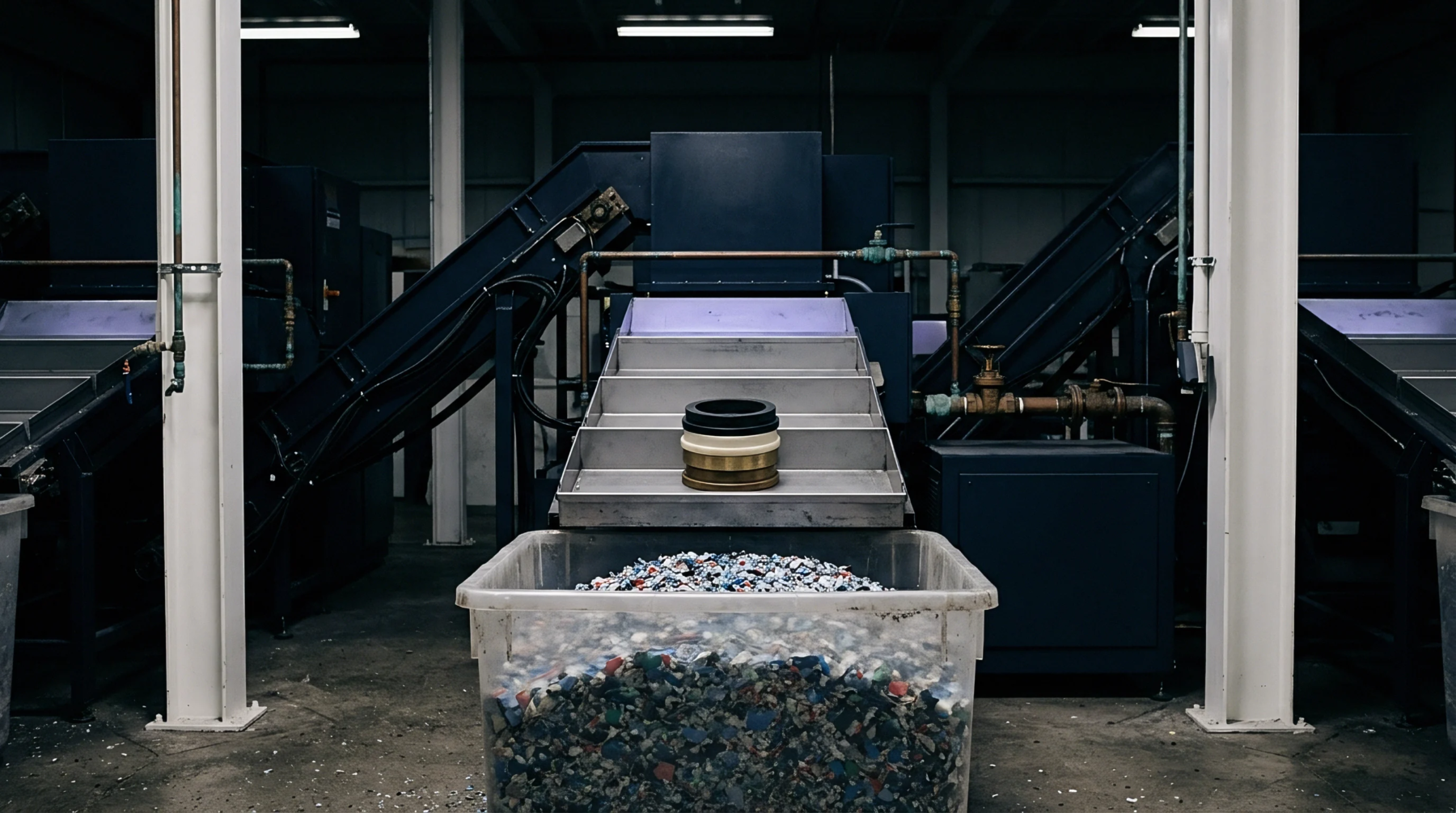
Economic pressures drive facilities to blend recycled polymers into structural mouldings without sacrificing chemical resistance. Recycled polymer streams introduce volatile contaminants that alter crystallization rates during the cooling phase inside the cavity. Operators adjust injection speed to compensate for variable melt flow indexes caused by thermal history in previous life cycles.
Virgin resin pricing fluctuates alongside crude oil markets, forcing manufacturers to maximize regrind usage until mechanical properties drop below regulatory thresholds. Part rejection rates climb when moisture content inside recycled feedstock exceeds strict drying limits, leading to surface bubbling and voids.
Failure Analysis
Analytical methods reveal microscopic crazing along weld lines where polymer chains fail to entangle properly during injection. Technicians inspect fracture surfaces using scanning electron microscopy to differentiate between ductile tearing and brittle chemical attack. Cooling channel efficiency determines how uniformly crystals form throughout thick sections, directly influencing residual stress distribution.
Improper packing pressure creates localized density variations that accelerate chemical permeation through the finished barrier layer. Quality controllers reject entire moulding batches when molecular chains sever prematurely under standard environmental stress crack resistance evaluations.