Meaning
Dimensionless ratios comparing material stress relaxation time to characteristic experimental time frames indicate liquid or solid viscoelastic response in flowing fluids. Calculating the deborah number helps polymer rheologists predict whether a polymer melt will flow smoothly or fracture under rapid deformation. Tooling engineers monitor this parameter when designing high-speed injection gates or film extrusion dies.
The concept loses relevance in static melt conditions where shear rate drops to zero.
Stress Relaxation
Polymer chains require finite temporal intervals to disentangle and align when subjected to mechanical deformation. High values of the deborah number reflect dominant elastic responses where polymer chains behave like solid networks. Lower values indicate viscous flow dominated by chain entanglement slippage.
Rapid cavity filling increases elastic stress accumulation in thin-walled technical mouldings.
Processing Instability
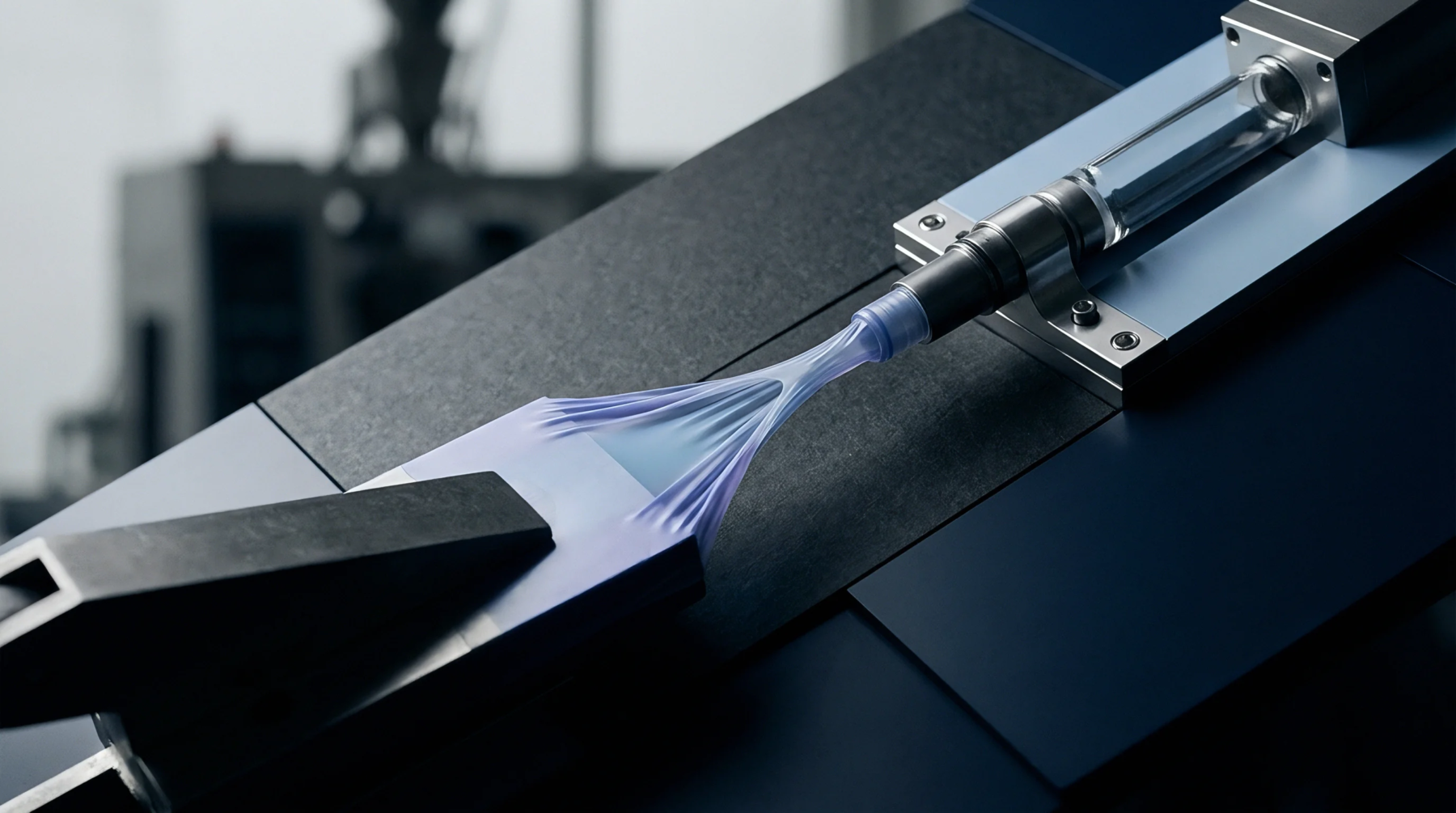
Flow anomalies emerge when material response times exceed die residence time. Extreme values of the deborah number trigger melt fracture, surface sharkskin defect formation and severe extrudate swell at die exits. Lowering extrusion speed reduces processing instability by granting polymer molecules sufficient time to reorient.
Material suppliers modify molecular weight distribution to shift relaxation responses into manageable operating windows.
Extrusion Boundary
Processing stability breaks down. High shear forces at land die exits generate localized elastic stress buildup. Operating beyond a critical deborah number distorts extruded profile dimensions permanently.