Thermal Oxidation Stabilizer Masterbatch Letdown Ratios for Post Consumer Polyethylene
Optimal thermal oxidation stabilizer letdown ratios for post-consumer polyethylene balance melt shear degradation with active antioxidant dosing to minimize landed part cost.
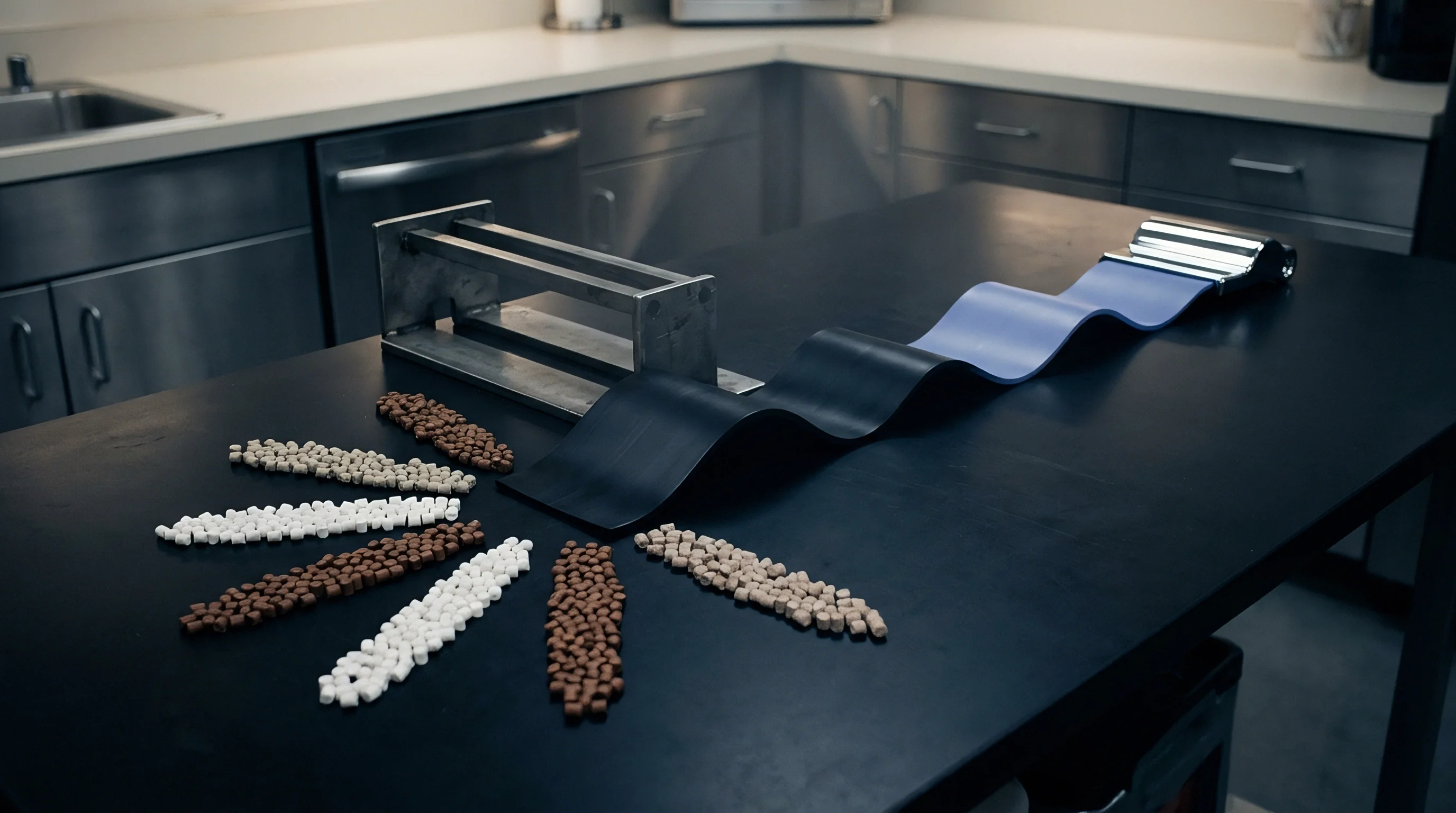

Chemistry
Post-consumer polyethylene flake with unknown processing histories undergoes rapid auto-oxidation at compounding temperatures above 190 °C. Shear strain inside the extruder barrel snaps carbon-carbon bonds along the polymer backbone, generating alkyl radicals (Rbullet). In an unstabilized melt, these carbon-centered radicals react with trapped atmospheric oxygen at diffusion-controlled rates to form alkylperoxy radicals (ROObullet). The peroxy radicals then pull hydrogen atoms from adjacent polyethylene chains, yielding unstable hydroperoxides (ROOH) and driving a self-sustaining cycle of degradation.
Left unchecked, this cascade splits polymer chains via beta-scission in high-density polyethylene or builds crosslinked networks in low-density fractions. Every melt pass without added stabilization shifts the molecular weight distribution, raising melt flow rate in film-grade HDPE streams and lowering it in low-density molding grades.
Stabilizing post-consumer polyethylene requires a dual-action additive system that stops both propagating peroxy radicals and hydroperoxide precursors. Primary antioxidants ~ specifically sterically hindered phenols like Tetrakis methane ~ donate hydrogen atoms to peroxy radicals (ROObullet), converting them into stable hydroperoxides while leaving behind an unreactive, sterically hindered phenoxy radical. Secondary antioxidants, mostly trivalent organophosphites such as Tris(2,4-di-tert-butylphenyl) phosphite, react directly with hydroperoxides (ROOH) before thermal homolysis splits them into alkoxy (RObullet) and hydroxyl (HObullet) radicals.
The phosphite oxidizes to a non-radical phosphate ester, neutralizing the peroxide without creating new reactive sites. Masterbatches formulated for recycled polyolefins combine primary hindered phenols and secondary phosphites at fixed ratios, usually 1:1 or 1:2 by weight, suspended in a prime polyethylene carrier matrix.
Recyclate streams from post-consumer packaging carry residual transition metals that alter classic oxidation kinetics. Trace titanium catalyst residues, iron contamination from shredder blades, and copper from electrical contact scrap act as active redox catalysts. These metals accelerate the homolytic decomposition of hydroperoxides into reactive alkoxy and hydroxyl radicals at temperatures well below the nominal degradation threshold of prime resin.
Higher concentrations of active organophosphites are required to scavenge hydroperoxides before this metal-catalyzed cleavage can occur. Thioester hydroperoxide decomposers, like distearyl thiodipropionate, offer long-term heat aging protection in solid-state applications, but phosphite chemistry remains the standard melt-phase stabilizer during compounding extrusion.
Secondary phosphites scavenge hydroperoxides during melt processing while hindered phenols protect the solid polymer against long-term thermal aging.
Adding carbon black to recycled polyethylene for pipe or cable jacketing complicates chemical interactions with phenolic antioxidants. Fine particle carbon blacks carry surface quinone and phenolic functional groups that scavenge radicals, acting synergistically alongside primary antioxidants. However, high surface area carbon blacks adsorb hindered phenol molecules into their surface pores, physically trapping the active molecules and restricting their mobility through the polymer matrix.
Compounding lines running black post-consumer formulations must scale active letdown calculations upward to offset this additive immobilization on carbon surfaces.
| Chemical Class | Representative Structure | Target Radical or Intermediate | Melt Thermal Window | Typical Active Payload |
|---|---|---|---|---|
| Hindered Phenol | Tetrakis methane | Alkylperoxy (ROObullet) | 160 °C to 280 °C | 10% to 20% |
| Organophosphite | Tris(2,4-di-tert-butylphenyl) phosphite | Hydroperoxide (ROOH) | 180 °C to 300 °C | 10% to 25% |
| Thioester | Distearyl thiodipropionate | Hydroperoxide (ROOH) | 150 °C to 220 °C | 15% to 30% |
| Hindered Amine | Poly -1,3,5-triazine-2,4-diyl]] | Alkyl (Rbullet) and Peroxy (ROObullet) | 140 °C to 230 °C | 5% to 15% |
Masterbatch producers compound these active stabilizers into carrier resins formulated to melt and disperse quickly through the host recyclate stream. These carriers typically use high melt flow linear low-density polyethylene to stay lower in viscosity than the incoming post-consumer flake at processing temperatures. A mismatched carrier resin creates undispersed additive gel pockets, concentrating active phenols in isolated zones while leaving surrounding polymer unstabilized.
Continuous compounding of post-consumer streams requires matching carrier melt behavior to the incoming flake profile. Standard stabilizer masterbatches do not perform uniformly across all polyolefin streams regardless of prior degradation, because post-consumer feedstocks carry variable residual antioxidant levels.
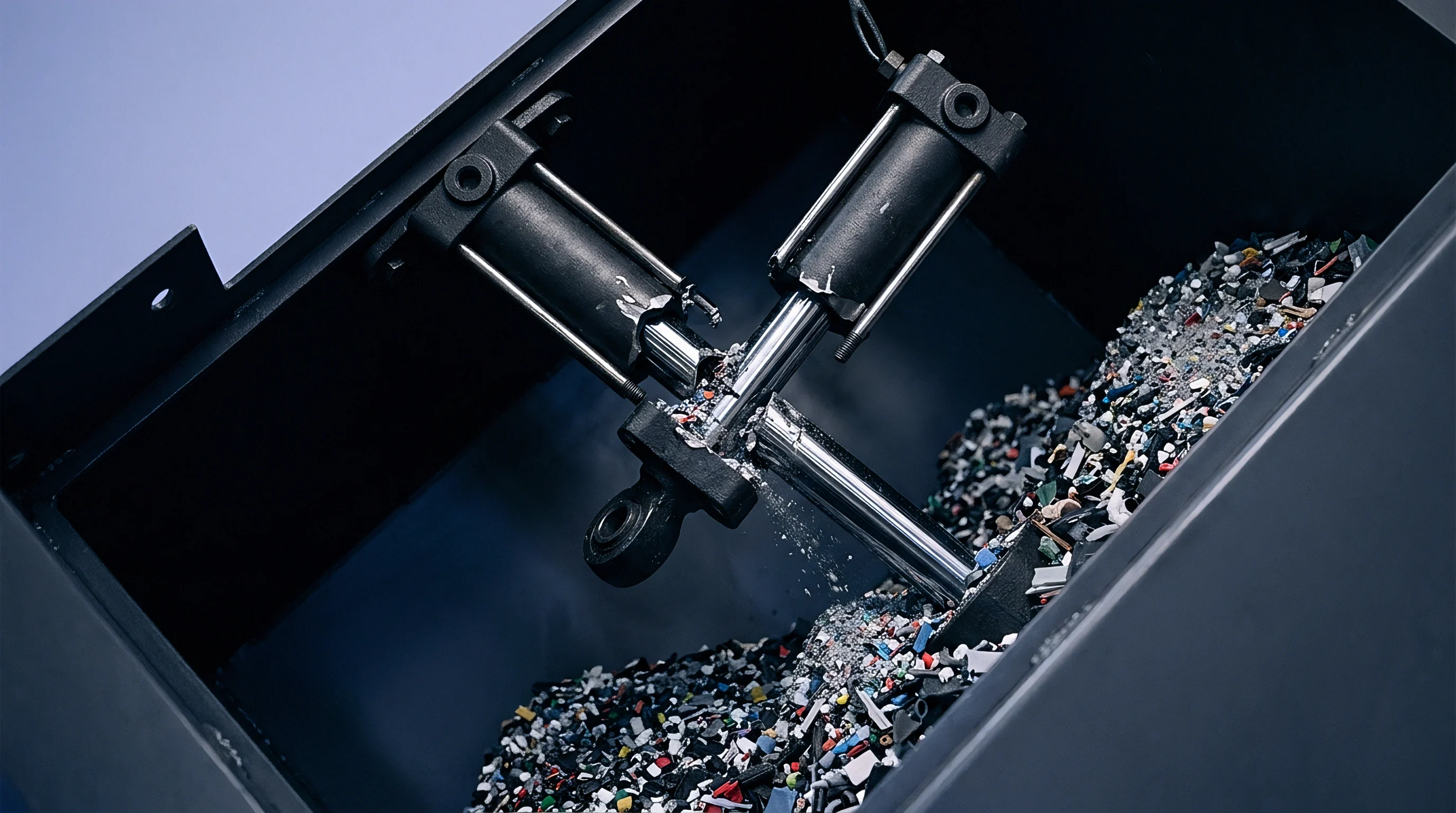
Mesh
Physical contamination in post-consumer polyethylene flakes introduces severe mechanical and thermal stress inside compounding extruders. Shredded detergent bottles, milk jugs, and flexible packaging carry residual soils, paper fibers, moisture, and inorganic dust. As the melt moves along the barrel, solid particles wedge into screw flights, causing localized frictional hotspots where temperatures spike past 260 °C. These thermal spikes degrade polymer backbones long before the bulk melt reaches the die exit.
Meanwhile, high-shear zones near breaker plates and melt pumps drive mechanical chain scission, exposing fresh, unstabilized polymer chains to trapped air.
Melt filtration assemblies protect compounding dies by trapping solid contaminants in woven wire screen packs. Continuous belt screen changers and dual-bolt hydraulic filter units pass the molten post-consumer resin through fine metal meshes ~ down to 50 microns on high-specification compound lines. As debris builds up upstream of the mesh, differential pressure across the screen pack rises steeply.
This pressure gradient spikes the shear rate inside filter cavities, driving up melt temperatures by 15 °C to 30 °C through viscous dissipation. Because thermal oxidation rates double for every 10 °C rise in melt temperature, primary antioxidants are consumed rapidly right at the filtration zone.
Contaminants that pass through or bypass screen packs become heterogeneous sites for thermal oxidative attack in finished products. Metal particles accelerate localized degradation, while cellulosic paper fibers decompose at 200 °C, releasing organic acids and water vapor that hydrolyze secondary phosphite stabilizers. Ultimately, screen pack mesh selection directly dictates how fast antioxidants are consumed inside the compounder barrel.
- Shear-Induced Chain Scission breaks high molecular weight chains in high-density polyethylene, increasing melt flow rate and reducing environmental stress crack resistance.
- Crosslinking Gel Formation bridges radical polymer chains in low-density polyethylene fractions, producing insoluble micro-gels that rupture thin blown films.
- Additive Absorption traps active phenolic molecules inside porous inorganic fillers like calcium carbonate, preventing uniform radical scavenging across the matrix.
- Hydrolytic Deactivation destroys organophosphite hydroperoxide decomposers when wet incoming flakes release moisture inside heated barrel zones.
- Volatile Organic Off-gassing occurs as thermal oxidation by-products like aldehydes and ketones vaporize, creating voids and off-odors in finished pellets.
Continuous monitoring of pressure drop across the screen pack offers direct visibility into thermal oxidation risks inside the barrel. When differential pressure climbs past 15 MPa, residence time in high-shear zones increases, consuming up to 40 percent of the active primary antioxidant before the compound ever reaches the pelletizing head. Keeping screen packs clean maintains uniform flow velocities and prevents localized thermal degradation spots.
Consequently, filters should shift automatically based on pressure setpoints rather than fixed time intervals.
Melt filtration differential pressure drives shear heating and accelerates active stabilizer consumption inside the barrel.
Compounders operating without automatic continuous screen changers frequently let pressure build between manual filter cleanings. This subjects the polymer to fluctuating thermal histories, yielding pellets with inconsistent oxidative stability from the start of a screen pack cycle to the end. Stable compounding requires balancing filtration surface area against stabilizer letdown rates ~ finer meshes demand higher stabilizer letdowns to offset viscous dissipation heating.

Bench
Verifying the residual stability of post-consumer polyethylene compounds requires standardized analytical lab testing. Differential Scanning Calorimetry operating in Oxidative Induction Time mode under ISO 11357-6 provides the benchmark baseline for thermal oxidation resistance. The lab prepares an aluminum pan with a 5-milligram specimen cut directly from incoming pellets or flake.
The sample is heated to 200 °C under protective nitrogen at 20 °C per minute. Once isothermal equilibrium is reached, the gas switches automatically to pure oxygen at 50 milliliters per minute. The calorimeter then tracks the time from oxygen exposure to the onset of exothermic oxidation, marked by a sharp upward inflection on the heat flow curve.
Unstabilized post-consumer polyethylene flake typically shows an Oxidative Induction Time under 3 minutes at 200 °C, reflecting near-total depletion of its original stabilizer package through its first service life and recycling. By comparison, high-grade prime pipe resin specs require induction times over 30 minutes under identical test conditions. Compounders adding stabilizer masterbatches generally target finished pellet induction times between 15 and 45 minutes, depending on the end application.
Relying strictly on raw flake supplier datasheets risks severe field failures, as oxidation resistance degrades noticeably during storage and wash-drying.
Melt flow rate testing per ISO 1133-1 Condition D (190 °C / 2.16 kg load) serves as a secondary check for chain scission or crosslinking. Comparing the melt flow rate ratio between high-load Condition G (21.6 kg) and standard Condition D shows shifts in molecular weight distribution breadth. A broadening ratio indicates that both chain scission and gel-forming crosslinking are occurring within the same batch.
Testing should be performed on incoming flake, compound at the extruder exit, and final converted parts to map antioxidant consumption across every processing step.
| Masterbatch LDR | OIT at 200 °C (Pass 1) | OIT at 200 °C (Pass 3) | MFR 190 °C / 2.16 kg (Pass 1) | MFR 190 °C / 2.16 kg (Pass 3) | Retained Tensile Elongation |
|---|---|---|---|---|---|
| 0.0% (No Additive) | 1.8 minutes | 0.2 minutes | 0.75 g/10 min | 1.45 g/10 min | 22% |
| 1.0% Letdown | 12.4 minutes | 4.1 minutes | 0.68 g/10 min | 0.88 g/10 min | 68% |
| 2.5% Letdown | 28.5 minutes | 14.2 minutes | 0.65 g/10 min | 0.71 g/10 min | 91% |
| 4.0% Letdown | 46.1 minutes | 26.8 minutes | 0.64 g/10 min | 0.66 g/10 min | 96% |
Tracking Oxidative Induction Temperature offers an alternative accelerated approach under ASTM D3895. The instrument heats the sample at a linear rate under continuous oxygen flow, recording the temperature where exothermic oxidation begins. This dynamic method shortens overall test duration compared to isothermal OIT, making it convenient for quick incoming material screening.
Dynamic oxidation temperatures shift upward by 15 °C to 35 °C when active stabilizer letdown increases from 0.5 percent to 2.5 percent in HDPE flake blends.
Oxidative Induction Time testing under ISO 11357-6 at 200 °C under pure oxygen measures residual active antioxidant concentration directly in minutes.
Laboratory test results vary significantly based on sample preparation techniques. Pressing incoming post-consumer flake into plaques at 190 °C without stabilizer consumes part of the remaining active antioxidant before the sample even enters the calorimeter cell. Test protocols must specify cold-cutting specimens directly from pellets or raw flake without thermal pre-treatment.
Standard supply contracts make lot acceptance contingent on certified laboratory testing of samples taken at the extruder die ~ a clause that changes everything when disputing degraded shipments.


Dosage
Determining the correct masterbatch letdown ratio requires calculating the target active stabilizer concentration in parts per million relative to the masterbatch carrier loading. Recycled HDPE flake for extrusion applications generally needs roughly 1,000 ppm of active primary hindered phenol and 2,000 ppm of active secondary phosphite to survive processing and maintain 20 minutes of Oxidative Induction Time. If a masterbatch carries a 10 percent total active payload by weight, a 1.0 percent letdown delivers 1,000 ppm of active additive to the compound.
Highly degraded post-consumer feedstocks with zero residual antioxidant require letdown ratios up to 3.5 or 4.0 percent to reach equivalent stability.
Modeling letdown requirements mathematically takes into account the percentage of recycled content blended into prime resin. A formulation incorporating 30 percent post-consumer flake into prime resin requires lower additive dosing than a 100 percent recyclate stream, assuming the prime resin retains its original manufacturing stabilization package. Target letdown ratios follow a linear mass-balance equation:
Target LDR (%) = ((PPMtarget – PPMresidual × Xpcr) / PPMmasterbatch) × 100
Where PPMtarget is the required active concentration in the finished product, PPMresidual is the measured active antioxidant remaining in the un-stabilized flake, Xpcr is the mass fraction of recycled content, and PPMmasterbatch is the total active loading inside the masterbatch pellets.
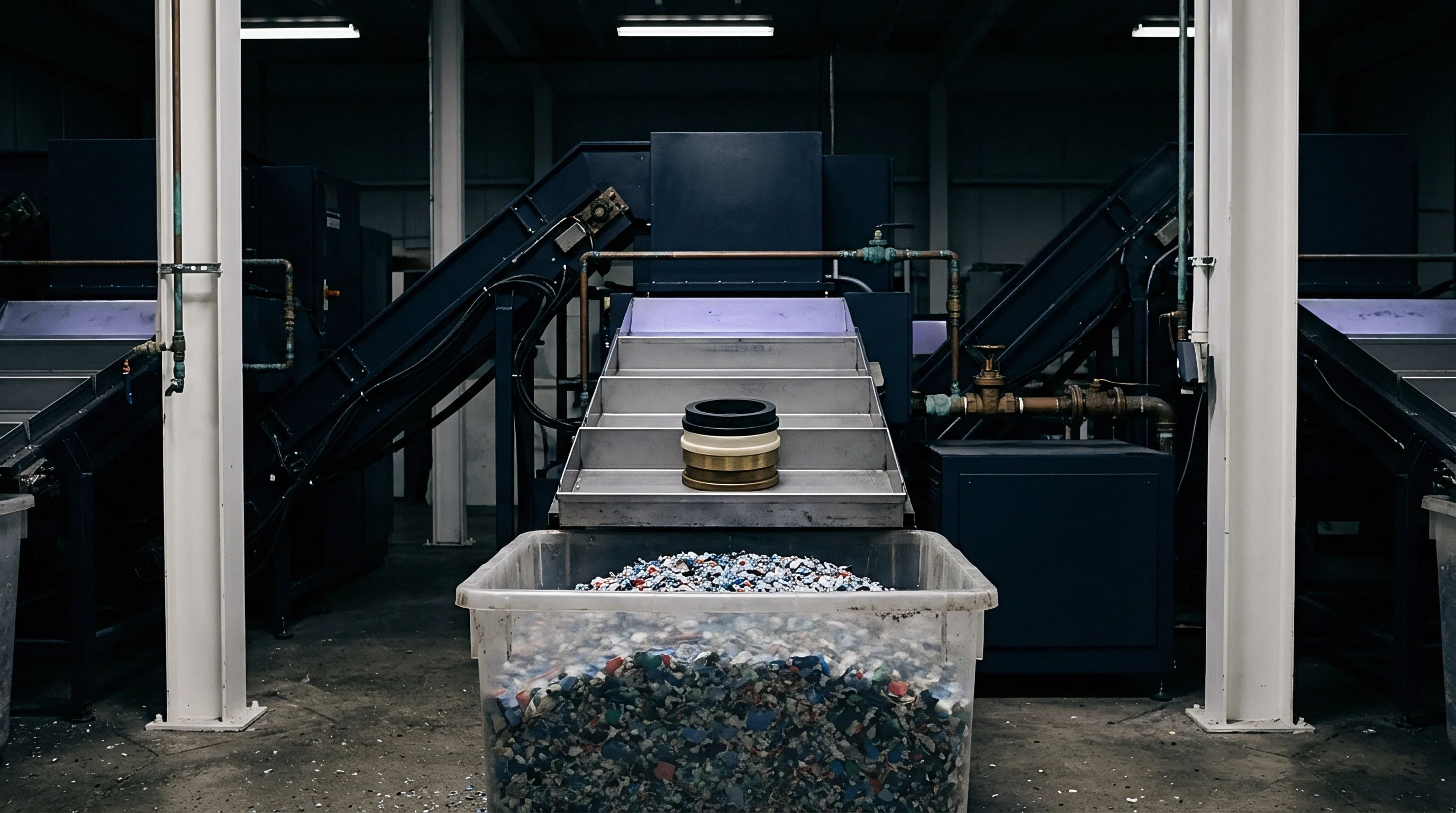
Can Higher Secondary Phosphite Letdowns Counteract Residual Catalyst Deactivation?
Post-consumer polyolefin streams often carry unpassivated Ziegler-Natta or metallocene catalyst residues from initial polymerization. These transition metal sites lower the activation energy for hydroperoxide cleavage. Increasing the ratio of secondary phosphite to primary phenol from a standard 1:1 balance to a phosphite-rich 2:1 or 3:1 ratio neutralizes hydroperoxides directly at metal sites before chain cleavage occurs.
High-phosphite masterbatches effectively passivate active metal residues, protecting primary phenolic antioxidants from premature consumption during high-shear compounding.
Gravimetric loss-in-weight feeders deliver masterbatch pellets directly into the main extruder throat alongside post-consumer flake. Volumetric feeders can introduce feed rate variability of plus or minus 15 percent due to bulk density fluctuations in masterbatch pellets and irregular flake geometry. A 15 percent drop in feeder rate on a 2.0 percent letdown target reduces the active additive payload from 2,000 ppm to 1,700 ppm ~ a deficit that drops finished product Oxidative Induction Time below spec thresholds and risks premature failure during outdoor use.
The decision parameters for calibrating masterbatch letdown ratios rely on analytical inputs from incoming inspection and melt processing conditions.
- Incoming Flake Residual OIT defines the baseline antioxidant content in raw feedstock before compounding begins.
- Extruder Residence Time dictates total thermal exposure, requiring higher stabilizer letdowns on low-rpm, long-barrel lines.
- Melt Temperature Profile determines auto-oxidation rates, where melt zones above 230 °C mandate higher secondary phosphite concentrations.
- Regrind Percentage Integration shifts the required active letdown balance based on the cumulative thermal passes experienced by the material.
- End-Use Outdoor Exposure requires adding hindered amine light stabilizers alongside thermal oxidation packages for structural applications.
Masterbatch carrier resin selection requires strict viscosity matching with the host recycled polymer. Using a low melt flow rate carrier resin in a high melt flow rate post-consumer stream prevents complete melting and mechanical dispersion of the additive payload during barrel passage. Active antioxidant molecules stay trapped inside dense carrier domains, leaving the surrounding matrix unstabilized.
Consequently, carrier resin melt flow rate must equal or exceed that of the incoming post-consumer flake under identical test conditions.
Purchase contracts for stabilizer masterbatch must define minimum active payload tolerances via gas chromatography or thermo-gravimetric analysis.
Under-dosing thermal oxidation masterbatch to shave immediate production costs creates severe long-term financial risk. Converted post-consumer products with insufficient stabilization suffer embrittlement, stress cracking, and heavy yellowing within months of deployment. The cost of field failures, customer rejections, and brand damage far outweighs the minor savings of trimming masterbatch letdown ratios.
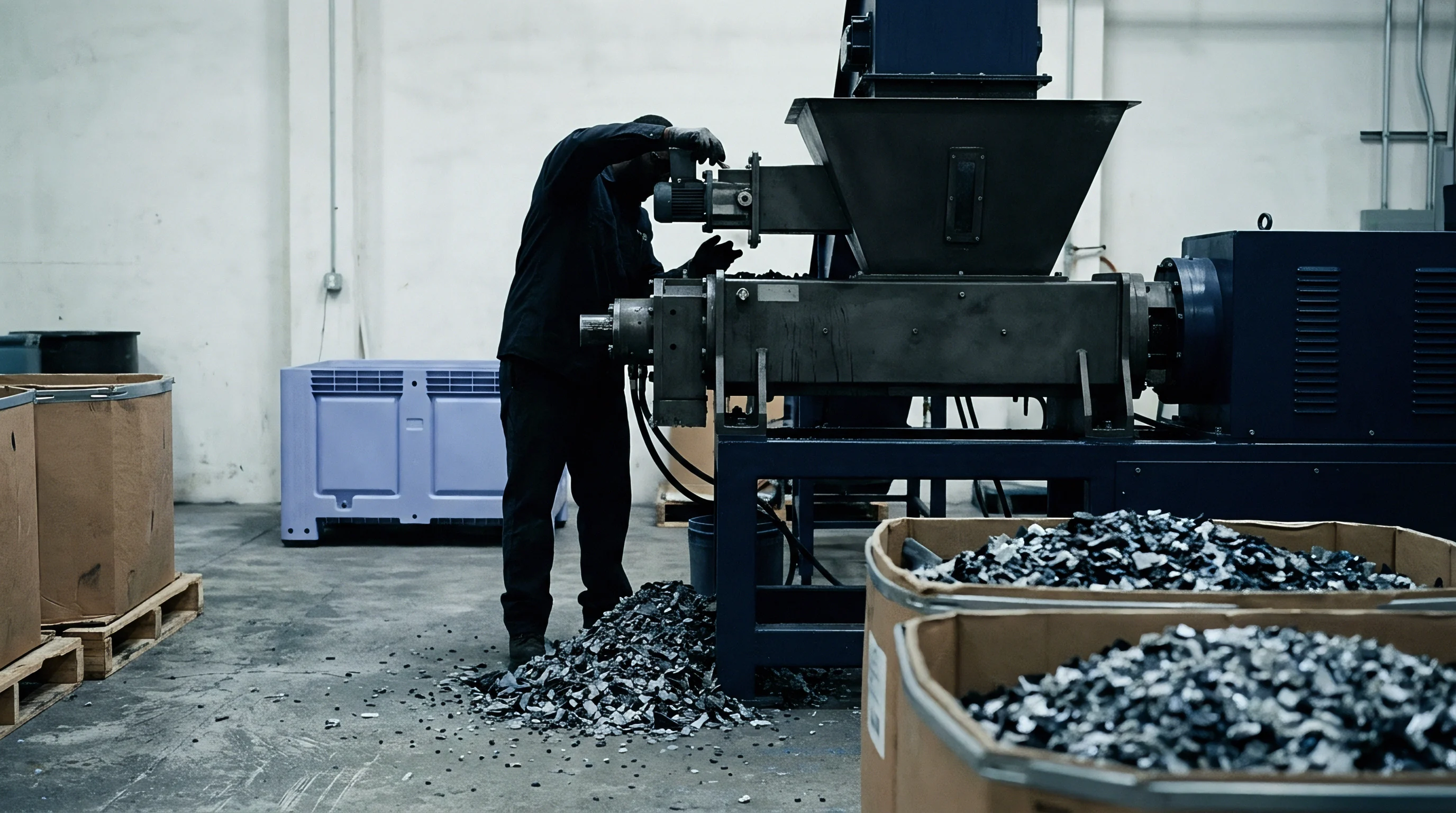
Silo
Storing post-consumer polyethylene flakes in unconditioned outdoor silos exposes material to moisture and atmospheric oxygen that trigger solid-state oxidation before compounding even starts. Summer temperatures inside aluminum silos can hit 60 °C, accelerating hydroperoxide formation on particle surfaces. Flakes stored over extended periods consume their remaining residual antioxidants while sitting idle.
Processing plants should track silo storage times and re-test Oxidative Induction Time on any inventory held longer than fourteen days.
Organophosphite secondary antioxidants hydrolyze rapidly if masterbatch pellets absorb ambient moisture during improper storage. Compounds such as Tris(2,4-di-tert-butylphenyl) phosphite react with water to yield 2,4-di-tert-butylphenol and acidic phosphorous derivatives. Once decomposed, phosphites lose their ability to scavenge hydroperoxides during melt processing and release acidic by-products that corrode extruder screws and barrel liners.
Storage silos and gaylord containers for masterbatch must run desiccant dehumidification systems to hold relative humidity below 10 percent.
Gravimetric feeder hoppers mounted above the extruder feed throat need sealed covers and nitrogen blanketing when running sensitive post-consumer blends. Open hoppers draw warm, humid air upward from the throat via chimney effects, bathing incoming masterbatch pellets in thermal moisture plumes. This localized humidity breaks down active secondary phosphites right before they reach the melt zone.
- Sample incoming masterbatch lots from five distinct locations in each gaylord or bulk container using a stainless steel sampling thief.
- Perform thermo-gravimetric analysis to verify active additive payload percentage against the manufacturer’s certificate of analysis.
- Measure moisture content using Karl Fischer titration at 160 °C, verifying total moisture stays below 300 parts per million.
- Calibrate gravimetric loss-in-weight feeders using actual production masterbatch pellets to establish accurate bulk density curves.
- Purge feeder hoppers with dry nitrogen gas at 5 liters per minute before starting continuous compounding runs.
Variations in masterbatch pellet size cause gravimetric feeding errors and particle segregation inside feeder hoppers. Machine vibration causes smaller pellets to settle toward the bottom while larger pellets remain on top, driving letdown ratio drift over a twelve-hour production shift. Compounders should enforce strict pellet size uniformity with masterbatch suppliers, requiring 98 percent of pellets by weight to sit within a 2.5 mm to 3.5 mm spherical envelope.
Whether real-time melt spectroscopy mounted directly in the extruder adapter block can dynamically adjust gravimetric feeder letdown ratios as incoming flake oxidation fluctuates remains an open question for high-throughput recycling plants.

Invoice
Stabilizing post-consumer polyethylene adds direct chemical input costs that impact compounding margins. Concentrated primary and secondary antioxidant masterbatches command market prices from $3,800 to $6,200 per metric ton, depending on active payload, carrier resin, and additive formulation. By comparison, post-consumer HDPE flake trades between $850 and $1,300 per metric ton.
Applying a 2.5 percent masterbatch letdown adds $95 to $155 per metric ton to raw material costs.
Skimping on stabilizer letdown ratios to cut pellet cost increases scrap rates downstream during conversion. Unstabilized or under-stabilized compound suffers from MFR fluctuations, thermal discoloration, and high gel counts during blow molding or film extrusion. For instance, a blow molding line converting post-consumer compound into detergent bottles incurs immediate scrap costs when erratic melt strength leads to parison sag and wall thickness variation.
Factoring scrap losses into net good production shows that optimal stabilizer letdown rates actually yield a lower total cost per converted part.
Calculations comparing landed material costs across three stabilizer letdown ratios reveal the economic balance between additive investment and scrap reduction.
| Cost Component | 1.0% Letdown Ratio | 2.5% Letdown Ratio | 4.0% Letdown Ratio |
|---|---|---|---|
| Base PCR Flake Cost ($/t) | $1,050.00 | $1,050.00 | $1,050.00 |
| Masterbatch Cost ($/t at $4,800/t) | $48.00 | $120.00 | $192.00 |
| Compounding Conversion Cost ($/t) | $320.00 | $320.00 | $320.00 |
| Total Pelleted Compound Cost ($/t) | $1,418.00 | $1,490.00 | $1,562.00 |
| Converter Process Scrap Rate (%) | 12.5% | 2.1% | 1.8% |
| Scrap Amortization Overhead ($/t) | $202.57 | $31.99 | $28.66 |
| Net Landed Cost per Good Ton ($/t) | $1,620.57 | $1,521.99 | $1,590.66 |
The financial model confirms that a 2.5 percent letdown ratio yields the lowest net landed cost per metric ton of good converted parts. Running a 1.0 percent letdown saves $72.00 per ton in masterbatch expense, but incurs $202.57 per ton in scrap overhead from parison rupture and dimensional instability. Over-stabilizing at a 4.0 percent letdown trims scrap rates slightly to 1.8 percent, but the extra masterbatch cost increases net cost per good ton by $68.67 compared to the 2.5 percent optimum.
Proper additive letdown optimization minimizes total cost per good part by reducing scrap rates at the converter.
International shipments of custom stabilizer masterbatches involve specific tariff classifications that affect landed cost calculations. Masterbatches classified under Harmonized System Code 3812.39 carry import duties between 3.0 percent and 6.5 percent, depending on destination trade agreements. Traders structuring cross-border resin supply deals incorporate tariff liabilities and chemical concentration guarantees directly into commercial contracts.
Setting precise letdown protocols ensures compounders meet performance standards while protecting operating margins against unexpected scrap generation.