Post Consumer Polyolefin Recycling Property Degradation Fundamentals
Polyolefin property degradation stems from chain scission, oxidation, and contamination; managing property drift requires strict OIT, melt index, and blend controls.

Chain
Polyolefin degradation in mechanical recycling starts with backbone cleavage under thermal and mechanical stress. Extrusion temperatures between 190 °C and 260 °C, combined with intense shear inside compounding screws, break carbon-carbon bonds along the polymer spine. Polypropylene and polyethylene react differently to this environment because of their underlying structures.
Polypropylene has tertiary carbons along its chain that readily form stable tertiary alkyl radicals under heat and shear. These radicals undergo rapid beta-scission, snapping one long polymer chain into two shorter fragments.
Every extrusion pass shifts the molecular weight distribution toward lower averages. Weight-average molecular weight drops while melt flow rate rises exponentially. For instance, a polypropylene injection molding grade with an initial melt flow rate of 12 g/10 min under ISO 1133 test conditions at 230 °C and 2.16 kg can reach 28 g/10 min after three reprocessing cycles.
Shear preferentially breaks high molecular weight chains, directly compromising mechanical properties. Tensile strength at yield declines moderately, but notched Izod impact resistance drops sharply because short chains fail to form enough inter-crystalline tie molecules across amorphous regions.
High-density polyethylene follows a competing reaction mechanism during melt processing. Secondary alkyl radicals on the polyethylene backbone undergo recombination alongside scission, building long-chain branches and localized crosslinked networks. Melt flow rate shifts rapidly as a result.
Under ISO 1133 test conditions at 190 °C and 2.16 kg, high-density polyethylene frequently exhibits a falling melt flow rate over successive passes, dropping from 0.8 g/10 min down to 0.2 g/10 min. High-load melt flow index measurements at 21.6 kg reveal severe changes in shear sensitivity. These branched and crosslinked structures broaden the molecular weight distribution, driving up low-shear melt viscosity and triggering melt fracture during high-speed extrusion.

Molecular Weight Distribution Shift under Thermal Shear
Melt processing degrades polyolefin resins by shifting the distribution of molecular lengths. Gel permeation chromatography tracks this structural change by measuring number-average molecular weight, weight-average molecular weight, and the polydispersity index. Virgin polypropylene normally carries a polydispersity index between 4.0 and 6.0.
Mechanical recycling can narrow or broaden this range depending on residual peroxides, operating temperatures, and screw shear profiles. High-shear zones in kneaders and reverse-conveying elements produce localized hot spots that run 30 °C above bulk melt setpoints. Shear-induced scission hits the longest chains first, since they absorb more mechanical energy passing through tight screw clearances.
Destroying these long chains narrows the molecular weight distribution in polypropylene without peroxides, lowering zero-shear melt viscosity and degrading melt strength.
In high-density polyethylene, high molecular weight fractions branch through radical addition to terminal vinyl groups, producing high-molecular-weight tails on gel permeation chromatography curves. These branched molecules increase strain hardening during uniaxial elongation ~ improving parison stability in blow molding, but inducing melt fracture in film extrusion dies. Capillary rheometry at 190 °C across shear rates from 10 to 10,000 s⁻¹ shows that recycled high-density polyethylene develops sharkskin and gross melt fracture earlier than virgin prime resins with the same nominal melt index.
Zero-shear viscosity calculated from oscillatory shear measurements using Carreau-Yasuda fits offers a direct window into chain length decay. Dynamic mechanical analysis under ISO 6721-10 shows systematic shifts in crossover modulus and crossover frequency across re-processing generations. In degraded polypropylene, the crossover frequency moves to higher shear rates as shorter, scissioned chains relax faster.
Recycled polyethylene shows the opposite trend ~ a lower crossover frequency and a flattened storage modulus curve at low frequencies ~ confirming the presence of long-chain branching.
| Polymer Type | Processing Pass | Melt Flow Rate (g/10 min) | Weight-Average MW (g/mol) | Polydispersity Index (Mw/Mn) | Notched Izod Impact (kJ/m²) |
|---|---|---|---|---|---|
| Polypropylene Homopolymer | Pass 0 (Virgin) | 12.1 (230 °C / 2.16 kg) | 245,000 | 4.2 | 4.5 (ISO 180/1A at 23 °C) |
| Polypropylene Homopolymer | Pass 1 (Compounded) | 15.8 (230 °C / 2.16 kg) | 210,000 | 3.9 | 3.8 (ISO 180/1A at 23 °C) |
| Polypropylene Homopolymer | Pass 3 (Recycled PCR) | 27.4 (230 °C / 2.16 kg) | 162,000 | 3.4 | 2.4 (ISO 180/1A at 23 °C) |
| HDPE Blow Molding Grade | Pass 0 (Virgin) | 0.35 (190 °C / 2.16 kg) | 310,000 | 8.5 | 18.2 (ISO 179/1eA at 23 °C) |
| HDPE Blow Molding Grade | Pass 1 (Compounded) | 0.28 (190 °C / 2.16 kg) | 325,000 | 9.8 | 14.6 (ISO 179/1eA at 23 °C) |
| HDPE Blow Molding Grade | Pass 3 (Recycled PCR) | 0.14 (190 °C / 2.16 kg) | 360,000 | 12.4 | 8.1 (ISO 179/1eA at 23 °C) |
| Data measured on laboratory twin-screw extrusion equipment at 220 °C melt temperature. Melt flow rates tested under ISO 1133 conditions; molecular weights determined by high-temperature gel permeation chromatography in 1,2,4-trichlorobenzene at 160 °C; impact strengths tested under ISO 180/1A and ISO 179/1eA standards. | |||||
Tie Molecule Density and Semicrystalline Morphology Failure
Mechanical performance in semicrystalline polyolefins depends on tie molecules that bridge adjacent crystalline lamellae through amorphous regions. These long chains hold crystallites together under load, but chain scission destroys these linkages first. As weight-average molecular weight drops, the chance that a single chain spans the gap between two crystallites falls rapidly.
Polypropylene requires a critical molecular weight near 40,000 g/mol to form effective tie molecules. Once thermal scission builds up a high fraction of chains below this threshold, mechanical stress concentrates directly at lamellar interfaces.
Differential scanning calorimetry per ISO 11357-3 shows clear shifts in crystallization kinetics and peak melting behavior. Recycled polypropylene often exhibits a higher crystallization peak temperature during non-isothermal cooling scans. Shorter, degraded chains move more freely in the melt, nucleating and crystallizing at higher temperatures than long, entangled chains.
This early crystallization disrupts spherulite size uniformity and creates defective domain boundaries, where micro-voids form during cooling to serve as failure sites under impact.
High-density polyethylene undergoes chemi-crystallization during ambient storage following thermal degradation. Scission in amorphous regions frees trapped chain segments, letting them fold into existing lamellae or form imperfect secondary crystals. Tensile testing under ISO 527-2 shows an increased flexural modulus and yield stress alongside a severe drop in tensile elongation at break ~ often falling from 600 percent in virgin HDPE to under 40 percent in un-compatibilized post-consumer lots.
As tie molecule density declines, failure shifts from ductile yielding to brittle inter-lamellar fracture.
Melt flow shifts in post-consumer polyolefins are frequently assigned to feedstock collection seasonality rather than cumulative thermal breakdown during extrusion cycles.
Oxidation
Atmospheric oxygen reacts readily with polymer radicals formed during melt processing and outdoor exposure. Autoxidation follows a free-radical chain sequence: initiation, propagation, branching, and termination. Initiation occurs when mechanical shear, UV radiation, or residual processing heat cleaves carbon-hydrogen bonds along the polyolefin backbone, producing carbon-centered alkyl radicals.
These react instantly with dissolved oxygen at diffusion-controlled rates to form peroxyl radicals, which then strip hydrogen atoms from neighboring polymer chains ~ generating hydroperoxides and fresh alkyl radicals that sustain the loop.
Hydroperoxides are the main driver of long-term property loss in post-consumer resins. Under heat or light, they decompose homolytically into alkoxy and hydroxyl radicals. This cleavage doubles the active radical count, setting off branching cascades.
Alkoxy radicals then undergo beta-scission, yielding carbonyl-terminated short chains, aldehydes, ketones, and carboxylic acids. Fourier-transform infrared spectroscopy per ASTM E168 tracks this breakdown using the carbonyl index, calculated as the ratio of carbonyl absorbance near 1715 cm⁻¹ to a stable reference band near 2019 cm⁻¹ for polyethylene or 1167 cm⁻¹ for polypropylene.
Primary hindered phenol antioxidants, including Irganox 1010 and Irganox 1076, interrupt autoxidation by donating hindered phenolic hydrogens to peroxyl radicals. Secondary phosphites, like Irgafos 168, convert hydroperoxides to inactive alcohols while oxidizing into non-reactive phosphates. Post-consumer polyolefins arrive at recycling plants with depleted stabilizer packages, as antioxidants get consumed over the original product’s life and during hot wash-drying steps.
Running un-stabilized PCR accelerates autoxidation, rapidly converting leftover hydroperoxides into chain-scission products inside compounding barrels.
Hydroperoxide Generation and Auto-Oxidation Kinetics
Measuring hydroperoxide concentration gives early warning of degradation before mechanical properties drop. These levels reach a steady state during initial service, then decompose rapidly when re-exposed to extrusion temperatures above 200 °C. Standard melt flow rate tests miss this risk because their short duration limits thermal exposure. Processing a lot rich in hydroperoxides triggers aggressive chain scission inside production molds, yielding brittle parts despite normal incoming melt flow readings.
Iodometric titration and chemical reduction can measure hydroperoxides down to micromoles per gram of polymer. Clean virgin resins stay below 0.5 µmol/g, whereas post-consumer polyolefins from outdoor agricultural film or detergent bottles show concentrations between 4.0 and 18.0 µmol/g. Compounding these streams without re-stabilization rapidly consumes any added primary antioxidants, leaving the finished pellet unprotected during final molding or extrusion.
Free-radical scavengers and hydroperoxide decomposers must work together to stabilize post-consumer feeds. Phenolic antioxidants alone cannot manage heavy hydroperoxide loads without forming quinone-type colored species. These byproducts yellow the material, raising the yellowness index under ASTM E313 from negative baseline values up to +15 YI units.
Adding secondary phosphites or hydroxylamines reduces hydroperoxides cleanly, holding the melt index steady during compounding.
Differential scanning calorimetry under pure oxygen at 200 °C records oxidative induction times below four minutes for un-stabilized post-consumer polypropylene flake.
Oxidative Induction Time as Lot Acceptability Metric
Oxidative induction time (OIT) testing offers a reliable way to check residual stabilization in incoming PCR shipments. Using differential scanning calorimetry per ISO 11357-6 or ASTM D3895, a sample is heated to an isothermal temperature ~ usually 200 °C ~ under nitrogen. Once thermal equilibrium is reached, the gas switches to pure oxygen, and the instrument measures the time until exothermic oxidation begins.
The resulting OIT reflects the remaining stabilizer package.
Virgin polyolefins for outdoor or pressure-pipe applications typically show OIT values over 45 minutes at 200 °C, whereas un-stabilized PCR flake sits below 5 minutes. Blending low-OIT recyclate into virgin resin drops the thermal stability non-linearly. For example, a mixture of 30 percent PCR (OIT of 3 minutes) and 70 percent virgin resin (OIT of 50 minutes) does not give a linear average; hydroperoxides in the recyclate rapidly consume antioxidants in the virgin phase, pulling the blend’s OIT down below 15 minutes.
Receiving specifications require a minimum oxidative induction time of 20 minutes at 200 °C for all incoming re-stabilized post-consumer pellet lots. Testing incoming lots via DSC prevents premature failure in field applications. Samples failing the 20-minute threshold receive secondary stabilizer dosing in masterbatch form during compounding.
Standard re-stabilization relies on a 2:1 ratio of phosphite processing stabilizer to hindered phenol long-term thermal stabilizer, dosed at total active concentrations between 0.15 percent and 0.35 percent by weight.

Does Cross-Contamination Alter Crystallisation Dynamics in Post-Consumer Polyolefin Streams?
Polyethylene and polypropylene streams from municipal waste remain cross-contaminated even after automated optical sorting. High-density polyethylene packaging streams usually contain 2 to 8 percent polypropylene, mostly from caps, closures, and multi-layer labels. Polypropylene streams similarly carry residual HDPE.
Because the two polymers are thermodynamically immiscible, cross-contamination alters phase morphology and crystallization behavior.
DSC cooling curves show dual crystallization exotherms in contaminated PCR lots. In an HDPE matrix with 5 percent polypropylene, polyethylene crystallizes near 118 °C while the dispersed polypropylene phase crystallizes around 125 °C. Under certain cooling conditions, the minor polypropylene phase nucleates the polyethylene, shifting crystallization onset upward. This shift changes shrinkage behavior inside injection molds, causing warpage and dimensional variation outside tolerance limits.
Adding nucleating agents to post-consumer polyolefins helps control crystal morphology by encouraging fast, uniform spherulite growth. Sorbitol-based nucleators or organophosphorus metal salts push polypropylene’s crystallization temperature toward 130 °C. Higher nucleation rates produce smaller spherulites, which partially restores notched Izod impact strength by spreading stress over a denser grain network. Non-isothermal tests confirm that nucleated post-consumer polypropylene reaches peak crystallization much faster than un-nucleated resin, trimming mold cooling times.
Determining the exact point where cumulative hydroperoxide buildup triggers irreversible tie-molecule cleavage during ambient storage remains a challenging measurement problem for compounding laboratories.
Flake
Reground rigid containers and washed post-consumer packaging introduce significant structural variation into compounding feeds. Municipal systems pool HDPE blow-molded bottles, polypropylene tubs, LDPE films, and non-polyolefin contaminants together. Mechanical shredding breaks this mix into flake ranging from 2 mm to 12 mm.
Near-infrared sorters, air classification, and sink-float tanks then separate polyolefins from heavy polymers like PET and PVC. Water-based density separation uses a 1.0 g/cm³ cutoff, floating polyolefins (densities from 0.89 g/cm³ to 0.96 g/cm³) while sinking vinyls, polyesters, and metals.
Density separation in water cannot isolate HDPE from polypropylene. High-density polyethylene ranges from 0.940 to 0.965 g/cm³ and polypropylene from 0.895 to 0.915 g/cm³, so both float. High-speed optical sorters using short-wave infrared can sort flakes, but carbon black and dark pigments absorb infrared radiation entirely, blinding the sensors.
Dark rigid packaging consequently passes through undetected, introducing polypropylene inclusions into HDPE compounds or vice versa.
The immiscibility of polyethylene and polypropylene creates a two-phase morphology with weak interfacial bonding. Their differing solubility parameters result in a positive Flory-Huggins interaction parameter. Without compatibilizers, melt blending suspends spherical domains of the minor phase within the major matrix.
Under mechanical load, cracks travel along these weak phase boundaries. ISO 180/1A notched Izod testing shows that adding just 10 percent polypropylene to HDPE cuts impact strength from 18 kJ/m² to below 6 kJ/m², causing room-temperature brittle failure.
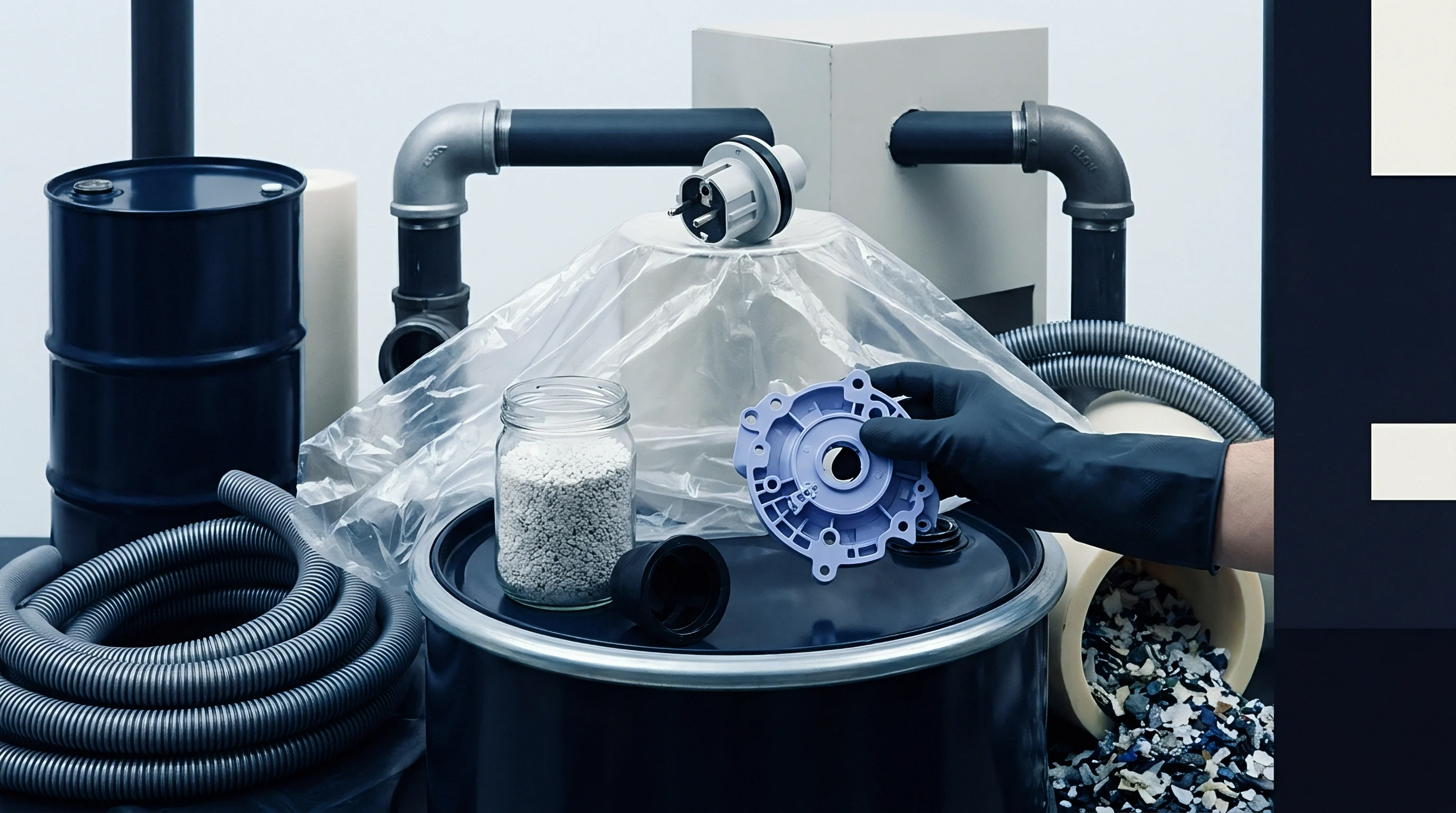
Polymeric Contamination and Phase Separation Mechanics
Scanning electron microscopy of fracture surfaces clearly shows phase separation in PCR polyolefin blends. Below 15 percent by weight, the minor phase forms a droplet-matrix morphology with spherical inclusions between 1 µm and 8 µm. This separation embrittles the matrix: weak interfacial tension prevents smooth stress transfer across domain boundaries.
Under tensile load, micro-voids form around minor phase droplets, driving early craze formation and rapid crack growth.
When the minor phase reaches 20 to 40 percent by weight, the structure becomes co-continuous, forming interpenetrating networks of both polymers. These blends exhibit erratic mechanical properties ~ flexural modulus swings between polyethylene’s lower baseline and polypropylene’s higher range depending on local mold cooling and shear orientation. Tensile elongation at break (ISO 527-2) drops below 15 percent, ruling out co-continuous PCR blends for structural, impact-absorbing parts.
Compatibilizers restore adhesion between immiscible polyolefin phases. Block copolymers with ethylene and propylene segments, such as olefin block copolymers or EPDM, migrate to the interface during compounding. The ethylene blocks crystallize into the polyethylene phase while propylene blocks integrate into the polypropylene phase.
Adding 3 to 7 percent compatibilizer by weight reduces domain sizes below 0.5 µm and boosts interfacial shear strength, bringing ISO 179/1eA notched Charpy impact values back above 12 kJ/m².
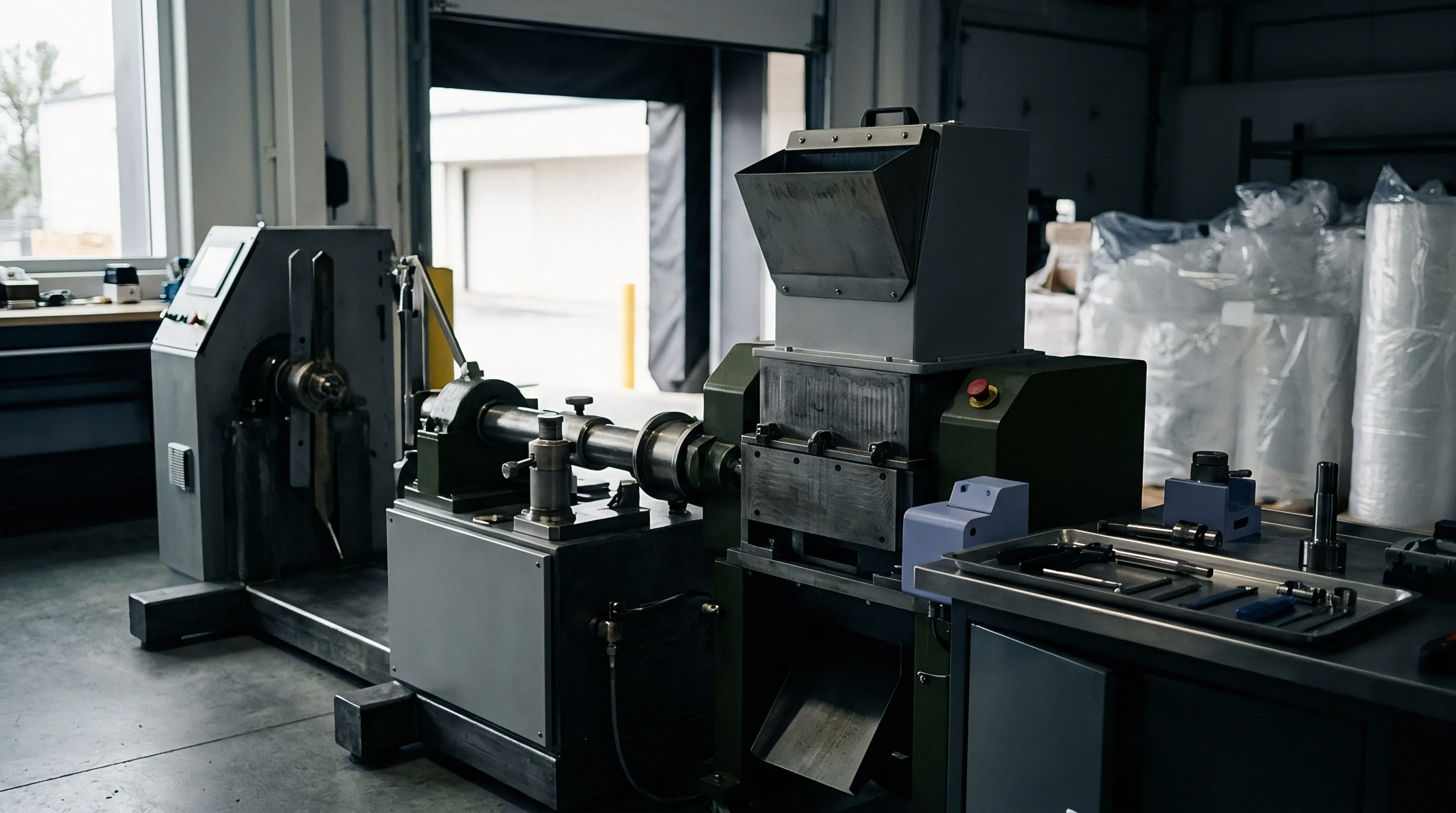
Solid Impurities and Stress Concentration Sites
Particulate contamination in PCR flake comes from non-polyolefin packaging elements, dirt, sand, calcium carbonate, aluminum foil, paper fibers, and wear from equipment, along with high-melting polymers like PET and polyamide that survive washing. Rigid inclusions over 20 µm act as stress concentrators inside the ductile polyolefin matrix. Under cyclic loads, mismatch in thermal expansion between rigid particles and the surrounding polymer initiates micro-cracks that grow into structural failures.
Melt filtration removes particulates before pelletizing. Continuous twin-screw extruders use screen changers loaded with woven wire mesh. Packs use multi-layer configurations, like 20/60/100/20 layouts, where the finest screen dictates efficiency.
A standard 100-mesh screen catches particles down to 150 µm. Thin-wall packaging or small-pipe extrusion demands continuous laser-drilled plate filters or 200-mesh screens to trap particles down to 75 µm. However, finer filtration builds barrel backpressure, elevating melt temperatures by 15 °C to 30 °C and compounding thermal shear degradation.
Cross-linked gels are another frequent defect in recycled polyolefins. Thermo-oxidative crosslinking from prior heat cycles turns linear polyethylene into insoluble three-dimensional networks. These gels will not melt during extrusion, surfacing as translucent specs in films or blow-molded bottles.
Optical surface inspection units measure gel defect density. Gels over 200 µm spoil surface appearance and serve as stress points during biaxial stretching or pressure testing.
ASTM D7611 resin identification protocols fail to distinguish high-density polyethylene blow-molding fractions from injection-molding caps, forcing buyers to write melt index caps directly into supply agreements.
Contamination failure mechanisms manifest across processing and end-use environments:
- Interfacial Delamination occurs when immiscible polypropylene droplets separate from a polyethylene matrix under applied tensile strain, creating internal micro-voids.
- Notch-Sensitive Brittle Fracture develops around sharp aluminum micro-fragments or mineral grit particles exceeding fifty micrometers in diameter during impact loads.
- Pinhole Perforation arises in thin-walled film extrusion when non-melting PET or polyamide flake inclusions pass through melt filters and rupture under die draw-down.
- Melt Pressure Fluctuation happens during extrusion compounding when rapid dirt accumulation on screen packs forces continuous backpressure increases, disrupting barrel dosing accuracy.
- Thermal Discoloration manifests during high-temperature conversion as residual paper fibers and organic adhesives scorch inside the barrel, producing brown streaking and volatile off-gassing.
| Property Metric | Test Method | Virgin HDPE (Blow Mold) | PCR HDPE (100 Mesh Filtered) | PCR HDPE (200 Mesh Filtered) | PCR HDPE + 8% PP Uncompatibilized |
|---|---|---|---|---|---|
| Density (g/cm³) | ISO 1183-1 | 0.954 | 0.956 | 0.955 | 0.948 |
| Melt Flow Rate (190 °C / 2.16 kg) | ISO 1133 | 0.32 g/10 min | 0.22 g/10 min | 0.24 g/10 min | 0.45 g/10 min |
| Tensile Modulus (MPa) | ISO 527-2 | 1,050 | 1,180 | 1,160 | 1,240 |
| Tensile Stress at Yield (MPa) | ISO 527-2 | 27.5 | 26.2 | 26.5 | 25.8 |
| Tensile Elongation at Break (%) | ISO 527-2 | 650 | 85 | 180 | 35 |
| Notched Charpy Impact 23 °C (kJ/m²) | ISO 179/1eA | 19.5 | 9.2 | 12.8 | 5.1 |
| Environmental Stress Crack Resistance (h) | ASTM D1693 (10% Igepal) | > 500 | 45 | 82 | 12 |
Environmental stress crack resistance testing per ASTM D1693 highlights how sensitive HDPE is to polymeric and solid contamination. The test exposes notched bent strips to a 10 percent surfactant solution (Igepal CO-630) at 50 °C. Virgin blow-molding HDPE withstands over 500 hours without failure. In contrast, PCR HDPE lots without proper compatibilization or fine filtration fail in under 50 hours.
Polypropylene inclusions speed up stress cracking by creating weak phase boundaries that allow surfactants to penetrate under flexural load.
Compounding un-compatibilized regrind causes a twelve percent impact drop, transferring costs directly into scrap credit adjustments for the blow-molding line operator.
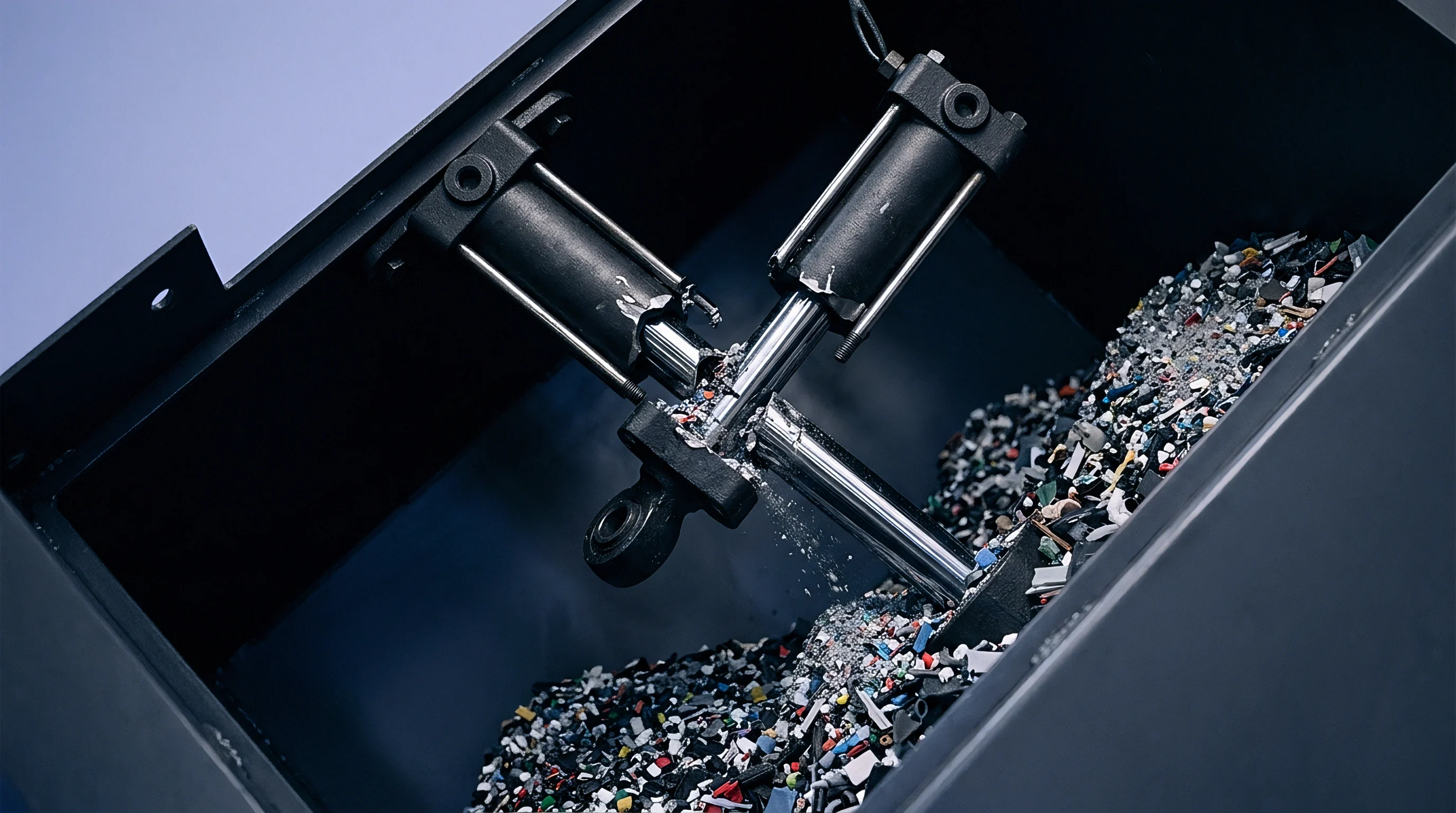
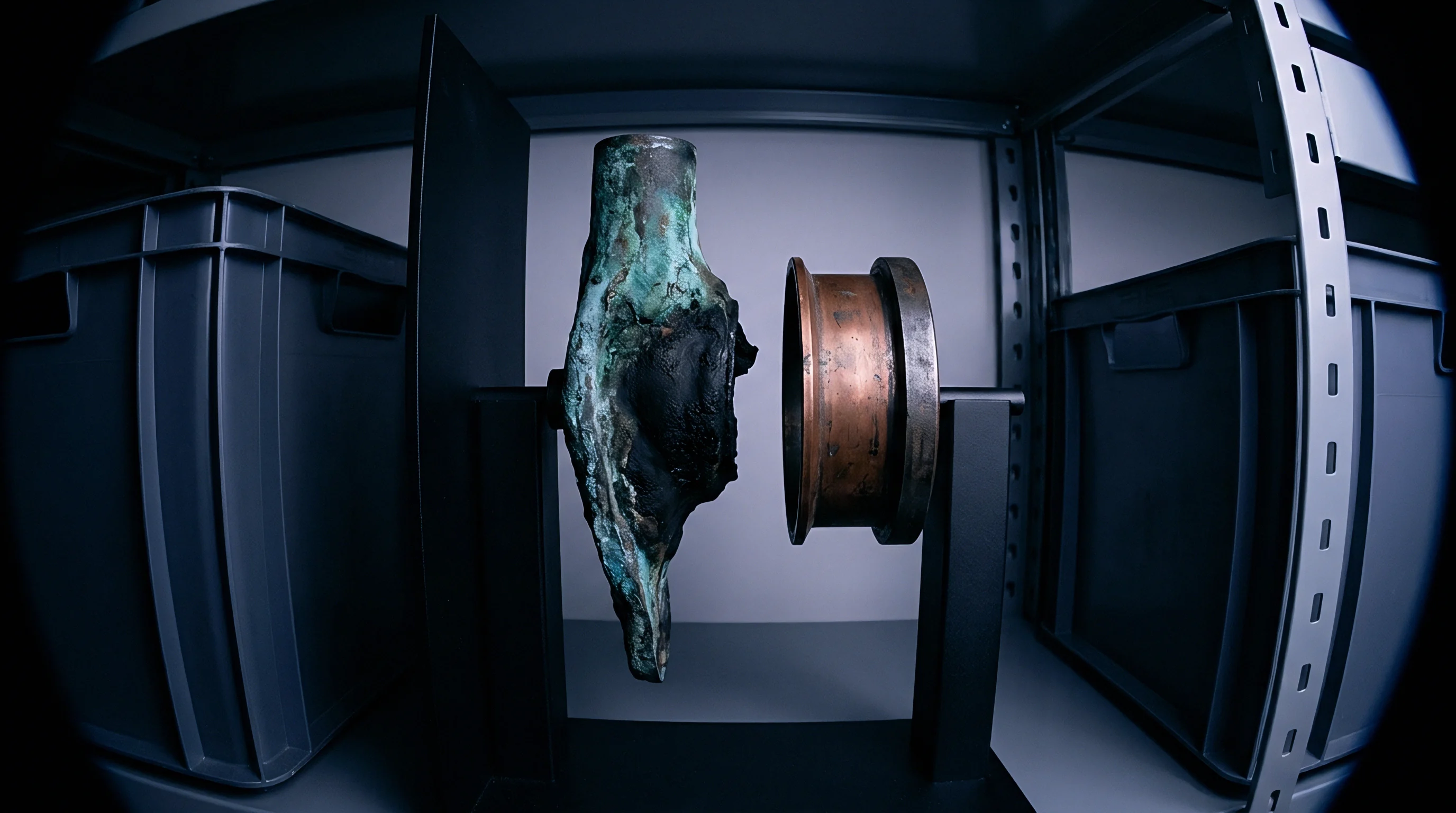
Vent
Thermal decomposition releases low-molecular-weight species that stay trapped in the polymer melt during extrusion. Post-consumer polyolefins absorb volatiles during their initial lifespan and subsequent handling ~ picking up organics from detergents, cosmetics, food, printing inks, and solvents. When reprocessed at 200 °C to 250 °C, these absorbed compounds vaporize alongside degraded oligomers.
Trapped volatiles cause voids, splay marks, and pinholes in molded parts, as well as pressure instability in processing equipment.
Removing volatiles requires multi-stage devolatilization built into the compounding extruder. Co-rotating twin-screw machines for PCR processing feature extended barrels with L/D ratios from 40:1 to 48:1. Degassing zones sit downstream of the main melting and mixing sections.
A high-shear melt seal ~ formed by reverse-conveying elements or left-hand kneading blocks ~ isolates the vent zone, blocking air intake while maintaining upstream melt pressure.
Vacuum devolatilization uses low absolute pressures to pull volatile species out of the polymer melt. While atmospheric vents remove bulk moisture and light solvents, deep vacuum sections below 20 mbar strip residual short-chain volatiles, slip additive amides, and degraded ink byproducts. Degassing efficiency hinges on melt surface renewal.
Screw elements in vent zones run partially filled, spreading the melt into thin films along barrel walls to maximize surface area and speed up diffusion.
Devolatilization and Thermal History Accumulation
Degassing efficiency depends directly on vacuum level, melt temperature, and residence time under vacuum. Gas chromatography-mass spectrometry via micro-extraction identifies residual volatiles in PCR pellets. Limonene, a fragrance compound common in household packaging, serves as a benchmark for PCR cleanliness.
Un-vented polypropylene compounds can carry over 50 ppm of limonene, causing noticeable citrus odor and lowering heat deflection temperatures. Devolatilization below 10 mbar cuts limonene levels down below 2 ppm.
Excessive heat during devolatilization triggers secondary degradation. Raising melt temperatures to boost volatile vapor pressure accelerates beta-scission in polypropylene and crosslinking in polyethylene. Running screw speeds above 400 rpm creates heavy viscous heating in tight mixing zones, pushing local melt temperatures beyond 270 °C. Processing requires a careful balance between thermal degassing and shear degradation.
Installing melt pumps at the discharge isolates the screw from die backpressure, letting operators lower screw speeds and hold melt temperatures within bounds.
Surfactants and wash chemicals break down at compounding temperatures into acidic byproducts. Alkylbenzene sulfonates and ester washing residues yield volatile organic acids that corrode carbon-steel barrels and molding screws. This corrosive wear widens flight clearances, compromising pumping efficiency and widening residence time distribution.
As a result, compounders running PCR specify barrel liners made from high-nickel alloys or bimetallic nickel-chromium matrices to preserve screw geometry over long runs.
- The polymer flake enters the extruder feed throat under atmospheric nitrogen blanketing to minimize thermal oxidation during initial heating.
- Melting occurs in high-shear kneading zones where mechanical energy converts solid flake into a homogeneous polymer melt at 210 °C.
- The melt passes through a primary atmospheric vent port where free moisture and light hydrocarbon gases escape the barrel volume.
- High-pressure melt filtration forces the polymer through continuous screen changers to remove solid particulate contaminants above 100 mesh size.
- The filtered melt enters a multi-stage deep vacuum degassing barrel section operating under absolute pressures below 15 mbar to strip volatile organic compounds.
Degassing stability requires constant vacuum monitoring and trap maintenance. Volatile vapors drawn through vent ports carry polymer fines, waxes, and low-weight oligomers that condense in vacuum piping. Clogged lines can drop effective vacuum from 10 mbar to 200 mbar in a matter of hours, trapping gas in extruded pellets.
This entrapped gas expands during injection molding, creating splay marks and internal voids that drop part density below specification.
Melt pump pressure feedback loops stabilize pelletizer feed rates during vacuum fluctuations. Gear pumps mounted between the barrel and die provide constant volumetric output regardless of upstream pressure shifts from vent degassing. Consistent die pressure keeps strand diameters uniform during underwater pelletizing, producing spherical pellets with tight bulk density profiles ideal for automated gravimetric feeding.
Vacuum levels above thirty millibar during twin-screw extrusions leave residual volatile organic compounds that destabilize melt pressure in thin-wall injection molds.
Maintaining melt temperature profiles below degradation thresholds while operating vacuum ports at maximum draw rate forms the foundational requirement for volatile removal.


Valuation
Valuing post-consumer resins requires weighing feedstock costs against processing penalties and field performance risks. Landed cost involves far more than the raw pellet price quoted per metric ton. A 20 percent discount on PCR pellets relative to prime virgin resin often conceals operational costs: melt flow variability, lower mechanical properties, higher scrap rates, longer molding cycles, and extra stabilizer additions quickly erode nominal savings.
Lower mechanical properties force designers to thicken part walls to meet structural loads. For example, HDPE packaging ribs designed for virgin resin with a flexural modulus of 1,200 MPa need geometry adjustments when molded from PCR HDPE with a modulus of 950 MPa. Thickening walls from 2.0 mm to 2.3 mm compensates for lower stiffness, but increases part weight by 15 percent ~ directly offsetting the per-kilogram price advantage of recycled resin and raising net material costs per part.
Blending PCR with prime virgin polymer is a common way to manage performance loss. Linear rules of mixtures predict density and melt flow rate fairly accurately, and tensile yield strength and flexural modulus also follow linear trends closely. However, notched Izod impact and environmental stress crack resistance drop non-linearly: adding 30 percent un-compatibilized PCR HDPE to 70 percent virgin blow-molding resin cuts ESCR by over 60 percent, forcing the use of compatibilizers or impact modifiers.
Virgin-Recycled Blending Physics and Property Retention
Optimizing blends requires precise property measurement and clear compatibilization limits. Elastomeric modifiers, such as ethylene-octene copolymers, restore impact strength lost to chain scission and contamination. Dosing 5 percent ethylene-octene copolymer into PCR polypropylene raises notched Charpy impact strength from 3.0 kJ/m² to 7.5 kJ/m².
Because elastomers reduce flexural modulus ~ dropping stiffness by 10 to 15 percent ~ formulators balance toughness and stiffness by pairing elastomer modifiers with calcium carbonate or talc fillers.
Re-stabilization economics should be factored into cost models during early product qualification. PCR lacking sufficient primary antioxidants requires additive dosing during compounding or dry-blending masterbatches at the press. Restabilization masterbatches with 10 percent active hindered phenol and phosphite, dosed at a 2 percent let-down, add $0.06 to $0.12 per kilogram to raw material costs.
Skipping this step risks thermal degradation in molding barrels, driving up scrap from color drift and melt index fluctuations.
Recycled resins alter cycle times. Slower crystallization in degraded polyolefins extends cooling times inside molds. Un-nucleated PCR polypropylene needs longer dwell times to reach the rigidity needed for ejection without distortion.
A two-second addition to a 20-second injection cycle cuts machine productivity by 10 percent, driving up fixed overhead per part. Lowering tool temperatures to compensate often leads to mold sweating and surface defects in humid plant conditions.
| Formulation Blend Ratio | Landed Resin Cost ($/kg) | Flexural Modulus (ISO 178) | Notched Izod 23 °C (ISO 180) | Injection Cycle Time (s) | Effective Net Part Cost ($/unit) |
|---|---|---|---|---|---|
| 100% Virgin HDPE Prime | $1.65 | 1,150 MPa | 16.5 kJ/m² | 18.5 s | $0.412 |
| 70% Virgin / 30% Un-stabilized PCR | $1.42 | 1,020 MPa | 8.4 kJ/m² | 19.8 s | $0.388 |
| 70% Virgin / 30% Re-stabilized PCR | $1.47 | 1,040 MPa | 9.1 kJ/m² | 18.8 s | $0.382 |
| 50% Virgin / 50% Re-stabilized + Compatibilized PCR | $1.38 | 1,110 MPa | 13.2 kJ/m² | 19.2 s | $0.369 |
| 100% PCR HDPE Pellet (Filtered 100 Mesh) | $1.15 | 910 MPa | 5.8 kJ/m² | 21.5 s | $0.395 |
Contractual Specifications and Landed-Cost Arithmetic
A concrete evaluation of heavy-duty tote box manufacturing illustrates the financial impact of polymer degradation. A converter molds 1.0 kg totes using prime virgin HDPE at $1.65 per kilogram delivered. The spec allows up to 50 percent PCR content, provided the tote survives a 1.5-meter drop test at -10 °C and holds a 500 kg top-load stack strength.
Raw PCR HDPE pellets cost $1.15 per kilogram landed ~ a apparent savings of $0.50 per kilogram over prime resin.
However, running 50 percent unmodified PCR pellet directly fails the drop test. A 4.2 percent polypropylene contamination level in the PCR lot reduces cold impact strength, cracking corners during testing at -10 °C. To pass qualification, the converter adds 4 percent olefin block copolymer compatibilizer at $4.20 per kilogram and 0.2 percent antioxidant masterbatch at $8.50 per kilogram. The blend cost then calculates as follows:
Formula Cost = (0.458 kg Virgin × $1.65) + (0.50 kg PCR × $1.15) + (0.04 kg Compatibilizer × $4.20) + (0.002 kg Stabilizer × $8.50) = $0.7557 + $0.5750 + $0.1680 + $0.0170 = $1.5157 per kilogram.
This reformulation shrinks raw resin savings from $0.25 per unit down to $0.1343 per unit. Operational factors cut into margins further: cooling time increases by 0.7 seconds per cycle due to broader crystallization spans in the recycled phase, lowering press output from 180 to 173 parts per hour. Scrap rates increase from 1.5 percent to 3.2 percent from wall thickness variations driven by ± 0.08 g/10 min melt flow drift.
After factoring in an $85.00/hour machine rate and scrap reprocessing, net savings land at $0.078 per good part. This tight margin leaves little room for further lot variability.
Incoming inspection procedures protect converter operations against substandard post-consumer shipments:
- Melt Index Variance Verification requires sampling five bag points per lot under ISO 1133 to confirm flow rate stability stays within agreed ± 15 percent tolerance bands.
- Oxidative Induction Time Screening uses isothermal DSC testing at 200 °C per ISO 11357-6 to confirm active stabilizer presence above 15 minutes minimum threshold.
- Polypropylene Contamination Quantification executes DSC melting peak integration per ISO 11357-3 to restrict minor phase polypropylene content below 3 percent in high-density polyethylene streams.
- Ash Content Determination burns samples at 600 °C per ISO 3451-1 to measure total inorganic mineral filler concentration, keeping calcium carbonate and talc residues below 1.5 percent by weight.
Higher recycled polymer ratios increase injection molding cycle times when slower crystallisation rates force longer cooling phases inside the tool.
Supply contracts must incorporate explicit melt flow rate tolerance bands, minimum oxidative induction times, maximum non-polyolefin contamination caps, and defined price adjustment penalties for lots requiring secondary additive remediation on the factory floor.