Post Consumer Recyclate Content a Supplier Can Actually Evidence
Evidencing post-consumer recyclate requires batch-level physical mass balance audit trails, independent radiocarbon or DSC testing, and rigorous dock-side sampling before silos accept delivery.


Custody
Physical separation in resin distribution takes dedicated bulk tankers, segregated silos, and thorough line purges to keep virgin polymer out. For recycled polymers, the supply chain splits into two paths: physical segregation and mass balance allocation. When a moulder orders post-consumer recyclate, their audit trail hinges on which model the compounder uses.
Physical segregation requires every kilogram of municipal or commercial scrap to stay isolated through sorting, shredding, washing, compounding, and pelletizing. That way, the material in the gaylord directly matches the feedstock on the certificate of analysis. Mass balance systems work differently ~ recyclers and crackers blend post-consumer feedstocks with virgin fossil materials during processing, then assign environmental attributes to downstream lots on paper.
The market now demands solid proof. Buyers face tighter regulations and disclosure rules that make unverified recyclate claims a serious liability. Claiming post-consumer content without checking how the supplier tracks material creates real commercial and legal exposure.
Post-industrial regrind ~ taken from plant offcuts and edge trim ~ is cheaper to process and more consistent because it never went through consumer use or environmental degradation. Separating true post-consumer resin from recycled factory scrap requires strict physical traceability across every step of the supply chain.
Under EN 15343 certification, a compounder must maintain batch-level mass balance ledger entries linked to verified weigh scale tickets from municipal collection facilities.
Auditors at European compounding facilities have traced high-density polyethylene lots back to municipal sorting hubs, confirming through paper and plant records that post-consumer milk bottles were washed, flaked, and re-extruded without virgin additions. That degree of physical isolation is rare in high-throughput resin distribution. Most major producers rely on mass balance systems certified under ISCC PLUS or REDcert2, allocating chemical recycling output or co-processed feedstocks to specific polymer grades.
Spotting the operational difference between these two custody models is essential before evaluating any supplier claim.

Mass Balance Accounting versus Physical Traceability
Contracts based on credit transfers let compounders shift recycled volumes between separate sites. A plant processing ten thousand tonnes of post-consumer polypropylene at one facility can assign those credits to resin made at a completely different plant running on pure virgin monomer. The physical resin delivered to the converter contains no recycled polymer whatsoever.
Mass balance accounting effectively conceals local substitution. Where local rules or packaging taxes require physical recycled content, relying on paper credit transfers can easily fail a regulatory audit.
Physical traceability demands continuous batch tracking from the initial waste source to the finished pellet lot. Each intermediate processor assigns a unique identifier to washed flake, melt-filtered pellets, and final compounds. The trail relies on weight tickets, wash-line yields, extruder logs, and shipping manifests.
This approach removes the risk of paying for paper credits that aren’t actually present in the delivered resin. However, physically segregated post-consumer resin costs twelve to twenty-five percent more per tonne than mass-balance virgin material, driven by dedicated storage, frequent line purges, and smaller production runs.

Standardized Protocols for Chain Verification
ISO 22095 sets out clear operational tiers for tracking materials across conversion plants, defining four chain-of-custody options: physical separation, controlled blending, mass balance, and book-and-claim. It includes specific rules for inventory accounting, filtration losses during extrusion, and credit rollover limits between reporting periods. European standard EN 15343 serves as the primary benchmark for mechanical recycling certification, covering input traceability, yield loss metrics, and strict definitions of post-consumer waste.
Structural gaps in chain of custody mechanisms routinely compromise post-consumer claims during third-party verification audits:
- Unverified Regrind Injection happens when plants mix internal runner scrap or off-spec parts back into post-consumer lots without recording the volume on the batch sheet.
- Administrative Credit Double Counting occurs when a compounder sells physical post-consumer pellets to one buyer while selling the corresponding mass-balance carbon credits to another.
- Origin Yield Discrepancies appear when declared incoming bale weights ignore moisture loss, label contamination, and heavy dirt removed during washing.
- Cross-Facility Mass Allocation lets multiline processors assign high-purity post-consumer feedstocks to premium food-grade resin while sending degraded regrind into standard industrial stock.
Clear supply agreements specify upfront whether mass balance accounting is acceptable or if strict physical isolation is required. European packaging directives increasingly favor physical traceability for mechanical recyclate claims, penalizing administrative credit transfers in rigid container applications. Buyers and suppliers should embed explicit chain-of-custody terms into purchase orders so evidentiary requirements are clear before payment.
A well-drafted purchasing clause details the necessary records, audit rights, and lab tests required before releasing a shipment.
Under ISO 22095 physical segregation rules, a purchase agreement obligates the supplier to provide batch-level weigh scale logs and wash-line yield receipts for every container shipped.

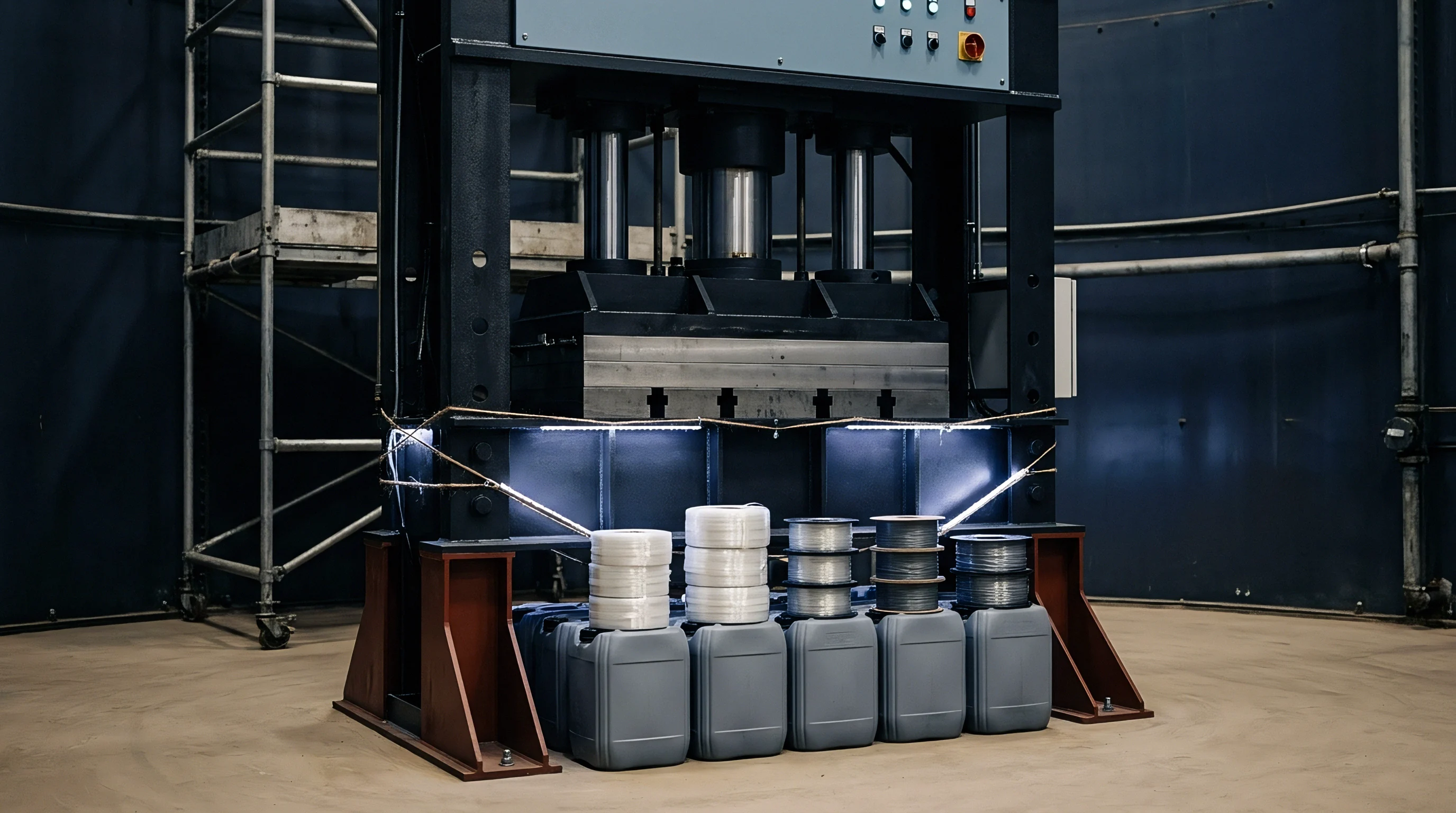
Assay
Lab testing on incoming pellets uncovers contamination that standard datasheets routinely omit. Relying solely on paper documentation leaves buyers exposed to mislabeled virgin offcuts or mixed factory scrap. Rheology and analytical chemistry give clear physical metrics that expose false post-consumer claims.
Because mechanical recycling subjects polymers to repeated thermal cycles, shear, and oxidation, it breaks polymer chains, broadens molecular weight distribution, and introduces organic contaminants. Laboratory testing measures these exact degradation signatures.
Melt flow testing under standard loads and temperatures is the first line of defense. Polypropylene tested under ISO 1133 or ASTM D1238 at 230 °C with a 2.16 kg load shows higher flow rates when repeated processing breaks polymer chains. High-density polyethylene tested at 190 °C (under 2.16 kg or 21.6 kg high load) shifts in ways that indicate either chain scission or cross-linking, depending on how much oxygen was present during reprocessing.
While virgin polyolefins feature tight melt flow tolerances, recycled compounds from municipal waste exhibit wider molecular weight distributions and unpredictable shear viscosity at high injection speeds.
Carbon-14 testing via ASTM D6866 under ISO 16620-2 yields a precision band of plus or minus 3 percent on bio-based or fossil-derived carbon ratios.
Datasheets often mislead by omission. A sheet listing a post-consumer polypropylene melt flow rate of 12 g/10 min might conceal that virgin, low-molecular-weight resin was blended in to boost a degraded 4 g/10 min recycled flake base. Differential scanning calorimetry (DSC) spots these blends by isolating thermal transition peaks.
In a lot sold as high-density polyethylene, DSC heating scans at 10 °C per minute under ISO 11357 often reveal a secondary melting peak at 163 °C ~ clear proof of polypropylene contamination from unseparated bottle caps or multilayer films.

Carbon Differential Measurement and Isotope Ratios
Radiocarbon testing under ASTM D6866 measures carbon-14 activity to distinguish modern bio-based polymers from petrochemical stock. Waste streams derived from biological sources, like bio-based PE or bio-PET, carry distinct modern radiocarbon signatures. Fossil-derived virgin polymers contain zero carbon-14 because it has long since decayed.
Using isotope ratio mass spectrometry, labs can pinpoint carbon origins and verify bio-based claims down to fractions of a percent.
Using carbon isotopes to distinguish fossil-based post-consumer plastic from virgin fossil plastic hits a clear physical limit. Since both come from crude oil or natural gas liquids, their carbon-14 levels are identical: zero. Radiocarbon assays cannot separate virgin fossil polypropylene from recycled fossil polypropylene.
While carbon testing verifies bio-based claims, mechanical testing and contaminant profiling are required to prove that fossil-derived resin was actually recycled.
| Test Method | Parameter Measured | Detection Threshold | Standard Protocol | Sample Cost Band |
|---|---|---|---|---|
| Carbon-14 Radiocarbon Assay | Bio-based vs fossil carbon fraction | 0.5 percent biogenic carbon | ASTM D6866 / ISO 16620-2 | $450 – $650 per sample |
| Differential Scanning Calorimetry | Thermal transitions and polymer contamination | 0.1 percent cross-polymer fraction | ISO 11357 / ASTM D3418 | $120 – $220 per run |
| High-Temperature Gel Permeation Chromatography | Molecular weight distribution and chain scission | Mw, Mn, and polydispersity index | ISO 16014 / ASTM D6474 | $300 – $500 per test |
| X-Ray Fluorescence Spectroscopy | Heavy metal and halogen trace additives | 10 ppm elemental concentration | ISO 18265 / ASTM F2617 | $80 – $150 per scan |
| Headspace Gas Chromatography Mass Spectrometry | Volatile organic compound odiferous residue | 1 ppm organic volatile profile | ISO 11890-2 / EN 13130 | $250 – $400 per assay |
| Methods note: Analytical detection thresholds depend on sample preparation, calibration matrix purity, and instrument baseline noise levels evaluated under laboratory environmental control conditions. | ||||

Can Chemical Tracers Definitively Prove Recyclate Proportion?
Fluorescent additives added during compounding let optical sorters read a material’s processing history. Chemical marker technology embeds sub-micron organic or inorganic tracers into virgin masterbatches. When the product eventually hits the waste stream, optical or mass spectrometers read those tracer signatures to confirm origin, material history, and pass count.
Unique spectroscopic signatures make it possible to track materials across complex supply chains.
Scaling chemical markers across the industry faces real economic and practical hurdles. Universal adoption requires agreement across global resin producers, compounders, and converters. Untracked resin streams dilute tracer concentrations whenever materials are remelted, and measuring those drops gets complicated when scrap comes from dozens of unknown converters.
Tracers work well in closed-loop systems like crate-leasing programs or automotive returnables, but open-loop municipal recycling lacks the clean baselines needed to quantify post-consumer content reliably.

Thermal and Spectroscopic Fingerprinting Techniques
DSC isolates thermal peaks that expose foreign polymers hiding inside a single-resin shipment. Attenuated total reflectance FTIR offers fast surface analysis of polymer functional groups. Oxidized polyolefins show distinct carbonyl absorption bands between 1710 cm-1 and 1740 cm-1, caused by hydroperoxide breakdown and ketone formation during UV exposure or hot processing.
Comparing the carbonyl peak area against the steady methylene bending peak at 1460 cm-1 gives a clear, quantitative measure of degradation.
High-temperature gel permeation chromatography (GPC) measures the full molecular weight distribution of polyolefins dissolved in 1,2,4-trichlorobenzene at 160 °C. Mechanically recycled polyethylene shows a noticeably broader polydispersity index ~ the ratio of weight-average to number-average molecular weight. Repeated high-shear extrusion cuts polymer chains, creating a low-molecular-weight tail that degrades impact strength and stress-crack resistance. GPC curves clearly reveal heavy regrind additions or severe thermal damage.
ICP-OES and X-ray fluorescence (XRF) detect trace elements from old additives, catalysts, and inorganic contaminants. Elemental analysis easily picks up legacy flame retardants like PBDEs, lead or cadmium stabilizers in recycled PVC, and unlisted titanium dioxide or calcium carbonate fillers. Finding undeclared inorganic fillers or restricted heavy metals usually points to scrap sourced from old industrial or electronic waste.
What testing sampling rate strikes the right balance between confirming post-consumer percentages in commodity polyolefins and keeping lab costs under control?


Crate
The receiving dock serves as the primary barrier against non-conforming polymer lots. Whether post-consumer resin arrives in gaylords, octabins, or bulk tankers, representative sampling must occur before material is discharged into production hoppers or bulk storage silos. Once incoming pellets mix with existing silo inventory, isolating contamination or returning a disputed lot becomes practically impossible.
Pellet shape and color offer instant visual clues about quality. Virgin polyolefin pellets feature uniform cuts, consistent color, and zero embedded debris. Post-consumer pellets tend to show color variation from pellet to pellet, opacity shifts, shear tails, and tiny gel inclusions.
Shifts in density signal mixed resins. Checking bulk density under ISO 60 or ASTM D1895 uncovers packing inconsistencies caused by irregular pellet sizes, which mess with gravimetric feeder accuracy on injection molding machines.
An incoming lot sample taken from a single gaylord surface layer fails to represent the density and melt flow variation across a twenty-tonne shipment.
Moisture control on incoming post-consumer pellets is critical. Hygroscopic materials like recycled PET and polyamide absorb humidity fast. Even non-hygroscopic polyolefins can trap surface moisture inside micro-voids, cracks, and rough surfaces common to recycled flake extrudate.
Moisture levels over 0.02 percent in PET or polyamide trigger severe hydrolytic degradation during processing, snapping ester or amide bonds and tanking intrinsic viscosity. Poor drying destroys PET molecular weight.
Execution of incoming lot qualification follows a strict sequential protocol at the receiving bay:
- Verify box seals, lot manifests, and shipping paperwork against approved purchase order specifications.
- Drive a multi-stage stainless steel thief sampler diagonally through the gaylord to capture material from top, middle, and bottom layers.
- Combine samples from ten percent of delivered containers into a sealed five-liter glass container to prevent moisture contamination.
- Inspect the sample immediately under daylight lamps for off-color pellets, metal specks, and black contamination.
- Test density uniformity using a desktop gradient column or gas pycnometer against target limits.
- Run a quick melt flow rate test on the composite sample under specified load and temperature settings before releasing the truck.

Bay Side Acceptance and Sampling Frequency
Using thief samplers at different depths in an octabin catches density stratification before resin hits bulk storage. Sampling standards under ISO 582 or ASTM D1898 set minimum container counts based on shipment volume. For a twenty-tonne shipment in forty octabins, protocols require sampling at least seven containers for composite testing.
Sampling only top pellets skews results, as heavier filled pellets and fines settle to the bottom during transit vibration.
Supply contracts need clear pass/fail thresholds for incoming shipments. If the melt flow rate varies by more than plus or minus fifteen percent from specification, the entire lot should be quarantined immediately. Color tolerance is measured via spectrophotometer under CIE L a b space; a delta E over 2.0 against the reference plaque signals batching inconsistency or unannounced virgin blending.

Morphological Anomalies and Contamination Flags
Uneven pellet geometry, opacity variations, and surface shear marks point to irregular cooling or mixed regrind streams. Looking at pellet cross-sections under polarized light microscopy reveals phase separation in incompatible blends. For instance, HDPE mixed with un-compatibilized polypropylene shows clear island-sea domain structures under cross-polarization, warning of poor impact resistance and early environmental stress cracking.
Embedded contaminants ~ such as unmelted engineering plastics, paper fibers, or metal flakes ~ clog melt filter screens and cause structural part defects. Running a lab single-screw extruder with a 44-micron (325-mesh) filter pack lets technicians monitor pressure buildup during a standard test run. A sharp rise in melt pressure signals high levels of non-melting particulates that would clog production hot runners and pin gates.
Sampling octabins across three vertical strata at the receiving dock keeps unmixed regrind off the molding floor. In one case, a fifty-octabin shipment of post-consumer polypropylene passed a surface visual check but jammed production hot runners because metal flakes had settled at the bottom of ten unsampled boxes. Because sign-off occurred before deep sampling, the processing plant had to absorb the entire loss.


Paperwork
Shipment paperwork for recycled resin often falls apart during audit scrutiny. Suppliers frequently offer self-declared certificates of conformity, generic green statements, or old ISO 9001 certificates as evidence of post-consumer content. None of these satisfy modern audit standards.
Proper verification demands an unbroken paper trail connecting original waste collection records to the exact lot code printed on the packaging.
Certificates of analysis carry real legal weight. A CoA is a formal representation of the material’s actual state, and its figures must come from testing conducted on that specific production batch. When a supplier submits identical melt flow, density, and impact values across consecutive shipments over six months, the data indicates template duplication rather than active batch testing.
A certificate of analysis carrying identical property values across six consecutive shipments indicates template duplication rather than active lot testing.
More than sixty percent of commercial certificates of analysis rely on self-declared mass balance credits without accompanying physical segregation proof. Accepting generic supplier statements without reviewing underlying audit reports leaves sourcing managers exposed to false labeling claims. Thorough paper verification means checking the certifier’s accreditation, confirming audit validity dates, and reconciling lot traceability matrices.
| Document Type | Issuing Authority | Core Information Content | Audit Validation Standard | Evidentiary Weight Tier |
|---|---|---|---|---|
| Third-Party Chain of Custody Certificate | Accredited Certification Body (e.g. ISCC, EUNOMIA) | Facility audit status, chain of custody model, certified site mass balance ledger | EN 15343 / ISO 22095 annual site audit | Primary (High) |
| Batch Origin Weighbill Certificate | Municipal Waste Authority / Recycling Hub | Incoming waste classification, weigh scale tickets, collection origin code | National waste transfer regulations | Secondary (High) |
| Batch Certificate of Analysis | Compounding Laboratory | Specific lot test results: MFR, density, tensile, notched Izod, moisture | ISO 17025 accredited laboratory standard | Operational (Medium) |
| Self-Declared Supplier Statement | Material Compounder / Trader | General recycled content percentage declaration, broad policy compliance claims | ISO 14021 self-declaration guidelines | Low (Insufficient alone) |

Audit Trail Structures and Waste Origin Documents
Municipal collection receipts provide the baseline proof for post-consumer claims. Under ISO 14021, post-consumer material must originate from household, commercial, or institutional end-users who used the product for its intended purpose. Scrap created during manufacturing or converting is classified as post-industrial.
Origin paperwork must explicitly confirm the material was collected after end-use service.
Traceability matrices track material movement across every processing node. Collection sites generate weigh scale tickets and transfer manifests showing raw tonnage. Wash lines issue yield reports logging losses during sorting, cold washing, hot washing, and drying.
The compounding plant logs feed rates, additive ratios, and pellet yields. An unbroken audit trail ties these mass balances together, accounting for every kilogram lost along the way.

Certificate of Analysis Discrepancies
Compounder datasheets often cite figures from pristine laboratory specimens instead of actual production lots. ISO metrics require specific sample preparation details ~ such as injection-molded ISO 3167 Type A specimens conditioned at 23 °C and 50 percent relative humidity for 48 hours per ISO 291. Listing tensile strength under ISO 527 without stating testing speed or conditioning renders the number meaningless.
Audit standards mandate specific mandatory data elements on every valid lot certificate:
- Unique Lot Identification Code that links directly to extruder run logs, raw material receipts, and production timestamps.
- Standardized Melt Flow Rate Figures reported with exact test load, temperature, and standard protocol, like ISO 1133 Condition D (190 °C / 2.16 kg).
- Ash Content Metrics measured under ISO 3451-1 Method A to quantify inorganic mineral fillers and glass residue.
- Notched Impact Resistance Values tested via ISO 179-1 Charpy or ISO 180 Izod at specified ambient or sub-zero temperatures.
- Accredited Audit Certification Numbers identifying the third-party registrar and valid site registration credentials for the facility.
Withholding wash-line yield logs under proprietary trade-secret assertions undermines transaction validity: without source documentation, post-consumer declarations fail to withstand statutory tax audits.
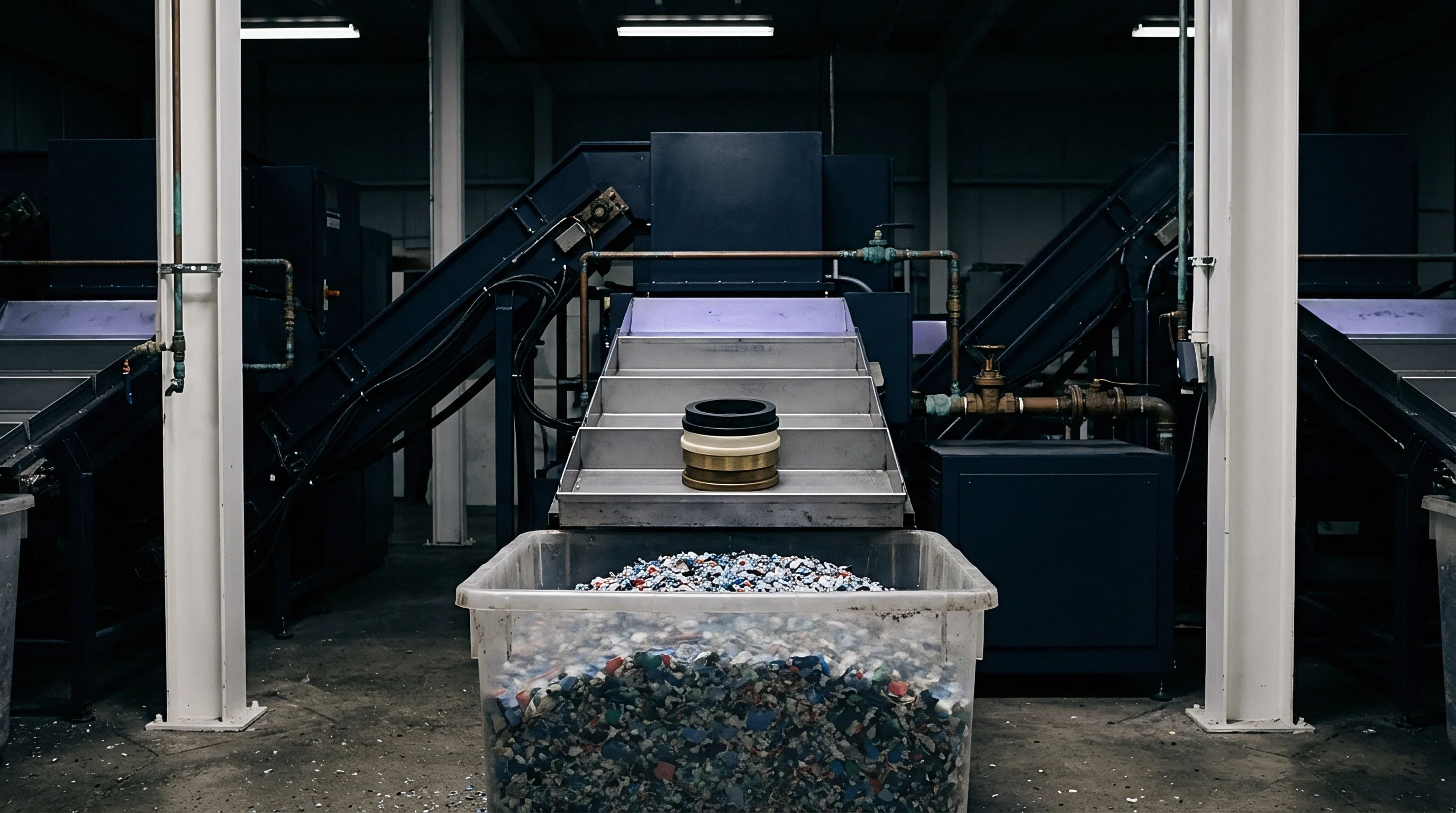

Penalty
Regulators in major import markets now impose heavy financial penalties on unverified plastic packaging. Buying resin backed by unverified or false recycled content claims exposes importers, converters, and brand owners to statutory fines, retroactive taxes, and customs seizures. The ultimate cost easily wipes out initial raw material savings when claims fail an administrative tax audit.
EU member states and neighboring markets enforce strict packaging taxes on non-recycled plastic. The UK Plastic Packaging Tax levies £217.85 per tonne on packaging produced in or imported into the UK with less than thirty percent verified recycled content. Similar rules across continental Europe charge between €450 and €800 per tonne of non-compliant plastic.
Importers bear the direct legal burden of proving recycled content during customs reviews.
European packaging tax frameworks place statutory liability on the importer of record, making unverified supplier statements a direct tax exposure risk.
Commercial risks stretch well beyond taxes into regulatory enforcement and brand damage. Consumer protection agencies actively prosecute greenwashing under unfair trade rules. Asserting 100 percent post-consumer content via unapproved mass balance credits can trigger administrative fines and forced product recalls.
On the plant floor, unexpected regrind substitution leads to packaging failures, tool damage, and costly downtime.

Tax Exposure and Statutory Enforcement
European packaging taxes levy per-tonne charges on imports that cannot document minimum recycled content. During statutory tax audits, customs officials demand complete evidentiary dossiers. Since the burden of proof rests entirely on the importer, offering self-declared compounder statements without third-party audit credentials leads to immediate rejection, retroactive tax assessments, default penalties, and higher audit rates on future shipments.
Customs authorities use chemical analysis and data cross-checking to flag suspicious shipments. Inconsistencies between tariff codes, pricing, and origin processing capacity often spark formal investigations. For example, declaring high-grade post-consumer resin at prices well below prevailing virgin market indexes triggers mandatory sampling and customs holds, piling up demurrage fees while technical audits take place.

Contractual Risk Allocation and Indemnity Clauses
Purchase orders written without explicit verification terms leave buyers fully exposed to non-compliance fines. Standard purchasing terms should explicitly pass regulatory penalties, tax liabilities, and legal costs back to the supplier if delivered resin fails independent verification or lacks valid audit documentation.
Effective commercial risk management requires structured contracting protocols applied across all resin supply agreements:
- Statutory Tax Indemnification obligates the supplier to reimburse all regional packaging taxes, duties, and interest resulting from invalid documentation.
- Third-Party Verification Cost Allocation shifts all testing, lab, and audit expenses to the supplier if independent analysis shows recycled content below contract specs.
- Mandatory Right-to-Audit Access gives buyer audit teams direct access to compounding plants, wash lines, and batch records on 48 hours’ notice.
- Quarantine and Replacement Mechanics requires the supplier to replace non-conforming lots within seven business days while covering demurrage and freight.
Supply contracts that fail to assign tax liabilities explicitly leave buyers holding full financial responsibility for statutory defaults.


Dispute
Disputes surge when delivered resin fails to match contract specs for melt flow or tensile strength. Resolving post-consumer recyclate disagreements takes clear technical protocols established before signing purchase orders. When a pellet shipment causes processing instability, screen pack blinding, or part failures on the shop floor, having preset dispute mechanisms avoids drawn-out legal battles.
Root cause analysis clarifies whether part failures stem from resin degradation, contamination, inadequate drying, or tooling issues. Holding sealed reserve samples from initial dock inspections provides clean baseline material for referee testing. Certified ISO 17025 laboratories can then perform binding arbitration assays to resolve technical disputes objectively.
Contract enforceability depends on realistic property tolerances. Because municipal waste feedstocks vary, post-consumer recyclates naturally show wider lot-to-lot variation than virgin resins. Demanding zero variance in melt flow or density is unworkable.
Purchasing agreements should set practical tolerance bands around target numbers, linking property deviations directly to price adjustments or rejection rights.

Arbitration Mechanisms for Contaminated Lots
Technical specifications in the purchase order serve as the legal baseline during disputes. When receiving tests flag contamination, the buyer quarantines the lot and issues a formal notice of non-conformance within five business days, attaching test reports, sample chain-of-custody logs, and label photos. The supplier then has the right to perform joint sampling at the buyer’s plant within a set timeframe.
If parties dispute initial bay-side results, independent referee laboratories step in. Contracts should pre-name two accredited labs before order placement. If referee testing confirms that property deviations exceed contract limits, the supplier covers all testing fees, retrieves the lot at their own expense, and issues full credit.
If tests show the resin meets specifications, the buyer accepts the shipment and pays the lab fees.

Property Variance Limits in Recyclate Contracts
Tolerance windows must balance physical processing realities against finished part requirements. Setting realistic limits prevents arbitrary lot rejections while keeping unusable resin off the production line. For mechanical polyolefin recyclates, melt flow rate tolerances typically allow a variance of plus or minus fifteen to twenty percent from target values.
Mechanical properties ~ like flexural modulus (ISO 178) and notched Charpy impact (ISO 179-1) ~ usually operate within a plus or minus ten percent window.
| Property Metric | Standard Test Protocol | Nominal Target Example | Allowed Contract Variance | Contractual Commercial Remedy |
|---|---|---|---|---|
| Melt Flow Rate (MFR) | ISO 1133 / ASTM D1238 | 8.0 g/10 min (230 °C / 2.16 kg) | +/- 15.0 percent (6.8 – 9.2 g/10 min) | Lot quarantine or price discount if 15-25% off target; mandatory rejection above 25% |
| Density | ISO 1183-1 Method A | 0.952 g/cm³ at 23 °C | +/- 0.004 g/cm³ | Rejection if density shifts indicate cross-polymer contamination |
| Flexural Modulus | ISO 178 / ASTM D790 | 1,200 MPa | +/- 10.0 percent (1,080 – 1,320 MPa) | 5% invoice reduction per 50 MPa drop below lower tolerance limit |
| Ash Content (Mineral Filler) | ISO 3451-1 Method A | 2.0 percent by weight | +1.0 / -0.5 percent | Price adjustment calculated against virgin polymer mass equivalent |
| Moisture Content (PET/PA) | ISO 15512 Method B | 0.02 percent by weight (200 ppm) | Max 0.03 percent at bay delivery | Supplier pays re-drying operational costs if delivered above 0.03% |
| Summary note: Tolerance thresholds apply to composite lot samples collected under ISO 582 sampling rules; failure on any single primary property grants the buyer right of quarantine. | ||||
Conditioning payment release on third-party laboratory verification secures procurement operations against non-compliant materials. Building robust supply contracts requires objective testing standards, verified chain-of-custody documentation, and disciplined receiving dock inspections. Sourcing teams that replace self-declared vendor statements with enforceable technical thresholds protect operating margins against regulatory fines and plant downtime.
Balancing recycling yields with part consistency depends on establishing clear batch-level documentation before placing orders. Compounders willing to undergo independent testing, supply full collection trails, and sign explicit tax indemnities demonstrate real capability in post-consumer resin supply. Grounding purchasing in physical verification, tight technical contracts, and disciplined receiving inspections ensures specified recycled content holds up under regulatory scrutiny while running reliably on the molding line.