Melt Shear History and Contaminant Catalyzed Scission in Post Consumer Polyolefin Silo Blends
Deactivate metal catalysts and neutralize acid traces with targeted additives to stabilize viscosity drift and optimize landed cost per good recycled part.


Shear
Processing equipment breaks down polymer chains long before the resin ever reaches a secondary converter. Post-consumer polyolefin feeds carry this physical history in their molecular weight distributions. During primary polymerisation, virgin high-density polyethylene and polypropylene are homogenised under tightly regulated thermal conditions.
Subsequent conversion ~ whether into thin-wall injection-molded parts or blow-molded bottles ~ forces the melt through steep velocity gradients in extruder barrels and runner systems. Once collected as waste, the material undergoes shredding, friction washing, and multi-stage re-granulation, accumulating structural damage through every thermal pass.
This mechanical stress triggers two competing microstructural responses: chain disentanglement and homolytic carbon-carbon bond cleavage. In a twin-screw compounding extruder, shear rates between screw flights and barrel walls regularly pass 1,000 inverse seconds at melt temperatures between 190 °C and 240 °C. When shear stress exceeds the rupture strength of carbon-carbon single bonds, macro-radicals form. In polypropylene homopolymers and random copolymers, these alkyl free radicals undergo rapid tertiary carbon scission, driving chain degradation and skewing the molecular weight distribution heavily toward low-molecular-weight fractions.
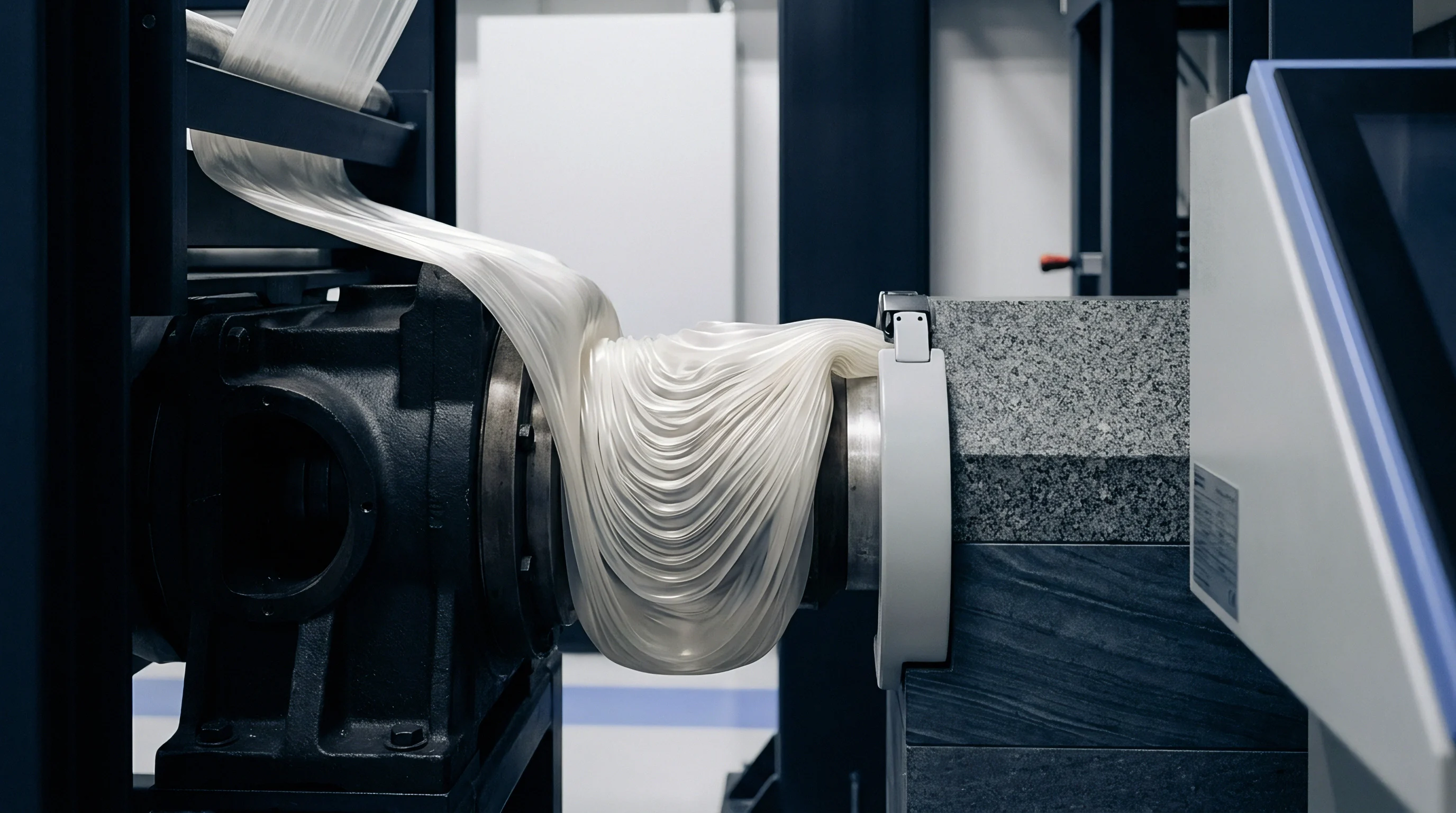
Viscoelastic Response of Polymer Matrices under Thermo-Mechanical Stress
Polypropylene degrades systematically under thermo-mechanical loads. The tertiary carbon positioned at every second backbone site offers an easy target for hydrogen abstraction, followed immediately by chain rupture. Tested under ISO 1133 Condition M at 230 °C with a 2.16 kg load, post-consumer polypropylene run through four extrusion passes sees its melt flow rate jump from a virgin baseline of 3.0 grams per 10 minutes to well over 28.0 grams per 10 minutes.
That sharp rise reflects a collapse in weight-average molecular weight and zero-shear viscosity.
High-density polyethylene behaves along different lines under matching shear gradients. Secondary alkyl radicals along the linear polyethylene backbone take two competing routes: chain scission or radical-radical recombination. Lower temperatures and moderate shear favor recombination, creating long-chain branches that alter melt elasticity while barely shifting mass-average molecular weight.
Hotter melt temperatures and intense shear shift the balance toward scission, dragging down tensile yield strength and introducing die swell distortion during profile extrusion downstream.
A four-fold increase in processing shear rate at 220 °C elevates the melt flow rate of post-consumer polypropylene from 4.2 to 18.5 grams per 10 minutes under ISO 1133 test parameters.
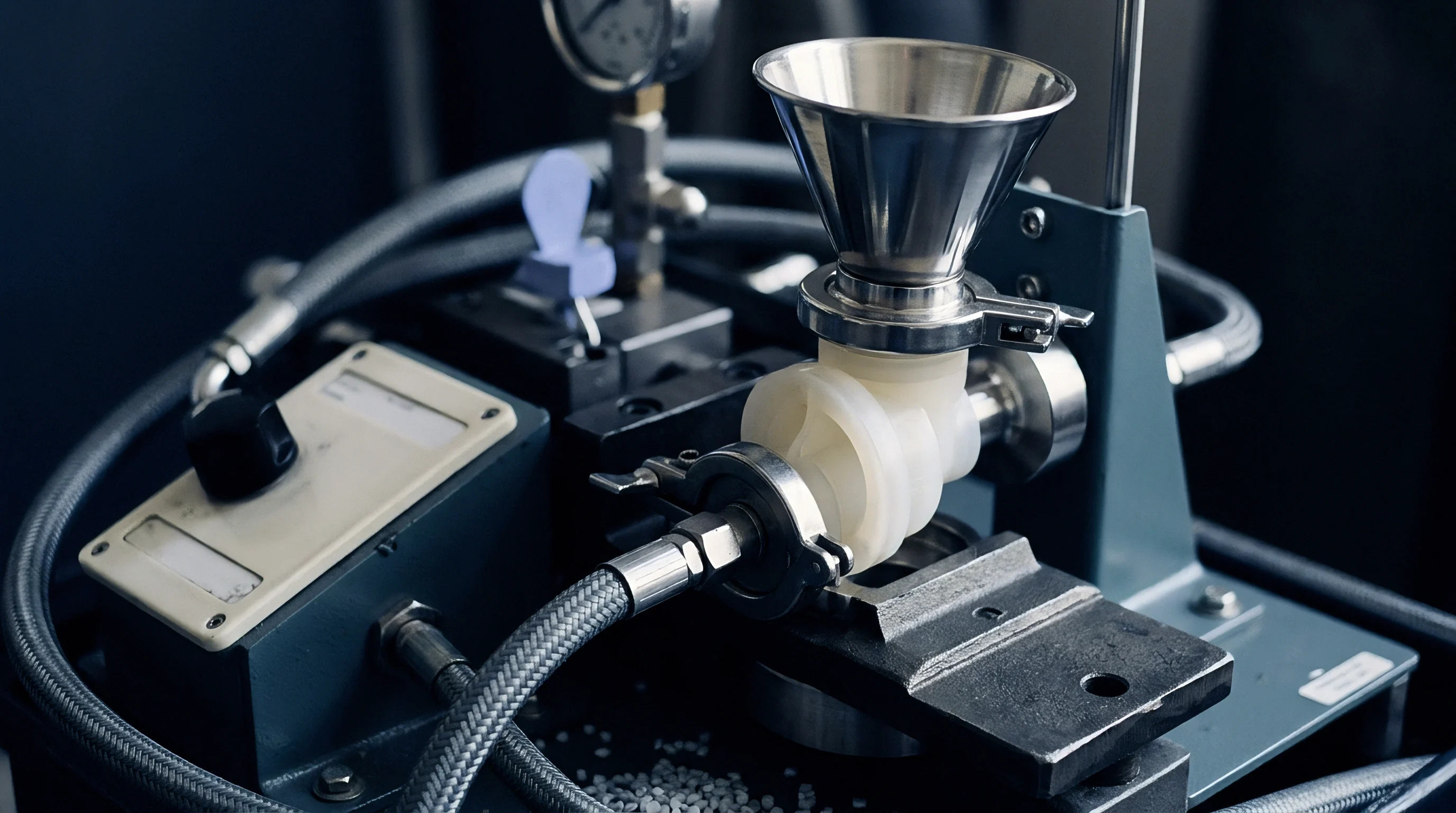
Extrusion Screw Geometry and Local Shear Profiling
Screw geometry governs how shear stress distributes through post-consumer melt blends. High-intensity kneading blocks and reverse elements originally intended to disperse pigments in virgin resin create intense energy dissipation zones in re-granulation lines. High shear concentrated across tight flight clearances can drive local melt temperatures 20 °C to 40 °C above nominal barrel setpoints, touching off thermal-oxidative degradation cascades well before the bulk melt homogenises.
Residence time distribution through the barrel sets the total heat history per unit mass. A tight residence profile keeps thermal exposure uniform, whereas a broad distribution holds a portion of the resin at peak temperatures under continuous shear. When post-consumer polyolefin flake contains cross-linked particles or uneven flake gauges, plasticization becomes erratic.
Line operators often counter this by ramping up screw speed, which only accelerates shear scission through lower molecular weight fractions.
Shear degradation permanently warps the relaxation spectrum of a polyolefin melt. As scission trims molecular weight, entanglement density drops, cutting low-frequency storage modulus during rotational dynamic mechanical analysis. The lost melt strength shows up immediately on converting equipment ~ as parison sag during blow molding or melt fracture in high-speed blown film lines.
This instability causes part-to-part weight scatter, widens wall thickness tolerances, and pushes up scrap rates on automated molding lines.


Catalysis
Impurities embedded in post-consumer polyolefins turn ordinary thermo-mechanical stress into rapid, self-sustaining chemical breakdown. Recycled streams bring together materials from dozens of sources, blending residual synthesis catalysts, organometallic pigments, metal wear fragments, and acidic residues during re-extrusion. These contaminants act as heterogeneous or dissolved homogeneous catalysts, dropping the activation energy for hydroperoxide decomposition and backbone scission far below the thresholds seen in clean virgin resin.
Polymerisation catalyst residues survive through multiple processing lifecycles. Legacy Ziegler-Natta systems leave sub-micron traces of titanium tetrachloride and trialkylaluminum complexes locked inside the matrix. At compounding temperatures, these transition metal sites interact with dissolved oxygen or existing hydroperoxides to spin off alkoxy and alkylperoxy radicals via redox cycles.
These radicals attack neighboring polymer chains, continuing chain-cleavage loops independent of mechanical shear.
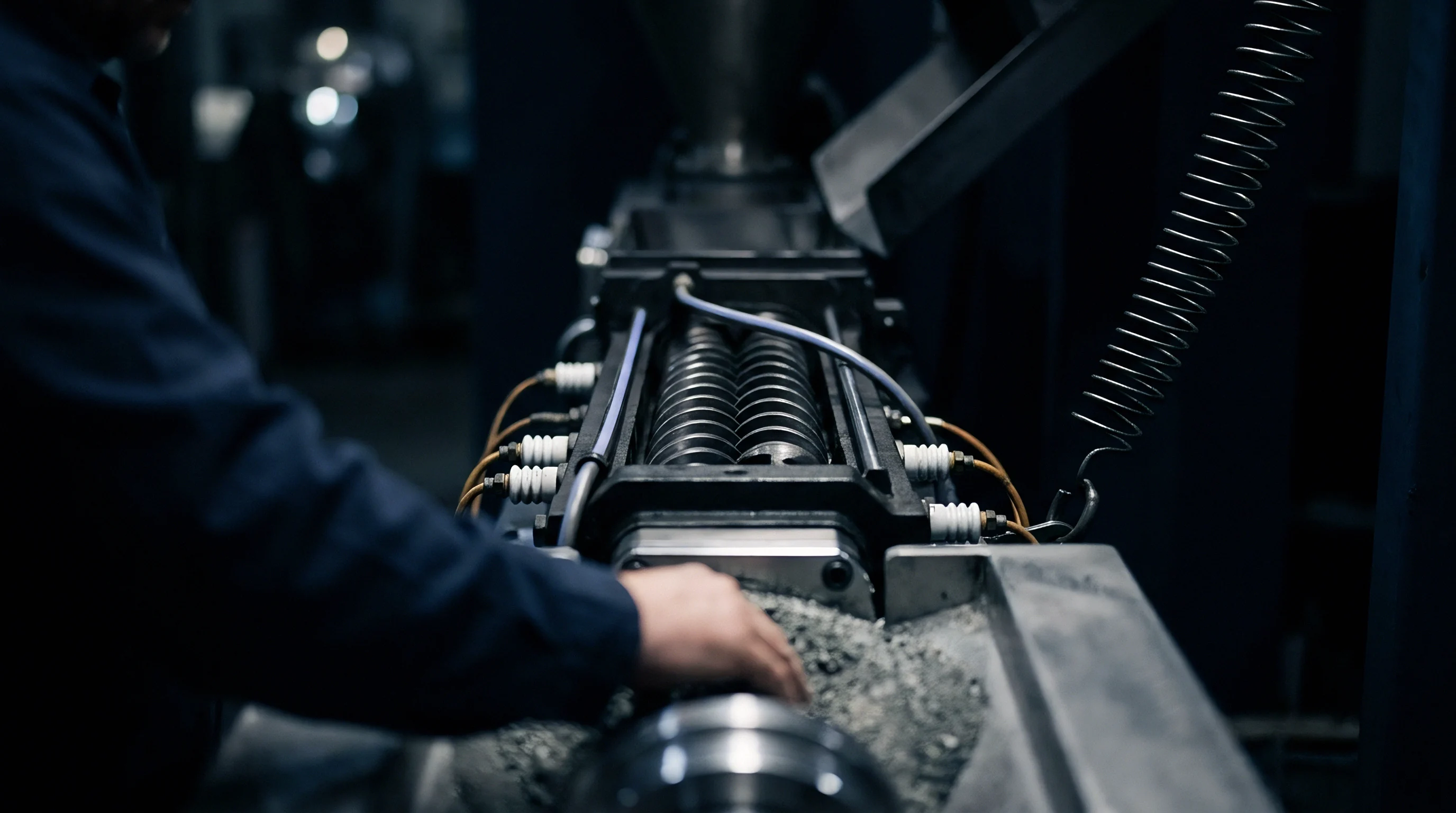
Transition Metal Redox Cycling and Auto-Oxidation Kinetics
Transition metal contaminants serve as multivalent catalysts for hydroperoxide breakdown. Shredder blade erosion supplies trace iron, scrap wiring introduces copper, and synthesis residues provide titanium ~ all driving classic Haber-Weiss and Fenton-type reactions. These catalytic cycles split polymer hydroperoxides into reactive alkylperoxy radicals without requiring high thermal activation energies.
The reaction follows a direct redox loop. A transition metal ion in its lower oxidation state reduces a polymer hydroperoxide into an alkoxy radical and a hydroxyl ion. The newly oxidized metal ion then encounters another hydroperoxide molecule, returning to its reduced state while producing an alkylperoxy radical and a proton.
This regeneration loop continuously consumes hydroperoxides to yield radical initiators, rapidly stripping down molecular weight even during low-temperature extrusion.
Transition metal contaminants accelerate hydroperoxide breakdown via redox cycling, eliminating the thermal induction phase typically observed during virgin polyolefin processing.

Acidic Contamination and Secondary Catalyst Scavenging
Sorting escapes introduce foreign polymers that release acidic fractions during compounding. Poly(vinyl chloride) traces as low as 50 parts per million dehydrochlorinate above 180 °C, releasing hydrochloric acid gas into the polyolefin melt. Residual acetic acid from ethylene-vinyl acetate or acidic surfactants left over from wash tanks likewise introduce free protons into the extruder barrel.
These acidic species rapidly deactivate basic additives. Secondary phosphite antioxidants, which clear hydroperoxides by converting them into inert alcohols, hydrolyze when exposed to acidic contaminants. The reaction degrades active phosphite molecules into inert phosphoric acid derivatives, removing the resin’s secondary thermal defense.
At the same time, acid-catalyzed scission attacks ester linkages in co-polymers or residual polyesters, producing low molecular weight carboxylic acids that further accelerate matrix degradation.
Contaminant mechanisms in post-consumer polyolefins lead to distinct processing and material failures:
- Titanium Residue Homolytic Cleavage drives tertiary carbon scission in polypropylene matrices, resulting in immediate viscosity drops and elevated melt flow rates during pelletization.
- Copper Catalyzed Auto-Oxidation accelerates radical propagation at lower operating temperatures, causing severe discoloration, carbonyl index increases, and embrittlement during downstream thermal storage.
- Hydrochloric Acid De-phosphitization hydrolyzes secondary phosphite antioxidants into inactive phosphoric acid derivatives, terminating hydroperoxide passivation mechanisms across the melt stream.
- Iron Oxide Radical Generation converts polymer hydroperoxides into active alkoxy radicals, causing micro-gel formation in high-density polyethylene through localized cross-linking loops.
- Acidic Ester Scission degrades co-monomers and trace polar impurities, yielding volatile organo-acid species that generate pinhole voids, unpleasant odors, and surface splay in molded components.
Contaminant-driven degradation undermines the mechanical reliability of recycled resins. Unlike virgin polyolefins, which show a clear induction period before thermo-oxidation begins, contaminated post-consumer materials generate free radicals the instant they melt. Off-the-shelf stabilizer packages tailored for virgin feeds fail against multivalent metal ions and acidic species, leaving the polymer susceptible to ongoing chain scission through conversion and parts service.
The unaddressed presence of metal residues leaves open the question of whether chemical passivation can completely halt radical generation or if mechanical removal of sub-micron metallic fragments represents the only viable path to long-term melt stability.


Diagnostics
Evaluating recycled polyolefin blends requires separating mechanical shear damage from contaminant-driven chemical scission. Standard single-point melt flow rate testing cannot distinguish whether a high flow index stems from repetitive extrusion cycles or active catalytic cleavage driven by transition metals. Isolating these mechanisms takes a combined protocol: dynamic oscillatory rheology, high-temperature gel permeation chromatography, and oxidative induction time testing.
Dynamic mechanical rheology catches subtle changes in chain architecture. Measuring complex viscosity, storage modulus, and loss modulus across frequencies from 0.01 to 100 rad/s under nitrogen reveals structural damage without introducing fresh oxidative artifacts. Resins that suffered purely mechanical scission display a predictable drop in zero-shear viscosity alongside a parallel shift in relaxation times.
By contrast, lots undergoing metal-catalyzed oxidation show distinct rheological signatures, including terminal slope anomalies on Cole-Cole plots and elevated loss tangents at low frequencies.

What Analytical Threshold Isolates Shear Degradation from Metal Catalyzed Scission?
Distinguishing shear history from catalytic scission centers on the relationship between molecular weight loss and oxidative stability. High-temperature gel permeation chromatography in 1,2,4-trichlorobenzene at 160 °C yields the absolute molecular weight distribution: number-average, weight-average, and z-average. Mechanical shear preferentially cleaves the longest chains, narrowing the polydispersity index.
Catalytic scission degrades chains more indiscriminately, broadening polydispersity and leaving a heavy low-molecular-weight tail.
High-pressure oxidative induction time measurements under ISO 11357-6 provide the complementary baseline. Samples are heated to 200 °C under nitrogen before switching the cell purge to oxygen at 3.5 MPa. Shear-degraded resins retain measurable induction times provided their stabilizer packages are intact.
When active transition metals are present, induction times collapse to near zero because residual iron, copper, or titanium turns incoming oxygen into free radicals immediately.
Standard oxidative induction testing per ISO 11357-6 reveals zero residual stability in post-consumer polyolefin blends containing transition metal impurities exceeding 15 parts per million.
Two post-consumer high-density polyethylene lots arriving with identical melt flow rates of 2.0 grams per 10 minutes (190 °C / 2.16 kg) illustrate why this diagnostic distinction matters. Standard receiving checks would clear both as identical material, yet in-depth analysis uncovers divergent structures that dictate how each handles on the conversion line.
| Parameter | Test Method | Virgin HDPE Reference | Lot A (High Shear History) | Lot B (Metal Catalyzed Scission) |
|---|---|---|---|---|
| Melt Flow Rate (190 °C / 2.16 kg) | ISO 1133 | 0.85 g/10 min | 2.00 g/10 min | 2.00 g/10 min |
| Weight-Average Mw | HT-GPC (160 °C) | 185,000 g/mol | 125,000 g/mol | 110,000 g/mol |
| Polydispersity Index (Mw/Mn) | HT-GPC (160 °C) | 6.2 | 4.1 | 8.8 |
| Zero-Shear Viscosity (Eta-0) | ISO 6721-10 (190 °C) | 18,500 Pa·s | 7,200 Pa·s | 4,800 Pa·s |
| Oxidative Induction Time (200 °C) | ISO 11357-6 (O2) | 45.0 min | 22.5 min | 1.8 min |
| Titanium / Iron Content | ICP-MS (ISO 17025) | < 1.0 ppm | 2.4 ppm | 28.5 ppm |
The comparative data shows that Lot A experienced straightforward shear degradation: its molecular weight distribution narrowed, yet it preserved substantial oxidative stability. Lot B suffered catalytic scission driven by high transition metal content. Its low oxidative induction time and expanded polydispersity index point to rapid degradation during molding, threatening mechanical performance despite matching Lot A on initial flow index.
Inductively Coupled Plasma Mass Spectrometry provides direct quantification of these catalytic impurities. Microwave-assisted digestion in concentrated nitric and sulfuric acid frees bound metals into aqueous solution, allowing ICP-MS to quantify titanium, aluminum, iron, copper, and zinc down to parts-per-billion levels. These figures give compounders an empirical basis for stabilizer additions rather than relying on trial and error.
Fourier Transform Infrared Spectroscopy screens for carbonyl groups formed during chain cleavage. The carbonyl index ~ taken as the ratio of the 1715 cm⁻¹ carbonyl peak against the reference band at 1378 cm⁻¹ for polypropylene or 1463 cm⁻¹ for polyethylene ~ tracks cumulative oxidative damage. A high carbonyl reading paired with a depleted oxidative induction time confirms active, metal-assisted matrix oxidation.
A reliable analytical rule of thumb dictates that any post-consumer resin lot displaying a polydispersity expansion above eight alongside an oxidative induction time below five minutes will suffer rapid viscosity collapse during re-extrusion regardless of processing temperature adjustments.

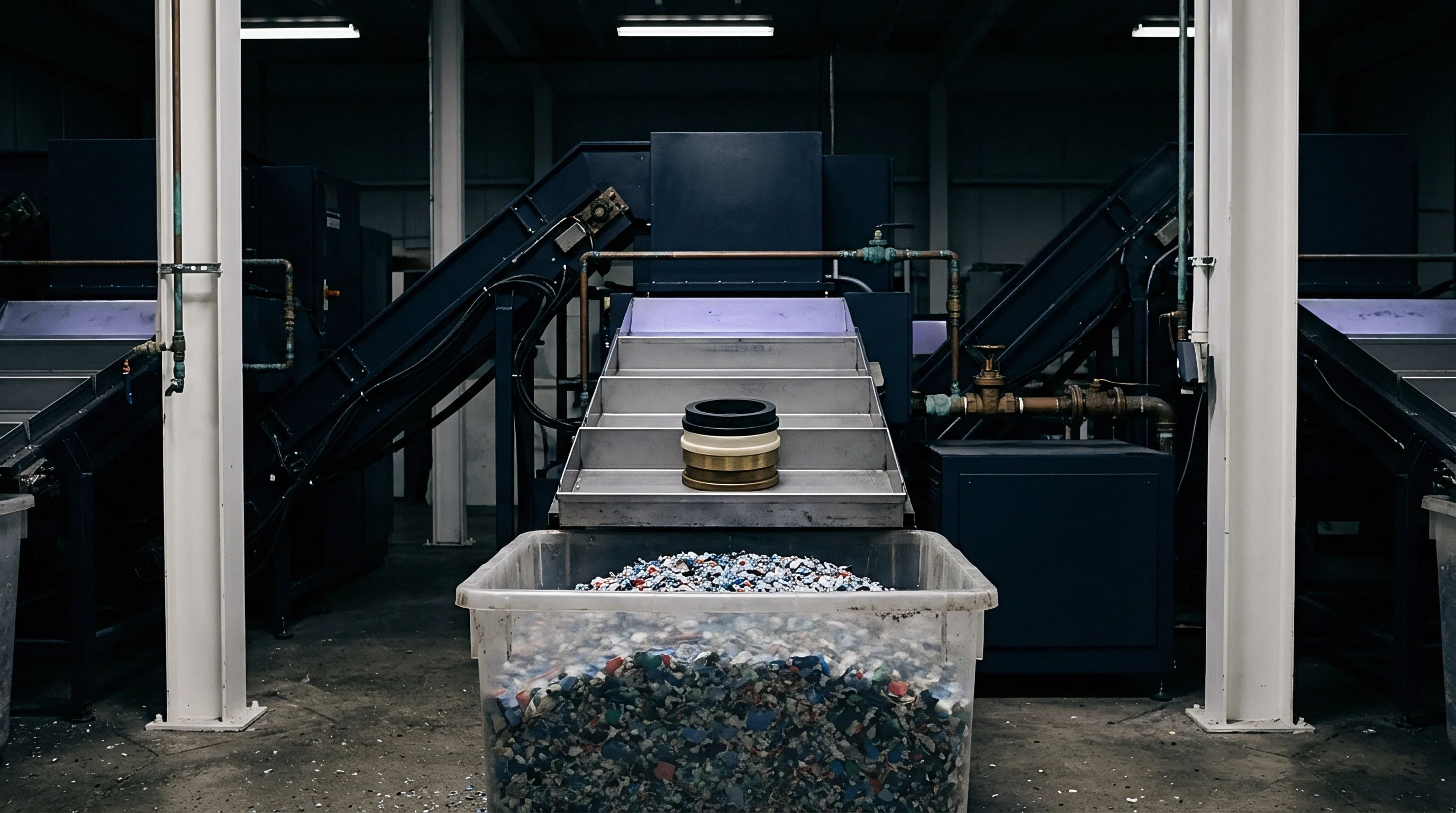
Silo
Recycling facilities rely on blending silos to smooth out lot-to-lot variations in post-consumer resins. Reprocessors store reground flake or compounded pellets in silos holding between 20 to 100 metric tonnes. Dynamic gravity blenders draw pellets from multiple discharge ports and return them to the top of the vessel, blending older material with incoming feeds to present uniform average properties to the converting plant.
Bulk blending achieves gross uniformity, but it also buries sharp micro-scale differences. When pellets degraded by heavy shear mix with pellets laden with active transition metals, composite tests for density and average melt flow rate may fall cleanly within specification. Individual pellets nonetheless retain their distinct thermal and chemical degradation states, creating localized viscosity surges in the converter’s barrel.

Intra-Silo Stratification and Segregation Dynamics
Differences in particle size, bulk density, and pellet shape cause mechanical segregation during filling and draw-off. Uniform, spherical pellets drop down central gravity channels faster, whereas irregular flakes or fines migrate toward silo walls. This core-flow pattern produces property drift over the course of an unloader cycle, forcing converting lines to handle variable melt viscosity as the silo empties.
Common sampling techniques frequently introduce heavy bias. Single-point thief samples pulled from lower inspection ports capture only nearby resin, missing contaminated or degraded pockets held higher in the bed. Pneumatic inline sampling during vessel filling is the minimum sound practice for collecting representative composite samples for Certificate of Analysis verification.
Evaluating blending efficiency requires tracking melt flow rate spread across multi-point discharge samples over 24-hour converter production runs.
- Install dynamic multi-point pneumatic sampling valves along the main vertical transfer tube leading into the blending silo vessel.
- Collect individual 500-gram composite resin samples at ten-minute intervals throughout the entire pneumatic vessel loading process.
- Combine and homogenize the individual sample increments in a laboratory tumble blender to form a primary composite lot sample.
- Extract six sub-samples from top, middle, and bottom quadrant ports after completing a minimum of three full silo gravity recirculation cycles.
- Perform individual single-point melt flow rate testing per ISO 1133 on each sub-sample to calculate intra-silo coefficient of variation.
- Reject the silo lot for converting operations if the melt flow rate coefficient of variation across all internal sampling points exceeds 8.5 percent.
Property swings inside a silo create serious processing headaches on high-speed molding lines. When a batch carrying high catalytic metal concentrations reaches the injection barrel, a sudden drop in melt viscosity causes parting-line flash, cuts packing pressure, and leaves sink marks. A subsequent parcel of high-viscosity, shear-free material then leads to short shots, high cavity pressures, and potential mold damage.
Closed-loop extruder pressure feedback controls can adjust barrel temperatures and injection velocities to absorb gradual material shifts, but intra-silo property swings still produce dimensional defects and scrap on the line.


Additives
Managing prior shear damage and catalytic scission in recycled polyolefins requires dedicated re-stabilization chemistry. Virgin resins rely on basic hindered phenols and secondary phosphites formulated for a single thermal pass. Post-consumer feedstocks need multi-functional stabilization systems that can simultaneously passivate active metal residues, neutralize free acids, and stop hydroperoxide decomposition during high-shear compounding.
Metal deactivators serve as the core defense against catalytic scission in contaminated streams. Hydrazine derivatives like N,N’-bis(3,3,5-di-tert-butyl-4-hydroxyphenylpropionyl)hydrazide chelate multivalent transition metal ions into stable, non-catalytic complexes. Binding directly to titanium, iron, and copper sites blocks redox pathways, preventing metal-catalyzed hydroperoxide cleavage even under high compounding temperatures.

Acid Scavenging Mechanics and Hydrotalcite Passivation
Acidic fragments from degrading PVC or wash-bath residues must be neutralized before they can attack phosphite stabilizers. Synthetic hydrotalcites, such as magnesium aluminum hydroxycarbonates, act as effective acid catchers in polyolefin melts. Hydrotalcite crystals exchange interlayer carbonate ions for chloride or carboxylate species, binding acidic protons permanently inside an inorganic lattice.
Primary hindered phenols must be paired with high-stability organophosphite or phosphonite secondary antioxidants for thorough melt defense. Trivalent organophosphites react stoichiometrically with hydroperoxides, converting them to inert alcohols while oxidizing into stable phosphates. Because recycled resins carry severe shear damage, secondary antioxidant loadings must be raised to maintain an active stabilizer reserve for final conversion.
Incorporating hydrotalcite acid scavengers at 0.15 weight percent prevents the catalytic hydrolysis of secondary phosphite antioxidants in post-consumer polyolefin blends.
Additive selection depends on contaminant concentration, shear history, and the converter’s operating window. The table below lists standard re-stabilization systems formulated for post-consumer polyolefin blends.
| Additive Class | Chemical Structure / Compound | Target Mechanism | Effective Dosage | Cost Increment per Tonne |
|---|---|---|---|---|
| Primary Antioxidant | Sterically Hindered Phenol (Irganox 1010) | Scavenges alkylperoxy radicals; terminates propagation. | 0.10 – 0.25 wt% | $4.50 – $11.25 |
| Secondary Antioxidant | Organophosphite (Irgafos 168) | Decomposes hydroperoxides into inert alcohols. | 0.15 – 0.35 wt% | $5.25 – $12.25 |
| Metal Deactivator | Oxalic Acid Bis-Hydrazide (Irganox MD 1024) | Chelates transition metals (Ti, Fe, Cu); halts redox loops. | 0.05 – 0.15 wt% | $3.75 – $11.25 |
| Acid Scavenger | Synthetic Hydrotalcite (DHT-4A) | Neutralizes free HCl and carboxylic acids; prevents hydrolysis. | 0.10 – 0.20 wt% | $2.80 – $5.60 |
| Rheology Modifier | Dialkyl Peroxide / Nitroxide Radical | Controlled branching or scission adjustment for MFR targeting. | 0.02 – 0.08 wt% | $1.80 – $7.20 |
Full stabilization adds raw material expense up front, but it prevents property failures on converting lines. Stabilized post-consumer resins maintain melt strength, resist yellowing, emit fewer volatile odors, and perform more reliably in long-term thermal aging than un-stabilized grades.
Restoring viscoelastic balance in shear-degraded polyethylene often requires adding radical precursors or long-chain branching agents. Reactive compounding with organic peroxides under controlled barrel temperatures introduces sparse intermolecular cross-links. This raises low-frequency melt viscosity and restores parison stability for blow molding without triggering high-molecular-weight gel defects.
A standard procurement contract line specifies that “The post-consumer compound shall contain a minimum active metal deactivator content of 0.10 percent by weight and display a residual Oxidative Induction Time exceeding 20 minutes at 200 °C per ISO 11357-6, binding the supplier to full catalytic passivation across every delivered silo lot.”


Qualification
Commercial qualification of recycled polyolefin blends requires linking laboratory testing directly to purchasing terms and landed-cost calculations. Buying post-consumer resin strictly on delivered price per metric tonne creates severe production exposure when lots carry unaddressed shear history or active metal residues. Sound procurement rules establish statistical process control limits for key physical metrics and place the financial burden of off-spec property swings on the compounder.
Certificate of Analysis standards must set multi-point acceptance windows rather than single-point targets. Melt flow specifications need to state target values alongside tight batch-to-batch standard deviation limits. Embedding high-temperature GPC parameters, residual oxidative induction time thresholds, and ICP-MS metal maximums into supply agreements protects converters against material breakdown on the production floor.

Commercial Risk Mitigation and Receiving Inspection Logic
Incoming lot qualification protocols must verify rheological stability before bulk tankers discharge into plant silos. Technicians pull representative samples from front, center, and rear compartments. Screening tests ~ including 230 °C melt flow rate, furnace ash testing, and oxidative induction time via portable DSC ~ deliver pass-fail decisions within 45 minutes of a delivery arriving.
Plants must track landed cost per acceptable molded part rather than price per kilogram of resin. Un-passivated catalytic contaminants increase internal scrap rates, accelerate mold wear through acidic corrosion, lengthen cycle times through warpage, and elevate field failure rates. Modest investments in resin stabilization regularly generate net manufacturing savings.
Incoming lot qualification prior to silo discharge follows a sequential verification gate:
- Document Inspection and COA Verification confirms that every delivered bulk tanker carries a certified lab report containing multi-point MFR, ash content, and residual OIT figures matching contract specifications.
- Pneumatic Tanker Compartment Sampling extracts composite resin sub-samples from top hatch access ports across all individual shipping compartments using calibrated stainless steel thief samplers.
- Rapid Melt Flow Rate Verification measures flow index under ISO 1133 standard parameters to ensure the delivered lot falls within the designated plus-or-minus 10 percent target viscosity window.
- Differential Scanning Calorimetry OIT Screening evaluates thermal stability at 200 °C under pure oxygen to verify residual primary and secondary antioxidant levels exceed minimum 15-minute operational limits.
- Ash Content and Inorganic Fill Analysis quantifies total inorganic loading via thermogravimetric analysis or muffle furnace calcination at 600 °C to detect filler substitution or wash-stage failure.
- Moisture Content Desiccant Titration measures moisture levels using Karl Fischer coulometry or loss-on-drying instruments to confirm resin moisture remains below 0.05 percent prior to molding.
- Automated Quarantine and Discharge Gate Approval locks receiving silo valve actuators until laboratory technicians issue a digital pass code based on completed screening test compliance.
A comparison of three post-consumer high-density polyethylene sourcing strategies for a facility producing 10,000,000 thin-wall packaging units annually outlines the direct financial impact of material quality.
| Cost Parameter / Metric | Option A (Low-Cost Unstabilized PCR) | Option B (Standard Re-stabilized PCR) | Option C (Fully Passivated PCR Blend) |
|---|---|---|---|
| Delivered Pellet Price per Metric Tonne | $1,150 | $1,320 | $1,450 |
| MFR Variance Window (190 °C / 2.16 kg) | ± 35 % | ± 15 % | ± 5 % |
| Processing Cycle Time per Part | 14.2 seconds | 12.5 seconds | 11.8 seconds |
| Part Weight Variance (Tolerance Band) | ± 4.8 % | ± 2.1 % | ± 0.8 % |
| Average Scrap Rate (Flash / Warpage / Short) | 8.5 % | 2.5 % | 0.4 % |
| Machine Maintenance & Tool Wear Allowance | $45,000 / year | $18,000 / year | $8,000 / year |
| Net Material Required per 1,000 Good Parts | 24.5 kg | 22.8 kg | 22.1 kg |
| Total Landed Cost per 1,000 Good Parts | $32.68 | $31.90 | $32.85 |
The financial model shows that Option B delivers the lowest unit manufacturing cost despite a higher initial resin price than Option A. High scrap rates, slow cycle times, and mold maintenance costs linked to unstabilized resin quickly outstrip initial discounts. Option C provides the narrowest dimensional tolerance and minimal scrap for demanding parts, though its stabilizer package raises final unit cost slightly above Option B.
Sourcing post-consumer polyolefins successfully means connecting resin chemistry, extrusion controls, and commercial contract terms into one risk framework. Managing shear history and neutralizing catalytic scission allows converters to use recycled material in demanding applications without sacrificing uptime or product consistency.