Meaning
Thermal cleavage of weak covalent bonds in polymer chains generates free radicals during compounding and extrusion. Hydroperoxide decomposition accelerates this chain scission by breaking down unstable species into active radical pairs that attack surrounding macromolecular backbones. Polymer sourcing engineers monitor this degradation pathway to establish safe melt temperature ceilings for polyolefins and engineering thermoplastics.
Virgin resin pellets arrive with minimal peroxide contaminants, whereas reprocessing recycled scrap introduces accumulated peroxides that drastically lower thermal stability. Melt index drift during production signals uncontrolled radical activity originating from this chemical breakdown.
Thermal Ceiling
Extruders set barrel temperature profiles to keep residence times below the threshold that triggers rapid peroxide scission. Excess heat converts labile hydroperoxides into hydroxyl and alkoxyl radicals that propagate unzipping reactions along the polymer backbone. Moulders face severe viscosity drops and molecular weight degradation if processing temperatures exceed the recommended resin limits.
Laboratory melt flow rate testing on molded bars detects whether processing heat induced premature chain fragmentation.
Scrap Economics
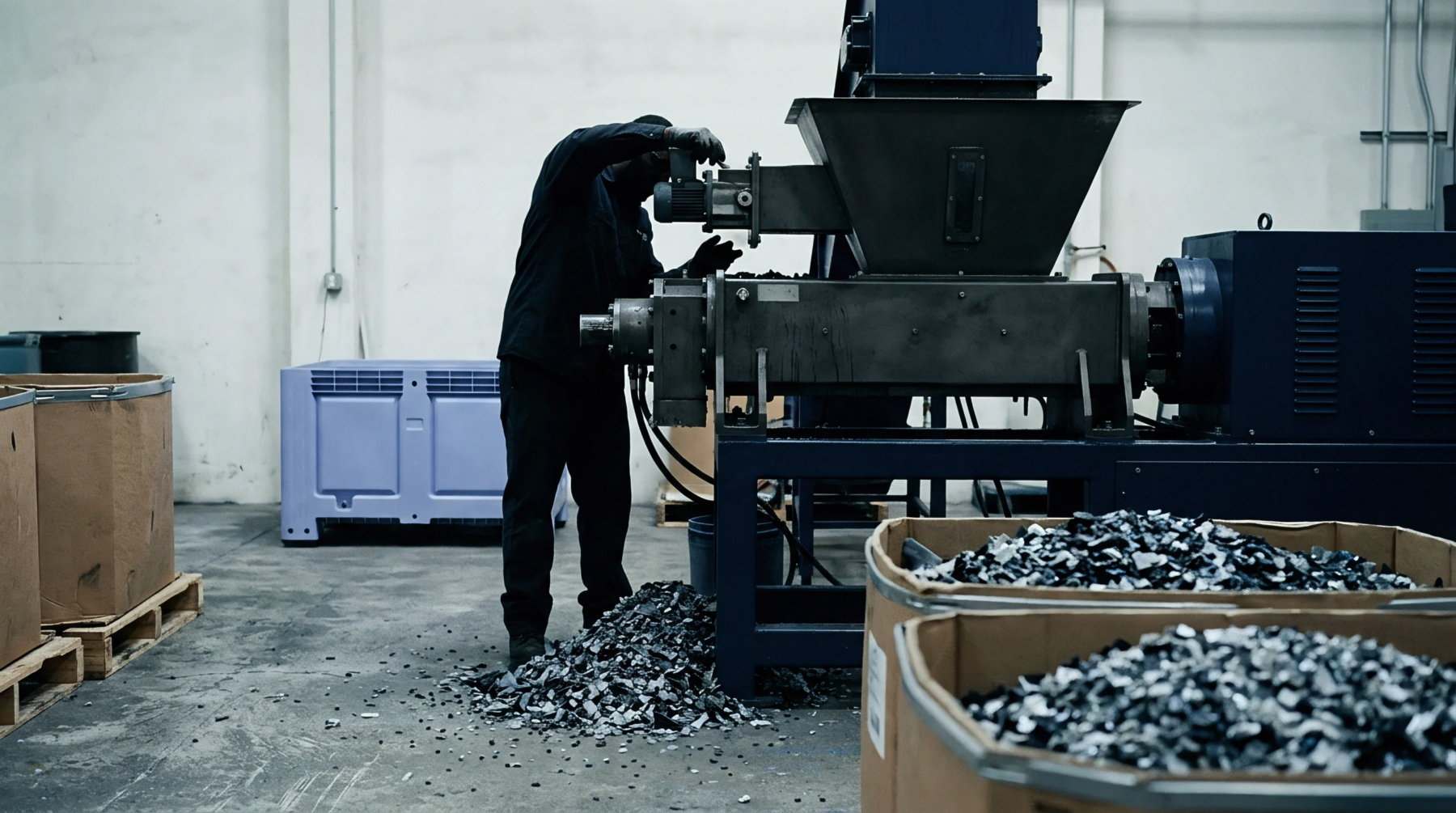
Recycled regrind accumulates high concentrations of oxidation products through repeated exposure to heat and shear in prior moulding cycles. Hydroperoxide decomposition rates spike during the processing of regrind because these dormant species break down far faster than virgin polymer linkages. Compounders counteract this instability by adding primary antioxidants and secondary phosphite stabilizers to scavenge free radicals before crosslinking or chain scission occurs.
Economic models must account for stabilizer depletion rates when high percentages of regrind enter the feed hopper.
Structural Failure
Brittle parts emerge from injection moulding when excessive radical activity compromises the molecular weight distribution required for impact strength. Finished components suffer from localized micro cracking and premature environmental stress cracking under load when the polymer matrix contains degraded chains. Material specifications establish strict upper bounds for allowable melt viscosity reduction to guarantee that final mouldings retain their specified mechanical integrity.
Part specifications rely on tensile elongation testing to confirm that thermal history during plastication did not degrade the polymer beyond functional limits.