Mitigating Thermal Pyrolysis Interferences during Coulometric Headspace Water Determination in Flame Retarded Polyamides
Mitigate thermal pyrolysis interferences during coulometric water determination in flame retarded polyamides by lowering headspace temperatures and buffering anolytes.
Pyrolysis
Parasitic Reactions in Flame Retarded Polymers
Thermal desorption of water from polyamide compounds containing non-halogenated or brominated flame retardant packages initiates secondary chemical degradation when oven temperatures exceed specific energy thresholds. Base polyamides absorb atmospheric moisture quickly. Hydrolysis breaks the polymer backbone at elevated processing temperatures, making incoming moisture verification mandatory.
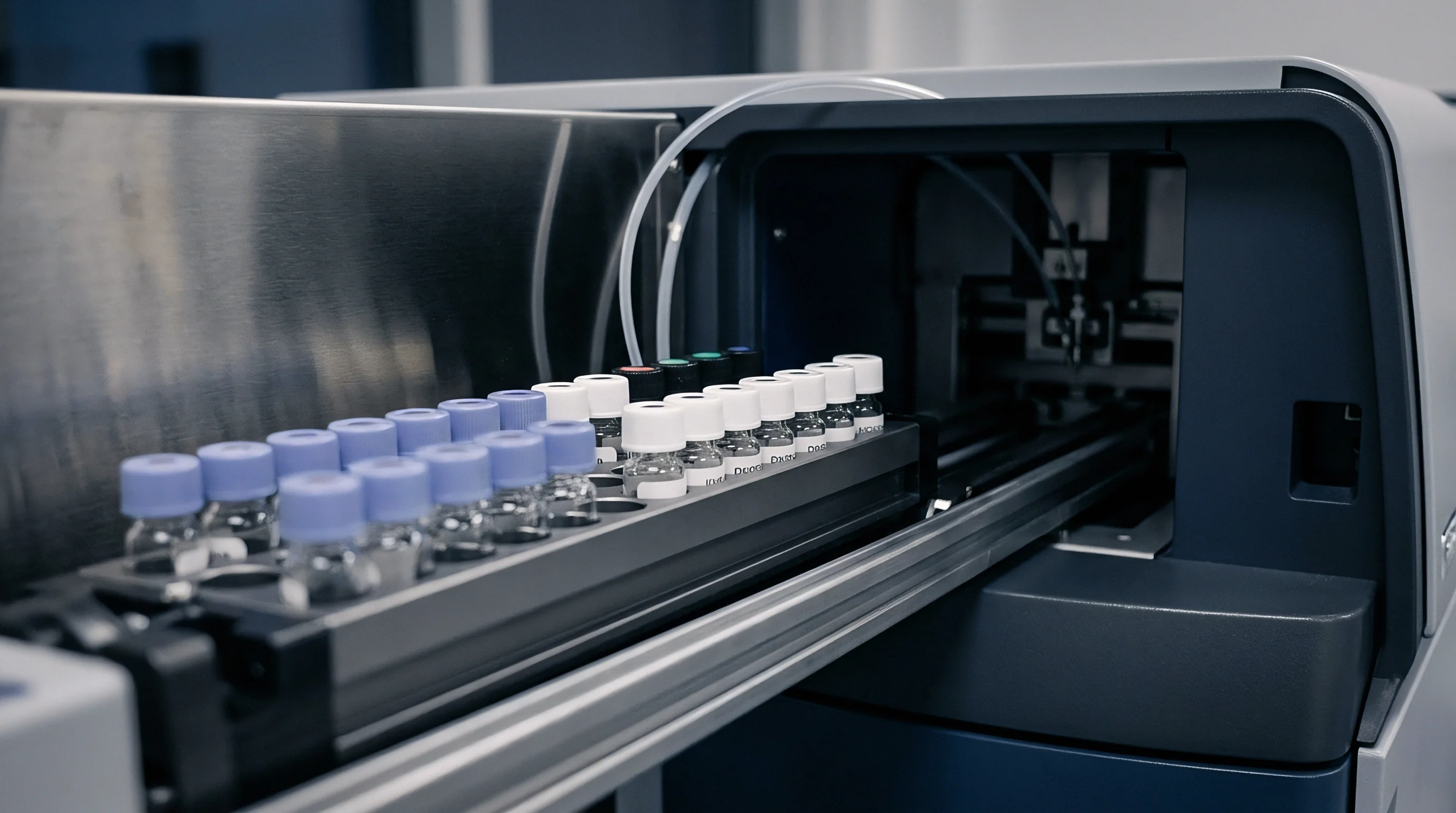
Standard coulometric Karl Fischer determination relies on heating the polymer sample in a sealed vial, sweeping desorbed moisture via dry carrier gas into an anolyte solution containing sulfur dioxide, iodide, and an amine buffer. When testing glass-fiber reinforced or unreinforced polyamide 66 or polyamide 6 grades compounded with aluminum diethylphosphinate, melamine polyphosphate, red phosphorus, or brominated polystyrene paired with antimony trioxide, heating above 200°C liberates reactive volatile decomposition products alongside water.
Organophosphorus salts begin subtle thermal decomposition at temperatures as low as 210°C, producing volatile diethylphosphinic acid, ethylene, and alkyl phosphine fragments. Melamine polyphosphate undergoes preliminary endothermic dissociation, yielding free melamine, polyphosphoric acid traces, and ammonia gas. These volatile pyrolytic species traverse the transfer line and enter the coulometric titration vessel, altering the chemical environment of the anolyte matrix.
The Bunsen reaction governing Karl Fischer titration demands a strictly buffered pH window between 5.0 and 7.0 to maintain stoichiometric quantitative conversion of sulfur dioxide and iodine.
At heating temperatures above 230°C, melamine polyphosphate releases triazine fragments that shift anolyte pH below 4.5, slowing the coulometric reaction rate by a factor of four.
Acidic pyrolytic vapors lower the anolyte pH below its operating threshold. Acidic conditions slow the reaction rate between sulfur dioxide and iodine, causing incomplete moisture titrations, delayed endpoint detection, and false positive drift readings. Conversely, basic volatiles such as free melamine or amine species elevate the cell pH above 7.5.
High pH triggers dark-colored side reactions that consume iodine independently of water, yielding artificially inflated moisture figures that do not correlate with actual resin dry content.
| Flame Retardant Chemical Family | Pyrolysis Onset Temperature Range (°C) | Volatile Degradation Species | Electrochemical Interference Mode in Anolyte Cell |
|---|---|---|---|
| Aluminum Diethylphosphinate (OP1230/OP1400) | 220 – 240 | Diethylphosphinic acid, ethylene, phosphine traces | Acidifies anolyte, consumes iodine through secondary oxidation, causes false high water counts |
| Melamine Polyphosphate (MPP) | 210 – 230 | Ammonia, triazine monomer fragments, phosphoric acid condensation products | Elevates pH, induces secondary Bunsen side-reactions, creates persistent high baseline drift |
| Brominated Polystyrene with Antimony Trioxide | 240 – 260 | Alkyl bromides, hydrobromic acid, antimony volatilization complexes | Consumes anodically generated iodine directly, attacks indicator electrode pins |
| Red Phosphorus (Stabilized) | 200 – 220 | Phosphine gas (PH₃), lower phosphorus oxides | Direct oxidation by anodically generated iodine, causing extreme overestimation of water content |
Electrode Passivation and Redox Deviation Mechanics
Indicator pin contamination occurs when condensation products from degraded flame retardants deposit onto the double platinum wire electrode inside the coulometric cell. The detection system applies a constant current or voltage across the platinum pins, measuring alternating current polarization resistance or voltage drop to determine when excess free iodine signals the titration endpoint. Pyrolysis alters cell stoichiometry.
Organophosphorus condensation films and triazine particulates form an insulating dielectric layer over the platinum surface, dampening the electrode’s sensitivity to microampere current fluctuations.
Passivated indicator pins register false high electrical resistance across the cell, masking the arrival of anodically generated free iodine. The generator electrode continues synthesizing iodine via the electrolysis of iodide ions at the anode, over-titrating the solution past its true chemical equivalence point. The automated titrator interprets this delayed response as ongoing water release, generating calculated moisture concentrations two to five times higher than true values.
Iodine generation depends on current. Brominated species present a different analytical complication by participating in direct electrochemical oxidation-reduction cycles with the generator electrode, consuming iodine generated at the anode through non-aqueous halogen exchange rather than the targeted oxidation of sulfur dioxide in the presence of water.
Failing to isolate thermal water desorption from flame retardant decomposition leads directly to compound rejection during incoming inspection, false claims against resin suppliers, and incorrect drying parameters that induce thermal degradation inside injection molding barrels.

Vial
Thermal Window Selection and Heating Curves
Headspace oven temperature controls the kinetic rate of water release from polyamides while governing the initiation rate of additive breakdown. Polyamide resin pellets trap moisture within their amorphous core, held by strong hydrogen bonding to amide carbonyl groups. Standard analytical protocols like ISO 15512 Method B1 or ASTM D6869 routinely mandate sample oven temperatures between 230°C and 280°C to achieve rapid moisture desorption within an acceptable eight-to-twelve-minute test cycle.
Applying these generalized temperature settings to flame retardant polyamides causes immediate pyrolytic breakdown of the additive package.
Lowering the headspace heating temperature from 250°C to an isothermal band between 170°C and 190°C slows the diffusion rate of core-bound moisture, yet suppresses the thermal decomposition of phosphinate and melamine additives below their activation thresholds. Flame retardants alter this behavior. Extending the analytical hold duration from 10 minutes to 25 minutes ensures total water desorption without generating interfering gas phases.
Plotting a differential thermal desorption curve identifies the precise temperature window where water vapor escapes the polymer matrix prior to the onset of additive pyrolytic release.
Standard ISO 15512 Method B specifies carrier gas dew points below minus sixty degrees Celsius to prevent ambient humidity bleed into sample vials.
Carrier Gas Volumetric Sweep Kinetics
Gas transport dynamics dictate the residence time of desorbed volatile species within the heated sample vial and the transit tubing leading to the titration cell. High carrier gas flow rates flush moisture efficiently but can carry aerosolized particulate condensates into the cell if flow kinetics become turbulent. Carrier flow carries water gas.
Reducing gas pressure and maintaining an optimal carrier flow rate between 40 and 60 milliliters per minute creates a stable laminar sweep across the crimped glass vial septum.
- Bake empty borosilicate glass sample vials and aluminum crimp caps with PTFE-lined silicone septa in a vacuum oven at 150°C for a minimum of four hours to purge surface-adsorbed moisture.
- Transfer dried vials into a glass desiccator containing active molecular sieves and allow cooling to ambient laboratory temperature under an dry nitrogen purge.
- Tare the vial on an analytical balance reading to 0.1 milligrams, minimize ambient air exposure during sample pellet loading, and crimp the aluminum seal immediately.
- Set the headspace oven temperature to the predetermined safe thermal window, typically 185°C for aluminum phosphinate compounded PA66 grades.
- Purge the carrier gas lines with dry nitrogen exhibiting a moisture content below 1 milligram per kilogram until the coulometric cell baseline drift drops below 5 micrograms of water per minute.
- Inject the sample vial into the oven block, initiate the carrier gas sweep at 50 milliliters per minute, and record total moisture integration over a 20-minute titration curve.
Compounders frequently claim that moisture values above specification represent supplier drying failures, ignoring the reality that their chosen laboratory oven temperatures actively decompose the additive package inside the test vial during measurement.
Anolyte

Reagent Buffer Buffering and Cell Ph Control
Titration electrolyte selection provides a secondary chemical barrier against pyrolytic interferences that survive temperature optimization and escape the sample vial. Standard commercial coulometric anolytes rely on imidazole or diethanolamine buffer bases designed for neutral organic solvents and untreated polymers. Acids consume the electrolyte buffer.
Acidic phosphinate vapors entering standard anolytes quickly exhaust the basic buffer capacity, driving the solution pH into acidic zones where iodine generation efficiency collapses.
| Reagent System Classification | Chemical Buffer Composition | pH Tolerance Window | Target Interference Mitigation |
|---|---|---|---|
| Standard Universal Anolyte | Imidazole / Sulfur Dioxide / Methanol | 5.5 – 7.0 | Standard polyolefins, unreinforced polyamides without acidic additives |
| Acid-Buffered Anolyte | Diethanolamine / N-Methylformamide | 4.0 – 6.5 | Neutralizes phosphinic acid and hydrobromic acid vapors from FR breakdown |
| Base-Buffered Anolyte | Salicylic Acid / Pyridine Derivatives | 6.5 – 8.0 | Suppresses basic amine and triazine dissociation products from MPP decomposition |
| Halogen-Tolerant Anolyte | Propylene Carbonate / Chloroform / Imidazole | 5.0 – 6.5 | Prevents secondary redox cycling caused by volatile brominated species |
Selecting specialized acid-resistant or amine-tolerant anolytes stabilizes the cell pH during continuous routine sample runs. Formulations rich in diethanolamine neutralize incoming phosphinic acid traces without triggering side reactions, maintaining stable endpoint voltage triggers across multi-sample testing sequences. Sample size dictates measurement accuracy.
Utilizing a generator cell without a frit diaphragm prevents cumulative pyrolytic tar buildup in porous ceramic barriers, though it demands higher electrical baseline compensation to account for cathodic back-oxidation of iodine species.
Lowering the headspace oven temperature while extending purge time separates water desorption from additive degradation.
Does Carrier Gas Purity Shift Thermal Side Reactions?
Trace oxygen contamination within the carrier gas line induces oxidative degradation of flame retardants inside the heated sample vial at temperatures well below their standard thermal pyrolysis limits. Industrial grade nitrogen carrying 10 to 50 parts per million of gaseous oxygen reacts with red phosphorus and organophosphinates above 160°C, forming volatile phosphorus oxides that gas off into the transfer tubing. Installing catalytic oxygen scrubbing columns alongside dual molecular-sieve drying towers reduces line oxygen concentrations below 0.5 parts per million and gas moisture below 0.1 parts per million, suppressing thermo-oxidative decomposition pathways during long sample heating cycles.
Whether gas phase catalytic filters completely eliminate volatile phosphine generation during high-temperature testing of heavily loaded red phosphorus compounds remains an open operational question across commercial testing laboratories.

Audit

Standard Addition and Water Standard Recovery
Analytical verification requires continuous recovery testing using certified water standards to validate that thermal side-reactions are not distorting moisture counts. Liquid water standards injected directly into the coulometric cell confirm basic electrochemical generator performance, but they fail to audit the thermal headspace sweep pathway. Liquid water standards sealed in headspace vials, or certified micro-capillary liquid standards, verify carrier sweep efficiency and line loss.
Solid water standards, such as sodium tartrate dihydrate carrying a theoretical 15.66 percent water content by mass, or certified polycaprolactone matrix standards, must undergo identical heating cycles as the flame retardant resin.
Testing a certified solid standard at 190°C establishes baseline recovery accuracy. Adding a known quantity of solid water standard directly into a vial containing flame retardant resin pellets isolates compound-specific interferences through recovery calculations. Traps absorb acidic volatiles.
A calculated water recovery between 95 percent and 105 percent confirms that the heating profile and electrolyte system successfully suppress additive pyrolysis interferences.
| Inline Trap Sorbent Material | Chemical Selectivity Target | Moisture Retention Impact | Replacement / Regeneration Threshold |
|---|---|---|---|
| Granular Sodium Carbonate / Lime Silica | Phosphinic acids, hydrobromic acid, acidic volatiles | Negligible ( | Color indicator shift or after 100 sample titrations |
| Activated Molecular Sieve (4A) | Water vapor, low molecular weight alcohols | High (> 99% retention) | Unsuitable for inline trap; removes target water gas |
| Acid-Washed Activated Carbon | Triazine fragments, aromatic brominated monomers | Low ( | Saturates after 50 high-load flame retardant runs |
| Anhydrous Zinc Oxide / Alumina | Phosphine gas (PH₃), hydrogen halides | Minimal ( | Saturates based on total phosphorus additive load |
Inline Sorption Traps and Volatiles Scavenging
Physical and chemical filter traps installed between the oven outlet and the titration cell inlet selectively remove pyrolytic species while permitting desorbed water vapor to pass quantitative transport. Melt processing degrades wet resin. Granular sodium carbonate traps neutralize volatile phosphinic and hydrobromic acids via solid-gas acid-base neutralization before the gas stream reaches the titration vessel, protecting anolyte buffer capacity.
- Thermal Window Calibration using thermogravimetric analysis paired with Fourier-transform infrared spectroscopy to establish the precise pyrolysis onset temperature of the specific resin additive package.
- Blank Baseline Compensation subtraction measuring ambient vial air, septa moisture release, and carrier gas background drift under identical heating time and flow conditions.
- Sorbent Trap Integrity Verification checking inline chemical sorbent columns for volumetric saturation, channeling, or accidental water retention prior to daily sample auditing.
- Electrode Sensitivity Validation inspecting platinum indicator pins under stereomicroscopy for pyrolytic tar film deposition and executing acid-wash cleaning when voltage response time degrades.
Trusting a coulometric water reading without running a matrix recovery check on flame retardant grades guarantees inaccurate data.
Claim
Moisture Thresholds in Commercial Specifications
Polyamide resin sales specifications mandate strict upper moisture limits, typically set between 0.05 percent and 0.10 percent by weight for injection molding grades, and below 0.03 percent for extrusion grades. Hydrolysis breaks the polymer backbone. Processing resin with moisture contents above these thresholds causes hydrolytic chain scission during melting, leading to molecular weight degradation, reduced intrinsic viscosity, surface splay defects, and severe loss of notched impact strength in molded parts.
Dry pellets avoid part failure.
When incoming quality control labs utilize standard 250°C oven methods on flame retardant polyamides, pyrolytic interferences generate false moisture readings of 0.25 percent or higher. Resin lots that are chemically dry and fully compliant with processing requirements are incorrectly flagged as wet, triggering unwarranted material rejections, delayed production schedules, and costly commercial disputes with compounders.
Unchecked moisture drift during incoming acceptance testing creates artificial non-compliance reports for dry resin shipments.
Landed Quality Penalties and Compound Dispute Resolution
Resolving commercial quality disputes requires unambiguous, contractually binding analytical testing standards tailored specifically to flame retardant resin formulations. Sourcing agreements must explicitly state the exact testing conditions rather than relying on generic standard references. Moisture control dictates product quality.
Procurement contracts that define moisture limits without specifying oven heating temperatures, carrier flow rates, and electrolyte buffering methods leave buyers vulnerable to unresolvable technical deadlocks when incoming test results diverge from supplier certificates of analysis.
- Designated Test Method Standard specifying ISO 15512 Method B2 or ASTM D6869 with mandatory additive-specific temperature modifications written into the material purchase specification.
- Isothermal Heating Temperature Limits defining the precise maximum oven temperature permitted for the contracted resin grade, capping testing at 185°C for phosphinate-loaded compounds.
- Carrier Gas Specification Protocols mandating nitrogen purity levels of 99.999 percent with inline oxygen and moisture scrubbing equipment defined explicitly.
- Arbitration Testing Laboratory Clauses identifying an independent, mutually agreed analytical laboratory equipped with headspace coulometric systems capable of matrix recovery validation for contested resin lots.
A purchase agreement clause stating that Karl Fischer water determination must follow ISO 15512 Method B at 185°C with an acid-buffered electrolyte and sodium carbonate inline trap eliminates false high moisture rejections, legally binding both parties to mathematically verifiable testing parameters that protect resin structural integrity.