Karl Fischer Water Extraction Parameters for Engineering Plastics Inspection
Coulometric Karl Fischer oven extraction parameters between 160C and 220C isolate true polymer moisture while preventing additive pyrolysis and cell fouling.

Oven
Direct liquid injection fails when testing insoluble engineering thermoplastics. Pellets placed inside an external heating chamber release bound water into a dry transfer gas stream, which delivers the moisture directly to the titration vessel. This vaporization technique separates the solid matrix from the chemical bath.
It prevents insoluble polymer granules from fouling the platinum sensing electrodes. It also avoids premature reagent exhaustion caused by solid matrix contamination.
Vaporization Chambers and Carrier Velocity
Dry nitrogen sweeps liberated moisture through a heated transfer line maintained at 110 degrees Celsius to prevent condensation. The carrier gas flow rate operates between 40 and 60 milliliters per minute. Gas flow rates below 30 milliliters per minute allow vapor to collect along the transfer manifold.
Gas rates above 80 milliliters per minute sweep moisture past the titration electrolyte without complete capture. The septum seals the sample vial against ambient humidity. Aluminum crimp caps with PTFE-faced silicone septa prevent moisture entry during transport from the balance to the heating block.
The septum prevents ambient ingress. Tight seals preserve test integrity.
A sample vial seals against ambient air only when the crimp cap compresses the PTFE septum uniformly across the glass rim.
Thermal Windows across Semicrystalline Pellets
Solid granules release moisture through temperature-dependent diffusion gradients. Semicrystalline structures trap moisture within amorphous regions between crystallites. Polybutylene terephthalate releases trapped water at 160 degrees Celsius without melting.
Setting the heating chamber to 230 degrees Celsius melts polybutylene terephthalate pellets, which triggers thermal degradation and releases organic byproducts into the titration cell. Polyamide 66 tolerates heating to 180 degrees Celsius before post-condensation begins. Solid polyetheretherketone requires 280 degrees Celsius to drive water out of its rigid aromatic network.
Water content dictates melt stability. Wet pellets cause silver splay.
| Polymer Family | Oven Temperature (°C) | Carrier Gas Flow (mL/min) | Sample Weight (g) | Transfer Line Temperature (°C) |
|---|---|---|---|---|
| Polyamide 6 (PA6) | 170 | 50 | 0.50 to 1.00 | 110 |
| Polyamide 66 (PA66) | 180 | 50 | 0.50 to 1.00 | 110 |
| Polybutylene Terephthalate (PBT) | 160 | 40 | 1.50 to 2.50 | 105 |
| Polycarbonate (PC) | 180 | 40 | 2.00 to 3.00 | 105 |
| Polyetherimide (PEI) | 220 | 50 | 1.00 to 2.00 | 115 |
| Polyetheretherketone (PEEK) | 280 | 60 | 1.00 to 1.50 | 120 |
Coarse virgin pellets release interior moisture at a slower pace than cryogenic regrind flakes.
Reagents
Coulometric detection measures microgram quantities of moisture using electrochemically generated iodine. The Bunsen reaction converts sulfur dioxide, iodine, and water into sulfuric acid and hydriodic acid in the presence of an alcohol base. Coulometric generators supply an electric current across the generator electrode.
Faraday law dictates that 10.71 coulombs of electricity correspond to exactly one milligram of consumed water.
Coulometric Cell Stoichiometry and Diaphragm Selection
Generator assemblies operate with either a fritted glass diaphragm or a diaphragm-free cathode. Diaphragm cells isolate the catholyte from the anolyte, preventing reduced chemical species from diffusing back to the anode and causing falsely elevated moisture readings. Diaphragm-free cells simplify cleaning routines when inspecting engineering thermoplastics, yet they exhibit higher background drift when testing resins that release oxidizable trace volatiles.
Anolytes formulated with methanol alternative bases such as ethanol and imidazole maintain stable pH buffering between 5.5 and 7.5. Acidic drift below pH 5 slows the reaction rate, while basic drift above pH 8 causes side reactions that consume iodine without water.
Unreacted iodine turns dark brown. The sensing pin monitors cell potential.
- Diaphragm Porosity Degradation traps ionic contaminants inside the glass frit, requiring repeated acid flushes to restore electrical conductivity across the electrode boundary.
- Catholyte Oxidation Shift occurs when ambient humidity migrates through cathode seals, raising background consumption rates above twenty micrograms per minute.
- Solvent Volatilization Loss strips alcohol bases during extended purge cycles, reducing the chemical capacity of the titration vessel within forty-eight operating hours.
Why Do Saturated Polyesters Undergo Rapid Hydrolysis?
Ester linkages along the polymer chain break apart when exposed to water at processing temperatures. The reaction splits high molecular weight chains into shorter fragments terminating in carboxylic acid and alcohol groups. Polybutylene terephthalate drops from an intrinsic viscosity of 0.95 deciliters per gram down to 0.62 deciliters per gram when injection molded above 0.02 percent moisture content.
This molecular weight drop destroys impact toughness. Parts molded from wet pellets fail brittle tensile tests without yielding.
Hydrolysis cleaves the polymer backbone. Melt strength drops under shear.
Coulometric titration captures the residual moisture content responsible for this backbone degradation down to single-digit parts per million.
Calibration
Accuracy depends on verifying system drift and quantifying recovery factors before analyzing production pellets. Drift represents the ambient moisture entering the titration cell each minute through joints, fittings, and gas connections. Modern titration units record baseline drift automatically before initiating extraction.
Subtracting this baseline value from the gross moisture calculation isolates the moisture released by the plastic sample.
Drift Stabilization and Background Compensation
Baseline values below five micrograms per minute indicate an airtight analytical system. Baseline rates exceeding fifteen micrograms per minute point to saturated molecular sieves, loose transfer line fittings, or compromised septa. The blank value accounts for atmospheric air trapped inside the sample vial during crimping.
Analyzing five empty, pre-crimped vials establishes the mean vial blank value. This value is subtracted from subsequent resin test results.
Titration stops when drift stabilizes. The carrier gas must stay dry.
Standard recovery checks achieve 99.2 percent extraction efficiency when testing 100 milligrams of disodium tartrate dihydrate at 220 degrees Celsius.
Solid Tartrate against Pure Water Standards
Disodium tartrate dihydrate contains exactly 15.66 percent water by weight under stoichiometric conditions. This chemical standard remains stable under standard storage conditions without adsorbing atmospheric moisture. Vaporization testing of 100 milligrams of tartrate confirms furnace temperature calibration and carrier gas transport efficiency.
Certified liquid water standards sealed in glass ampoules provide an alternative verification route. Injecting a 1.00 milligram liquid water standard into a specialized vaporization vial checks whether line condensation occurs along the transport tubing.
Pure tartrate verifies cell accuracy.
- Inspect the carrier gas line pressure, confirming a delivery pressure of 100 to 150 kilopascals with molecular sieve desiccant indicating blue dryness.
- Condition the titration cell until background drift drops below five micrograms per minute under active gas purge.
- Heat three empty, crimped vials to 180 degrees Celsius to record the background air moisture value.
- Weigh 50 to 100 milligrams of disodium tartrate dihydrate into a clean vial, crimp immediately, and heat to 220 degrees Celsius.
- Calculate water recovery, confirming that total measured moisture matches the theoretical 15.66 percent value within a 97 to 103 percent window before testing resin lots.
Whether carrier gas drying towers require molecular sieve replacement every thirty days or after every three hundred testing cycles remains dependent on facility ambient humidity levels.

Resins
Incoming inspection specifications vary widely across polymer families. Hydrophilic polyamides absorb several percent atmospheric water by weight within days, whereas hydrophobic polyolefins absorb virtually none. Engineering polymers occupy the critical intermediate zone, where water fractions between 0.01 percent and 0.20 percent dictate whether parts pass or fail mechanical impact qualifications.
Extraction Parameters across Commercial Polymers
Polyamides demand careful parameter selection to separate surface moisture from internal crystalline water. Polyamide 66 pellets tested at 180 degrees Celsius release moisture without exceeding the thermal threshold that triggers solid-state post-condensation. Polycarbonate requires 180 degrees Celsius to liberate moisture trapped within its stiff diphenyl carbonate segments.
Polyetherimide demands 220 degrees Celsius to overcome strong dipolar interactions within the imide rings.
Excess heat triggers side reactions. Controlled heating protects analytical accuracy.
Polyamide granules absorb moisture from ambient workshop air within fifteen minutes of exposure.
| Polymer Matrix | Max Mold Moisture (% w/w) | Target Sample Weight (g) | Titration Drift Stop Criteria | Target Moisture Range (ppm) |
|---|---|---|---|---|
| PA6 (Dry Virgin) | 0.100 | 0.50 to 1.00 | Drift + 2 µg/min | 400 to 1000 |
| PA66 (Impact Modified) | 0.080 | 0.50 to 1.00 | Drift + 2 µg/min | 300 to 800 |
| PBT (Unfilled) | 0.020 | 2.00 to 3.00 | Drift + 1 µg/min | 50 to 200 |
| PBT (30% Glass Filled) | 0.020 | 3.00 to 4.00 | Drift + 1 µg/min | 50 to 200 |
| PC (Optical Grade) | 0.015 | 3.00 to 5.00 | Drift + 1 µg/min | 30 to 150 |
| PEI (Unfilled) | 0.025 | 1.50 to 2.50 | Drift + 1 µg/min | 80 to 250 |
| PEEK (Industrial) | 0.050 | 1.00 to 2.00 | Drift + 2 µg/min | 100 to 500 |
Where Does Surface Moisture Part from Volatiles?
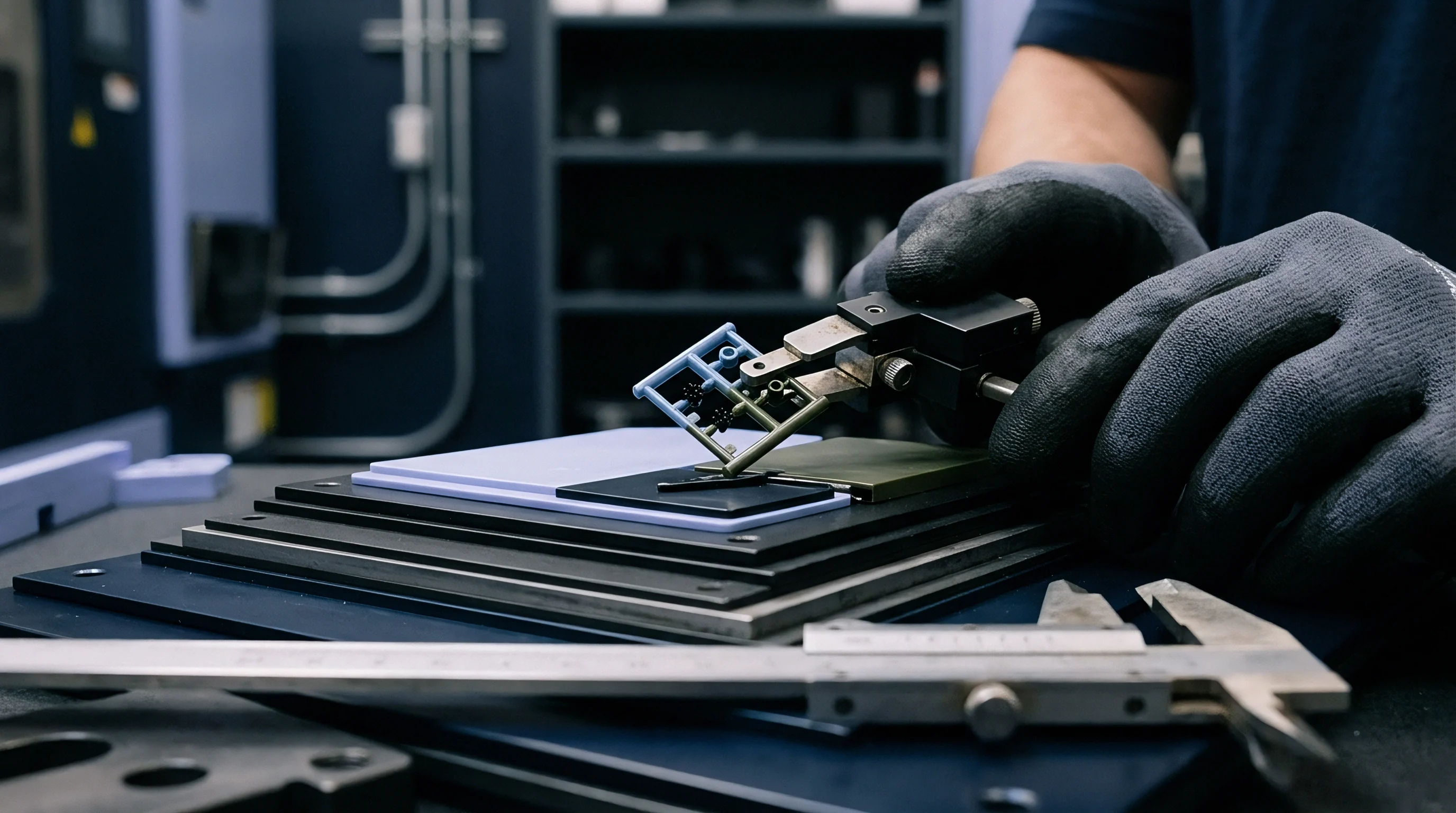
Surface water desorbs from pellet exteriors below 120 degrees Celsius. Internal moisture requires matrix heating above the glass transition temperature to diffuse through the polymer bulk. When testing polyamides, capillary moisture leaves first, followed by water hydrogen-bonded to amide carbonyl groups.
Setting the titration endpoint too early cuts off the diffusion tail, underreporting moisture content by up to 300 parts per million. Titrators monitor the extraction curve slope. The titration run completes only when the moisture extraction curve flattens to the baseline drift rate.
- Sample Mass Calibration matches pellet weight to titrator cell sensitivity, loading between two and five grams for dry polyesters to achieve measurable iodine consumption.
- Crimp Seal Uniformity prevents atmospheric air leaking into the headspace during furnace auto-sampler movements across ninety-six position testing trays.
- Desiccant Tower Monitoring preserves carrier gas dew points below minus fifty degrees Celsius, preventing carrier gas moisture from registering as polymer moisture.
The vendor claimed the moisture reading was inflated because the testing furnace baked volatile processing lubricants out of the pellets.

Decomposition
High temperatures trigger thermal cleavage reactions that produce volatile species other than moisture. These decomposition gases travel down the transfer line directly into the coulometric cell. Certain organic byproducts react with the Karl Fischer reagent, consuming iodine and producing falsely elevated water readings.
Volatile Pyrolysis Products and Electrochemical Interference
Polyamides release caprolactam monomer and cyclic oligomers when heated near their melting points. Caprolactam vapor deposits on cool transfer line surfaces or enters the electrolyte solution. Aldehydes formed during thermal oxidation react with methanol in the reagent to form acetals, liberating water as a chemical reaction byproduct.
This side reaction creates a continuous, false water signal that prevents the titration endpoint from ever being reached. Ketones undergo ketal formation, similarly generating false water. Reagents formulated with 2-chloroethanol or propylene glycol suppress acetal and ketal formation when analyzing resins prone to aldehyde release.
The barrel temperature accelerates degradation.
Testing under ISO 15512 Method B invalidates incoming lots when volatile caprolactam monomer consumes iodine inside the titration cell.
Stepped Isothermal Heating Profiles
Complex formulations containing flame retardants, impact modifiers, and lubricants require stepped heating scans to distinguish true water release from additive breakdown. An initial temperature step at 120 degrees Celsius removes surface moisture. A second isothermal step at 170 degrees Celsius extracts core moisture without degrading organic brominated flame retardants.
Brominated additives degrade above 210 degrees Celsius, liberating hydrogen bromide. Hydrogen bromide destroys the pH buffer inside the titration cell and ruins the platinum electrodes.
High moisture creates structural voids.
| Additive or Matrix | Thermal Hazard | Chemical Interference | Parameter Correction |
|---|---|---|---|
| Flame Retarded PA66 | Decomposition at 220°C | HBr release consumes buffer | Cap temperature at 170°C |
| Polycarbonate with Release Wax | Ester wax volatilization at 200°C | Fouls transfer tube wall | Use 170°C with glass wool filter |
| Polyoxymethylene (POM) | Depolymerization at 160°C | Formaldehyde forms acetals | Use ketone-specific reagent at 140°C |
| Recycled PBT Regrind | Volatile acid generation at 190°C | Alters cell electrolyte pH | Restrict furnace to 155°C |
Running extraction furnaces above polymer degradation limits generates false moisture readings that lead to unwarranted pellet lot rejections and lost production shifts.
Settlement
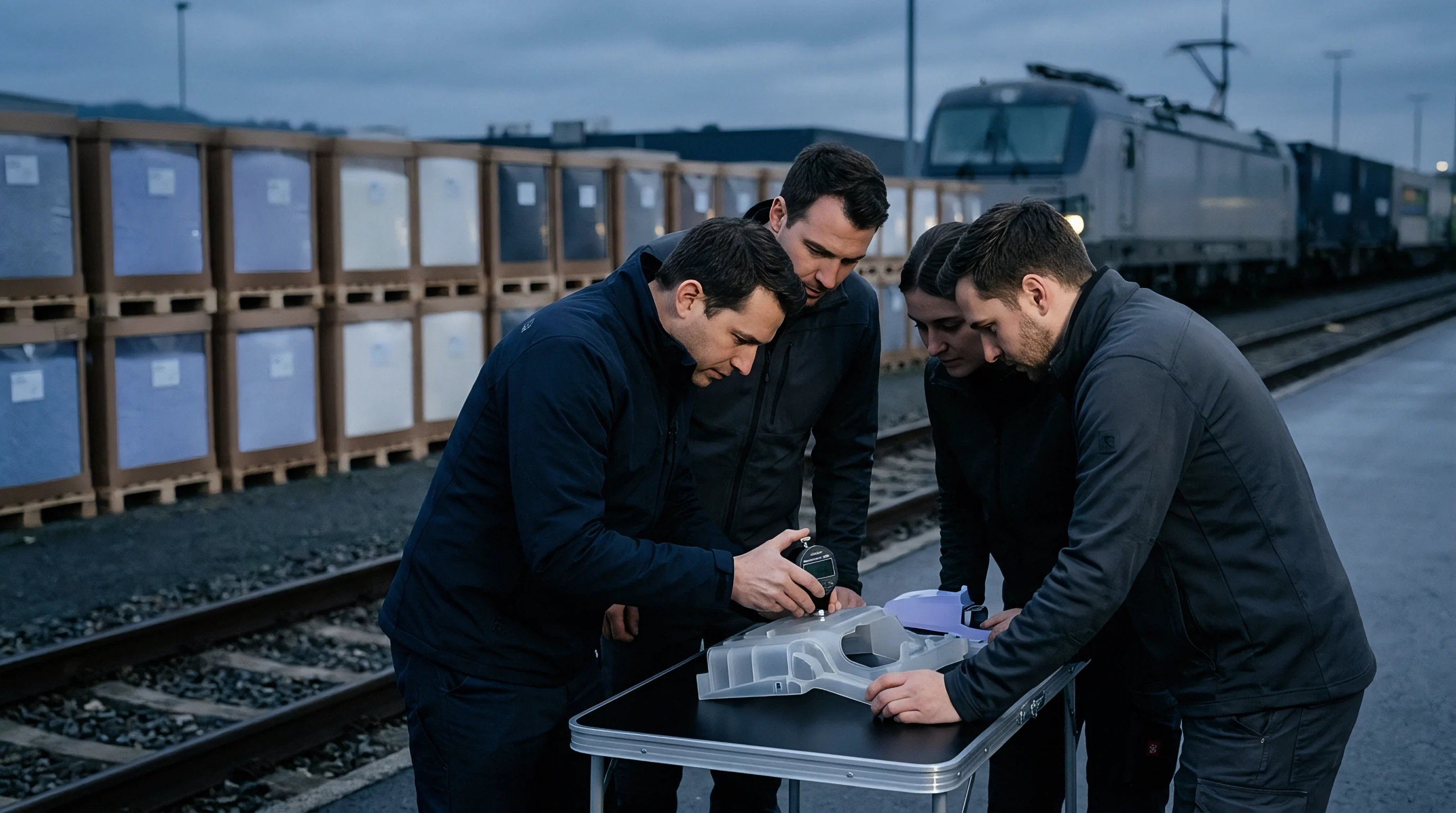
Moisture testing serves as the technical basis for financial acceptance of resin deliveries. Railcars and 1000-kilogram octabins arrive with manufacturer certificates of analysis stating moisture values measured at packaging. Atmospheric ingress during ocean transit or pneumatic conveying frequently elevates pellet moisture above processing specifications.
Discrepancies between Mill Certificates and Incoming Inspection
Incoming inspection personnel sample resin pellets from the center and bottom of delivery containers using clean, dry sampling probes. Pellets sampled from torn bags or damaged ocean container liners show localized moisture spikes. Comparing receiving inspection data against manufacturer certificates of analysis identifies whether moisture was sealed into the container at the compounding plant or absorbed during transit.
When moisture exceeds critical processing boundaries, compounders face substantial financial losses.
Suppliers discount rejected pellet lots.
Contractual Defect Thresholds and Landed Scrap Costs
Processing wet engineering polymers leads directly to part failure. Injection molding polybutylene terephthalate with 0.05 percent moisture drops tensile elongation at break by 40 percent compared to resin dried below 0.015 percent. This ductility loss causes snap-fit components to fracture during automotive assembly.
A 20-tonne delivery of out-of-specification resin represents 60,000 dollars in raw material value and over 200,000 dollars in potential defective part liability. Incoming inspection using validated Karl Fischer vaporization parameters provides legally defensible data for commercial warranty claims.
Degraded resin clogs injection nozzles.
Under standard commercial purchase contracts, ISO 15512 Method B verification demonstrating moisture in excess of 0.02 percent shifts the drying and downtime expenses directly to the resin supplier.