Resolving Non Linear Viscoelastic Melt Stability Discrepancies in High Pressure Gas Pipe Compounding
Melt stability discrepancies in gas pipe PE100 compounding are resolved by mandating ISO 18488 strain hardening modulus tests alongside standard melt index.


Melt
Standard certificates of analysis for high-density polyethylene gas pipe resins routinely record single-point shear parameters. Melt flow rate tests conducted under ISO 1133 Condition T at 190 degrees Celsius with a 5 kilogram load, alongside high-load measurements under Condition Y at 21.6 kilograms, form the standard commercial baseline. These values yield a nominal Flow Rate Ratio.
They fail to reflect non-linear viscoelastic behavior during large-strain processing. Pipe extrusion dies impose intense shear fields within land regions, followed immediately by unconstrained free-surface recovery. Two resin lots presenting identical melt flow rates of 0.25 grams per 10 minutes at 190 degrees Celsius with 5 kilograms load often exhibit completely divergent swell ratios and pressure drops across the die head.
Polymer chains within high-pressure gas pipe grades feature a bimodal molecular weight distribution. High molecular weight fractions containing hexene or octene comonomers reside predominantly in the long-chain regions to provide stress-crack resistance. Low molecular weight homopolymer fractions provide fluid flow through processing equipment.
The high-molecular-weight tail generates significant elastic memory. The shear rate varies. Standard capillary viscometric measurements miss the elastic normal stress differences that arise when long chains untangle and stretch under rapid deformation.
When processing heavy-wall gas pipe exceeding 32 millimeters in wall thickness, subtle differences in long-chain branching or molecular weight distribution breadth trigger severe melt instability.

Capillary Viscometry Discrepancies across Load Ratios
Standard high-pressure rheometer barrels equipped with capillary dies operating at shear rates above 1000 reciprocal seconds expose subtle structural variations. Entrance pressure drop, evaluated through Bagley corrections using dies of varying length-to-diameter ratios, quantifies the extensional flow energy consumed as the polymer enters the die orifice. Resin lots with elevated entrance pressure losses display higher extensional strain hardening and pronounced die swell.
Single-point melt index ratios fail to resolve these entrance losses. A batch with an identical melt flow rate ratio of 28 can display a 35 percent variation in Bagley entrance pressure drop at standard extrusion processing temperatures.
Capillary entrance losses stem directly from long-chain entanglements forming transient physical networks. The die entrance causes pressure loss. Evaluating pressure signals at high capillary shear rates reveals non-linear melt elastic responses that single-load testing compresses into averaged viscosity figures.
When two raw resin lots are processed under identical extruder screw speeds, the lot carrying higher elastic memory exhibits superior melt strength but elevated barrel head pressures, forcing temperature compensation that alters the final pipe surface morphology.

Non Linear Response under Oscillatory Shear
Dynamic mechanical measurements carried out in the linear regime fail to capture high-strain structural responses. Small-amplitude oscillatory shear measurements yields storage modulus and loss modulus curves within the linear viscoelastic limit, typically below 5 percent strain amplitude. High-pressure gas pipe compounding and extrusion subject polymer melt to shear strain amplitudes exceeding 100 percent.
Large Amplitude Oscillatory Shear testing subjects the melt to sinusoidal deformations outside the linear range, decomposing stress responses into higher-harmonic Fourier spectra through Fourier-Transform rheology.
Fourier-Transform rheology isolates non-linear viscoelastic fingerprints through the relative intensity of the third harmonic normalized by the fundamental harmonic. Higher third-harmonic intensities correlate directly with broad molecular weight tails and sparse long-chain branching. Resins showing identical dynamic storage modulus curves in linear frequency sweeps separate distinctly under Large Amplitude Oscillatory Shear at a strain amplitude of 300 percent.
Melt fracture appears.
Zero-shear viscosity measured at 190 degrees Celsius under nitrogen atmosphere exceeds 180,000 pascal-seconds for stable PE100-RC bimodal compound grades.
| Resin Lot Parameter | Test Method and Condition | Grade Specification Range | Unstable Lot Variance | Extrusion Consequence |
|---|---|---|---|---|
| Melt Flow Rate (190°C / 5 kg) | ISO 1133-1 Condition T | 0.22 to 0.28 g/10 min | 0.25 g/10 min | Baseline flow compliance |
| High Load Melt Index (190°C / 21.6 kg) | ISO 1133-1 Condition Y | 6.0 to 7.5 g/10 min | 6.2 g/10 min | Nominal shear thinning |
| Flow Rate Ratio (21.6 kg / 5 kg) | ISO 1133-1 Ratio | 25 to 30 | 24.8 | False equivalent classification |
| Bagley Entrance Pressure Drop | ISO 11443 Capillary (1000 s⁻¹) | 8.5 to 11.2 MPa | 14.8 MPa | Die head over-pressurization |
| LAOS Third Harmonic Ratio (I₃/₁) | 300% strain at 1 rad/s | 0.015 to 0.030 | 0.065 | Severe sharkskin melt fracture |
| Data measured via dynamic oscillatory shear and high-pressure capillary rheometry under standard nitrogen blanketing. | ||||
Extrusion processors relying solely on standard melt flow index documentation consistently report unexplained surface roughness and high rejection rates during pipe calibration. The resin producer routinely attributes batch-to-batch extrusion fluctuations to variations in ambient humidity during pellet storage rather than structural shifts in high-molecular-weight polymer chain entanglements.


Extension
Heavy-wall gas pipe extrusion demands high resistance to gravitational sagging during cooling transitions. As thick-walled molten pipes exit the annular die die-head and pass into vacuum calibration tanks, gravity pulls the upper section downward, causing wall thinning at the pipe top and thickening at the invert. Linear shear viscosity does not govern resistance to this sag.
Extensional viscosity measured in uniaxial tension dictates how polymer chains resist continuous stretching under gravitational body forces. High-pressure pipe extrusion requires a balanced extensional strain hardening response where elongational viscosity increases abruptly at elevated strain rates.
Uniaxial elongational rheometry measures transient extensional viscosity growth over time at fixed extensional strain rates. Extensional strain hardening occurs when long polymer chains undergo orientation faster than their thermal relaxation time permits. The dimensionless Trouton ratio, defined as extensional viscosity divided by zero-shear viscosity, remains equal to 3 for linear polymers under low extensional rates.
In bimodal PE100-RC pipe resins, long-chain branching and high-molecular-weight entanglements elevate the Trouton ratio above 10 at extensional strain rates between 0.1 and 1.0 reciprocal seconds. Extensional viscosity controls sagging.

Uniaxial Tensile Rheology in Heavy Wall Extrusion
Planar and uniaxial elongational rheometers measure transient stress growth functions under constant strain rates. Measurements recorded on Sentmanat Extensional Rheometer fixtures reveal strain hardening behavior at processing temperatures ranging from 180 to 210 degrees Celsius. When testing two bimodal pipe compounds with matching melt flow rates, the material displaying an abrupt upturn in extensional viscosity at Hencky strains above 1.5 resists sag during large-diameter pipe extrusion.
Resins lacking this strain hardening response undergo localized necking, leading to circumferential wall thickness variation.
Chain scission reduces elasticity. Extensional stress growth curves confirm that thermal degradation during compounding destroys long-chain structures responsible for strain hardening. Small reductions in high-molecular-weight chain length diminish extensional viscosity while leaving standard low-shear capillary measurements virtually unchanged.
A resin lot subjected to excess thermal history during compounding shows normal MFR performance yet collapses under gravity during thick-walled pipe calibration.

Viscoelastic Structural Failure Mechanisms
Irregular wall thickness profile development initiates when elastic recovery forces diverge across the extrudate circumference. Inconsistent strain hardening causes unpredictable melt relaxation as the pipe passes through vacuum calibration sleeves. Severe viscoelastic instability produces physical defects across high-pressure gas pipe lines.
- Sharkskin Melt Fracture manifests as high-frequency periodic surface ridges caused by extreme tensile stress concentration at the die exit edge exceeding melt strength limits.
- Gross Melt Fracture emerges when severe elastic pressure fluctuations within the die entrance zone trigger volumetric flow disruptions throughout the extrudate cross section.
- Gravitational Sagging Defect occurs when insufficient extensional viscosity at low strain rates allows downward material flow, thinning the upper wall of large-diameter gas pipe profiles.
- Draw Resonance Instability appears as cyclic wall thickness variations along the axial extrudate direction during high-speed pipe haul-off operations.
Standard testing under ISO 18488 requires a strain hardening modulus above 60 megapascals at 80 degrees Celsius to guarantee 100-year crack growth resistance.
| Resin Grade Designation | Extensional Strain Rate | Transient Viscosity at 1s | Peak Strain Hardening Ratio | Heavy Wall Sag Stability |
|---|---|---|---|---|
| PE100 Standard Compound | 0.1 s⁻¹ | 420,000 Pa·s | 3.8 | Moderate sag risk above 32mm |
| PE100 High Elasticity | 0.1 s⁻¹ | 680,000 Pa·s | 7.2 | Stable up to 63mm wall thickness |
| PE100-RC Premium Bimodal | 0.1 s⁻¹ | 890,000 Pa·s | 12.4 | Optimal for ultra-heavy wall pipe |
| PE100 Degraded Lot | 0.1 s⁻¹ | 310,000 Pa·s | 1.9 | Severe gravitational sagging |
| PE100 Standard Compound | 1.0 s⁻¹ | 180,000 Pa·s | 2.1 | Surface sharkskin observed |
| PE100-RC Premium Bimodal | 1.0 s⁻¹ | 450,000 Pa·s | 5.8 | Smooth surface profile maintained |
Inadequate extensional viscosity leads directly to excessive wall thinning at the top apex of large-diameter gas pipe, inducing premature stress-crack failures and full lot rejections under European standard EN 1555-2.

Feed
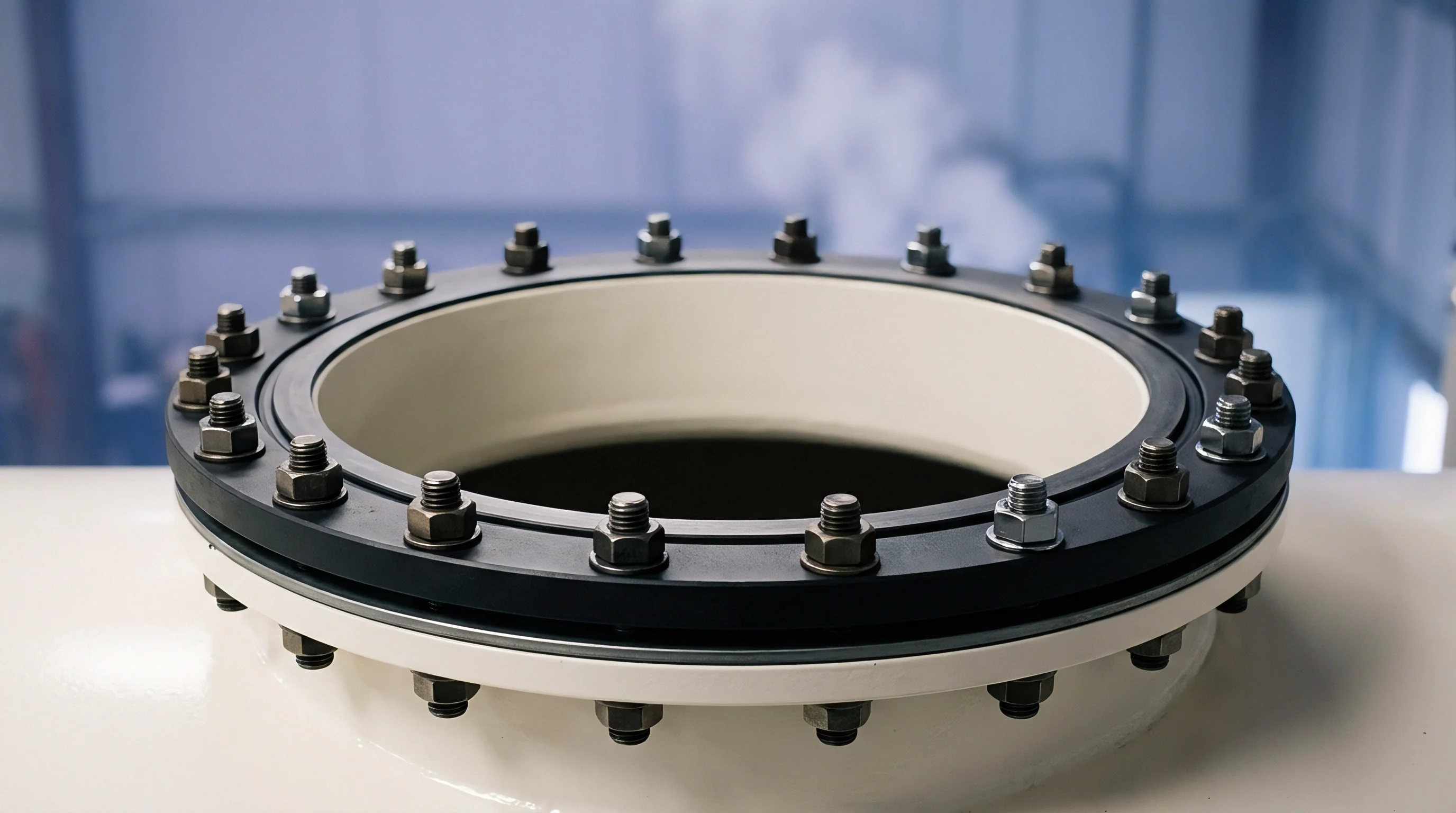
Compounding co-rotating twin-screw extruders process bimodal polyethylene grades alongside carbon black masterbatch pellets. Thermomechanical history inside the screw channels alters molecular entanglements. Aggressive kneader block configurations impart intense localized shear, breaking agglomerates to reach required carbon black dispersion levels below 18 micrometers.
High mechanical shear energy cuts high-molecular-weight polymer chains simultaneously. Chain scission shifts the non-linear viscoelastic response, lowering melt elastic recovery and extensional viscosity.
Peroxide radical generation under elevated compounding temperatures accelerates cross-linking or chain scission depending on melt oxygen content. Mild oxidative degradation introduces sparse long-chain branching, increasing zero-shear viscosity and extensional strain hardening. Excessive degradation cleaves long chains, reducing melt elasticity and broadening molecular weight distribution without changing standard melt flow rate numbers.
Specific energy input governs dispersion. Compounding conditions must balance masterbatch dispersion with preservation of long-chain entanglements.

Thermomechanical Shear History in Twin Screw Processing
Specific mechanical energy input during extrusion alters high-molecular-weight polymer chain entanglements. Operating a twin-screw compounder at elevated shaft speeds increases mechanical shear energy, heating the polymer melt through viscous dissipation. The local melt temperature in the primary kneading zone often exceeds barrel setpoints by 35 degrees Celsius.
Elevated temperatures combined with high shear strain rates selectively cleave ultra-high molecular weight fractions.
Temperature controls reaction speed. Consistently monitoring the ratio of melt pressure drop to torque input reveals structural changes in real time during compounding operations. When specific mechanical energy input rises above 0.28 kilowatt-hours per kilogram, loss of extensional strain hardening accelerates rapidly.
The compounder achieves fine carbon black particle dispersion at the expense of melt elasticity required during pipe profile calibration.
Twin Screw Thermal Management Sequence
Barrel temperature profiles across the compounding extrusion line maintain polymer stability while dispersing masterbatch additives. Compounding engineers regulate temperature and shear conditions through precise parameter control.
- Set initial feed throat barrel zone temperatures below 160 degrees Celsius to prevent premature pellet softening and solids conveying blockages.
- Increase temperature setpoints in melting zones to 190 degrees Celsius to promote uniform melt pool formation without inducing local overheating.
- Throttle co-rotating twin screw speed to maintain specific mechanical energy input between 0.22 and 0.25 kilowatt-hours per kilogram.
- Inject carbon black masterbatch via side feeders directly into fully molten polymer matrix to minimize abrasive screw flight wear and chain scission.
- Apply continuous vacuum degassing at barrel zone eight operating below 50 millibars absolute pressure to extract volatile degradation species and moisture.
- Maintain die head melt temperature strictly between 200 and 210 degrees Celsius using dynamic barrel cooling zones prior to melt filtration screens.
Specific mechanical energy input must remain sufficient to breakdown carbon black agglomerates without severing ultra-high-molecular-weight polymer entanglements.
Consider a worked scenario involving a 40-tonne production lot of PE100-RC gas pipe compound processed on a 92-millimeter co-rotating twin-screw line. Assume the line runs at a throughput rate of 1,200 kilograms per hour. If the compounding team increases screw speed from 320 to 420 revolutions per minute to maximize production output, specific mechanical energy input increases from 0.23 to 0.31 kilowatt-hours per kilogram.
Viscous dissipation drives actual melt temperature within the kneading elements from 208 to 238 degrees Celsius. Standard MFR testing of the resulting pellets reveals a nominal shift from 0.24 to 0.27 grams per 10 minutes at 190 degrees Celsius with 5 kilograms load, remaining well within sales specification. Subsequent elongational rheometry indicates a 42 percent reduction in strain hardening modulus at 80 degrees Celsius, accompanied by a drop in zero-shear viscosity from 195,000 to 112,000 pascal-seconds.
Wall thickness variation during 400-millimeter SDR 11 gas pipe extrusion increases from 1.2 millimeters to 4.8 millimeters, forcing a complete halt to pipe production. The initial throughput gain of 300 kilograms per hour generates 8 tonnes of out-of-specification compound, demonstrating how high-shear thermal degradation compromises non-linear melt performance without breaching standard MFR limits.
Data points confirm structural shifts. The precise threshold where mechanical energy dissipation in the kneader block shifts from beneficial Masterbatch dispersion to detrimental chain degradation remains unresolved across varying twin-screw screw element configurations.


Criterion
Quality specifications based purely on melt flow rate at 190 degrees Celsius with 5 kilogram loading permit wide variance in processing behavior. Incoming pellet inspections must incorporate rheological characterization methods capable of resolving structural differences. Gas pipe compound specifications demanding high resistance to slow crack growth and melt sagging utilize strain hardening modulus measurements governed by ISO 18488.
This test evaluates true stress versus stretch ratio in solid-state uniaxial tension at 80 degrees Celsius, correlating directly with long-chain entanglement density.
High-pressure capillary rheometry provides critical shear viscosity profiles across four orders of magnitude in shear rate. Measuring non-linear viscoelastic recovery requires adding creep recovery or stress relaxation protocols to routine batch release checks. Stress relaxation tests carried out on rotational rheometers measure the decay of shear stress over time following a step shear strain deformation.
Rapid stress relaxation indicates lower molecular weight or reduced long-chain branching, predicting poor extrudate melt strength.

Which Test Conditions Isolate Low Strain Elasticity?
Rotational rheometers running frequency sweeps at low angular velocities quantify zero-shear performance. Testing conducted under controlled nitrogen atmospheres at 190 degrees Celsius across angular frequencies from 0.01 to 100 radians per second isolates long-chain relaxation times. The crossover frequency, where storage modulus equals loss modulus, shifts to lower frequencies as molecular weight increases.
The crossover modulus value correlates inversely with molecular weight distribution breadth.
Low strain measurements remain inside the linear viscoelastic region, but extrapolation models yield zero-shear viscosity values that dictate sag resistance. Applying Carreau-Yasuda model fits to complex viscosity curves produces definitive zero-shear viscosity parameters. Resins showing zero-shear viscosity values below 150,000 pascal-seconds at 190 degrees Celsius undergo excessive deformation during cooling phase transit in thick-wall gas pipe extrusion lines.

Batch Acceptance Metrics
Receiving inspections for high-pressure gas pipe compound lots demand multi-point physical characterization. Purchasing specifications must contain binding rheological thresholds to reject structurally altered resin lots prior to extrusion line feeding.
- High Load Melt Index Spread must remain within plus or minus 0.5 grams per 10 minutes from qualification reference baselines under ISO 1133 Condition Y.
- Strain Hardening Modulus Minimum shall equal or exceed 65 megapascals determined at 80 degrees Celsius in accordance with ISO 18488 protocols.
- Zero Shear Viscosity Floor measured at 190 degrees Celsius using creep-recovery or frequency sweep extrapolation shall not drop below 180,000 pascal-seconds.
- Bagley Entrance Pressure Drop Limit shall not exceed 12 megapascals at a capillary shear rate of 1000 reciprocal seconds at 190 degrees Celsius.
Incorporating standard clause ISO 18488 Annex B directly into supply contracts establishes a legally binding strain hardening modulus minimum of 60 megapascals, shifting financial liability for sagging defects back to the resin compounder.


Margin
Financial exposure in heavy-wall gas pipe manufacture correlates directly with extrudate stability during vacuum cooling. Processing unstable polymer melt forces line operators to lower haul-off speeds, reduce output rates, or increase pipe wall thickness target margins to ensure minimum wall thickness compliance under ISO 4437. Excessive wall thickness consumes additional raw resin per meter produced.
A wall thickness overshoot of merely 5 percent on a 500-millimeter SDR 11 gas pipe line adds substantial unrecoverable material cost across annual production runs.
Scrap generation during start-up calibration escalates when processing resin lots with fluctuating extensional viscosity. Off-spec resin drains capital. Re-compounding or regrinding pipe scrap degrades polymer molecular structure through repeated thermomechanical stress cycles, further lowering melt elasticity and strain hardening capability.
Direct financial loss stems from both scrapped material cost and lost production line capacity during frequent recalibration stops.

Scrap Rate Variance and Melt Stability
Production downtime and material loss spike when melt strength fluctuates across raw resin lots. Unstable extensional flow causes vacuum sleeve sticking, outer diameter sizing errors, and wall concentricity failures. Extruders adjusting temperature profiles to mitigate sag often induce surface overheating, causing thermal degradation and reducing long-term hydrostatic strength performance.
Converting unstable compound lots into regrind introduces secondary degradation loops. Processing virgin compound containing 10 percent regrind generated from unstable melt batches reduces strain hardening modulus by up to 15 percent. The financial savings realized by purchasing non-certified virgin compound dissolve when accounting for scrap generation and line capacity losses.

Landed Cost Sensitivity and Resin Grade Substitution
Sourcing bimodal high-density polyethylene resin requires evaluation of landed price against scrap probability. Certified PE100-RC pipe compounds command price premiums over standard PE100 grades due to specialized polymerization steps and rigorous additive stabilization packages. Buying uncertified or substitute bimodal grades exposes pipe extruders to operational volatility.
Gravitational sagging in heavy-wall gas pipe production converts high-grade bimodal resin into scrap within minutes of vacuum box exit.
| Resin Sourcing Option | Pellet Price per Tonne | Average Line Scrap Rate | Over-Thickness Material Penalty | Effective Landed Cost per Good Tonne |
|---|---|---|---|---|
| Certified Premium PE100-RC | $1,650 | 1.2% | 1.0% | $1,686 |
| Standard PE100 Compliant | $1,520 | 3.5% | 3.2% | $1,621 |
| Non-Certified Bimodal Lot | $1,410 | 8.8% | 6.5% | $1,625 |
| Substituted Off-Spec Lot | $1,320 | 16.5% | 9.8% | $1,667 |
Consider a manufacturing plant extruding 10,000 tonnes of heavy-wall PE100-RC gas pipe annually. Purchasing a non-certified bimodal compound at $1,410 per metric tonne offers an upfront material cost saving of $240 per tonne compared to certified premium compound priced at $1,650 per tonne. Assume the non-certified resin exhibits inconsistent extensional strain hardening, resulting in an average scrap rate of 8.8 percent due to gravitational sagging defects and surface sharkskin.
Furthermore, achieving minimum wall thickness compliance across the pipe circumference requires increasing the extruder nominal target wall thickness by 6.5 percent to offset sagging thinning at the pipe top. The combined scrap loss and raw material overshoot require consuming 11,530 tonnes of raw resin pellets to ship 10,000 tonnes of compliant gas pipe. Total raw material outlay equals $16,257,300.
In contrast, processing certified PE100-RC compound at $1,650 per tonne with a 1.2 percent scrap rate and a 1.0 percent wall thickness allowance consumes 10,222 tonnes of resin pellets, resulting in a total material cost of $16,866,300. The initial nominal cost gap of $2,400,000 shrinks to a net savings of $609,000. When factoring in line downtime costs, labor for scrap grinding, and elevated warranty risk from compromised crack growth resistance, purchasing lower-cost uncertified resin destroys operational margins.
Landed prices drive margin decisions. Technical purchasing practices that enforce extensional stability criteria alongside standard melt flow measurements secure steady production rates while isolating the pipe extruder from uncompensated scrap losses.