Meaning
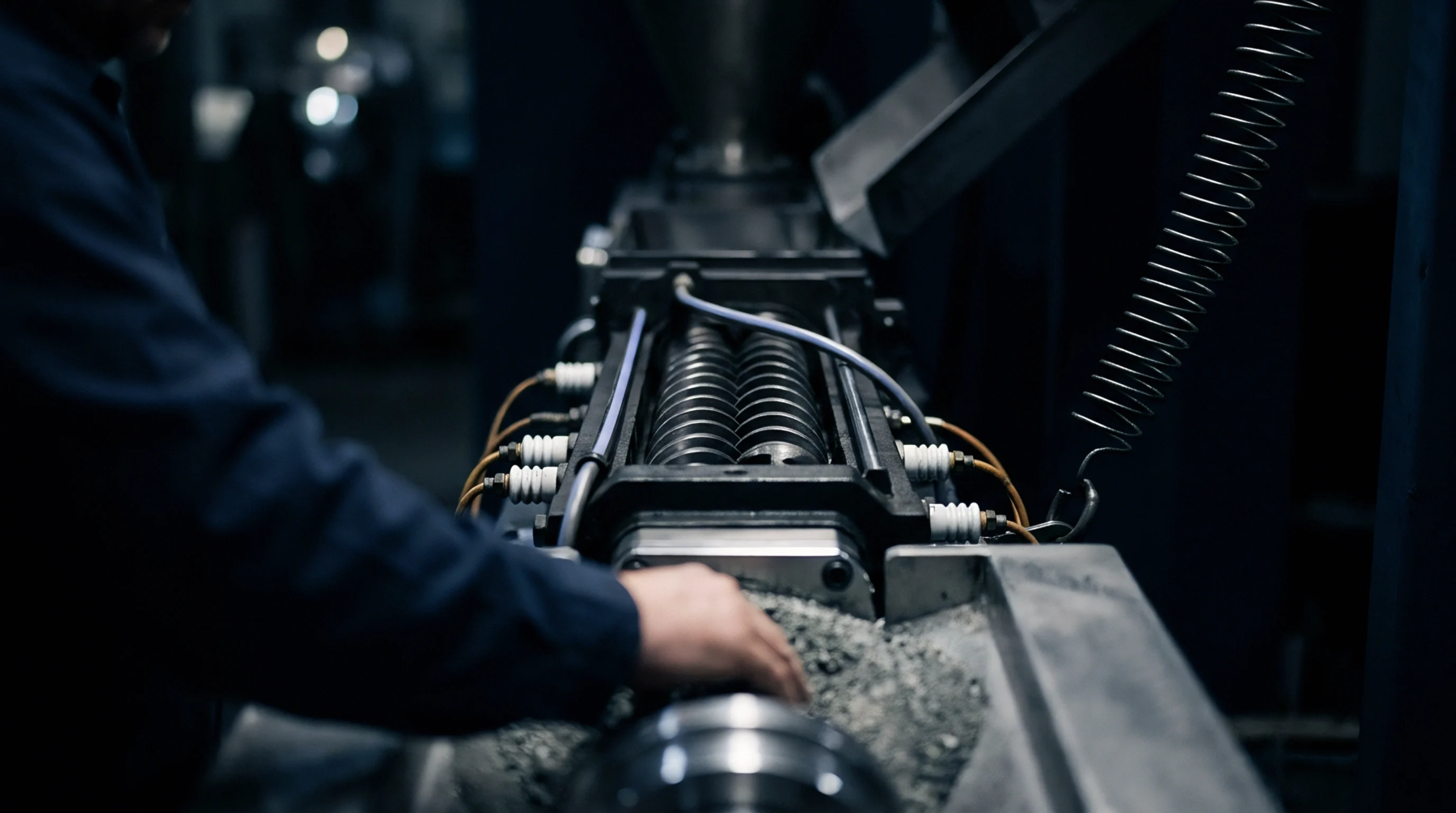
Mechanical work transferred from extruder screws to a polymer melt per unit of throughput quantifies the energy input during compounding. Calculating specific mechanical energy determines how much shear energy is applied to melt, mix and disperse additives within the resin. This value is measured in kilowatt hours per kilogram.
Energy Dissipation
Motor power and screw speed drive the rotation of the extruder screw against the viscous resistance of the polymer melt. In this process, specific mechanical energy is dissipated as heat, which raises the melt temperature. This mechanical heating is often greater than the heat supplied by the barrel heaters.
Compounding Efficiency
Distributive and dispersive mixing of fillers requires a high amount of mechanical work to break down agglomerates. Monitoring specific mechanical energy allows operators to assess if the screw configuration and compounding speed are sufficient to achieve a homogeneous blend. If this value is too low, the fillers remain poorly dispersed, which can lead to structural weakness and cosmetic defects in the extruded profiles.
Degradation Control
Excessive shear energy can break polymer chains and reduce the molecular weight of the resin. High specific mechanical energy values indicate that the polymer is being subjected to intense stress, which can cause thermal degradation and loss of physical properties. Optimizing the screw design keeps this energy within safe limits.