Optimizing Diblock Copolymer Loading Limits for Recycled Polypropylene Polyethylene Compounds
Optimal diblock copolymer loading caps at interfacial saturation between 2.0 and 3.0 wt%, maximizing impact strength while avoiding stiffness loss and cost penalties.
Phase
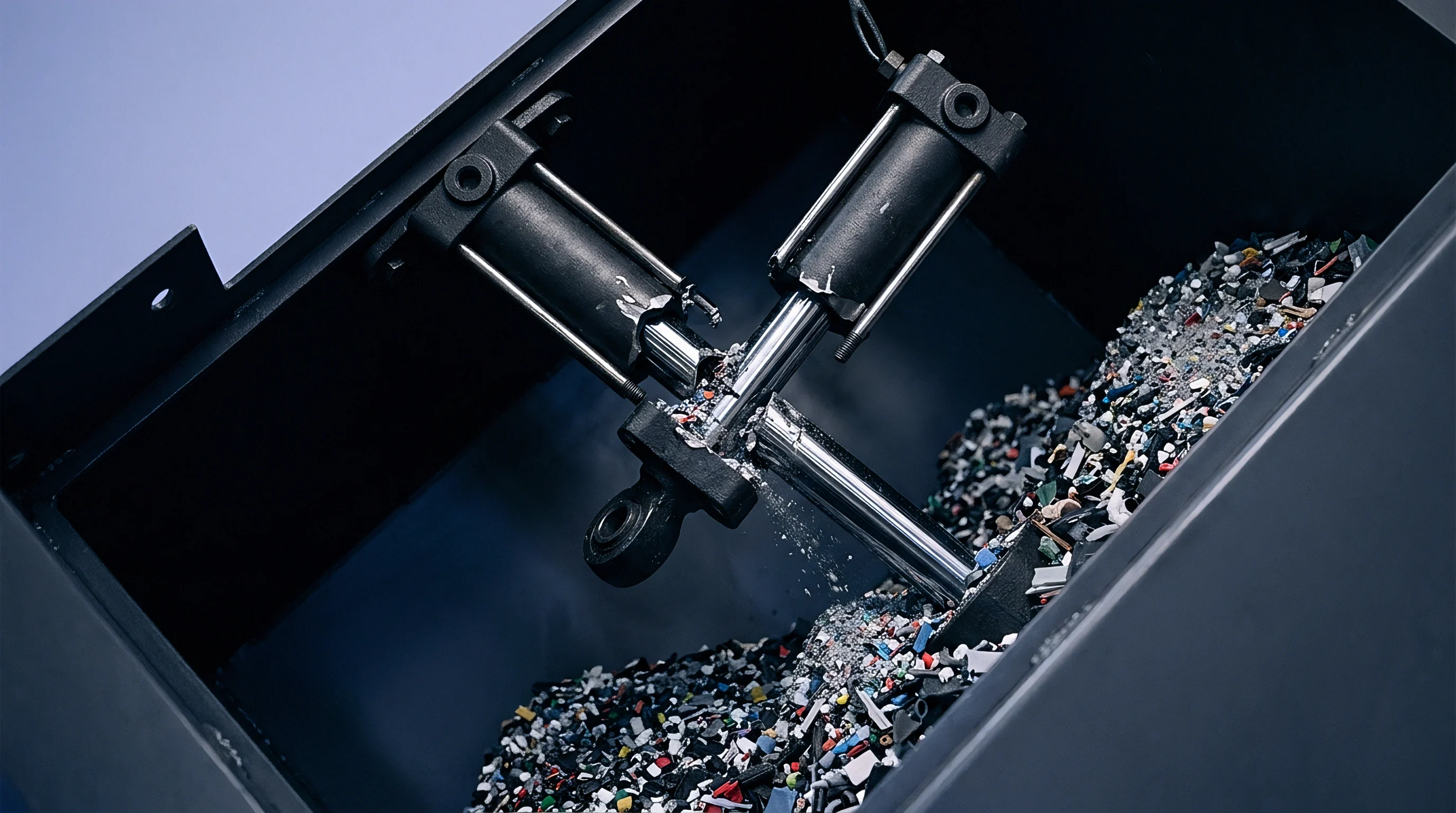
Commingled polyolefin waste streams contain semi-crystalline polypropylene alongside high-density and low-density polyethylene that separate into distinct thermodynamic domains during melt processing. Liquid polymer mixtures of non-polar polyolefins exhibit phase separation driven by positive Flory-Huggins interaction parameters, typically ranging from 0.02 to 0.08 at compounding melt temperatures between 200 and 240 degrees Celsius. Uncompatibilized blends exhibit poor interfacial adhesion, macro-phase separation, and coarse droplet morphology exceeding ten micrometers in diameter.
These uncompatibilized boundaries act as stress concentration sites, causing premature brittle failure under flexural or impact loads.
Diblock copolymers composed of discrete polypropylene and polyethylene segments position themselves directly at the boundary between immiscible polymer domains. The ethylene block enters the polyethylene phase while the propylene block solubilizes into the polypropylene continuous matrix. This block localization drops interfacial tension from roughly 4.5 millinewtons per meter down to under 0.5 millinewtons per meter.
Lower interfacial tension reduces disperse phase droplet coalescence inside the extruder screw barrel, yielding domain sizes below one micrometer under optimal shear rates.
Interfacial compatibilization converts gross domain delamination into fine disperse droplets that transfer mechanical shear under sudden impact.
The molecular weight of each block segment determines how deeply the diblock copolymer entangles with the homopolymer matrices. Short block sequences fail to penetrate beyond the immediate interface, resulting in interfacial slippage under load. Excessively long block sequences diffuse slowly through the high-viscosity melt, failing to reach domain boundaries during typical extrusion residence times of thirty to sixty seconds.
A balanced diblock copolymer architecture balances dynamic mobility during extrusion mixing with sufficient block length to form mechanical entanglements capable of sustaining stress transfer across phase boundaries.
Whether long-chain hyper-branched diblock architectures can stabilize wide-spread polyethylene molecular weight distributions without inducing co-crystallization defects across the boundary interface remains an open analytical question in high-speed compounding.

Saturation
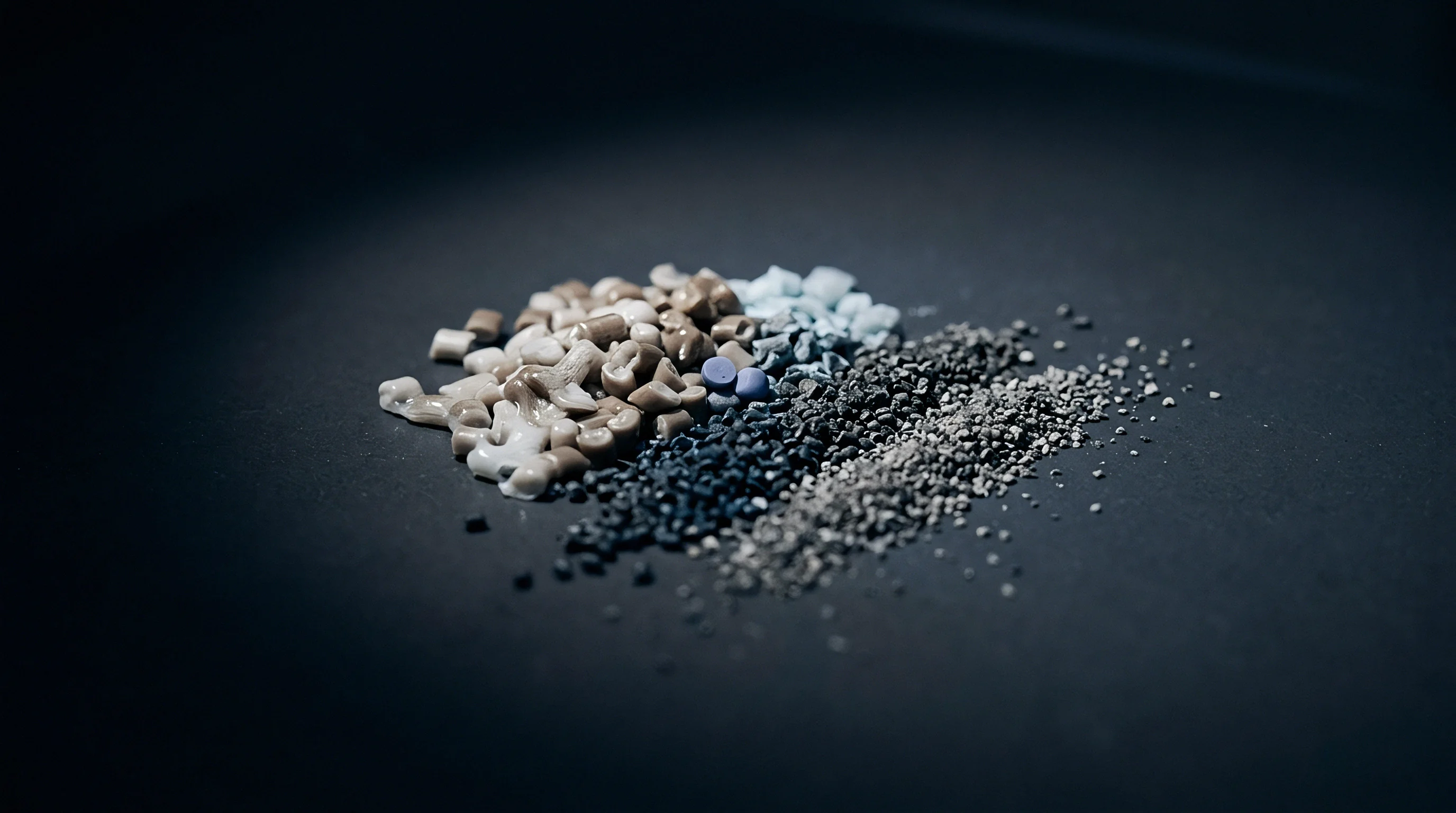
Diblock additive concentration exhibits a distinct thermodynamic boundary where interfacial sites reach total coverage. Below this threshold, incremental copolymer additions systematically reduce disperse phase domain diameter and improve mechanical energy dissipation. Once interfacial coverage reaches absolute saturation, additional block copolymer molecules no longer locate at phase boundaries.

Interfacial Dynamics and Micelle Formation
Excess block sequences assemble into self-organized spherical or cylindrical micelles within the continuous polymer phase. Critical micelle concentration in polymer melts depends on temperature, matrix molecular weight, and block sequence length. Micelles act as soft elastomeric inclusions rather than structural bridges.
This transition alters the stress state of the compound, shifting mechanical responses from localized stress relief to matrix plasticization.
| Diblock Content (wt%) | Disperse Domain Size (µm) | Notched Impact ISO 179 (kJ/m²) | Tensile Modulus ISO 527 (MPa) | Morphological Interfacial State |
|---|---|---|---|---|
| 0.0 | 8.4 | 3.2 | 1420 | Macro-phase coarse droplets with voids |
| 1.0 | 3.1 | 7.8 | 1390 | Sub-saturating boundary localization |
| 2.5 | 0.8 | 18.4 | 1340 | Optimal interfacial monolayer saturation |
| 4.5 | 0.7 | 19.1 | 1260 | Primary micelle formation in continuous phase |
| 7.0 | 0.7 | 16.2 | 1150 | Extensive micellar agglomeration and softening |
Quantifying domain size reduction relative to compatibilizer loading highlights the diminishing returns of high dosage rates. Take a post-consumer recyclate stream comprising seventy percent polypropylene and thirty percent polyethylene by weight. Adding one weight percent of olefin diblock copolymer drops disperse phase domain size from 8.4 micrometers to 3.1 micrometers, delivering a 143 percent gain in notched Charpy impact strength.
Increasing diblock loading to 2.5 weight percent reduces domain diameter further to 0.8 micrometers, securing an additional 135 percent impact improvement up to 18.4 kilojoules per square meter. Pushing loading to 4.5 weight percent yields a negligible domain reduction down to 0.7 micrometers while notched impact increases by merely 3.8 percent.
Unnotched impact strength reaches maximum resistance at three weight percent diblock concentration when measured at minus twenty degrees Celsius under ISO 179-1/1eA.
The flexural stiffness of the compound decreases continuously as rubbery diblock content increases. Tensile modulus drops from 1420 megapascals in the uncompatibilized base resin down to 1260 megapascals at 4.5 weight percent diblock loading. The marginal mechanical gain above 2.5 weight percent copolymer fails to justify the linear drop in structural stiffness and the exponential increase in material cost per metric tonne.
Adding compatibilizer beyond the point where disperse phase domain size stops shrinking converts expensive additive into soft elastomeric inclusions that lower flexural stiffness without improving impact performance.


Strain
Mechanical load deformation tests reveal the exact functional limit where compatibilizer addition transitions from toughening agent to plasticizing diluent. Uniaxial tensile testing conducted under ISO 527-2 at a crosshead speed of 50 millimeters per minute illustrates how interfacial block density governs deformation mechanisms. Uncompatibilized post-consumer polyolefin blends undergo rapid necking followed by immediate clean interfacial failure across domain boundaries, exhibiting ultimate elongation figures below fifteen percent.
Does Impact Strength Regress above Critical Copolymer Loading?
Elevated block copolymer levels introduce localized phase softening that initiates micro-voiding under high-rate dynamic impact. While impact resistance increases rapidly up to the interfacial saturation point, loading beyond five weight percent causes notched Charpy values measured under ISO 179-1/1eA at 23 degrees Celsius to plateau and eventually decline. Continuous phase plasticization reduces the energy required for shear yielding, allowing cracks to propagate through micelle-dense regions in the polypropylene matrix.
- Interfacial Delamination occurs when inadequate diblock loading leaves high surface tension between polypropylene continuous matrix and polyethylene droplets under high strain rates.
- Matrix Plasticization arises when unlocalized block copolymer molecules accumulate within the polypropylene continuous phase, lowering tensile yield strength and flexural modulus.
- Viscosity Mismatch Instability appears when diblock concentration alters melt flow rate unevenly, generating shear band concentration during injection molding fill cycles.
- Co-Crystallization Distortion emerges when misaligned ethylene block sequences disrupt polypropylene spherulite growth, creating localized micro-voids during part cooling.
The transition between brittle cleavage and ductile tearing depends on testing temperature and strain velocity. At minus 20 degrees Celsius, uncompatibilized polyolefin recyclates exhibit glass-like fracture profiles. Optimal diblock copolymer additions between 2.0 and 3.0 weight percent shift the ductile-to-brittle transition temperature downward by up to 25 degrees Celsius, allowing parts to absorb energy at sub-zero temperatures.
Pushing copolymer concentration to 6.0 weight percent lowers room-temperature tensile yield strength by eighteen percent relative to virgin homopolymer targets, compromising the structural stability of thin-walled injection molded components.
A contract clause specifying maximum three percent flexural modulus degradation under ISO 178 restricts total compatibilizer letdown ratio regardless of impact resistance gains.
Exceeding the critical diblock concentration increases raw compound expense while causing finished injection molded components to fail structural creep deflection thresholds under sustained load.
Dispersion
Extruder screw design and thermal profile execution dictate whether block copolymer chains migrate to phase boundaries before melt solidification occurs. Co-rotating twin-screw extruders featuring length-to-diameter ratios between 40:1 and 48:1 provide necessary residence time and kinematic shear mixing. Thermal profiles setting barrel zone temperatures between 190 and 220 degrees Celsius balance polymer melt viscosity while preserving block copolymer chemical stability.

Twin Screw Extrusion Setup Parameters
Distributive mixing elements break up large polyethylene domains, generating high surface area for diblock adsorption. Kneading blocks arranged in narrow forward and neutral configurations transfer energy without over-shearing polymer backbones. Specific mechanical energy input maintained between 0.18 and 0.24 kilowatt-hours per kilogram achieves optimal compatibilizer dispersion without inducing chain scission in high molecular weight polypropylene fractions.
- Pre-dry post-consumer polyolefin flakes at eighty degrees Celsius for four hours to eliminate residual moisture that induces thermal degradation in block sequences.
- Feed recycled polypropylene and polyethylene flake fractions into the primary throat using loss-in-weight gravimetric feeders calibrated to target blend ratios.
- Meter pure diblock copolymer pellets through a secondary side feeder situated at barrel section four downstream of initial polymer melting.
- Apply high-intensity distributive kneading blocks at barrel sections six and seven under a specific mechanical energy input of zero point two two kilowatt-hours per kilogram.
- Vent volatile contaminants through a dual-stage vacuum degasser operating at twenty kilopascals absolute pressure before melt filtration and underwater pelletizing.
| Diblock Loading (wt%) | Specific Energy (kWh/kg) | Melt Pressure at Die (bar) | MFR 230°C/2.16kg (g/10min) | Dispersed Phase Diameter (µm) |
|---|---|---|---|---|
| 0.0 | 0.16 | 42 | 14.2 | 7.8 |
| 1.5 | 0.19 | 48 | 11.8 | 1.9 |
| 3.0 | 0.22 | 56 | 9.4 | 0.8 |
| 5.0 | 0.25 | 68 | 6.8 | 0.7 |
| Test methods: Melt Flow Rate measured per ISO 1133-1 Condition M. Disperse phase droplet diameter quantified via scanning electron microscopy on cold-fractured xylene-etched surfaces. | ||||
Rheological properties shift significantly as block copolymer loading increases. Melt flow rate measured at 230 degrees Celsius under a 2.16 kilogram load drops from 14.2 grams per 10 minutes in the base recyclate down to 6.8 grams per 10 minutes at 5.0 weight percent diblock loading. This viscosity elevation stems from interfacial entanglement networks and increased complex viscosity in the melt state.
Molders must adjust injection pressure and barrel temperature profiles to accommodate reduced flowability when processing heavily compatibilized compounds.
Compounders frequently claim that elevated die pressure stems from feedstock viscosity shifts rather than uncompatibilized block copolymer agglomerates plugging the melt filter screen.

Valuation
Commercial viability hinges on balancing raw additive expenditure against performance uplift in the reprocessed polyolefin market. Raw diblock copolymer pricing ranges from 3,800 to 5,500 USD per metric tonne, whereas post-consumer polyolefin regrind trades between 850 and 1,200 USD per metric tonne depending on flake purity and color sorting. Additive loading directly dictates compound cost structure and finished part profit margins.

Landed Cost Arithmetic for Compatibilized Recyclates
Consider a 20-tonne production run of a 70/30 polypropylene-polyethylene post-consumer compound. The base recycled flake blend carries a landed cost of 1,100 USD per metric tonne. Pure olefin diblock copolymer costs 4,600 USD per metric tonne delivered.
Processing expense across the twin-screw extrusion line runs at 250 USD per metric tonne produced.
Formulation Option A utilizes 1.5 weight percent diblock copolymer. Base resin contribution equals 1,083.50 USD. Compatibilizer cost contributes 69.00 USD.
Adding compounding operational costs brings total landed manufacturing expense to 1,402.50 USD per metric tonne. This compound achieves a notched Charpy impact strength of 11.2 kilojoules per square meter under ISO 179 at 23 degrees Celsius, meeting technical requirements for non-structural automotive interior trim panels.
Formulation Option B increases diblock loading to 4.0 weight percent to maximize toughness. Base resin contribution drops to 1,056.00 USD while compatibilizer contribution increases to 184.00 USD. Combined with compounding processing costs, landed manufacturing expense reaches 1,490.00 USD per metric tonne.
This formulation yields a notched Charpy impact strength of 18.8 kilojoules per square meter. The 2.5 percentage point increase in copolymer loading raises total manufacturing cost by 87.50 USD per metric tonne, representing a 6.2 percent cost premium.
| Formulation Tier | Diblock Loading (wt%) | Additive Cost per Tonne ($) | Landed Compound Cost ($/t) | Cost per Unit Impact ($ / kJ/m²) |
|---|---|---|---|---|
| Unmodified PCR Base | 0.0 | 0.00 | 1350.00 | 421.87 |
| Low Loading Tier | 1.5 | 69.00 | 1402.50 | 125.22 |
| Optimal Loading Tier | 2.5 | 115.00 | 1429.00 | 78.08 |
| High Loading Tier | 4.0 | 184.00 | 1490.00 | 79.25 |
| Saturated Tier | 6.0 | 276.00 | 1566.00 | 96.66 |
Calculating cost per unit of impact strength reveals the economic efficiency peak. Unmodified recyclate incurs a cost of 421.87 USD per kilojoule of impact resistance due to abysmal baseline toughness. The 2.5 weight percent loading tier reaches maximum economic efficiency at 78.08 USD per kilojoule of impact resistance.
Pushing loading to 6.0 weight percent increases the unit impact cost to 96.66 USD because impact gains plateau while material costs climb continuously.
- Melt Rheology Verification confirms that melt flow rate changes under ISO 1133 at 230 degrees Celsius and two point one six kilogram load stay within ten percent of base resin baseline.
- Impact Threshold Target validates that notched Charpy resilience meets part design criteria without over-allocating premium diblock additive.
- Flexural Stiffness Retention ensures flexural modulus tested under ISO 178 retains ninety percent of virgin polypropylene structural rigidity.
- Lot Cost Variance Audit calculates additive expenditure per finished good part to maintain commercial target margins.
Reprocessed resin specifications retain commercial value only when mechanical performance remains consistent across sequential feedstock shipments.
A purchase contract specifying ISO 1043-1 material identification along with a four percent cap on block copolymer additive weight protects buyers against unexpected resin density increases and flexural performance loss.