Analytical Verification Limits for Trace Post Consumer Recycled Fractions in Multi Layer Packaging
Trace post-consumer recycled fractions in multi-layer packaging require physical layer microtomy before pyrolysis GC-MS to verify claims below five percent.


Marker
Polymer recycling processes leave chemical signatures in reprocessed resins. Post-consumer recycled polyolefins and polyethylene terephthalate contain non-intentionally added substances that originate from previous service cycles, consumer contents, fragrance additives, thermal degradation products, and cross-contamination during collection. When converters blend recycled content into discrete layers of multi-layer flexible films, identifying these chemical footprints requires tracking specific trace compounds that survive melt processing, extrusion, and lamination.

Volatile Hydrocarbon and Terpene Signatures
Post-consumer polyethylene and polypropylene streams consistently retain terpene compounds. Limonene, pinene, and menthol serve as primary volatile indicators due to their widespread use in household cleaning products and personal care packaging. During mechanical recycling, washing and vacuum degasification reduce limonene levels, yet residual concentrations between 0.5 milligrams per kilogram and 12 milligrams per kilogram remain bound within the polymer matrix.
Sorption kinetics determine how these volatile molecules distribute within multi-layer packaging. In a coextruded five-layer film with a polyethylene glycol barrier layer, limonene migrates from an internal recycled core into virgin outer sealing layers. Gas chromatography coupled with triple quadrupole mass spectrometry detects these compounds down to 0.01 milligrams per kilogram.
The presence of limonene in a virgin polyolefin layer indicates either direct incorporation of recycled resin or cross-layer migration from an adjacent recycled core layer during roll storage.
Limonene concentrations exceeding 0.05 milligrams per kilogram in ethanol simulants after ten days at forty degrees Celsius establish the presence of post-consumer polyolefin fractions in core film layers.

Oxidation and Degradation Byproducts
Thermal extrusion subjects polymers to heat and shear stresses that generate oxidized species. Recycled polyolefins display elevated concentrations of branched alkanes, oxidized fatty acids, linear aldehydes, ketones, and cyclic degradation products. Antioxidants such as tris(2,4-di-tert-butylphenyl)phosphite undergo transformation into oxidized phosphates, specifically tris(2,4-di-tert-butylphenyl)phosphate and di-tert-butylphenol isomers.
Carboxylic acids and esters form distinct patterns in post-consumer materials. Polyethylene processing yields 2-ethylhexanoic acid and various aliphatic dicarboxylic acids. Quantitative analysis uses solvent extraction followed by gas chromatography mass spectrometry to establish the ratio between active antioxidant molecules and their degradation products.
Virgin resins display high ratios of unreacted phosphite stabilizer to oxidized phosphate, whereas post-consumer fractions shift this equilibrium toward degradation derivatives.

Contaminant Profile Quantification
Post-consumer polyethylene terephthalate contains specific marker compounds that differ from polyolefin streams. Isophthalic acid residues, terephthalic acid esters, cyclic PET oligomers, and residual catalysts like antimony trioxide serve as primary indicators. In multi-layer structures containing barrier polymers, contamination profiles vary by layer location and thermal history.
Print inks and adhesive residue compounds also mark recycled content. Plasticizers like acetyl tributyl citrate, phthalate esters, and photoinitiators including benzophenone remain detectable in trace quantities. Analytical screening sets signal thresholds to distinguish background factory contamination from structural resin impurities.
Suppliers routinely explain detected terpene markers as environmental background contamination absorbed during warehouse storage rather than evidence of post-consumer resin content.


Bench
Quantifying post-consumer recycled content in multi-layer packaging demands specialized instrument configurations. Standard infrared spectroscopy fails to resolve recycled polymer fractions below ten percent in coextruded films because chemical bonds in virgin and recycled polyolefins present identical absorption bands. Advanced analytical workflows integrate thermal desorption, pyrolytic cleavage, mass selectivity, and isotopic ratios to establish detection thresholds for trace fractions.

Instrument Capabilities and Detection Thresholds
Pyrolysis gas chromatography mass spectrometry isolates structural differences in polymer backbones. Pyrolyzing film samples at six hundred degrees Celsius yields characteristic pyrograms that reveal branch density, thermal history, and trace additives. Coupled with tandem mass spectrometry, this technique quantifies recycled polyolefin content down to two percent mass fraction in isolated film layers.
Isotope ratio mass spectrometry measures variations in carbon stable isotopes. Recycled polymers derived from diverse fossil fuel feedstocks and post-consumer collection streams exhibit carbon thirteen to carbon twelve ratios that deviate slightly from single-source virgin resins. While isotope ratio instruments achieve high precision, isotopic overlap across petrochemical feedstocks complicates definitive quantification when recycled fractions fall below five percent.
| Analytical Technique | Target Marker Class | Limit of Detection | Limit of Quantification | Primary Interferences |
|---|---|---|---|---|
| Pyrolysis GC-MS/MS | Polymer thermal fragments, branching markers | 0.5% mass fraction | 1.5% mass fraction | Tie-layer adhesives, copolymer additives |
| TDU-GC-MS/MS | Volatile organic compounds, terpenes, degradation product set | 0.005 mg/kg resin | 0.015 mg/kg resin | Cross-contamination from ambient plant air |
| Isotope Ratio MS | Stable carbon isotope ratios | 3.0% mass fraction | 8.0% mass fraction | Variation in virgin petrochemical feedstocks |
| High-Resolution NMR | End-group structures, oxidized carbon centers | 1.0% mass fraction | 3.0% mass fraction | Overlapping signal peaks from slip additives |
| Methods tested using ten milligram film samples prepared by mechanical separation or microtome slicing. | ||||
Microtomy and Spatial Spectroscopy
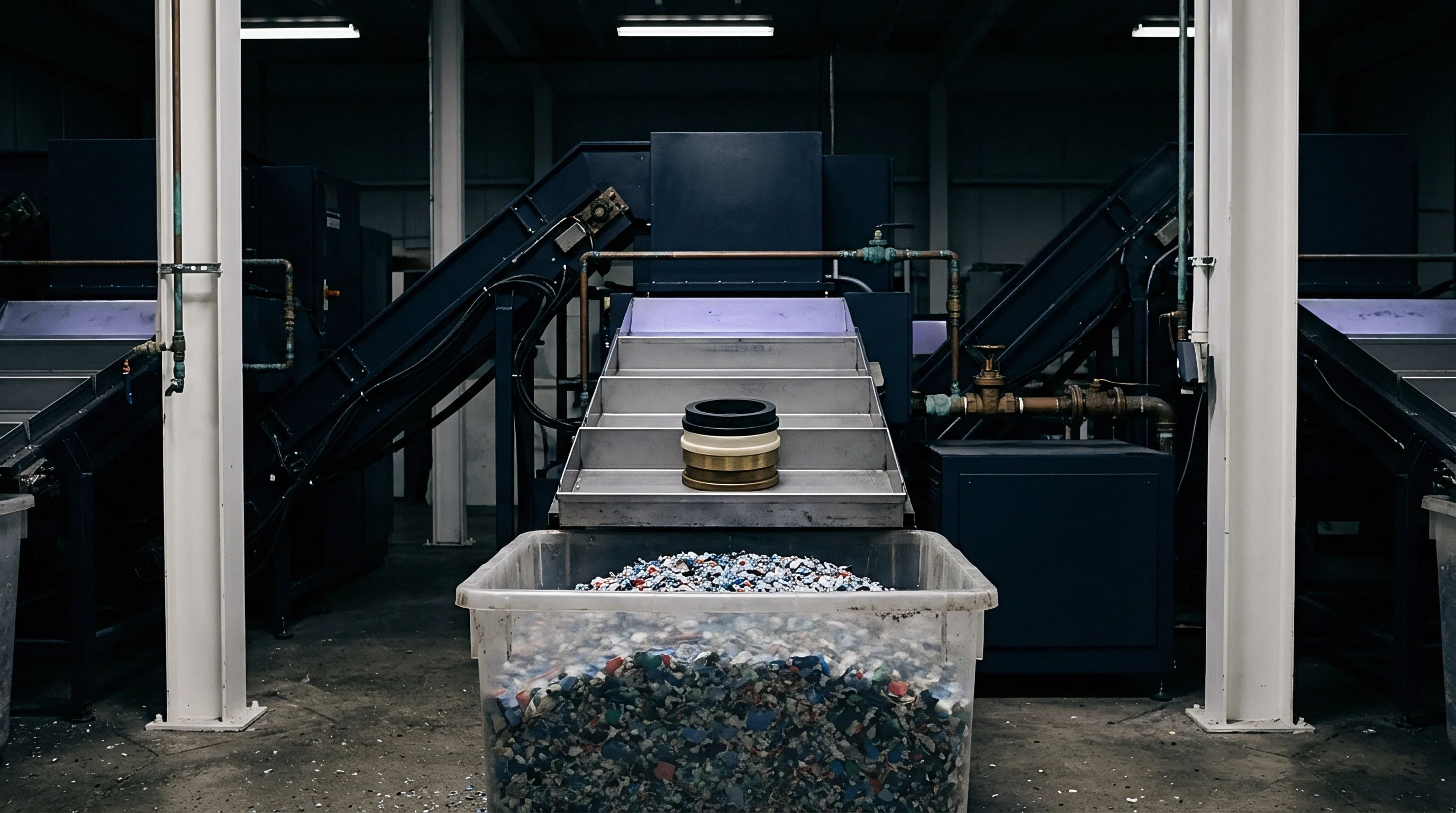
Isolating individual film layers before instrumental analysis prevents false positives caused by adhesives and functional additives. Cryogenic microtomy cuts multi-layer cross-sections into precise slices between two and five micrometers thick. Fourier transform infrared microscopy and Raman microscopic imaging map functional group distributions across these cross-sections.
Raman spectroscopy identifies functional layers like ethylene vinyl alcohol, polyamide, and polyethylene. When assessing recycled content within a specific inner layer, confocal Raman microscopy focuses laser excitation directly onto a five-micrometer focal point within the interior layer. This non-destructive spatial profiling detects oxidation markers, titanium dioxide pigment dispersion variations, and carbon black particles typical of post-consumer waste streams.
Solid-phase microextraction extracts volatile components directly from heated sample vials. Heating film samples to one hundred twenty degrees Celsius for forty-five minutes releases volatile markers into the headspace without melting the structural packaging layers.
Analytical quantification limits improve by an order of magnitude when physical layer separation precedes instrumental extraction.
Uncertainty increases rapidly as sample mass drops below laboratory extraction thresholds.


Leach
Evaluating multi-layer packaging for food contact requires measuring substance migration into standardized food simulants. Post-consumer recycled plastics introduce complex mixtures of non-intentionally added substances that can cross inner functional barriers. Testing regimes apply specific temperature and time parameters to force chemical transport from internal film layers into contacting liquids.

Migration Testing Conditions and Simulants
Specific migration testing employs official food simulants according to European standard EN 1186 and Regulation EU 10/2011. Ethanol ten percent by volume serves as Simulant A for aqueous foods. Acetic acid three percent mass by volume acts as Simulant B for acidic media.
Poly(2,6-diphenyl-p-phenylene oxide), known commercially as Tenax, serves as Simulant E for dry food matrices. Vegetable oil or fifty percent ethanol simulates fatty food contact.
Test protocols subject packaging samples to ten days at sixty degrees Celsius to simulate long-term storage at ambient temperatures. For high-temperature processing applications, exposure conditions escalate to two hours at one hundred seventy-five degrees Celsius using Tenax or oil. Laboratory analysts measure migration rates into these simulants using gas chromatography mass spectrometry and liquid chromatography coupled with high-resolution time-of-flight mass spectrometry.
Specific Migration Limits and Non-Intentionally Added Substances
European packaging regulations establish strict specific migration limits for identified chemical compounds. Low molecular weight additives, degradation products, and oligomers face strict thresholds. Oligomers from recycled polyethylene terephthalate must not exceed 0.05 milligrams per kilogram of food.
Cyclo-di-badge residues from adhesives and epoxy systems carry a limit of 0.05 milligrams per kilogram.
Non-intentionally added substances present screening challenges. Unidentified compounds detected above ten micrograms per kilogram of food equivalent trigger toxicological evaluation. Structural threshold of toxicological concern concepts categorize unknown migrants based on molecular features.
Genotoxic compounds mandate analytical detection limits as low as 0.15 micrograms per kilogram.
Consider a worked evaluation of a three-layer film structure comprising a twenty-micrometer outer virgin polyethylene layer, a thirty-micrometer core containing suspected post-consumer recycled polyethylene, and a fifteen-micrometer inner virgin sealing layer. Assume total packaging surface area of six square decimeters contacting one kilogram of food simulant. Testing uses ten days at forty degrees Celsius in fifty percent ethanol.
Headspace extraction reveals residual 2,4-di-tert-butylphenol in the film at three milligrams per kilogram of total film mass. Laboratory migration measurement yields a concentration of 0.008 milligrams per kilogram in the simulant. The specific migration limit for this compound stands at 0.05 milligrams per kilogram.
The film passes specific migration compliance, yet the presence of this specific degradation product confirms that chemical species originate from the core layer and diffuse through the inner virgin barrier layer during storage.
Non-intentionally added substances migrating above 0.01 milligrams per kilogram require formal toxicological hazard classification under European food contact rules.
Failing to detect migrating migrants leads directly to regulatory enforcement, product recalls, packaging waste penalties, and immediate cancellation of food contact compliance declarations.


Stack
Multi-layer flexible films combine distinct polymers to satisfy barrier, strength, and sealing requirements. Coextruded packaging structures integrate low-density polyethylene, linear low-density polyethylene, polyamide, ethylene vinyl alcohol, and polyurethane tie adhesives within a single film construction ranging from thirty to one hundred fifty micrometers in total thickness. Introducing trace post-consumer recycled fractions into specific layers alters boundary layer mechanics and complicates analytical verification.

Delamination Bottlenecks and Interfacial Interference
Separating coextruded layers without chemical cross-contamination represents a major barrier in verification protocols. Mechanical peeling fails when tie-layer adhesives achieve high bond strength. Solvent dissolution techniques selective to specific polymers risk leaching trace volatile markers out of the target layer into the solvent bath, rendering quantitative mass fraction calculations inaccurate.
Polyamide and ethylene vinyl alcohol layers act as formidable functional barriers to volatile organic compounds. A core layer containing post-consumer recycled content sandwiched between two barrier layers prevents volatile markers from escaping during headspace thermal desorption testing. The analytical laboratory must microtome the multi-layer stack into cross-sectional ribbons or chemically delaminate the structure using mild ethyl acetate baths to expose the recycled layer directly.
- Physical Cross-Sectioning requires cryogenic microtomy at minus eighty degrees Celsius to produce clean layer cross-sections without smearing soft polyolefin boundaries into adjacent layers.
- Solvent Swelling Exposure utilizes selective organic solvents to swell tie-layer polyurethane adhesives, enabling mechanical separation of polyethylene from polyamide barriers without thermal degradation.
- Laser Ablation Sampling directs focused ultraviolet laser pulses to ablate core layer material directly into an inductively coupled plasma mass spectrometer for trace metal catalyst identification.
- Infrared Micro-Spectroscopic Mapping scans cross-sectional film faces at one-micrometer steps to plot chemical spectra variations that delineate virgin layers from contaminated recycled zones.

How Does Layer Separation Affect Trace Recycled Detection?
Layer separation dictates whether an analytical technique measures total film average properties or specific layer compositions. Dilution effects degrade detection sensitivity when testing intact multi-layer structures. A trace recycled fraction of five percent present within a ten-micrometer core layer represents less than 0.5 percent of a hundred-micrometer total film structure.
Whole-film pyrolysis or extraction dilutes target marker compounds below instrumental limits of detection.
Physical isolation of the target layer eliminates matrix interference caused by adjacent tie-layers, slip additives, and printing inks. Isolating the core layer concentrates trace degradation markers, raising local concentration levels above the limit of quantification. Microtoming or solvent-assisted delamination increases analytical signal clarity for mass spectrometry instruments.
Surface contamination during microtomy introduces ambient volatile organic compounds onto freshly cut layer interfaces. Blade friction generates local heating, causing volatile terpene markers like limonene to evaporate before chromatographic analysis. Laboratory techniques must balance physical layer isolation against thermal and mechanical marker loss.
Current analytical standards leave open whether confocal Raman chemical imaging can replace destructive solvent extraction for routine customs clearing audits.


Audit
Declarations of conformity document regulatory compliance throughout the flexible packaging supply chain. Converting operations, resin synthesizers, and recyclers supply supporting documentation to prove food contact safety and verify recycled content claims. Audit workflows compare mass balance documentation against physical laboratory test data to identify discrepancies between declared composition and actual film structure.

Documentation Chains and Mass Balance Verification
Mass balance accounting systems track recycled resin volumes through extrusion plants. Certificates of analysis state recycled input percentages based on raw material batch weights added to extruder hoppers. In-line dosing systems log resin additions, generating mass balance ledgers certified under schemes like ISCC PLUS or RecyClass.
Analytical verification acts as an independent check against mass balance paperwork. A declaration claiming ten percent post-consumer recycled polyethylene in a core layer must correlate with detectable marker thresholds during pyrolytic mass spectrometry. When paper mass balance ledgers declare recycled content but laboratory gas chromatography yields zero detected degradation markers, audit teams investigate potential batch mixing errors, resin mislabeling, or falsified chain of custody reports.
- Raw Material Receipt Verification matches incoming resin lot numbers against certified recycler declarations and safety data sheets detailing decontamination process approvals.
- Extrusion Dosing Calibration cross-checks gravimetric feeder log files against job production runs to confirm physical dosing ratios match target recycled content percentages.
- Retained Sample Extraction submits retained production film samples to thermal desorption gas chromatography to establish baseline volatile impurity fingerprints for each lot.
- Third-Party Laboratory Cross-Check sends duplicate packaging samples to accredited testing facilities for independent specific migration and non-intentionally added substance screening.
Discrepancies between documentary declarations and analytical test reports expose packaging converters to commercial liability. Importing entities face regulatory scrutiny when border authorities perform random physical sampling on packaging consignments. Laboratory reports claiming non-detectable post-consumer content contradict commercial invoices that claim tax exemptions based on recycled content percentages.
Contracts for flexible packaging supply now incorporate explicit clauses stating that any batch yielding zero analytical detection of post-consumer markers under pyrolysis GC-MS testing loses its certified recycled status regardless of mass balance documentation, transferring tax exposure directly to the packaging converter.


Tariff
Government authorities enforce statutory packaging taxes and extended producer responsibility fees to drive circular economy adoption. Tax regulations penalize virgin plastic packaging while granting exemptions or fee discounts to products containing certified post-consumer recycled thresholds. Proving compliance requires rigorous analytical verification that holds up under revenue audit scrutiny.

Financial Impact of Plastic Packaging Taxes
The United Kingdom Plastic Packaging Tax levies a charge of two hundred seventeen pounds and sixty-nine pence per metric tonne on plastic packaging components that contain less than thirty percent post-consumer recycled plastic. European Union member states pay a national contribution calculated at eight hundred Euros per metric tonne of non-recycled plastic packaging waste generated within their borders. Packaging buyers calculate landed costs based on these regulatory fees.
Claiming tax exemptions based on trace or core-layer recycled content exposes brand owners to financial risk. Revenue authorities require clear evidence demonstrating that declared recycled fractions meet statutory thresholds. Relying solely on supplier certificates without analytical validation leaves companies vulnerable to back-taxes, interest penalties, and legal sanctions during tax audits.
| Jurisdiction | Base Tax Rate | Recycled Content Threshold | Audit Verification Requirement | Penalty Structure for False Claim |
|---|---|---|---|---|
| United Kingdom | GBP 217.69 per tonne | 30% mass fraction | Mass balance plus analytical test dossier | 100% tax liability plus administrative fine |
| Spain | EUR 450.00 per tonne | Non-recycled fraction basis | Accredited UNE-EN 15343 certification | Up to 150% of unpaid tax obligation |
| Italy | EUR 450.00 per tonne | Virgin polyolefin component basis | Laboratory migration dossier | Double tax obligation plus customs hold |

Commercial Clause Construction for Recycled Verification
Supply agreements for multi-layer packaging must define analytical testing protocols, sampling frequencies, and cost allocation rules for verification failures. Buyers insert specific clauses mandating that converters provide accredited laboratory migration data and volatile marker profiles for every fifty tonnes of delivered film. Testing protocols must specify limits of detection and exact analytical methods used to quantify core layer fractions.
When custom audits uncover non-compliant packaging, financial liability calculations include direct tax liabilities, laboratory re-testing fees, container demurrage charges, and packaging line downtime costs. Establishing quantitative analytical verification limits within commercial specifications protects procurement teams from paying premium prices for unverified recycled claims.
Customs authorities routinely reject mass balance certificates that lack corresponding chromatographic test reports when clearing multi-layer flexible packaging consignments from non-member nations.