Polyolefin Recyclate Quality Verification Methods for Packaging Resin Compounds
Polyolefin recyclate quality verification relies on multi-temperature melt flow testing, oxidation induction time, and continuous screen filtration tracking.


Sieve
Particulate contamination in recycled polyolefins comes from leftover packaging labels, cross-contaminated resins, and degraded polymer fragments. These solid inclusions disrupt melt homogeneity, creating defects in thin-wall blow-moulded containers and flexible films. Catching them before pelletization requires continuous melt filtration integrated into the recycling extruder.
Continuous Melt Filtration Requirements
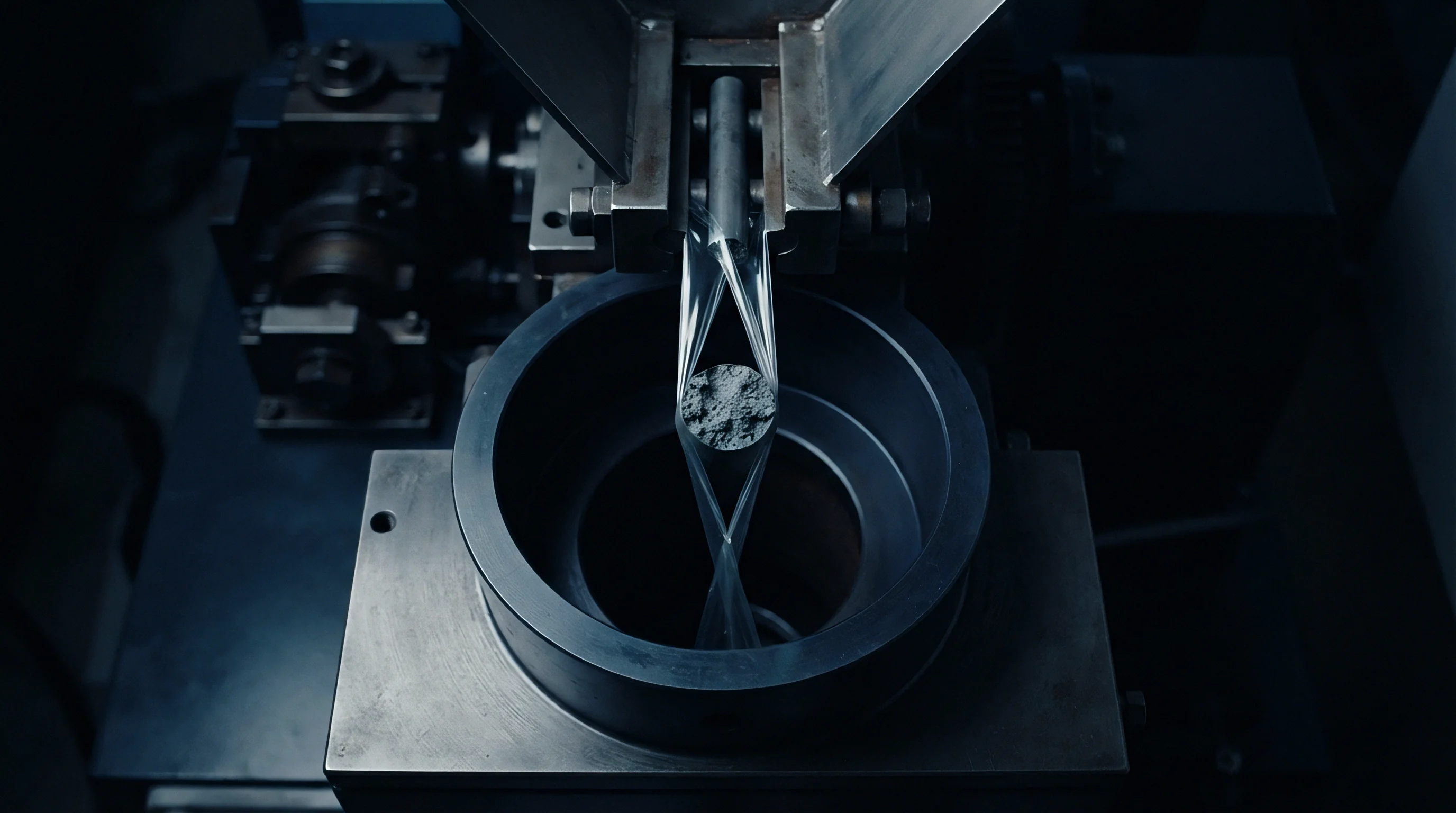
Extrusion lines handling post-consumer recyclate rely on automated screen changers to isolate solid particles ahead of the pelletizer. Dual-piston units fitted with wire mesh down to 50 micrometers pull out aluminum foil remnants, cellulose fibers, and unmelted engineering plastics. As debris builds up on the screen, the pressure differential rises until it triggers a back-flush or screen change.
Tracking how often this happens gives a quick read on feedstock purity, since sharp pressure spikes point to heavy contamination that can score the barrel and disrupt output rates.
Laser-drilled filter discs give tighter aperture control than woven wire mesh, which can flex under head pressure and let long particles squeeze through end-first. Laser plates keep their cylindrical or conical pore shape even past 200 bar. The choice between mesh and laser discs comes down to the end product: thin packaging films need 50 to 70 micrometer filtration, while heavy-walled blow-moulded containers can handle particles up to 150 micrometers without failing right away.
Filter pack bypass happens when high melt pressure deforms the sealing rings inside the screen changer housing, letting unfiltered polymer leak around the element directly into the strand die. Routinely inspecting breaker plates and hydraulic seals keeps these hidden contamination spikes out of finished pellet lots.

Contaminant Screening Methods and Detection Thresholds
Lab verification of solid particles uses both destructive and non-destructive testing. Dynamic melt filtration tests under EN 13900-5 measure pressure build-up behind a standard test screen to quantify organic and inorganic contamination. The resulting pressure filter value, in bar per gram of polymer, provides a consistent benchmark for compound cleanliness.
| Contaminant Class | Primary Test Standard | Verification Technique | Operational Detection Floor | Packaging Failure Impact |
|---|---|---|---|---|
| Cellulose and Paper Fibers | EN 13900-5 | Pressure Filter Value | 0.10 bar/g at 100 µm mesh | Charring, odor formation, and micro-voids in container walls |
| Cross-linked Elastomers (EPDM/Rubber) | ISO 11357-3 | Differential Scanning Calorimetry | 0.50% weight fraction | Stress concentration spots and localized impact cracking |
| Aluminum Foil Inclusions | ISO 3451-1 | Calcination / Muffle Furnace | 0.01% ash content | Die scoring, pinholes in films, and sealing jaw failure |
| Polyethylene Terephthalate Flakes | FTIR / Micro-ATR | Infrared Chemical Imaging | 50 ppm cross-contamination | Unmelted gels, wall thin spots, and optical hazy streaks |
Optical pellet sorters with high-resolution cameras check surface contamination on finished granules in free fall, flagging black specks, off-color particles, and foreign material down to 100 micrometers. Unfiltered particles larger than fifty micrometers risk causing pinholes in blown film, which leads to structural failure and rejections on the filling line.


Melt
Rheological stability directly affects wall thickness uniformity and cycle times during processing. Post-consumer polyolefins often show unpredictable flow behavior because of mixed resin streams, uneven thermal histories, and polymer chain scission. Testing melt behavior across standardized shear rates shows whether a recycled compound can swap in for virgin resin without modifying tooling.

Rheological Discrepancies across Temperature Ranges
Testing under ISO 1133 measures mass flow through a calibrated orifice at set temperatures. Blow-moulding grade HDPE recyclates are usually run under Condition D (190 C / 2.16 kg) alongside Condition T (21.6 kg). The ratio between the high-load and low-load melt flow rates gives the flow rate ratio, which offers a straightforward gauge of how broad the molecular weight distribution is.
Polypropylene contamination in polyethylene streams alters melt behavior because the two resins have different melting points and viscosity curves. Polypropylene is tested under ISO 1133 Condition M at 230 C with a 2.16 kg load. Citing a melt flow rate without specifying test temperature and load causes confusion on the shop floor: a compound rated at 2.0 g/10 min at 230 C flows much slower under 190 C extrusion conditions, driving up motor amperage and risking melt pump cavitation.
Molecular weight distribution broadens when virgin resin is blended with reprocessed post-consumer scrap. Capillary rheometry under ISO 11443 generates shear viscosity curves across rates from 10 to 10,000 reciprocal seconds, capturing actual polymer flow inside injection moulding gates and blow moulding die gaps.
Melt mass-flow rate shifts exceeding 15 percent under ISO 1133 Condition D at 190 C and 2.16 kg signal uncontrolled chain scission across consecutive lots.
Melt Flow Anomalies in Recycled Compounds
Recycled resin streams show specific flow irregularities during processing that compromise part consistency.
- Melt Fracturing occurs when high molecular weight fractions rupture elastically at die exits under high shear, creating a rough “sharkskin” surface.
- Thermal Viscosity Drift happens when leftover peroxides or active catalysts remain in the compound, causing ongoing viscosity loss during barrel residence delays.
- Phase Separation appears in un-compatibilized polyethylene and polypropylene blends, driving local viscosity swings that cause uneven wall thickness in blow-moulded parisons.
- Elastic Die Swell Discrepancies disrupt parison programming during bottle blowing, leading to off-spec neck dimensions and weak bottom pinch-offs.
Low-shear rotational rheology detects subtle structural changes like cross-linking or long-chain branching. While cross-linking increases melt pressure, high molecular weight tails raise zero-shear viscosity, which helps prevent parison sag in heavy-duty blow moulding. Conversely, steep shear thinning under pressure usually points to a broad molecular weight distribution that can destabilize thin-wall injection moulding.


Degradation
Repeated heat cycles during initial processing and subsequent recycling shorten polymer chains. Thermo-oxidative breakdown attacks tertiary carbons in polypropylene and the backbone of polyethylene, forming hydroperoxides, carbonyl groups, and vinyl unsaturations. Tracking this breakdown through chemical and thermal testing prevents brittle resin from being used in load-bearing packaging.

Thermal Oxidative Tracking through Infrared Spectroscopy
Fourier transform infrared spectroscopy tracks structural changes caused by hydroperoxide breakdown during recycling. The primary metric for oxidative history is the carbonyl index, calculated by dividing the carbonyl absorption area (1710 to 1740 reciprocal centimeters) by a stable reference band, such as the methylene bending peak at 1463 reciprocal centimeters in polyethylene.
A high carbonyl index correlates with lower elongation at break and early failure under impact. In polypropylene, degradation drives chain scission, dropping molecular weight and pushing melt flow rates up. High-density polyethylene can undergo both chain scission and cross-linking from radical recombination; the cross-linking increases gel content and broadens molecular weight distribution, altering how the material relaxes under stress.
Differential scanning calorimetry measures how much active stabilizer remains in a recycled compound. Specifically, oxidation induction time testing under ISO 11357-6 measures the resin’s resistance to thermo-oxidative breakdown at elevated temperatures.

Oxidation Induction Time Testing Procedure
- Slice a disk specimen weighing 5 to 10 milligrams from the core of a pellet using a clean microtome blade to prevent contamination.
- Place the sample in an open aluminum crucible inside the DSC sample chamber, alongside an empty reference crucible.
- Purge the chamber with high-purity nitrogen at 50 milliliters per minute while heating the sample at 20 C per minute up to 200 C.
- Hold the sample at 200 C under nitrogen for 5 minutes to reach thermal equilibrium throughout the specimen.
- Switch the gas supply immediately from nitrogen to high-purity oxygen at 50 milliliters per minute and log the time until an exothermic oxidation peak starts.
Short oxidation induction times indicate that primary phenolic antioxidants and secondary phosphite stabilizers have been exhausted. A compound with an OIT under 5 minutes at 200 C degrades quickly during secondary conversion, releasing acrid odors, shifting color, and losing mechanical strength.
| Degradation Parameter | Test Method | Testing Parameters | Virgin Baseline Range | Recyclate Threshold Limit |
|---|---|---|---|---|
| Oxidation Induction Time | ISO 11357-6 | 200 C, Pure O2 Purge, Aluminum Crucible | > 30 minutes | > 10 minutes for packaging grades |
| Carbonyl Index | ASTM E168 / FTIR | Absorbance Ratio A1720 / A1463 | < 0.05 | < 0.25 for structural rigids |
| Crystallinity Percentage | ISO 11357-3 | 10 C/min heating rate, 293 J/g baseline PE | 60% – 70% (HDPE) | > 72% indicates heavy chain scission |
| Volatile Organic Content | VDA 277 / Headspace GC-MS | 120 C desorption temperature for 5 hours | < 20 µg C/g | < 50 µg C/g for non-food packaging |
Colorimetric analysis in the CIELAB space tracks yellowing caused by quinone formation from oxidized phenolic antioxidants. A shift in Yellowing Index greater than 5 units points to severe thermal stress during previous processing runs. These color shifts and reduced oxidation times can sometimes stem from residual masterbatch pigment carriers rather than underlying polymer backbone degradation.


Ash
Inorganic additives in post-consumer resin shift nominal density and alter mould shrinkage behavior. Fillers like calcium carbonate, talc, titanium dioxide, and glass fibers come from original masterbatches, industrial sacks, and rigid labels. Measuring these non-polymeric residues keeps structural calculations aligned with actual material properties.

Standardized Calcination Procedures
Total mineral content is determined by muffle furnace calcination under ISO 3451-1 Method A. Polymer samples are weighed into quartz crucibles, ignited over a gas burner until organic vapors burn off, and kept in a muffle furnace at 600 C for two hours. The unburned residue represents the total inorganic content.
Beyond accelerating equipment wear, calcium carbonate additions increase compound density, stiffness, and heat deflection temperature while reducing impact strength and tensile elongation. A two percent rise in calcium carbonate shifts HDPE density from 0.955 g/cm3 to over 0.970 g/cm3 under ISO 1183 buoyancy testing. This shift alters mass-to-volume calculations on automated filling lines, throwing off net weight compliance in finished packaging.
Thermogravimetric analysis under ISO 11358-1 generates mass loss curves across temperature under controlled nitrogen and air atmospheres, making it straightforward to separate fillers like talc ~ which lowers impact strength ~ from carbon black. Heating a sample from 30 C to 900 C at 10 C per minute isolates carbon black by switching from nitrogen to oxygen at 600 C.
Adherence to ISO 3451-1 Method A for ash determination prevents unpriced mineral filler loading from distorting packaging wall thickness calculations.
X-ray fluorescence spectroscopy identifies the specific elements present in calcined ash. High titanium levels point to heavy white pigment loading, while silicon and magnesium confirm the presence of talc. Setting maximum inorganic residue limits under ISO 3451-1 Method A holds suppliers accountable for tool wear and wall-thickness variation caused by excess filler.

Fracture
Mechanical failure in recycled packaging compounds usually happens under sustained environmental stress or localized impact. Post-consumer scrap contains micro-contaminants, internal voids, and mixed polymer phases that initiate micro-cracks. Verifying toughness and stress crack resistance prevents sudden container rupture during transport and stacking.

Environmental Stress Crack Resistance Testing
Full-notch creep rupture tests under ISO 16770 and bent-strip tests per ASTM D1693 measure HDPE susceptibility to slow crack growth. Environmental stress cracking occurs when polyolefins undergo tensile stress while exposed to surface-active chemicals like detergents, oils, or industrial surfactants, which accelerate tie-molecule disentanglement in the amorphous regions between crystalline lamellae.
Under ASTM D1693 Condition B, notched specimens are bent into U-channels and immersed in a 10 percent Igepal CO-630 solution at 50 C. The time it takes for half the samples to show visible cracking defines the failure threshold. Recycled compounds with broad molecular weight distributions or high concentrations of low molecular weight fractions show significantly lower crack resistance than virgin blow-moulding grades.
Notch sensitivity increases sharply when secondary polypropylene contamination exceeds three percent by weight in high-density polyethylene. Residual volatiles can form internal voids, un-melted gels risk clogging filter packs, and exaggerated shear thinning alters melt flow during conversion.

When Does Polypropylene Contamination Impair Polyethylene Stress Crack Resistance?
Immiscible blends of HDPE and polypropylene exhibit phase separation under load. As the melt cools, polypropylene forms isolated spherical domains inside the polyethylene matrix. Under tensile stress, the lack of molecular entanglement at these phase boundaries creates micro-voids that initiate cracks.
Notched Izod impact testing under ISO 180 at 23 C and -30 C reveals brittle transitions caused by this phase separation. Adding block copolymer compatibilizers ~ like styrene-ethylene-butylene-styrene or ethylene-propylene rubber ~ improves interfacial adhesion, transferring stress across domain boundaries and restoring impact strength.
Environmental stress crack resistance deteriorates rapidly when low molecular weight fraction buildup disrupts tie-molecule density in semi-crystalline domains.
Determining mechanical qualification involves specific testing steps before commercial specification sign-off.
- Specimen Preparation Standardisation requires compression moulding test plaques under ISO 293 to eliminate internal cooling stresses common in injection-moulded bars.
- Notch Radius Verification uses optical micro-inspection of cutting blades to ensure a uniform 0.25 mm notch radius per ISO 179 Charpy guidelines.
- Environmental Pre-conditioning mandates storing specimens at 23 C and 50 percent relative humidity for at least 40 hours under ISO 291 standards.
- Multi-Axial Impact Assessment relies on instrumented dart drop tests per ISO 6603-2 to record energy absorption during puncture.
The exact concentration where dispersed polypropylene micro-domains switch from benign stiffness modifiers to active stress concentration sites in recycled polyethylene remains a point of debate in blow moulding applications.


Discount
Commercial pricing for recycled packaging compounds depends heavily on certificate of analysis compliance. Price discounts on post-consumer resin account for processing risks, higher scrap rates, and re-stabilization costs carried by the converter. Tying physical property defects to clear penalty structures ensures transparency across supply contracts.

Verification Procedures for Incoming Shipments
Incoming inspection protocols establish clear steps for evaluating bulk shipments or containerized bags.
- Extract pellet samples from the top, middle, and bottom of three randomly selected super-sacks per lot using a stainless steel sampling thief.
- Combine the thief samples into a 2 kg composite sample inside an airtight aluminum-lined moisture barrier bag.
- Run rapid melt flow rate screening at 190 C with a 2.16 kg load to confirm compliance with target specification windows.
- Run DSC thermal analysis to scan for un-declared polypropylene contamination peaks near 160 C.
- Measure moisture content via coulometric Karl Fischer titration per ISO 15512 Method C to verify drying status before loading the hopper.
While unsorted flakes degrade clarity, off-spec melt flow rates disrupt moulding cycles by extending cycle times and generating continuous runner scrap. Moisture levels above 0.05 percent by weight trigger hydrolytic degradation in sensitive additives and cause severe surface splay defects on finished rigid parts.
Compounders that omit lot-specific differential scanning calorimetry curves frequently hide secondary polypropylene contamination inside nominal high-density polyethylene recyclates.

Cost Impact Matrix for Quality Variances
Structuring financial deductions around laboratory test results prevents overpaying for off-spec compound lots.
| Defect Parameter | Deviation Threshold | Operational Impact on Moulding | Quality Penalty Structure | Landed Cost Effect per Tonne |
|---|---|---|---|---|
| Melt Flow Rate Variance | > 20% shift from COA target | Part flash, short shots, wall thickness variation | 5% price deduction per 0.5 g/10 min shift | USD 60 to USD 150 discount per tonne |
| Polypropylene Contamination | > 5.0% weight fraction in HDPE | Stress cracking, drop impact failure | Rejection of lot or 15% raw material discount | USD 200 to USD 350 discount per tonne |
| Inorganic Ash Excess | > 1.5% above contracted baseline | Tool wear, density increase, weight penalty | 1.5% price deduction per 0.5% excess ash | USD 30 to USD 90 discount per tonne |
| High Volatile Organic Content | > 500 ppm headspace VOCs | Severe odor, off-gassing, packaging taint | Outright lot rejection at supplier expense | Full refund plus demurrage charges |
Financial modeling highlights the true gap between raw pellet price and actual converting cost per good part. For instance, if post-consumer HDPE pellets sell at USD 1,400 per tonne compared to virgin resin at USD 1,750 per tonne, but contain an unpriced 3 percent calcium carbonate filler and cause a 4 percent scrap rate from melt flow instability, the effective cost per good part shifts. Higher density adds 3 percent more mass per container to maintain wall thickness, driving up material consumption.
Factoring in scrap penalties raises effective landed material cost to USD 1,515 per processed tonne, cutting actual savings by more than a third.

Specification Clauses for Quality Off-Spec Penalties
Purchase specifications set binding terms for non-conforming shipments.
- Certificate of Analysis Conformance mandates that every 22-tonne shipment include lot-specific ISO test data for melt flow rate, density, ash content, and oxidation induction time before offloading.
- Split-Sample Retain Requirements obligates receiving plants to retain sealed 5 kg samples from each lot for 90 days to resolve latent failure disputes.
- Third-Party Laboratory Arbitration designates an accredited independent lab whose test results serve as binding final judgment during specification disputes.
- Demurrage and Disposal Liabilities assigns demurrage fees, silo purge expenses, and disposal costs directly to the supplier if contamination exceeds contract thresholds.
Because chain scission reduces melt viscosity and OIT reflects remaining antioxidant reserves, establishing structured lot verification at the dock prevents uncertified recyclate from entering production silos and eroding conversion margins.