Quantifying Rheological Shear Sensitivity Variations in Hydrolytically Degraded Polyamide Reclaim Compounds
Quantifying shear sensitivity in degraded polyamide reclaim via capillary rheometry prevents processing flash and eliminates hidden costs from MFR misreadings.


Hydrolysis
Polyamide processing requires careful moisture control prior to plasticating resin in the barrel. Unfilled polyamide 66 and glass-reinforced polyamide 6 absorb ambient moisture readily through polar amide linkages along the polymer backbone. If processed between 270°C and 310°C without drying below 0.05% moisture by weight, water hydrolyzes these amide bonds via random chain scission, cutting weight-average molecular weight and broadening the polydispersity index.
Reclaim streams from post-industrial sprues, runners, and blow-molding flash often accumulate thermal cycles in humid storage, compounding this degradation before re-pelletization.

Molecular Weight Collapse in Recycled Polyamide
Tracking the extent of chain scission requires solution viscosity testing alongside end-group titration. Virgin polyamide 66 typically shows a relative viscosity of 2.4 to 2.8 in 96% sulfuric acid per ISO 307. Severe hydrolysis drops this value below 1.9, which corresponds to a decline in number-average molecular weight from 18,000 g/mol down to 11,000 g/mol and directly reduces entangled network density in the melt.
The loss of molecular weight also contracts the relaxation time spectrum. Shorter chains disentangle under moderate deformation rates, entering the shear-thinning regime at lower shear rates than virgin material and altering the slope of the viscosity curve across normal processing windows.
Polyamide melt viscosity drops exponentially when moisture content exceeds fifty parts per million at elevated processing temperatures.

Carreau Yasuda Rheological Parameters
Modeling reclaim melt flow relies on the Carreau-Yasuda fluid model to capture zero-shear viscosity, transition kinetics, and power-law shear thinning. Non-Newtonian behavior across shear rates from 0.1 to 10,000 reciprocal seconds fits the standard formulation:
η(dotγ) = η0 left fracn-1a
In hydrolytically degraded material, zero-shear viscosity drops while the relaxation parameter shortens, shifting the onset of shear thinning toward higher frequencies. Uneven hydrolytic cleavage broadens the molecular weight distribution, lowering the power-law index and producing steeper pseudoplastic thinning under high shear.
Blending high-viscosity virgin resin into degraded reclaim produces non-linear rheological responses, where unmodeled power-law shifts are often mistaken for regrind particle size variations rather than underlying chain degradation.

Capillary
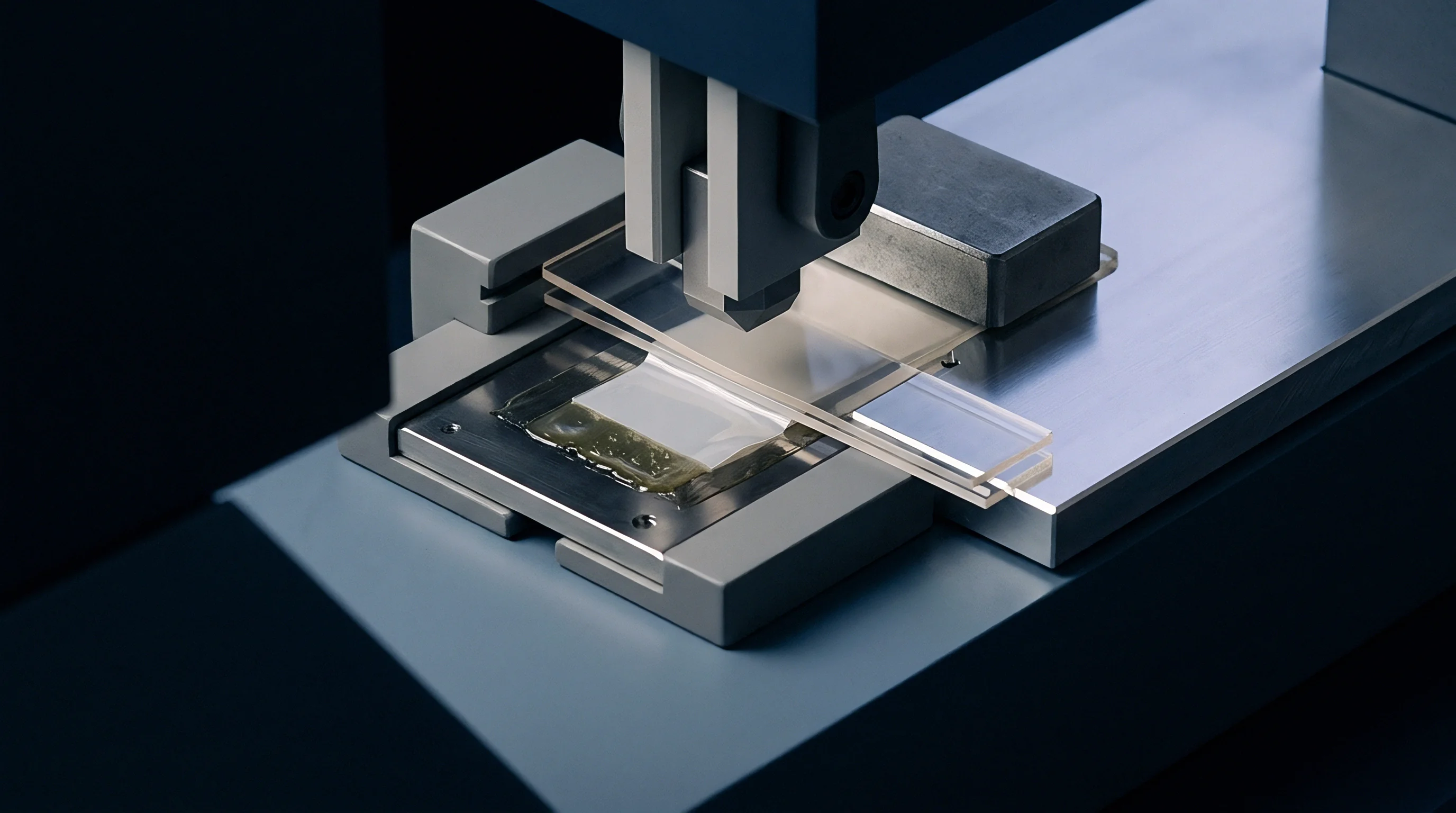
High-pressure capillary rheometry per ISO 11443 characterizes shear sensitivity across practical velocity profiles where single-point melt flow index values fall short. Capillary testing between 100 and 10,000 reciprocal seconds captures the pseudoplastic drop occurring inside runner channels and gates, where localized shear rates regularly exceed 5,000 reciprocal seconds and apparent viscosity falls sharply.

High Shear Rate Viscosity Curves
Capillary runs at 285°C through a 30:1 L/D tungsten carbide die highlight clear differences between virgin PA66 and 30% glass-filled degraded reclaim. Rabinowitsch corrections account for non-Newtonian velocity profiles in the capillary bore, while Bagley corrections separate entrance and exit pressure losses.
Below 500 reciprocal seconds, degraded compounds show up to a 45% lower apparent viscosity than virgin resin. Past 3,000 reciprocal seconds, that divergence narrows to roughly 15% as shorter polymer chains orient in the flow field.
Capillary rheometer testing performed at 285°C under ISO 11443 conditions reveals a thirty-two percent drop in apparent viscosity at five thousand reciprocal seconds for degraded PA66 reclaim.

Pressure Drop Deviations across Multi Gate Tools
Shear sensitivity shifts alter pressure distribution through hot runners and multi-cavity tooling. As degraded reclaim moves through narrow gates, localized shear heating raises melt temperature and accelerates flow along high-shear channels, creating filling imbalances across identical cavities.
Cavities subject to higher shear rates see lower instantaneous flow resistance. Meanwhile, slower-filling cavities are prone to early gate freeze caused by the higher crystallization temperature of low molecular weight fractions, which introduces sink marks and dimensional drift.
| Grade Variant | Moisture Level (%) | Zero-Shear Viscosity (Pa·s) | Power-Law Index (n) | Apparent Viscosity at 1,000 s⁻¹ (Pa·s) | Apparent Viscosity at 5,000 s⁻¹ (Pa·s) |
|---|---|---|---|---|---|
| Virgin PA66 (Unfilled) | 0.02 | 420 | 0.72 | 145 | 68 |
| PA66 Reclaim (1 Cycle) | 0.04 | 310 | 0.68 | 118 | 59 |
| PA66 Reclaim (Hydrolyzed) | 0.12 | 180 | 0.58 | 82 | 46 |
| PA66 Reclaim (30% Glass Filled) | 0.05 | 650 | 0.51 | 190 | 78 |
Procurement agreements specifying capillary viscosity limits should require an ISO 11443 multi-point curve across three shear decades, establishing mandatory rejection when viscosity at 5,000 reciprocal seconds deviates more than 10% from nominal targets.

Pseudoplasticity
Changes in shear sensitivity trace back to altered relaxation mechanics in broken chains. Virgin polyamides maintain melt strength at low shear stress because extended chain entanglements resist deformation. Hydrolysis severs these networks and shortens fundamental relaxation times, letting chains align along flow lines under lower applied stress and steepening the pseudoplastic slope.

Single Point Melt Flow Rate Inadequacy
Quality control checks often rely on Melt Flow Rate testing under ISO 1133 or ASTM D1238 at 275°C with a 2.16 kg load. This single-point test operates at undefined shear rates between 5 and 20 reciprocal seconds, reflecting zero-shear differences while failing to capture behavior under high-shear injection conditions.
Two reclaim lots with identical 25 g/10 min MFR values can have completely different power-law indices at 5,000 reciprocal seconds. A uniformly degraded lot maintains a predictable shear-thinning slope, whereas a blend of degraded scrap and off-spec virgin material thins aggressively, causing parting line flash once injection velocity ramps up.
Quality specifications relying solely on single-point melt flow rate criteria permit lot-to-lot shear sensitivity variations exceeding forty percent at gate shear rates.
Shift Factors in Oscillatory Shear Testing
Small-amplitude oscillatory shear measurements on parallel-plate rotational rheometers per ISO 6721-10 characterize viscoelastic structure across angular frequencies from 0.1 to 100 rad/s. While the Cox-Merz rule equates dynamic viscosity at a given frequency to steady-shear capillary viscosity for linear virgin polyamides, broad-polydispersity reclaim routinely diverges from this relationship.
In degraded material, dynamic viscosity often falls faster than steady shear viscosity at high deformation rates. Tracking the crossover frequency where storage modulus matches loss modulus provides an indicator of degradation: higher crossover frequencies correspond to reduced molecular weight and increased shear thinning.
- Execute frequency sweep tests from 0.1 to 100 rad/s at 275°C within the linear viscoelastic region using 25 mm parallel plates to map storage and loss moduli.
- Calculate crossover point values to determine the exact frequency where storage modulus equals loss modulus, establishing the baseline relaxation time.
- Construct Master Curves applying Time-Temperature Superposition principles across reference temperatures of 260°C, 275°C, and 290°C to extract thermal shift factors.
- Fit Carreau-Yasuda parameters using non-linear regression to quantify zero-shear viscosity, relaxation time, and power-law index values for lot characterization.
Viscosity deltas recorded at low shear rates often double once processing speeds reach full injection velocities.


Die
Gate geometry and extrusion die land lengths must reflect the higher shear sensitivity of degraded reclaim. Extrusion dies sized for prime PA6 lose backpressure when running hydrolyzed resin, which degrades mixing in the screw metering zone and introduces thermal gradients and dimensional variation into extruded profiles.
Flash and Short Shot Boundary Mapping
Processing reclaim constricts the operating window between short shots and tool flash. At low injection speeds, higher low-shear viscosity causes early gate freeze and incomplete fills. Increasing injection speed drops viscosity abruptly at the gate, forcing melt past parting lines.
Preventing flash requires in-cavity pressure control rather than position-based transfer. Cavity transducers placed near the gate detect pressure build-up during filling, allowing transfer to pack pressure before excessive shear thinning drops viscosity too far.

Barrel Temperature and Screw Speed Adjustments
Managing shear sensitivity requires adjustments to barrel profiles and screw recovery speeds. While prime PA66 typically runs on flat profiles near 280°C, degraded reclaim runs better with reverse profiles ~ higher rear feed temperatures paired with nozzle zones lowered to 265°C.
The cooler nozzle maintains melt strength during screw decompression. Screw rotation must also be slowed to curb viscous dissipation, since excessive shear heating further degrades molecular weight on top of existing hydrolytic damage.
| Degradation Class | Intrinsic Viscosity (dL/g) | Required Nozzle Temp (°C) | Injection Speed Window (mm/s) | Max Cavity Pressure (bar) | Scrap Rate Potential (%) |
|---|---|---|---|---|---|
| Prime Virgin Grade | 1.35 | 285 | 80 – 140 | 850 | 0.5 |
| Minor Hydrolysis (<0.05% H₂O) | 1.18 | 280 | 70 – 110 | 760 | 2.1 |
| Moderate Hydrolysis (0.10% H₂O) | 0.96 | 270 | 50 – 80 | 620 | 8.4 |
| Severe Hydrolysis (>0.20% H₂O) | 0.74 | 260 | 30 – 50 | 480 | 24.5 |
Overlooking shear sensitivity when setting injection profiles causes continuous parting line flash, tooling wear, and elevated scrap rates.
Tolerance
Incoming inspection limits for recycled polyamides require controls beyond standard supplier certificates. Material specifications must include multi-point rheology alongside density and ash content, setting defined acceptance bands for zero-shear viscosity and the power-law index to control lot-to-lot variation.

Incoming Lot Qualification Criteria
Receiving inspection for reclaim lots requires composite sampling across 10% of delivered Gaylords or railcar compartments to catch batch-to-batch variation from compounding runs.
Samples require moisture measurement by Karl Fischer titration at 180°C per ISO 15512 Method C. Moisture above 0.06% requires vacuum drying at 80°C for 12 hours prior to rheometry, as testing wet reclaim mischaracterizes temporary hydrolytic thinning during testing as permanent matrix degradation.
- Capillary Viscosity Ratio testing must confirm that viscosity at 5,000 s⁻¹ remains within plus or minus 8% of approved baseline samples.
- Power Law Index Thresholds require value derivation between 500 s⁻¹ and 5,000 s⁻¹ falling strictly within a 0.60 to 0.66 range for unfilled PA66.
- Ash Content Verification per ISO 3451-1 must confirm filler content within 1.0% of nominal target to separate filler loading variance from polymer matrix degradation.
- Differential Scanning Calorimetry execution per ISO 11357-3 must verify peak melting point integrity, catching contamination from lower-melting polymers like polypropylene or polyethylene.
Incoming lot acceptance protocols that enforce dual-point capillary viscosity checks eliminate eighty percent of field molding failures linked to shear sensitivity drift.

Technical Specification Clauses for Reclaim Resin
Generic grade designations in procurement contracts leave buyers unprotected against rheological drift. Specifications require explicit parameters defining test temperatures, shear rate evaluation points, and allowable index windows.
Contracts for PA66 reclaim should require ISO 11443 capillary testing at 285°C. Defining the shear sensitivity ratio as apparent viscosity at 500 reciprocal seconds divided by apparent viscosity at 5,000 reciprocal seconds provides a clear metric: values over 2.8 indicate excessive degradation and warrant rejection at the seller’s expense.
Streams blending post-consumer mechanical waste with degraded industrial film scrap require multi-decade oscillatory and capillary validation to isolate compounding inconsistencies from base polymer breakdown.

Economics
Sourcing recycled polyamides trades lower material cost against process stability risks. Virgin PA66 trades between 3.40 and 4.20 EUR per kilogram depending on volume and market conditions, while re-compounded PA66 sells at a 25% to 45% discount. Economic evaluation depends on total cost per conforming part rather than raw resin pricing alone.
Landed Cost Variance per Molded Component
Finished part cost incorporates raw material pricing, cycle duration, scrap rates, and tooling downtime. Reclaim with elevated shear sensitivity alters cycle dynamics; lower injection resistance is frequently offset by longer cooling times or manual de-gating needed to manage early gate freeze and flash.
A 10% rise in scrap from flash or short shots erases the resin discount. Mold cleaning and cavity downtime add direct labor cost while lowering machine utilization, particularly when inconsistent melt viscosities plug small gates.

Reclaim Discount Thresholds against Virgin Grades
Financial models must balance material savings against operational risk, establishing the minimum discount required to maintain net margin as processing difficulty increases with deeper degradation.
| Resin Grade Specification | Raw Resin Cost (€/kg) | Average Cycle Time (s) | Part Scrap Rate (%) | Tool Maintenance Cost (€/k-parts) | Effective Cost Per Good Part (€) |
|---|---|---|---|---|---|
| Virgin PA66 (Prime) | 3.80 | 22.0 | 0.8 | 12.00 | 0.485 |
| Reclaim PA66 (Controlled Shear) | 2.60 | 22.5 | 2.2 | 15.00 | 0.372 |
| Reclaim PA66 (Variable Shear) | 2.10 | 26.0 | 8.5 | 45.00 | 0.418 |
| Reclaim PA66 (Severely Degraded) | 1.65 | 29.0 | 18.0 | 95.00 | 0.512 |
Buying discounted reclaim without multi-point rheology limits often results in higher net part costs than running prime virgin resin. Effective sourcing links purchase order release to multi-point capillary lot certification, ensuring raw material savings reach the balance sheet.