Validation of Charged Aerosol Detection for Quantifying Cyclic Polyethylene Terephthalate Oligomer Migration in Food Contact Simulants
Validation of HPLC CAD enables accurate quantification of cyclic PET oligomers in food simulants through uniform aerosol response calibration.
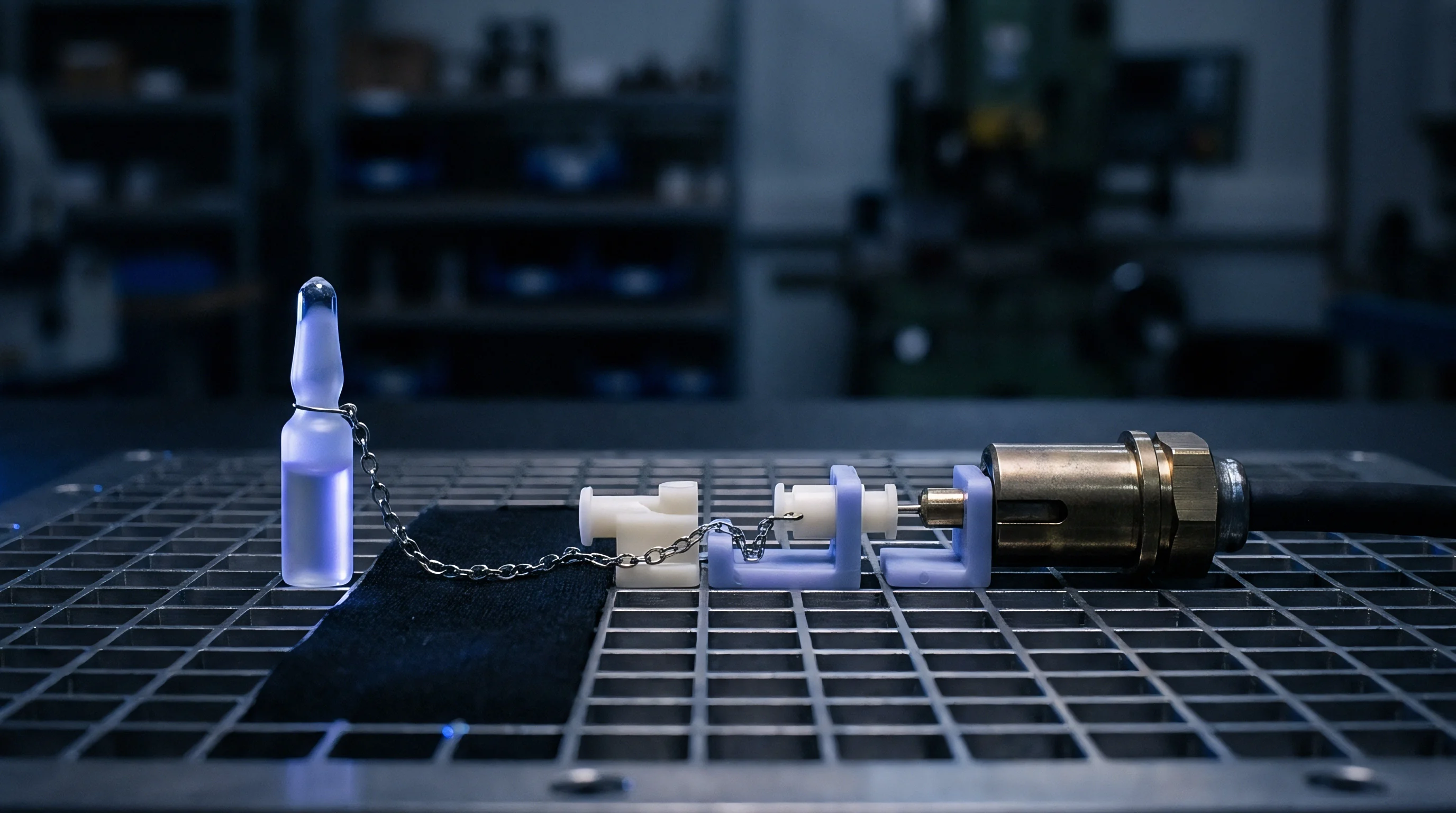

Aerosol
Polyethylene terephthalate packaging releases cyclic oligomers into liquid contact media during thermal processing. These non-volatile ring structures, dominated by cyclic trimers, tetramers, and pentamers, lack strong ultraviolet chromophores. High-performance liquid chromatography coupled with charged aerosol detection overcomes this limitation by measuring physical particle mass rather than light absorption.
Inside the charged aerosol detector, high-purity nitrogen carrier gas pneumatically nebulizes the mobile phase effluent. Larger droplets strike the spray chamber walls and drain to waste, while smaller aerosol droplets enter a heated drift tube where mobile phase solvents evaporate completely. The remaining dry analyte particles pass into a reaction chamber containing ionized nitrogen gas generated by a high-voltage corona discharge wire.
Positive gas ions transfer electrical charge to the surface of the dry particles through diffusion. This charged particle stream flows past an ion trap that strips away excess unattached gas ions before reaching a high-sensitivity electrometer. The electrical current measured by the electrometer directly reflects the total mass of non-volatile analyte entering the detector chamber.
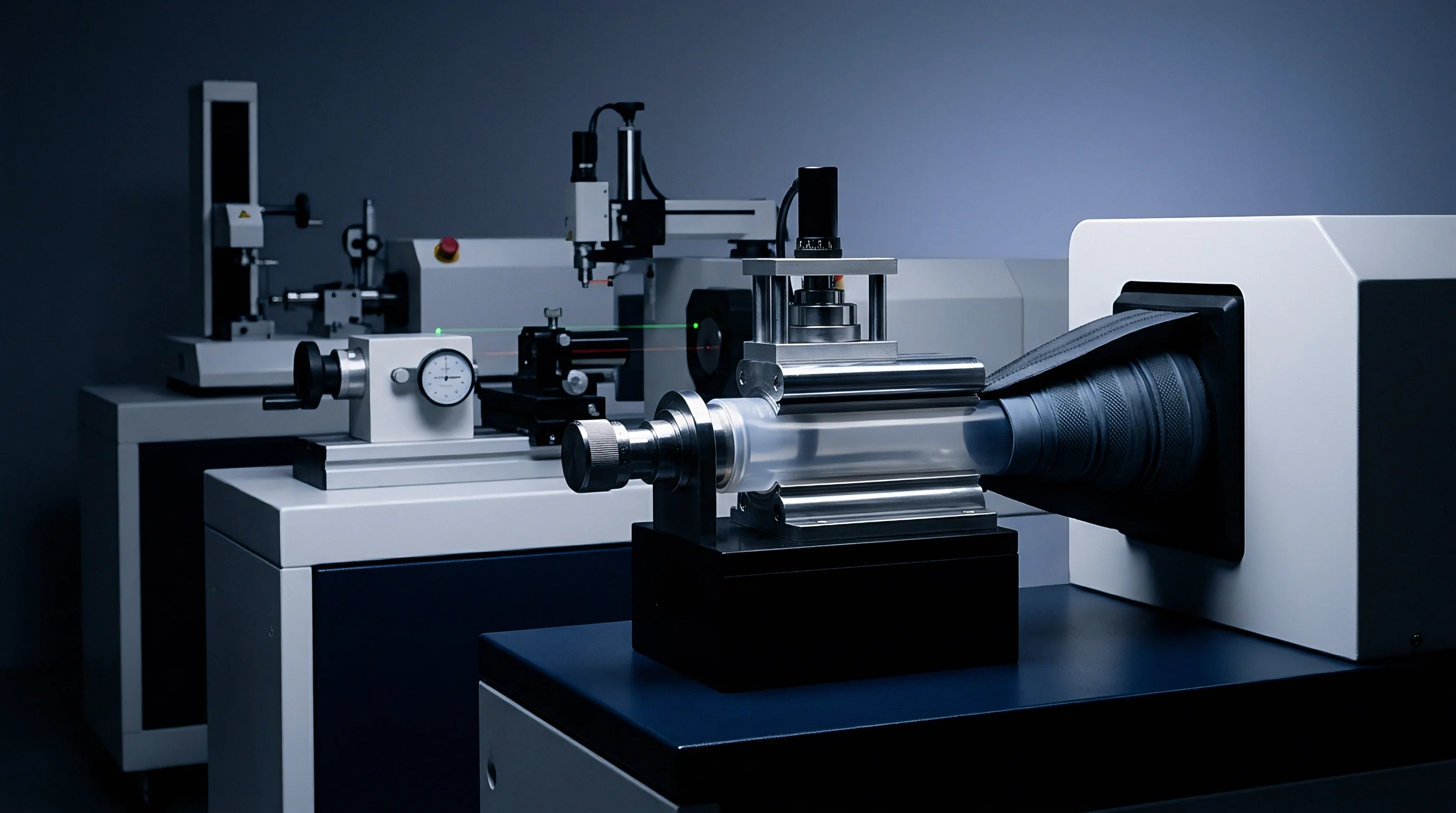
Pneumatic Nebulization and Corona Discharge Mechanics
Response uniformity represents the primary technical advantage of this measurement technique. Because charge transfer depends on physical particle surface area rather than chemical structure, distinct cyclic species yield virtually identical signal intensities per unit mass. A cyclic trimer with molecular weight 576.5 grams per mole generates the same detector response per microgram as a cyclic tetramer with molecular weight 768.7 grams per mole.
Nebulizer efficiency dictates overall signal stability. Liquid flow rates entering the spray chamber must remain strictly controlled between 0.2 and 0.8 milliliters per minute to maintain constant droplet size distributions. Changes in mobile phase viscosity or surface tension directly alter droplet diameter, shifting the fraction of aerosol that reaches the drift tube.
- Droplet Agglomeration occurs when high surface-tension simulants enter the spray chamber without adequate organic modifier ratios.
- Solvent Volatilization Drift alters particle drying rates inside the heated drift tube when ambient laboratory temperature fluctuates.
- Corona Needle Fouling results from non-volatile inorganic salts transferred out of food simulants during direct injection workflows.
- Electrometer Signal Saturation develops when total cyclic oligomer concentrations exceed twenty micrograms per milliliter on column.
Charged aerosol detection yields equal signal intensity per unit mass for non-volatile cyclic trimers and tetramers regardless of ultraviolet chromophore presence.
Evaporation tube temperature tuning balances solvent volatilization against analyte preservation. Setting the evaporation temperature to fifty degrees Celsius ensures complete drying of aqueous and alcoholic mobile phases while preventing thermal degradation or premature volatilization of smaller cyclic oligomers. Lower temperatures leave liquid droplets intact, causing baseline spikes, whereas higher temperatures reduce signal intensity for lower molecular weight species.
Whether corona discharge efficiency varies across higher-order cyclic oligomers beyond the octamer remains an open analytical question across research laboratories.


Solvent
Food simulants specified under European Commission Regulation 10/2011 present distinct evaporative residue profiles during high-performance liquid chromatography. Testing compliance requires exposure of packaging materials to Simulant A, Simulant B, Simulant D2, or Simulant E depending on the target food category. Direct injection of evaporated simulant concentrates introduces background contamination that directly elevates detector baseline noise.
Aqueous acetic acid at three percent by weight leaves inorganic trace mineral residues upon concentration, whereas ethanol mixtures carry organic solubles. When these concentrates inject onto a reverse-phase column, non-volatile background contaminants co-elute with early migrating oligomers or bleed continuously into the aerosol chamber.

Gradient Compensation and Matrix Residue Management
Mobile phase compositions continuously alter aerosol generation during gradient elution. Chromatographic separation of cyclic polyester migrants utilizes a water and acetonitrile gradient ranging from twenty percent to ninety-five percent organic phase. Because acetonitrile exhibits lower viscosity and higher volatility than water, aerosol droplets become smaller and produce higher charging efficiency as organic content increases during the run.
Without active compensation, gradient runs exhibit severe upward baseline drift that compromises peak integration for late-eluting cyclic pentamers and hexamers. Laboratories counteract this physical phenomenon by implementing an inverse gradient delivered via a secondary post-column pump, maintaining a constant solvent composition at the nebulizer tip throughout the entire separation cycle.
| Food Simulant Type | Simulant Composition | Evaporation Residue (mg/L) | Baseline Noise Shift (pA) | Recommended Reconstitution Solvent |
|---|---|---|---|---|
| Simulant A | 10% Ethanol (v/v) | 0.8 to 1.5 | 0.12 | Acetonitrile:Water (50:50 v/v) |
| Simulant B | 3% Acetic Acid (w/v) | 2.1 to 4.5 | 0.45 | Acetonitrile:Water (50:50 v/v) |
| Simulant D1 | 50% Ethanol (v/v) | 1.2 to 2.8 | 0.18 | Pure Acetonitrile |
| Simulant D2 | 95% Ethanol (v/v) | 3.0 to 8.2 | 0.62 | Pure Acetonitrile |
| Simulant E | Tenax (MPPO) | 5.5 to 14.0 | 1.10 | Dichloromethane transferred to Acetonitrile |
Secondary pump integration adds capital cost and mobile phase consumption, yet eliminates mathematical baseline subtraction errors. Alternatively, software power-function adjustments apply mathematical smoothing to raw electrometer signal outputs, although hardware-based post-column fluidic balancing provides superior precision near limits of quantitation.
Chromatographic grade solvents containing trace non-volatile impurities generate persistent background currents. Rinsing fluidic lines with ultra-pure methanol prior to analytical runs cleans aerosol transfer lines and restores baseline stability.
Mobile phase volatility determines nebulization efficiency before secondary charging occurs inside the evaporation tube.
Solid phase extraction removes interfering matrix compounds before column introduction. Extracting migration aliquots through C18 cartridges retains cyclic PET migrants while allowing polar acid residues from Simulant B to pass into waste. Eluting retained oligomers with pure acetonitrile yields clean chromatograms with minimal baseline disruption.
Lowering evaporation tube temperature reduces baseline noise whenever non-volatile simulant residues enter the spray chamber.


Curve
Quantification of cyclic polyethylene terephthalate migrants relies on non-linear response equations across broad concentration ranges. Unlike ultraviolet absorption detectors governed by the linear Beer-Lambert law, aerosol charge detectors exhibit a power-law relationship between mass concentration and electrometer output signal. Correct signal conversion requires empirical determination of response exponents across four orders of magnitude.
Signal intensity scales according to an empirical equation where current equals a calibration constant multiplied by mass raised to an exponent typically ranging between 1.15 and 1.45. Neglecting this non-linear relationship introduces quantification errors exceeding thirty percent at concentration extremes.
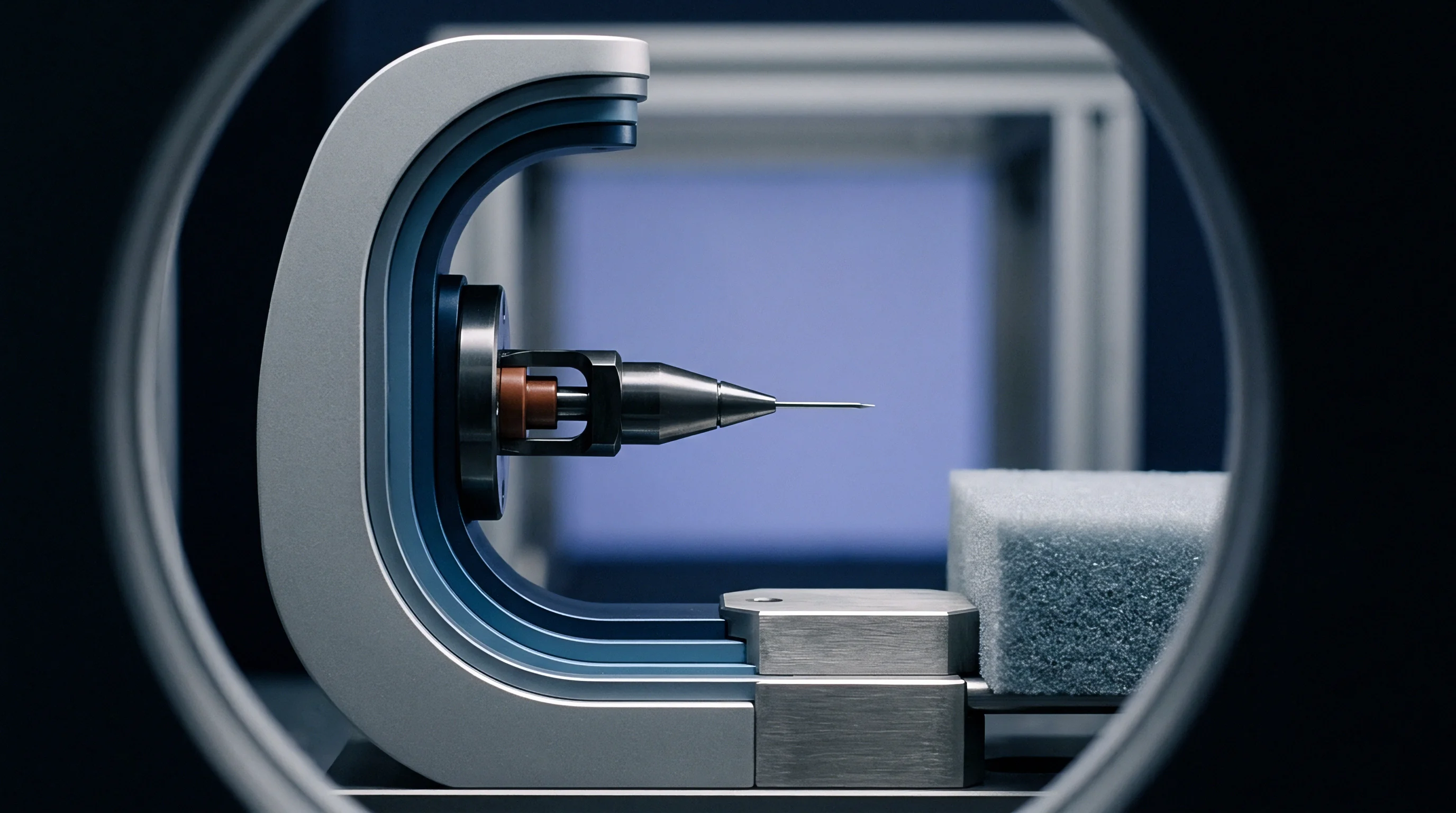
Does Power Function Fitting Resolve Low Level Non Linearity?
Mathematical transformations linearize detector responses by taking the logarithm of electrometer current against the logarithm of analyte concentration. Linear regression performed on log-transformed data yields reliable slope coefficients, provided background noise subtraction occurs prior to logarithmic calculation.
Pure isolated reference standards exist primarily for the cyclic trimer, while pure cyclic dimer, tetramer, and pentramer standards remain difficult to source commercially. Laboratories validate quantification protocols by establishing the response factor of isolated cyclic trimer and applying that factor across all identified cyclic peaks based on the equal-mass aerosol response law.
| Target Oligomer | Calibration Fit Model | Exponent Range (x) | Linearity Range (µg/mL) | LOD (mg/kg Simulant) | LOQ (mg/kg Simulant) |
|---|---|---|---|---|---|
| Cyclic Trimer (C33H24O12) | Log-Log Quadratic | 1.18 to 1.24 | 0.05 to 50.0 | 0.015 | 0.050 |
| Cyclic Tetramer (C44H32O16) | Log-Log Linear | 1.20 to 1.26 | 0.05 to 50.0 | 0.018 | 0.055 |
| Cyclic Pentramer (C55H40O20) | Log-Log Linear | 1.21 to 1.28 | 0.10 to 50.0 | 0.022 | 0.070 |
| Cyclic Hexamer (C66H48O24) | Second-Order Polynomial | 1.22 to 1.30 | 0.10 to 25.0 | 0.030 | 0.090 |
Limit of quantitation checks verify analytical sensitivity against regulatory thresholds. European Union limits for non-intentionally added substances mandate clear detection capabilities down to 0.01 milligrams per kilogram of food simulant. Charged aerosol detection achieves limits of quantitation between 0.05 and 0.09 milligrams per kilogram, satisfying specific migration verification demands through sample concentration steps.
Specific migration limits for total cyclic PET oligomers default to 5.0 milligrams per kilogram of food simulant under ten-day exposure at sixty degrees Celsius.
Polynomial regression offers an alternative fitting strategy without log transformation. Applying a second-order polynomial equation directly to raw peak area data yields correlation coefficients exceeding 0.999 across narrow analytical ranges, simplifying data handling within automated chromatography data systems.
Missing individual reference standards for cyclic tetramers complicates accurate migration accounting.


Vial
Sample containment glass receives concentrated extracts following migration testing of polyethylene terephthalate containers. Analytical execution demands rigorous sample preparation steps to convert high-volume food simulant aliquots into clean, concentrated chromatographic specimens. Loss of analyte during evaporation or incomplete reconstitution directly corrupts accuracy metrics.
Testing protocols assess target analyte losses by fortifying fresh simulant aliquots with known concentrations of cyclic trimer prior to executing exposure cycles. Reconstitution solvents must completely re-dissolve dry oligomer residues without inducing phase separation or precipitation inside autosampler containers.

Sample Concentration and Reconstitution Mechanics
Evaporation procedures require precise vacuum and thermal management. Rotary evaporation conducted under reduced pressure at forty degrees Celsius removes aqueous and alcoholic simulants while preventing thermal oxidation of polyester migrants. Nitrogen blow-down stations offer rapid evaporation for small sample volumes, provided gas streams remain free of hydrocarbon contaminants.
- Fill double-sided migration cells with fifty percent ethanol simulant at a surface-to-volume ratio of six square decimeters per kilogram of food.
- Seal test assemblies inside temperature-controlled environmental chambers set to sixty degrees Celsius for two hundred forty hours.
- Decant migration aliquots into rotary evaporation flasks and concentrate under reduced pressure at forty degrees Celsius to complete dryness.
- Reconstitute solid residues using two milliliters of chromatographic-grade acetonitrile and water mix in equal volumetric proportions.
- Transfer reconstituted solutions through zero point two micron polytetrafluoroethylene syringe filters into amber chromatographic containers.
Filter membrane selection alters quantitative recovery. Standard nylon filters adsorb hydrophobic cyclic oligomers, causing losses up to twenty-five percent during filtration. Hydrophilic polytetrafluoroethylene membranes exhibit negligible binding affinity for cyclic polyester species, preserving target concentrations prior to injection.
Reconstitution solvent proportions control injection peak shapes. Dissolving extracts in pure acetonitrile generates solvent-peak splitting when injecting onto chromatographic columns running initial aqueous mobile phases. Matching the reconstitution solvent composition to the initial mobile phase ratio eliminates solvent peak distortion and ensures sharp chromatographic peaks.
Contract purchasing specifications incorporating EN 13130 section 4 compliance clauses make laboratory recovery documentation a mandatory prerequisite for shipment authorization.

Audit
Conformity documentation for food contact materials must demonstrate complete accounting of cyclic polyethylene terephthalate oligomers. Regulatory inspectors scrutinize declarations of conformity and supporting technical dossiers to verify that analytical methods possess sufficient sensitivity to prove compliance with specific migration limits. Undocumented analytical assumptions invalidate compliance claims during regulatory reviews.
Declarations claiming compliance under Regulation European Union 10/2011 without supporting migration test reports face immediate rejection at port border inspections. Importing entities bear absolute legal liability for ensuring that technical dossiers contain validated analytical data covering all potential migrant species.

Declaration Dossier Validation and Regulatory Enforcement
Non-intentionally added substance evaluation protocols require screening for cyclic oligomers up to eight hundred Daltons. Because cyclic trimers and tetramers form spontaneously during PET melt processing via thermal back-biting reactions, their presence in finished packaging is unavoidable. Validated aerosol detection testing provides the quantitative foundation required to demonstrate that total oligomer migration remains below safety thresholds.
When analytical laboratories report migration values measured via uncalibrated ultraviolet detection, calculated concentrations systematically underestimate actual oligomer migration due to variable molar extinction coefficients. Auditors identify these methodology gaps, trigger comprehensive re-testing orders, and suspend commercial distribution until compliant datasets are produced.
| Validation Parameter | Acceptable Technical Range | Enforcement Audit Action Threshold | Documentation Requirement |
|---|---|---|---|
| Method Linearity (R²) | Greater than 0.995 | Less than 0.990 | Calibration plot with raw peak area tables |
| Spike Recovery Rate | 80% to 120% | Outside 70% to 130% | Fortified matrix recovery records across three levels |
| Repeatability Precision (RSD) | Less than 5.0% | Greater than 10.0% | Replicate injection data for minimum six samples |
| Intermediate Precision (RSD) | Less than 8.0% | Greater than 15.0% | Multi-day inter-analyst test summary |
| Quantitation Limit (LOQ) | Below 0.05 mg/kg | Above 0.10 mg/kg | Signal-to-noise ratio proof chromatograms |
Commercial buyers draft purchase contracts requiring chemical suppliers to indemnify brands against customs impoundment costs stemming from defective compliance documentation. Establishing rigorous charged aerosol detection protocols protects packaging converters, resin manufacturers, and retail brand owners from costly market withdrawals and regulatory penalties.
- Simulant Alignment Verification checks that test media match the specific food categories declared on the commercial specification document.
- Detector Capability Assessment confirms that aerosol charging methodologies replace ultraviolet detection for non-chromophoric cyclic species.
- Limit Quantification Check verifies that reported quantitation limits remain below ten percent of the applicable specific migration limit.
- Batch Traceability Matching connects analytical report identification numbers directly to the resin lot loaded into export containers.
Compliance files lacking raw chromatograms under Regulation EU 10/2011 Annex V invalidate the associated declaration of conformity during enforcement screening.
Failing to validate oligomer migration data strands export containers at customs entry points and triggers mandatory destruction orders.