End of Waste Validation Protocol for Secondary Polyolefin Compounding Facilities
End of waste validation for secondary polyolefin compounding requires batch migration testing and accredited technical dossiers to convert scrap into compliant resin.


Boundary
For post-consumer polyolefin waste to be sold as market-ready resin, it must formally exit waste status under applicable legal frameworks. Compounding plants in European jurisdictions work under strict criteria established in Article 6 of Directive 2008/98/EC and implemented nationally through measures like Article 28 of Spanish Law 7/2022, Italian Decree 188/2020, and the German Gewerbeabfallverordnung. Secondary polyolefins drop their classification under European Waste Catalogue code 19 12 04 or packaging waste code 15 01 02 only if they meet technical end-of-waste standards, comply fully with REACH chemical safety rules under Regulation (EC) 1907/2006, and are processed for a defined end use without threatening human health or the environment.
Compounding polyolefins effectively requires clean inputs, yet post-consumer streams give secondary High-Density Polyethylene and Polypropylene highly variable contamination profiles. Mechanical pelletization alone does not qualify a material for end-of-waste status. Compliant facilities apply strict entry criteria and verification protocols before flakes ever reach an extruder hopper.
Once a plant converts waste into a chemical substance or mixture, it assumes full importer and manufacturer obligations under REACH, stripping away the legal cushion of standard waste management permits.
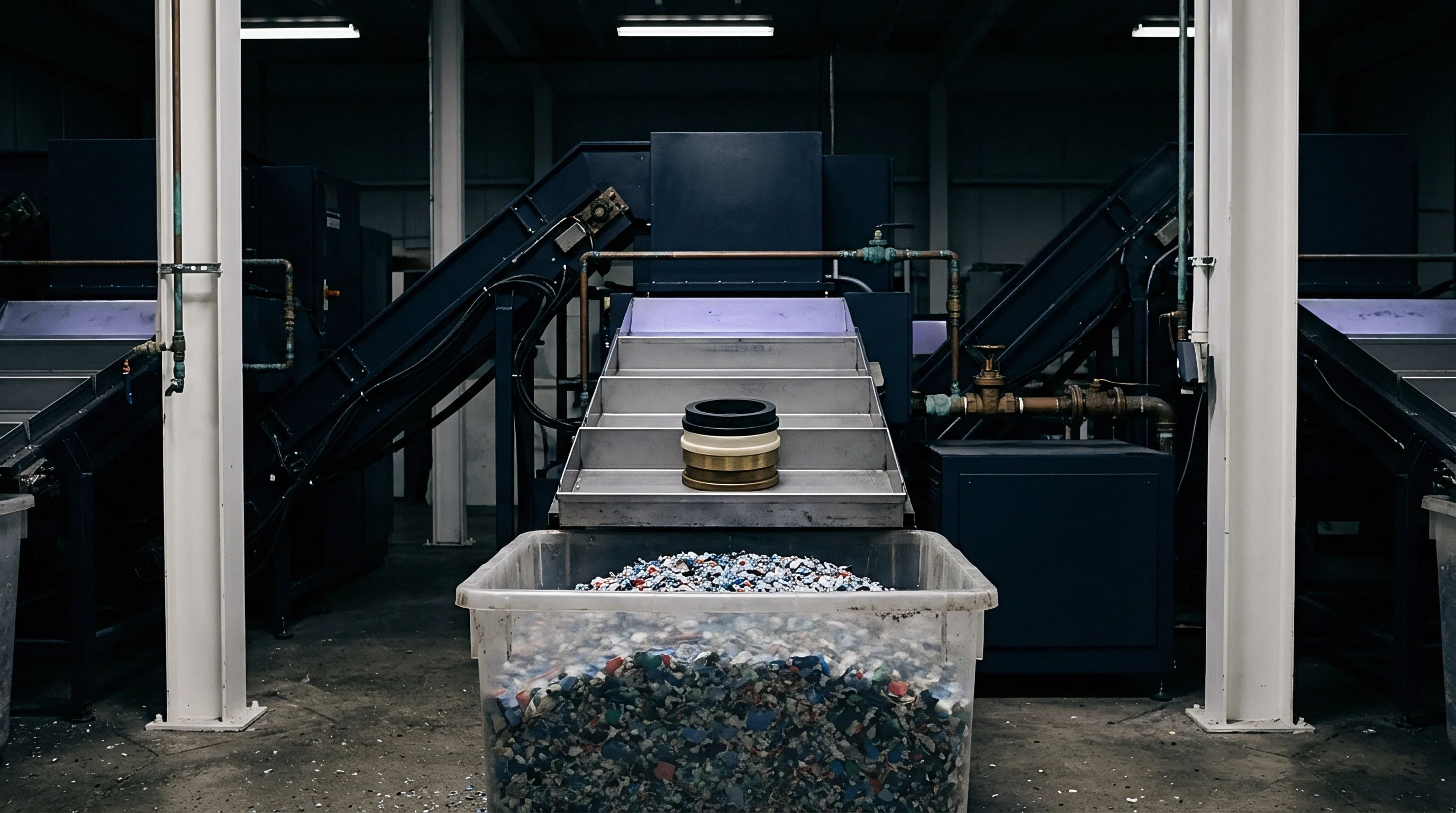
Waste Status Cessation under Article 6 Framework
To bring secondary polymers out of waste status, compounders must compile technical dossiers showing that inputs meet baseline purity levels. Standard EN 15347 outlines characterization requirements for plastic waste, setting explicit measurements for melt flow rate, density, moisture content, foreign polymers, and volatile matter. Incoming shipments also need origin documentation tracing the material back to its collection source, whether municipal packaging or post-industrial off-cuts.
- Visual assessment of incoming baled or shredded polyolefins determines gross contamination levels including paper labels, dirt, and non-polymeric debris prior to wash plant processing.
- Density separation in sink-float tanks isolates high-density polyethylene and polypropylene fractions from heavier chlorinated polymers like polyvinyl chloride and heavy inorganic contaminants.
- Infrared spectroscopy screening verifies polymer identity across incoming flake lots, flagging cross-contamination from polyethylene terephthalate or polystyrene that compromises physical properties.
- Moisture and volatile organic content measurement prevents hydrolytic degradation and excessive off-gassing during high-temperature extrusion compounding operations.
- Ash content analysis via calcination at 600 degrees Celsius quantifies inorganic fillers, pigments, and glass residues present in source scrap feeds.
These qualification steps verify that raw scrap matches end-of-waste input limits. As soon as physical transformation occurs, chemical safety requirements take effect, eliminating the regulatory buffer built into waste management laws.

REACH Registration Exemption Conditions for Recycled Polymers
Recovered substances in the European Economic Area can claim registration exemptions under Article 2(7)(d) of Regulation (EC) 1907/2006, provided certain documentation is in order. The compounder must show that the recovered polymer comes from previously registered substances and hold safety information on the material’s composition that matches what REACH requires under Article 31 or Article 32 safety data sheets.
Compounders evaluate incoming feedstock through direct analytical testing rather than relying on visual sorting certificates. Secondary polyolefin compounds carry residual additives, degradation products, and absorbed contaminants from their primary use. If a compound contains a newly generated chemical substance or an imported, unregistered additive above one metric ton per annum, the Article 2(7)(d) exemption no longer applies and full REACH registration becomes mandatory.
Compounders must keep chemical safety files proving that restricted substances under REACH Annex XVII ~ including phthalate plasticizers and polycyclic aromatic hydrocarbons ~ stay strictly below regulatory limits.
Sorting logs for input feedstock do not replace batch-level analytical testing of the finished regranulate.
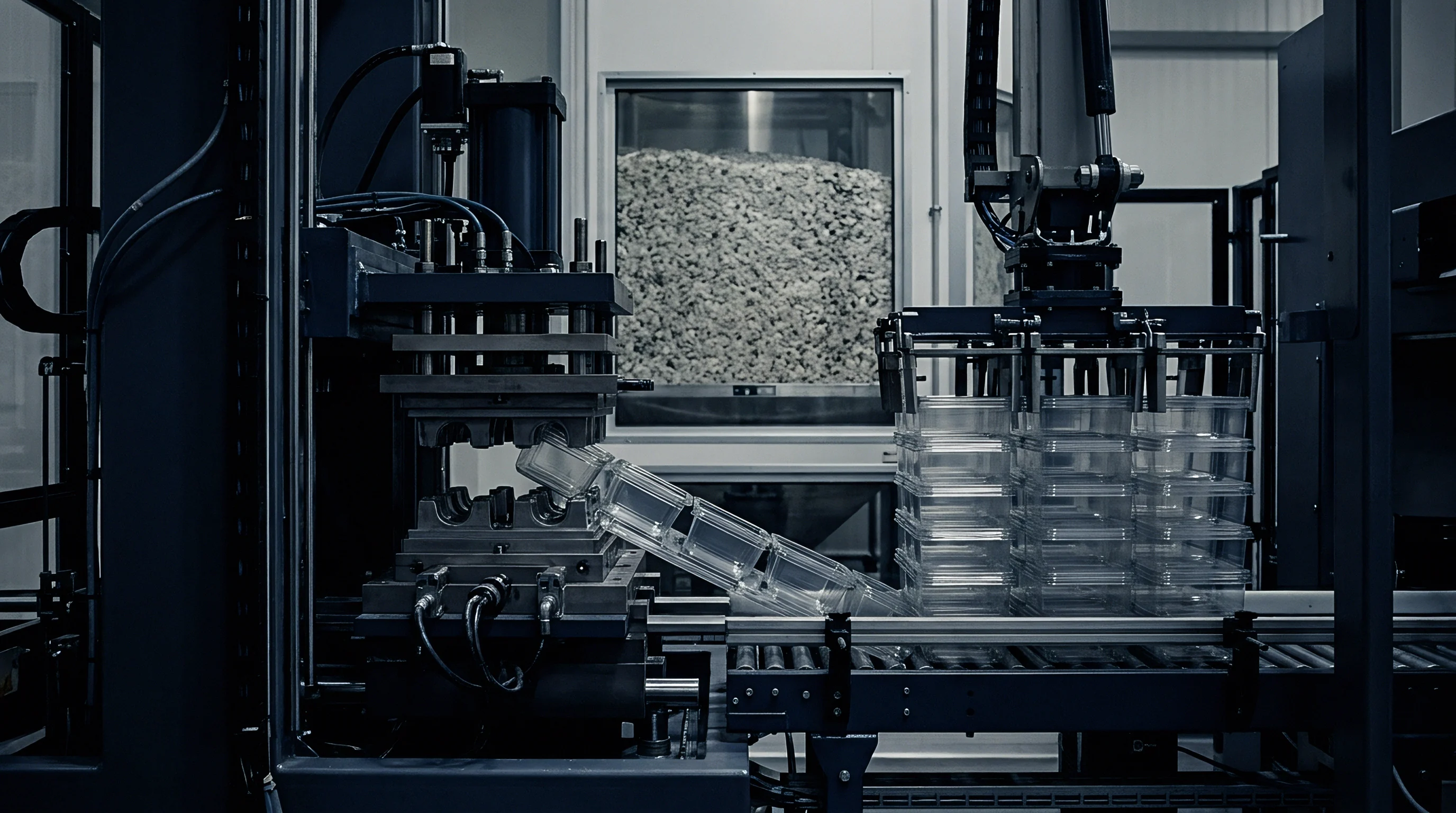

Melt
Extrusion compounding is the core physical and chemical purification stage, subjecting secondary polyolefins to continuous melt filtration, thermal homogenization, and devolatilization. Extruders designed for end-of-waste work use specialized co-rotating twin screws with high length-to-diameter ratios, usually between 40:1 and 52:1. The longer barrels give the melt enough residence time for multi-stage vacuum degasification, thorough additive blending, and the intensive shear needed to pull out residual monomers and low-boiling volatile organic compounds.
Recycled resins arrive with volatile residues, and heating post-consumer polypropylene and polyethylene triggers complex degradation mechanisms. Thermal-oxidative chain scission in polypropylene produces short-chain oligomers, aldehydes, ketones, and carboxylic acids, whereas high-density polyethylene undergoes simultaneous chain scission and cross-linking. Managing barrel temperature profiles, screw speed, and melt temperature requires careful control to avoid damaging the polymer further while stripping out odorants, absorbed contaminants, and migration-active species.

Decontamination Kinetics in Twin Screw Extrusion
Removing volatile organic compounds in the extruder depends on how quickly they transfer from the liquid melt into the gas phase inside vented barrel sections. Devolatilization efficiency hinges on melt surface renewal, driven by kneading elements and reverse-conveying screw blocks. Extruders with two or three atmospheric and vacuum degassing zones draw off trapped air, residual moisture, limonene, alpha-pinene, and volatile alkanes absorbed during the original product’s lifecycle.
Higher twin-screw vacuum levels cannot overcome poor washing line density separation.
Running vacuum ports at absolute pressures between 5 mbar and 20 mbar creates the partial pressure gradient needed to pull out perfume residues, semi-volatile organo-silicon compounds, and breakdown products. Injecting stripping agents like nitrogen gas or demineralized water ahead of the vacuum zones improves volatile removal through entrainment, generating micro-foaming that dramatically expands the melt surface area.
How Does Decontamination Efficiency Scale with Vacuum Pressure?
Decontamination efficiency climbs non-linearly as barrel vacuum pressures drop. Dropping vacuum port pressure from 100 mbar to 10 mbar increases the outward mass flux of volatile organic species by an order of magnitude, driven by rapid bubble nucleation within the thin polymer layer coating the screw flights.
| Polymer Matrix | Extruder L/D Ratio | Vacuum Pressure (mbar) | Melt Temperature (°C) | Stripping Agent Type | Limonene Reduction (%) | TVOC Residue (ppm) |
|---|---|---|---|---|---|---|
| Secondary PP | 44:1 | 15 | 220 | None | 84.5 | 142 |
| Secondary PP | 48:1 | 8 | 230 | Water (0.8 wt%) | 96.2 | 38 |
| Secondary HDPE | 40:1 | 20 | 210 | None | 79.1 | 185 |
| Secondary HDPE | 52:1 | 5 | 225 | Nitrogen (0.5 wt%) | 97.8 | 24 |
| Data compiled from continuous twin-screw extrusion trial runs at 450 kg/h throughput using post-consumer packaging flakes. TVOC measured via HS-GC-MS according to VDA 277 protocol. | ||||||
Maintaining high, stable vacuum levels throughout a compounding run is essential to keep volatile non-intentionally added substances below the analytical thresholds demanded by end-of-waste rules.

Melt Filtration Limits for Particulate Residues
Continuous melt filters installed upstream of the die catch solid, non-melting impurities like aluminum foil bits, paper fibers, cross-linked gels, and mineral grit. Dual-piston screen changers or continuous rotary disc units allow operators to change filter screens without stopping the extruder, maintaining stable head pressure and melt velocity at the die orifices.
Choosing a filter mesh requires balancing dirt capture against head pressure buildup. Typical end-of-waste polyolefin operations run woven wire screens from 70 micrometers to 150 micrometers (200 mesh to 100 mesh). Filtering down to 50 micrometers strips out gels and fine particles that cause pinholes or tear failures in thin films, though tighter media raises shear heating, melt temperature, and blinding frequency.
Automated back-flush filters clear trapped debris using a small side stream of melt, reducing waste and keeping line throughput steady over extended runs.
Thorough devolatilization in the extruder barrel only removes low-boiling volatile fractions while leaving heavy hydrophobic oligomers locked inside the polymer matrix.
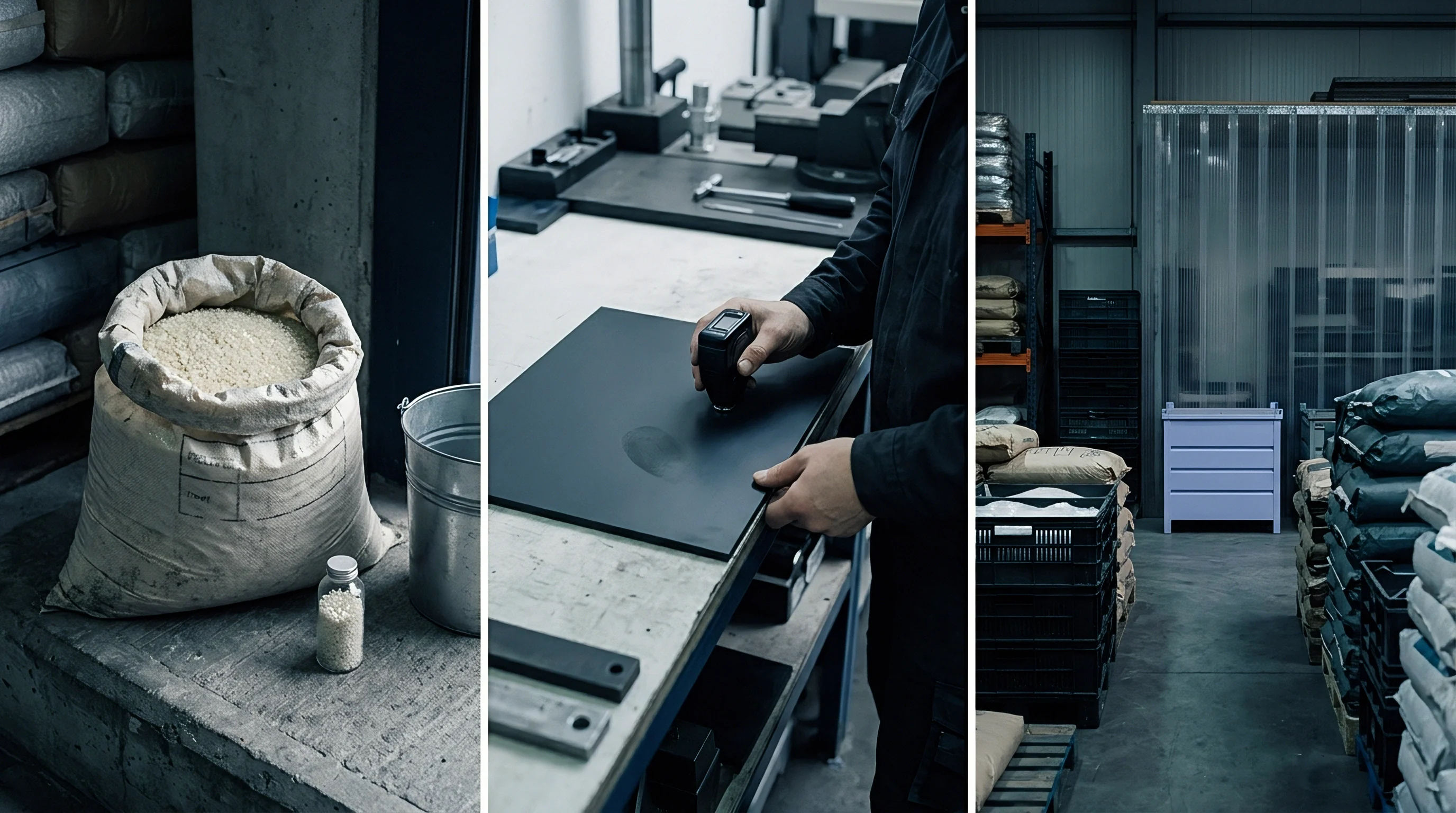
Impurity
Proving that secondary polyolefin compounds are no longer waste comes down to analytical chemical testing. End-of-waste rules require screening to confirm that regranulates carry no hazardous substances at levels that could harm human health or the environment. Laboratories rely on gas chromatography, liquid chromatography, and mass spectrometry to detect volatile organic compounds, semi-volatile species, non-intentionally added substances, and restricted trace metals.
Compounders cannot rely on generic safety data sheets from scrap suppliers. Every production lot requires testing against regulatory limits in Regulation (EU) 10/2011 for food contact, REACH Annex XVII restrictions, and European standard EN 71-3 for toy safety before the recycled resin enters commercial supply chains.

Non Intentionally Added Substances Screening Mechanics
Characterizing secondary polyolefins requires thorough screening for non-intentionally added substances (NIAS) generated by polymer breakdown, reaction side-products, residue from prior packaging contents, or exposure during waste handling. Laboratories run Headspace Gas Chromatography-Mass Spectrometry (HS-GC-MS) to spot and quantify volatile organic species under 200 Daltons.
Overall migration from polyolefin compounds cannot exceed 10 milligrams per square decimeter after 10 days at 40 degrees Celsius in 10 percent ethanol simulant.
For semi-volatile organic compounds (SVOCs) between 200 and 1000 Daltons, samples are extracted with solvent ~ usually dichloromethane, hexane, or acetone ~ and analyzed via GC-MS and Liquid Chromatography-High Resolution Mass Spectrometry (LC-HRMS). Quadrupole Time-of-Flight mass spectrometry allows for non-target screening, matching fragmentation spectra against reference libraries to flag unknown breakdown products, oxidized antioxidant residues like Irganox 1010 and Irgafos 168 derivatives, and absorbed flavor compounds such as menthol and limonene.
- Oxidized Antioxidant Residues Quinone derivatives and breakdown products of hindered phenol stabilizers generate discoloration and migration peaks during LC-MS screening of secondary polypropylene.
- Hydrocarbon Oligomers Low molecular weight polyolefin oligomers below 1000 Daltons migrate readily into food simulants, causing total migration limit failures in dry and fatty food testing.
- Absorbed Consumer Chemicals Fragrance ingredients, cosmetic solvents, and pest control residue traces remain trapped within post-consumer high-density polyethylene packaging structures.
- Halogenated Flame Retardants Brominated compounds originating from mis-sorted electronic waste packaging components breach REACH Annex XVII concentration caps when mixed into polyolefin waste streams.
- Phthalate Plasticizers Di(2-ethylhexyl) phthalate and dibutyl phthalate contamination introduced through flexible PVC film inclusions exceed specific migration limits during food simulant extraction.
Ten percent ethanol extracts hydrophobic oligomers far more aggressively than aqueous simulants during migration testing. Pinpointing non-intentionally added substances requires detection limits down to 0.01 milligrams per kilogram of polymer to ensure calculated consumer exposure stays within safe toxicological thresholds.

Overall and Specific Migration Testing Protocols
Secondary polyolefins intended for food contact or sensitive consumer items must undergo standardized migration testing under European standards EN 1186 and EN 13130. These protocols expose samples to food simulants under specific times and temperatures chosen to mimic worst-case exposure scenarios.
| Target Chemical Class | Analytical Test Method | Extraction / Simulant Condition | Detection Limit | Regulatory Threshold Limit |
|---|---|---|---|---|
| Volatile Organic Compounds (VOC) | HS-GC-MS (VDA 277) | Headspace 120 °C for 5 hours | 0.5 mg/kg | 50 mg/kg Total Carbon |
| Overall Migration (OML) | Gravimetric (EN 1186-3) | Simulant A (10% EtOH), 10 days @ 40 °C | 1.0 mg/dm² | 10 mg/dm² (60 mg/kg) |
| Fatty Food Migration (OML) | Gravimetric (EN 1186-2) | Simulant D2 (Olive Oil), 10 days @ 60 °C | 2.0 mg/dm² | 10 mg/dm² (60 mg/kg) |
| Dry Food Migration (OML) | Modified Tenax (EN 1186-13) | Simulant E (Tenax), 10 days @ 60 °C | 1.0 mg/dm² | 10 mg/dm² (60 mg/kg) |
| Specific Migration: Irgafos 168 | HPLC-UV (EN 13130-1) | Simulant D1 (50% EtOH), 10 days @ 40 °C | 0.1 mg/kg | 60 mg/kg (SML) |
| Heavy Metals (Pb, Cd, Hg, Cr VI) | ICP-MS (EN 17054) | Microwave Acid Digestion (HNO3/H2O2) | 0.1 mg/kg | 100 mg/kg Combined (94/62/EC) |
| Polycyclic Aromatic Hydrocarbons | GC-MS/MS (AfPS GS 2019:01) | Toluene Extraction 1 hour @ 60 °C | 0.05 mg/kg | 1.0 mg/kg Sum of 8 PAHs |
Overall migration limits (OML) cap the total mass of non-volatile substances transferring into food simulants at 10 milligrams per square decimeter of surface area (or 60 milligrams per kilogram of simulant). Specific migration limits (SML) apply to individual evaluated substances, such as synthetic antioxidants, erucamide slip agents, and residual catalyst metals. For repeated-use articles, compliance requires three consecutive exposures with the same simulant, measuring final pass/fail values on the third test period.

Heavy Metals and Legacy Additive Quantification
Legacy additives present constant compliance headaches in polyolefin recycling. Flame retardants, lead heat stabilizers, and cadmium pigments once common in durable industrial goods regularly show up in post-consumer streams due to sorting cross-contamination.
Inductively Coupled Plasma Mass Spectrometry (ICP-MS) following microwave nitric acid digestion determines elemental levels across production lots. Under Directive 94/62/EC, the combined concentration of lead, cadmium, mercury, and hexavalent chromium in packaging must stay below 100 milligrams per kilogram. Plants routinely run X-ray Fluorescence (XRF) on raw scrap batches as an initial gatekeeper, then certify final pellets with accredited ICP-MS testing for their technical compliance file.
Analytical screening still faces significant uncertainty regarding how unknown breakdown products below 10 parts per billion interact toxicologically in multi-layer food packaging applications.


Strand
Proving that secondary polyolefins meet mechanical, physical, and rheological performance standards is essential for industrial reuse. Ending waste status requires demonstration that recovered resin delivers consistent properties on par with virgin grades, ensuring it can perform in injection molding, blow molding, or film extrusion lines.
Rheological behavior reveals molecular weight distribution and overall polymer health. Because secondary polyolefins undergo thermo-mechanical degradation during recycling, polypropylene tends toward chain scission while polyethylene tends toward cross-linking. Compounders must measure melt flow properties, oxidative stability, and mechanical strength lot by lot to guarantee batch consistency and confirm specs match buyer agreements.

Rheological Consistency and Melt Flow Verification
Melt Flow Rate (MFR) is the primary quality check in polyolefin compounding. Following ISO 1133-1, technicians push molten resin through a standard die orifice under specified temperatures and loads, reporting mass flow in grams per 10 minutes.
Secondary polypropylene is tested at 230 degrees Celsius under a 2.16 kilogram load; high-density polyethylene is measured at 190 degrees Celsius under 2.16 kilogram or 21.6 kilogram loads, depending on molecular weight. Wide MFR variations across a single lot signal poor feedstock blending or thermal damage during extrusion. In production, erratic MFR leads to fluctuating injection pressures, inconsistent wall thicknesses, and unstable cycle times.

Thermal Oxidation Resistance and Stabilizer Retention
Oxidation Induction Time (OIT) testing measures residual thermal stability under accelerated conditions. Under ISO 11357-6, Differential Scanning Calorimetry (DSC) holds polymer samples in pure oxygen at 200 degrees Celsius, measuring the time elapsed before an exothermic oxidation reaction begins.
Failure to deliver an ISO 17025 accredited test report showing oxidation induction time above 20 minutes under ISO 11357-6 voids the buyer obligation to accept secondary polypropylene shipments.
Post-consumer polyolefins often arrive with low baseline OIT values ~ sometimes under 5 minutes ~ because primary antioxidant packages were consumed during original service and reprocessing. Compounders must restore stability by adding fresh hindered phenol antioxidants (like Irganox 1010) and phosphite processing stabilizers (like Irgafos 168) during extrusion. Raising OIT above 20 minutes at 200 degrees Celsius ensures the resin will withstand thermal stress during downstream conversion and long-term use.

Mechanical Testing and Insoluble Contaminant Quantification
Mechanical qualification confirms structural performance under static and dynamic loads. Molded test specimens are subjected to Charpy notched impact testing (ISO 179-1), tensile modulus and yield stress measurement (ISO 527-2), and heat deflection temperature testing (ISO 75).
Insoluble particles hurt mechanical properties, especially impact strength and elongation at break. Un-melted rubber, cross-linked gels, and mineral grit create internal stress concentrators that cause premature cracking. Testing ash content via calcination at 600 degrees Celsius per ISO 3451-1 measures mineral filler levels, verifying that calcium carbonate, talc, or titanium dioxide concentrations match specification limits.
Uncontrolled melt flow variability forces convertors to adjust injection molding parameters per resin lot, increasing scrap rates and triggering batch rejection claims under supply agreements.

Log
Traceability, certified quality management, and technical documentation form the legal bridge that converts waste into commercial chemical products. End-of-waste frameworks require compounding plants to operate quality systems under ISO 9001 and chain-of-custody tracking under ISO 22095. Facilities must produce complete batch records, certificates of analysis, and formal declarations of conformity for every resin lot shipped.
Compounding plants cannot mix unverified scrap streams into validated lines without losing end-of-waste status. Sampling must follow statistical acceptance protocols so that laboratory results accurately represent full production batches, creating an unbroken audit trail for buyers and regulatory inspectors.

Sampling Plans and Batch Homogeneity Rules
Representative analytical testing relies on strict batch definitions and sampling plans. Standard ISO 2859-1 sets out acceptance sampling based on Acceptable Quality Limit (AQL) standards, specifying how many sample increments to take relative to total batch mass.
A standard compounding lot is defined as a continuous run of up to 25 metric tons of homogenized pellets stored in a single silo or blender. Technicians draw samples from top, middle, and bottom sampling ports, blending them into a composite sample for lab testing. Homogeneity checks must confirm that MFR and density vary by less than 5 percent relative standard deviation across samples, proving uniform blending before sending material for expensive migration testing.

Declaration Architecture and Conformity Dossier Requirements
Facilities supplying end-of-waste resin must supply buyers with a formal Declaration of Conformity (DoC) and an accompanying technical compliance dossier. Standards EN 15346 (for recycled PE) and EN 15348 (for recycled PP) lay out the required data fields and characterization values for commercial documentation.
Post-consumer polyolefin melt streams retain organoleptic signatures from previous packaging contents despite intensive washing.
- Compounding Facility Identification Official registration details, environmental operating permit numbers, and physical location of the recovery operation issuing the end-of-waste declaration.
- Batch Identification And Volume Unique lot tracking number, production date range, total batch mass in kilograms, and silo allocation matching shipping bills of lading.
- Input Feedstock Classification Source waste codes under European Waste Catalogue, waste origin sector documentation, and EN 15347 characterization test summary files.
- Accredited Analytical Test Reports Laboratory test certificates issued under ISO/IEC 17025 accreditation covering heavy metals, REACH SVHC screening, and specific migration values.
- Physical And Rheological Specifications Measured values for melt flow rate (ISO 1133), density (ISO 1183), ash content (ISO 3451-1), and oxidation induction time (ISO 11357-6).
- End Use Boundary Scope Explicit statements defining approved downstream processing methods and restrictions regarding food contact, toy, or medical application boundaries.
Tracing the chain of custody covers every step from raw scrap collection points to final compounded pellet lots. Compounding facilities must archive technical compliance dossiers for a minimum of ten years, keeping them available for inspection by enforcement authorities and customs officers.
Customs Classification and Border Verification Protocols
Shipping secondary polyolefins across international borders brings the distinction between waste and chemical products into sharp focus. Plastic scrap traded under Harmonized System tariff code 3915 triggers strict controls under the Basel Convention, requiring prior informed consent and waste transport permits.
| Test Parameter | Standard Test Method | Sampling Frequency | Acceptance Criteria | Compliance Document |
|---|---|---|---|---|
| Melt Flow Rate (MFR) | ISO 1133-1 | Every 2.5 metric tons | Target ±15% tolerance | Certificate of Analysis |
| Density | ISO 1183-1 | Once per production shift | Target ±0.005 g/cm³ | Certificate of Analysis |
| Ash Content | ISO 3451-1 | Once per production shift | Target ±0.5 wt% | Certificate of Analysis |
| Oxidation Induction Time | ISO 11357-6 | Every production lot (max 25t) | > 20 minutes @ 200 °C | Technical Dossier |
| Heavy Metals (Pb, Cd, Hg, Cr) | ICP-MS / EN 17054 | Every 100 metric tons | Sum < 100 mg/kg | ISO 17025 Report |
| NIAS / VOC Screening | HS-GC-MS / VDA 277 | Monthly re-validation | TVOC < 50 mg/kg | ISO 17025 Report |
| Overall Migration (OML) | EN 1186 Series | Quarterly / Process change | < 10 mg/dm² | ISO 17025 Report |
Valid end-of-waste status reclassifies pellets under standard primary resin codes ~ HS 3901 for polyethylene and HS 3902 for polypropylene. Customs agencies check declarations of conformity, inspect ISO 17025 lab reports, and take spot samples at border posts. Lacking analytical proof risks immediate detention of the shipment, administrative penalties, and forced re-export under waste transport rules.
Supply contracts adopting Section 4 of EN 15343 shift full financial liability for non-compliant chemical impurities to the compounder whenever lot sampling reveals off-specification heavy metal concentrations.


Tariff
Achieving end-of-waste status fundamentally alters the commercial position and cost structure of a compounding operation. Upgrading scrap into a certified chemical product allows compounders to command a premium over uncertified regrind while offering converters compliance assurance. As regulation increasingly mandates verified recycled content, regulatory compliance becomes a key commercial selling point.
Downstream brand owners and converters face substantial exposure under extended producer responsibility schemes and national packaging taxes. Using validated secondary compounds lets converters qualify for eco-modulation fee discounts and tax exemptions, directly improving finished packaging economics.
Eco Modulation Fees and Landed Cost Economics
European Extended Producer Responsibility (EPR) programs use fee modulation to penalize non-recyclable packaging while discounting certified recycled resin content. In parallel, the EU Packaging and Packaging Waste Regulation (PPWR) sets mandatory minimum recycled content targets that increase toward 2030 and 2040 targets.
Evaluating landed cost differentials involves combining eco-modulation credits with accredited laboratory testing expenditures. Securing accredited migration test reports and maintaining ISO 17025 dossiers adds roughly 45 to 80 Euros per metric ton to operating costs. Yet certified end-of-waste pellets command premiums of 150 to 300 Euros per metric ton over basic post-consumer regrind.
On top of that, converters running certified resin avoid packaging taxes like the UK Plastic Packaging Tax (217.85 Pounds per metric ton) or the Spanish non-reusable plastic packaging tax (0.45 Euros per kilogram), easily offsetting testing costs.

Liability Allocation and Commercial Supply Contracts
Contracts for secondary polyolefins must spell out chemical warranties, lot rejection protocols, and liability limits. Supply agreements without tight technical specifications expose buyers to high recall costs if non-compliant chemical contaminants are detected after product distribution.
Robust supply contracts rely on explicit compliance clauses covering batch testing. Lot acceptance is tied to accredited lab analysis delivered before delivery offloading. Clear indemnification terms cap seller liability at total shipment value for minor physical off-spec issues, but remove liability caps if prohibited REACH Annex XVII substances or heavy metal contamination force product recalls.
Secondary polyolefin compounders that maintain fully validated technical dossiers capture premium pricing while insulating buyers against regulatory withdrawal risks in European target markets.