Karl Fischer Determination of Trace Water in Polyethylene Terephthalate
Polyethylene terephthalate trace moisture determination relies on Karl Fischer coulometric oven extraction at 170 to 180 degrees Celsius to prevent chain scission.
Scission
Polyethylene terephthalate processes in the melt state between 270 and 300 degrees Celsius, where trace moisture triggers rapid nucleophilic attack. Moisture trapped inside solid resin pellets dissolves into the molten polymer phase during extrusion, reacting directly with ester linkages along the macromolecular chain. Each cleavage event hydrolyzes the polymer backbone, breaking one polymer chain into an ester carboxyl group and a hydroxyl group to lower the average molecular weight.
Intrinsic viscosity drops in direct proportion to this chain cleavage. Because the rate of hydrolytic degradation in molten polyethylene terephthalate exceeds the thermal degradation rate by orders of magnitude, moisture control is the single most influential variable governing processability and part performance.
Ester Linkage Cleavage Kinetics in Polyester Melts
Thermal degradation during melt processing follows a zero-order rate law governed by moisture concentration and residence time in the extruder barrel. At processing temperatures, the chemical equilibrium between ester bonds and water favors chain cleavage over esterification. One mole of water absorbed into the resin cleaves exactly one ester linkage, converting long structural chains into shorter fragments within seconds in the injection molding barrel.
Controlling moisture content below 0.005 percent by weight, or 50 parts per million, limits chain degradation to acceptable levels and protects melt stability. When moisture exceeds 100 parts per million, loss of intrinsic viscosity causes melt strength collapse, leading to parison sag in blow molding, web breaks during film casting, and flash along parting lines in injection molds.

Intrinsic Viscosity Degradation Thresholds
Resin suppliers quote mechanical values based on dry pellets containing under 0.005 percent moisture by weight. A bottle-grade virgin resin rated at an initial intrinsic viscosity of 0.80 deciliters per gram experiences severe property losses if processed at elevated water concentrations. Processing at 200 parts per million moisture reduces final part intrinsic viscosity to below 0.70 deciliters per gram, causing brittle fracture under impact testing and stress cracking in carbonated beverage packaging.
PET resin dried to 0.005 percent moisture by weight retains intrinsic viscosity above 0.78 dL/g during processing at 280 degrees Celsius.
The processing window depends on the specific end-use application and mechanical stress demands. Structural industrial yarns require water levels below 20 parts per million to preserve high tensile strength, whereas non-critical thermoforming sheet operations tolerate up to 100 parts per million water without structural failure.
| Moisture Content (ppm) | Intrinsic Viscosity (dL/g) | Number-Average Molecular Weight (g/mol) | Zero-Shear Melt Viscosity (Pa s) | Processing Outcome |
|---|---|---|---|---|
| 20 | 0.82 | 28,500 | 850 | Optimal melt strength for technical filaments |
| 50 | 0.79 | 26,800 | 720 | Standard bottle preform molding compliance |
| 100 | 0.73 | 23,500 | 510 | Increased preform wall variation and haze |
| 200 | 0.66 | 19,800 | 320 | Preform gate crystallization and brittle failure |
| 500 | 0.52 | 13,200 | 110 | Melt drool and catastrophic mechanical loss |
Ignoring water determination before processing leads directly to unexpected structural failure in molded components, elevated scrap rates across processing shifts, and invalidation of supplier warranty terms on resin shipments.
Oven
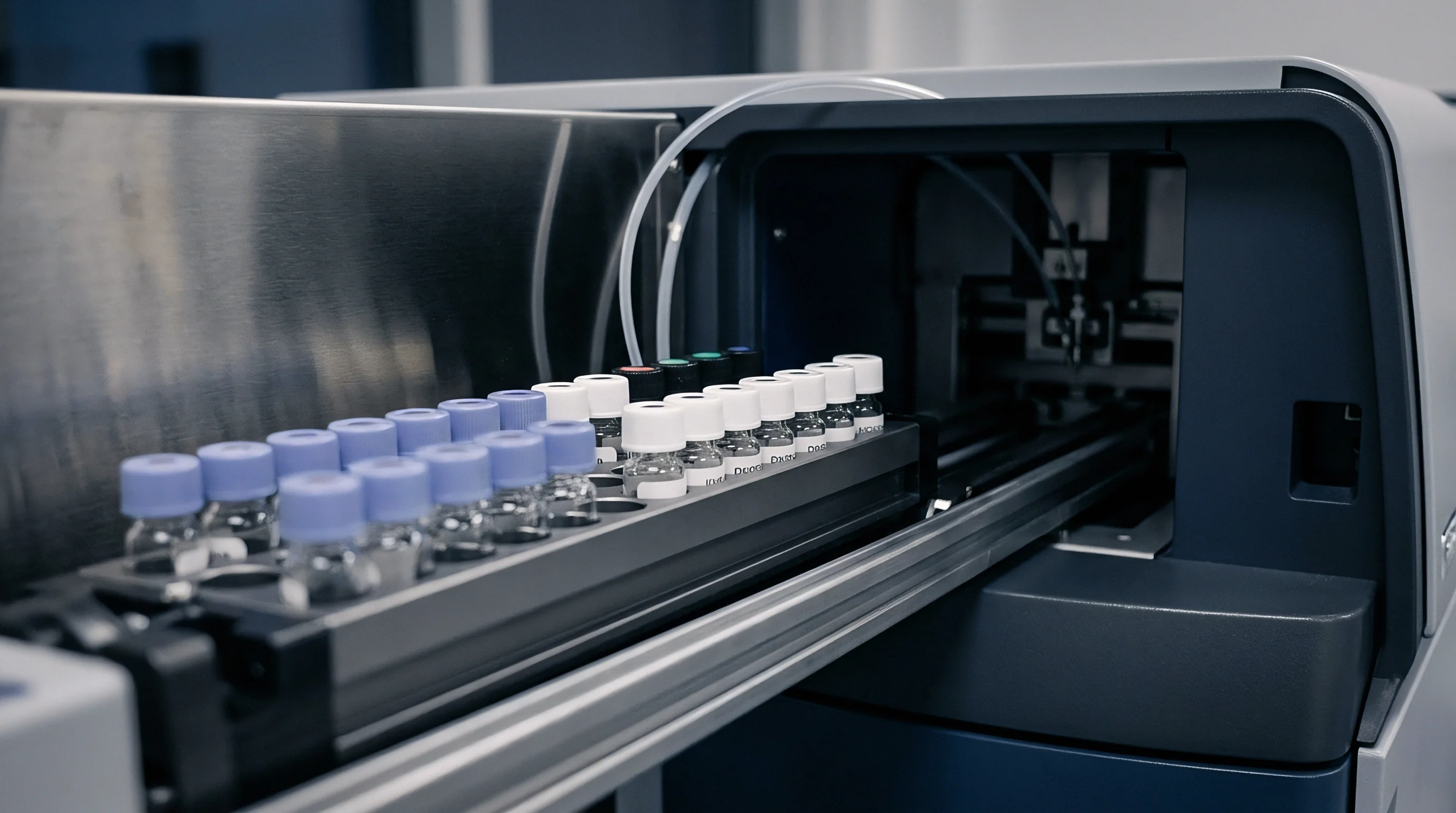
Direct dissolution of condensation polymers in liquid titrant requires aggressive solvents such as phenol, chloroform, or ortho-dichlorobenzene heated above 100 degrees Celsius. These solvents create environmental and occupational safety hazards while accelerating side reactions with polymer additives. Karl Fischer oven evaporation systems bypass chemical dissolution by heating solid resin pellets inside a sealed chamber, where dry nitrogen gas carries volatilized moisture directly from the solid matrix into an attached titration cell.

Thermal Extraction Principles and Evaporation Chambers
Heating polymer pellets below their crystalline melting temperature liberates trapped fluid without causing structural fusion of the material mass. Polyethylene terephthalate exhibits a glass transition temperature around 75 degrees Celsius and a crystalline melting peak near 255 degrees Celsius. Heating the sample inside an extraction chamber maintained between 170 and 180 degrees Celsius allows water molecules to diffuse out of amorphous and semi-crystalline regions.
Exceeding 200 degrees Celsius causes thermal degradation of polymer chains, releasing acetaldehyde, thermal degradation products, and secondary condensation water that skew measurement results.
Carrier Gas Delivery and Baseline Dew Point Limits
Dry nitrogen transports volatilized moisture from the heating module directly into the titration cell at constant pneumatic pressure. The carrier gas must pass through molecular sieve drying columns to reach a dew point below minus 60 degrees Celsius, corresponding to residual moisture under 2 parts per million. Carrier gas flow rates are controlled between 50 and 100 milliliters per minute.
Flow rates below 50 milliliters per minute fail to sweep vapor effectively out of transfer lines, creating measurement lag, while rates exceeding 100 milliliters per minute splash electrolyte solution against cell walls and disrupt electrochemical detection.
- Purge the sample vial heating chamber with dry nitrogen at 100 mL/min for ten minutes until baseline drift drops below 2.0 micrograms per minute.
- Transfer 1.5 to 2.0 grams of PET pellets directly into the glass sample vial using pre-dried anti-static forceps to prevent static dust attachment.
- Seal the vial immediately with a PTFE-coated silicone septum cap using an electronic crimper set to standard compression torque.
- Place the sealed vial into the oven block heated to 170 degrees Celsius and initiate carrier gas transfer to the titration cell.
- Monitor the coulometric reaction current until extraction stops and drift rate returns to baseline within 0.2 micrograms per minute.
ISO 15512 Method B2 mandates an extraction temperature of 170 to 180 degrees Celsius to prevent thermal degradation of polyester chains.
Moisture values below 50 parts per million present measurement challenges during oven extraction because atmospheric exposure during vial loading introduces background test error.
Reagents
Coulometric titration relies on the electrochemical oxidation of iodide ions into iodine at an anode surface, governed by Faraday’s law. Generated iodine reacts quantitatively and instantaneously with water molecules swept into the electrolyte solution by the carrier gas stream. Because one mole of iodine reacts with exactly one mole of water, the electrical charge required for iodine generation directly quantifies moisture content in the sample.

Coulometric Cell Chemistry and Faraday Quantitative Stoichiometry
One mole of water reacts quantitatively with one mole of iodine inside the reaction vessel. The classic Bunsen reaction mechanism involves sulfur dioxide, a base such as imidazole, an alcohol solvent, and iodine. Electrochemical oxidation produces iodine from iodide ions according to the anode reaction where two iodide ions yield one iodine molecule and two electrons.
Passing 10.71 Coulombs of electrical charge through the generator electrode converts sufficient iodide to react with exactly 1.0 milligram of water. Coulometric instruments measure microcoulombs of current, enabling measurement down to 1.0 microgram of water.
Which Reagent Formulations Suppress Acetaldehyde Side Reactions?
Methanol-free electrolytes containing ethanol or ethylene glycol monoethyl ether prevent side reactions during thermal extraction. Standard Karl Fischer formulations contain methanol, which reacts with acetaldehydes released by heated polyethylene terephthalate pellets. This reaction forms acetals and releases excess water into the solution, driving continuous false titrations that fail to reach a true endpoint.
Using specialized aldehyde-resistant or alcohol-free anode reagents suppresses acetal formation, stabilizing baseline drift and delivering accurate water readings.
- Anode reagent depletion reduces triiodide conversion efficiency, causing delayed titration endpoints and artificially high moisture calculations.
- Cathode diaphragm fouling increases electrical cell resistance, preventing generator electrodes from maintaining stable reaction currents.
- Methanol side reactions generate excess water from aldehyde condensation, driving continuous titration drift without reaching equilibrium.
- Atmospheric humidity leaks introduce background moisture through worn septum seals, elevating system drift baseline values.
Coulometric cell drift stabilizes only when ambient air infiltration through injection septa is completely eliminated.
Determining whether glycol derivatives or specialized ethanol blends provide superior long-term stability in continuous analytical operations remains a subject of ongoing study in laboratory analysis.


Vial
Sample transfer from storage containers into testing apparatus introduces significant environmental exposure risks. Polyethylene terephthalate pellets adsorb moisture onto their surface within seconds of exposure to humid air. Handling dry resin in ambient laboratory air causes rapid moisture uptake, turning an internal moisture measurement into a surface humidity reading.
Atmospheric Moisture Adsorption and Handling Controls
At 60 percent relative humidity, measurable water transfers onto pellet surfaces within thirty seconds. Using pre-dried anti-static sampling equipment and transfer vials minimizes static charge accumulation on pellet surfaces. Crimp vials are purged with ultra-dry nitrogen gas before sample collection, and weighing must take place within an isolated dry box or through rapid balance transfer procedures.

Blank Determination and Baseline Drift Compensation
Uncharged testing containers carry ambient air moisture that artificially elevates recorded water titration values. Baseline water is calculated by heating empty, dry septum vials under identical purging, crimping, and heating sequences as actual sample vials. The resulting background value ~ typically 3.0 to 10.0 micrograms of water ~ is recorded as the environmental blank and subtracted from total sample water to ensure measured values reflect only water released by the polymer matrix.
| Pellet State | Exposure Duration (s) | Ambient Relative Humidity (%) | Moisture Gain (ppm) | Measurement Error Margin (%) |
|---|---|---|---|---|
| Dry Bottle Grade | 10 | 40 | 2.5 | 5.0 |
| Dry Bottle Grade | 30 | 40 | 8.0 | 16.0 |
| Dry Bottle Grade | 60 | 60 | 22.0 | 44.0 |
| Industrial Filament Grade | 10 | 30 | 1.2 | 4.0 |
| Industrial Filament Grade | 60 | 60 | 35.0 | 116.0 |
- Standard protocol designation specifies the precise extraction method, heating curve, and carrier gas composition used during release testing.
- Baseline drift recording documents the stabilized background moisture rate immediately preceding sample vial insertion.
- Sample mass precision records pellet weight to four decimal places using a calibrated microbalance within an inert environment.
- Electrolyte balance verification confirms anode reagent capacity and drift stability prior to lot release sign-off.
Samples held inside unsealed containers for longer than forty-five seconds adsorb sufficient ambient moisture to invalidate trace water measurements.
Arithmetic
Calculating final moisture concentration requires precise mathematical reconciliation of baseline background drift, container moisture, and raw coulombs consumed. Electrochemical instruments measure total integrated electrical charge passed during testing, and converting these charge values into mass fraction concentrations requires sample weight logging to four decimal places.
Quantitative Calculation Framework and Drift Compensation Formulas
Electrochemical titration instruments measure total integrated current passed through the generator electrode over the full duration of heating. Mass calculation integrates total microcoulombs passed, drift background rate, heating time, environmental blank mass, and net sample mass according to the formula:
Concentration = ( ( Q / 107.12 ) – Blank – ( Drift Time ) ) / Sample Mass
Concentration expresses final water content in parts per million, and total charge Q is measured in microcoulombs. The constant 107.12 microcoulombs per microgram converts electrical charge directly into water mass. Blank reflects moisture mass in micrograms determined from empty vial tests, Drift represents background system leakage in micrograms per second, Time represents total titration duration in seconds, and Sample Mass represents resin weight in grams.

Worked Commercial Specification Verification
A sample lot of bottle-grade polymer pellets weighing approximately two grams yields a net titration charge during thermal extraction. Consider a sample weight of 2.1050 grams placed into an oven at 170 degrees Celsius for 12 minutes (720 seconds). Instrument background drift records 0.15 micrograms per minute (0.0025 micrograms per second).
Empty vial blank calibration yields 3.20 micrograms of water, and total charge recorded by the coulometric cell equals 0.4820 Coulombs (482,000 microcoulombs).
Converting total charge to water mass yields 482,000 divided by 107.12, equalling 4500.56 micrograms of water. Total drift compensation over 720 seconds equals 0.0025 multiplied by 720, yielding 1.80 micrograms. Net water mass equals 4500.56 minus 3.20 blank minus 1.80 drift, equalling 4495.56 micrograms of water (4.4955 milligrams).
Dividing net water mass by sample weight yields 4495.56 micrograms divided by 2.1050 grams, giving 2135.65 parts per million water (0.2136 percent by weight).
A single microgram of atmospheric water entering the carrier gas stream shifts calculated moisture content by tens of parts per million in a small sample.
| Sample Mass (g) | True Water Content (ppm) | Uncompensated Blank (ug) | Calculated Water (ppm) | Absolute Error (ppm) |
|---|---|---|---|---|
| 0.5000 | 50.0 | 5.0 | 60.0 | +10.0 |
| 1.0000 | 50.0 | 5.0 | 55.0 | +5.0 |
| 2.0000 | 50.0 | 5.0 | 52.5 | +2.5 |
| 5.0000 | 50.0 | 5.0 | 51.0 | +1.0 |
Standard sales agreements incorporate ISO 15512 Method B2 precision tolerances, establishing that water variations within plus or minus 5 parts per million fall within acceptable testing error limits and cannot serve as legal grounds for shipment rejection.

Audit
Global resin transactions specify moisture boundaries inside purchase agreements to ensure processability upon arrival. Sourcing practices audit incoming shipments by cross-checking Certificate of Analysis documents against verified laboratory test results. Misalignment between supplier claims and buyer intake testing creates commercial disputes that require standardized reference protocols for resolution.
International Test Standard Mechanics and Method Alignment
Testing protocols published under ISO 15512 Method B2 and ASTM D6869 outline heating temperatures, gas flow velocity, and cell conditions. ISO 15512 Method B2 specifies heating sample vials between 170 and 180 degrees Celsius using dried nitrogen carrier gas connected to a coulometric or volumetric titration cell. ASTM D6869 governs coulometric determination with oven evaporators, defining mandatory baseline drift stability criteria below 2.0 micrograms per minute prior to sample injection.
Aligning laboratory procedures with these standards eliminates methodological discrepancies during cross-validation audits.
Certificate Analysis Verification and Sourcing Dispute Protocols
Discrepancies between supplier test certificates and destination laboratory results trigger formal resin re-testing procedures. Certificates of Analysis frequently report moisture values measured at the compounding line exit prior to packaging. Moisture ingress during sea container transit or damaged moisture-barrier bag liners elevates resin water content before arrival at the processing facility.
Sourcing agreements require destination sampling within twenty-four hours of container unsealing, utilizing sealed crimp vial collection methods to establish binding legal proof of resin non-compliance.
Verifying incoming pellet moisture against contract specifications protects processing machinery from catastrophic hydrolytic degradation, ensures stable part dimensions during long production runs, and validates financial claims against resin manufacturers when delivered material fails quality specifications.