Ester Bond Hydrolysis Kinetics in Molten Polyethylene Terephthalate
Polyethylene terephthalate ester bonds hydrolyze rapidly in melt above 270 °C, requiring drying below 30 ppm moisture to prevent intrinsic viscosity collapse.
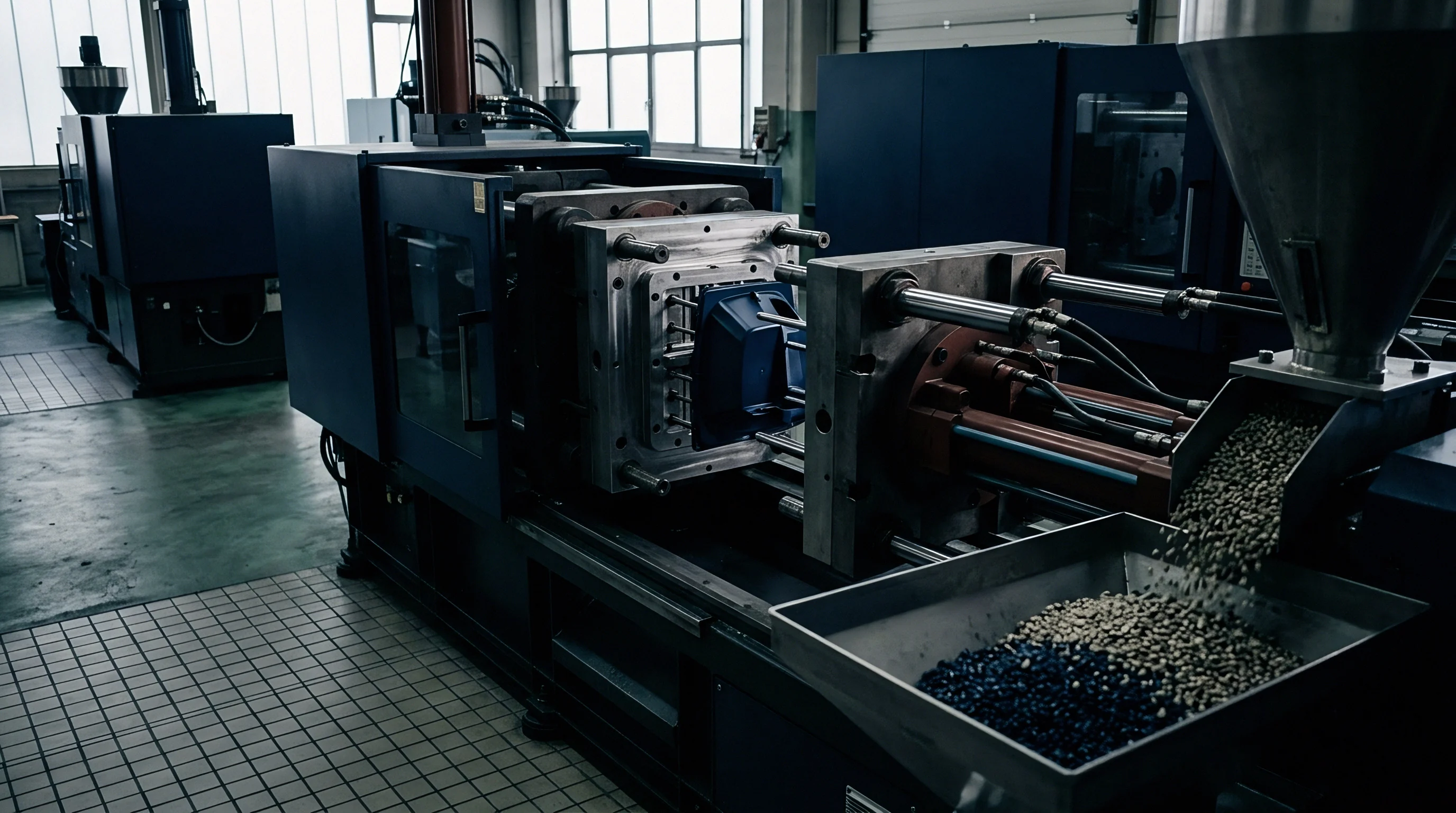
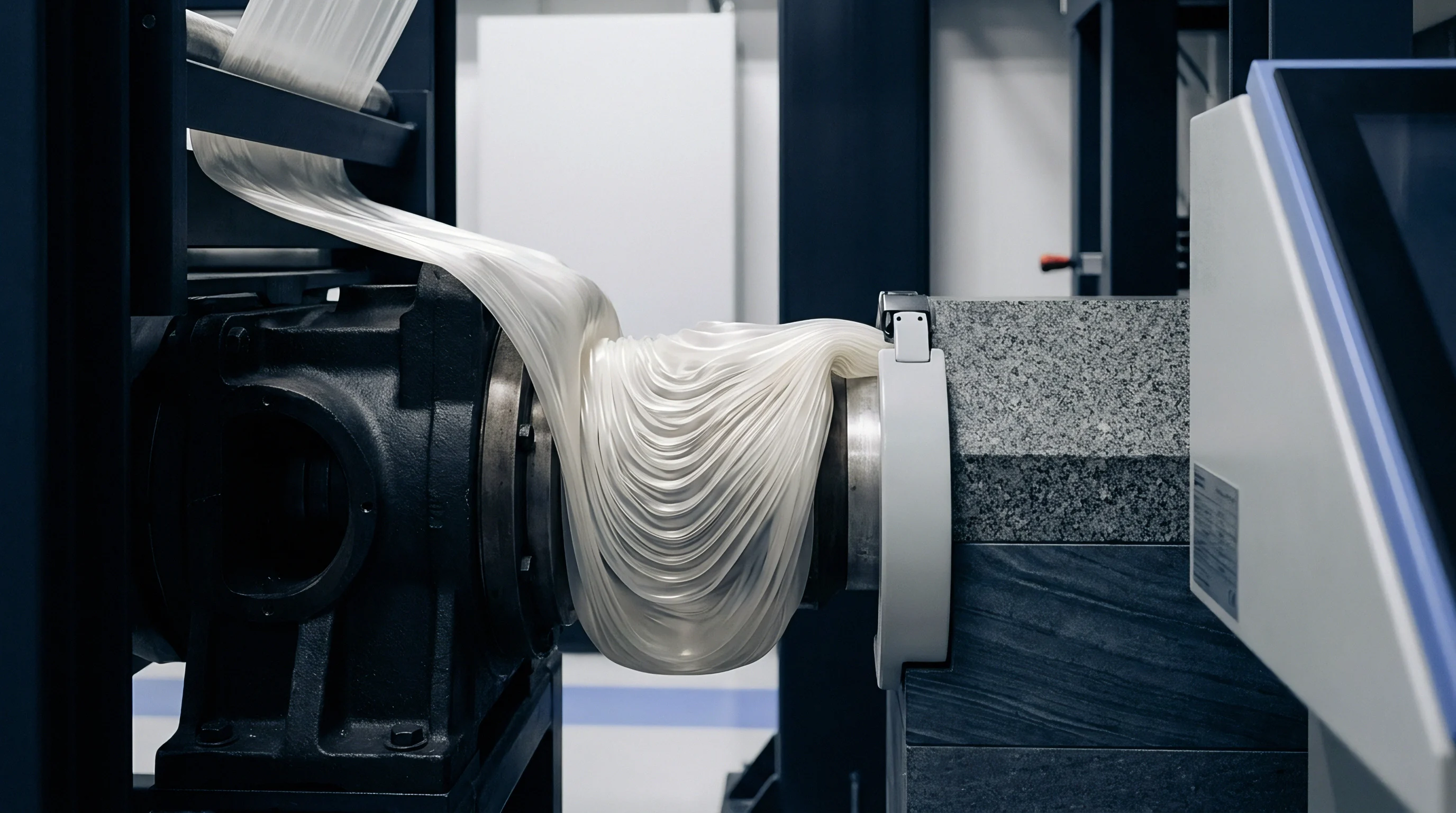
Cleavage
When processed as a liquid with trace water present, polyethylene terephthalate loses molecular weight rapidly. At temperatures between 270 °C and 300 °C, moisture dissolved in the amorphous parts of the resin pellets attacks the ester bonds along the linear polymer backbone. Under melt processing conditions, water is an active reactant, not just a passive plasticizer.
A single water molecule splits a diester linkage, breaking one long polymer chain into two shorter fragments ~ one ending in a carboxyl group and the other in a hydroxyl group. This nucleophilic substitution runs several orders of magnitude faster than solid-state hydrolysis, shifting the molecular weight distribution within seconds of hitting the extruder barrel.
Moisture-driven chain scission degrades polymer integrity within seconds of entering the melt.
The initial concentration of dissolved water in incoming pellets sets the absolute limit for chain scission. Virgin bottle-grade polyethylene terephthalate usually starts with a carboxylic acid end group concentration between 15 and 30 milliequivalents per kilogram. When an un-dried pellet containing 0.05 percent water by weight reaches the plasticizing screw, the excess of water relative to ester linkages causes immediate structural breakdown.
Un-dried resin feedstocks suffer immediate molecular weight collapse within the first thirty seconds of barrel dwell. Processing melt with high moisture turns high-tenacity preform resin into a thin, unstable fluid useless for structural parts.
Chemical Mechanism of Ester Linkage Scission
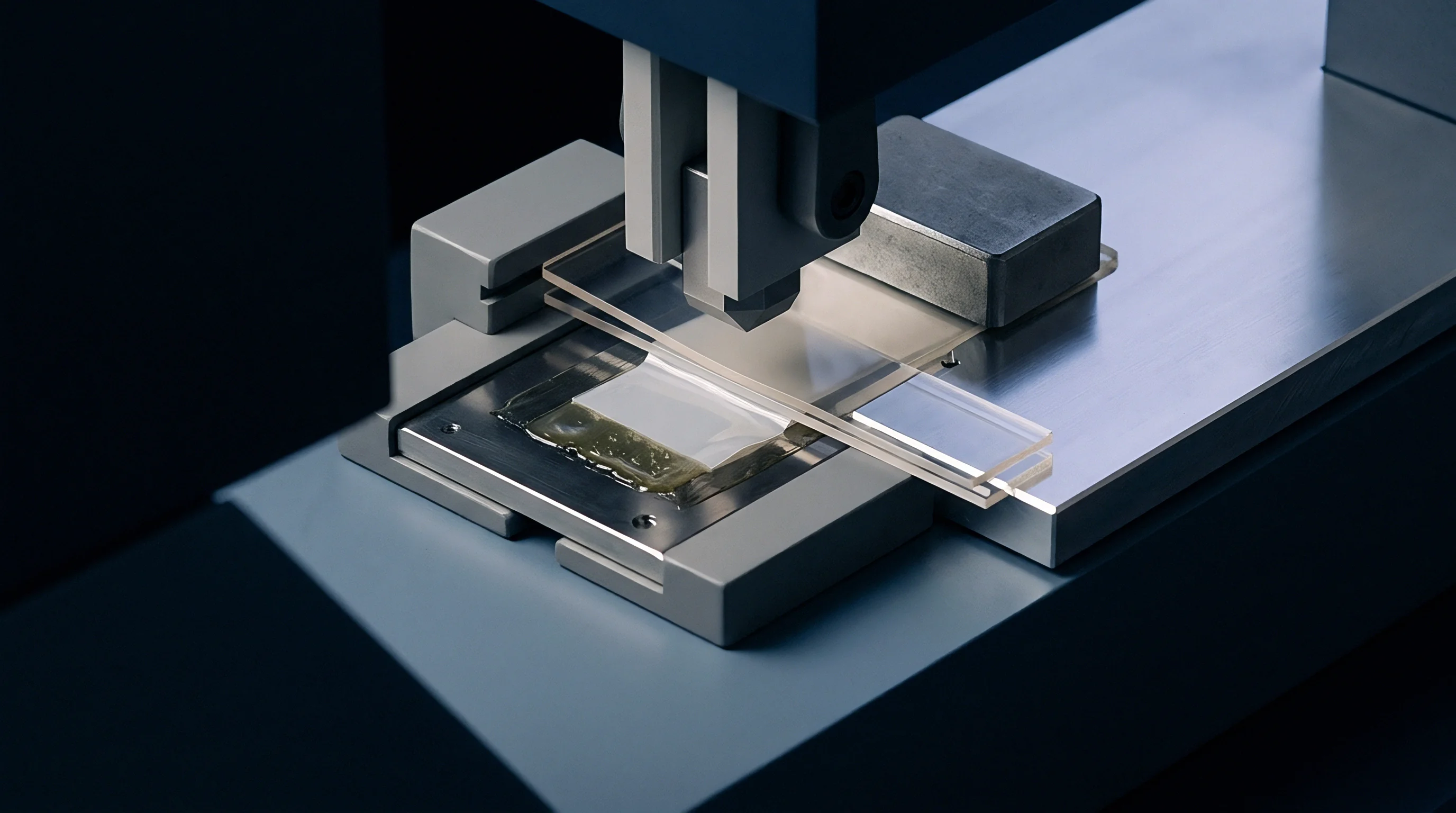
Degradation starts when water attacks the carbonyl carbon atom of the polyethylene terephthalate ester group. The oxygen in the water molecule donates an electron pair to that electrophilic carbonyl carbon, forming a brief tetrahedral intermediate. Proton transfer inside this intermediate then splits the ester bond, breaking the aliphatic-aromatic linkage.
This leaves one terminal carboxylic acid group and one terminal ethylene glycol hydroxyl group. Because the reaction consumes water while creating new chain ends, the overall number average degree of polymerization drops in direct proportion to the mass of water consumed.
Unbound moisture in the PET melt destroys molecular weight faster than thermal chain scission at standard processing temperatures.
Thermal chain scission also happens in the melt at the same time, producing vinyl ester and carboxyl end groups through a six-membered cyclic transition state. However, hydrolytic scission has a much lower activation energy than thermal degradation, making moisture-driven breakdown the main failure mode above the 250 °C melting point. Thermal scission takes over only when moisture drops below 20 parts per million.
As a result, thermal degradation determines the absolute ceiling for residence time, while hydrolysis sets the practical processing limits for un-dried or partially dried polymer.
- Hydrolytic Cleavage Rate dominates early melt degradation because nucleophilic carbonyl attack requires little activation energy when dissolved moisture is present.
- Thermal Chain Scission generates vinyl ester intermediates and extra carboxyl end groups whenever processing temperatures pass 290 °C, regardless of moisture levels.
- Thermo-Oxidative Degradation drives radical-mediated backbone cleavage if atmospheric oxygen enters the feed throat during high-temperature melting.
- Thermal Transesterification redistributes chain lengths over extended dwell times without altering the total number average degree of polymerization.
Auto-Catalytic Role of Carboxylic End Groups
Carboxylic acid end groups generated by hydrolysis act as acidic catalysts for further ester bond scission. The hydrogen ion from a carboxyl group protonates the carbonyl oxygen of an adjacent ester bond, making its carbonyl carbon even more electrophilic. This makes the ester bond much more vulnerable to attack by whatever water remains.
The reaction rate accelerates non-linearly as carboxylic acid accumulates in the melt: breakdown begins at an uncatalyzed baseline rate, but the kinetic curve steepens sharply once carboxyl concentration passes 40 milliequivalents per kilogram.
Accumulating carboxylic end groups accelerate further ester breakdown through acid catalysis.
As these acidic end groups build up, they trigger a self-reinforcing degradation cascade during long extrusions or repeated thermal reprocessing. Recycled resin with a high baseline carboxyl concentration hydrolyzes faster than virgin resin with the exact same initial moisture level. Controlling initial carboxyl content in incoming raw resin directly determines how stable the material will be during high-temperature molding.
Processing un-dried resin with high carboxyl levels causes severe intrinsic viscosity loss, poor mechanical toughness, and complete loss of impact resistance in molded parts.


Kinetics
Modeling ester bond hydrolysis in molten polyethylene terephthalate requires tracking how ester bonds, water, and end groups change concentration over time. The rate of cleavage depends directly on the instantaneous concentrations of ester linkages, dissolved moisture, and catalytic carboxyl end groups. Because ester linkages exist in massive molar excess compared to water, the system behaves as a pseudo-first-order or pseudo-second-order reaction depending on the catalytic state.
The differential rate expression for hydrolytic scission combines both uncatalyzed and acid-catalyzed pathways into one unified model.
Elevated melt temperatures markedly accelerate the rate of hydrolytic degradation.
Across different melt temperatures, measured intrinsic viscosity decay shows an activation energy consistently near ninety-five kilojoules per mole. That value means a 10 °C temperature rise boosts the hydrolytic reaction rate constant by roughly 40 to 50 percent. Running at 295 °C instead of 280 °C accelerates ester bond cleavage enough to cut the allowable residence time in half for a given moisture level.
Barrel thermal management is therefore a primary kinetic control variable during resin processing.

Temperature and Moisture Rate Equations
The rate of ester group consumption is expressed by an explicit differential rate law using temperature-dependent rate constants and instantaneous concentrations. Model equations set the time derivative of carboxylic acid concentration equal to the sum of uncatalyzed and auto-catalytic terms multiplied by water concentration. The rate constant follows an Arrhenius relationship based on a pre-exponential factor and activation energy.
Kinetic calculations show that reducing moisture cuts the scission rate far more effectively than dropping melt temperature within normal operating limits.
At 285 °C with 50 ppm residual moisture, the hydrolytic rate constant yields an intrinsic viscosity loss of 0.04 dL/g within sixty seconds of melt residence.
Water concentration in the melt drops continuously during hydrolysis because each scission event consumes a molecule of water. Once dissolved water is completely consumed, hydrolytic scission stops, leaving thermal degradation as the only active pathway. In a typical extrusion setup carrying 200 parts per million of initial moisture, water is fully consumed within 30 to 45 seconds of melting, causing substantial molecular weight loss before the polymer even reaches the metering zone.
| Melt Temperature (°C) | Initial Moisture (ppm) | Uncatalyzed Constant k0 (kg/mol min) | Catalytic Constant kc (kg²/mol² min) | Half-Life of Water (s) |
|---|---|---|---|---|
| 270 | 50 | 0.042 | 0.31 | 52.4 |
| 270 | 200 | 0.042 | 0.31 | 18.1 |
| 285 | 20 | 0.089 | 0.68 | 38.2 |
| 285 | 50 | 0.089 | 0.68 | 24.6 |
| 285 | 200 | 0.089 | 0.68 | 8.5 |
| 300 | 50 | 0.178 | 1.42 | 11.3 |
| 300 | 200 | 0.178 | 1.42 | 3.9 |

Activation Energy and Thermal Acceleration
Knowing the activation energy for hydrolytic scission is essential for predicting degradation across different processing equipment. Melt rheology and end-group titration place this activation energy between 85 and 105 kilojoules per mole for molten polyethylene terephthalate ~ the energy needed to reach the transition state during nucleophilic addition to the ester carbonyl. High shear rates in extrusion screws generate localized viscous heating, raising the local melt temperature above barrel zone setpoints and accelerating local hydrolysis kinetics.
Residual moisture remains the primary driver of ester bond cleavage in the melt phase.
Because the kinetic rate constant accelerates with temperature, heat zone calibration directly impacts finished part quality. A barrel profile running 15 °C hot reduces molecular weight retention by over 20 percent if the resin is marginally dry. Residence time distribution profiles must be paired with local kinetic equations to accurately predict final chain length.
Precise thermal control and strict moisture specifications remain the only reliable defense against runaway degradation during extrusion.
The boundary where auto-catalytic carboxyl formation permanently overwhelms standard processing additives defines a critical kinetic limit for melt stability.

Stoichiometry
Stoichiometry dictates the exact relationship between the mass of water in the melt and the drop in number average molecular weight. Polyethylene terephthalate repeat units have a molar mass of 192.17 grams per mole, and each cleavage event consumes 18.015 grams of water per mole of ester linkages broken. Because number average molecular weight is total polymer mass divided by the total moles of polymer, adding trace water increases the mole count of chains while mass stays constant ~ causing an immediate drop in average chain length.
Unbound water rapidly degrades the physical and mechanical properties of the resin.
A simple stoichiometric calculation converts moisture content in parts per million to terminal group accumulation. Ten parts per million of moisture equals roughly 0.555 millimoles of water per kilogram of resin. If fully consumed by hydrolysis, those ten parts per million increase carboxyl end-group concentration by 0.555 milliequivalents per kilogram and hydroxyl end-groups by the exact same amount.
Converting these end-group increases into intrinsic viscosity changes shows that even trace amounts of water cause measurable structural damage.
Relationship between Water Molecules and Molecular Weight
The mathematical relationship connecting number average molecular weight, baseline end-group concentration, and consumed moisture comes directly from polymer mass balance. The inverse of number average molecular weight equals half the sum of carboxyl and hydroxyl end-group concentrations. When water reacts completely with ester linkages, the new inverse molecular weight equals the initial inverse molecular weight plus the molar concentration of water consumed per unit mass of resin.
This linear inverse relationship explains why high molecular weight grades suffer a larger percentage drop in molecular weight than lower-grade resins from the exact same moisture input.
Thorough pellet drying limits subsequent thermal and hydrolytic degradation during processing.
High molecular weight industrial filament grades with initial intrinsic viscosities above 0.95 dL/g start with very few chain ends per unit mass. Adding a set amount of water causes a much larger proportional spike in total chain ends in these technical grades than in standard packaging resins with intrinsic viscosities around 0.72 dL/g. As a result, technical polymers demand much stricter drying controls to retain their engineering properties during melt conversion.
Can Moisture Limits Be Calculated from Melt Residence Time?
Calculating allowable moisture limits requires setting a target limit on intrinsic viscosity drop and solving the kinetic-stoichiometric equations for initial water content. Standard preform manufacturing protocols cap intrinsic viscosity loss at 0.02 dL/g across the injection molding cycle. Assuming a two-minute residence time at 280 °C, the integrated rate equations yield a maximum initial moisture limit of 30 parts per million by weight.
Exceeding this threshold produces parts that fail impact tests.
- Sample five grams of resin pellets from the core of the dryer discharge using a sealed, moisture-impermeable bottle.
- Transfer the sample immediately into the titration cell of a vapor-evacuation Karl Fischer coulometric moisture analyzer held at 220 °C.
- Purge the cell with dry nitrogen carrier gas at 200 milliliters per minute for ten minutes.
- Record the total integrated current consumed during titration and calculate residual moisture in parts per million.
- Compare the measured moisture value against the calculated process limit based on dwell time and barrel zone temperatures.
Short-residence screw geometries are sometimes held to make deep desiccant drying down to 20 parts per million unnecessary. Field evidence indicates otherwise: localized shear heating in high-output injection units creates thermal micro-zones above 300 °C. At those localized temperatures, hydrolytic rate constants jump by a factor of three or four, completing ester cleavage within five to ten seconds of initial melting. Processing systems operating without thorough pre-drying consistently yield out-of-spec parts, no matter how refined the screw design.

Rheology
Loss of molecular weight fundamentally changes how PET melt behaves under flow. Zero-shear melt viscosity in linear PET scales with weight average molecular weight raised to the 3.4 power. Even minor reductions in chain length drop melt viscosity substantially, altering die pressure drop, mold filling behavior, and melt strength during blow molding.
Monitoring melt rheology gives immediate feedback on the severity of hydrolytic scission taking place inside the equipment.
Loss of chain length causes melt strength to drop sharply under applied shear.
Mid-cycle melt strength collapse drops intrinsic viscosity by 0.14 dL/g, severely reducing process yield. Intrinsic viscosity measures a polymer molecule’s ability to raise solution viscosity at infinite dilution, and it correlates directly with molecular weight through the Mark-Houwink equation. For polyethylene terephthalate in standard solvent mixtures, the Mark-Houwink exponent runs between 0.65 and 0.82.
Quality controls rely on intrinsic viscosity as the primary benchmark for incoming resin pellets and finished products.

Impact of Chain Length Reduction on Melt Viscosity
Shorter chain lengths compress the polymer’s relaxation spectrum, pushing the onset of shear thinning to higher shear rates. High molecular weight PET shows strong non-Newtonian, shear-thinning behavior at typical processing shear rates between 100 and 1000 reciprocal seconds. As hydrolysis breaks the backbone into shorter fragments, the melt acts more Newtonian across a broader shear rate range.
This shift causes unexpected flashing in injection molds and uneven wall thickness in blow-molded containers.
Carboxylic acid end-groups produced during ester cleavage accelerate subsequent hydrolytic scission through auto-catalysis.
Viscosity loss during extrusion alters mechanical shear dissipation inside the screw channels. Lower viscosity reduces shear heating, disrupting the thermal balance across barrel zones. Operators who try to offset low viscosity by lowering barrel temperatures often end up introducing un-melted resin into the fluid stream.
Factory-floor temperature tweaks cannot fix the structural damage caused by hydrolytic chain scission.
| Residence Time (s) | Initial Moisture (ppm) | Intrinsic Viscosity (dL/g) | Weight Average Mw (g/mol) | Zero-Shear Viscosity (Pa s) |
|---|---|---|---|---|
| 0 | 30 | 0.82 | 54,000 | 850 |
| 30 | 30 | 0.81 | 52,800 | 790 |
| 60 | 30 | 0.80 | 51,500 | 730 |
| 120 | 30 | 0.78 | 49,200 | 630 |
| 30 | 200 | 0.73 | 43,500 | 420 |
| 60 | 200 | 0.67 | 37,200 | 260 |
| 120 | 200 | 0.58 | 29,800 | 130 |
| Values measured using dilute solution viscometry in phenol/1,2-dichlorobenzene (60/40 w/w) at 30 °C and capillary rheometry under dry nitrogen. | ||||

Processing Instabilities Driven by Viscosity Shear Collapse
Viscosity collapse causes severe operational instabilities in continuous extrusion processes like film casting and sheet production. In film casting, low zero-shear viscosity degrades melt strength, leading to edge bead instability, heavy neck-in, and web breaks under tension. In injection molding, low-viscosity resin causes nozzle drool, mold flash, and uneven cavity packing, leaving parts with internal stress and sink marks.
As polymer chains break, melt viscosity decreases rapidly across all processing shear rates.
Controlling melt flow variability requires strict material verification before releasing resin for production. Quality control must reject lots with wide melt flow variations or high initial moisture. A solid quality framework pairs incoming moisture testing with inline rheology monitoring to maintain consistency across raw material shipments.
- Moisture Verification Threshold sets an absolute upper limit of 50 parts per million measured by coulometric Karl Fischer titration before hopper loading.
- Intrinsic Viscosity Retain Delta caps the maximum allowable drop between raw pellets and finished parts at 0.03 deciliters per gram.
- Melt Flow Rate Stability Index restricts melt index variation to within plus or minus five percent between incoming resin batches.
- Carboxyl Content Limit requires incoming virgin resin to contain no more than 25 milliequivalents per kilogram of carboxylic acid end groups.
Resin dried below 30 parts per million maintains stable zero-shear viscosity and predictable shear-thinning characteristics across normal barrel dwell times.


Extrusion
Industrial handling of PET relies on continuous dehumidifying dryers to strip moisture from pellets before they reach the melt phase. Polyethylene terephthalate is hygroscopic, absorbing up to 0.6 percent water by weight under ambient conditions. Most of this exists as equilibrium moisture trapped within the amorphous regions of the pellets.
Removing both surface water and deep moisture requires high-temperature drying with air streams carrying dew points below -40 °C.
Effective moisture removal in desiccant hoppers depends on a continuous supply of dry air.
Solid-state drying kinetics follow Fickian diffusion through the solid polymer matrix, which runs orders of magnitude slower than melt-phase hydrolysis. Pellets must be exposed to dry air at 160 °C to 180 °C for four to six hours to pull ambient moisture down to the target specification below 30 parts per million. Trying to speed up the process above 180 °C risks pellet clumping and thermal oxidation if air dew points fluctuate.

Barrel Residence Time Distribution and Shear Heating
Flow inside plasticizing extruders creates a range of residence times, so different fluid elements receive varying amounts of thermal and hydrolytic exposure. While average dwell time in a single-screw extruder runs between 60 and 180 seconds, dead spots and recirculating flows near flight corners can hold polymer elements in the melt much longer. These stalled fractions undergo extensive ester hydrolysis, creating pockets of low molecular weight resin that create structural defects downstream.
ISO 16228 specifies moisture limits below 0.005 percent by weight to prevent rapid IV collapse during melt conversion operations.
Shear heating in the metering zone and barrier flights causes severe local temperature spikes. Mechanical energy from the screw converts directly into heat within the viscous melt, pushing local temperatures inside high-shear channels 15 °C to 25 °C above nominal barrel setpoints. Because hydrolytic kinetics accelerate exponentially with temperature according to the Arrhenius equation, shear heating sharply increases scission rates wherever residual water is present.
| Drying Temperature (°C) | Air Dew Point (°C) | Drying Time (h) | Final Moisture (ppm) | Melt IV Drop (dL/g) |
|---|---|---|---|---|
| 140 | -20 | 4.0 | 120 | 0.11 |
| 160 | -40 | 4.0 | 45 | 0.03 |
| 170 | -40 | 5.0 | 25 | 0.01 |
| 180 | -50 | 6.0 | 12 | 0.005 |
| 180 | -10 | 6.0 | 180 | 0.16 |

Moisture Extraction and Dehumidifying Dryer Performance
Dehumidifying dryers depend on continuous closed-loop desiccant bed rotation to keep airflow, air temperature, and dew point within tight operating bands. Desiccant beds filled with synthetic 4A molecular sieves capture moisture from the recirculating air. If the regeneration cycle fails to strip moisture from the bed, the dew point can rise from -40 °C to -10 °C, causing pellet moisture to level off around 150 parts per million rather than the target 30 ppm.
Processing resin dried under poor dew points leads directly to quality failures downstream.
Purging with dry gas prevents residual air from introducing moisture into the melt zone.
Vacuum degassing vents on twin-screw extruders offer a secondary way to extract moisture. By pulling vacuums below 10 mbar over the open melt, these vents draw out volatilized water before extensive hydrolysis takes place. Extraction efficiency depends on melt film thickness, surface renewal rates, and bubble nucleation conditions.
While vacuum vents reduce scission, they cannot replace primary solid-state drying when dealing with wet feedstock.
Purchasing contracts should specify compliance with ASTM D4019 or ISO 15512 Method B moisture testing standards, establishing clear recourse to reject resin lots that fail to dry properly under standard plant schedules.


Mitigation
Preventing and reversing hydrolytic scission in PET melt takes both strict drying controls and chemical additives. While removing water via desiccant drying remains the primary defense against melt degradation, additives can rebuild damaged polymer backbones during processing. Reactive chain extenders operate directly in the melt phase, coupling broken fragments to recover lost molecular weight and restore viscosity.
Reactive chain extenders reconnect broken polymer fragments to rebuild molecular weight.
Evaluating reactive chain extenders relies on measuring melt flow stabilization across ten-minute dwell times. Multifunctional epoxy, bis-oxazoline, or di-anhydride compounds react quickly with carboxyl and hydroxyl end groups on degraded polymer chains. When a chain extender encounters a cleaved fragment, it forms covalent links that restore chain length or introduce controlled branching, effectively reversing hydrolytic scission.
Chain Extenders and Reactive Additive Systems
Epoxy-functionalized acrylic oligomers are among the most effective additives for mitigating hydrolysis in recycled or degraded PET streams. The epoxy rings undergo ring-opening nucleophilic addition with carboxylic acid end groups at melt temperatures, forming stable covalent ester-hydroxy links without releasing low molecular weight byproducts. This coupling consumes the auto-catalytic carboxyl groups ~ extending polymer chains while removing the catalyst that drives further scission.
Reductions in average chain length compromise the impact resistance of finished parts.
Adding reactive additives requires precise metering and thorough dispersive mixing in the extruder barrel. Typical let-down ratios run between 0.2 and 1.0 percent by weight, depending on how much intrinsic viscosity the feedstock has lost. Over-dosing chain extenders causes excessive cross-linking, leading to gels, insoluble specks, and high melt elasticity that disrupts fiber spinning and thin-wall injection molding.
Processors must balance additive levels against the carboxyl content of incoming resin.
Post-Condensation Regrind Processing and Quality Assurance
Solid-state polymerization offers a practical way to rebuild molecular weight in severely degraded recycled flakes or post-industrial regrind. In a solid-state reactor, clean flakes or pellets are heated to between 200 °C and 230 °C under high vacuum or a continuous dry nitrogen purge. This drives solid-phase transesterification and esterification well below the melting point.
Continuous removal of water and ethylene glycol byproducts shifts reaction equilibrium toward chain growth rather than scission.
Consider a post-industrial regrind stream that suffered severe hydrolytic scission during an un-dried compounding run, dropping its intrinsic viscosity from 0.80 dL/g down to 0.58 dL/g. End-group analysis shows carboxylic acid concentration surging from 22 to 68 milliequivalents per kilogram. Rebuilding this resin requires removing water and providing enough reactive dwell time to restore long polymer chains.
To bring this regrind back to an intrinsic viscosity suitable for bottle preforms (0.76 dL/g), a processor can run solid-state polymerization at 210 °C under a nitrogen sweep at a -60 °C dew point. Solid-state molecular weight growth follows a second-order kinetic model based on remaining end-group concentrations. Calculating the required dwell time involves integrating the esterification rate equation against target carboxyl levels:
Rate of carboxyl elimination: -d /dt = k_ssp
Given a solid-state rate constant k_ssp of 0.0012 kg/(meq h) at 210 °C, dropping carboxyl concentration from 68 to 30 milliequivalents per kilogram requires about 14.5 hours of reactor residence time. Alternatively, feeding 0.5 percent by weight of a multifunctional epoxy chain extender during re-extrusion achieves the same intrinsic viscosity recovery in a 45-second extruder dwell time. The additive approach avoids energy-intensive reactor runs, though it introduces minor chain branching that alters melt elasticity.
Combining incoming moisture testing, disciplined drying, and strategic reactive chemistry creates a solid quality assurance framework for processing moisture-sensitive polyesters. Understanding ester hydrolysis kinetics turns resin handling from empirical trial and error into a clear engineering discipline grounded in chemical thermodynamics, rheological control, and verified commercial specs.