Post Consumer Recyclate Verification Standards for High Density Polyethylene Sourcing
Post-consumer HDPE sourcing relies on batch melt testing, DSC thermal screening, and mass balance audits to prevent factory scrap and field failure.


Flake
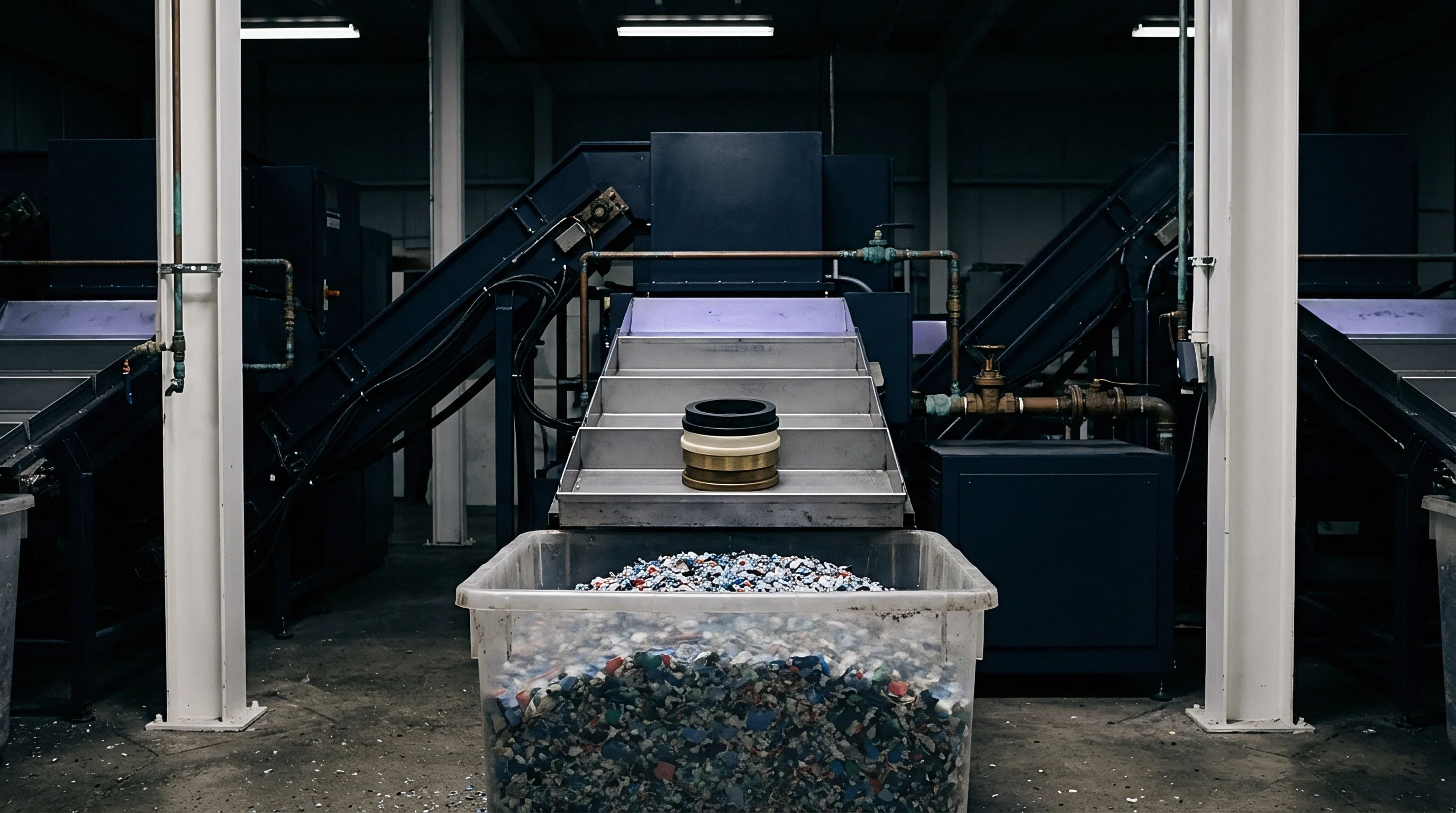
Mechanical recycling of high-density polyethylene relies on rigid sorting lines to isolate blow-molded bottles from pigmented injection containers. Baled post-consumer packaging arrives at processing plants carrying residual food soils, paper labels, polyolefin caps, and volatile organic compounds absorbed during consumer use. Automated optical sorting units with near-infrared sensors separate high-density polyethylene containers from polypropylene, polyethylene terephthalate, and polyvinyl chloride fractions, while manual sorting belts pick out multi-layer flexible barrier films that pass through automated detectors.
Material moving through granulators undergoes dry screening to remove fine dust before entering hot friction washing. Caustic wash solutions operating at 80 to 90 degrees Celsius remove water-soluble adhesives and organic residues, preventing unwashed labels from introducing severe contamination.
Feedstock Quality and Decontamination Thresholds
Thermal desorption during melt extrusion drives off low-boiling volatile contaminants, but heavy organic compounds remain trapped inside the polymer matrix. The baseline purity of recovered flake prior to melt filtration and pelletization comes down to friction washing efficiency. Residual adhesives containing polyamides or ethylene-vinyl acetate degrade under extrusion temperatures, forming carbonized specks that weaken thin-wall blow-molded packaging.
Dissolved surfactant levels in wash water must stay below monitored thresholds to prevent accelerated stress cracking in finished goods. Mechanical drying centrifuges drop surface moisture below 1.0 weight percent before continuous thermal drying brings total moisture down under 0.1 weight percent.
European standard EN 15343 section 5.2 voids origin compliance when recycled content allocations exceed physical inventory reconciliation windows of thirty days.
The choice of decontamination technology dictates whether processed flake meets food-contact safety standards or is restricted to non-food containers. Super-clean recycling systems use high-vacuum thermal stripping columns operating at 100 to 120 degrees Celsius under 0.1 mbar pressure with continuous residence times exceeding four hours. Gas chromatography coupled with mass spectrometry quantifies volatile surrogate contaminants to confirm decontamination efficiency under European Food Safety Authority guidelines.
Meanwhile, heavy metal residues from pigments and masterbatch additives require atomic absorption spectroscopy to verify compliance with regulatory thresholds.

Post-Consumer Collection Stream Characteristics
Source separation models govern the physical composition and property distribution of post-consumer polyolefin streams. Municipal kerbside collection yields broad molecular weight distributions and mixed melt flow rates because container grades are blended together. By contrast, industrial bottle return systems produce cleaner streams with consistent melt indexes ideal for blow molding re-extrusion.
Bales from deposit return schemes average 95 percent high-density polyethylene content, while kerbside bales frequently carry up to 12 percent non-target polymers and inorganic contaminants.
| Feedstock Source Type | Volatile Organics (ppm) | Polyolefin Purity (%) | Ash Content (wt%) | Odor Score (1 to 5) |
|---|---|---|---|---|
| Deposit Return Bottle Flake | 45 to 85 | 98.5 to 99.5 | 0.08 to 0.15 | 1.5 |
| Kerbside Rigids Mixed Flake | 180 to 350 | 91.0 to 95.0 | 0.45 to 0.85 | 3.8 |
| Commercial Drum Clean Recyclate | 20 to 50 | 99.0 to 99.8 | 0.05 to 0.10 | 1.2 |
| Values measured across washed post-consumer flake lots prior to melt compounding. Odor score determined via DIN 10955 sensory panel evaluation. | ||||
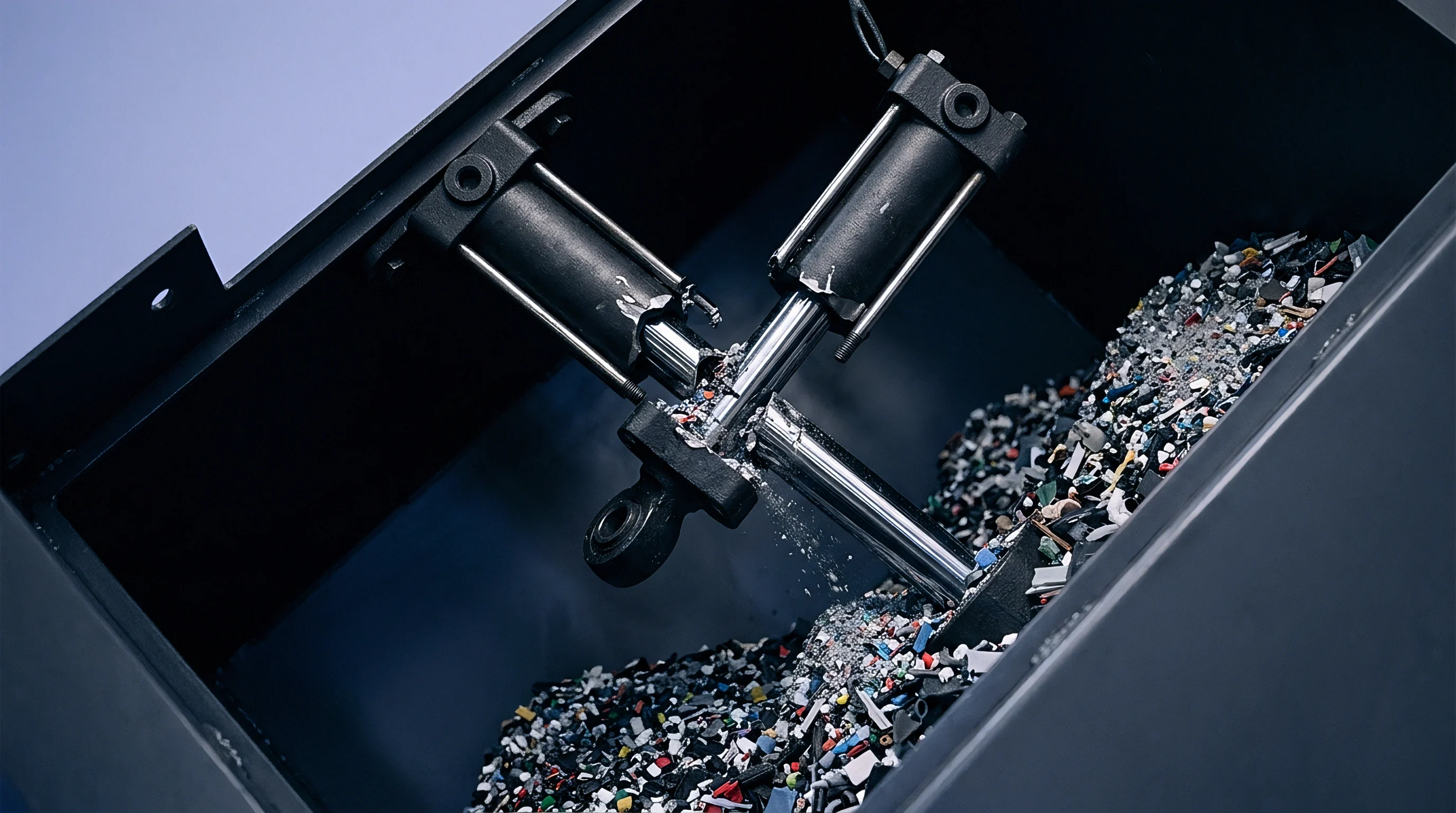
Extruder melt filtration screens remove non-melting solid contaminants such as metal fragments, glass, and cross-linked gels. Continuous dual-piston screen changers with mesh sizes down to 70 microns trap these inclusions without interrupting melt flow pressure. Because finer mesh sizes increase backpressure inside the extruder barrel ~ raising melt temperature and accelerating thermal degradation ~ compounders balance filtration efficiency against thermal stress by using multi-stage woven wire mesh setups that capture coarse debris before final fine-mesh filtration.
Compound suppliers frequently attribute color shifting and volatile odors to seasonal variations in municipal waste streams.

Rheology
Viscoelastic behavior in post-consumer high-density polyethylene reflects the thermal stress accumulated across initial conversion and subsequent recycling loops. Melt flow rate testing per ISO 1133 under standard conditions of 190 degrees Celsius and 2.16 kg load provides a baseline index of average molecular weight, while high load melt index measurements using a 21.6 kg load at 190 degrees Celsius reveal subtle shifts in long-chain branching and high molecular weight tails. Calculating the melt flow ratio between the 21.6 kg and 2.16 kg loads quantifies molecular weight distribution breadth without resorting to dilute solution viscometry or gel permeation chromatography.

Melt Flow Rates and Load Ratio Indices
Mechanical recycling exposes polyolefins to thermo-mechanical shear forces that cause simultaneous chain scission and thermal cross-linking. Chain scission dominates in linear low-density fractions, reducing average molecular weight and increasing the melt flow rate. Conversely, cross-linking predominates in high-density fractions subjected to repeated processing without adequate primary antioxidant stabilization.
This cross-linking increases zero-shear melt viscosity and introduces elastic melt yield stresses that cause surface roughness during high-speed extrusion blow molding, making melt flow rate stability the main indicator of polymer degradation.
- Uncontrolled viscosity variation alters mold cavity filling rates, causing wall thickness to vary across consecutive blow-molded containers.
- Environmental stress crack resistance drop occurs as polymer chain scission reduces the inter-crystalline tie molecules that anchor lamellar crystallites together.
- Die swell inconsistency disrupts automated parison programming, creating localized structural weaknesses in bottle necks and bottom pinch-off seams.
- Premature thermal oxidative degradation depletes active hindered phenol and phosphite stabilizer packages, leaving the resin vulnerable during conversion.

Thermal Degradation Mechanics and Chain Scission
Oxidative degradation during post-consumer re-processing generates hydroperoxide groups along the polyethylene backbone. Thermal decomposition of these hydroperoxides yields alkoxy radicals that undergo beta-scission, forming carbonyl groups, terminal vinyl unsaturations, and lower molecular weight fragments. Fourier-transform infrared spectroscopy tracks carbonyl index growth between 1710 and 1740 wavenumbers, quantifying cumulative thermal damage across recycling cycles as regrind accumulation alters melt flow.
Secondary antioxidants such as tris(2,4-di-tert-butylphenyl)phosphite prevent hydroperoxide breakdown, preserving molecular weight during melt compounding.
Higher MFI variance across lot shipments accelerates die swell fluctuations and wall thickness instability during blow molding.
Rotational rheometers operating in small-amplitude oscillatory shear mode measure storage modulus, loss modulus, and complex viscosity across dynamic frequency ranges. Cole-Cole plots of imaginary versus real viscosity highlight structural heterogeneity stemming from cross-linked gels or immiscible polymer contamination. High-frequency dynamic viscosity measurements track changes in short-chain branching, whereas low-frequency crossover modulus values quantify molecular weight distribution breadth.
While a broader molecular weight distribution improves melt strength during blow molding, it also narrows the acceptable processing temperature window.


Contamination
Impurities introduced during post-consumer waste collection alter both phase morphology and mechanical integrity in recycled polyolefin compounds. Polypropylene is the main polymer phase contaminant in high-density polyethylene streams owing to overlapping density ranges and incomplete automated sorting. During solidification, polypropylene forms distinct immiscible domains within the polyethylene matrix because the two polymers have positive thermodynamic free energies of mixing.
These uncompatibilized domains act as micro-scale stress concentrators, leading to sudden loss of impact strength under mechanical loads.

Cross-Polymer Phase Separation and Polypropylene Impurities
Differential scanning calorimetry per ISO 11357-3 identifies polypropylene contamination at low concentrations by detecting endothermic melting peaks around 160 to 168 degrees Celsius during dynamic thermal scans, distinct from the characteristic polyethylene melting endotherm between 128 and 136 degrees Celsius. Quantifying the enthalpy of fusion for the polypropylene peak gives the exact weight percentage of polypropylene contamination present. Adding block copolymers, such as ethylene-propylene rubber or hydrogenated styrene-butadiene block copolymers, lowers interfacial tension between the immiscible phases, partially restoring notched impact resistance.
Differential scanning calorimetry per ISO 11357-3 identifies polypropylene contamination down to 0.5 weight percent by measuring endothermic melting peaks at 165 degrees Celsius during a 10 degree per minute heating ramp.
Inorganic contaminants such as calcium carbonate, talc, titanium dioxide, and residual silica originate from mineral fillers, pigments, and ambient dirt. Ash content testing per ISO 3451-1 relies on thermal muffle furnace calcination at 600 degrees Celsius to burn off organic polymer structures, leaving non-combustible inorganic residues behind. Elevated ash levels increase compound density, alter melt heat capacity, and cause severe abrasive wear on extruder screws and tooling surfaces.
Thermogravimetric analysis under nitrogen and oxygen atmospheres separates carbon black content from mineral filler fractions.
| Contaminant Class | Primary Standard Method | Analytical Detection Equipment | Critical Performance Boundary |
|---|---|---|---|
| Polypropylene Residue | ISO 11357-3 Thermal Analysis | Differential Scanning Calorimeter | Melting peak area limit < 2.0% wt |
| Inorganic Fillers | ISO 3451-1 Ash Determination | High-Temperature Muffle Furnace | Calcined ash mass fraction < 0.5% wt |
| Volatile Organic Compounds | VDA 277 Headspace Emissions | Gas Chromatograph / Mass Spectrometer | Total carbon emissions < 50 ug C/g |
| Non-Polymer Solids | ISO 1133-2 Melt Filtration | Continuous Melt Pressure Filter | Pressure differential spike < 15 bar |

Analytical Methodologies for Volatile and Inorganic Contaminants
Non-intentionally added substances (NIAS) include volatile organic compounds, degradation products, residual monomers, and environmental contaminants absorbed during consumer use. Gas chromatography coupled with mass spectrometry and headspace sampling screens recycled pellets for volatile migrants such as limonene, pinene, and degradation aldehydes. Limonene absorbed from household detergents often persists through washing, imparting citrus odors to recycled packaging.
Advanced decontamination relies on high-vacuum degassing extruders to drop volatile organic compound levels below sensory perception thresholds, though processors remain uncertain whether chemical recycling additives can neutralize cross-linked rubber contaminants without degrading the parent polymer’s tensile properties.


Traceability
Verifying post-consumer content percentages relies on chain of custody documentation backed by third-party site audits. Chain of custody models split broadly into physical segregation and mass balance accounting. Physical segregation requires total isolation of post-consumer waste streams throughout collection, washing, compounding, and converting.
Mass balance accounting, by contrast, permits blending post-consumer recyclate with virgin feedstocks inside integrated chemical complexes, tracking recycled credits through administrative balance sheets.

Chain of Custody Accounting and Chain Audits
International Sustainability and Carbon Certification (ISCC PLUS) and RecyClass offer formal frameworks for verifying recycled content claims. ISCC PLUS relies on mass balance credit bookkeeping, requiring facilities to reconcile physical material inputs against output allocations over operational windows of at most thirty days. RecyClass certification emphasizes physical traceability along the mechanical recycling chain, verifying origin, wash process integrity, and exact physical inclusion percentages in final compounds.
- Chain of custody declaration confirms legal title transfers and documents origin credentials across every entity handling the material lot.
- Mass balance balance sheet logs total physical inputs of qualified post-consumer feedstock against certified credit sales to prevent double counting.
- Mass balance transfer certificate accompanies every commercial shipment, listing specific sustainability claims and certification registration numbers.
- Analytical batch test report provides chemical verification that physical shipments align with declared polymer composition parameters.
- Third party audit certificate demonstrates annual site compliance verification performed by accredited independent certification bodies.

Which Audit Models Confirm Physical Recyclate Percentage?
Physically verifying post-consumer content in converted plastic articles remains difficult because virgin and recycled polyolefins share nearly identical chemical structures. Standard analytical tools cannot differentiate virgin high-density polyethylene from clean post-consumer recyclate that lacks distinct degradation markers or additives. Carbon-14 isotopic analysis can distinguish bio-based polyolefins from fossil-derived resins, but it cannot separate virgin fossil polymer from post-consumer fossil polymer.
As a result, traceability relies heavily on unannounced site audits, mass balance reconciliation, and raw material purchase order verification. Standard purchase contracts incorporating ISCC PLUS clause 204.3 mandate immediate credit notes whenever mass balance audit credits exceed verified physical throughput.


Qualification
Incoming resin verification confirms whether delivered pellet lots match technical specifications before material is transferred into factory storage silos. Receiving inspection plans use statistical sampling protocols per ISO 2859-1 to determine sample sizes and acceptance quality limits (AQL). Core samplers draw representative pellet samples across multiple depth layers within gaylord boxes, sea bulk containers, or silotruck compartments, as unrepresentative sampling masks lot-to-lot variance and allows off-spec resin to enter production lines and trigger molding failures.

Acceptance Sampling Protocols and Inspection Levels
Laboratory incoming tests evaluate melt flow rate, pellet bulk density, moisture content, and visual surface contamination before delivery trucks unload into main storage silos. Rapid near-infrared spectrometers screen incoming pellets against baseline material libraries, detecting gross resin substitutions or major polypropylene contamination within two minutes of sampling. If rapid screening indicates off-spec parameters, quality assurance teams place the shipment on administrative hold pending full analytical testing.
| Inspection Stage | Target Parameter | Test Method Standard | Acceptance Criterion | Defect Disposition |
|---|---|---|---|---|
| Dock Arrival | Surface Moisture | ISO 15512 Karl Fischer | < 0.05% weight | Reject Silo Discharge |
| Sampling Bay | Melt Flow Rate (190C/2.16kg) | ISO 1133 Method B | Target +/- 15% | Quarantine Entire Shipment |
| Laboratory Pass | Polypropylene Content | ISO 11357-3 DSC Scan | < 1.5% peak mass | Downgrade Material Grade |
| Trial Run | Extrusion Pressure Variance | Internal Mold Trial | < 8.0% pressure drift | Return to Compounder |
Mechanical Property Deficits and Processing Trials
Mechanical verification testing relies on injection-molded test specimens produced from qualified lot samples. Tensile testing per ISO 527 measures yield stress, tensile modulus, and ultimate strain at break, while environmental stress crack resistance testing per ASTM D1693 subjects notched specimens in surface-active agents to elevated thermal stress, recording time-to-failure distributions. Recycled compounds often show lower stress crack resistance than virgin equivalents due to chain scission and residual surfactant contamination.
- Inspectors pull representative core samples from ten percent of gaylord boxes or bulk silo compartments following ISO 582 double sampling plans.
- Laboratory technicians execute melt flow rate testing at 190 degrees Celsius under 2.16 kg load to confirm batch viscosity compliance within plus or minus 15 percent of target grade specification.
- Technicians run differential scanning calorimetry thermal scans from 30 to 200 degrees Celsius to screen for unblended polypropylene contamination peaks.
- Extrusion trial runs measure die pressure, melt temperature variance, and motor load stability over a continuous two-hour production sequence.
- Quality assurance officers issue lot release certificates only after mechanical tensile bar tests meet minimum yield stress thresholds of 22 megapascals under ISO 527-2 testing conditions.
Full production trials validate material performance inside target tooling before final commercial lot sign-off. During trial runs, molders monitor extruder motor amperage, melt temperature stability, pressure drops across screen changers, and cycle time repeatability. Fluctuations in melt elasticity alter bottle wall distribution, creating thin corners that fail vertical drop impact tests.
Bypassing incoming melt index verification risks unpredictable wall thinning, elevated stress cracking, and costly batch recalls.


Margin
Financial returns on post-consumer resin integration depend on balancing raw material premiums against processing yields and finished part scrap rates. Certified post-consumer high-density polyethylene pellets often command commercial price premiums over prime virgin resin due to sorting, washing, and multi-stage extrusion decontamination costs. Purchasing decisions must therefore evaluate total landed cost per good part rather than relying strictly on delivered resin price per metric tonne.

Commercial Spreads and Scrap Yield Economics
Evaluating a 40-tonne order of blow molding grade high-density polyethylene compound containing 30 percent post-consumer recyclate illustrates the financial trade-offs between virgin resin parity and finished part costs. Virgin blow molding grade HDPE trades at 1,350 Euros per tonne, while certified high-purity post-consumer recyclate pellets trade at 1,520 Euros per tonne due to sorting and wash line energy overheads. At a nominal 30 percent blend, raw material pellet costs equal 1,401 Euros per tonne.
Unverified post-consumer recyclate containing 1.8 percent polypropylene contamination increases part wall variation, pushing molding scrap rates from 1.5 percent to 4.8 percent. On a 40-tonne processing run producing 800,000 unit bottle containers weighing 50 grams each, a 3.3 percentage point scrap increase generates 26,400 defective units. Reprocessing contaminated regrind degrades impact strength, forcing the plant to landfill scrap at a disposal cost of 90 Euros per tonne, bringing total scrap losses to 1,811 Euros across the lot.
Compounding verified recyclate with predictable melt rheology limits scrap to 1.5 percent, yielding net raw material savings of 1,240 Euros compared to processing unverified low-cost recyclate.
Recycled resin price formulas pegged to virgin contract settlements fail when regional supply crunches decouple post-consumer flake availability from virgin monomer dynamics.

Landed Cost Calculations for High-Recyclate Blow Molding
Regulatory penalty frameworks alter material economics across international packaging markets. Legislative mandates imposing statutory taxes on non-recycled plastic packaging incentivize brand owners to absorb short-term post-consumer resin price premiums. Packaging lines incorporating certified 30 percent post-consumer content avoid plastic packaging taxes levied at 200 Pounds sterling per tonne or 800 Euros per tonne across European jurisdictions.
Compliance savings directly offset higher compounding costs, establishing clear commercial parity for verified post-consumer resin blends. Factoring regulatory plastic packaging tax exemptions into net resin pricing shifts the commercial advantage toward verified high-content post-consumer compounds.