Managing Post Crystallization Dimensional Drift in Unreinforced Polypropylene Parts across Climate Zones
Stabilize unreinforced PP dimensional drift by maximizing in-mold crystallization via hot tooling and extended pack, then conditioning parts prior to inspection.
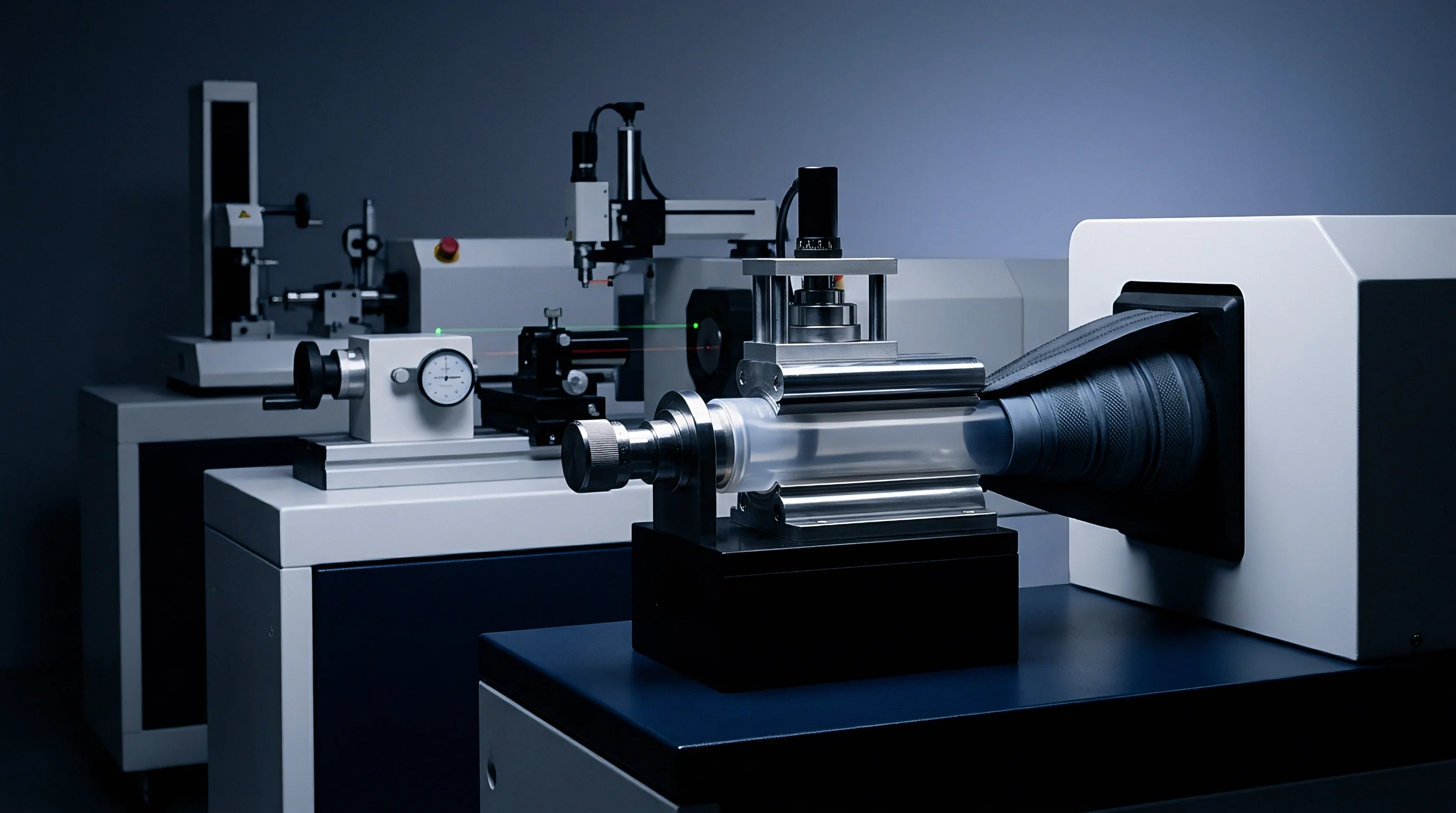

Kinetics
Unreinforced polypropylene parts undergo a structural phase transformation that continues for hundreds of hours after ejection from the mold. Inside the tool, primary crystallization occurs rapidly as the melt drops below its crystalline melting point, driven by the nucleation and growth of polymer spherulites. Secondary crystallization then proceeds much more slowly in the solid state, as constrained amorphous chain segments align into adjacent crystal lamellae.
This ongoing structural rearrangement increases polymer density, contracting linear dimensions along both the molecular orientation axis and the transverse direction long after ejection.
Without comonomer units to disrupt chain packing, semi-crystalline homopolymer polypropylene has a higher potential for secondary crystallization than random or block copolymers. Density shifts from roughly 0.900 grams per cubic centimeter at ejection to 0.912 grams per cubic centimeter once fully stabilized. This density rise correlates directly with volumetric shrinkage, which ranges between 1.5 percent and 2.2 percent depending on processing conditions and molecular weight distribution.
Under typical molding conditions, alpha-phase monoclinic crystals dominate, though rapid cooling near cavity surfaces can induce pseudo-hexagonal beta-phase structures with lower density and distinct thermal stability profiles. Over time, or under elevated ambient temperatures, these metastable phases slowly transform toward the equilibrium alpha crystal structure, causing further dimensional change.
Density increases from 0.900 to 0.914 grams per cubic centimeter within 168 hours of press ejection under standard ambient conditions.
Physical aging in amorphous regions accompanies this secondary crystal growth. Below the alpha relaxation temperature, structural relaxation reduces free volume, increasing yield strength while reducing impact resistance and altering part geometry. Chains trapped in non-equilibrium conformations during rapid quenching gradually relieve internal stresses, compounding overall dimensional loss.
| Polymer Structure | Ejection Density (g/cm³) | 24-Hour Density (g/cm³) | 168-Hour Density (g/cm³) | Total Post Shrinkage (%) |
|---|---|---|---|---|
| Homopolymer (MFR 12) | 0.898 | 0.908 | 0.914 | 0.45 – 0.65 |
| Impact Copolymer (MFR 8) | 0.895 | 0.903 | 0.908 | 0.30 – 0.50 |
| Random Copolymer (MFR 25) | 0.892 | 0.899 | 0.903 | 0.20 – 0.38 |
Post-mold contraction proceeds logarithmically over time. Roughly 85 to 90 percent of total post-crystallization shrinkage occurs within the first 24 hours after production. The remaining dimensional change accumulates over periods exceeding 1,000 hours, introducing measurement errors when inspecting parts shortly after ejection against drawings specified for fully stabilized components.
Residual thermodynamic forces continue to drive the transition between metastable beta spherulites and stable monoclinic crystals across multi-year field exposure.
Steel Cavity Adjustments
Toolmakers accommodate polypropylene post-crystallization contraction by scaling cavity steel dimensions beyond isotropic nominal shrink factors. Differential shrinkage between the flow direction and cross-flow direction complicates tool design, as molecular alignment during filling causes greater shrinkage parallel to polymer orientation. Steel sizing calculations that rely on single-value shrinkage tables lead to out-of-round features, bowing on flat surfaces, and localized wall thinning.
Cooling circuit design dictates how uniformly crystals form across part cross-sections. Unequal heat extraction between cavity and core halves creates asymmetrical crystallization rates, forcing the slower-cooled side to develop higher final crystallinity and higher local shrinkage. This thermal balance determines whether a flat panel remains planar or warps after room temperature conditioning.
- Core temperature balance dictates wall curvature by establishing identical cooling rates across opposite surfaces of the part geometry.
- Conformal cooling channels eliminate localized hot spots that otherwise prolong secondary crystal growth near thick ribs and boss intersections.
- Gate size sizing prevents premature gate freeze, enabling pack pressure delivery to feed core volumetric contraction during early cooling.
- Ejection pin distribution prevents mechanical distortion of warm, low-crystallinity parts during mechanical removal from the tool.
Shrinkage anisotropy is particularly pronounced in thin-wall sections where high shear rates induce strong molecular orientation along flow paths. Core-side mold temperature overrides skin-side temperature in driving part distortion whenever thermal differentials exceed ten degrees Celsius across the parting line. Tool steel dimensions must therefore incorporate localized shrinkage variations derived from filling simulations rather than uniform volumetric scaling.
Ignoring differential shrinkage values between orthogonal axes during cavity machining results in scrap rates exceeding thirty percent upon final inspection.

Storage
Ambient thermal conditions during warehouse storage and transit alter the velocity of secondary crystallization in unreinforced polypropylene components. Glass transition temperature resides near minus ten degrees Celsius for homopolymers and minus twenty degrees Celsius for impact copolymers. Above these thresholds, polymer chains retain sufficient mobility to rearrange into crystalline lamellae.
Exposing newly molded parts to elevated temperatures in shipping containers or unconditioned warehouses accelerates secondary crystallization kinetics. A part stored at fifty degrees Celsius completes thirty days of room-temperature crystallization within forty-eight hours. Thermal energy overcomes steric hindrances in amorphous regions, enabling faster chain folding into lamellar structures and driving rapid dimensional loss.
| Climate Zone Designation | Temperature (°C) | Relative Humidity (%) | Volumetric Drift (%) | Stabilization Time (Hours) |
|---|---|---|---|---|
| Cold Climate (Zone I) | -20 | Ambient | 0.02 | 720 |
| Temperate (Zone II) | 23 | 50 | 0.35 | 168 |
| Tropical Hot/Humid (Zone IVb) | 40 | 90 | 0.58 | 36 |
| Extreme Hot Dry (Zone A) | 60 | 15 | 0.72 | 12 |
Sub-zero logistics routes halt chain mobility, effectively freezing post-crystallization progress. Parts shipped through arctic transit corridors retain unorganized amorphous zones throughout transport. Upon arrival in temperate assembly facilities, the sudden increase in ambient temperature triggers rapid latent crystallization, causing unexpected dimensional shrinkage during secondary assembly operations.
ISO 2233 standard conditioning protocols dictate dimensional sign-off only after temperature stabilization.
Attributing post-mold dimensional shift entirely to raw material thermal expansion coefficients ignores the irreversible density increases caused by physical aging and heat-accelerated secondary lamellar growth.

Transit Temperature and Post-Mold Shrinkage
Thermal energy supplied by high-ambient shipping environments provides the thermodynamic drive for amorphous chain segments to overcome potential energy barriers. The elevated kinetic state allows polymer chains to detach from disordered inter-spherulitic regions and integrate into existing crystalline arrays, permanently reducing part volume beyond reversible thermal expansion effects.

Gaging
Dimensional inspection protocols must account for time-dependent post-crystallization drift to achieve reproducible quality control data. Measuring unreinforced polypropylene components immediately after ejection produces artificially large dimensional readings that do not reflect final equilibrium states. Standardization requires strict conditioning intervals before placing parts on coordinate measuring machines.
DIN 16742 establishes tolerance group classifications for plastic moldings, placing unreinforced polypropylene within tolerance group TG6 or TG7 due to high semi-crystalline shrinkage variability. Standard dimensional verification requires part conditioning at twenty-three degrees Celsius and fifty percent relative humidity for a minimum of sixteen hours, with absolute stabilization achieved at one hundred sixty-eight hours.
| Nominal Dimension Range | Tolerance Group TG5 (Precision) | Tolerance Group TG6 (Standard) | Tolerance Group TG7 (Coarse) |
|---|---|---|---|
| 1 to 6 | ±0.10 | ±0.15 | ±0.25 |
| 6 to 30 | ±0.15 | ±0.25 | ±0.40 |
| 30 to 120 | ±0.25 | ±0.45 | ±0.70 |
| 120 to 400 | ±0.50 | ±0.85 | ±1.30 |
Fixtures designed for CMM holding must apply uniform, low clamping forces to prevent elastic deformation of lower-modulus polypropylene parts during scanning routines. Optical measurement systems eliminate physical contact forces but remain sensitive to part orientation and ambient thermal fluctuations during multi-point laser profiling.
Contracts specifying dimensional compliance under DIN 16742 Grade TG6 automatically invalidate quality rejections based on measurements performed within twenty-four hours of part production.

Envelope
Process parameter selection at the injection molding machine establishes baseline crystallinity and controls subsequent dimensional drift. Melt temperature, hold pressure, cushion volume, pack duration, and mold wall temperature interact to define the initial polymer morphology upon tool opening.
Increasing packing pressure forces additional polymer into the mold cavity to compensate for volumetric shrinkage during the fluid-to-solid phase transition. High pack pressure compresses the melt, increasing nucleation density and forming finer spherulitic structures that exhibit reduced post-mold dimensional shift. Hold duration must extend past gate seal to prevent polymer melt from backflowing into the runner system, which causes voids and uncontrolled volumetric contraction.
A gate seal study establishes the exact hold time threshold required to maximize cavity packing.
Mold temperature controls the cooling rate across the solidification window. Higher mold temperatures retard the quench rate, promoting higher initial in-mold crystallinity. This shifts dimensional shrinkage into the molding cycle, leaving less latent amorphous polymer available for post-mold secondary crystallization during downstream transport and storage.
- Perform a gate seal study by weighing parts at incremental hold times to pinpoint exact gate freeze.
- Set cavity surface temperature to the highest permissible limit that maintains target cycle time.
- Optimize pack pressure in small increments until part mass reaches a stable asymptote without inducing flash.
- Extend cooling duration to ensure structural core temperature drops below the effective glass transition point before mold opening.
- Verify cushion stability across shift changes to confirm consistent hydraulic pressure transfer into cavity core areas.
Thick wall features retain internal heat long after ejection, accelerating localized secondary crystallization. Optimizing press parameters stabilizes part mass, minimizes internal stress differentials, and restricts post-mold dimensional variance within defined tolerance limits.
Maximizing in-mold crystallization through elevated tool temperatures and extended pack times minimizes secondary dimensional drift after ejection.

Freight
Protecting part geometry through global supply chains requires explicit environmental controls within logistics contracts and shipping documentation. Shipping unreinforced polypropylene parts through fluctuating climate zones subjects cargo to extreme temperature cycling that rapidly alters physical dimensions before final assembly.
Logistics specifications must mandate climate-controlled maritime and overland transit options when part tolerances are tight. Insulated ocean container liners, temperature logging devices, and controlled ambient warehousing reduce exposure to heat spikes that trigger accelerated crystallization. Quality receiving departments should hold incoming shipments in staging areas at standard measurement temperatures for forty-eight hours prior to conducting dimensional acceptance audits.
Standard quality agreements must incorporate specific clauses detailing post-crystallization measurement windows, temperature control thresholds during transit, and clear risk transfer points. Supply chain documentation should explicitly state that dimensional non-conformance claims require verification using conditioning protocols outlined in international standard test procedures.
Receiving inspection personnel must log ambient container temperatures upon seal breach to validate environmental history prior to initiating part measurement routines. Thermal history records provide necessary evidence when resolving dimensional discrepancies between production facility origin inspection logs and destination dock acceptance checks. Establishing verified shipping profiles ensures components meet physical design requirements regardless of seasonal weather shifts across global logistics corridors.