Meaning
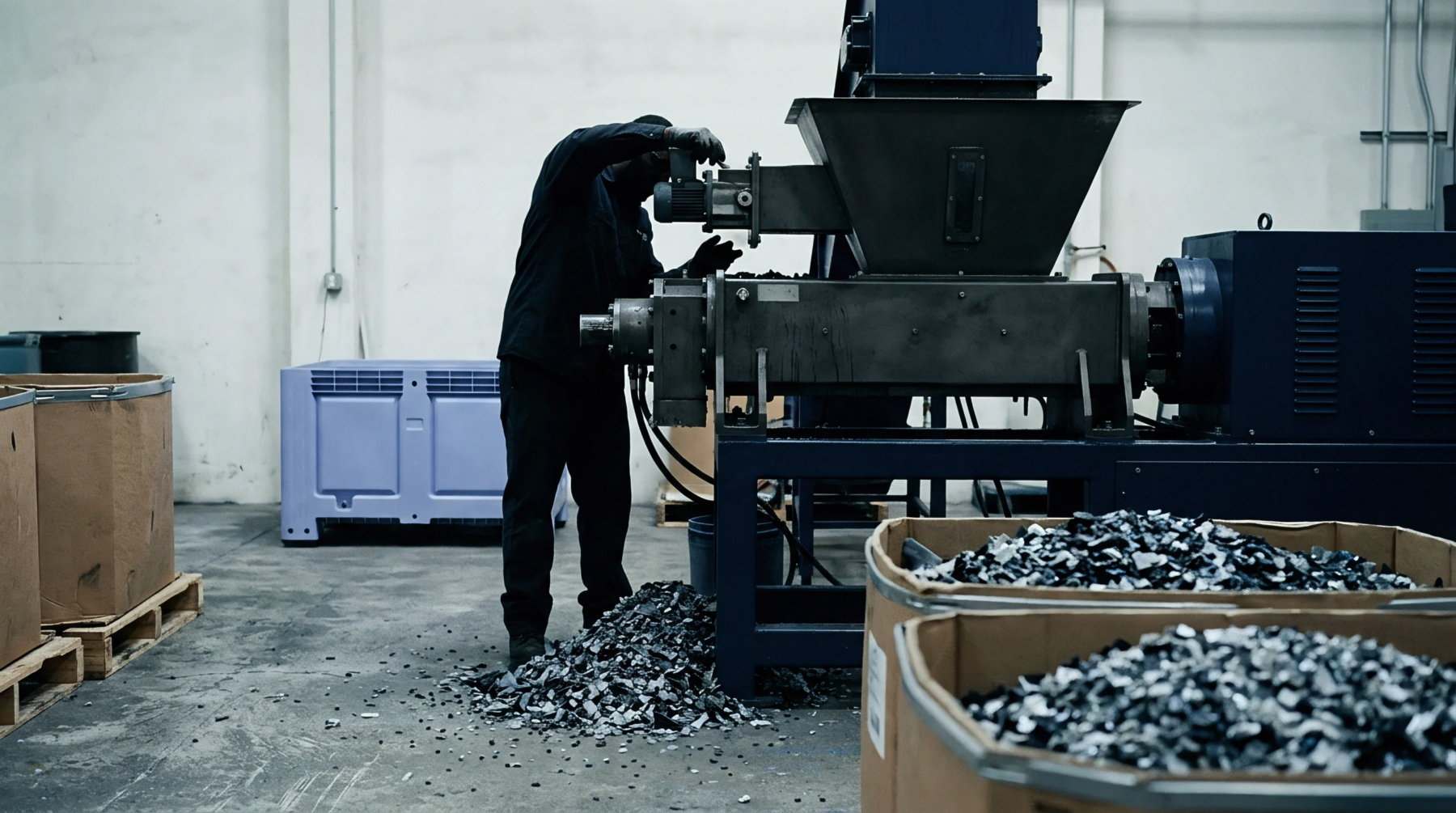
Foreign inclusions within a polyolefin feedstock alter the thermal crystallisation kinetics and mechanical strength of the resulting plastic matrix. Polypropylene contamination occurs when non-target polymers like polyethylene or inorganic materials are intermixed during post-consumer collection or regrind processing. Small fractions of incompatible polymers form immiscible domains that act as stress concentrators during mechanical loading.
The boundary of this condition extends to trace chemical additives, stopping at intentional copolymer blending where compatibilizers are active.
Phase Incompatibility
Immiscible polymer phases fail to form interfacial molecular entanglements during the cooling cycle. Interfacial tension between incompatible phases promotes phase separation, creating weak boundaries that initiate micro-cracks under impact loading. Polypropylene contamination lowers the tensile yield strength and clarity of extruded films, converting resin into low-grade utility stock.
Processing Disruption
Melt temperature discrepancies between the matrix resin and foreign contaminants disrupt continuous extrusion and injection cycles. High-melting inclusions like polyamides remain solid within the barrel, clogging nozzle orifices and scoring precision tool surfaces. Moulding shops using contaminated regrind experience unstable cavity filling times.
Quality Degradation
Part performance specifications demand clean feedstock to maintain predictable shrinkage and impact resistance. Unintended polymer blends cause severe delamination in containers, causing structural failure along stress lines. Continuous melt filtration removes solid particulates but cannot separate molten foreign polymers.