Polypropylene Copolymer versus Homopolymer Impact Resistance
Impact copolymers deliver superior notched and subzero impact resistance over homopolymers by incorporating a dispersed ethylene-propylene rubber phase.
Morphology
Propylene-based polymers show distinct mechanical behavior depending on how monomer units are arranged along the backbone chain. Homopolymer polypropylene consists of pure propene sequences joined in an isotactic stereospecific configuration. High isotacticity allows the chains to pack tightly into dense semi-crystalline domains, giving the material a high flexural modulus, elevated tensile strength, and high heat deflection temperatures.
Polypropylene homopolymer fractures cleanly under impact. While this crystalline structure resists deformation up to its melting point near 165 °C, it lacks intrinsic mechanisms to dissipate rapid mechanical energy. Under sudden kinetic impact, crack propagation occurs rapidly along spherulitic boundaries, particularly below the glass transition temperature of the matrix.
Random copolymers insert small fractions of ethylene comonomer ~ typically between 1.0% and 7.0% by weight ~ directly into the growing polypropylene chain during polymerization. Adding ethylene randomly disrupts the structural regularity of the isotactic propylene sequences, lowering overall crystallinity, shrinking spherulite size, and dropping the melting point to between 135 °C and 150 °C. Random copolymers achieve superior optical clarity and improved ductility compared to homopolymers. Because ethylene is distributed randomly along a single-phase backbone, these copolymers lack a discrete rubbery phase.
Room-temperature impact strength improves moderately over homopolymer grades, but subzero performance remains severely constrained by the single-phase glass transition temperature.
Impact copolymers, historically called block copolymers, use multi-stage synthesis to build a heterophasic architecture. Polypropylene homopolymer is synthesized in a primary reactor to form a semi-crystalline matrix, which then transfers to a secondary gas-phase reactor. There, ethylene and propylene copolymerize to form an amorphous ethylene-propylene rubber phase, often alongside semi-crystalline ethylene-rich sequences.
The final material features an isotactic polypropylene matrix filled with finely dispersed elastomeric domains. Rubber content ranges from 10% to over 35% by weight, depending on the required balance of stiffness and impact strength. Particle size, spatial distribution, and interfacial adhesion between these elastomeric domains and the matrix ultimately dictate how much kinetic energy the material can absorb during sudden impact events.
Monomer Distribution and Phase Structure
The molecular architecture of polypropylene resins depends heavily on whether Ziegler-Natta or metallocene catalyst systems are used. Ziegler-Natta catalysts produce chains with broader molecular weight distributions and subtle compositional variations across polymer fractions. Metallocene systems yield narrow molecular weight distributions and uniform comonomer insertion along the backbone.
In heterophasic impact copolymers, the secondary polymerization stage sets the intrinsic viscosity of the ethylene-propylene rubber phase relative to the matrix. If the intrinsic viscosity of the continuous homopolymer matrix and the dispersed rubber phase are mismatched, the rubber disperses poorly, creating large domain sizes that act as failure initiation sites.
Optimal impact toughness requires elastomeric domain sizes between 0.5 and 2.0 micrometers. Below 0.2 micrometers, inclusions fail to initiate localized shear yielding or micro-crazing in the matrix. Above 3.0 micrometers, the particles trigger premature void formation under low-strain mechanical loading.
Interfacial tension between the matrix and the rubber phase determines whether particles remain bound to the matrix during rapid deformation. Polypropylene formulations are evaluated by testing both phase morphology and mechanical response under specified rates of strain. The volume fraction of the rubber phase directly dictates the reduction in flexural modulus, creating an inverse relationship between mechanical stiffness and impact resistance.
| Resin Designation | Ethylene Content (wt%) | Melt Flow Rate (230 °C / 2.16 kg) | Tensile Modulus (MPa) | Notched Izod Impact (23 °C, kJ/m²) | Notched Izod Impact (-20 °C, kJ/m²) | Heat Deflection Temp (0.45 MPa, °C) |
|---|---|---|---|---|---|---|
| Homopolymer (hPP) | 0.0 | 12.0 g/10 min | 1550 | 3.5 | 1.8 | 110 |
| Random Copolymer (rPP) | 3.5 | 10.0 g/10 min | 1150 | 5.5 | 2.0 | 92 |
| Medium-Impact Copolymer (ICP) | 9.0 | 8.5 g/10 min | 1300 | 10.5 | 4.2 | 102 |
| High-Impact Copolymer (ICP) | 16.0 | 7.0 g/10 min | 1050 | 42.0 | 9.5 | 94 |
| Ultra-High Impact ICP + POE | 24.0 | 3.5 g/10 min | 820 | 65.0 (No Break) | 18.0 | 86 |
Phase architecture dictates every thermal and mechanical trade-off in downstream processing. Homopolymer polypropylene offers maximum structural rigidity and elevated thermal resistance, making it suitable for thin-wall packaging and high-temperature closures where impact loading is negligible. Random copolymers trade some stiffness for translucency and moderate toughness in medical devices and consumer containers, though they stay vulnerable to brittle fracture if dropped at cold temperatures.
Heterophasic impact copolymers give up clarity and tensile modulus to survive heavy mechanical shock. Compounding in polyolefin elastomers during secondary processing boosts cold impact properties further while lowering flexural modulus below 900 MPa.
The molecular weight distribution of the homopolymer matrix governs how efficiently the secondary rubber phase disperses during reactor synthesis. Broad molecular weight distributions improve melt strength and processability, but introduce local stress variations within molded components. Narrow molecular weight distribution polymers yield uniform matrix relaxation times, preventing orientation-induced mechanical weakness near injection gates.
Rubber content lowers flexural modulus. The precise ratio of ethylene to propylene within the elastomeric phase dictates the glass transition temperature of the rubber inclusions, establishing the lower thermal boundary for impact performance.
Modifiers designed to alter baseline impact copolymers frequently introduce third-phase components like plastomers or elastomeric modifiers. Ethylene-octene and ethylene-butene copolymers blend into the ethylene-propylene rubber inclusions or form an interpenetrating network inside the homopolymer matrix. This tertiary phase modification pushes the ductile-to-brittle transition temperature lower than standard reactor grades can reach.
Under high strain rates in cryogenic service, the resulting multi-phase compound absorbs impact energy through complex multi-axial deformation, suppressing catastrophic crack propagation.
Whether modern reactor configurations can consistently tailor rubber phase morphology at high melt flow rates without triggering phase inversion during high-shear injection moulding remains an open industrial question.


Notch
Geometric interruptions in molded parts concentrate applied force along the apex of local stress fields. A resin’s notched impact behavior defines its ability to withstand localized stress concentrations without undergoing premature catastrophic fracture. Standard test protocols ~ such as ISO 180 for Izod impact and ISO 179 for Charpy impact ~ use a machined or molded V-notch to measure crack initiation and propagation resistance.
A standard Type A notch features a 0.25 mm tip radius, creating intense triaxial stress vectors ahead of the crack tip during pendulum impact. Homopolymer polypropylene demonstrates extreme sensitivity to these geometric stress raisers due to its rigid crystalline structure and lack of internal toughening mechanisms.
Striking an unnotched homopolymer bar at room temperature yields moderate toughness, as the specimen absorbs kinetic energy across its full volume through uniform flexural deformation. Cutting a 0.25 mm notch into that bar concentrates the stress, dropping measured impact resistance from over 80 kJ/m² in unnotched testing down to 3.0 to 4.0 kJ/m² in notched testing. By preventing global yield elongation, the sharp notch forces the root region into rapid triaxial deformation; without an elastomeric phase to dissipate energy, microcracks form instantaneously at spherulitic boundaries and travel across the specimen cross-section at sonic velocities.
Impact copolymers alter this fracture mechanism fundamentally through rubber-assisted energy dissipation. Under pendulum impact loading, stress fields generated at the notch tip propagate until they encounter dispersed ethylene-propylene rubber particles. The lower shear modulus of the rubber inclusions causes them to act as internal stress concentrators on a microscopic scale.
This microscopic stress concentration triggers two distinct toughening phenomena: elastomeric domain cavitation and localized matrix shear yielding. Cavitation of the rubber particles relieves local triaxial stress around the notch root, converting it into a biaxial state that permits extensive plastic deformation of the surrounding homopolymer matrix.
Fracture Mechanics and Strain Rates
Energy absorbed during notched impact failure splits into crack initiation energy and crack propagation energy. In rigid homopolymers, crack initiation consumes almost the entire energy budget, with crack propagation requiring negligible additional work. In heterophasic copolymers, crack initiation demands substantially higher energy inputs due to localized rubber cavitation, while crack propagation is slowed by extensive micro-crazing and shear band formation.
Evaluating impact performance exclusively through unnotched test methods masks catastrophic failure risks in real-world parts containing sharp radius corners, internal ribs, or snap-fit assemblies.
- Mould test specimens according to ISO 294-1 specifications using controlled mold wall temperatures of 40 °C and fixed injection speeds to minimize internal residual stress distributions.
- Condition the molded test specimens at 23 °C and 50% relative humidity for a minimum of 40 hours prior to notch preparation to stabilize polymer crystallinity.
- Cut the V-notch using a single-tooth profile cutter adhering strictly to ISO 179-1 Type A specifications, maintaining a constant cutting speed to prevent local frictional heating and thermal annealing of the notch apex.
- Measure the residual depth beneath the notch root using an optical comparator to confirm compliance within a tolerance band of ±0.02 mm.
- Mount the notched specimen in the anvil of an automated pendulum impact tester calibrated to ISO 13802 standards, ensuring correct alignment relative to the striking edge.
- Release the pendulum hammer from a calibrated drop height to deliver a nominal impact velocity of 2.9 m/s or 3.8 m/s, recording the absorbed impact energy in kilojoules per square meter.
- Inspect the fracture surface under scanning electron microscopy to categorize the failure mode as brittle flat cleavage, hinged partial fracture, or ductile tear yielding.
Strain rate sensitivity dictates how polypropylene compounds respond during impact loading. Test protocols operating at pendulum velocities between 2.9 m/s and 3.8 m/s apply rapid strain rates that exceed the molecular relaxation times of the polymer chains. At high strain rates, homopolymer polypropylene chains cannot slip or disentangle quickly enough to accommodate the applied strain, leading to brittle chain scission and low absorbed energy.
Impact copolymers contain rubber phases that maintain localized chain mobility even at high deformation rates, enabling rapid craze termination before microcracks coalesce into a macroscopic failure front.
The notched impact resistance of an impact copolymer drops sharpest when the radius of an internal part corner falls below the radius of the test notch used to generate the material datasheet.
The notch root radius plays a major role in determining the transition from ductile to brittle fracture modes. A broad 1.0 mm radius (Type B notch) distributes stress over a larger volume of material, yielding elevated impact values even in medium-impact copolymer grades. Decreasing the radius to 0.10 mm creates severe stress concentration, inducing brittle fracture in grades that perform acceptably under standard 0.25 mm notch conditions.
Injection moulders and component designers must match the fillet radii of structural parts to the specific notch sensitivity of the selected resin, avoiding sharp internal angles that negate the toughening mechanisms of heterophasic copolymers.
Notch sensitivity varies inversely with test specimen thickness due to plane-stress to plane-strain transitions. In thin specimens, typically 2.0 mm thick, material near outer surfaces can deform freely under plane-stress conditions, producing lateral contraction and higher apparent toughness. Increasing specimen thickness to 4.0 mm or 6.4 mm constrains lateral contraction near the center of the part, establishing a dominant plane-strain state.
Plane strain suppresses matrix shear yielding and promotes rapid brittle crack propagation. Datasheet values generated on 3.2 mm test bars routinely overestimate the impact performance of thick-section industrial mouldings.
When part geometry contains internal corners sharper than the standard test notch radius, the material fails through brittle fracture regardless of the nominal Izod impact rating published on the supplier datasheet.


Frost
Thermal contraction alters the segmental mobility of polypropylene chains when ambient exposure drops below room conditions. Homopolymer polypropylene features a glass transition temperature (Tg) centered between -5 °C and +5 °C. When operating temperatures drop below this thermal range, the amorphous regions between crystalline lamellae transition from a flexible rubbery state into a rigid glass state. Below its glass transition temperature, homopolymer polypropylene loses its ability to undergo localized segmental motion under mechanical stress.
The material becomes extremely brittle, exhibiting notched Izod impact values below 2.0 kJ/m² and failing via catastrophic shatter under minor mechanical impacts.
Random copolymers lower the matrix glass transition temperature slightly, shifting it downward to a range between -2 °C and -8 °C due to the disruption of crystalline packing caused by ethylene comonomer units. This modest reduction provides negligible benefit in severe subzero applications. In cold storage logistics, automotive exterior components, and outdoor infrastructure, materials must endure high-velocity impacts at temperatures ranging from -20 °C down to -40 °C. At these subzero temperatures, random copolymers and homopolymers exhibit identical brittle shatter behavior, making them entirely unsuited for load-bearing cold impact duty.
Impact copolymers address subzero embrittlement through the distinct thermodynamic properties of their dispersed ethylene-propylene rubber phase. The amorphous ethylene-propylene rubber inclusions possess a secondary glass transition temperature positioned between -45 °C and -60 °C, depending on the ethylene content of the rubber phase. Between the matrix glass transition temperature of 0 °C and the rubber glass transition temperature of -50 °C, the homopolymer matrix becomes rigid while the dispersed rubber inclusions remain flexible and elastomeric.
Under low-temperature impact, these soft elastomeric particles continue to cavitate and initiate localized micro-yielding within the glass-state matrix, absorbing kinetic energy and preventing brittle crack propagation.

Can Nucleating Agents Narrow Impact Differences under Subzero Loading?
Nucleating agents alter the crystallization kinetics of polypropylene by providing heterogeneous sites for crystal growth. Advanced nucleating agents, including dibenzylidene sorbitol derivatives, organophosphate salts, and dicarboxylic acid salts, increase the crystallization temperature (Tc) from approximately 110 °C to over 125 °C. This elevation in crystallization temperature promotes the formation of smaller, more uniform spherulites throughout the matrix. Smaller spherulites reduce the width of the amorphous inter-spherulitic boundaries where cracks preferentially initiate, modestly improving the intrinsic toughness of the homopolymer matrix at room temperature.
At subzero temperatures below the matrix glass transition temperature, the toughening effect of nucleating agents on homopolymer polypropylene becomes ineffective. Microcracks propagate through the glassy amorphous phase regardless of spherulite refinement. Beta-nucleating agents, which induce the formation of the hexagonal beta crystalline polymorph instead of the standard monoclinic alpha polymorph, provide higher energy dissipation due to the plastic transformation of beta-crystals into alpha-crystals under mechanical elongation.
Beta-nucleated homopolymers demonstrate improved notched impact values at 0 °C, but their impact resistance degrades at -20 °C compared to standard heterophasic impact copolymers with dedicated elastomeric phases.
| Resin Grade | Test Temp (°C) | Peak Force (N) | Total Energy Absorbed (J) | Puncture Energy (J) | Failure Mode |
|---|---|---|---|---|---|
| Homopolymer (hPP) | +23 | 2800 | 12.5 | 11.0 | Ductile / Brittle Transition |
| Homopolymer (hPP) | 0 | 3100 | 3.5 | 2.8 | Brittle Shatter |
| Homopolymer (hPP) | -20 | 3400 | 1.8 | 1.2 | Brittle Shatter |
| Medium-Impact Copolymer | -20 | 2900 | 18.5 | 15.2 | Stable Ductile Tear |
| High-Impact Copolymer | -20 | 2600 | 28.0 | 24.5 | Full Ductile Puncture |
| High-Impact Copolymer | -40 | 3100 | 14.2 | 10.8 | Brittle / Ductile Transition |
| Ultra-High Impact ICP + POE | -40 | 2750 | 32.5 | 29.0 | Full Ductile Puncture |
Instrumented falling dart impact testing according to ISO 6603-2 or ASTM D3763 provides a complete force-deflection record during high-velocity puncture impact events. Unlike pendulum tests that measure total absorbed energy on notched bars, instrumented drop-weight impact evaluates multiaxial energy dissipation in two-dimensional plaque geometries. The test records peak force, energy at peak force, and total energy absorbed up to complete failure.
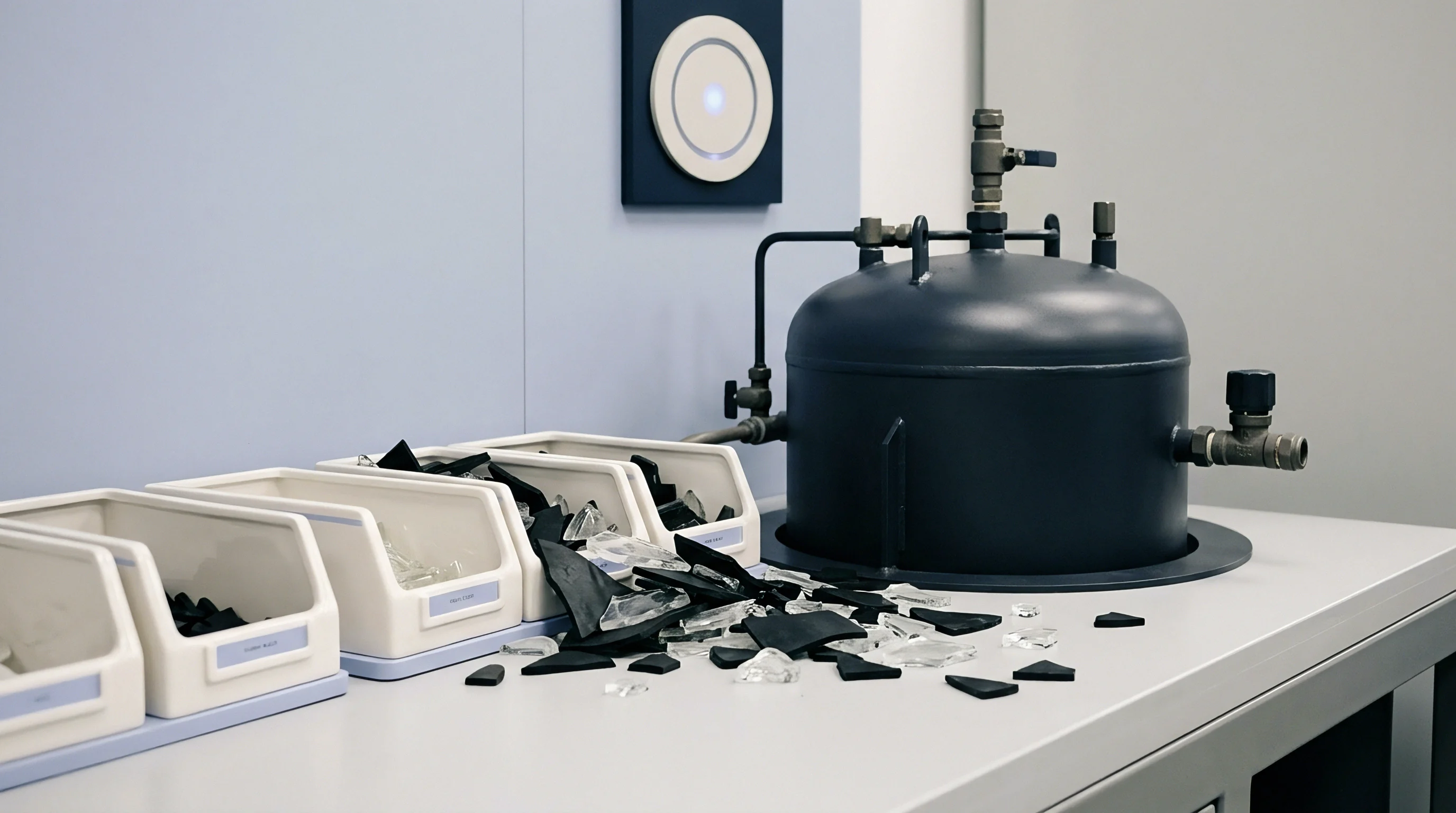
Under low-temperature testing at -20 °C, homopolymers exhibit a sudden drop in force immediately after reaching their elastic deformation limit, yielding catastrophic brittle shatter with energy absorption under 2.0 Joules.
An impact copolymer formulation exhibiting 28 Joules total energy absorption at -20 °C under ISO 6603-2 multiaxial puncture testing will lose over 50% of its energy absorption capacity if the ethylene content of the secondary rubber phase drops below 35% by weight.
High-speed video capture during subzero instrumented impact tests reveals distinct failure morphologies across different resin compositions. Homopolymers fragment into multiple sharp shards, driven by high elastic strain energy release ahead of the crack tip. Random copolymers show identical fragmentation patterns below -10 °C. Heterophasic impact copolymers absorb kinetic energy through extensive localized yield whitening, forming a tough puncture hole without splintering.
The presence of stress whitening indicates microscopic rubber cavitation and matrix shear yielding, confirming that energy dissipation mechanisms remained active during high-velocity subzero impact.
The balance of ethylene and propylene within the rubber phase controls low-temperature performance limits. If the ethylene content in the ethylene-propylene rubber phase is too high, exceeding 60% by weight, ethylene sequences tend to crystallize into polyethylene-like domains. These crystalline rubber domains increase the effective glass transition temperature of the inclusion phase to -15 °C, rendering the compound brittle in subzero service conditions.
Optimum cold impact performance requires an amorphous rubber phase with ethylene content maintained strictly between 40% and 50% by weight, preserving an ultra-low glass transition temperature near -55 °C.
Selecting a homopolymer resin for cold-chain logistics containers based strictly on ambient room temperature drop test data results in catastrophic field failures, container cracking, and product loss when operating temperatures drop below the glass transition point of the matrix resin.
Extrusion
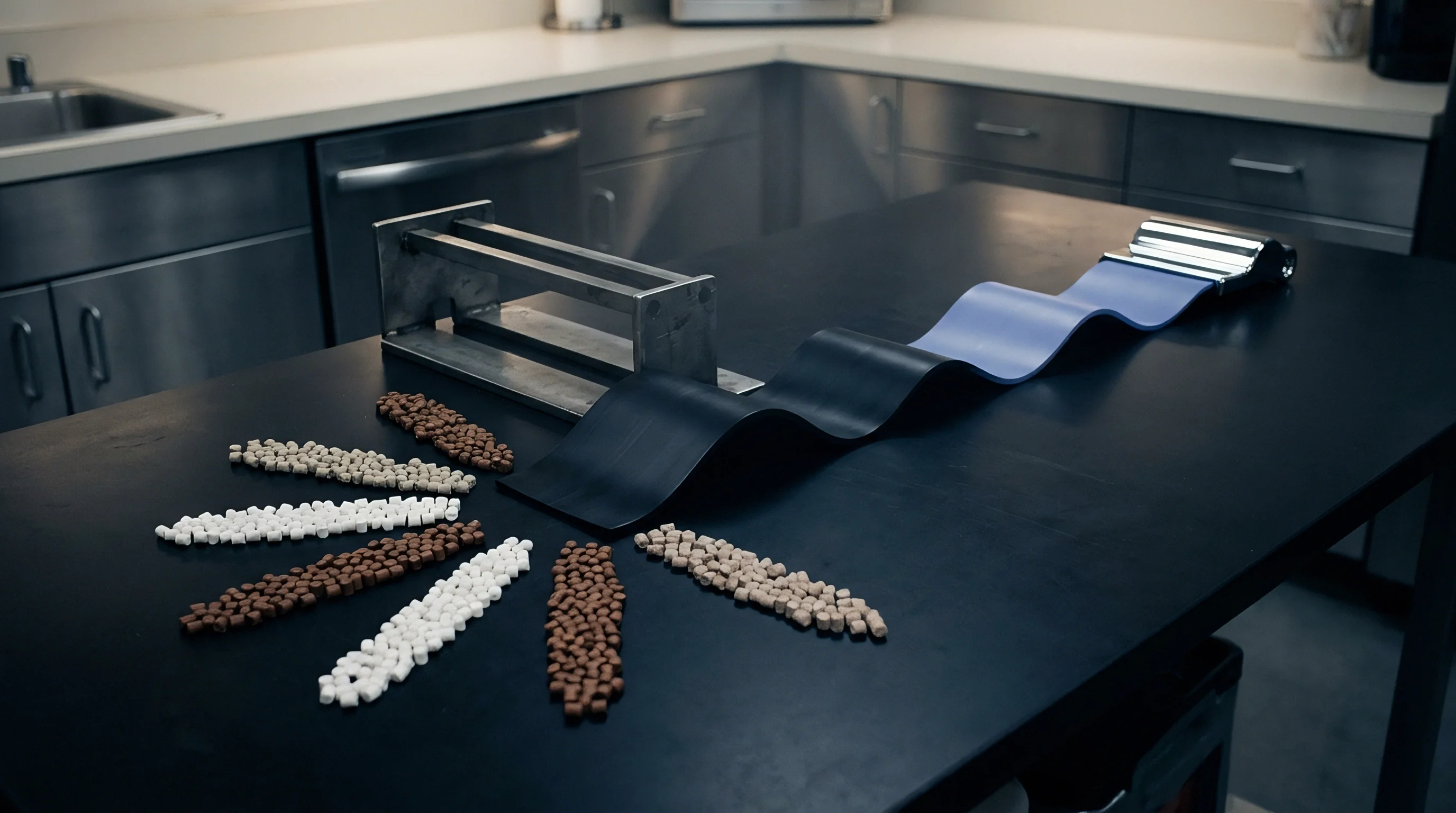
Thermal and mechanical energy imparted by continuous screw plasticization reshapes the physical properties of polyolefin compounds. Compounding and extrusion conversion processes alter the molecular weight distribution and phase morphology of both homopolymers and copolymers. During twin-screw extrusion compounding, high shear rates and thermal exposure can induce chain scission within the isotactic polypropylene matrix.
Chain scission elevates the melt flow rate (MFR) while narrowing the molecular weight distribution. Visbreaking, achieved by adding organic peroxides such as 2,5-dimethyl-2,5-di(tert-butylperoxy)hexane during extrusion, degrades long polymer chains through free radical reactions.
Visbreaking homopolymers to achieve higher flow rates for thin-wall moulding reduces melt strength and slightly decreases unnotched impact resistance due to the loss of high molecular weight entanglements. In heterophasic impact copolymers, controlled rheology visbreaking presents severe technical complexities. Peroxides preferentially attack the polypropylene matrix while simultaneously inducing cross-linking or degradation within the ethylene-propylene rubber phase.
Uncontrolled peroxide visbreaking alters the viscosity ratio between the matrix and the rubber inclusions, causing rubber domains to coalesce into oversized agglomerates that degrade notched impact performance.
Extrusion compounding of filled polypropylene systems introduces further structural shifts. Incorporating mineral fillers, such as talc or calcium carbonate, increases flexural modulus and dimensional stability while compromising impact strength. Talc particles act as rigid stress concentrators that restrict matrix mobility.
Platelet orientation during extrusion aligns talc particles parallel to the melt flow direction, producing anisotropic impact performance. To offset filler-induced impact degradation, compounders add polyolefin elastomers (POE) or ethylene-propylene-diene monomer (EPDM) rubbers during extrusion plasticization, re-establishing a heterophasic rubber network within the heavily filled compound.
- Peroxide Over-Dosing Phase Coalescence Excess organic peroxide addition during visbreaking reduces matrix molecular weight excessively, causing dispersed rubber particles to coalesce into large agglomerates exceeding 5.0 micrometers, which severely reduces notched Izod impact strength.
- Thermal Degraded Matrix Embrittlement Extended residence times inside compounding barrels at temperatures above 260 °C cause thermal-oxidative degradation of the polypropylene matrix, destroying primary antioxidant packages and leading to premature embrittlement during field exposure.
- Moisture Induced Hydrolytic Filler Debonding Processing mineral-filled impact copolymers without pre-drying wet talc or calcium carbonate masterbatches causes void formation along particle-matrix interfaces, drastically increasing notch sensitivity and crack initiation susceptibility.
- Extrudate Shear Induced Phase Separation Exceeding critical shear stress limits inside extrusion die channels induces melt fracture and surface phase separation of elastomeric components, resulting in delamination and low impact resistance along part surfaces.
- Regrind Thermal History Accumulation Incorporating multiple-pass regrind introduces degraded lower molecular weight fractions and consumed stabilization packages, lowering the ductile-to-brittle transition temperature of the reprocessed material blend.
Maintaining thermal stability during extrusion demands sophisticated antioxidant systems. Primary hindered phenol antioxidants scavenge free radicals generated by thermal-mechanical shear, while secondary phosphite antioxidants decompose hydroperoxides before they can initiate chain scission. In heterophasic copolymers, antioxidant migration between the homopolymer matrix and the ethylene-propylene rubber phase influences long-term heat aging retention.
Antioxidants tend to solubilize preferentially within the amorphous rubber phase, leaving the semi-crystalline matrix vulnerable to thermo-oxidative degradation during high-temperature extrusion passes or prolonged thermal exposure.
Every compounding specification for heterophasic impact copolymers destined for high-rate extrusion conversion must state the maximum allowable change in melt flow rate post-processing, limiting MFR drift to within ±15% of the virgin resin baseline to prevent loss of rubber phase integrity.
Single-screw extrusion processing of sheet, pipe, and profile geometries relies on high melt strength to maintain dimensional stability upon leaving the die land. Homopolymer polypropylene grades with broad molecular weight distributions and low melt flow rates (MFR under 2.0 g/10 min) offer high zero-shear viscosity and pronounced strain hardening, preventing sag during cooling calibration. Heterophasic impact copolymers used in extrusion pipe applications provide high resistance to slow crack growth and rapid crack propagation.
The dispersed rubber phase arrests long-term environmental stress cracks, ensuring structural integrity under internal hydrostatic pressure over multi-decade service lifetimes.
Processing scrap and post-industrial regrind alters the delicate phase balance of impact copolymers. Repeated extrusion cycles generate thermo-mechanical stress that selectively degrades the longest polymer chains. As matrix viscosity decreases with successive heat histories, the domain size distribution of the dispersed rubber phase shifts.
Fine rubber dispersion coarsens, converting ductile failure modes into brittle fracture. Compounders managing regrind streams must monitor MFR drift and add secondary stabilization packages or virgin elastomer modifiers to maintain original impact performance limits.
Peroxide visbreaking a 2.0 MFR heterophasic copolymer up to a 30.0 MFR injection moulding grade degrades the rubber phase through free-radical cross-linking and phase agglomeration, rather than leaving cold impact performance unaffected.

Moulding
High-pressure conversion in closed cavity tooling introduces structural orientation that dictates isotropic performance. Injection moulding forces molten polypropylene through runners, gates, and narrow cavity channels at elevated shear rates. Near the mold walls, high shear stress aligns homopolymer polymer chains parallel to the flow vector, forming a highly oriented skin layer.
Near the center of the core region, lower shear rates permit random molecular relaxation before thermal crystallization solidifies the matrix. This skin-core structure produces anisotropic mechanical properties, yielding higher tensile strength along the flow direction and reduced impact resistance transverse to flow.
Heterophasic impact copolymers exhibit complex flow-induced phase orientation during moulding operations. Dispersed rubber domains elongate into micro-ellipsoids along high-shear flow lines, particularly near part surfaces and restricted sub-gates. Highly elongated rubber domains reduce their effective cross-sectional area perpendicular to potential crack fronts, decreasing their ability to initiate micro-crazing and shear yielding under lateral impact loads.
When two flow fronts meet inside a multi-cavity tool, the rubber domains align parallel to the weld line interface rather than crossing it, creating a plane of mechanical vulnerability.
| Material Grade | Test Orientation | Tensile Strength (MPa) | Weld Line Tensile Strength (MPa) | Notched Impact Parallel (kJ/m²) | Notched Impact Perpendicular (kJ/m²) | Weld Line Impact Retention (%) |
|---|---|---|---|---|---|---|
| Homopolymer (hPP) | Flow Direction | 36.5 | 22.0 | 3.8 | 2.9 | 52% |
| Random Copolymer | Flow Direction | 28.0 | 19.5 | 5.8 | 4.2 | 65% |
| Medium ICP | Flow Direction | 29.5 | 21.0 | 11.2 | 8.0 | 68% |
| High ICP | Flow Direction | 24.0 | 18.0 | 44.0 | 31.0 | 72% |
| High ICP + 20% Talc | Flow Direction | 31.0 | 17.0 | 6.5 | 4.1 | 42% |
Weld line performance represents a structural bottleneck in complex injection molded components. In homopolymers, polymer chains fail to interdiffuse fully across cold weld interfaces, reducing weld line yield strength to 50-60% of matrix baseline values. Impact copolymers maintain higher percentage retention of tensile strength at weld lines, but their weld line impact resistance remains severely compromised.
The exclusion of dispersed rubber domains from the immediate weld interface leaves a localized band of unreinforced homopolymer matrix, providing an easy path for crack propagation during localized impact.
Consider a post-mortem structural analysis of an injection molded logistics crate that failed cold drop testing from a height of 2.0 meters at -15 °C. The crate was originally specified in a high-impact copolymer with an MFR of 35 g/10 min to minimize cycle times in a thin-wall multi-cavity tool. To improve flow length and eliminate sink marks, the molder increased melt temperatures to 250 °C and maxed out injection speed. The high shear rate through thin 1.2 mm wall sections elongated the dispersed rubber particles into ultra-thin fibrils with aspect ratios exceeding 15:1.
When dropped on its corner, the impact force generated tensile stress perpendicular to the oriented rubber fibrils. The elongated rubber morphology failed to undergo cavitation, and crack propagation traveled along the unreinforced matrix boundaries between elongated fibrils, causing brittle splitting along the primary flow lines. An impact retention factor exceeding 0.78 occurs in high-rubber block copolymers at subzero temperatures only when processing parameters preserve spherical rubber domain morphology.

Resin Selection Protocol for Injection Moulding
- Melt Flow Rate Matching Match material MFR strictly to part wall thickness and flow length ratio, avoiding ultra-high MFR grades above 40 g/10 min where matrix entanglements are insufficient to retain high impact resistance.
- Gate Type and Location Optimization Position edge gates and valve gates to prevent weld line formation in primary load-bearing zones and high-impact drop contact areas.
- Mold Temperature Control Integration Maintain mold wall temperatures between 40 °C and 60 °C to allow controlled crystallization and minimize internal residual stress distributions.
- Shrinkage Anisotropy Compensation Account for differential shrinkage rates between flow and transverse directions, particularly in high-impact copolymers where rubber orientation increases cross-flow shrinkage variance.
Molded part specifications referencing ISO 19069-2 must explicitly mandate that weld line impact performance at -20 °C shall retain a minimum of 60% of the non-weld-line notched Izod impact value obtained from identical processing conditions.
Mold cooling rates directly govern crystal nucleation and lamellar packing within the homopolymer matrix phase. Rapid mold cooling using chilled water below 15 °C freezes the polymer melt rapidly, generating a high proportion of amorphous content and smaller spherulites. While this rapid quenching slightly improves impact resistance, it introduces high mold shrinkage variability and elevated internal molded-in stress.
Warmer mold temperatures near 60 °C yield higher crystallinity, increasing flexural modulus and heat resistance at the expense of impact toughness. Moulders must calibrate cooling schedules to balance dimensional tolerance retention against impact energy absorption requirements.
According to standard purchase contract terms governing automotive interior compounds, any resin substitution from a homopolymer to an impact copolymer that alters part shrinkage by more than 0.3% requires complete re-qualification of tool dimensions and air-bag deployment impact testing.

Arbitrage
Commercial valuations for polyolefin resins shift with monomer feedstock indexes, compounding complexity, and global freight tariffs. The pricing relationship between polypropylene homopolymers, random copolymers, and heterophasic impact copolymers reflects monomer costs and manufacturing complexity. Ethylene comonomer pricing acts as a primary cost driver.
Monomer polymerization requires multi-stage gas-phase reactors, double catalyst injection loops, and precise process controls to manage phase morphology. Consequently, heterophasic impact copolymers carry a consistent price premium over standard homopolymer grades, ranging from 80 to 220 USD per metric ton depending on regional market dynamics and ethylene contract settlements.
Feedstock economics link polypropylene pricing to steam cracker operation and refinery output streams. Naphtha-based steam crackers in Europe and Asia yield significant propylene co-product volumes, whereas ethane-based steam crackers in North America produce predominantly ethylene, driving regional variations in propylene-to-ethylene price spreads. Tracking feedstock pricing differentials across North America, Europe, and Asia helps forecast grade availability.
When monomer price spreads widen, resin producers alter reactor allocations, adjusting output toward high-margin impact copolymers or high-volume commodity homopolymers. Buyers must evaluate these feedstock dynamics to negotiate index-linked resin supply contracts effectively.
Global trade flow regulations and customs tariff classifications depend on precise chemical definitions. Standardized system customs codes differentiate between homopolymers and copolymers based on comonomer weight fractions. Under Harmonized System (HS) Code rules, sub-heading 3902.10 classifies polypropylene in primary forms containing 100% propene monomer units.
Sub-heading 3902.30 governs propylene copolymers, requiring verified analytical proof of ethylene or higher alpha-olefin comonomer content. Misclassifying an impact copolymer containing 8% ethylene as a homopolymer introduces customs compliance exposure, anti-dumping duties, and retroactive tax assessments during cross-border trade audits.
Volumetric yield calculations establish the true cost per part beyond simple price per kilogram resin quotes. Homopolymer polypropylene features a nominal density of approximately 0.900 to 0.905 g/cm³. Incorporating amorphous ethylene-propylene rubber phases lowers heterophasic copolymer density slightly to 0.895 to 0.900 g/cm³, yielding more molded parts per metric ton of raw material.
Conversely, adding mineral fillers like talc or calcium carbonate to recover lost stiffness increases compound density up to 1.15 g/cm³, reducing volumetric yield and raising the net material cost per finished unit despite a lower initial purchase price per kilogram.
Part structural design determines the total economic balance between homopolymer and impact copolymer selection. Designing a component using homopolymer polypropylene demands thicker wall sections, internal reinforcement ribs, and generous corner radii to prevent notch-sensitive brittle failure under physical shock. Utilizing an ultra-high-impact copolymer allows engineers to reduce wall thickness from 3.0 mm down to 2.0 mm while maintaining required drop impact performance limits.
Thin-walling reduces part weight by 33%, cuts injection moulding cycle time by 20%, and lowers overall manufacturing cost per part, offsetting the raw material price premium of the copolymer resin.
Scrap valuation and recyclate blending economics influence total lifecycle cost management. Clean post-industrial homopolymer scrap commands high market resale values due to its predictable melt rheology and compatibility with extrusion compounding streams. Mixed post-consumer polypropylene recyclate streams routinely contain unknown ratios of homopolymers, random copolymers, and impact copolymers.
Blending incompatible polypropylene phases creates macro-phase separation during melt re-processing, causing severe drop-impact failures in recycled content products unless compatibilized with dedicated block copolymer additives or virgin polyolefin elastomer modifiers.
Producers charge additional processing premiums for specialized reactor-grade impact copolymers featuring narrow molecular weight distributions, zero-peroxide visbreaking, or advanced nucleating packages. Premium impact grades tailored for cold-temperature automotive bumpers or thin-wall packaging command pricing up to 35% above commodity homopolymer baselines. Sourcing practices must evaluate whether part performance mandates high-cost reactor-grade impact copolymers or if a dry-blend of commodity homopolymer resin and secondary polyolefin elastomer modifier achieves equivalent field performance at lower landed costs.
Total cost of ownership models must incorporate field failure liabilities, warranty claims, and shipping container damage rates. Specifying a low-cost homopolymer resin for structural packaging operating in cold transport environments creates substantial downstream financial risk. A single cracked container in transit can destroy high-value contents, triggering customer penalties and brand damage that eclipse any initial savings achieved on resin purchase invoices.
Material specification lines written into RFQs must reflect full lifecycle exposure, balancing initial pellet cost against long-term mechanical reliability under real-world operating environments.