Sub Zero Polypropylene Grade Selection for Packaging Molders
Heterophasic polypropylene copolymers with controlled rubber dispersion prevent brittle container shattering during sub-zero cold chain transport and drop impact.

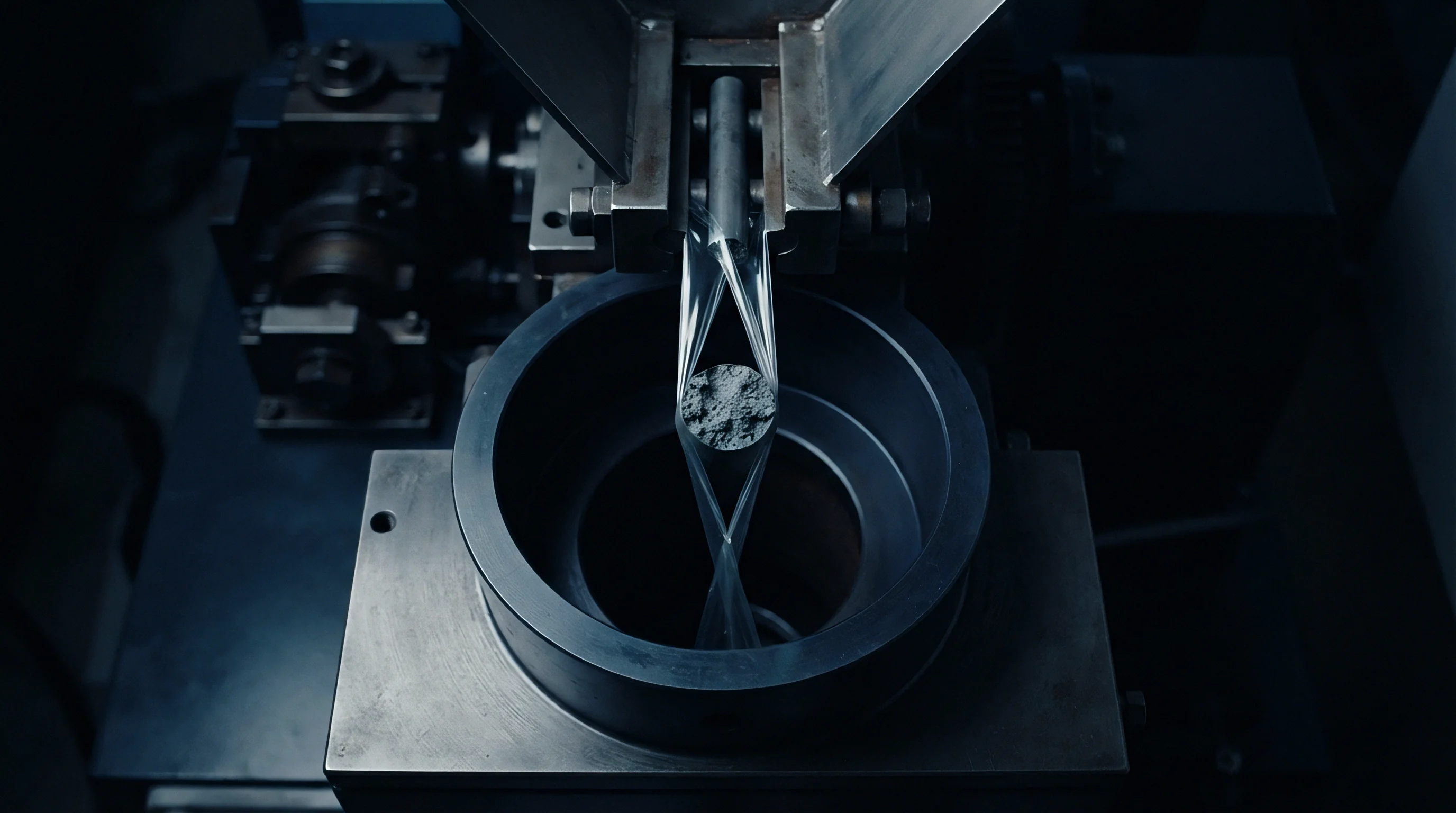
Duty
Thin-wall food tubs, ice cream containers, frozen protein trays, and pharmaceutical flip-top closures face heavy mechanical loads between minus twenty and minus forty degrees Celsius. Standard ambient packaging specs fail in commercial deep-freeze conditions. Polypropylene homopolymers undergo glass transition between zero and plus five degrees Celsius; below that range, amorphous polymer chains lose mobility and cannot deform plastically to absorb energy, turning drops, automated palletizing, or rough handling straight into brittle fractures.
Molders targeting sub-zero applications need resins that balance stiffness, processability, and cold toughness. High-speed injection moulding of thin-wall parts under zero point six millimeters demands high melt flow to fill long flow paths before quenching in the cavity. Pushing melt flow higher by lowering molecular weight, however, compromises impact strength, as shorter chains disentangle rapidly under stress and reduce the energy needed to initiate and propagate cracks.
Drop failures in frozen packaging lead directly to claims across the distribution chain. Cracked lids, broken bases, and split rims destroy hermetic seals, exposing product to oxidation, moisture loss, and freezer burn. Correcting cold brittleness with standard elastomeric additives frequently introduces longer cycle times, heavier parts, sidewall warping, and food-contact compliance issues.
Field failures highlight the clear trade-off between melt flow and impact resistance. A resin that easily fills an eight-cavity tool at low pressure can shatter if a container falls one point two meters off a conveyor at minus twenty degrees Celsius. Selecting the proper polypropylene requires evaluating thermal history, moulding shear rates, and physical stress points across the cold chain.
Charpy notched impact strength drops below 4.0 kJ/m² at -20°C for standard homopolymer polypropylene grades measured under ISO 179-1eA.
Part geometry compounds material limits under sub-zero stress. Sharp internal radii, gates, and thin rim transitions concentrate stress where microcracks form. At room temperature, localized yielding around a notch blunts crack growth, but in frozen storage, restricted chain mobility prevents that yield zone from forming.
Cracks then propagate near the material’s speed of sound, snapping structural ribs and stacking shoulders like glass.
Specifying resins solely from room-temperature datasheets risks severe failure claims during winter transit and cold storage. Field replacement costs far exceed the initial price premium for high-performance heterophasic impact copolymers.
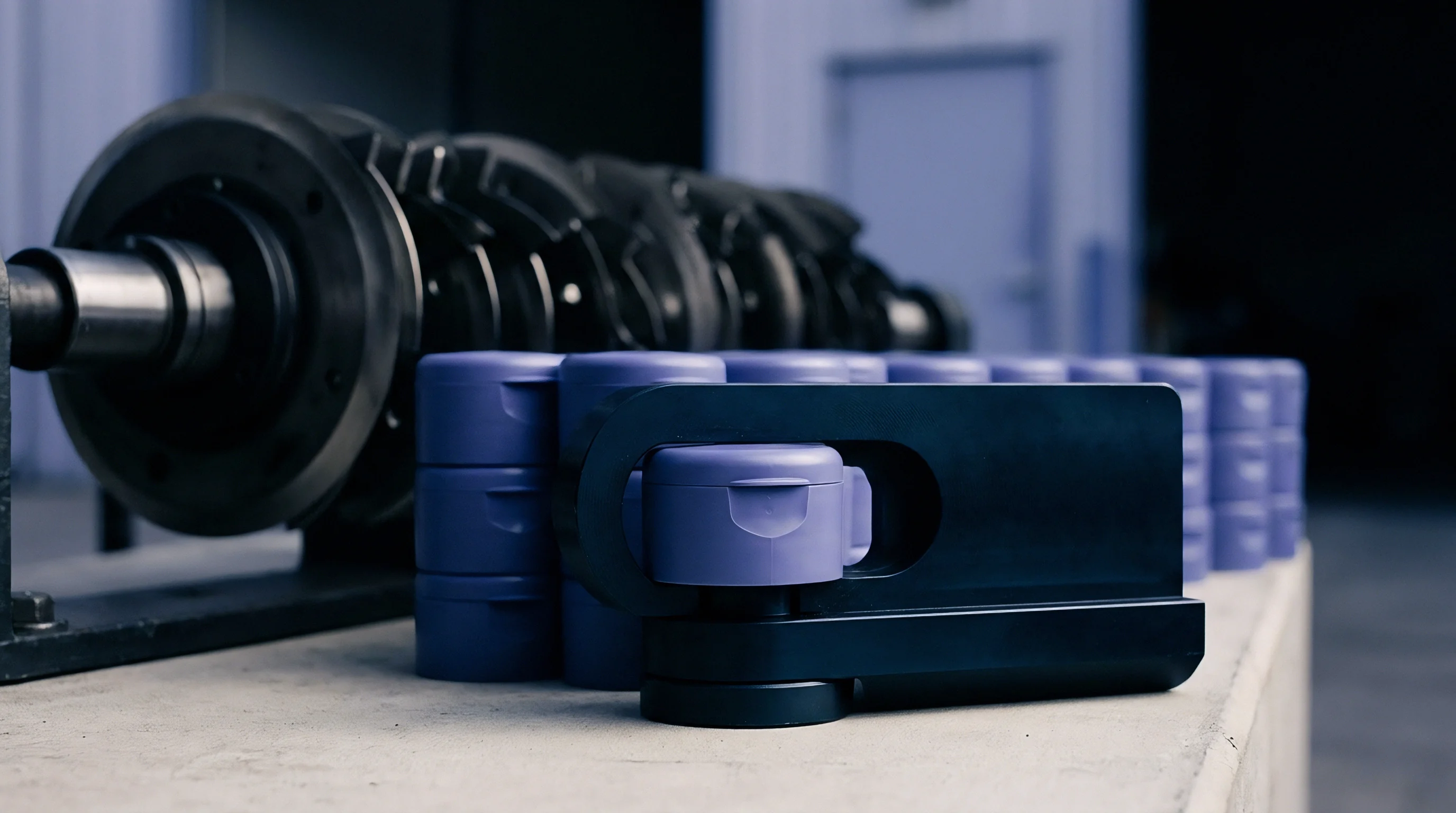
Architecture
Low-temperature performance is largely determined inside the polymerization reactor. Polypropylene fits three main structural classes: homopolymers, random copolymers, and heterophasic block copolymers. Homopolymers consist purely of propylene monomers in highly isotactic sequences; their high crystallinity yields strong tensile properties and flexural modulus, but leaves them susceptible to brittle failure below their glass transition temperature.
Random copolymers incorporate small amounts of ethylene ~ typically one to seven weight percent ~ into the backbone. Disrupting isotactic sequences lowers crystallinity, melting point, and optical haze. These grades improve clarity and maintain reasonable toughness down to zero degrees Celsius, but with glass transition remaining around minus five, they remain unsuitable for deep-freeze environments where impacts occur at minus twenty degrees Celsius.
Heterophasic polypropylene copolymers ~ commonly called impact copolymers ~ address sub-zero brittleness through a multi-phase structure produced in sequential reactors. The primary reactor synthesizes an isotactic homopolymer or random copolymer matrix, while the secondary reactor polymerizes an ethylene-propylene rubber phase dispersed throughout that semi-crystalline matrix. With a glass transition between minus forty-five and minus sixty degrees Celsius, this rubber phase retains flexibility in deep-freeze conditions.
Energy absorption depends heavily on rubber domain sizing and dispersion. Under impact, dispersed rubber droplets concentrate stress to initiate controlled micro-crazing and shear banding in the matrix. This localized yielding dissipates kinetic energy and prevents crack propagation through the wall.
Domain morphology hinges on interfacial tension between matrix and rubber, with optimal droplet diameters falling between zero point two and one point zero micrometers.
- Homopolymer chain rigidity prevents localized plastic deformation below zero degrees Celsius, driving clean brittle fractures across thin container walls.
- Coarse ethylene-propylene rubber domain sizing above two micrometers reduces interfacial area, allowing microcracks to merge into macro fractures.
- Excessive peroxide visbreaking degradation cuts high molecular weight matrix chains first, lowering entanglement density and energy absorption.
- Unfavorable molecular weight distribution skew causes processing instability in high-speed tools while lowering stress crack resistance under mechanical loads.
Ethylene content within the rubber phase governs both morphology and toughness. Lower ethylene levels yield an amorphous rubber that mixes cleanly with the matrix, producing small domain sizes and consistent low-temperature impact strength. Higher ethylene levels introduce semi-crystalline polyethylene segments that improve toughness at moderate cold, but risk phase coarsening and reduced impact resistance in deep-freeze settings.
Advances in reactor technology enable complex heterophasic structures featuring multimodal matrices and tailored rubber compositions. Bimodal matrix designs blend high molecular weight chains for strength with shorter chains for flowability, allowing suppliers to produce melt flow rates above sixty grams per ten minutes while preserving sub-zero notched impact strength.
| Polymer Architecture | Ethylene Content (wt%) | Melt Flow Rate (230°C/2.16kg) | Flexural Modulus (23°C, ISO 178) | Charpy Impact (-20°C, ISO 179-1eA) |
|---|---|---|---|---|
| Isotactic Homopolymer | 0.0 | 25 g/10min | 1550 MPa | 1.8 kJ/m² |
| Random Copolymer | 3.5 | 30 g/10min | 1050 MPa | 2.2 kJ/m² |
| Standard Heterophasic Copolymer | 8.5 | 45 g/10min | 1200 MPa | 6.5 kJ/m² |
| Advanced Reactor Impact Copolymer | 12.0 | 70 g/10min | 1100 MPa | 9.8 kJ/m² |
| Metallocene Heterophasic Copolymer | 10.5 | 100 g/10min | 1150 MPa | 8.2 kJ/m² |
Metallocene catalysts produce narrow molecular weight distributions and uniform comonomer placement. Heterophasic grades synthesized with metallocenes feature low extractables, minimal odor, and consistent rubber domain morphology, making them suitable for thin-wall food packaging requiring low odor, clarity, and performance at minus twenty degrees Celsius.
Claims that advanced nucleated random copolymers match heterophasic performance in freezer packaging fail under instrumented drop testing, where random copolymers shatter brittly once temperatures drop below their glass transition point.

Chill
Evaluating low-temperature limits requires testing mechanical properties across realistic thermal windows, as room-temperature datasheets provide little predictive value for freezer conditions. The ductile-to-brittle transition marks the point where a polymer stops deforming plastically and begins breaking cleanly. Keeping this transition temperature well below target distribution temperatures remains central to grade selection.
Charpy and Izod notched impact tests (ISO 179 and ISO 180) quantify high-strain energy absorption. While testing at plus twenty-three degrees Celsius establishes ambient benchmarks, tests at minus twenty and minus thirty degrees Celsius evaluate cold fracture performance. Heterophasic impact copolymers maintain energy absorption above six kilojoules per square meter at minus twenty degrees Celsius, whereas homopolymers drop below two kilojoules per square meter and snap cleanly.
Laboratory testing across multiple reactor-grade lots shows that notched impact numbers alone do not fully reflect multi-axial drop performance. Instrumented drop weight testing under ISO 6603-2 yields complete force-deflection curves at realistic impact speeds, capturing both the energy absorbed before crack initiation and the puncture energy required to drive failure through actual part geometry.

Do Nucleating Agents Shift the Ductile to Brittle Transition?
Alpha-nucleating agents accelerate crystallization, increase overall crystallinity, and refine spherulite size within the matrix. Smaller spherulites lower stress concentration at crystal boundaries, boosting flexural modulus and yield strength. Higher crystallization temperatures also reduce cooling times, improving moulding cycle efficiency.
The impact of nucleation on cold toughness depends on the base polymer architecture. In homopolymers, increased stiffness raises matrix rigidity, shifting the ductile-to-brittle transition to higher temperatures and reducing cold impact performance. In heterophasic copolymers, hyper-nucleators refine both spherulite size and rubber domain distribution; smaller spherulites lower localized stress during impact, allowing the rubber phase to absorb energy through crazing and shifting the transition down to minus thirty degrees Celsius.
Spherulite size directly affects impact performance. When spherulites grow to dimensions near the wavelength of visible light, their boundaries become weak points where sub-zero stress initiates microcracks. Hyper-nucleated heterophasic grades form dense, microscopic spherulite networks that distribute applied strain evenly across the part.
Finer rubber domain dispersion inside a polypropylene matrix consistently yields superior cold impact performance without destroying flexural modulus.
Dynamic mechanical thermal analysis (DMTA) tracks storage modulus, loss modulus, and tan delta from minus one hundred to plus one hundred degrees Celsius. Tan delta peaks identify glass transition points for each polymer phase. A typical heterophasic copolymer displays two distinct relaxation peaks: one near zero degrees Celsius for the semi-crystalline matrix, and another between minus forty-five and minus fifty-five degrees Celsius for the rubber phase.
Energy absorption at minus twenty degrees Celsius correlates directly with the height and width of the low-temperature tan delta peak. A broader, higher relaxation peak reflects greater energy dissipation during impacts. DMTA allows engineers to evaluate resin lots for cold-chain suitability before committing machine time to production.
Rubber domain spacing governs toughening, as keeping inter-particle distance below a critical threshold causes stress fields around adjacent droplets to overlap and trigger widespread shear yielding before brittle cracks spread.
Static freezer loading requires evaluating creep modulus alongside impact strength. Containers stacked four-high on pallets remain under constant compressive load for months at minus twenty-five degrees Celsius, where insufficient flexural creep modulus results in sidewall buckling, displaced lids, and stack failure.
Balancing stiffness and toughness requires careful optimization. Increasing rubber content improves impact resistance at minus thirty degrees Celsius but reduces flexural modulus, which may force molders to increase wall thickness to maintain top-load strength. The target grade satisfies three conditions: minimal wall thickness, required top-load capacity, and reliable drop performance.

Rheology
High-speed thin-wall moulding relies on melt flow rates between forty and one hundred twenty grams per ten minutes (230°C/2.16kg under ISO 1133). High flow enables rapid cavity filling below zero point five millimeters, moderating injection pressures and preventing premature freezing, though achieving this flow via standard visbreaking can compromise low-temperature properties.
Peroxide visbreaking (controlled rheology) degrades high molecular weight chains through free-radical scission, narrowing molecular weight distribution and lowering melt elasticity, die swell, and high-shear viscosity. Aggressive visbreaking of heterophasic copolymers, however, preferentially cleaves long matrix chains and disrupts rubber domain morphology. Over-visbroken resins suffer significant losses in sub-zero impact resistance as matrix chains disentangle and rubber domains coarsen.
Direct reactor-grade high-flow polymers synthesized with advanced catalysts achieve target melt flow rates while preserving high molecular weight tails. Bimodal or broad distributions shear-thin effectively above ten thousand reciprocal seconds during injection while retaining necessary chain entanglements in the solid state. Consequently, reactor grades retain far better energy absorption at minus twenty degrees Celsius than visbroken resins of matching melt flow rate.
Visbreaking reduces molecular chain length; when average molecular weight drops below critical entanglement thresholds, polymer chains slip past each other under cold stress, causing brittle fracture without plastic deformation.
Shear rate controls apparent viscosity inside thin-wall runners and gates, where shear rates frequently exceed fifty thousand reciprocal seconds and cause pseudoplastic melts to thin dramatically, filling long flow paths without elevated barrel temperatures that risk additive degradation.
Comparing peroxide-visbroken grades against reactor-made heterophasic materials on high-speed packaging lines reveals marked differences in gate-area impact retention. Visbroken grades frequently show localized brittleness adjacent to the gate, where extreme shear distorts rubber domain orientation and leaves residual stress trapped in the thin wall.
- Load the injection cylinder and stabilize temperature zones according to the recommended processing window for high melt flow copolymers.
- Record baseline hydraulic injection pressure across five consecutive full-shot production cycles at nominal wall thickness.
- Reduce cavity coolant temperature to standard operating levels while monitoring mold wall surface temperature via calibrated thermocouple sensors.
- Execute instrumented drop impact testing on ejected containers after a twenty-four hour thermal equilibration period at minus twenty degrees Celsius.
Melt elasticity and normal stress differences drive molecular orientation during filling. High melt elasticity aligns chains parallel to flow, inducing directional anisotropy in the finished part. While tensile and impact strength increase along the flow path, properties drop sharply in the transverse direction, causing anisotropic containers under sub-zero drop testing to split along flow-alignment lines.
| Grade Flow Character | MFR (230°C/2.16kg) | Shear Viscosity (10^4 s^-1) | Spiral Flow Length (0.5mm wall) | Sub-Zero Impact Retention (-20°C) |
|---|---|---|---|---|
| Visbroken Heterophasic | 70 g/10min | 12 Pa·s | 280 mm | 45% of ambient baseline |
| Reactor Bimodal HECO | 70 g/10min | 15 Pa·s | 270 mm | 82% of ambient baseline |
| Controlled Rheology HECO | 100 g/10min | 8 Pa·s | 330 mm | 30% of ambient baseline |
| Metallocene Reactor HECO | 110 g/10min | 9 Pa·s | 325 mm | 75% of ambient baseline |
Weld lines represent another frequent failure point in multi-gated tooling or parts with integrated handles and rim features. Where flow fronts meet, incomplete chain diffusion creates a boundary that concentrates stress at sub-zero temperatures. Maintaining adequate melt temperature at flow-front intersections promotes interdiffusion, reinforcing weld lines against impact during cold handling.
Wall thickness governs cooling rates. Ultra-thin sections cool at hundreds of degrees per second, quenching the melt so rapidly that non-equilibrium amorphous structures freeze with low crystallinity. Moderate cooling rates allow sufficient time for spherulite formation and clean rubber domain phase separation, improving sub-zero impact behavior.
Certifying melt flow rates under ISO 1133 Condition M at 230°C and 2.16 kg within a plus or minus ten percent tolerance band prevents automated injection pressure spiking.
Weld lines act as mechanical faults. When molders experience persistent drop failures along weld lines at low temperatures, adjusting gate placement or tool venting proves far more effective than additive adjustments, as weld line embrittlement stems directly from mold thermal and flow kinematics.
Polypropylene procurement contracts typically enforce tight rheological specifications. A standard clause dictates: Resin lots delivered under this agreement shall maintain a Melt Flow Rate within plus or minus seven percent of the baseline specification when tested per ISO 1133 at two hundred thirty degrees Celsius under a two point sixteen kilogram load, and any lot exceeding this variance shall be rejected to prevent automated injection pressure instability and cold drop failure variations across production shifts.

Compounding
Balancing high flow, high modulus, and sub-zero drop resistance requires precise compounding. Producers and compounders blend elastomeric impact modifiers, nucleating agents, antioxidants, and processing aids into base polypropylene resins to meet deep-freeze packaging requirements.
Polyolefin elastomers ~ including metallocene ethylene-octene and ethylene-butene copolymers ~ serve as primary impact modifiers in low-temperature formulations. Adding ten to twenty weight percent elastomer to a heterophasic or random copolymer matrix substantially improves impact strength at minus thirty degrees Celsius, as glass transition temperatures below minus fifty-five degrees Celsius keep these modifiers flexible in freezer conditions.
Effective elastomer modification requires matching melt viscosities between the polypropylene matrix and the rubber phase. If elastomer viscosity significantly exceeds matrix viscosity during twin-screw compounding, dispersion suffers, yielding coarse droplets over three micrometers that reduce interfacial contact area and compromise impact dissipation.
Residual peroxides degrade thermal stability, as unreacted free radicals from incomplete visbreaking react with secondary antioxidants during moulding, depleting the stabilizer package and exposing finished containers to long-term thermal oxidation.
Antioxidant systems in freezer-grade resins serve a dual purpose: protecting the melt during high-temperature moulding and preventing degradation during extended cold storage. Hindered phenol primary antioxidants paired with phosphite secondary antioxidants preserve molecular weight under shear, while sulfur-based thioesters provide additional defense against long-term thermo-oxidative stress.
- Stated melt flow rate window verified across incoming lot samples using standardized load and temperature conditions.
- Ethylene copolymer content verification confirmed via FTIR spectroscopy or NMR analysis to guarantee rubber phase concentration.
- Nucleation package efficiency factor measured via differential scanning calorimetry crystallization peak temperature elevation.
- Post-consumer recyclate contamination threshold controlled strictly to exclude homopolymer contamination that ruins sub-zero drop energy absorption.
Incorporating regrind introduces distinct risks in sub-zero packaging. Re-extruding sprues, runners, and rejected parts subjects the resin to extra thermal and shear stress, inducing chain scission and depleting antioxidant stabilizers. Exceeding fifteen percent regrind content in sub-zero formulations leads to a sharp decline in drop impact performance at minus twenty degrees Celsius.
Evaluating sub-zero packaging resins for high-speed lid lines involves monitoring antioxidant retention across repeated extrusion passes to ensure cumulative thermal history does not degrade low-temperature crack resistance in service.
Organoleptic performance remains essential in food packaging, where materials for dairy, ice cream, and frozen meals must not transfer volatiles, off-odors, or off-flavors to packaged contents. Peroxide residues, elastomer cross-linking byproducts, and antioxidant degradation species can migrate, triggering quality rejections. Low-odor, metallocene-catalyzed impact copolymers with low VOC profiles are specified where strict organoleptic requirements apply.
Internal stress locked in during rapid mold quenching often manifests over time. Under static stacking loads in frozen distribution centers, residual stress accelerates delayed brittle failure.
Questions remain whether chemically modified post-consumer polyolefin recyclates can achieve mechanical parity with virgin reactor-grade heterophasic copolymers in sub-zero food packaging without introducing organoleptic issues or crack propagation risks.
Docket
Commercial selection of sub-zero polypropylene grades requires balancing feedstock economics, import tariffs, quality verification, and regulatory compliance. Sourcing teams weigh technical performance against delivered resin costs per metric tonne and finished unit costs, as slight raw material price shifts significantly impact margins across high-volume production runs.
Global pricing for impact copolymers tracks monomer feedstock indexes, specifically polymer-grade propylene contract settlements. These prices adjust monthly based on regional cracker operation rates, propane dehydrogenation economics, and trade balances. High-impact sub-zero grades carry a premium over commodity homopolymers to cover secondary reactor processing, elastomer additives, and specialized nucleation packages.
Tracking contract-to-spot price spreads on high-impact heterophasic grades informs purchase timing and protects margins during volatile feedstock swings. Procurement teams establish multi-tiered pricing formulas tied to published monomer benchmarks to maintain transparent cost structures with brand owners.
Customs classifications determine tariff rates on international shipments. Harmonized System code 3902.10 covers homopolymer polypropylene, whereas code 3902.30 applies to propylene copolymers, including heterophasic sub-zero formulations. Misclassifying copolymer resins under homopolymer codes creates exposure to retroactive duties, penalties, and customs holds.
| Grade Sourcing Designation | Tariff Line (HS Code) | Typical Market Premium Over Homopolymer | Primary Food Contact Certification | Critical Acceptance Test Standard |
|---|---|---|---|---|
| Commodity Injection HECO | 3902.30.00 | +80 to +120 USD/MT | FDA 21 CFR 177.1520 / EU 10/2011 | ISO 1133 MFR Variance (< ±8%) |
| High-Flow Reactor HECO | 3902.30.00 | +150 to +220 USD/MT | FDA 21 CFR 177.1520 / EU 10/2011 | ISO 179-1eA Impact at -20°C |
| Metallocene Toughened HECO | 3902.30.00 | +280 to +380 USD/MT | EU 10/2011 low volatile statement | ISO 6603-2 Puncture Energy |
| POE Elastomer Modified Compound | 3902.30.00 | +450 to +600 USD/MT | Specific migration limit statement | Instrumented container drop test |
Food contact compliance is mandatory for freezer packaging resins. Materials in the United States must meet FDA regulation 21 CFR 177.1520 regarding maximum extractables in n-hexane and xylene, while European applications require compliance with EU Regulation 10/2011, maintaining overall migration below ten milligrams per square decimeter of food-contact surface.
Resin selection drives downstream yield, as selecting a grade based solely on raw resin price increases container breakage during cold distribution, erasing initial savings through chargebacks and warranty claims.
Incoming lot inspection provides the primary defense against container failures in the cold chain. Operations verify supplier Certificate of Analysis data against internal specifications before unloading railcars or bulk containers into silos. Standard testing across incoming lots includes melt flow rate, density, FTIR identity, crystallization temperature, and both ambient and low-temperature impact values.
Off-spec resin lots increase scrap rates and instability. Accepting shipments with wide melt flow variances forces operators to repeatedly adjust injection pressures and temperature profiles, introducing thermal variations that compromise sub-zero impact resistance in molded parts.
Sub-zero packaging failures appearing during distribution originate from resin grade misallocation during tool qualification rather than thermal stress alone.
Procurement contracts define formal dispute procedures for out-of-spec resin. Master agreements typically include technical non-conformity clauses: If incoming lot verification testing demonstrates a Charpy notched impact strength at minus twenty degrees Celsius below the agreed datasheet threshold minus five percent, the buyer retains the absolute right to reject the entire shipment lot at the seller expense, including all freight, demurrage, and silo decontamination costs incurred.
Technical qualification dossiers require long-term thermal stability data, environmental stress crack resistance, migration test results, and instrumented drop impact performance across operating temperatures. Combining rheological verification with commercial contract negotiation secures resin inventory capable of withstanding cold chain handling while controlling unit costs.