Chromatographic Mass Transfer Characterization for Sub-1000 Dalton Hydrocarbon Oligomers in Recycled Polyolefins
Chromatographic mass transfer characterization couples LC-GC-FID extraction with Fickian diffusion modeling to verify sub-1000 Dalton oligomers stay below 0.5 mg/kg.
Extract
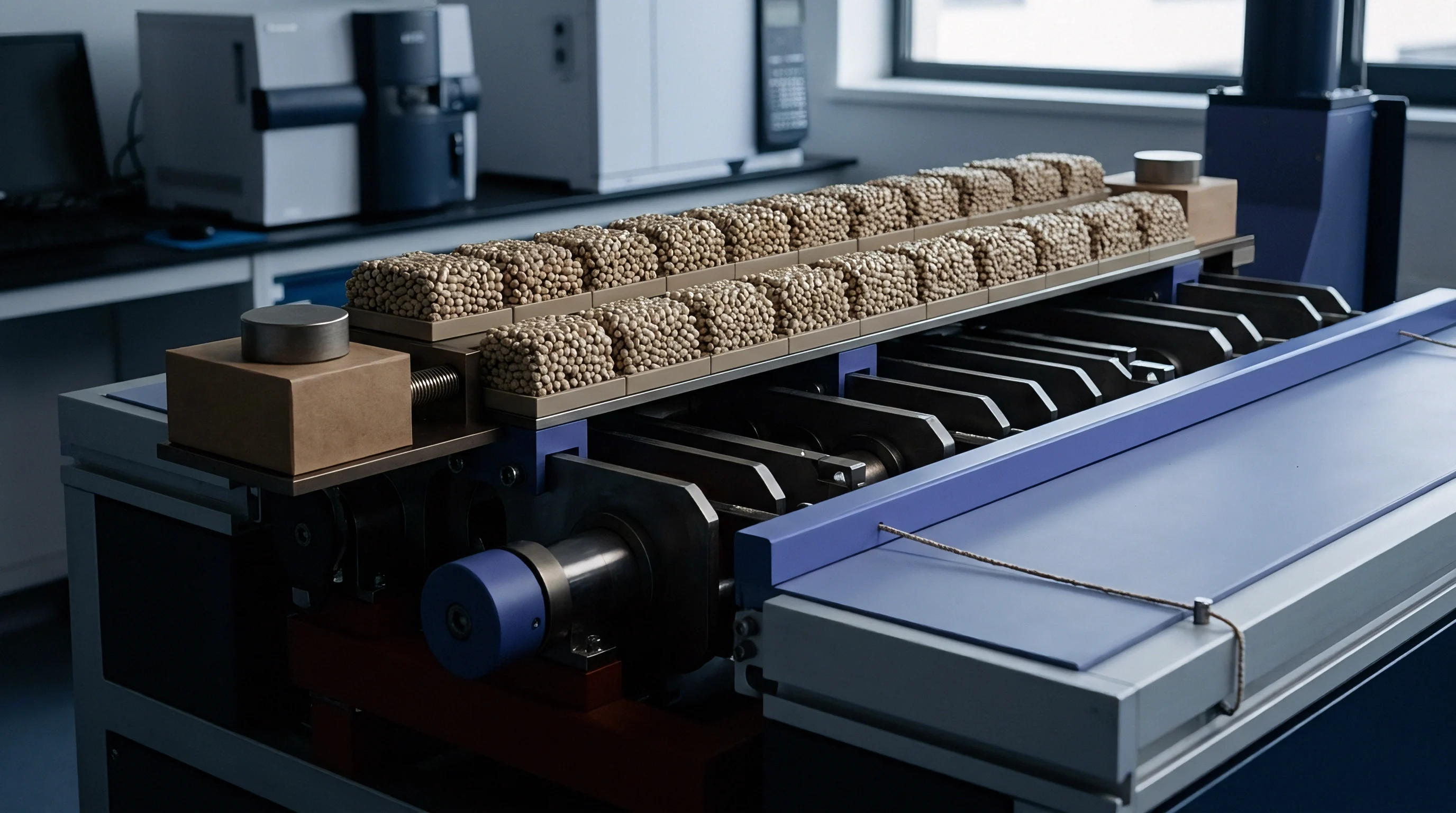
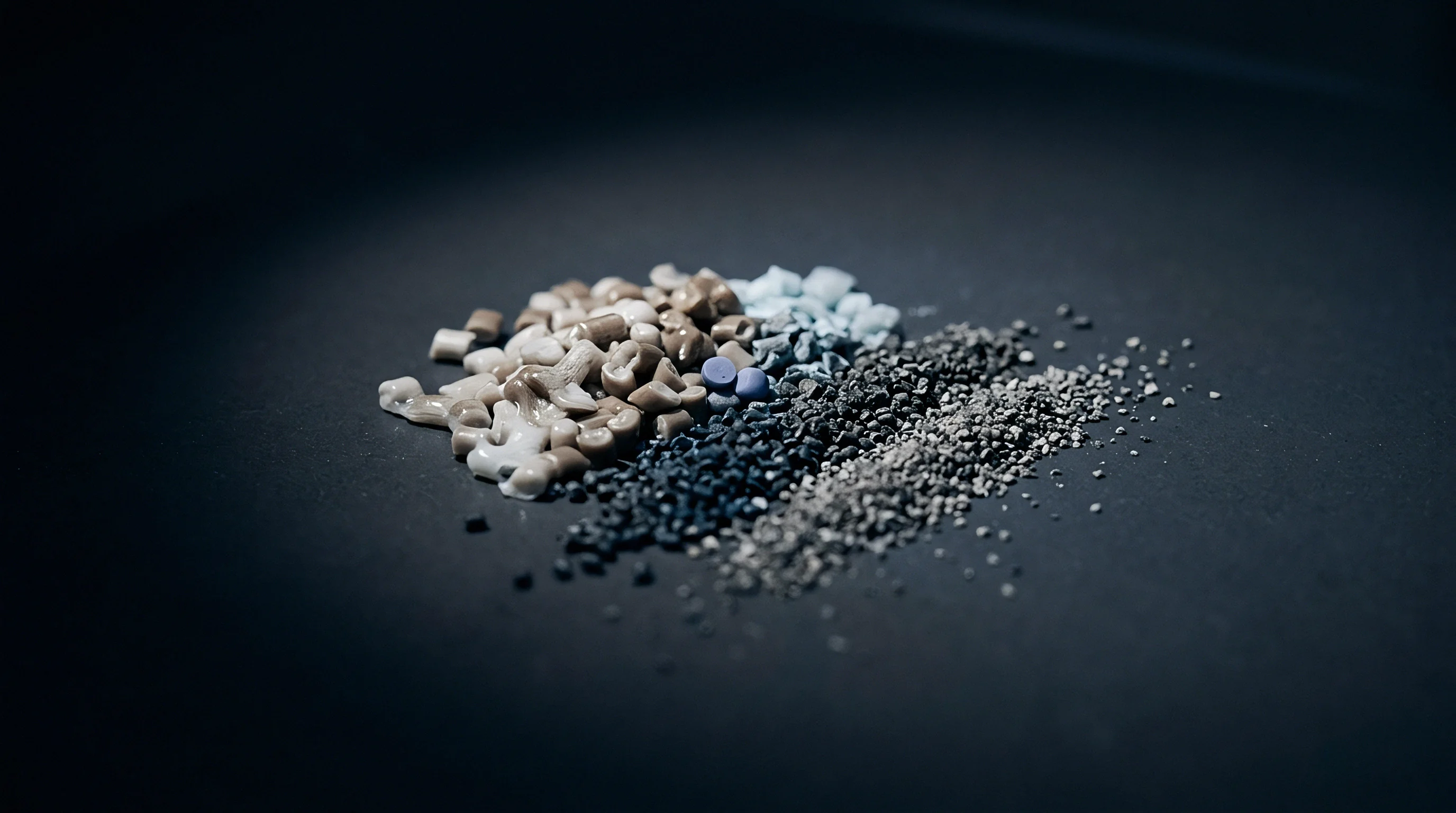
Recycled high-density polyethylene and polypropylene contain distinct sets of synthetic oligomers below 1000 Daltons, formed when polymer chains cleave during thermal reprocessing. In post-consumer recyclates, these polyolefin oligomeric saturated hydrocarbons (POSH) occur alongside mineral oil saturated hydrocarbons and cyclic degradation oligomers. Analyzing them requires solvent swelling and microwave-assisted extraction followed by gas chromatography with flame ionization detection and mass spectrometry.
Extraction with hexane at 60 degrees Celsius over four hours recovers hydrocarbon chains up to C35 from polyolefin flakes without dissolving the polymer matrix. Measuring these initial low-molecular-weight concentrations provides the source term needed for mass transfer modeling.
Solvent choice strongly affects recovery based on polymer morphology. Cyclohexane causes excessive swelling, releasing entrapped catalyst residues along with the oligomers and shifting the chromatographic baseline. Dichloromethane dissolves amorphous regions quickly while keeping crystalline lamellae intact.
To separate aliphatic saturates from aromatic unsaturates before gas chromatography, the extract is passed through high-performance liquid chromatography with a silica stationary phase. This cleanup isolates target hydrocarbons from ink resins and antioxidant breakdown products that elute in the same retention window.
Coupling liquid chromatography with flame ionization detection achieves a limit of quantification of 0.5 milligrams per kilogram for aliphatic oligomers in food-contact polyolefins.
Thermal history directly influences the total content of volatile and semi-volatile oligomers. Post-consumer polypropylene containers subjected to repeated reprocessing cycles build up higher levels of tert-butyl branched alkane isomers between C12 and C30. Gas chromatography paired with high-resolution time-of-flight mass spectrometry identifies the methylated trimers and tetramers formed by repeated beta-scission of secondary macroradicals.
Summing these fractions gives the absolute concentration input required for numerical transport equations.
While vacuum degassing and extrusion evaporate a portion of volatile fractions, low-molecular-weight species remain in the pelletized resin and still require quantification.

Diffusion
Fickian transport dictates how fast sub-1000 Dalton oligomers move from the polymer interior to the contact surface. Diffusion coefficients decrease steadily as molecular mass and branching density increase, with polymer structure controlling the free volume available for migration. Because recycled low-density polyethylene has a more open chain structure, its migration rates can exceed those of isotactic polypropylene by up to two orders of magnitude at the same temperature.
Mathematical models rely on polymer-specific diffusion parameters calibrated through standard migration tests. The European plastics migration model uses the polymer reference parameter Ap to estimate the diffusion coefficient D from temperature and relative molecular mass. For high-density polyethylene, standard Ap reference values range from 13.0 to 14.5, which conservatively overestimates mass transfer.
More refined models adjust the activation energy of diffusion to reflect the crystalline tortuosity of reprocessed resins containing high-density fractions.

Why Do Low Molecular Weight Fractions Migrate Faster?
Linear alkanes below 300 Daltons move through inter-lamellar pathways with low activation barriers, whereas branched oligomers face steric resistance that slows their movement across crystalline boundaries. Because chain length dictates hydrodynamic volume, oligomers below C20 reach equilibrium across thin packaging walls within twenty-four hours at room temperature.
| Oligomer Species | Molecular Weight (g/mol) | Polymer Matrix | Diffusion Coefficient (cm²/s) | Reference Parameter Ap |
|---|---|---|---|---|
| Dodecane (Linear C12) | 170.33 | Recycled HDPE | 2.8 × 10⁻¹⁰ | 14.2 |
| Octadecane (Linear C18) | 254.50 | Recycled HDPE | 6.4 × 10⁻¹¹ | 14.1 |
| Squalane (Branched C30) | 422.81 | Recycled HDPE | 8.1 × 10⁻¹² | 13.8 |
| Linear Trimer (C9) | 128.26 | Recycled PP | 1.5 × 10⁻¹⁰ | 13.1 |
| Isotactic Tetramer (C12) | 170.33 | Recycled PP | 4.2 × 10⁻¹¹ | 13.0 |
| Isotactic Octamer (C24) | 338.65 | Recycled PP | 1.9 × 10⁻¹² | 12.7 |
Uncalibrated reference parameters lead to inaccurate compliance predictions. Overestimating diffusion coefficients results in unnecessarily thick barriers and wasted material, while underestimating mass transfer risks non-compliance when finished packaging exceeds specific migration limits during distribution.

Partition
Equilibrium distribution across phase boundaries depends on chemical affinity between the migrating oligomers and the contacting medium. The partition coefficient expresses the ratio of oligomer concentration in the polyolefin to that in the contact medium at thermodynamic equilibrium. Lipophilic media pull non-polar aliphatic oligomers rapidly across the interface, whereas aqueous media suppress migration and retain long-chain hydrocarbons within the polymer wall.
Interfacial resistance is also governed by polymer polarity. In contact with pure vegetable oils or synthetic triglycerides, hydrocarbon oligomers display partition coefficients near unity, driving diffusion-controlled migration with minimal surface accumulation. Conversely, dry foodstuffs yield partition coefficients above one thousand, keeping the oligomer pool concentrated inside the polymer matrix.
Is Migration Partition Dominated in Fatty Media?
Contact with fatty foods eliminates the interfacial resistance that normally slows non-polar mass transfer. With ethanol simulants, partition coefficients shift according to alcohol concentration: ten percent ethanol acts as an aqueous barrier, whereas ninety-five percent ethanol swells the surface layer and accelerates extraction.
Article 17 of Regulation EC 1935/2004 binds traceability directly to individual production batches rather than general resin specifications.
Modeling equilibrium mass transfer requires experimental partition values measured under realistic contact conditions. A typical evaluation sequence includes:
- Matrix characterization establishes initial migrant concentration through exhaustive solvent extraction and chromatographic analysis.
- Simulant exposure holds uniform polymer plaques in contact with specific food simulants at controlled temperatures for set time intervals.
- Simulant quantification measures oligomer levels in the simulant using coupled liquid-gas chromatography with flame ionization detection.
- Mass balance calculation compares the oligomer mass recovered from the simulant against the residual concentration remaining in the polymer matrix.
Whether thermal degradation products formed during long-term storage alter partition behavior across multi-year contact intervals remains an open question.
Simulant
Specific migration testing under Commission Regulation EU 10/2011 uses standardized media to simulate food contact. Simulant D1 (fifty percent ethanol in water) represents dairy products and alcoholic beverages, while Simulant D2 (refined vegetable oil or synthetic triglycerides) models fatty foods. Analyzing Simulant D2 is technically challenging because large triacylglycerol peaks overlap with target oligomers between C10 and C35.
Direct immersion in vegetable oil requires transesterification or column chromatography cleanup to remove fatty acid methyl esters before analyzing hydrocarbon oligomers. Internal standards like polyisobutylene verify recovery through sample preparation. For dry foods, solid simulants such as modified polyphenylene oxide (Tenax) simulate high-temperature contact without swelling the polymer matrix.
| Intended Contact Application | Standard Food Simulant | Test Contact Exposure | Typical Detection Technique | Action Limit |
|---|---|---|---|---|
| Ambient Long-Term Storage | Ethanol 95% (D2 Substitute) | 10 Days at 60 °C | Online LC-GC-FID | 0.5 mg/kg food |
| High-Temperature Filling | Poly(2,6-diphenyl-p-phenylene oxide) | 2 Hours at 175 °C | Thermal Desorption GC-MS | 10.0 µg/dm² |
| Refrigerated Dairy Contact | Ethanol 50% (Simulant D1) | 10 Days at 40 °C | Solid Phase Extraction GC-MS | 0.5 mg/kg food |
| Aqueous Beverage Contact | Ethanol 10% (Simulant A) | 10 Days at 40 °C | Headspace GC-MS | 0.01 mg/kg food |
| Action limits correspond to toxicological screening thresholds for non-evaluated oligomeric mixtures lacking specific mutagenicity data. | ||||
Swelling caused by substitute simulants requires careful monitoring. Isooctane extracts oligomers rapidly, serving as a worst-case alternative for fatty contact; two days in isooctane at twenty degrees Celsius approximates ten days at forty degrees Celsius in vegetable oil. Confirming that the matrix remains intact prevents false-positive migration readings.
Lipophilic migrants partition into fatty media in direct proportion to surface contact area.

Cutoff
Toxicological thresholds distinguish hazardous polycyclic compounds from non-genotoxic saturated oligomers. When a substance lacks a dedicated toxicological dossier, the threshold of toxicological concern applies. Saturated hydrocarbon oligomers fall under Cramer Class I, which sets a human exposure threshold of 1800 micrograms per person per day.
Assuming standard consumption of one kilogram of food daily, this translates to an analytical migration ceiling of 0.5 milligrams per kilogram of food for polyolefin oligomers.
Distinguishing mineral oil contamination from polymer degradation products requires precise chromatographic profiling. Recycled resins contain both petroleum-derived mineral oil saturated hydrocarbons (MOSH) and intrinsic polyolefin oligomeric saturated hydrocarbons (POSH). Gas chromatography paired with vacuum ultraviolet detection or two-dimensional gas chromatography separates naphthenic rings from the methylated chains derived from polypropylene.
A measured migration value of 0.35 milligrams per kilogram in Simulant D2 leaves a comfortable margin below the 0.5 milligram limit.
Analytical dossiers for post-consumer recyclates must document specific migration limits, substance evaluations, and purity standards. Compliance declarations rely on clear chromatographic evidence and typically require:
- Compositional screening data identifying non-intentionally added substances below 1000 Daltons using high-resolution gas chromatography.
- Validated migration test reports recording exposure duration, temperature, and selected food simulants.
- Diffusion modeling parameters detailing polymer density, reference Ap values, and activation energy constants.
- Toxicological assessment records documenting Cramer class assignments and threshold limits for detected degradation peaks.
Commission Regulation EU 2022/1616 Annex II requires mechanical recycling processes to demonstrate decontamination efficiency high enough to ensure finished recyclate meets Article 3 migration limits across every commercial batch.