Meaning
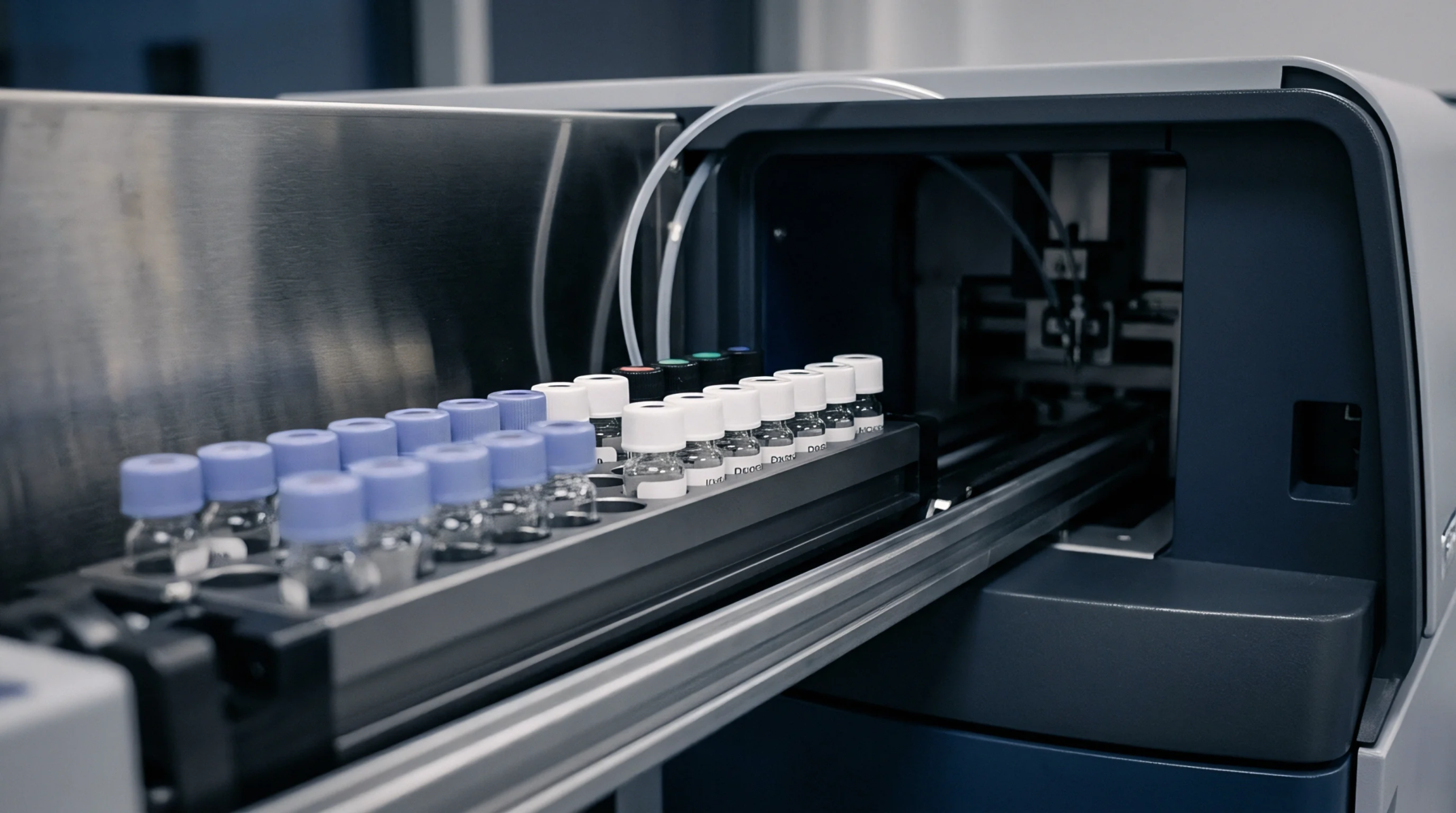
Analytical instrumentation known as gas chromatography separates volatile compounds within polymer extracts and residual monomer streams by vaporizing liquid samples into a carrier gas stream. Thermally stable capillary columns coated with stationary phases fractionate individual organic species based on partition coefficients and boiling points. Detection occurs through flame ionization or mass spectrometry methods to quantify additives, plasticizers and degradation products.
Regulated parameters govern injection port temperature, split ratios and oven ramp rates during the separation cycle. Quantitative limits apply strictly to volatile organic compounds and low molecular weight oligomers within a boiling point range below four hundred degrees Celsius.
Reson Extraction Efficiency
Sample preparation protocols dictate the solvent extraction parameters required to isolate target organic compounds from solid polymer matrices prior to instrumental injection. High temperature refluxing or accelerated solvent extraction methods release trapped additives and residual blowing agents from semicrystalline structures without inducing thermal degradation of the host material. Extracted fractions undergo filtration to remove suspended fillers and high molecular weight polymer chains that would otherwise foul capillary column inlets and degrade stationary phase efficiency.
Solvent selection balances polarity requirements for complete analyte recovery against boiling point constraints to prevent solvent peak broadening during initial chromatographic elution.
Elution Resolution Kinetics
Carrier gas flow velocity and stationary phase film thickness control the peak sharpness and baseline separation of coeluting monomer isomers. Temperature programming rates inside the column oven determine retention times for migrating chemical species across polyolefin or polyester sample matrices. Baseline drift arises from stationary phase bleed when column temperatures exceed safe thermal limits specified by the manufacturer.
Peak tailing indicates active site adsorption within the injection liner, which distorts low concentration additive quantitation and compromises batch verification reports.
Resin Purity Verification
Analytical trace reports derived from chromatographic separation distinguish virgin pellet feedstock from mechanically recycled regrind streams through characteristic degradation byproduct profiles. Virgin polymer suppliers provide baseline specifications for stabilizer packages and residual monomer content that serve as benchmarks for incoming material acceptance testing. Moulders establish operational processing windows based on volatile content limits to prevent surface silver slaking and internal void formation during high pressure injection cycles.
Contamination detection flags anomalous oligomer peaks that correlate directly with structural weakness and premature mechanical failure in finished automotive and electrical enclosures.