Quantifying Gas Chromatography Baseline Humps in Multi-Dimensional Separation Dossiers for High-Density Polyethylene Compliance
Multi-dimensional GC deconvolution quantifies baseline humps in HDPE compliance dossiers, isolating polyolefin oligomers from critical NIAS and mineral oils.


Extract
Analytical laboratories screening high-density polyethylene resins for food contact compliance routinely run into a broad, unresolved chromatographic hump beneath discrete peaks during gas chromatography testing. Classified analytically as an unresolved complex mixture, this envelope comes from thousands of branched, linear, and cyclic polyolefin oligomeric saturated hydrocarbons spanning roughly C12 to C35. When testing solvent extracts or food simulant migration solutions under European Regulation 10/2011 or United States Food and Drug Administration guidelines, this response lifts the apparent baseline ~ distorting automated electronic integration, falsely inflating non-intentionally added substance totals, and masking toxicologically relevant migrants.
High-density polyethylene resins made via catalytic slurry or gas-phase processes carry distinct oligomer populations shaped by catalyst architecture. Ziegler-Natta catalysts produce mostly linear alpha-olefins, even-carbon n-alkanes, and low-molecular-weight waxes. Chromium oxide based Phillips catalysts generate broader molecular distributions containing odd- and even-carbon alkanes alongside mono-olefinic branches.
Metallocene systems yield narrow distributions with controlled co-monomer insertion, forming specific isomer clusters instead of continuous envelopes. When these resins contact fat simulants like vegetable oil, ethanol solutions, or synthetic modified adsorbents like Tenax at elevated temperatures, low-molecular-weight fractions migrate into the test media. Quantifying this mass requires strict baseline deconvolution rather than arbitrary point-to-point skimming.
The regulatory difficulty with baseline deconvolution centers on threshold of toxicological concern concepts applied to non-listed substances. Article 19 of Regulation 10/2011 mandates risk assessments for non-intentionally added substances, setting an operational screening limit of 10 micrograms per kilogram of food for genotoxic alerts and 50 micrograms per kilogram for uncharacterized migrants without functional groups. An unresolved polyolefin oligomer hump spanning hundreds of detector counts over several retention minutes can add up to an aggregate migration mass over several milligrams per kilogram.
Treating that entire envelope as one uncharacterized migrant triggers automatic non-compliance flags. Yet completely subtracting the hump risks hiding discrete co-eluting contaminants like synthetic lubricants, printing ink components, or mineral oil aromatic hydrocarbons.
A total polyolefin oligomeric saturated hydrocarbon migration level of 1.8 milligrams per kilogram of food simulant D1 after ten days at 40 degrees Celsius exceeds the uncharacterized substance screening threshold by a factor of thirty-six.
Multi-dimensional separation techniques resolve the chemical makeup of these baseline envelopes. Comprehensive two-dimensional gas chromatography paired with flame ionization detection and time-of-flight mass spectrometry separates linear and branched oligomers across a primary non-polar boiling point column and a secondary polar or mid-polar retention axis. On-line high-performance liquid chromatography coupled to gas chromatography lets labs separate saturated polyolefin fractions from aromatic compounds and plasticizers before gas-phase analysis.
Without these multi-dimensional dossiers, compliance declarations rely on blind integration routines that end up failing compliant packaging lots or passing contaminated shipments.

Regulatory Migration Thresholds and Extractable Fractions
European Union plastic packaging rules set an overall migration limit of 60 milligrams per kilogram of food simulant or 10 milligrams per square decimeter of contact surface. High-density polyethylene articles intended for fatty food packaging face specific compliance verification under simulant D1 (50 percent ethanol) and simulant D2 (purified vegetable oil). Testing fatty food contact under standard OM2 conditions ~ ten days at 40 degrees Celsius ~ selectively swells the semi-crystalline polyethylene matrix.
That swelling accelerates diffusion of low-molecular-weight polyethylene waxes, generating a high extractable mass in fatty simulants compared to aqueous simulant A or acidic simulant B.
Toxicological classification of polyolefin oligomers separates endogenous polyethylene components from exogenous mineral oil hydrocarbons. Scientific opinions from food safety bodies treat polyolefin oligomeric saturated hydrocarbons as structural analogues to mineral oil saturated hydrocarbons. These saturated oligomers show no genotoxic potential, making toxicological thresholds for pure polyolefin oligomers dependent on organ accumulation profiles.
European monitoring recommendations set indicative guidance values of 5 milligrams per kilogram for saturated hydrocarbons in dry foods and fat-rich matrices. When chromatographic baselines drift upward, distinguishing synthetic polyolefin waxes from mineral oil residues requires selective extraction and clean-up steps to avoid false-positive regulatory rejections.
Analytical dossiers supporting high-density polyethylene declarations of conformity detail the exact conditions used to generate migration solutions. Sourcing desks reviewing lab certificates check whether the reported migrant sum includes or excludes the baseline hump. If a testing facility calculates specific migration by drawing a horizontal baseline from the initial solvent rise to the final return, the area integral includes both the hump itself and every nested sharp peak.
That final number reflects total extractable hydrocarbon mass rather than individual target substance migration.
Mishandling baseline integration leads directly to customs rejections at import inspections, product withdrawals from retail shelves, and costly litigation between packaging convertors and resin manufacturers.

Column
Primary separation of polyethylene extractables relies on non-polar capillary stationary phases built for high thermal stability. Polydimethylsiloxane phases and 5 percent diphenyl 95 percent dimethylpolysiloxane columns are standard choices for initial gas chromatography screening. High-density polyethylene oligomers have boiling points that rise regularly with carbon chain length.
On non-polar columns, they elute in an ordered series of homologous triplets made of alpha-olefins, n-alkanes, and internal olefins. In commercial resins with complex catalytic residues and branching agents, each carbon number develops dozens of structural isomers, broadening peaks and elevating the baseline between retention marks.
Stationary phase bleed adds to the difficulty of quantifying baseline humps. As oven temperatures pass 300 degrees Celsius to elute hydrocarbons above C30, siloxane linkages in the stationary phase undergo thermal degradation. This produces cyclic dimethylsiloxane oligomers that bleed into the detector, creating a continuous upward slope in the baseline.
Separating resin-derived oligomeric envelopes from column bleed requires running programmed solvent blanks under identical thermal profiles. Subtracting the blank run electronically yields a clean hydrocarbon profile for subsequent analysis.
Why Do Co-Eluting Hydrocarbon Envelopes Defeat Standard Integration?
Conventional one-dimensional gas chromatography algorithms rely on first- and second-derivative inflection points to identify peak liftoff and touchdown. When high densities of closely related isomer peaks overlap, the detector signal never returns to baseline between elution events. The software misinterprets valleys between peaks as an elevated baseline, dropping into valley-to-valley or baseline projection routines.
Valley-to-valley integration treats the unresolved envelope underneath as an inert floor, measuring only sharp apexes above the hump ~ underreporting total polyolefin oligomer migration mass by seventy to ninety percent.
Point-to-point tangential skimming produces inconsistent results across different labs analyzing identical extract samples. If an integrator drops perpendicular lines from peak valleys to a straight baseline beneath the envelope, the calculation assigns much of the unresolved hump to individual discrete peaks. Should an unlisted antioxidant degradation product elute at the peak of the polyolefin envelope, perpendicular dropping multiplies its apparent concentration threefold ~ triggering an unjustified toxicological alert under non-intentionally added substance protocols.
| Separation Parameter | One-Dimensional GC-FID | Comprehensive GCxGC-FID | LC-GC-FID Clean-up |
|---|---|---|---|
| Primary Stationary Phase | 100% Dimethylpolysiloxane (15m x 0.25mm x 0.1um) | 100% Dimethylpolysiloxane (30m x 0.25mm x 0.25um) | Non-polar capillary (10m x 0.53mm deactivated) |
| Secondary Stationary Phase | None | 50% Phenyl polysilphenylene-siloxane (1.5m x 0.15mm) | Silica LC Column (250mm x 2.0mm x 5um) |
| Modulation Period | None | 4.0 to 6.0 seconds | None (Valve transfer) |
| Carrier Gas Velocity | Helium at 35 cm/s | Hydrogen at 45 cm/s | Helium at 40 cm/s |
| Detector Sampling Rate | 10 to 20 Hz | 100 to 200 Hz | 20 Hz |
Column dimensions and film thickness directly dictate resolution between discrete additive peaks and the underlying oligomer envelope. Thin-film capillary columns (0.1 to 0.15 micrometers) permit rapid elution of high-boiling waxes up to C45 at lower oven temperatures, keeping phase bleed down. Thick-film columns improve retention and peak shape for volatile oligomers between C10 and C18.
An optimal separation protocol balances phase ratio against thermal degradation limits, ensuring volatile solvents and high-boiling waxes elute within a single calibrated run.
Evaluating column performance involves tracking resolution factors between n-alkane standards and adjacent synthetic branched markers across multiple testing sequences. When resolution falls below established limits, baseline hump integration errors climb exponentially. Inlet liner condition also affects baseline stability.
Non-volatile polymer residues deposited in the inlet create active sites that cause peak tailing and unpredictable baseline drift. Regular maintenance ~ inlet trimming and deactivated liner replacement ~ preserves chromatographic fidelity over extended runs.
Linear velocity selection plays an equally critical operational role. Hydrogen carrier gas delivers superior separation efficiency at higher linear velocities than helium, compressing run times and sharpening both discrete peaks and oligomeric envelopes. Sharper peaks rise clearly above the broad oligomeric floor, improving signal-to-noise ratios for trace non-intentionally added substances.
A broad baseline hump requires electronic blank subtraction and specialized curve-fitting routines before setting any integration markers across the chromatogram.
Trap
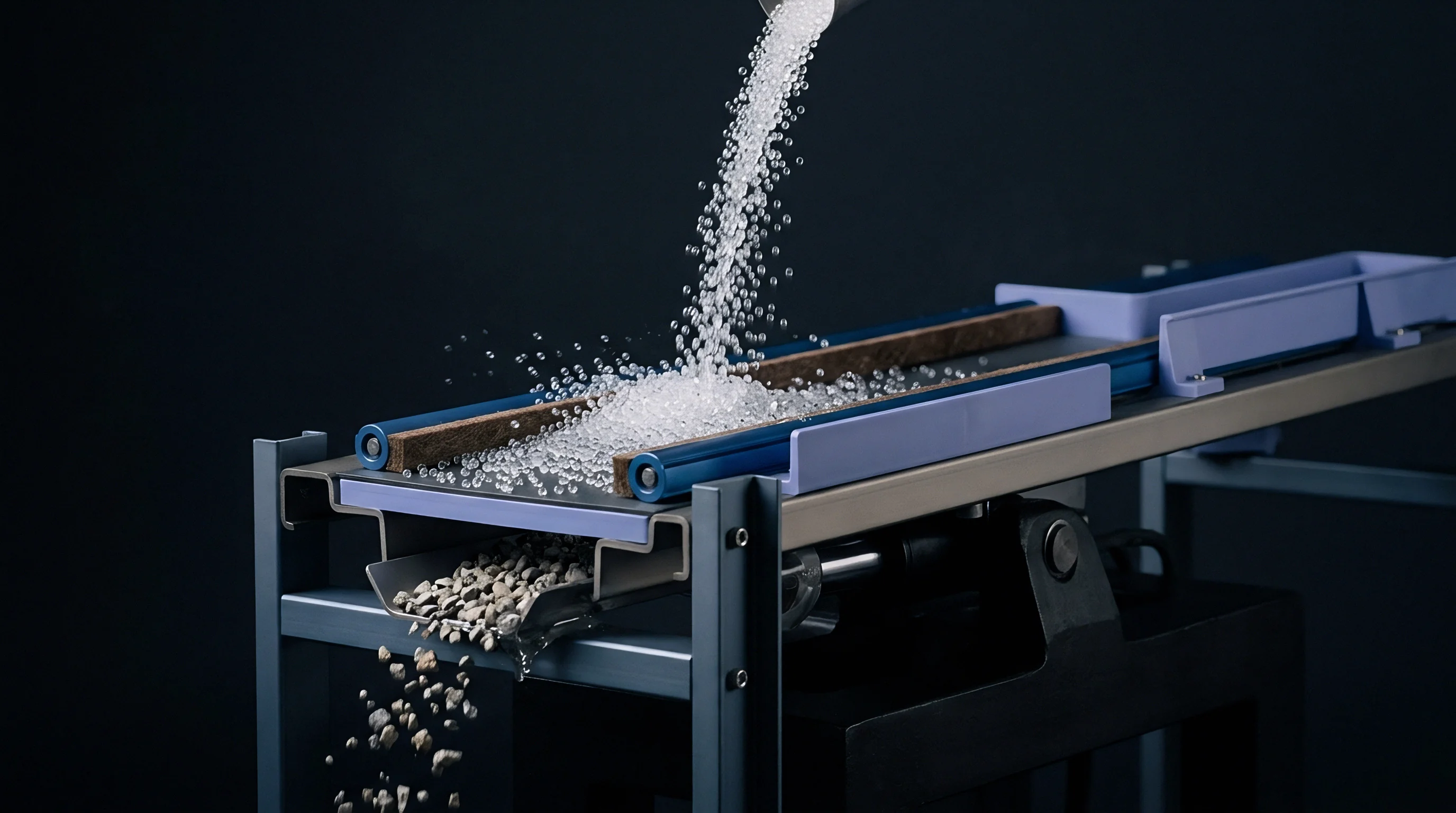
Thermal modulation systems and cryogenic traps provide the physical mechanism needed for multi-dimensional separation in high-density polyethylene migration dossiers. In comprehensive two-dimensional gas chromatography, the modulator sits between the primary and secondary capillary columns, continuously focusing effluent fractions exiting the primary column into narrow zones before injecting them onto the short secondary column. Cryogenic modulators use liquid nitrogen or chilled carbon dioxide jets to freeze analytes at the column interface, releasing them with rapid hot gas pulses.
This compresses chromatographic bands from four seconds wide down to under one hundred milliseconds.
Valve-based modulators offer a cryogen-free alternative for routine compliance labs testing high-density polyethylene packaging. Flow-switching differential modulators divert fractions of the primary column effluent into a secondary collection loop before discharging them onto the secondary analytical phase. While cryogenic systems provide superior trapping for volatile oligomers from C10 to C16, valve modulators handle higher-boiling polyolefin waxes up to C40 without thermal trapping losses.
Selecting the right modulation platform ensures complete recovery of the oligomeric migration spectrum without selective discrimination across carbon ranges.
Do Cryogenic Traps Eliminate Polyolefin Baseline Distortion?
Cryogenic focusing transforms unresolved one-dimensional baseline envelopes into structured two-dimensional contour plots. On the secondary column, analytes separate by chemical functionality, polarity, or aromaticity. In a typical non-polar by mid-polar arrangement, saturated polyolefin oligomers elute early in the second dimension, lining up along the bottom border of the separation space.
Additives, antioxidant degradation products, plasticizers, and aromatic hydrocarbons elute later along the secondary retention axis. This structural segregation lifts discrete target analytes out of the saturated hydrocarbon baseline hump.
The resulting two-dimensional data matrix permits isolated integration of discrete contaminants without interference from underlying polyolefin oligomer envelopes. Instead of battling an unresolved one-dimensional mixture, the analyst integrates target peaks against true, flat secondary baselines. The broad oligomer hump remains confined to a designated chemical band across the retention map.
Quantification software then integrates that oligomer zone independently, generating separate mass migration totals for the polyolefin wax matrix and trace migrating additives.
Under Commission Regulation 10/2011 Annex III, migration testing in vegetable oil simulant D2 for high-density polyethylene articles must account for fat absorption through verified reduction factors before specific migration totals are calculated.
Trapping efficiency depends on strict regulation of modulator temperature differentials and cycle times. If the modulation period is too long, primary column peaks undergo insufficient sampling, causing a loss of primary separation resolution known as wrap-around. If the modulation period is too short, high-boiling waxes fail to complete secondary column elution within the modulation cycle, appearing as ghost peaks and baseline elevation in subsequent secondary chromatograms.
Setting the modulation period to roughly one-third of the primary peak width prevents wrap-around while maintaining secondary resolution.
Multi-dimensional integration dossiers detail the following operational parameters to validate compliance determinations:
- Thermal modulation profile specifies the cold jet temperature offset, hot pulse duration, and secondary oven temperature ramp to verify complete mobilization of high-boiling polyethylene waxes.
- Secondary column dimensions document stationary phase polarity, internal diameter, and film thickness to confirm baseline resolution between saturated oligomers and polar degradation products.
- Detector acquisition frequency records sampling rates exceeding one hundred Hertz to ensure accurate reconstruction of narrow modulated peak envelopes.
- Secondary baseline drift verifies that thermal bleed from the primary stationary phase does not elevate the secondary flame ionization detection baseline.
Under standard supply specifications for food packaging dossiers, any migration analysis showing unresolved chromatographic humps above five milligrams per kilogram must provide secondary dimensional separation data to demonstrate the absence of co-eluting aromatic compounds.
Noise
Quantifying unresolved baseline envelopes demands clear mathematical discrimination between electronic detector noise, stationary phase bleed, and true sample-derived hydrocarbons. In flame ionization detection, background electronic noise fluctuates within a narrow band of picoamperes. Polyolefin oligomer envelopes show up as broad, continuous baseline elevations rising well above three standard deviations of baseline noise.
Quantifying this envelope requires setting appropriate integration thresholds, defining start and end points, and applying robust baseline correction algorithms across the full retention range.
Automated integration software uses several standard mathematical approaches to handle unresolved complex mixtures. The baseline projection method draws a straight horizontal line between the beginning of the oligomeric rise and its return to baseline. The spline fit method constructs a polynomial curve tracing valleys between overlapping peaks.
The Gaussian deconvolution method fits theoretical peak shapes to each identifiable apex while summing residual area into an unresolved total. Each approach yields different quantitative results for identical chromatographic datasets, introducing analytical variability between commercial testing labs.
Significant divergence occurs in reported migration values when different baseline models are applied to the same high-density polyethylene extract. The horizontal baseline method produces the highest total oligomer migration figure, incorporating all area under the envelope. The valley-to-valley approach yields the lowest figure, discarding up to eighty percent of the oligomer mass.
Harmonized compliance verification requires defining standard integration rules within the regulatory testing dossier to ensure consistent results across independent auditing laboratories.
| Integration Routine | Calculated Total Oligomers (mg/kg) | Irganox 1010 Calculated (mg/kg) | Uncharacterized NIAS Result | Compliance Status |
|---|---|---|---|---|
| Horizontal Projection | 4.85 +/- 0.32 | 0.42 +/- 0.04 | Elevated (Fail) | Non-compliant |
| Spline Valley Fitting | 1.12 +/- 0.15 | 0.14 +/- 0.02 | Indeterminate | Borderline |
| Perpendicular Dropped Lines | 3.65 +/- 0.28 | 0.38 +/- 0.03 | Elevated (Fail) | Non-compliant |
| GCxGC Deconvoluted Zone | 4.40 +/- 0.18 | 0.12 +/- 0.01 | Clean Baseline (Pass) | Compliant |
Accurate quantification requires calibrating detector response across the entire carbon range of the baseline hump. Flame ionization detectors provide an essentially uniform response per gram of carbon for saturated hydrocarbons. Using a single n-alkane standard, such as n-tetracontane or n-hexadecane, allows reliable quantification of total polyolefin oligomeric saturated hydrocarbons by summing total baseline-corrected peak area across the unresolved region.
Mass spectrometers display variable ionization efficiencies and fragmentation patterns across different hydrocarbon isomer classes, making total oligomer quantification unreliable without comprehensive internal standard sets.
Verifying integration integrity requires evaluating solvent blank subtraction procedures. In high-temperature gas chromatography, solvent purity directly affects baseline stability. Trace high-boiling impurities in extraction solvents such as n-hexane, dichloromethane, or ethanol concentrate during sample preparation.
When injected onto the column, these impurities create ghost envelopes that mimic polymer oligomers. Running concentrated solvent blanks alongside high-density polyethylene extracts identifies exogenous contamination and enables precise mathematical subtraction in compliance dossiers.
A flat detector baseline without electronic drift represents the essential analytical condition for verifying non-intentionally added substance migration limits below 10 micrograms per kilogram.
Elevated hydrocarbon baselines in packaging dossiers often represent base polymer waxes that are subtracted from the migration report.

Wax
Polyethylene waxes made of low-molecular-weight polymer fractions constitute the primary chemical source of chromatographic baseline humps. During high-density polyethylene synthesis, chain transfer reactions terminate polymer chain growth prematurely, generating molecules with molecular weights ranging from 200 to 1500 grams per mole. These oligomeric waxes exhibit high mobility within amorphous regions of the polymer matrix.
When exposed to fatty food simulants or elevated processing temperatures, they diffuse rapidly toward the polymer surface and partition into the contact medium.
The molecular composition of these waxes differs between high-density polyethylene, low-density polyethylene, and linear low-density polyethylene. High-density polyethylene waxes feature linear alkane structures with minimal short-chain branching, resulting in higher melting points and distinct crystalline behavior. Linear low-density polyethylene waxes contain substantial amounts of ethyl, butyl, or hexyl branches derived from 1-butene, 1-hexene, or 1-octene co-monomers.
These branches increase the number of structural isomers for each carbon number, broadening chromatographic peaks and expanding the area of the unresolved baseline hump.
Distinguishing synthetic polyolefin oligomeric saturated hydrocarbons from mineral oil saturated hydrocarbons is a central challenge in food contact compliance testing. Both substance classes consist of saturated aliphatic hydrocarbons with similar boiling point distributions. However, mineral oil saturated hydrocarbons derived from petroleum refining contain complex mixtures of naphthenic ring structures, including highly branched iso-alkanes and alkylated cycloalkanes.
Polyolefin oligomers from high-density polyethylene consist almost exclusively of linear and lightly branched alkanes. Multi-dimensional gas chromatography resolves these structural differences by separating naphthenic rings from linear chains along the secondary polar axis.
Testing laboratories perform pre-separation clean-up steps to isolate specific hydrocarbon fractions before gas chromatography analysis. Solid-phase extraction using silver nitrate impregnated silica gel separates saturated hydrocarbons from unsaturated olefins and aromatic hydrocarbons. Epoxidation reactions convert mono-olefins into polar epoxides, removing them from the saturated polyolefin fraction.
These chemical clean-up steps prevent interference from packaging additives, inks, and adhesives, ensuring that the quantified baseline hump reflects only saturated polyolefin oligomers.
Dossier assembly for high-density polyethylene articles requires comprehensive documentation of all extractable hydrocarbon fractions. Evaluators trace the provenance of detected baseline humps through the following analytical sequence:
- Extraction in fatty food simulant exposes the finished article to ethanol or vegetable oil under standardized temperature and time profiles to generate migrant solutions.
- Solid phase extraction on silica gel removes polar additives, fatty acids, and matrix components from the non-polar hydrocarbon fraction.
- Liquid chromatography fractionation isolates saturated aliphatic hydrocarbons from aromatic rings and olefinic compounds using normal-phase silica columns.
- Comprehensive multi-dimensional separation deconvolutes linear polyolefin waxes from branched mineral oil saturated hydrocarbons and background detector bleed.
The toxicological relevance of polyolefin waxes relates to their potential accumulation in human tissues ~ specifically the liver, spleen, and lymph nodes. Toxicological studies indicate that saturated hydrocarbons with carbon numbers between C16 and C35 possess the highest potential for tissue absorption and microgranuloma formation. Hydrocarbons below C16 undergo rapid metabolic clearance, while hydrocarbons above C35 display minimal gastrointestinal absorption.
Compliance dossiers must therefore quantify oligomer migration across specific carbon range windows ~ specifically C10-C16, C16-C25, and C25-C35 ~ rather than reporting a single undifferentiated baseline mass.
The central unresolved question in polyolefin packaging verification remains whether automated multi-dimensional integration algorithms can reliably differentiate toxicologically benign, highly linear polyolefin oligomers from synthetic isoparaffinic lubricants across varying processing histories.

Filing
Assembling a legally defensible compliance dossier for high-density polyethylene packaging requires compiling analytical raw data, integration protocols, and toxicological risk assessments into a coherent technical file. Under Article 16 of Regulation 10/2011 and Regulation 2023/2006 on good manufacturing practice, manufacturers must maintain supporting documentation demonstrating that food contact articles comply with safety requirements established in Framework Regulation 1935/2004. When chromatographic analyses reveal unresolved baseline humps, the technical filing must explicitly justify the baseline subtraction and integration methods applied.
A complete compliance dossier contains raw chromatograms, instrument calibration curves, solvent blank subtraction records, and multi-dimensional separation maps. Testing facilities provide both total integrated extractable values and deconvoluted specific migration calculations. If non-intentionally added substances elute within the baseline hump region, the dossier documents structural identification efforts using high-resolution time-of-flight mass spectrometry and provides toxicological justification showing migrant concentrations remain below relevant safety thresholds.
Commercial contracts and technical purchase agreements across the packaging supply chain specify exact analytical requirements for baseline hump characterization. Sourcing desks define limits on permissible total polyolefin oligomer migration, require multi-dimensional testing for fatty food applications, and establish clear guidelines for non-intentionally added substance quantification. Incorporating precise analytical specifications into raw material contracts prevents disputes between polymer producers, packaging convertors, and brand owners when independent verification testing detects elevated baseline responses.
Declarations of conformity referencing underlying test dossiers state the analytical limits of detection and quantification achieved for all target analytes. They also document specific reduction factors applied for fatty food contact and declare the surface-to-volume ratio used in migration calculations. Technical auditors reviewing these declarations cross-reference reported values against raw integration reports, verifying that baseline humps have not been improperly subtracted to conceal non-compliant additive migration or toxic degradation products.
Maintaining analytical transparency throughout the supply chain ensures high-density polyethylene packaging materials meet rigorous food safety and regulatory compliance standards across international markets.