Quantifying Transverse Matrix Contraction and Spherulitic Growth Kinetics under High-Pressure In-Cavity Solidification in Polyamides
Elevating cavity packing pressure suppresses spherulite growth radius and reduces transverse matrix contraction in polyamides, holding DIN 16742 TG4 tolerances.
Grain
Solidification kinetics in semi-crystalline polyamides depend directly on local thermodynamic supercooling and applied hydrostatic force. When molten polyamide 66 or polyamide 6 cools inside a sealed mould cavity, crystallization does not take place at a single fixed thermodynamic temperature. Packing pressure alters the phase transformation boundary, raising both the equilibrium melting temperature and the crystallization onset point.
Under cavity pressures between forty and one hundred fifty megapascals, the thermodynamic driving force for phase change increases substantially. This shift modifies spherulitic growth behavior, altering both the nucleation rate and the speed at which individual spherulites expand until impingement.
Spherulitic growth kinetics follow classical nucleation and growth models modified for high-pressure conditions. Plotted against temperature, the radial growth rate of a spherulite forms a classic bell curve: limited near the melting point by thermodynamic driving force, and choked near the glass transition by declining molecular chain mobility. Hydrostatic pressure shifts this entire kinetic curve toward higher temperatures.
By reducing free volume, pressure increases effective melt viscosity and raises the glass transition temperature. Chain mobility falls accordingly. While higher pressure increases thermodynamic supercooling at a given mould temperature, it simultaneously dampens molecular transport across the crystal growth front.
Thermodynamic Supercooling and Nucleation Density
Hydrostatic force elevates the equilibrium melting temperature of polyamide 66 by roughly 0.2 Kelvin per megapascal. Under a cavity packing pressure of one hundred megapascals, the effective equilibrium melting temperature rises by approximately twenty Kelvin, expanding the supercooling window during processing. Supercooling represents the differential between the pressure-adjusted melting point and the actual melt temperature.
Because nucleation rates scale exponentially with supercooling, high cavity pressure triggers intense homogeneous and heterogeneous nucleation throughout the polymer matrix.
Higher nucleation density fundamentally alters the final crystalline morphology. With so many sites initiating at once, growing spherulites impinge upon neighboring structures much earlier in the growth phase. This early impingement caps the maximum achievable spherulite diameter.
Instead of developing coarse spherulites of twenty to fifty micrometers across, the matrix freezes into a fine-grained morphology where average spherulite diameters drop below five micrometers. Applied pressure directly dictates this phase morphology.
Elevating cavity packing pressure to one hundred megapascals increases the primary crystallization temperature of polyamide 66 by eighteen Kelvin during rapid cooling cycles.
Fine-grained spherulitic matrices alter physical properties throughout the part cross section. Smaller spherulites distribute internal mechanical stresses more uniformly across inter-spherulitic amorphous regions, raising yield strength and impact resistance. Coarser spherulitic structures concentrate strain along well-defined grain boundaries, encouraging micro-cracks under mechanical load.
High-pressure solidification prevents coarse grain development, establishing a fine microstructural baseline.
Spherulitic Growth Kinetics under Hydrostatic Force
Chain mobility decreases rapidly as molecular packing tightens under high pressure. Mathematical modeling of spherulitic radial growth relies on the Hoffman-Lauritzen formulation, incorporating pressure-dependent terms for both transport enthalpy and crystal nucleation work. As cavity pressure climbs, the transport term increases due to restricted segmental motion.
Long-chain polymers require energetic activation to fold into lamellar crystallites at the growth front, where dense packing impedes conformational changes.
The net growth velocity reflects a balance between accelerated thermodynamic driving force and throttled molecular mobility. Early in the packing phase, pressure accelerates secondary nucleation on the crystal growth front. If held at extreme levels, however, d/dt of the spherulite radius drops because of these mobility constraints.
Radial growth rates for polyamide 6 typically peak between one hundred eighty and two hundred degrees Celsius at atmospheric pressure. Under one hundred megapascals of cavity pressure, this peak shifts upward by fifteen to twenty-two degrees Celsius while reducing maximum radial velocity by twelve to eighteen percent.
Cooling rate directly governs crystalline density. Rapid heat extraction paired with elevated packing pressure locks in high nucleation density while suppressing extended radial growth. Because the core solidifies last, contraction kinetics in the central matrix remain tied directly to local pressure decay as gate freeze approaches.

Skin Core Morphological Transition across Wall Sections
Steep thermal gradients near cavity walls quench polymer chains before crystallization can fully develop, leaving a highly oriented, low-crystallinity skin layer. Moving inward toward the core, heat dissipates more slowly, giving chains time to align and crystallize under shear and pressure. High-pressure solidification creates three distinct morphological zones across the wall section: the amorphous skin, the shear-induced transcrystalline intermediate zone, and the spherulitic core.
Shear flow near the mould wall aligns polyamide chains along the flow path. When high packing pressure coincides with this shear flow, trans-crystallization initiates along the oriented molecular fibrils. These fibrillar nuclei force spherulites to grow unidirectionally, perpendicular to the melt stream, forming a dense transcrystalline layer.
Inward from this zone, shear stresses drop off and isotropic nucleation takes over, with spherulites expanding spherically until mutual impingement stops them.
Cavity pressure shifts the thickness ratio of these structural layers. Higher packing pressure thickens the intermediate transcrystalline zone while narrowing the central isotropic spherulitic core. Because transcrystalline regions exhibit higher density and tighter chain orientation than the isotropic core, this spatial variation across the wall thickness generates anisotropic internal stress distributions during cooling.
Microstructural defects emerge when high-pressure solidification proceeds under improper thermal profiles:
- Void formation in core regions occurs when core solidification proceeds after gate freeze, eliminating hydraulic packing pressure and allowing volumetric shrinkage to pull the molten matrix apart internally.
- Spherulite size bimodality appears when localized pressure drops rapidly across thick wall sections, producing fine spherulites near cavity transducers and coarse spherulites in low-pressure dead zones.
- Interfacial lamellar micro-cracking results from severe thermal and density mis-matches between the highly crystalline transcrystalline shell and the late-crystallizing isotropic spherulitic core.
- Transcrystalline layer delamination develops under extreme shear rates combined with inadequate holding pressure, creating weak cleavage planes between oriented fibrils and bulk spherulites.
These structural defects compromise mechanical performance and dimensional stability. Controlling spherulitic growth kinetics requires active management of cavity pressure until the core matrix cools below the crystallization range. Whether real-time cavity pressure modulation can selectively homogenize lamellar thickness distributions in ultra-thick wall sections without inducing severe molecular degradation remains an open thermodynamic question.

Shrinkage
Matrix contraction in injection moulded polyamides exhibits severe directionality resulting from molecular orientation during cavity filling. Polymer chains align parallel to the flow vector under high shear rates during injection. When the matrix cools, crystalline lamellae fold preferentially along aligned chains, causing thermal contraction to vary dramatically by direction.
Contraction measured transverse to the flow path routinely exceeds longitudinal contraction parallel to the flow path by fifty to one hundred fifty percent in unreinforced polyamide grades.
High cavity pressure alters this contraction imbalance by modifying specific volume behavior. The thermomechanical response follows pressure-volume-temperature relations described by modified Tait equations. Packing pressure compresses liquid polymer prior to crystallization, forcing additional polymer mass into the cavity to offset phase-change volume loss during the liquid-to-solid transition.
However, hydraulic force suppresses transverse and longitudinal contraction unequally.
Transverse Contraction versus Longitudinal Alignment
Polymer backbones align along primary fluid streamlines during high-shear injection phases. Longitudinal contraction along the flow axis stays relatively small because extended polymer chains resist further axial shortening during cooling. Conversely, transverse contraction depends on the lateral packing density of molecular chains and inter-spherulitic amorphous regions.
In the direction perpendicular to flow, molecular chains relax laterally unless held under high hydrostatic compression.
Elevated packing pressure drives polymer chains closer together in the transverse plane, increasing inter-chain van der Waals interactions and hydrogen bonding density in polyamides. When holding pressure remains high throughout the crystallization window, transverse contraction drops significantly. Increasing cavity pressure from twenty to eighty megapascals reduces transverse shrinkage of polyamide 66 from 1.8 percent down to 0.9 percent.
Longitudinal shrinkage drops over the same pressure shift from 1.1 percent to 0.7 percent. Pressure application narrows the absolute gap between transverse and longitudinal contraction, reducing net component anisotropy.
Melt orientation largely dictates part warpage. Differentials between transverse and longitudinal matrix contraction create internal bending moments within the part cross section. When transverse contraction far exceeds longitudinal contraction, flat geometries twist or bow after ejection.
Applying high in-cavity pressure uniformizes dimensional change, suppressing warpage without requiring mechanical ribbing changes.

Specific Volume Curves and Pressure Response
Compressibility characteristics derived from PVT measurements define how liquid polymer yields mass to packing pressure. In the molten state above two hundred sixty degrees Celsius, polyamide 66 exhibits high volumetric compressibility. As temperature drops toward crystallization, specific volume decreases continuously along an isobaric line.
At the onset of crystallization, specific volume drops abruptly as polymer chains collapse into dense crystalline lattices.
Isobaric cooling paths at high pressure demonstrate two distinct phenomena. First, the sharp drop in specific volume shifts to higher temperatures due to pressure-induced elevation of Tc. Second, total volumetric contraction across the solidification transition decreases because high initial melt pressure pre-compresses the liquid state. In PVT analyses of polyamide 66, the inflection point at gate seal defines the maximum achievable density for the nominal skin geometry.
Following ISO 294 specification four establishes transverse contraction measurements under standardized twenty-three degree ambient conditions to decouple post-moulding shrinkage from moisture absorption.
Pressure decay inside the cavity directly dictates final specific volume distribution. If cavity pressure drops to zero before core solidification completes, specific volume jumps locally, creating high localized contraction. Maintaining eighty to one hundred megapascals of pressure until core solidification finishes holds specific volume low and uniform throughout the part interior.
Evaluation of shrinkage behavior under high pressure relies on systematic process mapping:
- Determine the zero-pressure volumetric thermal expansion coefficient across the melt temperature processing range using standard high-pressure capillary dilatometry.
- Establish PVT isobaric cooling trajectories at intervals of twenty megapascals from atmospheric pressure up to one hundred sixty megapascals.
- Measure gate seal time by performing incremental holding-time weight studies on molded plaque test specimens.
- Record cavity pressure traces at neargate and end-of-fill positions using flush-mounted piezoelectric pressure sensors.
- Quantify parallel and transverse dimensional changes on test plaques in accordance with ISO 294-4 test standards after forty-eight hours of environmental conditioning.
Wall Thickness Dependencies and Differential Cooling
Thermal dissipation rates drop sharply toward the center of thick molded sections. Wall thickness dictates the duration of core crystallization. A two-millimeter wall section solidifies four times faster than a four-millimeter wall section under identical thermal boundary conditions.
Thick walls experience prolonged core cooling, allowing extensive spherulite growth and higher final crystallinity if pressure remains available.
However, sustaining hydraulic pressure in thick sections presents technical challenges. Gate freeze often occurs well before core crystallization finishes in thick sections. Once the gate solidifies, pressure inside the cavity decays rapidly as heat transfers to mould steel.
Pressure loss during core crystallization leads to uncompensated transverse matrix contraction in central part zones. Uncompensated core contraction causes severe sink marks on outer surfaces or internal void formation inside thick wall intersections.
Elevated packing pressure delays gate freeze by compressing melt in the runner and gate, increasing friction heating during pack flow. High packing pressure forces molten polymer through narrowing gate channels, maintaining pressure transmission into the core for critical additional seconds. Extended pressure transmission controls transverse contraction across variable wall sections, preventing localized differential shrinkage.
| Cavity Packing Pressure (MPa) | Transverse Shrinkage (%) | Parallel Shrinkage (%) | Anisotropy Ratio (Trans/Par) | Crystalline Density (g/cm³) | DIN 16742 Tolerance Class |
|---|---|---|---|---|---|
| 20 | 1.85 | 1.12 | 1.65 | 1.132 | TG6 |
| 60 | 1.32 | 0.91 | 1.45 | 1.141 | TG5 |
| 100 | 0.94 | 0.72 | 1.31 | 1.148 | TG4 |
| 140 | 0.78 | 0.65 | 1.20 | 1.152 | TG4 |
Contraction behavior scales non-linearly with applied pressure. Increasing holding pressure reduces transverse matrix contraction up to the threshold where excessive mechanical strain locks orientation anisotropy permanently into the part structure.
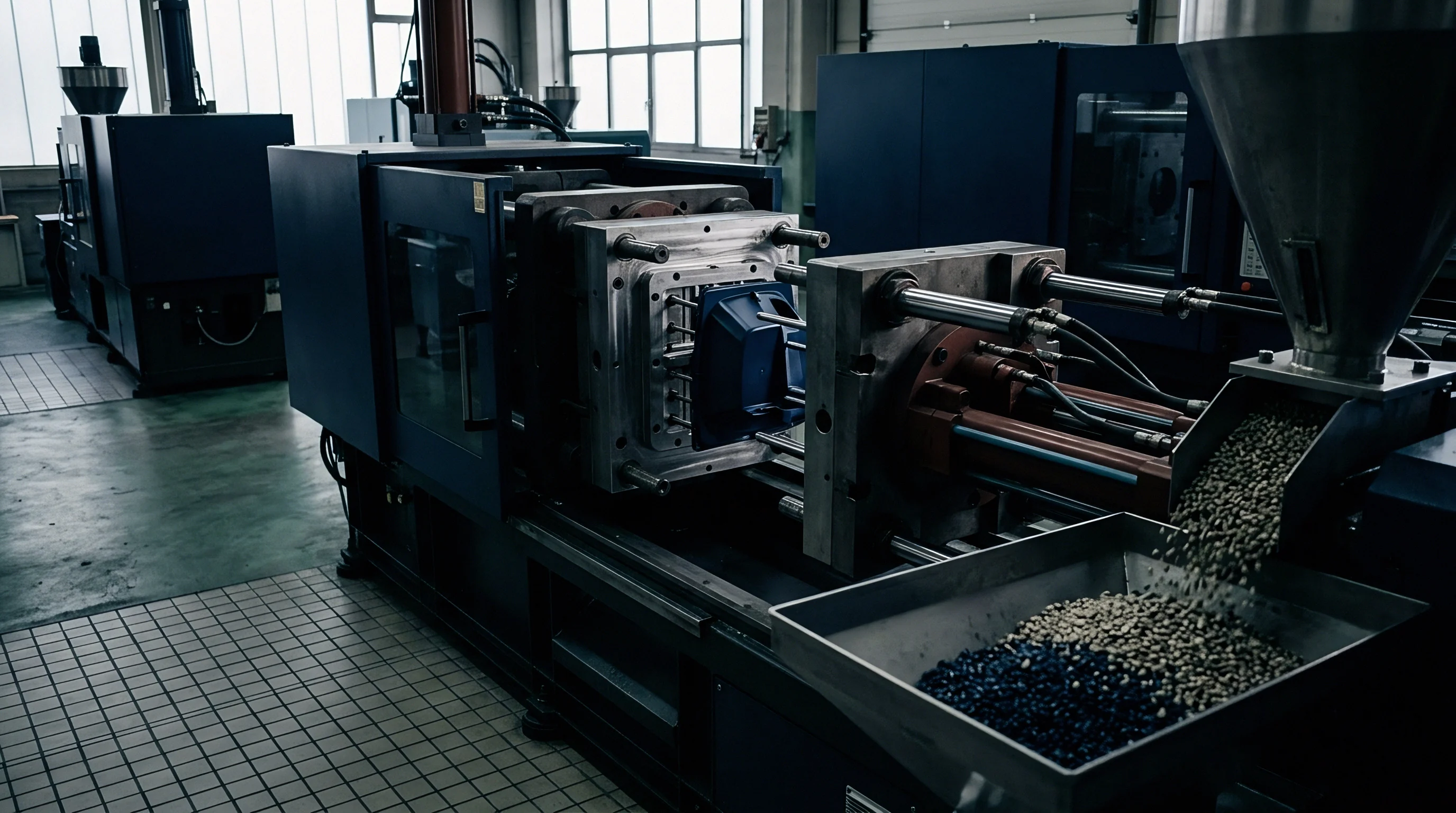
Tooling
Steel construction choices determine whether high cavitation moulds maintain uniform cavity pressure profiles across thousands of production cycles. Injection moulding polyamides under high packing pressures imposes heavy mechanical loads on tool components. Cavity walls experience continuous cyclic loading up to one hundred fifty megapascals at elevated melt temperatures.
Substandard steel selection or inadequate plate thickness leads to dynamic tool deflection during packing. Deflection alters local cavity dimensions, creates parting line flash, and permits pressure loss that undermines transverse matrix contraction control.
High-pressure polyamide tooling demands high-grade tool steels with exceptional compressive strength and thermal conductivity. Premium hot-work tool steels such as 1.2343 (H13) or corrosion-resistant martensitic stainless steels like 1.2083 hardened to fifty-two to fifty-six Rockwell C provide necessary resistance to plastic deformation under cyclic packing loads.
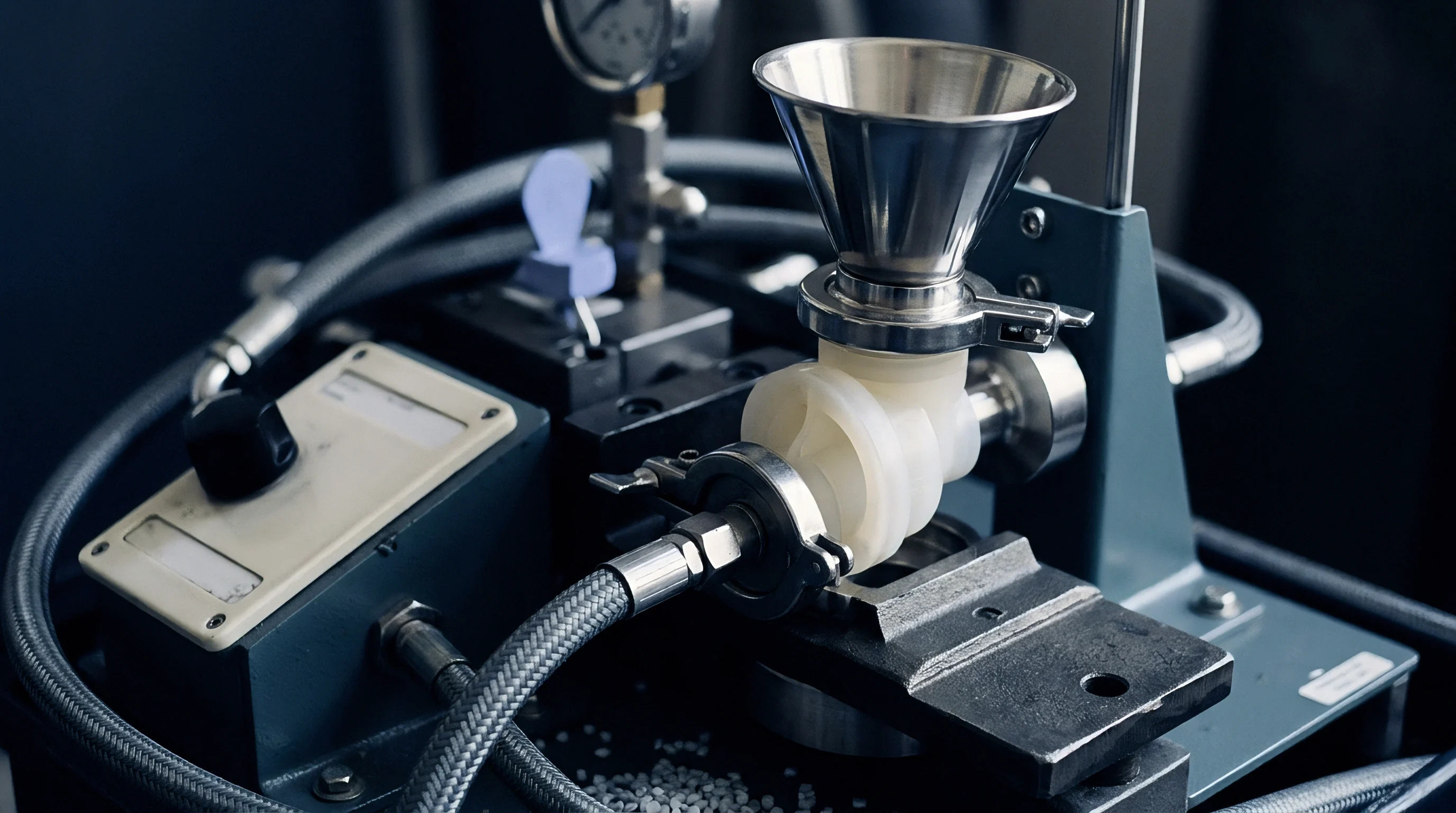
Cavity Pressure Transducer Placement and Signal Integrity
Piezoelectric sensors positioned directly behind ejector pins register true melt dynamics during injection. Direct in-cavity pressure measurement provides real-time data on pressure transmission from nozzle to cavity end. Atmospheric pressure readings outside the cavity fail to reflect true conditions inside the mould.
Friction losses across runners and sub-gates significantly reduce effective hydraulic pressure delivered to the polymer matrix.
Transducer positioning dictates monitoring capability. Mounting sensors near the gate captures peak packing pressures and gate freeze timing. Installing sensors at the furthest flow point ensures that minimum packing pressure thresholds are met before solidification terminates.
Placing piezoelectric sensors within two millimeters of the thickest nominal wall section delivers the most reliable indication of core cooling conditions.
Placing cavity pressure transducers directly behind gate regions prevents packing pressure deficits before gate freeze occurs.
Data from cavity transducers directly controls machine execution in scientific moulding processes. Pressure signals trigger machine transfer from velocity-controlled filling to pressure-controlled packing once cavity fill reaches ninety-nine percent. Automated decoupling prevents high-pressure momentum spikes that damage tool parting lines while ensuring immediate, seamless application of high packing pressure for spherulitic structure control.

Conformal Cooling Architecture for Uniform Heat Extraction
Additive manufacturing permits cooling circuits to follow complex cavity contours at constant depths. Conventional straight-drilled cooling channels create non-uniform thermal fields, particularly in core inserts and corner geometries. Non-uniform cooling causes local variations in spherulitic growth kinetics and crystallization rates.
Regions adjacent to cooling channels freeze rapidly under high pressure, while isolated steel sections run hot, extending crystallization times and increasing transverse contraction.
Conformal cooling channels maintain uniform temperature distributions across entire cavity surfaces. Uniform thermal boundaries eliminate spatial variations in supercooling Δ T, resulting in consistent spherulite nucleation and growth rates across the part geometry. Heat extraction equalization reduces differential matrix contraction, eliminating thermal warpage at its source.
Cooling channel fluid velocity must maintain turbulent flow characteristics to maximize heat transfer coefficients. Reynolds numbers inside cooling circuits must exceed four thousand to break down laminar thermal boundary layers. Maintaining high turbulent flow rates ensures rapid, balanced heat removal, permitting high cavity pressure to freeze fine spherulitic matrices efficiently without extending total cycle times.

Gate Seal Mechanics and Pack Pressure Delivery
Solidification at the cavity intake determines the duration of effective pressure transmission. Gate design dictates the boundary between machine hydraulic control and cavity isolation. If the gate geometry is too thin, rapid thermal freezing seals the gate prematurely, leaving core part regions unpacked while the matrix is still crystallizing.
Premature gate seal leads to uncontrolled transverse contraction, sink marks, and high volumetric shrinkage.
Conversely, excessively large gates extend gate seal times beyond core crystallization duration, wasting machine cycle time and creating large gate stub removal defects. Submarine and cashew gates designed for automated degating must incorporate precise land lengths to balance shear heating during injection with rapid, controlled freezing after packing completion. Valve-gated hot runner systems provide optimal control, allowing mechanical closure of valve pins precisely when core cavity pressure reaches desired target levels.
Tool construction parameters must meet strict operational guidelines:
- Minimum core plate thickness must sustain peak packing pressure of one hundred fifty megapascals with dynamic elastic deflection staying below 0.02 millimeters across all cavity spans.
- Hot runner nozzle sizing must prevent shear-induced thermal degradation of polyamide chains during rapid pack-volume delivery into cold cavity spaces.
- Venting depth specs must hold between 0.015 and 0.020 millimeters to allow rapid air escape during high-pressure pack phases without permitting polymer flash.
- Guide pin alignment accuracy must maintain cavity-to-core alignment within 0.005 millimeters to prevent asymmetrical wall thickness and unbalanced transverse contraction.
| Steel Grade (DIN / AISI) | Hardness (HRC) | Thermal Conductivity (W/m·K) | Yield Strength (MPa) | Compressive Rating | Max Cavity Pressure (MPa) |
|---|---|---|---|---|---|
| 1.2311 / P20 | 30-34 | 29.0 | 850 | Moderate | 60 |
| 1.2738 / P20+Ni | 32-38 | 30.0 | 950 | Moderate | 80 |
| 1.2343 / H13 | 50-54 | 24.5 | 1450 | High | 140 |
| 1.2083 / 420 SS | 52-56 | 19.0 | 1500 | Very High | 160 |
Mould designs that fail to deliver uniform hydraulic pressure across all cavities produce parts with varying crystalline densities, causing dimensional rejection and scrap rates during secondary assembly.
Bench
Laboratory evaluation of crystalline structures requires rigorous thermal control and precise optical equipment. Quantifying spherulitic growth kinetics and transverse matrix contraction demands standardized metrology procedures that isolate pressure-induced kinetic changes from environmental noise. Material verification protocols rely on micro-structural analysis, differential thermal measurements, and non-destructive three-dimensional dimensional inspection.
Accurate baseline characterization begins with raw resin quality verification. Melt flow rate testing under ISO 1133 protocols confirms molecular weight distribution consistency before mould trials begin. Variations in initial chain length directly impact spherulitic growth rates and melt compressibility under high packing pressure.
Polarized Optical Microscopy and Spherulite Radius Mapping
Thin cross-sectional slices cut from frozen mouldings reveal structural patterns when illuminated by cross-polarized light. Microtome sectioning produces specimen slices between five and fifteen micrometers thick taken perpendicular and parallel to the injection flow path. Polarized light passing through anisotropic spherulitic structures generates distinctive Maltese cross extinction patterns due to radial orientation of crystalline lamellae.
Optical analysis quantifies average spherulite radii, nucleation site density, and transcrystalline layer depth. Computer-aided image analysis maps spherulite boundary networks across skin, intermediate, and core cross sections. Under polarized light, fine-grained high-pressure core regions display dense, overlapping birefringence patterns, whereas low-pressure core sections present large, distinct spherulite boundaries suitable for direct radial measurements.
Polarized optical microscopy reveals that higher nucleation density under pressure reduces average spherulite radii below five micrometers in the core matrix.
Hot-stage polarized optical microscopy enables real-time observation of spherulite growth kinetics under controlled thermal conditions. Specimens heated above melting temperature and quenched to isothermal crystallization targets yield radial growth rate data G = dR/dt. Incorporating pressure-cell attachments permits direct measurement of growth rate suppression under applied hydrostatic force up to one hundred megapascals.

High Pressure Differential Scanning Calorimetry Execution
Standard atmospheric testing fails to replicate the physical environment inside an injection cavity during solidification. High-pressure differential scanning calorimetry measures heat flow events under controlled hydrostatic gas pressures up to one hundred fifty megapascals. Test samples weighing three to eight milligrams undergo controlled cooling ramps from three hundred degrees Celsius down to ambient room temperature under target isobaric conditions.
High-pressure thermograms reveal shifts in peak crystallization temperature Tc, crystallization onset temperature, and total crystallization enthalpy Δ Hc. Data collected across multiple pressure increments establishes empirical relations for pressure-dependent crystallization kinetics utilized in advanced process simulation software. Raising cavity packing pressure from forty to one hundred megapascals under controlled mold temperature trials produces roughly a twelve percent increase in spherulitic nucleation density.
Enthalpy values derived from integration of heat flow peaks allow direct calculation of matrix crystallinity percentage. Total crystallinity χc calculates by dividing measured sample enthalpy Δ Hc by theoretical enthalpy for one hundred percent crystalline polyamide (230 Joules per gram for PA66). High packing pressure increases absolute crystallinity while restricting average spherulite dimensions.
Micro Computed Tomography for Internal Contraction Analysis
X-ray attenuation mapping captures internal density variations non-destructively throughout complex geometrical features. High-resolution industrial micro-CT scanners resolve spatial density variations down to voxels smaller than three micrometers. Attenuation coefficients correlate directly to local polymer density, allowing visualization of internal contraction gradients without physical destruction of molded components.
Micro-CT scan data generates full three-dimensional volumetric deviation maps compared against original CAD geometry. Volumetric mapping isolates transverse matrix contraction from longitudinal contraction across complex features like internal rib intersections, snap fits, and boss geometries. Software algorithms compute localized dimensional variance, identifying zones where packing pressure transmission failed during core solidification.
Quality documentation requires explicit inclusion of testing and process parameters in production qualification dossiers:
- Raw material lot identification including raw resin moisture content verified below 0.05 percent by weight via Karl Fischer titration prior to moulding.
- Cavity pressure trace data recorded at two thousand Hertz sampling frequencies capturing peak pressure, packing duration, and pressure decay rate.
- Differential scanning calorimetry thermograms documenting crystallization onset temperature and enthalpy values under process-relevant pressures.
- Micro-CT volumetric deviation reports displaying dimensional variance histograms categorized under DIN 16742 tolerance classes.
- Polarized microscopy micrographs confirming core spherulite average diameter compliance below specified maximum thresholds.
Applying ISO 294 clause four requires shrinkage testing on unreinforced polyamides to occur after a forty-eight hour conditioning period at fifty percent relative humidity, which establishes a baseline that prevents disputes over post-crystallization dimensional drift.


Economics
Financial performance of high-volume moulding projects depends directly on cycle seconds and tool longevity. Achieving tight dimensional tolerances via high cavity pressure introduces complex trade-offs between unit piece price, machine clamping requirements, and capital expenditure for tooling. Operating moulding presses at elevated cavity pressures demands higher clamp tonnage, increasing hourly machine rates.
Extended holding pressure times required to control core transverse matrix contraction add seconds to cycle times, directly impacting daily production yields.
Sourcing strategies must balance precision engineering requirements against landed part costs. Specifying unnecessarily tight dimensional tolerances forces processors to run long packing cycles under extreme pressures, driving up unit costs. Conversely, under-specifying pressure requirements results in dimensional instability, high post-moulding warpage scrap, and costly assembly line downtime.
Amortization schedules rely on predictable output rates.
Cycle Time Inflation from Extended Holding Pressures
Maintaining pack pressure until gate freeze adds continuous costs to every machine hour. Cooling time constitutes the largest single component of total injection moulding cycle time. Extending holding pressure from three seconds to eight seconds to ensure core crystallization under high pressure directly increases total cycle time from eighteen seconds to twenty-three seconds.
A twenty-seven percent increase in cycle time reduces daily part output from four thousand units down to three thousand one hundred thirty units per press. Operating an automated three-hundred-ton moulding press costs approximately seventy-five dollars per hour. Cycle time extensions increase machine time allocation per unit, directly driving up unit piece price.
Process engineers must calculate the exact point of diminishing returns where additional packing time no longer yields measurable improvements in transverse matrix contraction or dimensional tolerance compliance.
Optimization of pack time relies on gate freeze studies. Weighing parts produced at incremental holding time steps identifies the exact second when part weight stops increasing. Extending packing past gate freeze wastes machine time and energy without affecting internal spherulitic growth or matrix contraction.

Cavitation Strategy and Machine Tonnage Requirements
High internal cavity pressures require proportional clamping forces to prevent parting line flash. Required clamp tonnage calculates by multiplying total projected part and runner surface area by peak internal cavity pressure, applying a safety margin factor of 1.2 to 1.5. Operating at packing pressures of one hundred twenty megapascals requires significantly larger moulding presses than standard moulding processes running at forty megapascals.
Evaluating cavitation options involves evaluating press hourly rates against total output volumes. A four-cavity tool running high packing pressure may require a three-hundred-ton press, whereas an eight-cavity tool producing the same part geometry under high pressure demands a six-hundred-ton press. Machine hour rates scale rapidly with clamp tonnage class, tying tooling amortization directly to press sizing.
Higher cavitation increases tool capital costs while reducing unit machine overhead costs per part. However, maintaining uniform cavity pressure delivery across high cavitation tools demands complex runner balancing and expensive valve-gated hot runner systems. If hydraulic pressure varies across cavities in an eight-cavity tool, parts from outer cavities will exhibit higher transverse contraction and lower crystalline density than parts from inner cavities near the main sprue, leading to high scrap rates.

Amortisation Models for High Precision Mould Construction
Capital expenditures for hardened steel dies with integrated pressure sensing recover through reduced scrap rates over long production runs. Premium tool construction utilizing 1.2343 hardened steel and conformal cooling channels increases initial tooling investment by twenty-five to forty percent compared to standard P20 tooling. For a complex technical component, tooling cost may rise from sixty thousand dollars to eighty-five thousand dollars.
Amortizing twenty-five thousand dollars of additional tooling cost over a production run of five hundred thousand parts adds five cents per part to capital expenditure. However, precision tooling capable of sustaining uniform high cavity pressures enables production of parts meeting DIN 16742 TG4 tolerance standards without post-moulding annealing or sizing fixtures. Scrap reduction from five percent down to 0.5 percent saves thousands of units over the production life, fully offsetting initial tooling investments within the first year of volume manufacture.
| Cavity Pressure (MPa) | Hold Time (s) | Total Cycle (s) | Required Press (Tons) | Hourly Rate (USD) | Piece Machine Cost (USD) |
|---|---|---|---|---|---|
| 40 | 3.0 | 17.5 | 180 | 52.00 | 0.253 |
| 80 | 5.5 | 20.0 | 250 | 65.00 | 0.361 |
| 120 | 8.0 | 22.5 | 350 | 82.00 | 0.512 |
| 150 | 10.5 | 25.0 | 450 | 98.00 | 0.680 |
Precision manufacturing economics dictate that process parameters must remain locked once tooling qualification completes. Altering packing pressure or hold time to artificially boost production rates alters microstructural spherulite kinetics, disrupts transverse matrix contraction control, and forfeits dimensional compliance. Balancing cavity pressure with cooling time establishes the commercial limit of dimensional control in polyamide moulding.