Non Isothermal Tube Model Characterization for High Speed Thermoforming Stretch
Accurate non isothermal tube characterization reduces thermoforming wall variance to under six percent at hundred hertz stretch rates.
Kinematics
In plug-assisted thermoforming, sheet deformation occurs over time scales from ten to one hundred milliseconds. When thin polyolefin or polyester sheet is stretched faster than five meters per second, molecular chains move quickly from an entangled isotropic state into extreme uniaxial and biaxial orientation. Deformation rates routinely exceed the reciprocal of the Rouse relaxation time, forcing polymer segments to stretch along their primitive path.
At these speeds, isothermal assumptions collapse. Internal friction dissipates heat while contact with the plug drives rapid conductive losses, creating sharp temperature gradients across the sheet thickness. Describing this behavior requires a viscoelastic framework accounting simultaneously for non-linear chain stretch, orientation relaxation, convective constraint release, and thermal softening.
Tube constitutive formulations provide the physical basis for entangled polymer melts under rapid extension. Standard linear viscoelastic models cannot capture the severe strain hardening seen in equibiaxial and planar stretch fields above the glass transition temperature or melting point. By treating individual polymer chains as constrained within a virtual tube of neighboring entanglements, the model splits relaxation into separate spatial and temporal mechanisms.
The orientation tensor tracks segment alignment geometrically, while the scalar stretch ratio measures chain contour length relative to equilibrium.

Entanglement Tube Mechanics under Rapid Elongation
Non-linear stretch mechanics constrain chain extension inside the tube. At lower rates, contour length relaxes quickly via Rouse motion along the tube path. Once the extensional strain rate exceeds the inverse of the stretch relaxation time, the chain fails to retract fast enough to preserve its equilibrium length.
Backbone tension rises, producing marked strain hardening. In high-speed thermoforming, that hardening stops localized necking and promotes uniform material distribution down deep-draw container walls.
Convective constraint release speeds relaxation as high strain rates strip away entanglements. Tube renewal occurs through neighboring chains physically sliding past each other in addition to classical reptation. The Rolie-Poly constitutive formulation models these coupled behaviors with explicit terms for Rouse stretch relaxation, orientation retraction, and convective constraint release.
Adapting this framework for non-isothermal conditions requires treating each characteristic relaxation time as a dynamic function of local temperature.
Transient heat transfer at the plug face alters localized relaxation times before primary sheet expansion occurs.
Temperature shifts alter the internal energy of the polymer network. As thermal energy rises, the monomeric friction coefficient drops, accelerating molecular motion. Relaxation time relates to temperature via the Williams-Landel-Ferry equation near the glass transition temperature, transitioning to an Arrhenius relationship at melt processing temperatures.
Modeling actual stretch speeds requires mapping these relaxation times through temperature drops of thirty degrees Celsius within a fraction of a second.
Transient Non Isothermal Energy Balances
Energy transfer in the expanding sheet follows conservation equations that account for heat conduction, internal viscous dissipation, and boundary losses. Viscous dissipation causes local heating under fast extension. High strain rates convert mechanical work directly into heat, pushing the sheet core temperature up by several degrees Celsius before mold contact.
This internal warming reduces local melt viscosity and speeds chain retraction, countering strain hardening in high-stretch zones.
The heat flux balance through the sheet thickness combines conductive transport along the normal coordinate with convective surface cooling. Local temperature change combines internal heat generation and boundary conduction through material density and dynamic heat capacity.
ρ Cp fracpartial Tpartial t = nabla · (k nabla T) + boldsymbolτ : mathbfD
The stress tensor operates alongside the deformation rate tensor to establish mechanical dissipation. Given the low thermal conductivity of amorphous and semi-crystalline polymers, thermal boundary layers develop quickly near contact surfaces. The core stays hot while the skin cools, leaving a steep thermal gradient across a sheet thickness under two millimeters.
Capturing these transient fields requires tracking temperature history at every material point on the stretch path. Shift factors update the relaxation spectrum continuously during numerical integration. Ignoring internal heat generation leads to overestimating strain hardening, producing wall thickness predictions that diverge sharply from measured containers.
Which viscoelastic parameter dominates fast plug-assisted draw kinetics when core thermal dissipation offsets surface contact cooling?

Swell
Extensional response during rapid deformation dictates dimensional stability and wall thickness across thermoformed parts. Once a preheated sheet leaves the radiative heating zone, thermal equilibration establishes a temperature profile across its thickness. When the plug hits the sheet, local material stretches under mixed planar and biaxial modes.
Thinning resistance in these modes hinges on the extensional viscosity curve, which spikes at critical strain thresholds. This dictates whether the sheet stretches evenly or necks locally near the plug tip.
Polymer chains under rapid equibiaxial extension retain memory effects tied to their uncoiling history. On plug contact, material near the sheet center partially freezes from conductive heat loss, whereas the unconstrained annulus stretches quickly. This uneven stretch generates variable swell and relaxation once primary blowing pressure hits the sheet into the cold cavity wall.
Extensional Strain Hardening and Localized Necking
Strain hardening acts as a stabilizing force during thin-wall forming. When a weaker spot begins stretching faster than surrounding material, local strain rate rises. If the polymer exhibits strong extensional strain hardening, transient extensional viscosity in that area climbs, raising resistance to further deformation.
Stretch then shifts toward thicker regions, keeping wall thickness uniform.
Without strain hardening, thinning happens rapidly and catastrophically. Resins without enough long-chain branching or high-molecular-weight tails show flat or Troutonian extensional viscosity curves under high strain rates. During fast plug travel, these materials neck heavily at the shoulder, dumping excess material into the container base while leaving sidewalls paper-thin.
Characterizing the non-isothermal strain hardening parameter lets tool designers optimize plug speeds and geometry to stop local structural failure.
| Polymer Grade | Glass Transition / Melt Peak (C) | Zero Shear Viscosity (Pa s at Ref T) | Extensional Hardening Ratio (10 s-1) | Thermal Conductivity (W/m K) | Contact Heat Transfer Coefficient (W/m2 K) |
|---|---|---|---|---|---|
| Polypropylene Homopolymer (MFI 2.0) | 165 | 4200 | 4.2 | 0.22 | 1250 |
| Polypropylene Random Copolymer | 148 | 3100 | 3.5 | 0.20 | 1180 |
| PET Amorphous Grade | 78 | 1800 | 1.2 | 0.15 | 1450 |
| High Impact Polystyrene (HIPS) | 100 | 2600 | 2.1 | 0.17 | 1050 |
| Poly(lactic acid) High D-Isomer | 155 | 2200 | 1.4 | 0.19 | 1320 |
Material selection dictates the process window for the press setup. Polypropylene homopolymers with tailored molecular weight distributions show strong strain hardening because entanglements persist during fast stretch. Amorphous PET shows less hardening, making its window vulnerable to temperature shifts across the sheet.
Small changes in preheat temperature alter the extensional viscosity curve enough to cause sidewall collapse or blown corners.
Thermal Memory Effects during Cavity Expansion
Dynamic stretch alters the entropic state of the polymer matrix, storing elastic energy that relaxes over distinct timescales. Contact with cold mold metal freezes this molecular orientation in place, leaving high residual stresses in the container wall. Those stresses fuel post-molding shrinkage and warpage, compromising rim planarity and top-load strength.
A two-degree drop in sheet surface temperature doubles the extensional stress required to maintain a five-meter-per-second plug displacement rate.
Relaxation kinetics during final inflation depend on contact timing between polymer and mold metal. Inflation pressure must hit before the sheet drops below its minimum forming temperature. If pressure lags plug movement, elastic recoil pulls the sheet off the plug, causing webbing and uneven corner distribution.
Lower preheat temperatures increase extensional resistance, forcing higher inflation pressures to fill sharp mold corners without producing thin spots.

Rheology
Extracting tube model parameters under high-speed non-isothermal conditions takes specialized testing protocols. Standard rotational or capillary rheometers cannot recreate the transient extensional strain fields found in thermoforming. Filament stretching extensional rheometers and Sentmanat fixtures mounted in high-response environmental chambers are the standard tools for gathering non-linear extensional data.
Testing needs to cover strain rates from one to one hundred inverse seconds across the entire thermoforming temperature window. The procedure involves preheating rectangular or cylindrical specimens to a uniform temperature, applying a set non-isothermal thermal history, and pulling them at constant or accelerated stretch rates while recording tensile force and optical cross-section changes.
High Speed Extensional Characterization Protocols
Measuring transient extensional force accurately requires high-bandwidth load cells paired with optical tracking at the mid-filament cross-section. Gravity-induced sagging at elevated temperatures creates initial orientation errors that skew low-strain extensional viscosity calculations. Suspending samples in oil baths or using fast horizontal stretch setups minimizes sag before pull starts.
Controlling temperature during the stretch run poses a real challenge. Convective environmental chambers cannot shift air temperature fast enough to match actual thermoforming cooling speeds. Infrared heating arrays built directly into the rheometer frame allow fast thermal cycling, dropping specimen temperatures by up to fifty degrees Celsius per second during active stretching.
Fitting the non-isothermal Rolie-Poly or tube model to raw extensional data takes a step-by-step optimization workflow. Multi-mode relaxation spectra extracted from small-amplitude oscillatory shear measurements establish the linear viscoelastic baseline, fixing zero-shear relaxation times and plateau modulus components before non-linear parameters are fit.
An integrated non-isothermal constitutive model fitting procedure uses the following structured sequence:
- Obtain dynamic frequency sweep data across the operating temperature range to construct a master curve with shift factors derived from Williams-Landel-Ferry or Arrhenius relationships.
- Perform discrete Maxwell mode regularization to set the spectrum of relaxation times and moduli for the linear viscoelastic baseline.
- Run high-speed transient extensional tests at multiple constant strain rates under isothermal conditions to extract non-linear parameters, including the chain stretch parameter, convective constraint release coefficient, and internal stretch relaxation times.
- Run transient non-isothermal extensional tests with active specimen cooling during stretch to validate temperature-dependent non-linear shift functions and non-isothermal memory coupling terms.
- Feed thermal history data into the continuous differential constitutive solver to minimize the error between calculated tensile stress profiles and optical strain records.
Multi Mode Tube Model Parameter Identification
Single-mode viscoelastic models cannot capture the broad relaxation spectrum typical of industrial polydisperse polymers. A multi-mode approach assigns independent tube parameters to specific molecular weight fractions in the matrix. Short modes handle high-frequency relaxation and orientation loss at small strains, while long modes govern chain stretch and strain hardening at high deformation.
Optimization algorithms balance residual errors between shear and extensional stress predictions. Fitting parameters exclusively to extensional data often produces unrealistic shear responses, skewing FEA calculations where mixed shear and stretch occur together along the plug interface.
| Mode Index | Relaxation Time Tau_d (s) | Stretch Time Tau_s (s) | Modulus G_i (Pa) | CCR Parameter Beta | Non-Linear Chain Stretch Exponent |
|---|---|---|---|---|---|
| 1 | 0.0082 | 0.0009 | 145000 | 0.15 | 2.0 |
| 2 | 0.0640 | 0.0071 | 48000 | 0.12 | 2.0 |
| 3 | 0.4500 | 0.0480 | 12500 | 0.10 | 2.0 |
| 4 | 3.1000 | 0.3100 | 2800 | 0.08 | 2.0 |
| 5 | 22.500 | 2.0500 | 410 | 0.05 | 2.0 |
Errors in parameter identification pass straight into wall thickness predictions. In one comparative test, fitting a single-mode tube model to a polydisperse PP resin gave an average prediction error of twenty-two percent at container corners. Moving to a five-mode spectrum brought that corner thickness error down below four percent under identical boundary conditions.
A post-mortem evaluation of a deep-draw polypropylene trial illustrates this, where sidewall thinning caused collapse during top-load testing. Initial FEA simulations relied on isothermal extensional data measured at a constant preheat temperature of one hundred and fifty-five degrees Celsius. That simulation predicted a minimum wall thickness of zero point three two millimeters along the lower radius, comfortably clear of the zero point two five millimeter threshold.
Re-characterizing the material with non-isothermal multi-mode tube parameters showed a different picture. In production, rapid heat transfer between the aluminum plug tip and the sheet dropped local polymer temperature to one hundred and forty-two degrees Celsius within thirty milliseconds of contact. This local drop shifted the stretch relaxation time up by a factor of three point four, stiffening material right at the plug tip.
The stiffened tip resisted stretching, forcing the unchilled free-spanning sheet by the plug shoulder to absorb over eighty percent of total displacement. The updated non-isothermal simulation predicted localized wall thinning down to zero point one eight millimeters along the upper sidewall. Sectioned trial containers showed an actual wall thickness of zero point one nine millimeters, proving non-isothermal characterization is necessary to capture local thermal-stiffening defects.
Sub-millisecond parameter update steps within non-isothermal solver loops prevent artificial numerical damping during high-rate strain hardening events.
Deriving non-isothermal tube parameters from steady-state isothermal assumptions yields wall profile predictions that fail in physical tool testing, wasting modification capital and delaying sign-off.
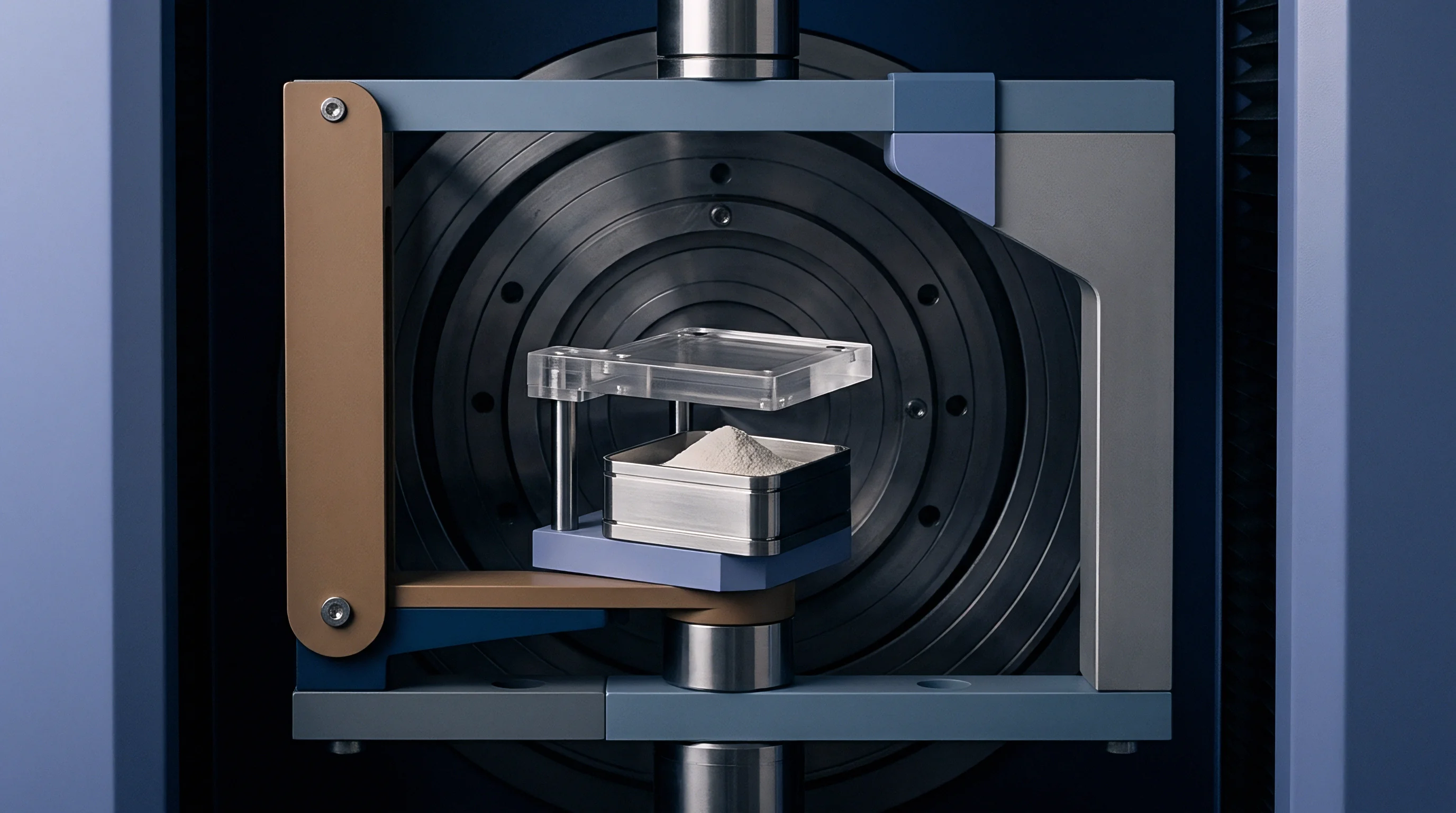

Boundary
Interface mechanics between the heated sheet and solid tooling drive local temperature fields and sheet movement as the plug penetrates. Thermal contact resistance varies dynamically with pressure, surface roughness, and local material compliance. As the plug advances, rising contact pressure forces micro-scale contact between the polymer melt and plug surface, pushing up the heat transfer coefficient.
Friction between sheet and plug dictates whether material slides into the cavity or sticks to the plug face. Sticking holds sheet thickness under the plug tip, starving the sidewalls. Controlled slip lets material draw evenly off the plug into expanding sidewalls, improving overall thickness distribution.
Interfacial Heat Transfer at Tooling Surfaces
Contact heat transfer values vary by an order of magnitude based on tooling material, surface texture, and local pressure. Uncoated aluminum plugs possess high thermal conductivity, pulling heat quickly from the sheet skin. This chilling freezes the contact layer into a high-viscosity boundary that acts like a solid cap.
Syntactic foam ~ made of hollow glass microspheres in an epoxy resin matrix ~ has low thermal conductivity and volumetric heat capacity. Plugs made from syntactic foam limit cooling in the contacting polymer layer. The sheet surface stays warm and ductile, stretching evenly over the plug without local chilling.
| Tooling Material / Coating | Thermal Conductivity (W/m K) | Contact Heat Transfer Coefficient (W/m2 K) | Static Friction Coefficient (PP at 150 C) | Dynamic Friction Coefficient (PP at 150 C) |
|---|---|---|---|---|
| Standard Aluminum (6061-T6) | 167.0 | 1850 | 0.45 | 0.38 |
| PTFE-Coated Aluminum | 167.0 | 1100 | 0.18 | 0.12 |
| Syntactic Foam (Standard Grade) | 0.12 | 180 | 0.28 | 0.22 |
| Syntactic Foam (High-Temp Epoxy) | 0.15 | 210 | 0.25 | 0.19 |
| Micro-Textured Tool Steel (1.2344) | 24.0 | 1350 | 0.32 | 0.26 |
Optimizing interfacial thermal parameters requires structured calibration against temperature measurements taken during tool bring-up. Thermocouples embedded just under the surface of test plugs record transient temperature spikes on contact, allowing inverse heat transfer calculations to yield local conductance profiles.
A systematic calibration sequence establishes reliable interfacial boundary parameters for thermoforming simulation codes:
- Instrument the plug tip and cavity walls with fast-response micro-thermocouples flush with the working surface.
- Form test samples under baseline conditions while logging high-speed thermal profiles and force-displacement curves.
- Run inverse heat conduction calculations to derive dynamic contact heat transfer coefficients against instantaneous contact pressure.
- Measure sliding forces on heated plug surface plaques with a high-temperature friction rig to set friction coefficients across the processing window.
- Load calculated thermal conductance and pressure-dependent friction maps into the boundary conditions block of the solver.
Frictional Mechanics across Plug Contact Zones
Friction models need to account for temperature, sliding velocity, and normal stress. Classical Coulomb friction assumes a constant coefficient, missing how warm polymer melts actually behave. At high contact temperatures, polymer chains adhere to the plug surface, creating a shear-thinning gel layer governed by viscous shear limits rather than normal force proportionality.
As sliding speed rises, frictional heating at the interface raises local temperature, reducing dynamic shear resistance in the boundary layer. This thermal-frictional feedback loop lets sheet material slip past the plug shoulder late in the stroke, altering final wall distribution.
A five-degree-Celsius fluctuation in plug temperature produces a 14 percent variance in minimum wall thickness.
While syntactic foam plug interfaces remain nearly adiabatic during forming, thermal transfer across the skin still necessitates non-isothermal modeling.
Tooling
Bringing non-isothermal tube characterization into mold engineering changes how containers are lightweighted. Standard container designs built in large safety margins, adding extra resin to cover unexpected corner thinning and wall variation. Accurate non-isothermal simulations let toolmakers refine cavity geometry, plug motion, and preheat patterns, cutting material while maintaining structural strength.
Top-load resistance, sidewall squeeze stiffness, and rim sealing rigidity depend on local wall thickness and strain-induced molecular orientation. Non-isothermal simulation maps predict local modulus development from stretch orientation, giving structural engineers exact local inputs for post-forming load analyses.

Structural Optimization and Mass Reduction
Re-engineering wall profiles with predictive non-isothermal models allows targeted resin distribution. Adjusting plug velocity profiles directs material from thick, un-stretched container bases into thin, stressed lower sidewall radii. Mass reductions of eight to twelve percent are possible without lowering top-load collapse thresholds.
Defining process windows with accurate models cuts scrap during cold starts and resin lot changes. Operating parameters often depend on operator intuition, causing repeated manual tweaks that produce off-spec parts. A calibrated non-isothermal model fixes the operating window for preheat temperatures, plug speeds, and inflation timing, enforcing process control.
| Parameter / Financial Metric | 12-Cavity Baseline Tooling | 24-Cavity High-Speed Tooling | 48-Cavity High-Speed Tooling |
|---|---|---|---|
| Tooling Capital Outlay (USD) | 145,000 | 280,000 | 520,000 |
| Forming Cycle Time (Seconds) | 2.8 | 1.8 | 1.2 |
| Output Rate (Containers per Hour) | 15,420 | 48,000 | 144,000 |
| Annual Resin Amortized Mass (Tonnes) | 620 | 1,930 | 5,780 |
| Target Container Mass (Grams) | 11.5 | 10.2 | 10.2 |
| Scrap Rate – Uncalibrated Window (%) | 4.2 | 5.8 | 8.5 |
| Scrap Rate – Non-Isothermal Calibrated (%) | 0.8 | 1.1 | 1.4 |
| Annual Unit Cost Reduction (USD/1000 units) | Baseline | 3.85 | 5.42 |
Qualifying high-cavitation tooling commercially requires verifying that every cavity holds dimensional tolerance during full production runs. Moving from twelve to forty-eight cavities introduces thermal and pneumatic distribution issues across the mold plate. Non-isothermal simulation highlights sensitive cavities vulnerable to manifold pressure drops or heater block temperature shifts from edge to center.

Cavitation Economics and Amortization Mechanics
Tooling investments weigh initial capital outlay against piece-cost savings from faster cycles and lighter containers. Characterization costs ~ a small fraction of the total tooling budget ~ are recovered quickly by avoiding tool recutting and cutting resin use over high-volume runs.
A rigorous tooling specification dossier incorporates non-isothermal characterization metrics to enforce quality controls across supply chains:
- Constitutive Model Dossier containing verified multi-mode tube relaxation spectra, non-isothermal shift functions, and raw extensional test data across the thermal processing window.
- Dimensional Wall Thickness Map defining minimum allowable material distribution across critical inspection zones under nominal and limit process boundaries.
- Interface Thermal Calibration Report documenting dynamic contact heat transfer coefficients and friction parameters for specified plug materials.
- Cavitation Uniformity Specification setting maximum acceptable wall variance between edge and center cavity positions at full operating speed.
- Process Window Envelope Matrix mapping approved ranges for preheat profiles, plug velocity profiles, inflation timing, and mold temperatures.
The purchase contract stipulates that the mold builder guarantees cavity-to-cavity minimum wall thickness variation within plus or minus zero point zero two millimeters during continuous production at the contract cycle speed of one point two seconds.