Modeling Non Isothermal Hydrolytic Degradation in Polyethylene Terephthalate Extrusion Micro Zones under Shear
Controlling micro-zone hydrolytic degradation in PET extrusion requires suppressing boundary-layer moisture below 30 ppm and limiting local shear heating spikes.

Diffusion
Pellet cores entering the feed section of an extruder carry residual moisture distributed across their amorphous and semi-crystalline regions. As solid resin granules transition into a compacted bed and melt under pressure, entrained water molecules partition into the molten polymer phase. Mass transport of water within the fluid layer proceeds rapidly under elevated temperatures and shrinking diffusion distances.
In extrusion processing, localized water concentration within thin fluid films dictates the initiation rate of hydrolytic chain scission long before the bulk melt homogenizes in the metering zone.

Water Transport in Polymer Melt Boundaries
Entrained fluid within the incoming resin matrix migrates into thin boundary layers during initial compression and fluxing. Water diffusion in polyethylene terephthalate melt follows a temperature-dependent Fickian model, in which the diffusion coefficient increases exponentially with local melt temperature. At barrel setpoints between 275 and 290 degrees Celsius, water molecules carry enough kinetic energy to traverse sub-millimeter polymer films in fractions of a second.
Rather than remaining trapped within unmelted core domains, water dissolves directly into the continuous melt phase where ester linkages face nucleophilic attack.
Elevated melt pressure accelerates this dissolution into the fluid phase.
High ambient pressure inside the screw channel prevents entrained moisture from flashing into steam, keeping water in a compressed, highly reactive solution state. When moisture levels exceed 50 parts per million, hydrolytic attack begins in the solid-liquid transition zone. The reaction rate scales directly with local water concentration, turning early-stage melt micro-zones into primary loci for molecular weight loss.
Modeling this phenomenon requires tracking water transport simultaneously with thermal energy accumulation across rapid shear deformation zones.
ISO 1133-1 method B melt mass-flow rate testing demands pre-drying below 50 ppm moisture to avoid artificial flow inflation during measurement.
Standard process sensors positioned along the barrel measure bulk properties, averaging thermal and chemical variations across large volumes. These macro-level instruments overlook micro-zone moisture concentrations along flight boundaries and barrel surfaces. Localized moisture hotspots form where semi-molten pellets undergo rapid shearing against heated metal walls, driving water diffusion into ultra-thin melt films before bulk mixing dilutes the reactant concentration.

Can Micro Zone Moisture Limits Prevent Hydrolytic Decay?
Processors operating at high throughputs often maintain incoming water content below fifty parts per million to suppress chain scission. Yet even deeply dried resin with an overall moisture content of 30 parts per million can undergo severe local hydrolytic degradation if boundary-layer transport concentrates water molecules into high-temperature shear micro-zones. In these micro-environments, local water concentration can spike to several hundred parts per million relative to the surrounding polymer matrix.
Bound water desorbs rapidly when exposed to high shear stresses.
The rate of boundary transport depends heavily on the local temperature gradient and shear stress field. Higher screw rotation speeds increase mechanical energy input, accelerating water migration into the liquid phase while raising local melt temperatures through viscous dissipation. This coupling of rapid mass transport and elevated micro-zone temperatures drives ester bond cleavage even when hopper-level moisture analysis reports acceptable dryness.
| Extrusion Zone | Local Temperature Range (°C) | Mean Moisture Level (ppm) | Diffusion Coefficient (cm²/s) | Relative Hydrolysis Rate Factor |
|---|---|---|---|---|
| Solid Conveying | 25 – 180 | 30 – 200 | 1.2 x 10⁻⁸ | 0.01 |
| Melting / Transition | 180 – 275 | 30 – 200 | 4.5 x 10⁻⁷ | 1.00 |
| Barrier Flight Micro Zone | 285 – 310 | 50 – 350 | 1.8 x 10⁻⁶ | 8.50 |
| Metering Section | 275 – 290 | 20 – 80 | 8.0 x 10⁻⁷ | 2.10 |
| Extrusion Die Land | 280 – 295 | 15 – 50 | 9.2 x 10⁻⁷ | 1.40 |
| Values calculated for bottle-grade polyethylene terephthalate with an initial intrinsic viscosity of 0.80 dL/g processed at 100 rpm screw speed under steady-state conditions. | ||||
Viscosity loss is frequently attributed to ambient humidity uptake during silo transfer rather than uncalibrated desiccant beds in the processing hopper.

Dissipation
Mechanical energy transferred from the rotating screw shaft converts into thermal energy through fluid friction in high-shear regions. Polyethylene terephthalate exhibits strong non-Newtonian shear-thinning behavior at elevated deformation rates, causing apparent viscosity to drop while generating substantial internal heat. In narrow mechanical clearances, such as barrier flight tips and mixing elements, localized viscous dissipation raises melt temperatures well above barrel setpoints, creating thermal micro-zones that accelerate chemical degradation.
Shear Stress and Localized Energy Balance
Fluid deformation within narrow flow channels generates internal heat faster than thermal conduction can remove it through metal barrel walls. The rate of volumetric heat generation scales with the product of local shear stress and shear rate. In zones where shear rates exceed 5,000 reciprocal seconds, internal heat generation dominates the local energy balance, pushing localized melt temperatures 15 to 35 degrees Celsius above barrel setpoints.
Viscous friction generates substantial internal heat directly within the deformation zone.
Thermal conduction through high-temperature polymer melts is inherently slow, with thermal conductivity typically ranging from 0.15 to 0.25 W/m·K. Consequently, heat generated by intense mechanical shear remains localized within the thin fluid layer undergoing deformation. This localized adiabatic heating produces extreme temperature spikes across boundary layers, lowering local melt viscosity and accelerating degradation kinetics.
Local temperature spikes inside shear gaps accelerate ester link destruction long before barrel thermocouple displays register a thermal drift.
Mathematical modeling of non-isothermal micro-zones requires incorporating temperature-dependent rheological parameters. The Carreau-Yasuda model captures the transition from Newtonian behavior at low shear rates to power-law shear thinning at high deformation rates, using an Arrhenius temperature shift factor to account for thermal softening. Integrated into numerical fluid dynamics simulations, these non-isothermal models reveal extreme shear stress gradients across flight clearance gaps that correlate directly with localized polymer degradation.

Viscous Heating Equations for Narrow Clearances
Quantifying temperature spikes in thin fluid films requires coupling non-Newtonian flow models with local thermal energy conservation. The rate of mechanical energy conversion per unit volume is expressed as:
q_v = eta(gamma_dot, T) gamma_dot^2
where q_v is the volumetric heat generation rate, eta is the dynamic viscosity dependent on shear rate gamma_dot and absolute temperature T. The non-isothermal temperature rise across a micro-zone of thickness h with residence time t_r is modeled through energy accumulation:
Delta T = (q_v t_r) / (rho C_p) – (k_m (T – T_barrel) t_r) / (rho C_p h^2)
where rho is melt density, C_p is specific heat capacity, k_m is thermal conductivity, and T_barrel is the controlled metal barrel temperature. In narrow gaps where clearance h drops below 0.3 millimeters, local dissipation exceeds conductive cooling, driving rapid thermal escalation within milliseconds.
Local dissipation routinely exceeds conductive cooling in restricted clearance geometries.
Omitting these non-isothermal micro-zones from process models leads to severe underestimation of total polymer chain scission. Standard isothermal models predict negligible viscosity loss in short residence channels, whereas non-isothermal simulations incorporating viscous dissipation accurately reflect the molecular weight decay observed in physical trials.
Unmodeled thermal spikes degrade molecular weight unevenly across the melt stream, creating gauge variance and web breaks that stall film lines.


Scission
Chemical cleavage of the ester linkage in polyethylene terephthalate proceeds rapidly at processing temperatures above two hundred and seventy degrees Celsius. Hydrolysis represents the primary degradation mechanism when residual moisture is present, yielding one carboxylic acid end-group and one hydroxyl terminal group for each ester bond broken. Because carboxylic acid groups act as autogenous catalysts for ester hydrolysis, the reaction rate accelerates non-linearly as scission progresses, rapidly lowering average molecular weight and degrading physical melt properties.

Ester Bond Cleavage Kinetics and End Group Catalysis
Reaction rates governing polymer degradation accelerate as carboxyl terminal species accumulate within the fluid phase. The kinetic rate equation for hydrolytic chain scission incorporates both uncatalyzed and acid-catalyzed pathways, expressed as:
d / dt = (k_0 + k_c ^0.5)
where represents carboxylic acid end-group concentration, is dissolved water concentration, is the concentration of ester linkages, k_0 is the uncatalyzed kinetic rate constant, and k_c is the autocatalytic rate constant. Both kinetic constants follow Arrhenius temperature dependence with high activation energies, making the reaction exceptionally sensitive to localized shear heating spikes.
Accumulating carboxylic end groups catalyze further hydrolytic degradation.
High shear stresses present in extrusion micro-zones can lower the effective activation energy required for ester bond cleavage. Mechanical force applied across oriented polymer chains lowers the potential energy barrier for hydrolytic attack, accelerating the reaction rate beyond purely thermal expectations. This mechanochemical coupling causes severe molecular weight drops in zones experiencing combined high shear and elevated temperatures.
Intrinsic Viscosity Loss Calculations
Solution properties measured in phenol and dichlorobenzene solvents directly reflect reductions in average molecular weight. Intrinsic viscosity relates to number-average molecular weight through the Mark-Houwink-Sakurada relationship:
= K (M_n)^a
For bottle-grade resin, standard parameters in phenol/1,2-dichlorobenzene at 25 degrees Celsius yield K = 2.1 x 10⁻⁴ dL/g and a = 0.82. Hydrolytic chain scission directly reduces number-average molecular weight according to:
1 / M_n(t) – 1 / M_n(0) = integral( k_h(T) dt )
Hydrolytic scission directly destroys polymer chain length over time.
An intrinsic viscosity reduction of 0.05 dL/g corresponds to a fifteen percent drop in number-average molecular weight for bottle-grade resin processed at 285 °C.
Consider an operational case involving virgin bottle-grade resin with an initial intrinsic viscosity of 0.84 dL/g, corresponding to an initial number-average molecular weight M_n(0) of 26,500 g/mol. The polymer enters a barrier flight shear micro-zone containing 120 ppm dissolved moisture (0.0067 mol/kg water) at a set barrel temperature of 280 degrees Celsius. Intense viscous dissipation elevates the local melt temperature to 305 degrees Celsius (578 Kelvin) for a residence duration of 2.5 seconds within the high-shear gap.
At 305 degrees Celsius, the overall hydrolytic rate constant k_h reaches 0.42 kg/(mol·s). Integrating the scission equation over the 2.5-second residence window yields an increase in chain ends equivalent to 7.03 x 10⁻⁶ mol/g of polymer scission. The updated reciprocal molecular weight equals:
1 / M_n(t) = (1 / 26,500) + 7.03 x 10⁻⁶ = 4.476 x 10⁻⁵ mol/g
Inverting this value yields a reduced number-average molecular weight M_n(t) of 22,340 g/mol. Applying the Mark-Houwink-Sakurada equation converts this reduced molecular weight into a final intrinsic viscosity of 0.725 dL/g. The single micro-zone pass causes an intrinsic viscosity loss of 0.115 dL/g, destroying structural integrity and rendering the melt unusable for high-stretch container processing.
| Resin Grade Application | Initial IV (dL/g) | Activation Energy E_a (kJ/mol) | Pre-Exponential Factor A (kg/mol·s) | Initial (eq/tonne) |
|---|---|---|---|---|
| Textile Filament | 0.64 | 112.5 | 4.8 x 10⁸ | 28.0 |
| Container / Bottle | 0.80 | 125.0 | 1.2 x 10⁹ | 18.0 |
| High-Tenacity Industrial | 0.98 | 132.0 | 2.5 x 10⁹ | 12.0 |
| Thermoforming Sheet | 0.74 | 118.0 | 7.2 x 10⁸ | 22.0 |
Whether local shear stress physically alters the activation energy barrier of ester cleavage or merely accelerates mass transport of reactive end groups across micro-zone fluid boundaries remains actively disputed.

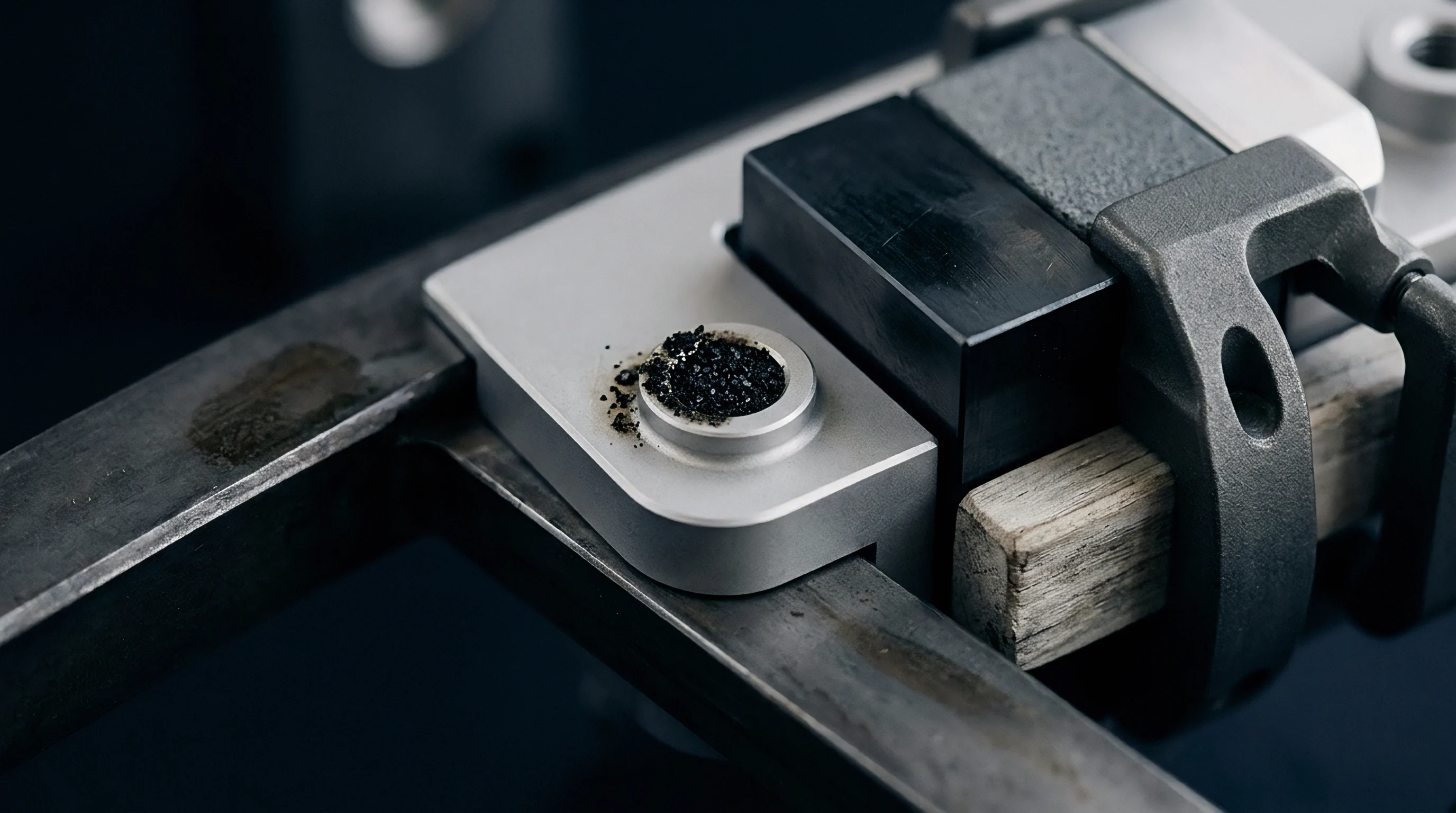
Flight
Narrow clearance gaps between the screw land and the inner barrel surface form high-shear micro zones that dictate thermal history. Flight geometry, clearance dimensions, and screw rotation speed govern the localized shear field imparted to the polymer melt. Mechanical wear on flight tips alters clearance dimensions over production campaigns, shifting the balance between viscous heat generation, volumetric leakage flow, and local fluid residence time.

Micro Zone Geometry and Clearance Tolerances
Mechanical dimensions across narrow flow channels dictate local deformation fields during processing. Radial clearance between screw flight lands and the barrel wall typically spans 0.10 to 0.25 millimeters in new extrusion machinery. As flight lands wear during extended operation with abrasive compounds or filled resins, clearances widen to 0.40 millimeters or more, dramatically altering flow mechanics across the micro-zone.
Clearance dimensions directly govern local shear rates and flow profiles.
Widening clearance gaps reduce the peak nominal shear rate, which scales inversely with clearance height (gamma_dot = pi D N / h). However, larger clearance gaps simultaneously increase back-leakage flow across the flight land, extending the residence time of polymer melt within the high-temperature micro-zone. The combined effect of extended thermal exposure and repeated flight passage often increases overall hydrolytic scission despite reduced peak shear rates.
- Measure barrel internal diameter using a calibrated three-point bore micrometer at 100-millimeter intervals along the processing length.
- Record screw flight tip outer diameter using precision external micrometers across both pushing and trailing flight edges.
- Calculate radial clearance gaps by subtracting screw diameter measurements from corresponding barrel bore dimensions.
- Inspect flight land surfaces for adhesive wear, scoring, pitting, or chemical pitting under ten-times optical magnification.
- Replace or re-flight screw sections where radial clearance exceeds manufacturer maximum tolerances by more than 0.12 millimeters.
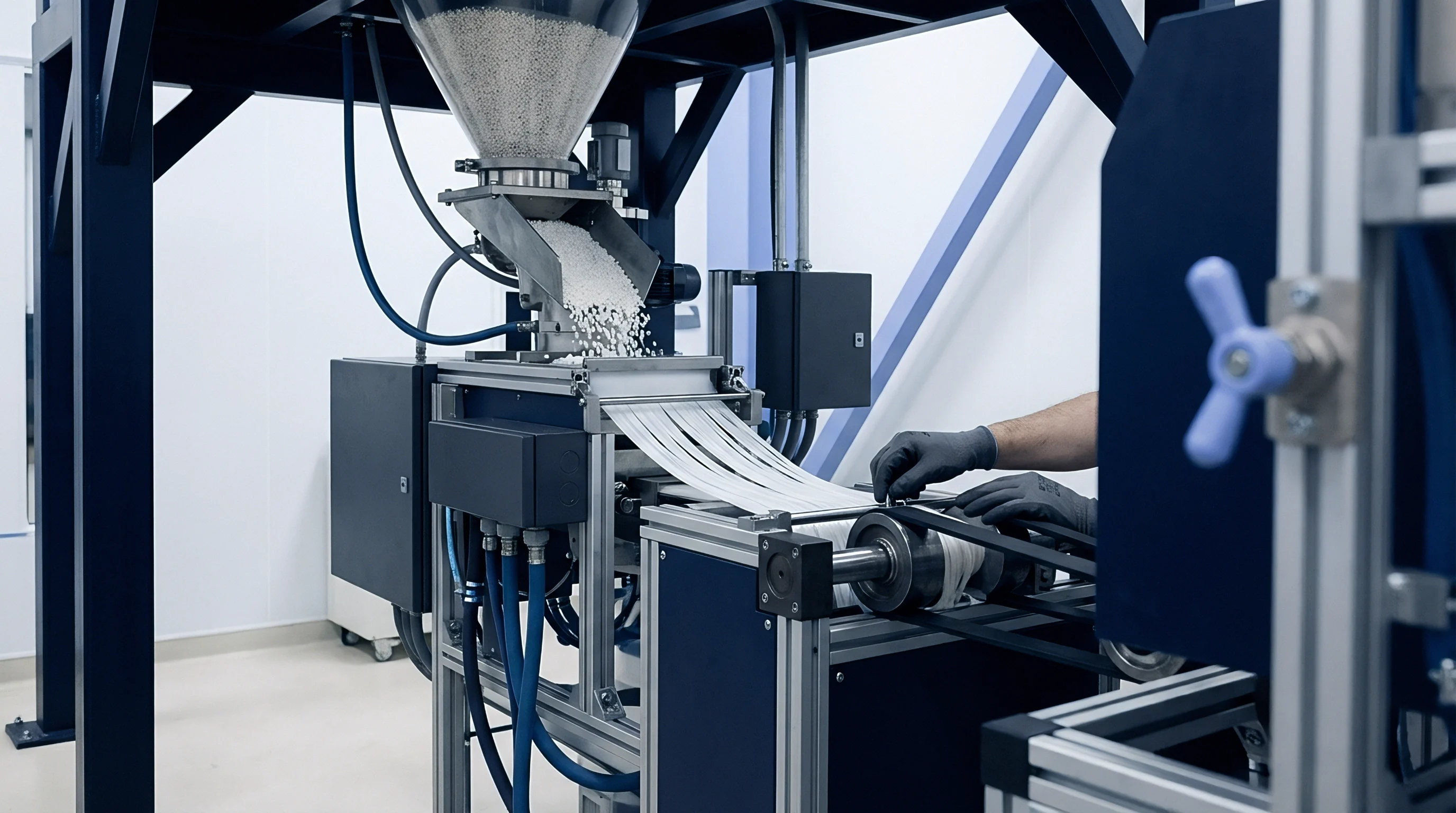
Shear Rate Profiles across Flight Tips
Velocity gradients across thin polymer films reach extreme magnitudes as screw rotation forces material through narrow mechanical gaps. Fluid entering the flight tip gap experiences rapid extensional deformation at the entrance, followed by intense simple shear within the land gap, and cross-phase expansion upon exit. This complex deformation field severely alters local polymer morphology and accelerates chemical degradation.
Screw wear progressively expands clearance gaps over continuous operational cycles.
Wear on screw flight tips increases clearance gaps, reducing peak shear rates while extending local residence times in thermal stagnation zones.
| Screw Component Element | Nominal Gap (mm) | Peak Shear Rate (s⁻¹) | Micro-Zone Residence Time (ms) | Calculated Temperature Jump (°C) |
|---|---|---|---|---|
| Feed Metering Flight | 0.20 | 2,200 | 12.0 | +8.5 |
| Barrier Flight Clearance | 0.12 | 6,800 | 3.5 | +24.0 |
| Maddock Mixing Tip | 0.15 | 8,500 | 2.1 | +31.5 |
| Pin Mixing Section | 0.50 | 1,400 | 45.0 | +12.0 |
| Die Land Gap | 0.80 | 650 | 120.0 | +4.2 |
Resin purchase contracts referencing ASTM D4603 specify solution viscosity limits that allow buyers to reject lots where shear-induced hydrolytic degradation drops inherent viscosity below 0.76 dL/g.


Drying
Desiccant air systems removing absorbed moisture from incoming resin pellets serve as the primary defensive barrier against hydrolytic chain scission. Polyethylene terephthalate is highly hygroscopic, absorbing atmospheric moisture up to saturation levels near 0.6 percent by weight (6,000 ppm) under humid conditions. Effective processing demands drying pellets to moisture levels well below 50 ppm, with high-performance technical applications demanding limits below 20 ppm to survive shear-induced thermal micro-zones without catastrophic intrinsic viscosity loss.
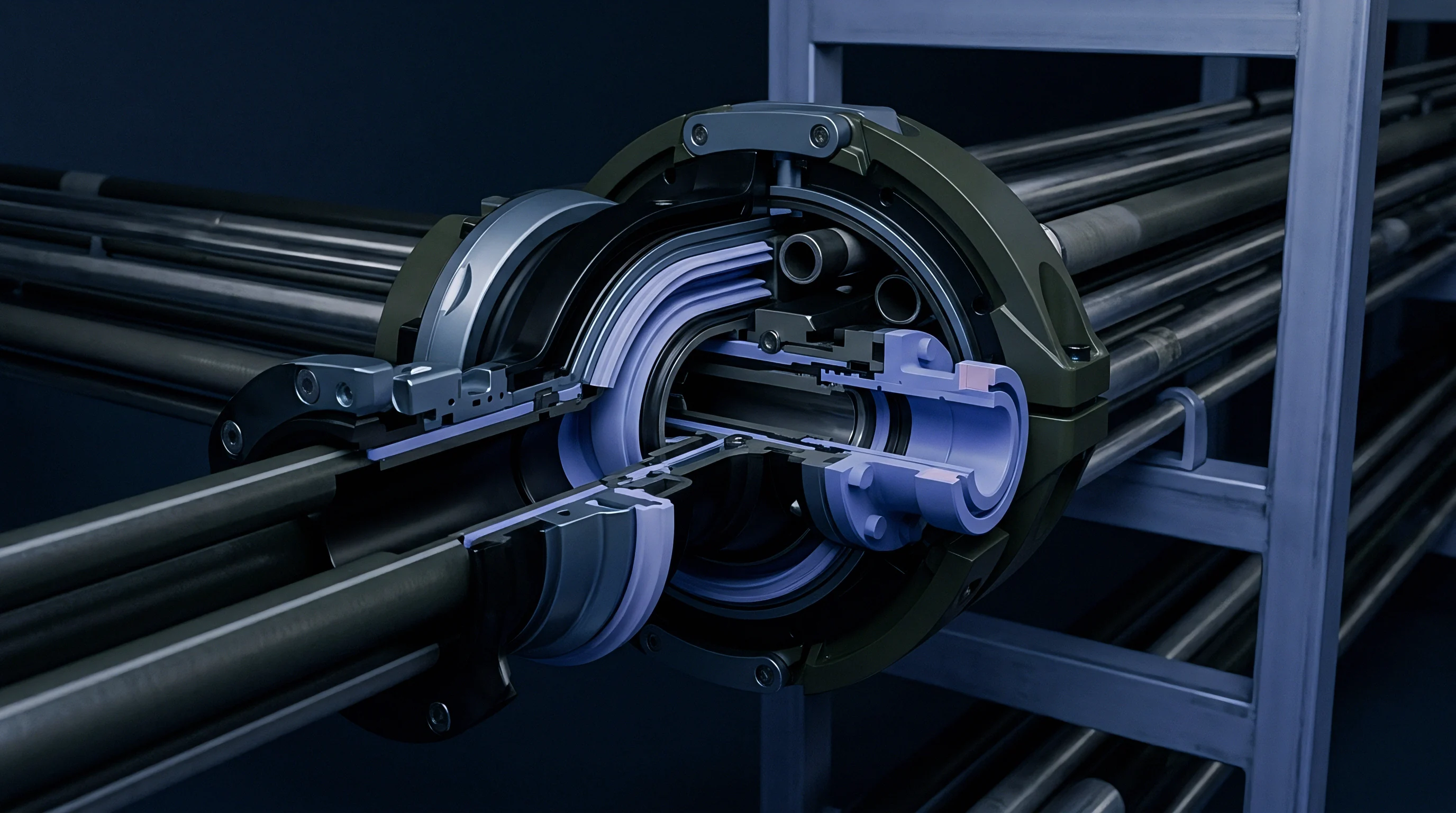
Desiccant Hopper Specifications and Moisture Control
Dehumidified air streams operating at dew points below minus forty degrees Celsius extract water molecules trapped within the polymer matrix. Process dryers must maintain air temperatures between 160 and 180 degrees Celsius for a residence duration of four to six hours. Insufficient drying time or elevated air dew points leave residual core moisture that rapidly diffuses into boundary melt layers during extrusion, triggering severe hydrolytic degradation inside barrier flight shear micro-zones.
Strict moisture control protects process profitability by preventing resin degradation.
Online moisture analyzers utilizing Karl Fischer coulometric titration or loss-on-drying sensor technology provide critical verification prior to feeding extrusion hoppers. Indirect measurement methods based on surface air humidity often fail to detect core pellet moisture, leading to unexpected degradation events during processing. Maintaining rigorous incoming verification procedures ensures material consistency and protects final product quality.
Maintaining dry resin prevents catastrophic scrap generation downstream.
- Haze Generation and Optical Clarity Loss manifested as micro-void formation and crystalline light scattering within injection blow molded bottle sidewalls.
- Impact Resistance Degradation resulting in catastrophic brittle fracture during drop-impact testing of thin-walled containers.
- Intrinsic Viscosity Drop causing severe melt tension collapse, parison sag, and sheet thickness instability during extrusion processing.
- Carboxylic Acid Accumulation accelerating thermal aging susceptibility and shortening long-term service lifetime of technical fibers.
- Process Instability and Gauge Fluctuation triggered by erratic melt pressure drops across die lands during high-speed extrusion runs.

Commercial Penalties of Molecular Weight Decay
Financial losses mounting from degraded resin manifest as elevated scrap rates, container line failures, and compromised part performance. When shear-induced hydrolytic scission reduces intrinsic viscosity below critical design thresholds, processed goods fail mechanical compliance testing, forcing raw material write-downs and expensive production line halts.
Degraded resin significantly lowers container burst pressure under mechanical stress.
- Karl Fischer Titration Verification measuring absolute water concentration below 30 ppm using ISO 15512 Method B prior to hopper loading.
- Desiccant Bed Dew Point Monitoring validating supply air dew points continuously at minus 40 degrees Celsius or lower under peak load.
- Solution Viscosity Testing confirming incoming pellet intrinsic viscosity meets specification limits within +/- 0.015 dL/g tolerance per ASTM D4603.
- Screw Clearance Wear Audit measuring flight tip radial clearance annually to prevent extended residence time leakage in high-shear micro zones.
- Thermal Profile Calibration cross-checking internal melt thermocouple readings against non-isothermal viscous dissipation models during grade switching.
Drying polymer to lower moisture limits pays for itself by maintaining resin grade integrity through high-shear extruder zones.