Meaning
Deformation behavior of polymer melts under tensile stress governs the stability of processes where materials are stretched rather than sheared. Measuring extensional rheology helps resin producers evaluate melt strength during film blowing and sheet extrusion. This measurement determines the maximum draw ratio a polymer can sustain before necking or rupture occurs.
Process Influence
Melt elasticity under tensile deformation dictates how a polymer behaves as it exits the extrusion die. High extensional rheology values prevent the sagging of extruded parisons in blow molding and stop bubble instability in blown film production. These properties are sensitive to long-chain branching, which increases the resistance to stretching under high strain rates.
Testing Instrument
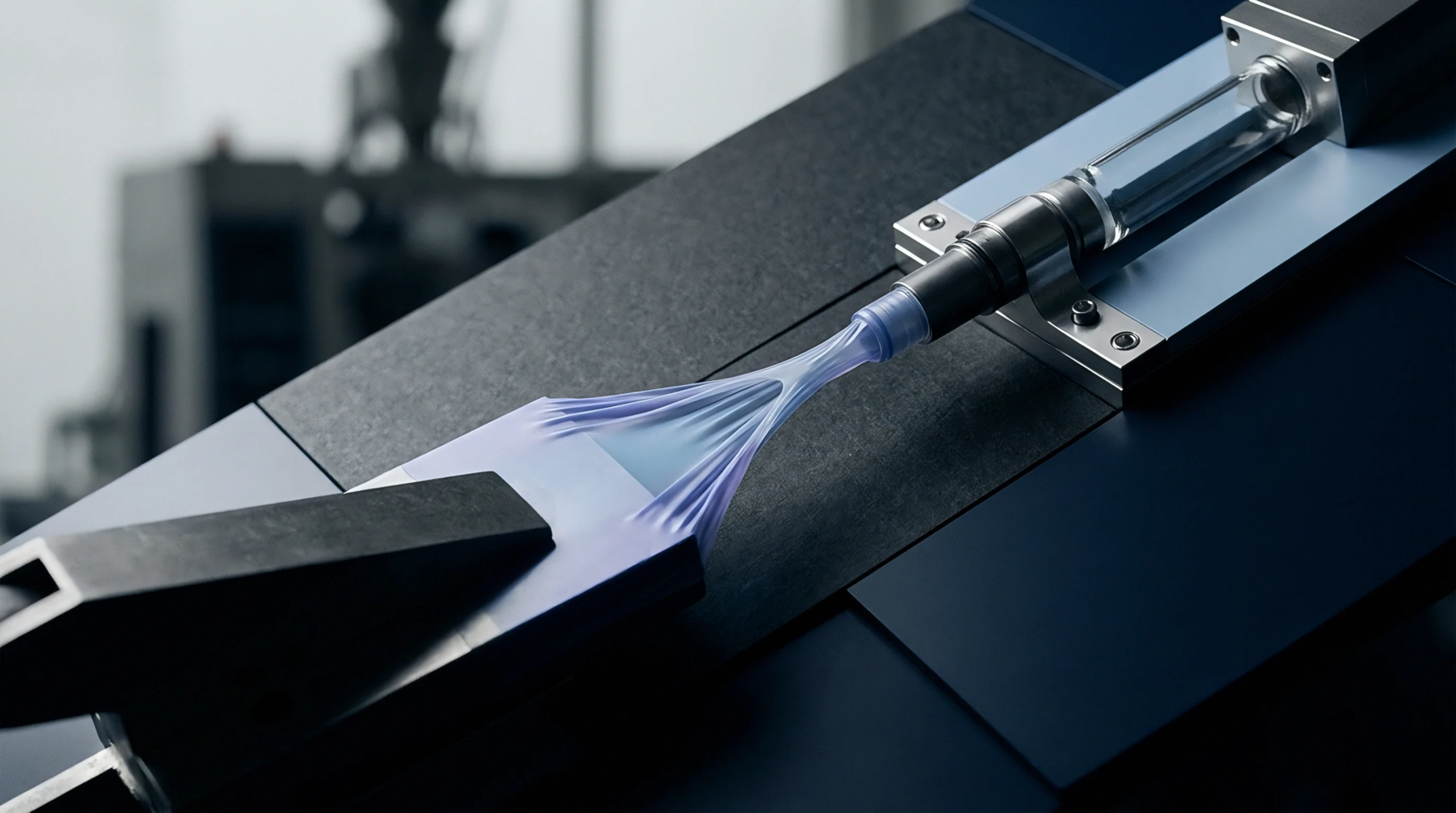
Elongational flow is analyzed using specialized instruments such as filament stretching rheometers or wind-up drums attached to capillary dies. These measurements of extensional rheology must be performed at precise temperatures to simulate actual factory conditions where the resin cools as it stretches. Capturing these transient forces gives a clearer picture of processability than standard shear viscosity tests alone.
Defect Prevention
Film tearing and wall thickness variations in thermoformed containers often stem from poor polymer melt strength. Resins that lack appropriate extensional rheology cannot distribute evenly over mold contours, leaving thin spots that fail mechanical tests. Compounders modify resin blends with high molecular weight components to improve stretching performance and reduce scrap rates.
This modification ensures that the melt maintains its integrity when stretched rapidly over deep-draw cavities, producing consistent part weights and uniform barrier properties across the entire surface of the container.