High Shear Rheology Calibration Thresholds for Recovered Polyolefin Industrial Blends
Calibrating high-shear capillary rheology via Bagley and Weissenberg-Rabinowitsch corrections prevents off-spec polyolefin lot processing failures.

Capillary
Standard 2.16 kg extrusion plastometers produce melt flow rate data that misrepresents how recovered polyolefin industrial blends behave inside high-speed processing machinery. Bench measurements under ISO 1133 or ASTM D1238 operate at low shear rates ~ typically between 1 reciprocal second and 10 reciprocal seconds ~ whereas commercial conversion subjects polymer melts to far higher deformation speeds. Mold runner channels, thin-wall gates, and extrusion die lips operate anywhere from 1000 reciprocal seconds to 100000 reciprocal seconds.
Standard MFI testing fails in this high-shear domain. Evaluating a recycled HDPE or PP lot solely on a single-point MFR creates severe processing errors: two recovered lots with the same melt flow rate of 2.0 grams per 10 minutes at 190 degrees Celsius under 2.16 kilograms can diverge by over 40 percent in apparent viscosity when forced through a mold gate at 10000 reciprocal seconds.
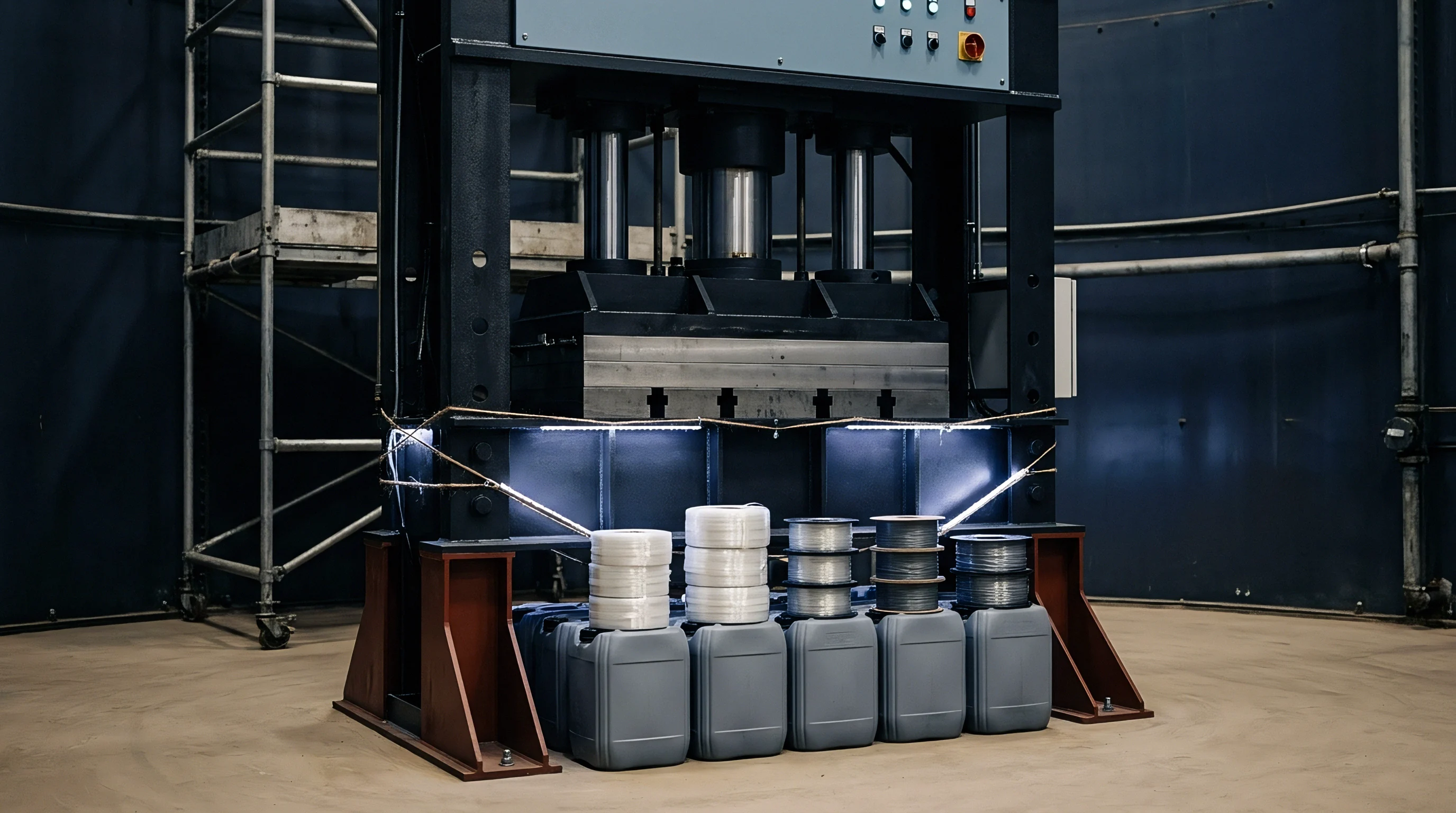
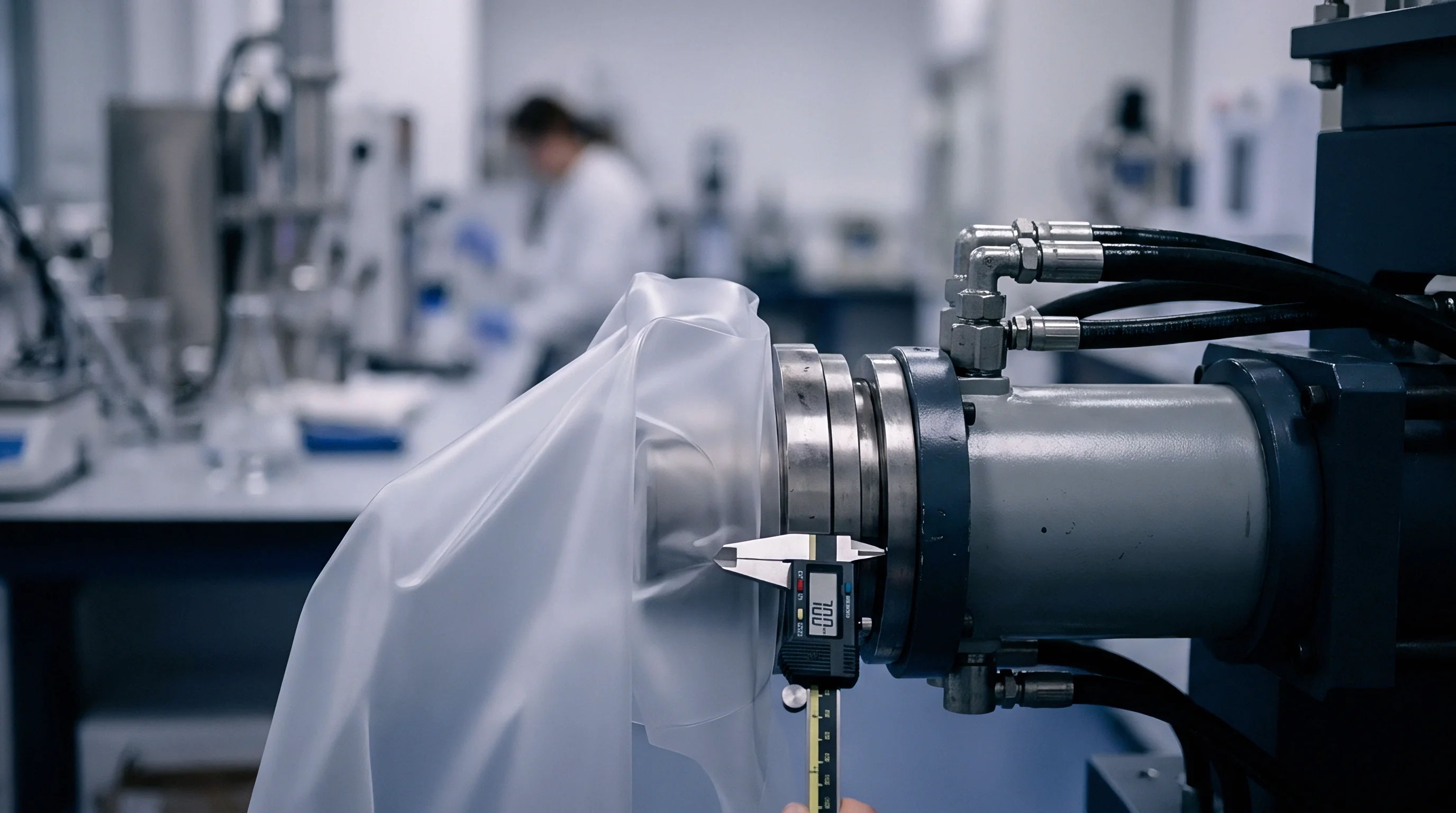
High-shear capillary rheometry under ISO 11443 and ASTM D3835 provides the essential analytical framework for characterizing recovered polyolefin blends. Deforming the melt inside a capillary tube mimics the actual stress field of primary processing equipment. High-shear viscosity determinations isolate structural variations in post-consumer and post-industrial feeds, including broad molecular weight distributions, cross-linked gel fractions, and minor phase polymer contaminants.
Measuring shear stress across a range of shear rates maps out the compound’s shear-thinning trajectory, defining the exact non-Newtonian flow regime met during high-speed processing.
Raw pressure data generated by high-pressure capillary rheometers cannot be converted directly into true shear stress or true wall shear rate without rigorous calibration corrections. The pressure drop recorded at the die entrance includes significant extensional deformation and viscous energy dissipation as fluid converges from the large barrel into the narrow capillary orifice. Applying the Bagley correction accounts for these entrance and exit pressure losses by evaluating total measured pressure drop across multiple capillary dies with identical internal diameters but differing length-to-diameter ratios.
Expressed mathematically, the measured pressure drop equals true shear stress multiplied by four times the length-to-diameter ratio plus the entrance pressure loss. Standardizing tests with length-to-diameter ratios of 10, 20, and 30 allows accurate extrapolation of the end pressure drop, isolating true shear stress at the die wall.
Non-Newtonian fluid behavior demands a second mathematical correction to accurately establish true shear rate at the capillary wall. Polyolefin melts exhibit velocity profiles that deviate significantly from parabolic Newtonian flow. Applying the Weissenberg-Rabinowitsch correction adjusts the nominal wall shear rate based on true fluid non-linearity, represented by the derivative of log shear stress with respect to log apparent shear rate.
The corrected wall shear rate equals the apparent shear rate multiplied by a factor containing the apparent power-law slope. Without the Weissenberg-Rabinowitsch adjustment, calculated apparent shear rates for shear-thinning post-consumer compounds understate actual deformation velocity at the die interface by 15 percent to 35 percent depending on the breadth of the molecular weight distribution.
| Test Method Standard | Shear Rate Regime (s⁻¹) | Primary Mathematical Correction | Dominant Deformation Mode | Target Process Correlation |
|---|---|---|---|---|
| ISO 1133 / ASTM D1238 (MFR) | 1 to 10 | None (Single-point weight load) | Gravity and Low-Shear Extrusion | Silo Batching Consistency |
| ISO 11443 (Capillary Rheometry) | 100 to 1,000 | Bagley Entrance Correction | Viscous Shear Shear-Thinning | Extrusion Die Profile Flow |
| ISO 11443 / ASTM D3835 (High-Shear) | 1,000 to 50,000 | Weissenberg-Rabinowitsch | High-Velocity Wall Shear | Thin-Wall Injection Gate Flow |
| High-Pressure Slit Die Viscometry | 5,000 to 100,000+ | Mooney Wall Slip Correction | Interfacial Wall Slip Shear | High-Speed Multi-Cavity Injection |
Evaluating high-shear viscosity profiles requires high-pressure capillary instruments equipped with tungsten carbide dies to prevent abrasive erosion from inorganic fillers. Recycled polyolefin industrial blends frequently carry residual calcium carbonate, talc, or silica from post-consumer packaging streams. Abrasive wear inside smooth capillary bores increases effective die diameter over time.
A 1 percent expansion in capillary bore diameter due to abrasive friction introduces a 4 percent error in calculated shear rate and an 8 percent error in calculated shear stress. High-shear calibration protocols require routine verification of die orifice dimensions using optical metrology or standard reference fluid benchmarks under ISO 17025 compliance routines.
Capillary pressure drops across a 1 mm orifice at 10000 reciprocal seconds frequently exceed 35 MPa in recovered polypropylene blends.
Temperature control during capillary rheology testing introduces another critical calibration variable. High deformation rates generate substantial frictional heating inside small-diameter capillaries, elevating local melt temperatures along the central axis of the fluid stream and artificially depressing measured shear stress values above 5000 reciprocal seconds. High-shear protocols compensate for adiabatic temperature rise by implementing isothermal wall temperature controls and calculating non-isothermal flow corrections when viscous dissipation exceeds 2 degrees Celsius.
Disregarding heat generation at elevated shear rates yields false flow curves, leading compounders to miscalculate required injection pressures on high-speed moulding lines.
Industrial polyolefin reclaims show variable non-Newtonian responses when mixed resin fractions are present, such as low-density polyethylene blended into high-density polyethylene container regrind. The degree of shear thinning directly reflects the relaxation spectrum of the long-chain polymer molecules. Capillary viscometry establishes the exact transition point between the low-shear Newtonian plateau and the shear-thinning power-law regime.
Identifying this transition threshold allows compounders to adjust processing temperatures and screw speeds to match target viscosities without compromising mechanical properties through excessive thermal degradation.
Characterizing high-shear rheology requires systematic selection of capillary geometry to minimize experimental error. Capillary dies with flat entrance angles of 180 degrees generate sharp convergence zones, amplifying entrance pressure drops. Dies designed with conical entrance angles of 90 degrees or 60 degrees alter the vortex flow structures formed at the die entrance, reducing extensional stress concentrations.
Standardizing entrance geometry across testing laboratories ensures reproducible Bagley corrections, providing direct baseline comparisons between raw virgin polyolefins and high-recycled-content industrial compounds. Determining specific shear rate limits establishes the threshold where capillary entrance pressure losses exceed 40 percent of the total system pressure drop in contaminated post-consumer polyolefin reclaims.

Scission
Thermal-mechanical processing history alters the molecular architecture of polyolefins through chain scission and cross-linking reactions. Polypropylene components in recovered industrial blends undergo chain scission under combined thermal and shear stress inside compounding extruders. Free radicals generated by carbon-carbon bond cleavage react with residual oxygen to form peroxy radicals, accelerating the breakdown of long chains into shorter fragments.
Chain scission shifts the molecular weight distribution downward, lowering high-shear viscosity profiles and decreasing melt elasticity, which causes melt strength to drop rapidly.
Polyethylene constituents exhibit competing degradation mechanisms dependent on oxygen exposure and branching structures. High-density polyethylene typically experiences long-chain branching or cross-linking under low-oxygen extrusion conditions, elevating high-shear viscosity and broadening the molecular weight distribution. Low-density polyethylene undergoes simultaneous scission and network formation.
When post-consumer streams contain mixed polypropylene and polyethylene fractions, mechanical degradation creates complex, non-linear rheological behavior where phase separation alters the high-shear response.
The molecular weight distribution governs the breadth of the shear-thinning regime. Unimodal virgin polyolefins with narrow molecular weight distributions maintain a prolonged Newtonian plateau before transitioning sharply into shear thinning at elevated shear rates. Recovered polyolefin industrial blends carry broad distributions resulting from physical compounding of multiple post-consumer product streams.
Broad distributions initiate shear thinning at substantially lower shear rates, exhibiting a gradual, constant slope across three orders of magnitude of deformation rate. High-shear calibration curves must capture this broad transition zone to prevent miscalculating pressure losses in runner channels.
Phase morphology in immiscible polyolefin blends creates additional rheological anomalies during high-shear deformation. Recovered industrial polyolefins frequently contain unseparated polypropylene and polyethylene phases. At low shear rates, dispersed phase droplets retain spherical shapes due to interfacial tension; inside high-shear capillary orifices or die channels, these droplets stretch into elongated fibrils.
Fibrillation reduces effective phase interaction resistance, causing temporary viscosity drops during high-velocity flow. Differential scanning calorimetry under ISO 11357 measures phase ratios by enthalpy of fusion analysis, providing essential compositional context for high-shear flow anomalies.
ISO 11357 differential scanning calorimetry enthalpy deviations above ten percent signal phase separation that alters high-shear viscosity profiles.
Quantifying structural degradation requires correlating high-shear rheological data with fundamental molecular parameters derived from gel permeation chromatography. Polymer degradation alters the ratio of weight-average molecular weight to number-average molecular weight, known as the polydispersity index. High polydispersity values correlate directly with enhanced shear-thinning behavior under high stress.
When compounding operations treat post-consumer polyolefins with peroxide viscosity modifiers, controlled chain scission artificially raises the melt flow index, sharpening the high-shear viscosity drop and narrowing molecular weight distribution while reducing broad elasticity tails.
Continuous reprocessing cycles deplete residual primary and secondary antioxidants within recovered polyolefin compounds. Phenolic antioxidants and phosphite stabilizers prevent radical propagation during thermal processing. Depletion of these additive packages accelerates thermal-oxidative degradation during subsequent conversion steps.
As stabilizer concentrations drop below critical thresholds, high-shear viscometry displays time-dependent viscosity decay during extended capillary dwell times. Laboratories must control pre-heat dwell durations inside capillary rheometer barrels to standard 5-minute windows under ISO 11443 to isolate intrinsic resin flow characteristics from ongoing oxidative degradation during testing.
- Gate Freezing Failure Premature solidification inside thin injection gates occurs when degraded low molecular weight fractions alter thermal conductivity and freeze-off timing.
- Jetting Instability Low melt elasticity in reprocessed polyolefin streams prevents smooth expanding flow fronts upon exiting restricted mold gates, generating surface defect lines.
- Gross Melt Fracture Extreme shear stress values at die exit orifices rupture the extrudate core when cross-linked polyethylene gel contaminants concentrate stress fields.
- Core Phase Separation High-velocity shear fields cause immiscible polypropylene droplets to migrate inward toward the fluid centerline, producing non-uniform mechanical properties across part walls.
- Frictional Overheating Viscous heat generation in high-viscosity regrind lots triggers localized thermal degradation, generating volatile organic compounds and dark surface discoloration streaks.
Elastomeric impact modifiers added to recovered polyolefins alter high-shear flow dynamics. Ethylene-propylene rubbers and block copolymers form discrete elastomeric domains that deform under high shear stress. The presence of rubber modifiers suppresses melt fracture initiation at high shear rates while increasing effective zero-shear viscosity.
High-shear capillary calibrations must establish distinct threshold curves for impact-modified recovered blends to distinguish between matrix polymer degradation and rubber domain deformation under extreme shear gradients.


Criterion
Defining precise calibration thresholds requires establishing quantitative bounds for acceptable viscosity variance across specified shear rate windows. Industrial specifications for virgin polyolefins typically permit a plus or minus 10 percent deviation from nominal melt flow index values. For recovered polyolefin industrial blends, single-point MFR specifications are insufficient to guarantee processability.
Calibration criteria must establish high-shear viscosity tolerances at shear rates directly matching the converter’s processing window. For thin-wall injection moulding applications operating between 5000 reciprocal seconds and 20000 reciprocal seconds, high-shear viscosity tolerance bands must hold within plus or minus 7 percent of target baseline values to prevent flashing or short shots.
Wall slip phenomena represent a major source of analytical error during high-shear viscometry of contaminated polyolefin reclaims. Polyolefin compounds containing low molecular weight waxes, fatty acid amide slip agents, or metallic stearates form thin lubricating layers along capillary die walls under high shear stress. Wall slip alters the velocity profile, causing the bulk fluid to plug-flow through the orifice rather than undergo true viscous shear.
Mooney wall slip analysis calculates slip velocity by measuring apparent shear rates across capillary dies possessing identical length-to-diameter ratios but varying bore diameters. Applying Mooney corrections isolates true wall slip velocities, preventing false readings of severe shear thinning.
Critical wall shear stress marks the threshold where smooth laminar flow transitions into instability. Viscoelastic polyolefin melts exiting capillary dies exhibit sharkskin surface melt fracture when localized wall shear stress exceeds approximately 0.1 to 0.15 MPa. Gross melt fracture occurs at higher shear stress levels, typically exceeding 0.3 to 0.5 MPa, producing severe helical or irregular extrudate distortion.
Contaminants in recovered polyolefin blends, such as residual cross-linked gels or inorganic particles, lower the critical wall shear stress threshold for gross melt fracture. High-shear calibration routines must map critical wall shear stress limits across operating temperatures to set maximum extrusion speed limits for converters.
- Mount a verified 1 mm diameter tungsten carbide capillary die with a 30:1 length-to-diameter ratio into the heated barrel of a calibrated high-pressure capillary rheometer.
- Preheat the barrel and die assembly to the target test temperature within a tolerance of plus or minus 0.5 degrees Celsius for a minimum of 20 minutes.
- Load 30 grams of dried polyolefin blend pellets into the barrel using a standard packing rod to eliminate trapped air pockets within the melt column.
- Allow a strict 5-minute thermal equilibration period before initiating piston displacement to standardise thermal degradation exposure.
- Drive the piston across step-rate sequences from 50 to 20000 reciprocal seconds, recording stabilized wall pressure values from the primary diaphragm transducer.
- Repeat the test sequence using 1 mm diameter dies possessing length-to-diameter ratios of 20:1 and 10:1 under identical temperature and packing protocols.
- Construct Bagley plots of measured pressure drop versus length-to-diameter ratio for each shear rate to extrapolate entrance pressure drop values.
- Calculate corrected wall shear stress and apply the Weissenberg-Rabinowitsch mathematical correction to determine true non-Newtonian wall shear rates.
Temperature sensitivity of high-shear viscosity shifts significantly in recovered polyolefin blends containing mixed resin streams. The Arrhenius flow activation energy characterizes the dependence of melt viscosity on temperature at constant shear rate. Virgin high-density polyethylene exhibits a low flow activation energy around 25 to 30 kJ/mol, rendering its flow profile relatively insensitive to small temperature changes.
Polypropylene displays a higher activation energy around 40 to 45 kJ/mol, while branched low-density polyethylene reaches 50 to 55 kJ/mol. Mixed rHDPE/rPP/rLDPE industrial compounds display composite activation energies that shift non-linearly with shear rate. Calibration dossiers must provide activation energy curves across the entire high-shear processing spectrum to enable accurate thermal tuning on processing lines.
Is High Shear Viscometry Sufficient to Predict Thin-Wall Mold Filling?
While high-shear capillary viscometry measures steady-state viscous flow, injection moulding of recovered polyolefins involves transient extensional flow and non-isothermal crystallization dynamics. High shear viscometry provides essential shear viscosity parameters, but full mold-filling modeling requires combining high-shear data with pressure-volume-temperature measurements under ISO 17744 and cross-slot extensional viscosity assessments. At gate shear rates exceeding 10000 reciprocal seconds, extensional stress contributions at channel convergences account for up to 30 percent of total injection pressure requirements.
High-shear calibration frameworks must integrate extensional viscosity estimates to achieve accurate predictions of cavity pressure distributions.
| Polymer Blend Composition | Test Temp (°C) | Critical Shear Stress (MPa) | Onset Shear Rate (s⁻¹) | Flow Instability Manifestation |
|---|---|---|---|---|
| 100% Post-Industrial rHDPE (MFR 0.8) | 190 | 0.14 | 1,200 | Surface Sharkskin Melt Fracture |
| 80/20 rHDPE / rPP Blend | 210 | 0.18 | 2,400 | Interfacial Phase Distortion |
| rHDPE with 2% Talc Contamination | 190 | 0.11 | 850 | Early Wall Slip Plug Flow |
| Controlled-Rheology rPP (MFR 25) | 230 | 0.32 | 14,500 | Gross Volumetric Melt Fracture |
When analyzing lot-to-lot consistency across recovered high-density polyethylene batches, Bagley corrections are indispensable for separating true batch viscosity shifts from entrance pressure anomalies caused by variable filler loadings. Uncalibrated viscosity data leads processing engineers to make incorrect barrel temperature adjustments on injection moulding machines, thermally degrading heat-sensitive resin fractions and causing premature field failure under mechanical load.
Continuous quality verification requires comparing high-shear rheological data against established statistical control boundaries. A polyolefin lot demonstrating steady MFR values but deviating by more than two standard deviations from the established high-shear flow curve causes automated cavity pressure control systems to exceed operational compensation limits. Processing plants setting baseline specifications without high-shear threshold boundaries suffer elevated scrap rates during high-speed production runs due to unpredictable short shots and part weight variations.
Screw
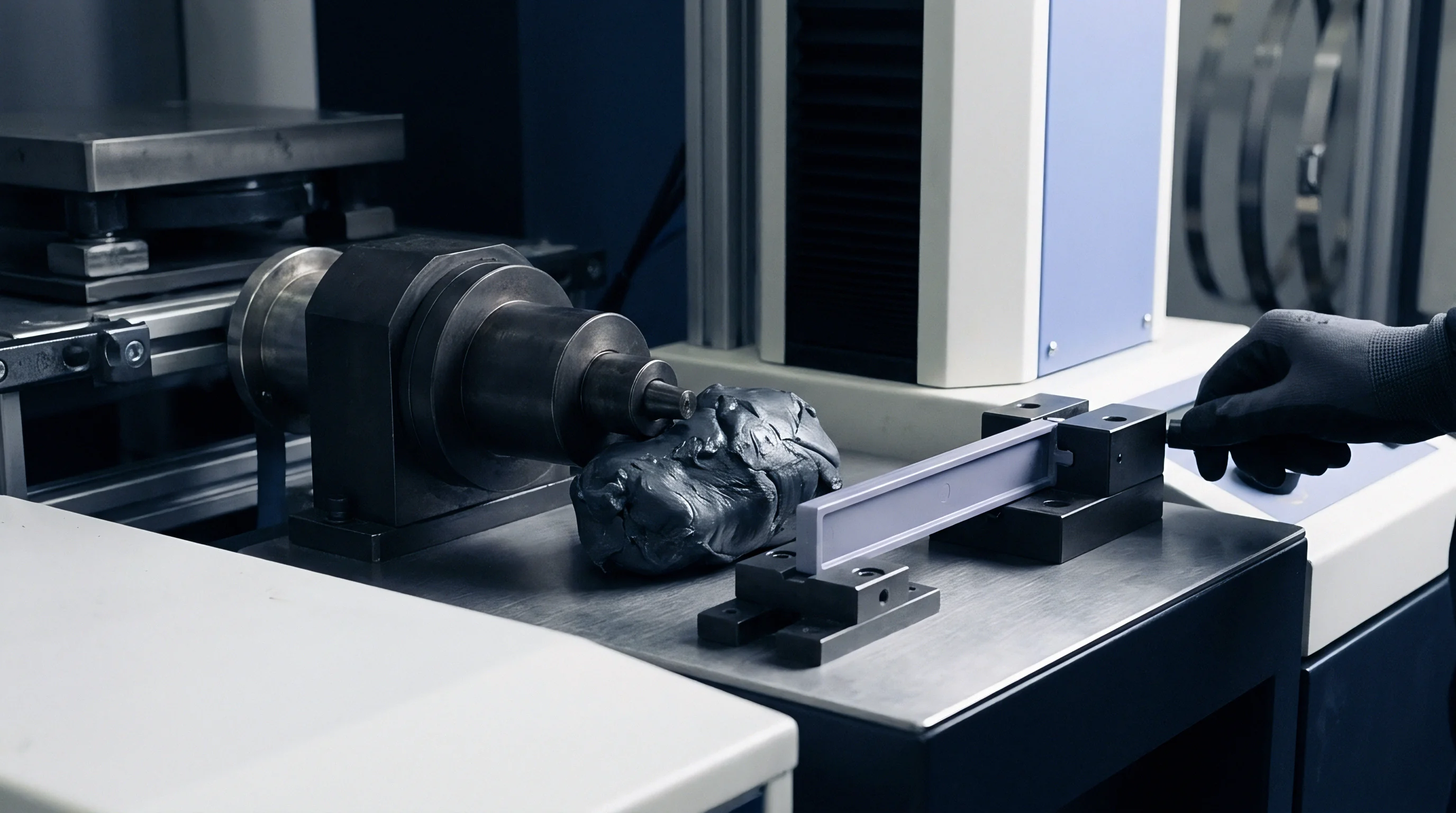
Shear-thinning behavior inside compounding extruders and injection moulding screws obeys non-linear constitutive equations. The power-law model, or Ostwald-de Waele relationship, describes fluid response within the high-shear power-law region: shear stress equals the consistency index, K, multiplied by shear rate raised to the power of the flow behavior index, n. Virgin polyolefins display flow behavior index values between 0.3 and 0.5.
Recovered polyolefin industrial blends containing broad molecular weight distributions or cross-linked fractions exhibit lower flow behavior index values, often falling between 0.15 and 0.28, causing aggressive shear thinning.
Accurate process simulation demands mathematical models that cover both the low-shear Newtonian plateau and the high-shear power-law regime. The Cross model and the Carreau-Yasuda model provide continuous curves fitting rheological data across five orders of magnitude of deformation velocity. The Cross model incorporates zero-shear viscosity, a characteristic relaxation time parameter, and the power-law exponent.
Fitting high-shear capillary data to the Cross model allows engineers to calculate precise pressure drops inside complex flow fields, such as spiral distribution manifolds in extrusion dies or hot-runner systems in multi-cavity injection molds.
Screw channel flow mechanics rely heavily on local viscosity predictions to optimize melting and conveying efficiency. Inside the metering zone of a single-screw extruder, shear rates range from 100 reciprocal seconds in the flight clearance to 2000 reciprocal seconds at the barrel surface. High local shear rates reduce local melt viscosity, generating intense frictional heating within thin polymer layers.
Excess heat lowers bulk melt viscosity further, altering the pressure-generating capacity of the screw metering section. Inaccurate high-shear viscosity calibration parameters lead directly to false throughput predictions and incorrect screw geometry selections.
Flow behavior index values shift distinctly when regrind content exceeds thirty percent. Increased regrind fractions introduce pre-sheared, partially degraded polymer chains that reduce the low-shear viscosity plateau while maintaining steep high-shear flow gradients. Screw design calculations must account for this shift in flow behavior index to maintain required backpressure levels and prevent melt temperature instability during continuous production cycles.
Broader molecular weight distributions in polyolefin reclaims lower the power law index and accelerate shear thinning under high stress.
Thin-wall injection moulding presents extreme shear environments where rheological calibration thresholds directly govern part quality. Injection gate shear rates during filling of 1 mm wall thickness packaging parts routinely exceed 30000 reciprocal seconds. Under these conditions, melt viscosity drops to less than 5 percent of its zero-shear value.
If high-shear viscometry underestimates the degree of shear thinning, predicted injection pressures exceed machine capacity limits, leading moulders to specify unnecessarily large injection moulding presses with excessive clamping forces.
| Material Grade Description | Zero-Shear Viscosity η₀ (Pa·s) | Relaxation Time λ (s) | Power-Law Index n | Fit Model Framework |
|---|---|---|---|---|
| Virgin Injection-Moulding HDPE | 1,200 | 0.012 | 0.42 | Cross Model |
| Post-Consumer Container rHDPE | 3,800 | 0.085 | 0.24 | Cross-Carreau-Yasuda |
| Virgin Pipe-Grade HDPE (PE100) | 18,000 | 0.450 | 0.18 | Modified Carreau |
| 50/50 Virgin/rPP Industrial Compound | 850 | 0.005 | 0.31 | Cross Model |
Pressure drop calculations along feed runners require integrating non-Newtonian flow equations across circular and parabolic cross-sections. Viscous fluid flow through a circular runner under power-law dynamics yields an expression where pressure gradient scales non-linearly with volumetric flow rate and channel radius. A 5 percent shift in the flow behavior index parameter alters calculated runner pressure losses by over 18 percent at gate shear rates of 15000 reciprocal seconds.
Tooling designers using default virgin polymer rheology datasets for recovered polyolefin tools risk installing undersized runner systems that restrict mold filling speeds.
Frictional heat generation within injection mold gates scales directly with high-shear viscosity and wall shear stress. Viscous dissipation increases local melt temperature by 15 to 30 degrees Celsius during high-speed injection impulses. Controlled temperature rises lower viscosity dynamically, assisting mold filling in ultra-thin part sections.
Excessive frictional heating causes thermal degradation of heat-sensitive pigments and additives, generating surface aesthetic flaws and localized embrittlement. Calibration curves must include high-shear temperature sensitivity metrics to enable accurate thermal modeling during mold filling simulations.
Extrusion die swell phenomena correlate closely with high-shear viscoelastic recovery upon exiting shaping orifices. As polyolefin melts experience severe normal stress differences within high-shear die channels, polymer chains align along the flow direction. Upon exiting die restraint, aligned chains relax back toward random coil configurations, swelling the extrudate.
Recovered polyolefin compounds exhibit variable die swell ratios depending on cross-linking content and long-chain branching fractions. High-shear capillary rheometry with optical extrudate diameter profiling provides essential die swell calibration data required to size extrusion die land lengths and sizing sleeves accurately, despite assertions that melt flow index compliance guarantees identical flow performance across equipment.
Inspection
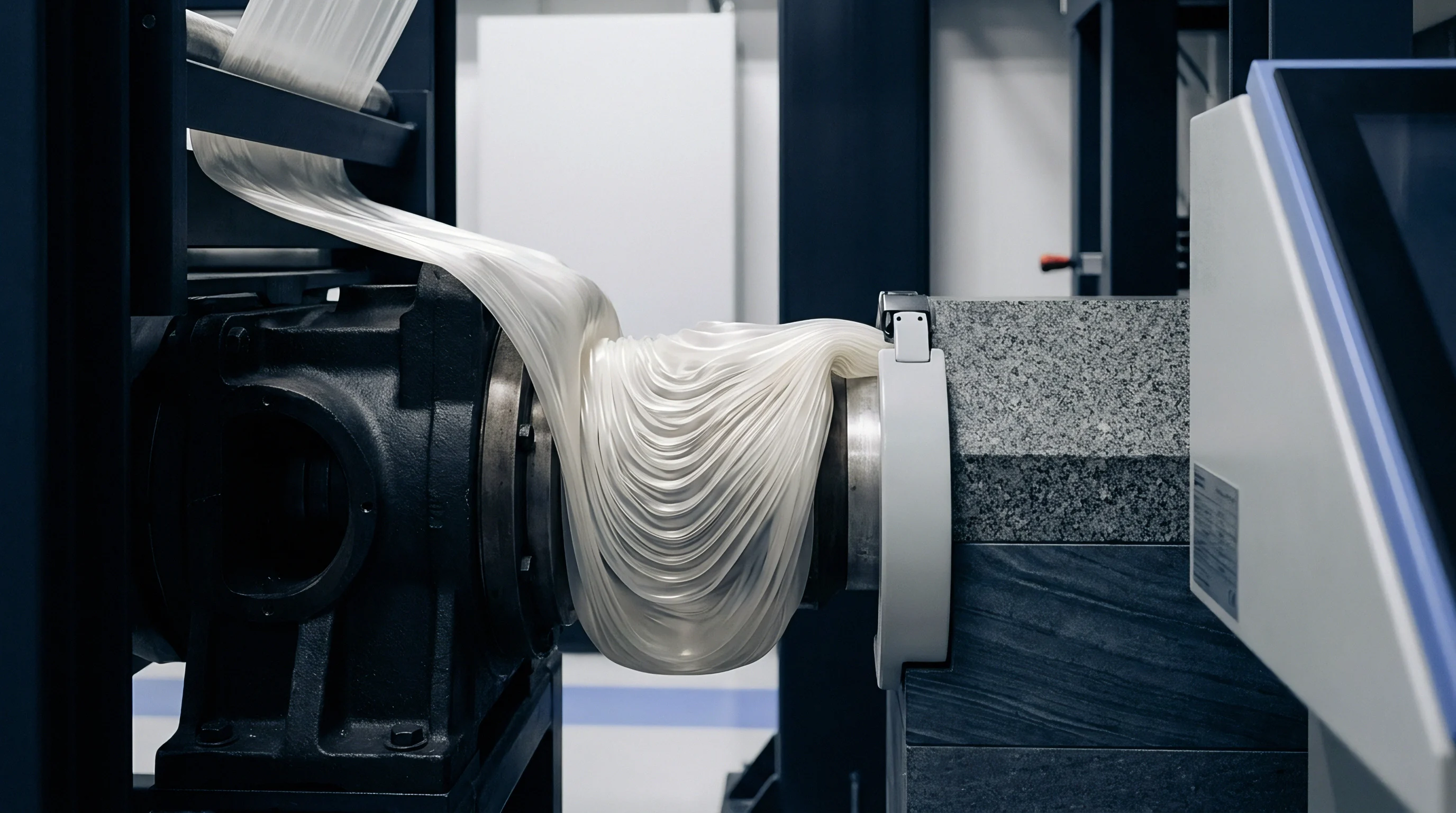
Incoming quality verification protocols for industrial polyolefin reclaims must incorporate high-shear viscometry to catch lot-to-lot inconsistencies that pass conventional melt flow tests. Sampling protocols under ISO 5659 and ASTM D1485 specify representative pellet sampling from shipping containers, railcars, or octabins. Collected samples must undergo thermal drying before rheological characterization to eliminate surface moisture and volatile residue that alter pressure readings inside capillary barrels.
Polyethylene reclaims carrying residual moisture generate steam micro-bubbles under high temperature and pressure, causing severe pressure transducer oscillations during testing.
Benchtop capillary rheometry serves as the primary standard for qualifying new material lots, but continuous process verification relies increasingly on inline and online slit-die viscometers mounted on industrial extruders. Online viscometers divert a small side-stream of polymer melt from the main extruder barrel through a calibrated rectangular slit die using a precision metering gear pump. Measuring pressure drop along the slit channel at controlled flow rates generates continuous real-time shear viscosity data.
Inline slit viscometers eliminate sample collection delays, permitting immediate compounding adjustments when high-shear viscosity drifts beyond target calibration thresholds.
Benchtop capillary rheometers and inline slit viscometers must be cross-calibrated using standardized master curve routines. Differences in channel geometry, entrance flow patterns, and wall heat transfer rates introduce systematic offset values between bench capillary data and inline slit measurements. Establishing robust calibration factors requires running identical polyolefin reference lots across both measurement systems at matching shear rates and temperatures.
Applying linear correction factors aligns inline slit viscometer outputs with laboratory baseline capillary curves, maintaining unified quality control standards across production facilities.
Pressure transducer calibration drift creates apparent viscosity shifts that mimic material degradation during continuous extrusion trials.
Pressure transducer calibration represents a major point of maintenance focus for high-shear rheological test systems. Diaphragm-style piezoresistive and melt pressure transducers experience zero-shift and sensitivity drift due to repeated thermal cycling and mechanical stress. Operating capillary rheometers with uncalibrated transducers introduces linear measurement errors that distort calculated shear stress curves.
ISO 11443 specifies routine multi-point pressure calibrations using certified hydraulic deadweight testers or digital pressure calibrators across the full operating range of the transducer.
- Capillary Die Geometry Certificate Certified metrology paperwork stating bore diameter, length, entrance angle, and surface roughness parameters under ISO 17025 traceability.
- Bagley Entrance Correction Dossier Measured entrance pressure loss curves plotted across minimum three length-to-diameter ratios for each tested shear rate point.
- Weissenberg-Rabinowitsch Flow Data Uncorrected and corrected wall shear rate data tables detailing calculated power-law slope derivatives at each test point.
- Isothermal Barrel Calibration Log Multi-zone barrel temperature verification records showing thermal stability within plus or minus 0.3 degrees Celsius along the melt column.
- Mooney Slip Analysis Assessment Comparative shear stress plots across multiple capillary diameters identifying wall slip velocity thresholds where applicable.
Metrology validation standards require verifying capillary die dimensions after specified operational hours or processing volumes. Processing highly abrasive post-consumer compounds containing mineral fillers or glass micro-contaminants degrades tungsten carbide capillary surfaces over time. Inspecting die entrance radii and internal bore finishes using high-resolution optical profilometers detects mechanical wear before dimensional changes compromise measurement accuracy.
Scratched or bell-mouthed capillary orifices alter entrance flow dynamics, producing invalid Bagley corrections and false rheological datasets.
Incoming lot acceptance procedures should enforce strict high-shear viscosity pass-fail criteria within procurement contracts. Relying on standard Certificate of Analysis documentation supplied by resin compounders exposes buyers to significant quality risks, as compounders typically report low-shear melt flow index figures measured prior to final lot blending. Establishing independent verification testing using standardized high-shear capillary methods ensures that incoming recovered polyolefin lots meet structural flow demands prior to silo loading and processing.
Specification Clause 4.2 of standard resin supply contracts defines the right to reject material shipments exhibiting high-shear viscosity deviations exceeding 8 percent from baseline reference curves at 5000 reciprocal seconds, regardless of single-point melt flow rate compliance.
Rebate
Commercial transactions for recovered polyolefin industrial blends carry financial risk when specifications rely on incomplete material characterizations. Off-spec high-shear viscosity causes severe monetary losses for component converters. Under-estimating shear thinning behavior leads to tool damage, extended cycle times, elevated scrap rates, and unexpected machine downtime.
Landed cost calculations for recycled resin must integrate processing efficiency metrics alongside raw material pricing per metric ton to quantify true financial performance.
Scrap rate increases resulting from high-shear viscosity variations alter part economics significantly. In thin-wall packaging operations, a 5 percent increase in part rejection rates due to gate flashing or short shots negates the cost savings achieved by purchasing low-cost post-consumer reclaims instead of virgin polyolefin resins. Calculating net delivered cost per good part requires accounting for raw resin cost, conversion energy, labor, machine amortization, and scrap re-grinding costs.
High-shear calibration metrics provide the essential engineering data required to secure stable processing windows and prevent financial margin erosion.
Energy consumption during injection moulding and extrusion scales directly with melt viscosity profiles under processing shear rates. Polyolefin compounds exhibiting higher high-shear viscosities require elevated hydraulic or electrical injection pressures, driving up kilowatt-hour energy consumption per kilogram of processed resin. In high-volume conversion plants operating continuous production runs, energy cost penalties resulting from uncalibrated high-shear viscosity lots add tens of thousands of dollars to annual utility bills.
High-shear viscometry enables converters to select optimized resin formulations that balance low-cost feedstock content with low processing energy demands.
- High-Shear Viscosity Tolerance Band Enforceable percentage deviation limits set at target processing shear rates matching primary manufacturing equipment.
- Melt Instability Threshold Limit Minimum critical shear stress ratings defining maximum extrusion throughput parameters without extrudate surface defect initiation.
- Arrhenius Thermal Sensitivity Range Maximum allowable flow activation energy shifts across the operating temperature window to maintain thermal tuning limits.
- Wall Slip Velocity Metric Upper limits on wall slip velocity parameters derived from Mooney corrections to prevent plug-flow instabilities during high-velocity injection.
- Filler Content Maximum Threshold Upper percentage limits on inorganic ash content established under ISO 3451 to limit abrasive die wear and viscosity inflation.
Commercial agreements governing post-consumer polyolefin supply should incorporate dynamic pricing adjustment formulas tied to high-shear viscosity metrics. Standard pricing structures that index raw material costs purely to virgin monomer or virgin resin spot prices fail to reflect the processing value of compounded reclaims. Implementing rebate schedules based on rheological compliance protects buyers against lot-to-lot performance degradation that single-point tests regularly miss.
Landed cost structures are evaluated by calculating energy consumption alongside raw resin pricing to establish true financial impact. Price adjustment formulas calculate financial rebates when delivered lots fall outside agreed high-shear viscosity windows. If an incoming lot of recovered high-density polyethylene displays a high-shear viscosity 12 percent above the target contract specification at 10000 reciprocal seconds, the resulting 4 percent reduction in moulding cycle speed generates a proportional per-ton rebate deduction on the final invoice.
Quantifying rheological deviations in direct monetary terms converts technical testing metrics into enforceable commercial protection, aligning supplier compounding practices with buyer conversion economics.