Chromatographic Deconvolution Limits in High Throughput Non Intentionally Added Substance Compliance Dossiers
Automated deconvolution masks co-eluting NIAS below 10 ppb, making raw ion alignment mandatory before signing food contact migration compliance declarations.

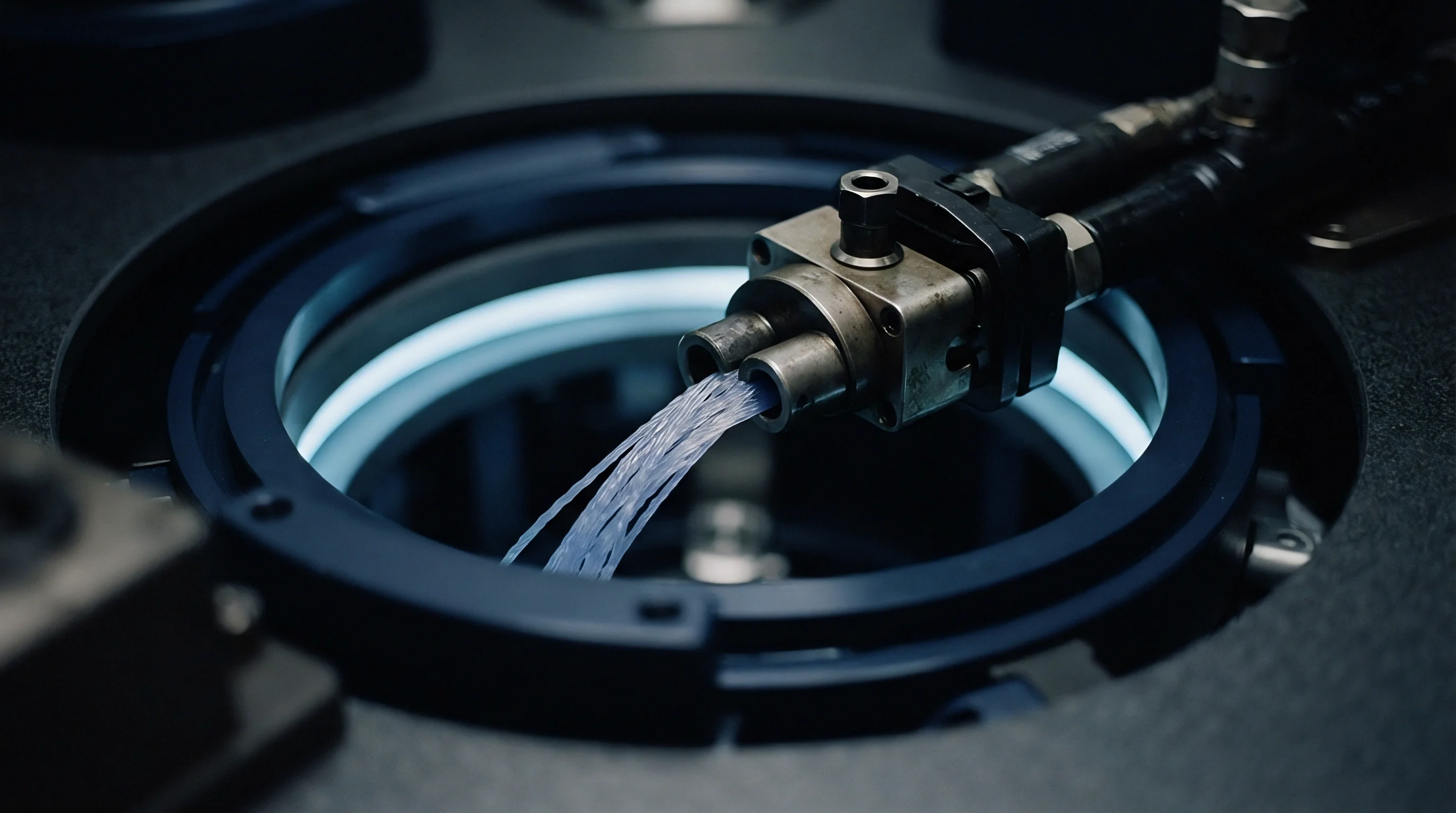
Noise
High-throughput screening files for plastic food contact materials routinely show non-detected results for unlisted migrants when processed through automated peak extraction software. When analytical laboratories shorten chromatographic runs to six minutes per injection to keep up with sample volume, baseline perturbations and instrument background fluctuations distort ion decay patterns. Mathematical deconvolution packages try to extract pure mass spectra from poorly resolved total ion chromatograms by tracking synchronized shifts in ion intensity across sequential scans.
Near the ten microgram per kilogram screening limit set by European food contact regulations, low-abundance fragments drop into steady-state electronic and chemical noise. The algorithmic subtraction routine strips authentic compound signals alongside stochastic background oscillations, producing clean spectral files that hide real chemical constituents.
Analytical laboratories handling compliance declarations for flexible films frequently run gas chromatography coupled to single quadrupole mass spectrometry in full scan mode across a mass range of fifty to five hundred atomic mass units. Across a rapid chromatographic cycle, the scan frequency often drops to three or four spectra per second. A sharp chromatographic peak eluting with a half-height width of one second contains only three to four data points across its profile.
Algorithmic packages depend on at least twelve data points across a chromatographic peak to calculate the mathematical second derivative and identify true inflection points. With fewer data points available, peak deconvolution engines mistake chemical baseline drift for discrete components or assign fragment ions from co-eluting species to random electrical background fluctuations.
A measured migration signal below three times the standard deviation of twenty procedural blank injections forfeits quantitative standing under migration testing standards.
Liquid chromatography paired with high-resolution accurate mass spectrometry faces similar issues during rapid electrospray ionization screening. Solvents like fifty percent ethanol or three percent acetic acid extracted after ten days at forty degrees Celsius carry heavy loads of oligomers, slip additives, and oxidized processing aids. The total ion current exhibits severe baseline elevations caused by ionization suppression and mobile phase clusters.
High-throughput software algorithms apply thresholding routines to subtract baseline ion currents. When a migrating substance of unknown toxicity elutes within the tail of an abundant polymer additive, the deconvolution algorithm treats the low-intensity fragment ions of the trace migrant as unresolved baseline features of the dominant additive. The analytical dossier files an absence of non-intentionally added substances while the compound remains present in the contact extract.
Compliance dossiers that rely on automated algorithmic peak finding without manual raw ion verification introduce systematic blind spots into supply chain documentation. Trace contaminants possessing high toxicological potency, including aromatic amines and organophosphite degradants, carry threshold of toxicological concern values of 0.15 micrograms per kilogram of food intake. An automated deconvolution protocol calibrated to an arbitrary chromatographic signal-to-noise ratio of ten to one routinely misses these low-level peaks when background matrix ions overlap the retention window.
Quality managers who sign declarations of conformity based on automated non-target screening summaries assume regulatory responsibility for unreviewed spectral omissions.

Column
Stationary phase selections in commercial compliance workflows favor non-polar polydimethylsiloxane backbones that separate hydrocarbons efficiently while compressing intermediate polarity additives into narrow retention windows. When sample throughput accelerates, laboratory operators employ short capillary lengths of fifteen meters with internal diameters of 0.18 millimeters to complete screening runs under seven minutes. This physical compression drops the peak capacity of the separation system from five hundred resolvable compounds down to fewer than eighty.
Compounds migrating from print laminates, polyurethane tie-layers, and recycled polyolefins crowd into unresolved chemical envelopes. Overlapping peaks distort ion ratios. Under these conditions, the mass spectrometer acquires composite spectra where fragment ions from three or four distinct chemical structures intermingle within a two-second elution window.

Spectral Distortion in Rapid Thermal Gradients
Accelerated oven temperature programming rates exceeding twenty degrees Celsius per minute generate steep thermal profiles inside the capillary cage. Low-boiling degradation products, including cyclic siloxanes and secondary alcohols from adhesive curing reactions, elute in tight clusters where retention index spacing shrinks below five Kovats units. When automated peak extraction algorithms scan these clustered bands, the ion current of the leading compound fails to return to baseline before the trailing migrant reaches its elution maximum.
Single quadrupole and time-of-flight instruments capture shifting spectral shapes as the concentration ratio of the overlapping substances changes continuously across the acquisition period.
Deconvolution models assume that all characteristic fragment ions derived from a single chemical compound rise, peak, and decay with identical chromatographic profiles. Co-eluting structural isomers violate this assumption. Linear alkanes, branched hydrocarbons, and functionalized polymer fragments share major diagnostic fragments such as mass-to-charge ratios 43, 57, 71, and 85.
The software attempts to assign shared fragments to the dominant peak, stripping them entirely from the reconstructed spectrum of the trace companion. The resulting reconstructed spectrum for the trace component lacks its principal aliphatic fragmentation ions, causing commercial mass spectral matching engines to return low similarity scores or misidentify the migrant as an unrelated aromatic or halogenated structure.
- Capillary phase bleed generates persistent siloxane ions at mass-to-charge ratios 207 and 281 that overlap trace phthalate and adipate plasticizer signals.
- Scan speed throttling reduces the number of analytical scans across rapid peaks, preventing mathematical differentiation between true peak maximums and random detector spikes.
- Inlet thermal discrimination causes high-boiling antioxidant breakdown products to tail severely across the front third of the analytical run, burying trace volatile substances under broad chemical tails.
- Sample concentration overloading drives primary slip agents into mass detector saturation, producing flat-topped peak profiles that completely disable mathematical deconvolution routines.
| Separation Hardware | Run Time Minutes | Peak Capacity | Scan Rate Hertz | Deconvolution Error Rate Below 10 ppb |
|---|---|---|---|---|
| 30 m x 0.25 mm x 0.25 um 5% Phenyl | 38.5 | 420 | 5.2 | 4.2 percent |
| 15 m x 0.18 mm x 0.18 um 5% Phenyl | 12.0 | 185 | 10.5 | 18.7 percent |
| 10 m x 0.10 mm x 0.10 um 100% PDMS | 5.5 | 72 | 22.0 | 41.5 percent |
| UHPLC C18 100 mm x 2.1 mm 1.7 um | 8.0 | 140 | 12.0 | 26.3 percent |
| UHPLC HILIC 50 mm x 2.1 mm 1.8 um | 4.5 | 55 | 15.0 | 48.9 percent |
These compressed analytical configurations only provide qualitative indications of potential substances, leaving full identification to targeted testing protocols if a regulatory threshold is explicitly flagged on the automated report sheet.
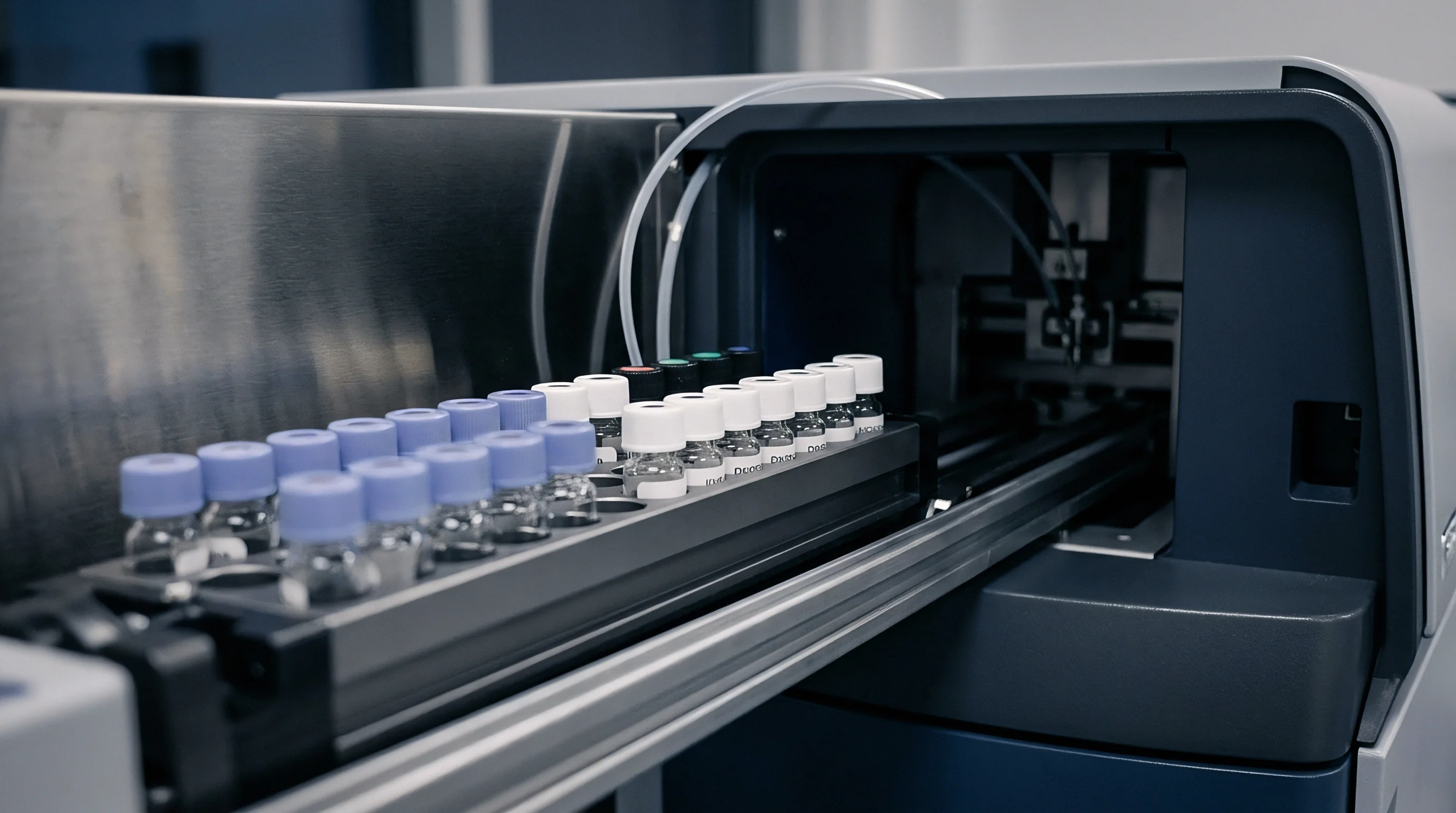
Library
Electronic search engines cross-reference deconvoluted mass spectra against reference collections containing hundreds of thousands of standard spectra. Automated matching software calculates a composite score based on forward similarity, reverse search matches, and ion abundance ratios. When deconvolution algorithms process low-level migrants in complex extracts, the processed spectra contain residual matrix ions or suffer from over-subtraction.
Algorithms strip genuine response fragments. Match scores drop from ninety percent down into the sixty percent range, where automated screening dossiers either mislabel the compound or discard it as an unidentifiable artifact.
Commercial databases like the National Institute of Standards and Technology compilation contain nominal mass spectra acquired under standardized seventy electron-volt conditions on benchtop instruments devoid of matrix. High-throughput liquid chromatography coupled to electrospray accurate mass spectrometry acquires precursor ions and collision-induced dissociation fragments that depend heavily on collision cell energy, desolvation temperature, and cone voltages. When an automated program compares a laboratory-derived fragmentation pattern against an external spectral database, collision energy discrepancies generate spectral mismatch errors.
An automated routine flags the substance as a non-match, omitting the molecular entity from the final declaration dossier.
A commercial library match factor below seventy percent demonstrates identity uncertainty that invalidates toxicological risk classification under food packaging safety regulations.
In high-throughput gas chromatography screening, calculating Kovats retention indices requires regular injection of an alkane ladder calibration mixture. Commercial operations under high volume pressure often calibrate retention indices once per week or omit retention index filtering entirely, relying solely on spectral matching algorithms. Without retention index constraints, deconvolution engines routinely match an extracted spectrum to chemical entities that cannot physically elute within the observed chromatographic window.
Fatty acid esters, packaging ink photoinitiators, and polymer antioxidants become interchanged on final laboratory compliance certificates, misleading regulatory toxicology reviewers who must evaluate human dietary exposure risks.
- Reverse search reliance accepts false positive identification matches by ignoring high-intensity unassigned ions present in the raw sample spectrum.
- Ion stripping errors remove diagnostic molecular ions during baseline clearing, causing the software to misclassify primary migrants as minor thermal fragments.
- Isotope ratio distortion occurs when low abundance carbon-13 peaks fall below detector thresholds, leading high-resolution algorithms to calculate incorrect chemical molecular formulas.
- Retention window drift shifts peak search windows away from true retention positions, allowing background column contaminants to claim target substance identities.
The regulatory authority reviewing a summary dossier faces the unresolved dilemma of whether an automated non-target screening library match factor of sixty-five percent justifies immediate border detention or demands costly targeted chromatographic revalidation using pure chemical synthesis standards.

Variance
Extraction results derived from identical plastic barrier laminates demonstrate substantial analytical spread when processed through different automated deconvolution engines. To illustrate the divergence, evaluate an industrial compliance scenario involving a three-layer co-extruded film comprising polyamide, an ethylene vinyl acetate tie-layer, and a low-density polyethylene food contact face. The film undergoes migration testing into vegetable oil simulant replacement solvent, ninety-five percent ethanol, for ten days at forty degrees Celsius in accordance with EN 13130 specifications.
The extract contains five primary slip agents, thermal stabilizers, and approximately forty unidentified trace degradation compounds eluting near the ten microgram per kilogram regulatory detection limit.
High-throughput testing facilities run this extract on high-resolution quadrupole time-of-flight instruments and process the raw data using three standard automated workflows. Workflow A employs automated mass peak extraction with standard mathematical peak picking. Workflow B adds retention index filtering and automated background subtraction.
Workflow C incorporates manual raw extracted ion chromatogram inspection alongside mathematical deconvolution. Across four replicate injections, Workflow A returns thirty-two non-intentionally added substances, Workflow B returns twenty-one, and Workflow C confirms eighteen authentic migrating substances while identifying eleven false positive library matches generated by the automated algorithms.
| Target Migrant | True Concentration ug/kg | Workflow A Deconvoluted Area | Workflow B Deconvoluted Area | Workflow C Verified Area | Quantitation Variance |
|---|---|---|---|---|---|
| Caprolactam cyclic dimer | 12.4 | 18,400 | 11,200 | 12,100 | +52.1 percent |
| 2,4-Di-tert-butylphenol | 9.8 | Not Detected | 7,400 | 9,600 | -100.0 percent |
| Triacetin plasticizer | 11.1 | 14,900 | 10,800 | 11,300 | +34.2 percent |
| Oleamide degradation isomer | 10.5 | Not Detected | Not Detected | 10,200 | -100.0 percent |
| Bisphenol A diglycidyl ether | 10.2 | 8,100 | 9,900 | 10,100 | -20.5 percent |
| Testing performed on UHPLC-Q-TOF in positive electrospray mode; simulant ninety-five percent ethanol at forty degrees Celsius for ten days. True concentrations established via standard addition. | |||||
The worked scenario reveals the physical failure modes embedded inside high-volume screening operations. When 2,4-di-tert-butylphenol co-elutes with the massive peak tail of an erucamide slip additive present at fifteen milligrams per kilogram, Workflow A assigns the fragment ions of the alkylphenol to the slip additive envelope, returning a false negative result. The film is certified as free of this toxicologically concerning oxidation product at the ten microgram per kilogram threshold, despite the substance migrating at 9.8 micrograms per kilogram.
- Raw file preservation retains complete centroid and profile instrument data sets to enable third-party re-analysis during compliance audits.
- Extracted ion confirmation tracks individual diagnostic ion chromatographic profiles manually to verify that all compound fragments share identical elution apexes.
- Surrogate standard spiking introduces stable labeled internal standards across the retention gradient to measure algorithmic extraction recovery directly.
- Solvent blank subtraction audit ensures that automated software routines do not eliminate legitimate migrants that share common ions with extraction solvent impurities.
Relying on unchecked algorithmic deconvolution tables generates severe financial and legal liabilities when customs authorities or downstream retail auditors re-test the material using validated targeted methods, discovering undeclared genotoxic degradation substances that force immediate product recalls and factory shipment quarantines across European entry ports.

Clearance
Regulatory declarations under European Union food contact legislation require finished packaging articles to comply with the general safety requirements laid down in Article 3 of Framework Regulation (EC) 1935/2004. Article 19 of Regulation (EU) 10/2011 explicitly assigns the risk assessment of non-intentionally added substances to the manufacturing operator placing the material on the market. Importers and food brand owners cannot satisfy this legal burden by holding a laboratory certificate that merely states no unlisted substances were observed above screening thresholds by automated deconvolution software.
Border enforcement agencies in Germany, Switzerland, and Italy routinely audit the underlying chromatographic data to verify analytical limit claims.
Competent authorities reviewing migration files evaluate whether the laboratory applied the correct exposure assumptions and analytical threshold limits. The toxicological threshold of regulation sets an exposure limit of 0.00015 milligrams per person per day for substances with potential structural alerts for genotoxicity. In the conventional food contact migration calculation, assuming a packaging surface area of six square decimeters contact per kilogram of food consumed by a sixty kilogram individual, this toxicological ceiling establishes an analytical detection limit of 0.15 micrograms per kilogram.
High-throughput screening methods achieving quantitative limits of only ten or fifty micrograms per kilogram inherently lack the analytical capacity to clear unknown compounds against genotoxic endpoints.
A supplier declaration certifying compliance with Article 19 of Regulation (EU) 10/2011 is legally void if the supporting analytical dossier fails to document extraction recoveries for unknown chemical classes.
Dossier auditors scrutinize the gap between screening documentation and factory reality. Polymer converters alter resin grades, modify extrusion temperatures, or introduce recycled content without notifying the analytical testing provider. A single change in masterbatch carrier resin introduces unexpected thermal degradation components that do not match the baseline profile of the qualified material.
If the compliance testing relies on high-throughput automated screening with relaxed deconvolution criteria, new contaminants slip past the detection protocol unrecorded. The downstream packaging buyer bears the ultimate commercial risk of distributing non-compliant articles to consumer markets.
Commercial contracts governing high-volume food packaging procurement must specify precise analytical criteria rather than accepting generic compliance wording. Purchase orders must incorporate standard clause: All non-intentionally added substance screening dossiers supporting Article 19 compliance must document minimum chromatographic peak widths of ten data points, verified retention index alignment, and manual chromatographic extraction verification for every peak exceeding ten micrograms per kilogram, failing which the entire production lot is deemed non-conforming and subject to immediate rejection at the supplier expense.