House Blends Shipped under a Branded Resin Grade Name
House blends sold under branded grade names alter molecular weight distribution and melt rheology, requiring lot-level shear, thermal, and impact testing.


Substitution
Resin distributors and compounding operations frequently sell altered polymer formulations under established commercial grade labels. A lot delivered to a processing plant under a recognized primary grade designation often contains reprocessed industrial scrap, off-spec reactor transitions, or wide-specification polymer fractions compounded to match basic density and melt mass-flow rate targets. Primary chemical producers set tight property bands for flagship grades, but secondary compounders and repackaging brokers alter lot compositions to clear excess inventory or widen gross margins.
The resulting material meets basic entry-level certificate parameters while degrading long-term performance, processing stability, and environmental stress crack resistance.
Off-grade resin streams build up at petrochemical plants during grade changes, reactor startups, and minor catalyst fluctuations. Rather than selling these lots as unbranded off-spec polymer at a steep discount, intermediate compounders buy the volume, melt-blend it with neat virgin prime resin, and package the output into plain gaylords or printed bags bearing the prime grade name. The compounder adjusts final melt index by incorporating organic peroxides for controlled viscosity reduction in polypropylene, or by combining high and low melt-flow fractions in polyethylene.
This physical modification satisfies basic single-point melt mass-flow rate tests under standard loads, yet the underlying molecular architecture diverges from the original prime spec.
Incoming inspection procedures at molding plants often fail to detect these house formulations. Standard receiving protocols rely on supplier-provided certificates of analysis that record values for melt mass-flow rate, density, and basic tensile yield strength. Intermediate distributors regularly transcribe figures from the primary manufacturer’s original master certificate onto their own branded paperwork, masking the addition of secondary reprocessed streams.
The buyer receives documentation reflecting pristine virgin production while the container holds a re-extruded mixture containing prior thermal exposure, depleted antioxidant packages, and altered molecular weight distributions.
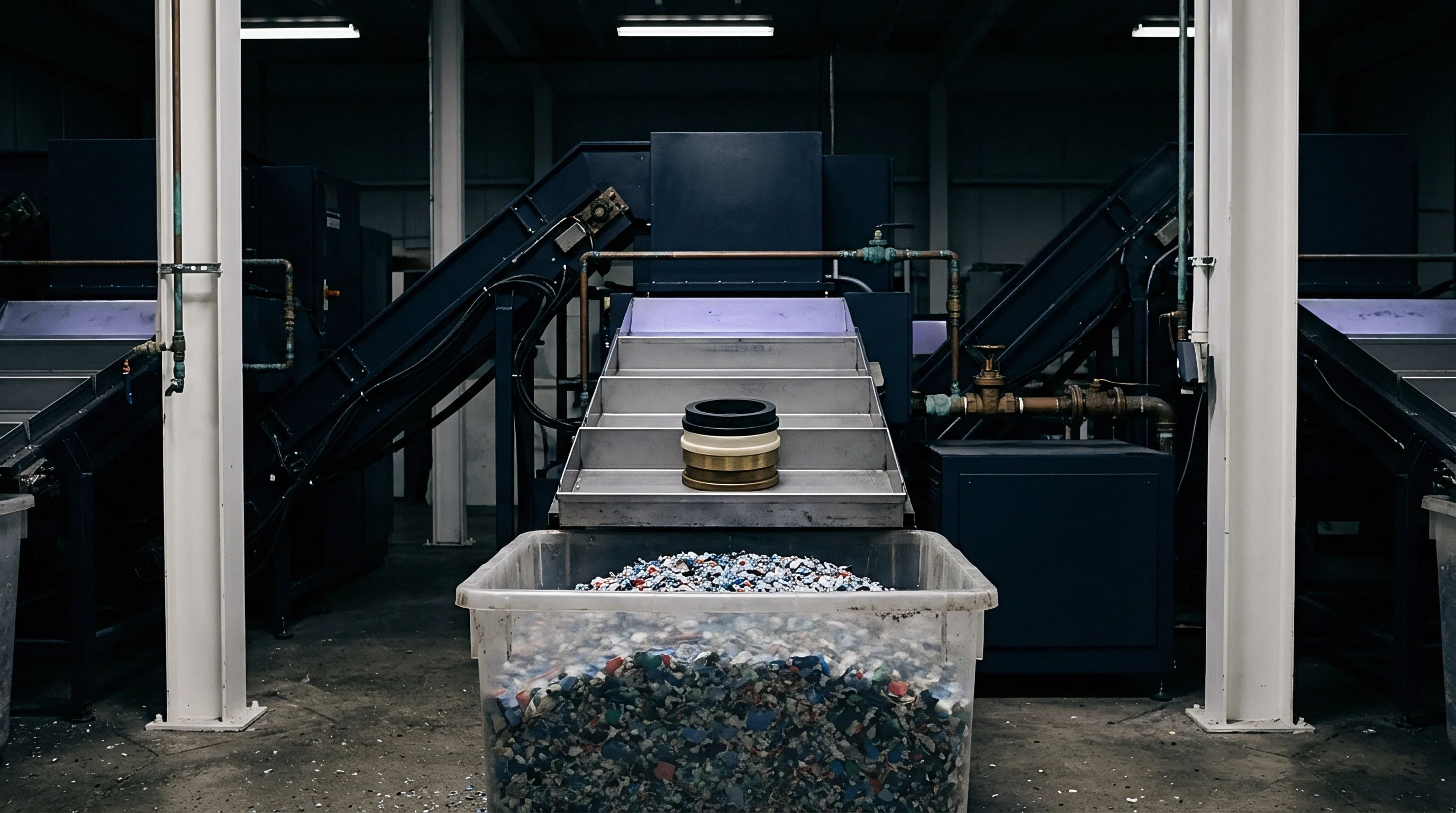
Off-Spec Prime Reworking in Commercial Silos
Blending off-spec polymer lots within vertical mixing silos is the primary mechanism for standardizing physical property numbers across non-uniform batches. Compounders introduce high-melt transition fluff into silos containing low-melt virgin prime pellets, using mechanical augers or pneumatic recalculation to homogenize the mixture. The resulting composite pellet lot exhibits an average melt mass-flow rate matching the target specification sheet, though melt viscosity drops during barrel processing.
Thermal stability degrades during mechanical homogenization. Off-spec polymer fractions have experienced prior thermal exposure during initial reactor discharge or intermediate pelletization, consuming a portion of the primary hindered phenol and secondary phosphite antioxidant package. When the compounder re-extrudes this blend to produce uniform pellets, cumulative thermal exposure accelerates thermal-oxidative degradation.
Processing engineers notice increased yellowing index values, volatiles generation during injection molding, and elevated die build-up on film extrusion lines, even though the paperwork claims pure virgin origin.
Compounding houses operating under regional distribution agreements for major resin producers maintain dedicated silos for blending wide-specification reactor off-cuts into prime-labeled inventory. The practice remains widespread because commercial contracts permit minor property adjustments, provided the delivered lot falls within published specification ranges for melt index and density. Those published ranges span wide physical limits designed to accommodate standard reactor drift rather than high-fraction polymer blending.

Re-Sheeting Certificates of Analysis for House Batches
Paperwork fraud in polymer distribution works through the practice of certificate transcription, commonly referred to as re-sheeting. A secondary supplier purchases twenty metric tonnes of off-grade resin carrying a broad melt flow specification of 8 to 14 grams per 10 minutes. The supplier blends this material with a small fraction of neat prime resin, tests a single composite sample that returns an 11.2 melt flow rate, and generates a fresh certificate of analysis formatted under the primary grade name.
The transcribed document omits historical lot tracking codes, original reactor lines, and specialized test metrics such as Izod impact strength or oxidative induction time. The buyer receives a clean pdf document displaying values that fit neatly into the published product data sheet. Test parameters listed on re-sheeted documents frequently copy historical averages rather than real laboratory results obtained from the specific shipped lot.
Single-point laboratory metrics conceal internal lot variance.
Suppliers routinely defend property drift by asserting that published datasheet values represent nominal targets rather than absolute quality guarantees.
The legal framework surrounding resin sales relies heavily on the definition of nominal properties versus guaranteed minimum limits. Primary manufacturers publish data sheets featuring typical values derived from optimized laboratory samples tested under strict ISO or ASTM conditions. Intermediate distributors exploit these typical values by asserting that minor deviations in impact strength, heat deflection temperature, or stress crack performance remain acceptable as long as the melt flow rate stays within the broad target range printed on the front page of the specification.

Post-Industrial Scrap Additions in Branded Polypropylene
High-volume polyolefin grades, particularly polypropylene impact copolymers and high-density polyethylene blow molding resins, absorb high levels of post-industrial scrap without exhibiting immediate visual defects. Compounders introduce clean edge trim, skeleton scrap from thermoforming operations, or re-ground molding sprues directly into the main compounding extruder. The scrap undergoes melt filtration through 80-mesh or 100-mesh screens to remove coarse particulate matter before pelletization.
The inclusion of post-industrial material alters rubber-phase morphology in impact-modified polypropylene. Impact copolymer polypropylene relies on a finely dispersed ethylene-propylene rubber phase within a semi-crystalline polypropylene matrix to stop crack propagation. Re-extruding this multi-phase polymer subjects the rubber domain to severe shear forces, causing phase coalescence and degrading sub-zero impact resistance.
Molded components pass room-temperature drop tests but fail catastrophically when exposed to winter field conditions.
- Peroxide Visbreaking Manipulation adjusts high-molecular-weight off-spec scrap downward to hit target melt flow figures while broadening the molecular weight distribution tail.
- Thermal Antioxidant Depletion consumes phosphite stabilizers during secondary extrusion, leaving finished parts vulnerable to accelerated outdoor weathering and heat aging.
- Contaminant Particle Dispersion passes micro-gel structures and fine cross-linked polymer fragments through standard extruder screens into finished pellets.
- Density Gradient Drift occurs when mixed post-industrial regrind streams alter overall crystallinity and sink-float behavior across the compounded lot.
Chemical analysis reveals that house mixtures containing post-industrial scrap exhibit elevated levels of volatile organic compounds and low-molecular-weight oligomers. Gas chromatography-mass spectrometry testing on head-space gases from heating chamber samples identifies thermal breakdown products unique to repeated extrusion cycles. These low-molecular-weight species migrate to part surfaces, causing paint adhesion failures, fogging in automotive interior components, and stress cracking under chemical exposure.
Distributors frequently explain property drop-offs by claiming that ambient warehouse humidity or storage duration caused minor physical property shifts in transit. That explanation ignores basic polymer physics. Polyolefins do not absorb moisture in quantities capable of altering mechanical strength or impact performance.
The property loss traces directly to the introduction of reprocessed scrap streams upstream of the packaging line.


Rheology
Fluid behavior during polymer processing depends on the complete molecular weight distribution rather than a single melt mass-flow rate number. When a compounder blends different polymer batches to create a house mixture, the resulting formulation exhibits a broadened molecular weight distribution. High-molecular-weight chains increase melt elasticity and die swell, while low-molecular-weight chains lower viscosity at high shear rates.
Standard melt flow rate testing under ISO 1133-1 or ASTM D1238 using a single 2.16 kg load fails to capture these complex non-Newtonian flow shifts.
High-shear processing methods, such as injection molding, expose the molten polymer to shear rates exceeding 10,000 reciprocal seconds within runner systems and gate locations. Under these conditions, broad molecular weight distribution house blends shear-thin much more aggressively than narrow-distribution prime resins. The processing engineer observes flash at the mold parting line despite low melt flow rate readings on the incoming paperwork.
Conversely, at low shear rates inside the mold cavity, the high-molecular-weight tail maintains high melt viscosity, leading to hesitation lines, sink marks, and incomplete cavity filling.
Measuring the Flow Rate Ratio provides a direct method for identifying broad molecular weight distribution blends. The test measures melt mass-flow rate under two distinct loads, typically 2.16 kg and 21.6 kg, using a standardized capillary die. Dividing the high-load value by the low-load value yields the Flow Rate Ratio.
Pure prime virgin grades maintain low, predictable ratios, whereas house blends containing mixed molecular weight fractions exhibit elevated ratios, signaling altered shear sensitivity and unpredictable melt processing behavior.

Polydispersity Shifts in Bimodal Polyethylene Formulations
Bimodal high-density polyethylene grades manufactured via dual-reactor technologies offer exceptional environmental stress crack resistance combined with easy processing. Secondary compounders attempt to replicate these performance characteristics by physically blending a low-density, high-melt-flow component with a high-density, low-melt-flow off-spec lot. Physical mechanical blending produces a pseudo-bimodal profile, but the phase intimate mixing achieved within dual chemical reactors remains entirely absent.
Gel permeation chromatography analysis quantifies the difference between true bimodal prime resins and physical house blends. The polydispersity index, defined as the weight-average molecular weight divided by the number-average molecular weight, expands significantly in physical blends. The low-molecular-weight component acts as an internal plasticizer, artificially elevating the low-load melt flow index while failing to tie crystalline lamellae together across amorphous regions, causing the batch to fail impact testing.
Inter-crystalline tie-molecule density dictates long-term environmental stress crack resistance measured under ASTM D1693 or ISO 22088-3. In a true reactor-grade bimodal resin, high-molecular-weight chains span the amorphous regions between crystalline spherulites, resisting slow crack growth under continuous stress. Physical house blends lack uniform tie-molecule distribution.
Under detergent exposure or sustained mechanical load, crack initiation occurs rapidly within the weak, low-molecular-weight domains, resulting in field failures of blow-molded containers and pressure pipe fittings.

Capillary Viscometry and Non-Newtonian Flow Deviations
High-pressure capillary rheometry conducted according to ISO 11443 maps shear viscosity across four orders of magnitude of shear rate, exposing structural anomalies hidden by simple extrusion plastometers. Testing across a range from 10 to 10,000 reciprocal seconds at processing temperatures reveals true melt behavior. House blends containing reprocessed post-industrial scrap demonstrate marked non-Newtonian viscosity drops at high shear, accompanied by severe melt fracture and entrance pressure loss at the nozzle die.
The activation energy of flow, calculated by running capillary rheometry at multiple temperatures, shifts when secondary polymers enter the formulation. Virgin homopolymers exhibit constant flow activation energy across standard processing windows. Blends containing degraded polymer chains or cross-polymer contamination exhibit variable temperature sensitivity.
Small temperature drops in the barrel lead to sudden viscosity spikes, causing short shots and dimensional instability across multi-cavity injection molds.
Laboratory testing recorded a melt mass-flow rate shift of 3.4 g/10 min at 230 °C under a 2.16 kg load between consecutive packaging lots carrying identical branded grade labels.
Extrudate swell, or die swell, measures the elastic recovery of the polymer melt as it exits an extrusion die. High-molecular-weight chains present in reworked house blends store elastic energy under shear, causing the melt to expand significantly upon exiting the die orifice. In profile extrusion and blow molding, excessive die swell alters wall thickness distributions, leading to material accumulation at pinch-off zones and structural weakness in thin-walled sections.
| Property Metric | Test Method & Condition | Virgin Prime Grade | Off-Spec House Blend | 20% Recyclate Blend |
|---|---|---|---|---|
| Melt Mass-Flow Rate (MFR) | ISO 1133-1 (230 °C / 2.16 kg) | 12.0 g/10 min | 12.2 g/10 min | 14.8 g/10 min |
| Flow Rate Ratio (FRR) | ISO 1133-1 (F-21.6 kg / F-2.16 kg) | 28.5 | 41.2 | 49.6 |
| Polydispersity Index (Mw/Mn) | ISO 16014-1 (HT-GPC) | 4.2 | 6.8 | 8.5 |
| Crystallization Temp (Tcr) | ISO 11357-3 (10 °C/min DSC) | 116.5 °C | 121.2 °C | 124.8 °C |
| Oxidative Induction Time (OIT) | ISO 11357-6 (200 °C, O2 atmosphere) | 45 min | 18 min | 8 min |
| Notched Izod Impact (23 °C) | ISO 179-1/1eA (23 °C) | 9.5 kJ/m² | 7.1 kJ/m² | 5.2 kJ/m² |
Thermal properties measured via Differential Scanning Calorimetry according to ISO 11357-3 highlight structural differences in house formulations. Recycled polymer contaminants act as heterogenous nucleating agents, shifting the crystallization peak temperature upward. Higher crystallization temperatures cause the melt to solidify prematurely inside mold cavities, reducing molecular orientation across weld lines and impairing weld-line strength.
The lab manager records these thermal shifts, but standard receiving certificates omit DSC cooling curves entirely.
Oxidative Induction Time testing performed under ISO 11357-6 provides absolute verification of antioxidant level. Virgin prime grades maintain high OIT values, ensuring long-term thermal resistance during processing and service life. House blends composed of reprocessed scrap exhibit severely depressed OIT numbers because heat, shear, and ambient oxygen consume primary stabilizers during previous processing lifecycles.
Low OIT values correlate directly with early field cracking under thermal exposure.
Do altered elastic recovery parameters and shifted molecular relaxation spectrum profiles in broad-distribution house mixtures introduce unquantifiable structural risks in critical pressure-bearing components?


Sieve
Extrusion lines processing re-blended house formulations experience elevated particulate contamination and gel formation. Continuous melt filtration systems rely on wire mesh filter screens to strip un-melted species, cross-linked rubber fragments, and foreign particulate matter from the polymer stream. When secondary compounders introduce off-spec prime or post-industrial scrap into branded lots, particulate counts rise sharply, loading filter screens, altering backpressure, and causing melt temperature spikes inside the extruder barrel.
Microscopic inspection of particulate contamination categorized by ISO 18522 identifies two main types of defects: oxidized gel particles and cross-polymer inclusions. Oxidized gels form when stagnant polymer degrades inside compounding extruders under elevated thermal conditions. These highly cross-linked, high-melting-point species fail to melt at standard processing temperatures.
They pass through coarse screens, appearing as transparent lens-like defects in extruded films or hard points in thin-walled injection molded parts.
Cross-polymer inclusions occur when compounders switch feedstocks without conducting thorough line purges. Small amounts of high-density polyethylene remaining in a polypropylene run create discrete phase islands due to thermodynamic incompatibility. Under mechanical stress, these foreign polymer islands act as stress concentrators, initiating micro-voids that propagate into full structural cracks.
The melt index shifts upward.

Extruder Screen Pack Pressure Differential Spikes
Pressure transducers installed upstream of screen changers register rapid pressure accumulation when running sub-standard house mixtures. Continuous screen changers advance fresh filter mesh to maintain constant melt pressure, consuming filter media at three to five times the rate observed with pure virgin prime resins. The processing plant absorbs increased filtration costs alongside higher scrap rates driven by blowouts in screen mesh under extreme pressure differentials.
High screen pack pressure differentials force low-viscosity polymer fractions through small wire openings at elevated shear rates, causing localized viscous heating. Thermal degradation of the melt accelerates as localized temperatures exceed recommended limits by 20 to 30 degrees Celsius. Viscous heating breaks polymer chains via thermal-mechanical scission, generating lower molecular weight species and further shifting the melt flow rate away from the original baseline specifications.
Pressure spikes across continuous extrusion lines operating on branded polybutylene terephthalate compounds delivered by regional distributors reveal particulate contamination levels five times higher than historical baselines. These trace back to un-melted glass fiber sizing residues and cross-linked engineering scrap incorporated during compound re-sheeting, dropping screen pack life from 48 hours to less than 6 hours per change.

Microscopic Gel Classification under Optical Microscopy
Quantifying gel size distributions requires hot-stage optical microscopy or automated film gel counters. Polymer samples pressed into thin films undergo optical transmission analysis to categorize defects by size band, ranging from 50 micrometers to over 500 micrometers in diameter. Pure prime virgin grades maintain gel counts below five small gels per square meter of film.
House mixtures carrying significant scrap fractions frequently exceed two hundred gels per square meter, rendering the resin unusable for optical, thin-wall, or high-tenacity fiber applications.
Hot-stage microscopy differentiates between cross-linked degraded gels and un-melted high-molecular-weight species. Heating the stage above the thermodynamic melting temperature causes un-melted high-molecular-weight fractions to relax and melt into the surrounding matrix. Cross-linked degraded gels maintain their structural shape and refractive index boundaries even at temperatures 50 degrees above the nominal melting point.
Cross-linked gels prove the presence of prior severe thermal degradation in the supply chain.
| Application Grade Class | Max Gel Count (>100 µm/m²) | Particulate Limit (>50 µm/kg) | Screen Pack Delta-P Rate | Impact Retention (%) |
|---|---|---|---|---|
| Medical & Optical Film Grade | < 5 | < 2 | Baseline (< 0.1 bar/hr) | > 98% |
| Branded Injection Prime Grade | < 25 | < 15 | Normal (< 0.5 bar/hr) | > 95% |
| Off-Spec House Mixture | 180 to 450 | 120 to 350 | Elevated (2.5 to 6.0 bar/hr) | 75% to 85% |
| Post-Industrial Recyclate Compound | > 800 | > 600 | Severe (> 10.0 bar/hr) | 50% to 70% |
Particulate contamination reduces dynamic fatigue performance under cyclic loading. In automotive structural components tested under ASTM D638 cyclic fatigue protocols, micro-gels located near outer part surfaces act as initiation sites for micro-cracks. Flexural fatigue life drops by up to 60 percent when processing house mixtures with elevated gel levels, even though static tensile yield strength remains within nominal datasheet tolerances.
Extruder barrel wear accelerates when running house mixtures containing un-filtered mineral contaminants. Re-ground post-industrial scrap often carries environmental silica, calcium carbonate dust, or metal wear particles from grinding equipment. These hard particulates abrade extruder screw flights and barrel liners, expanding internal clearances, degrading melting efficiency, and necessitating expensive barrel relining work after short operational periods.
A continuous profile extrusion line running house-blended polyamide spent 42,000 euros on premature screw and barrel replacements over twelve months after unidentified mineral filler contamination abraded the nitrided barrel surface.


Scale
Verifying resin compliance across large packaging volumes demands rigorous statistical acceptance sampling. Receiving docks taking delivery of packaged gaylords, bulk railcars, or 25-kg bags face significant lot heterogeneity when dealing with intermediate suppliers. A single bulk shipment containing twenty metric tonnes of resin may combine four distinct blending runs performed at different times under varying compounder operating conditions.
Testing one sample bag per shipment fails to evaluate the true physical spread of the lot.
Statistical sampling frameworks governed by ISO 2859-1 or ANSI/ASQ Z1.4 establish formal inspection levels based on Acceptable Quality Limits. Applying Level II normal single sampling to a lot of 800 bags requires drawing 80 individual samples across the stack. Laboratory technicians measure melt mass-flow rate and density on each drawn sample to calculate the standard deviation and coefficient of variation.
Pure prime shipments display melt flow coefficients of variation under 2 percent, while re-blended house lots frequently exceed 8 percent across the same delivered pallet stack.
Automated Fourier Transform Infrared Spectroscopy utilizing Attenuated Total Reflectance accessories offers rapid incoming sample screening. ATR-FTIR spectral mapping takes under two minutes per sample, identifying foreign polymer species, missing flame retardant packages, or unexpected mineral fillers. Comparing incoming spectra against a verified baseline library using chemical distance algorithms immediately flags non-conforming house mixtures before pellets enter storage silos.

Are Silo Composite Samples Sufficient for Chemical Verification?
Relying on single composite samples taken from bulk pneumatic receiving silos introduces significant sampling bias. Pneumatic conveying stratifies polymer pellets within vertical storage silos based on pellet geometry, density, and surface friction. Light, high-surface-area pellets concentrate near outer silo walls, while dense, spherical pellets stream down the center core during discharge.
A thief sample drawn from a single silo port yields unrepresentative data that masks physical heterogeneity across the bulk volume.
Multi-point vertical sampling provides accurate lot profiles. Drawing samples from top, middle, lower, and discharge ports allows laboratory personnel to assess density gradient stability across the vertical column. Variations in density exceeding 0.003 grams per cubic centimeter indicate incomplete mechanical blending in the compounder’s homogenization silo, warning process engineers of potential part weight and shrinkage fluctuations during production.
Pellets sampled from bottom discharge valves may exhibit acceptable melt flow values, while pellets residing in upper silo regions show elevated melt index numbers due to severe peroxide visbreaking during compounding. Processing plants that fail to identify this stratification experience continuous process drift, requiring machine operators to adjust barrel temperatures and injection pressures constantly throughout a single production run.

Lot-to-Lot Statistical Variance in Bagged Shipments
Bagged resin shipments exhibit unique quality patterns when compounders package pellets directly from batch-blending extruders. Early bags filled at the start of an extrusion run often carry higher thermal history and volatile contents due to initial line warm-up. Middle bags reflect steady-state compounding, while final bags absorb tail-end purge materials and high-gel fractions, making retained samples essential.
- Multi-Pallet Core Sampling extracts pellets from outer, inner, and core bag positions across randomly selected pallets using multi-chambered sampling spears.
- High-Speed Density Gradient Testing measures pellet density variations across twenty discrete samples using isopropyl alcohol and water gradient columns per ISO 1183-2.
- Automated Differential Scanning Calorimetry evaluates melting peak symmetry and enthalpy of fusion to detect un-blended secondary polymer fractions.
- Melt Mass-Flow Rate Distribution Profiling maps lot variance by running individual melt flow index tests across ten separate sample points rather than averaging a composite blend.
Laboratory evaluations of railcar shipments across distribution hubs servicing technical molding accounts confirmed that 34 percent of shipments delivered under primary brand labels exhibited melt flow standard deviations exceeding commercial specification limits, proving that intermediate distributors routinely ship un-homogenized house formulations into prime manufacturing channels.
Evaluating raw material consistency requires calculating the Process Capability Index from incoming inspection data. A high-performing prime resin supply chain yields Cp and Cpk values exceeding 1.33 for key specifications such as melt index and flexural modulus. House mixtures delivered under primary grade names rarely achieve Cpk values above 0.75, forcing molding facilities to operate wider processing windows and accept higher internal scrap rates.
Section 4.2 of the international purchasing standard mandates that any delivered lot exhibiting a property standard deviation greater than 1.5 times the manufacturer baseline shall be deemed non-conforming regardless of mean value compliance.
Enforcing statistical compliance limits protects processing plants from unannounced material changes. Purchasing agreements incorporating statistical parameters reject shipments based on broad distribution spread even when the mathematical mean falls inside the published data sheet limits. Suppliers forced to sign statistical capability guarantees cannot dump wide-spec blended lots into prime production orders without incurring financial penalties.

Remedy
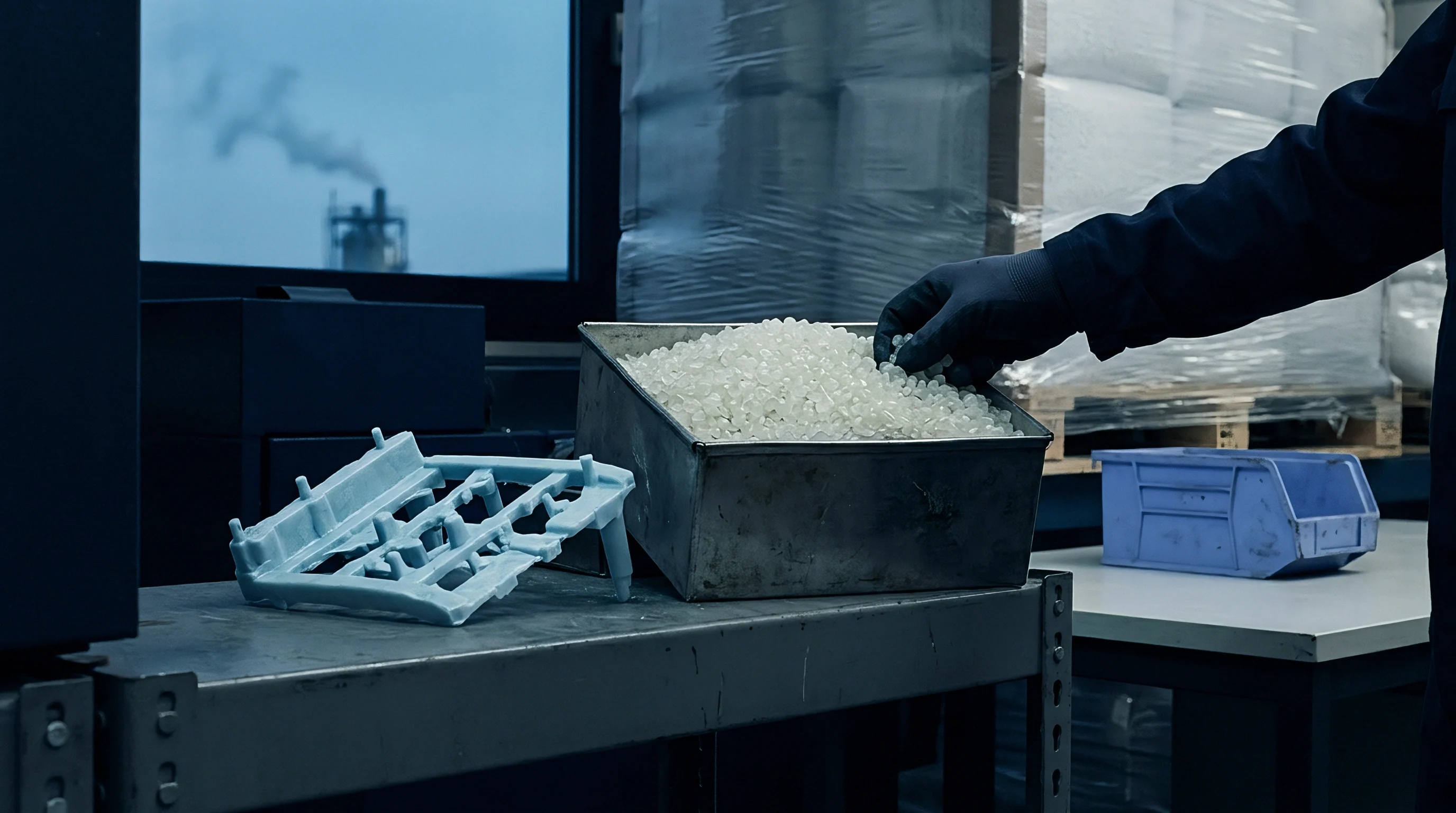
Legal protection against sub-standard house blends requires rigorous raw material purchase specifications. Standard purchase orders that list only commercial grade names and nominal prices leave buyers exposed to supplier substitution practices. Technical procurement teams draft comprehensive material specification attachments that define tight acceptable property bands, explicit chemical composition limits, and zero-tolerance mandates regarding undisclosed reprocessed scrap additions.
Specification documents must bind the supplier to specific chemical testing standards and sampling frequencies. Explicitly listing ISO 1133-1 for melt flow rate, ISO 1183-1 for density, ISO 179-1 for notched Izod impact strength, and ISO 11357-6 for oxidative induction time creates an absolute quality floor. The agreement specifies that any addition of post-industrial scrap, post-consumer recyclate, or off-spec transition fluff requires prior written authorization and fresh full-property re-qualification.
Distributors agreeing to strict specification attachments must provide batch-specific certificates of analysis issued directly by the primary chemical manufacturing laboratory. Third-party transcription of test numbers onto distributor letterhead must be strictly prohibited under commercial terms. Receiving docks automatically reject shipments arriving with transcribed certificates or missing original lot traceability codes.

Purchase Order Chemical Tolerance Attachments
Drafting chemical tolerance attachments requires establishing narrow property bands around key performance parameters. While standard commercial data sheets permit melt mass-flow rate variations of plus or minus 20 percent, technical purchase attachments narrow this window to plus or minus 7 percent for critical applications. Density tolerances shrink from plus or minus 0.005 g/cm³ down to plus or minus 0.0015 g/cm³, limiting underlying polymer crystallinity shifts.
Attachments must mandate maximum acceptable particulate and gel thresholds verified via optical testing methods. Specifying a maximum limit of twenty gels larger than 100 micrometers per square meter of film prevents compounders from passing off heavily contaminated house mixtures as prime engineering resins. Flame retardant grades must state absolute elemental concentrations for bromine, phosphorus, or antimony, verified through X-ray fluorescence testing on incoming lots.
Density drops below the specified minimum when un-blended light fractions enter the stream.
Commercial clauses must assign financial responsibility for full production downtime, mold cleaning costs, and scrapped finished components to the supplier if delivered material fails attached specifications. Standard supplier terms of sale attempt to limit liability strictly to resin replacement cost. Technical buyers eliminate these limitation clauses during contract negotiation, establishing full compensatory damages for line disruptions caused by unauthorized house blend substitutions.

Retention Sample Custody Protocols
Establishing an unbroken chain of custody for retention samples provides the evidentiary foundation for resolving material disputes. Dock personnel draw physical samples from every incoming lot during unloading operations, following standardized procedures before pellets enter storage silos or production lines. The retention samples are divided into three equal portions, sealed in moisture-proof aluminum foil bags, and labeled with original supplier lot numbers, delivery dates, and receiving bill of lading codes.
- Sample collection takes place directly from incoming gaylord boxes or bulk railcar discharge ports using clean stainless steel sampling spears to prevent external contamination.
- Laboratory technicians split the gathered sample using a rotary sample divider to ensure representative physical particle distribution across all sub-samples.
- Sub-sample one undergoes immediate verification testing for melt mass-flow rate, density, and ATR-FTIR chemical fingerprinting to clear the lot for production.
- Sub-sample two enters long-term secure archive storage held under controlled environmental conditions of 23 degrees Celsius and 50 percent relative humidity.
- Sub-sample three is formally sealed and counter-signed by the transport driver, serving as the neutral reference sample in the event of third-party arbitration.
Archived retention samples are preserved for a minimum of twenty-four months or throughout the target component’s full service warranty period. When field failures occur, forensic laboratories run parallel chemical and mechanical evaluations comparing field-failed parts directly against the archived raw pellet retention sample. Infrared spectroscopy, differential scanning calorimetry, and gel permeation chromatography quickly identify whether degradation occurred during component service or originated from sub-standard incoming raw material.
A sealed retention sample held in a verified archive beats ten pages of supplier certification when a quality claim goes to independent laboratory arbitration.
When incoming laboratory testing catches non-conforming house mixtures at the receiving dock, clear custody protocols enable immediate formal rejection. The buyer issues a formal Notice of Non-Conformance, backed by retention sample test reports, blocking invoice payment and requiring the supplier to remove the material from the site within forty-eight hours at their sole expense.


Accounting
Purchasing re-blended house formulations at nominal discounts often creates net cost losses when evaluated across total manufacturing cost. Intermediate suppliers market house grades by offering unit price reductions of 5 to 15 percent below standard virgin prime market indices. Uninformed procurement teams view these unit cost savings as direct margin improvements, ignoring the operational costs imposed on molding lines by material variance, extended cycle times, and elevated scrap rates.
Calculating landed cost per good part requires accounting for every production variable influenced by raw material quality. High gel counts, unstable melt flow rates, and broad molecular weight distributions increase cavity rejection rates during production. A molding line running pure virgin prime resin maintains scrap rates below 1.5 percent, whereas running a variable house mixture easily elevates scrap rates to 6 percent or higher, completely erasing the initial resin purchase discount.
Cycle time penalties represent another major hidden cost associated with house mixtures. Variations in crystallization temperature and melt viscosity force mold setters to extend cooling times and hold pressures to prevent part warpage, sink marks, and dimensional drift. Extending an injection molding cycle from 22 seconds to 25 seconds to accommodate material variance reduces overall plant output by nearly 12 percent, increasing allocated overhead cost per part and reducing machine gross margin generation.

Landed Cost Modeling for Yield Loss and Scrap Rates
Financial evaluation of raw material choices relies on total cost of quality equations that combine direct material expenses, processing energy consumption, tooling wear, and scrap disposal fees. A comprehensive cost model calculates the true cost per kilogram of processed good part, providing procurement teams with accurate data to evaluate supplier quotes.
The landed cost equation incorporates freight charges, import tariffs, handling fees, internal testing costs, and net scrap adjustments. Scrapped parts made from modified house blends containing post-industrial scrap carry lower regrind recovery value. While clean virgin regrind can be re-introduced into non-critical parts at full value, degraded regrind derived from house blends must be disposed of or sold to external recyclers at deep discounts, generating direct financial write-offs.
Operating margins erode rapidly under these compounded losses.
Calculating net part cost requires combining resin discount with scrap rate, cycle time expansion, and tool maintenance expenditure across a standard production run. Purchasing resin at a 10 percent unit discount turns into a 7 percent net unit cost increase when process scrap rises by 4 percent and mold cycle time expands by two seconds. True material economy requires evaluating total cost of manufacturing rather than initial pellet purchase price per metric tonne.

Discount Arbitrage versus Mold Cavity Wear
Intermediate compounders lower production costs by using coarse, low-cost mineral fillers or un-purified post-industrial regrind streams in house formulations. These unannounced additives increase the abrasiveness of the molten polymer, accelerating wear across injection mold cavities, core pins, hot runner nozzles, and runner gates. Tooling repairs and premature cavity re-polishing impose heavy unexpected maintenance costs on processing facilities.
| Cost & Performance Parameter | Pure Virgin Prime Grade | Discounted House Blend | Variance Impact |
|---|---|---|---|
| Pellet Invoice Price ($/kg) | $2.45 | $2.18 | – 11.0% (Initial Savings) |
| Incoming Inspection & Testing ($/kg) | $0.01 | $0.05 | + 400.0% (Added Testing) |
| Production Scrap Rate (%) | 1.2% | 5.8% | + 4.6% Yield Loss |
| Average Mold Cycle Time (sec) | 18.5 sec | 21.2 sec | + 14.6% Machine Time |
| Tooling Maintenance Cost ($/100k parts) | $450 | $1,850 | + 311.1% Cavity Wear |
| Effective Net Part Cost ($/unit) | $0.412 | $0.438 | + 6.3% Net Cost Increase |
Financial modeling must include warranty liability allocations. Parts molded from variable house mixtures carry elevated risks of delayed field failure caused by low environmental stress crack resistance, premature thermo-oxidative degradation, or hidden micro-gel crack initiation. A single product recall or field replacement campaign easily consumes years of accumulated resin purchasing discounts.
- Formulate Comprehensive RFQ Specifications that prohibit undisclosed reprocessed material additions and establish explicit property tolerance windows attached to purchase orders.
- Institute Mandatory Dockside Sampling Protocols using multi-point sampling spears and high-speed ATR-FTIR screening to catch non-conforming lots before unloading into main silos.
- Demand Original Manufacturer Documentation containing complete batch production tracking numbers directly from primary polymer producers.
- Maintain Secured Retention Sample Archives held in controlled environments to establish clear evidence for potential warranty and material failure arbitrations.
- Execute Total Cost Accounting Reviews that incorporate scrap rates, cycle time shifts, tooling maintenance, and warranty exposure into all material purchasing decisions.
Procurement teams operating under strict cost targets must balance short-term unit price savings against long-term manufacturing performance. Commercial contracts that hold suppliers accountable for total operational impacts align incentives across the supply chain, ensuring that delivered materials meet true engineering requirements.
Evaluating incoming pellet streams through rigorous rheological, physical, and financial frameworks eliminates the operational instability caused by unannounced house blends. Technical buyers holding clear documentation, rigorous testing protocols, and robust commercial terms successfully protect their manufacturing lines from sub-standard resin substitutions.