Meaning
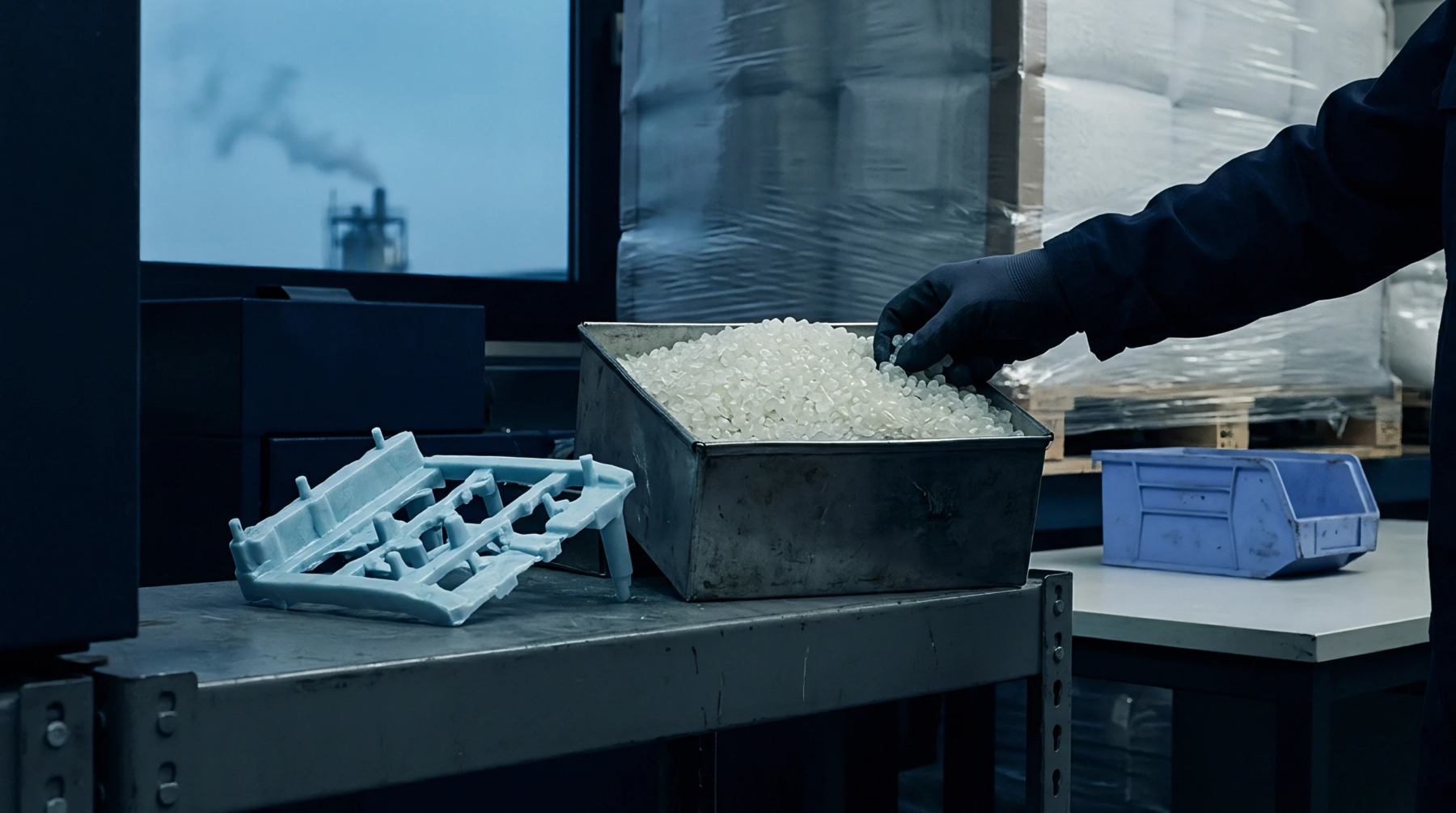
Thermoplastic resin certification originating from primary polymer production but failing strict rheological tolerances constitutes off-spec prime. Polymer manufacturers designate this material when melt flow index values deviate slightly from the narrow window demanded by high-speed extrusion lines yet molecular weight distribution remains intact. Processing technicians encounter this grade during resin reactor transition phases or color shifts between consecutive production lots.
Extruders handling off-spec prime experience subtle pressure oscillations inside the barrel because viscosity fluctuates faster than standard virgin polymer batches. Part manufacturers save raw material expenditure by purchasing these uncertified lots for thick-walled injection moulding where slight melt flow variations produce zero measurable warpage.
Resin Variability
Melt mass-flow rate instability defines the internal mechanics of off-spec prime during thermal plasticisation. Screw speed adjustments mitigate the lower viscosity profile only if shear heating stays proportional to barrel temperature zones. Cooling lines require longer water bath immersion times when molecular weight distribution spreads wider than standard specifications allow.
Operators running profile extrusion tools must reduce line speeds to prevent melt fracture along die lips.
Financial Economics
Resin acquisition budgets decrease significantly when purchasing secondary prime inventories instead of certified virgin compounds. Injection moulders calculate savings against scrap rates generated by dimensional shrinkage inconsistency across multi-cavity tools. Part structural integrity stays high enough for non-load-bearing enclosures despite the lower initial resin purchase price.
Plant managers balance these lower material costs against increased machine downtime spent calibrating injection pressures for fluctuating batches.
Quality Boundaries
Finished component dimensions remain compliant only if tool cavity pressures compensate for density shifts in the incoming feedstock. Part specifications demand tight tolerances that off-spec prime fails to satisfy when moulded into thin-walled housings requiring uniform shrinkage. Raw material suppliers refuse liability for final product failure once moulders accept uncertified resin lots into production schedules.
Strict quality assurance protocols restrict the use of this material to applications where mechanical property margins absorb batch-to-batch variations without risking structural failure.