Antidumping Duty Lines That Move a Polymer off the Shortlist
Antidumping duties reorder polymer shortlists when cash deposits, scope rulings, and customs reclassifications destroy the landed cost advantage of imported resin.


Tariff
Federal antidumping orders can drastically shift the delivered cost of imported polymer resins, adding margins anywhere from a few percentage points to over two hundred percent. An engineer selecting a grade based solely on its physical datasheet risks picking a material whose landed cost effectively doubles at the port of entry. Once an investigation confirms material injury, customs agencies issue targeted orders across specific tariff lines, countries, and individual production plants.
Importers are forced to post cash deposits upon entry, creating an immediate liability that hits cash flows well before final liquidation. A single active duty line can rewrite a supplier shortlist overnight, turning a cheap resin into an unviable commercial exposure.
A resin selection’s trade vulnerability sits within the six- and eight-digit Harmonized Tariff Schedule codes used at customs borders. Polyethylene, polypropylene, polybutylene terephthalate, and polyvinyl chloride each clear under distinct subheadings carrying specific baseline duty rates and prospective antidumping actions. Foreign mills facing steep dumping margins often try to route volume into un-targeted subheadings by tweaking physical traits like monomer ratios, density thresholds, or filler concentrations.
Trade enforcement agencies counter this with broad scope rulings that pull modified polymers right back under high-duty orders. Shortlisting decisions made without checking the specific mill margins published in government trade registers leave a manufacturing program exposed to retroactive levies.
Antidumping rates depend on comparing a polymer’s export price against its normal value in the producer’s home market. When foreign suppliers sell resin below calculated cost or domestic market prices, trade authorities assign producer-specific dumping margins. Mills that refuse to cooperate with financial audits receive adverse facts available rates ~ the highest statutory penalty lines available under trade law.
Shortlisting a resin from an uncooperative supplier locks an enterprise into cash deposits that wipe out any material savings. Procurement teams must track duty rates by individual facility rather than relying on national averages, since two plants operating in the exact same industrial park can face rates that differ by more than one hundred percentage points.
Polypropylene homopolymers entering under tariff line 3902.10.00 face a cash deposit requirement of 142.5 percent when exported by non-cooperating foreign mills.
Countervailing duty orders run alongside antidumping actions to target foreign government subsidies on raw feedstocks, energy, or export processing zones. Petrochemical facilities operating in state-subsidized industrial complexes often receive discounted naphtha or natural gas liquids, prompting domestic industry coalitions to file countervailing petitions. Stacked antidumping and countervailing duties quickly upend raw material economics, turning apparent cost efficiency into an active financial liability.
Once trade agencies initiate preliminary investigations, buyers face immediate exposure due to retroactivity provisions that apply to entries filed ninety days prior to official preliminary findings.
Customs procedures require the importer of record to post surety bonds capable of covering estimated antidumping duties upon arrival at the import gateway. If duty rates rise following an administrative review, customs will issue supplemental duty bills years after the original resin processing run finished. Polymer buyers who fail to account for open administrative review cycles remain exposed to retroactive price adjustments long after part delivery.
Qualifying a foreign material requires evaluating a mill’s legal filings just as thoroughly as its melt flow index or tensile modulus data.
Custom modifications are often framed as exempting specific resin grades from targeted trade orders, with assertions that minor additions of ethylene monomer or inorganic filler alter a resin’s trade identity. Customs authorities, however, routinely look past subtle formulation tweaks to enforce existing import restrictions.

Scope Inclusions for Unmodified Polyolefins
Customs scope definitions focus on base chemical composition and density metrics rather than commercial trade names. Unmodified polyethylene homopolymers and copolymers containing ninety-five percent or more ethylene by weight fall directly within primary import boundaries. This covers low-density polyethylene, linear low-density polyethylene, and high-density grades regardless of melt index or catalyst system used during synthesis.
Importers bringing in prime polyolefin grades from targeted origins face steady customs scrutiny designed to prevent minor chemical shifts from bypassing established order boundaries.
Polypropylene order definitions follow similarly strict chemical boundaries around homopolymers, random copolymers, and block copolymers based on monomer limits. Standard injection molding homopolymers with a melt flow rate of 12 g/10 min under ISO 1133 conditions of 230 C and 2.16 kg remain fully exposed to existing trade orders. Foreign producers attempting to reclassify standard homopolymers as specialized technical compounds face immediate rejection at the port of entry unless physical composition changes meet explicit statutory thresholds.
Technical specifications must incorporate tariff code cross-references to ensure that shortlisted materials carry fully audited customs risk profiles.
Duty lines targeting polyvinyl chloride and terephthalate polymers operate under equally explicit technical scope boundaries. Suspension-grade polyvinyl chloride resins with specific K-values between 65 and 70 remain primary targets for trade enforcement actions due to high import volumes in pipe and profile manufacturing. Polyethylene terephthalate resins with intrinsic viscosity figures exceeding 0.78 dl/g as measured by ASTM D4603 face continuous trade litigation across major manufacturing jurisdictions.
Evaluating these polymers requires verifying that foreign manufacturing sites possess cleared scope ruling determinations before placing volume purchase orders.

Retrospective Duty Adjustments and Cash Deposits
Import procedures in retrospective duty jurisdictions enforce liquidations long after goods enter commercial distribution networks. Importers pay estimated cash deposits at entry based on the duty rates established in the most recent administrative review cycle. Customs authorities keep entries unliquidated while trade agencies conduct annual reviews to calculate final actual dumping margins for the entry period.
If the administrative review yields a higher dumping margin than the preliminary deposit rate, the importer receives a bill for the differential duty plus statutory interest accrued over the multi-year review window.
These retrospective mechanics transform raw material cost accounting into an open liability balance sheet item. A compounder importing resin at an estimated cash deposit rate of ten percent may face a final liquidated duty rate of eighty percent three years later. Financial risk of this magnitude forces sourcing teams to demand indemnification guarantees from foreign suppliers or switch to domestic resin alternatives.
Sourcing procedures that evaluate only spot pricing fail to capture the long-tail capital risks associated with retrospective duty assessments.
Importers facing escalating duty deposits frequently seek administrative reviews to lower their individual assessment rates. These legal reviews require complete disclosure of production costs, yield ratios, energy consumption figures, and domestic sales records from foreign compounding plants. Foreign producers unable or unwilling to expose their internal accounting practices to foreign government auditors receive total adverse inferences, resulting in maximum duty application.
Shortlisting a resin from a supplier that lacks robust legal compliance infrastructure guarantees severe duty rate escalation during subsequent review periods.
Pending legal appeals are frequently presented as a near-term remedy that will dissolve duty lines within six months, encouraging purchasing managers to continue specifying high-duty resins under temporary import mechanisms. In practice, administrative appeals regularly extend over several years while duty liabilities continue to accumulate.


Classification
Accurate technical categorization under the Harmonized System governs whether an imported resin incurs baseline tariffs or severe trade penalties. Custom officials rely on standardized laboratory testing protocols to verify whether physical shipments match declared import documentation. When a declaration lists an un-targeted compound code while physical bags contain standard prime homopolymer, customs laboratories perform compositional and physical testing to reclassify the shipment.
A forced reclassification at the port of entry halts cargo movement, triggers immediate customs audits, and applies retroactive antidumping duty rates to all historical entries under that trade line.
Polymer specifications must match the exact analytical metrics enforced by national customs laboratories. Customs chemists utilize ISO 1183 density measurements, ISO 1133 melt mass-flow rate determinations, and nuclear magnetic resonance spectroscopy to establish comonomer weight fractions. A polyethylene grade declared as an ethylene-alpha-olefin copolymer under HS 3901.90 must contain more than five percent by weight of non-ethylene monomer units to avoid reclassification into high-duty homopolymer lines.
Suppliers who attempt to pass off low-comonomer resins as specialty copolymers face technical detection during routine port sampling protocols.
The distinction between raw polymer resins and fully compounded technical plastics creates continuous legal disputes at trade borders. Under statutory customs guidance, adding minimal color masterbatch or trace processing aids does not transform a base polymer into a compounding line under HS 3902.90. Customs rulings dictate that inorganic fillers must exceed specific weight thresholds, often ten to fifteen percent by mass, before a polymer mixture qualifies as a prepared compound.
Shortlist engineering must account for these exact compositional boundary lines when formulating custom resins intended for cross-border transit.
Polypropylene block copolymers containing less than five percent total ethylene content by weight revert to targeted homopolymer customs lines under standard trade laboratory spectrographic analysis.
Customs classification criteria demand that physical properties remain consistent across an entire production lot. Importers who blend high-duty foreign resin with un-targeted domestic material within foreign trade zones must submit to strict rules of origin transformation tests. Simple mechanical blending operations rarely constitute substantial transformation under trade law, leaving the full volume exposed to foreign origin duty rates.
Sourcing teams must audit foreign compounding facilities to verify that physical transformation processes meet legal thresholds required to alter Harmonized System lines.
Documentation submitted to trade clearance brokers must include precise laboratory test reports validated by accredited analytical facilities. Certificates of analysis that omit test methods, temperatures, or load conditions invite immediate customs holds and secondary laboratory sampling. A resin grade declaration must be supported by continuous compositional verification metrics that prove compliance with specified tariff definitions throughout the production lifecycle.
| Base Polymer Type | Harmonized System Subheading | Key Technical Classification Threshold | Baseline Import Duty (%) | Maximum Antidumping Exposure (%) |
|---|---|---|---|---|
| Polyethylene Homopolymer | 3901.10 / 3901.20 | Specific gravity < 0.94 g/cm3 (Low Density) or ≥ 0.94 g/cm3 (High Density) | 6.5 | 174.2 |
| Ethylene-Alpha-Olefin Copolymer | 3901.90.90 | Comonomer content > 5.0% by weight via ASTM D5576 NMR spectroscopic assay | 6.5 | 0.0 (Scope Excluded) |
| Polypropylene Homopolymer | 3902.10.00 | Pure propylene monomer content ≥ 99.0% by weight via melt FTIR analysis | 6.5 | 142.5 |
| Propylene Copolymers | 3902.30.00 | Ethylene or higher alpha-olefin comonomer ≥ 1.0% and < 50.0% by weight | 6.5 | 98.4 |
| Polyvinyl Chloride (Suspension) | 3904.10.00 | Unmixed PVC resin with K-value between 65 and 70 per ISO 1628-2 | 6.5 | 273.8 |
| Compounded Polypropylene | 3902.90.00 | Inorganic mineral content ≥ 15.0% by weight per ISO 3451-1 ash test | 6.5 | 0.0 (Third-Party Origin) |
Understanding these critical tariff line distinctions protects procurement budgets from unforeseen trade liability enforcement. Failure to verify technical parameters against physical shipments exposes importing organizations to administrative penalties and goods seizures at the port of entry.

Analytical Test Protocols for Customs Verification
Customs laboratories apply explicit analytical methods to verify resin composition when declared tariff lines offer duty concessions. Nuclear magnetic resonance spectroscopy serves as the primary standard for determining comonomer ratios in polyolefin copolymers under ASTM D5576. This test measures the exact molar percentage of ethylene, hexene, or octene integrated into the polymer backbone.
If the analytical result shows comonomer content falling below specified statutory limits, customs officers reclassify the shipment under high-duty homopolymer entries immediately.
Differential scanning calorimetry provides supplemental verification of thermal transitions and polymer phase architecture. Standard test protocols under ISO 11357 determine melting temperature peaks and heat of fusion metrics that distinguish random copolymers from heterophasic impact copolymers or physical mechanical blends. A supplier claiming a copolymer classification under HS 3902.30 must exhibit distinct melting profiles consistent with synthesized copolymer chains.
Physical blends created by simple dry-mixing of homopolymer and elastomer pellets fail this thermal analysis test and trigger immediate trade margin reassessments.
Ash content analysis performed in accordance with ISO 3451-1 measures the total inorganic content within filled plastic compounds. Customs auditors utilize this procedure to verify whether a compound declared under HS 3902.90 contains sufficient mineral reinforcement to escape base resin antidumping scope definitions. If calcination at 600 C reveals an ash content of eight percent when national trade rules demand a fifteen percent minimum threshold, the shipment faces reclassification as base polymer plus non-conforming additives.
Procurement teams must validate ash content metrics across every incoming lot to preserve tariff line integrity.
- Declared Copolymer Monomer Deficit where spectrographic analysis shows comonomer content falling below five percent by weight.
- Unsubstantiated Compounding Fillers where ash content test values fail to meet the fifteen percent weight threshold.
- Discrepant Melt Flow Index Readings indicating material substitution relative to submitted certificate of analysis records.
- Inconsistent Density Values falling outside declared Harmonized System limits during ISO 1183 liquid displacement testing.
- Missing Country of Origin Marks on bulk shipping sacks or railcar shipping documents.
Maintaining complete technical control over analytical verification protocols guarantees that import declarations withstand aggressive customs authority inspections. Sourcing teams must align internal testing procedures directly with standard trade laboratory practices.

Scope Ruling Litigation and Precedents
Importers facing scope ambiguities can petition trade agencies for formal scope rulings to clarify whether a prospective polymer grade falls within an existing duty order. This administrative process requires submitting detailed chemical structures, manufacturing process descriptions, and proposed Harmonized System code entries. The resulting formal ruling binds customs authorities across all domestic ports, creating legal certainty for multi-year procurement programs.
Relying on informal advice from customs brokers or overseas sales representatives provides zero legal defense against future duty assessments.
Historical scope litigation demonstrates that regulatory agencies prioritize the narrative language of duty orders over commercial marketing designations. If an order language captures all polypropylene polymers containing less than fifty percent comonomer, technical arguments regarding specialized end-use applications in medical devices or automotive parts carry no weight. Legal precedents consistently affirm that custom modified resins remain within targeted scope boundaries unless explicit exclusions exist within the published trade order.
Procurement strategies built around minor physical variations inevitably fail during formal agency reviews.
Contractual terms with foreign resin suppliers must incorporate explicit remedies for duty shifts caused by scope ruling failures. Master supply agreements must contain the following language to protect buying organizations from unexpected duty liabilities: “Seller warrants that all polymer grades delivered under this agreement strictly conform to the declared Harmonized System tariff subheadings and scope exclusions, and Seller assumes full financial liability for any retrospective antidumping or countervailing duties, interest, and penalties resulting from customs reclassification or scope ruling reversals.”

Compounding
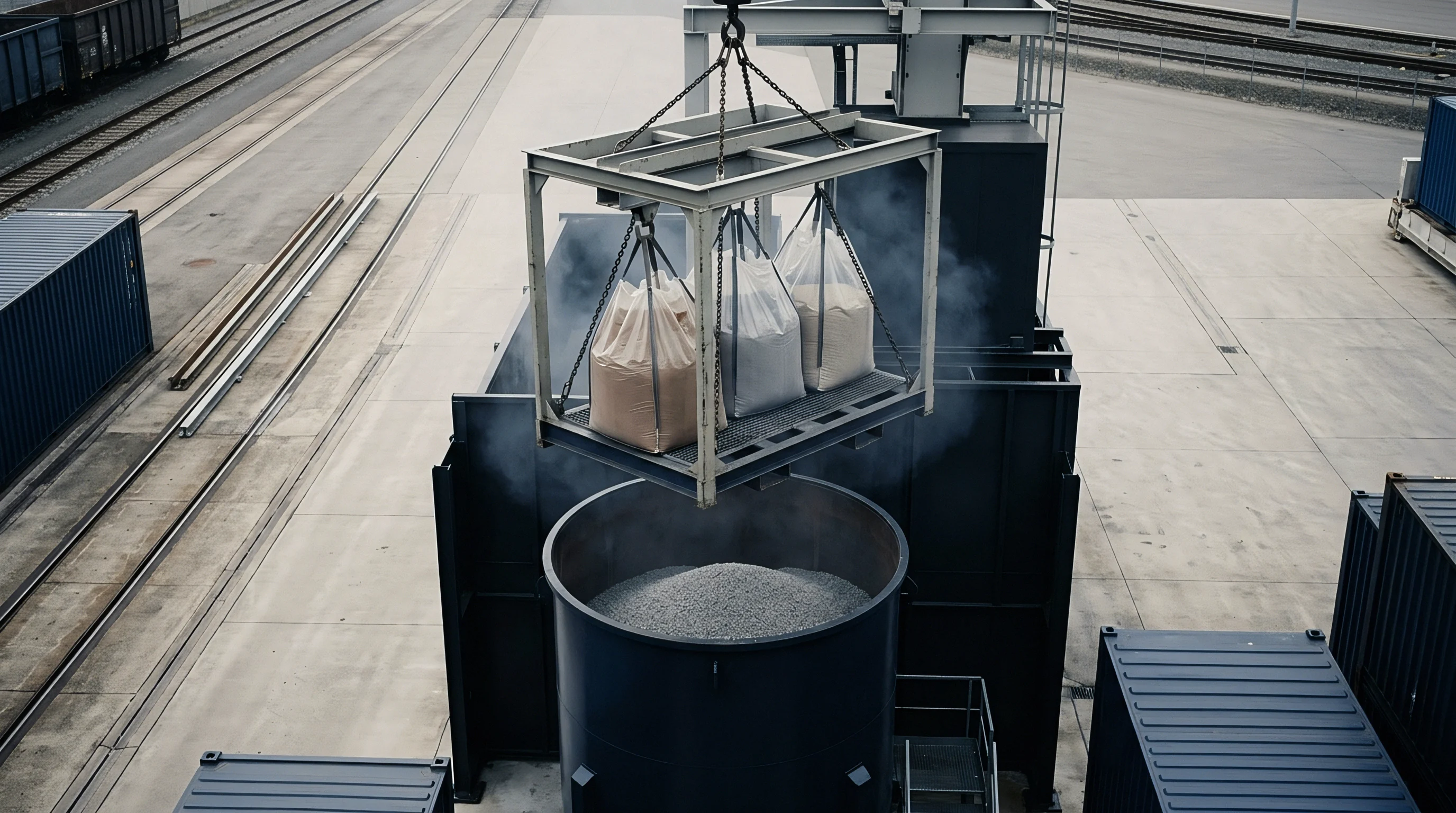
Modifying polymer formulations through downstream compounding provides a technical route to alter trade classifications, but it introduces real mechanical and processing trade-offs. Compounders add minerals, impact modifiers, or recycled streams to move base resins out of targeted single-polymer HS lines and into un-targeted compound classifications under HS 3902.90 or 3824.99. While this drops customs liabilities from triple-digit dumping rates down to baseline tariffs, structural shifts in the material affect how it processes in downstream tooling.
Procurement engineers need to weigh these performance drops before tweaking a formula purely to dodge tariffs.
Adding inorganic fillers like talc, calcium carbonate, or glass fiber alters the melt flow of base polyolefins. Loading twenty percent fine talc into polypropylene homopolymer bumps density from 0.905 g/cm3 to 1.05 g/cm3 while dropping the melt flow rate under ISO 1133 (230 C / 2.16 kg). Higher viscosity limits flow in thin-wall molds, forcing press operators to raise melt temperatures and injection pressures.
Those adjustments extend cooling phases, adding eight to fifteen percent to cycle times and eating into tariff savings.
Mineral fillers also alter mechanical properties. Tensile modulus under ISO 527 increases, making parts stiffer but reducing elongation at break. Charpy notched impact strength under ISO 179 at 23 C drops sharply if filler particles lack proper silane or maleic anhydride coupling agents.
A high-impact part rated for cold service can fail brittly if switched to a filled compound created to bypass duty orders. Full mechanical qualification is essential before approving any duty-shifted formulation for structural use.
Incorporating fifteen percent talc by weight into a prime polypropylene matrix increases flexural modulus under ISO 178 while reducing notched Charpy impact strength at sub-zero temperatures by forty percent.
Compounding runs designed to shift tariff lines demand strict dosing control. If gravimetric feeders drift during a run, filler levels can fall below the statutory minimum for un-targeted subheadings. Shipping a batch with twelve percent filler when documentation claims sixteen percent risks immediate seizure and duty reassessment at customs.
Quality control at compounding plants must mandate regular ash testing under ISO 3451-1 to protect every shipment container.
The financial case for compounding hinges on balancing additive costs, compounding fees, and processing trade-offs against duty penalties. Sourcing teams need to evaluate total compounded cost per kilogram alongside implicit performance costs, like thicker walls or longer cycle times. Modifying a resin formula to avoid duties only works if the final landed cost per good part comes out lower than buying prime domestic resin.
| Polymer Formulation Metric | Prime Targeted Homopolymer | Talc-Filled Tariff Shifted Compound | Recyclate-Blended Tariff Shifted Grade | Test Method & Condition |
|---|---|---|---|---|
| Base Resin Type | Polypropylene Homopolymer | PP + 16% Talc Reinforcement | PP + 30% Post-Industrial Regrind | ISO 1043 Classification |
| Density (g/cm3) | 0.905 | 1.030 | 0.912 | ISO 1183 Method A |
| Melt Flow Rate (g/10 min) | 12.0 | 7.5 | 15.5 | ISO 1133 (230 C / 2.16 kg) |
| Tensile Modulus (MPa) | 1,450 | 2,200 | 1,250 | ISO 527-2 (1 mm/min) |
| Tensile Strength at Yield (MPa) | 35.0 | 31.0 | 29.5 | ISO 527-2 (50 mm/min) |
| Charpy Notched Impact (kJ/m2) | 3.5 | 2.1 | 2.4 | ISO 179-1/1eA (23 C) |
| Deflection Temp Under Load (C) | 95 | 125 | 88 | ISO 75-2 Method A (1.80 MPa) |
| Harmonized System Subheading | 3902.10.00 | 3902.90.00 | 3902.90.00 | Customs Tariff Nomenclature |
| Antidumping Cash Deposit (%) | 142.5 | 0.0 | 0.0 | Enforced Trade Order Rate |
| Landed Material Cost ($/kg) | 2.78 | 1.85 | 1.68 | Delivered Gateway Port |
| Test data reflects room temperature conditioning at 23 C and 50% RH unless explicitly specified by reference standard. | ||||
Developing solid compound formulations takes extensive laboratory testing to confirm engineering properties hold up after formulation changes. Procurement teams shouldn’t accept compound swaps without auditing the complete test dossier.

Where Does the Tariff Penalty Cross the Recycling Premium?
Blending post-industrial or post-consumer recycled resin into virgin stock offers another route to change trade classifications while supporting sustainability targets. Foreign compounders mix high-duty prime resin with recycled polyolefins, shipping the compound under recycled composite headings. While recycled categories often carry favorable tariffs, recycled feedstock carries its own price premium from sorting, washing, and re-pelletizing.
Procurement engineers have to pinpoint where that recycling premium overtakes the duty savings.
Viscosity variation is the primary technical hurdle with recycled content. Recycled polyolefins have already undergone thermal processing, causing chain scission, broader molecular weight distribution, and depleted antioxidant packages. Melt flow rates in recycled blends can swing by up to thirty percent between lots.
Injection molders often need real-time cavity pressure monitoring and adaptive control to prevent flash or short shots caused by shifting melt behavior.
Contamination risks also multiply with recycled compounds. Trace amounts of incompatible polymers ~ like polyethylene in a polypropylene recycled stream ~ create immiscible pockets that act as stress concentration points. Parts molded from these blends see sharp drops in tensile strength at break and fatigue life under dynamic loads.
Specifications must set strict thresholds for un-melted gels, cross-linked particles, and foreign polymers using DSC and optical gel counting.
- Oxidative Induction Time Verification measuring residual antioxidant stabilization under ISO 11357-6 at 200 C in pure oxygen.
- High-Temperature Gel Permeation Chromatography mapping complete molecular weight distribution profiles and polydispersity indices.
- Rotational Rheometer Shear Sweeps measuring complex viscosity across processing shear rates from 0.1 to 1000 rad/s.
- Capillary Rheometry Die Swell Testing quantifying elastic melt recovery during high-speed extrusion.
- Contaminant Polymer Identification using FTIR microscopy to detect immiscible polymer inclusions down to ten microns.
Balancing recycling premiums against tariff avoidance requires ongoing lab oversight. Sourcing decisions must weigh raw material prices against compounding stability to protect overall yields.

Thermal and Oxidative Degradation in Re-Processed Compounds
Extrusion compounding subjects polymers to high melt temperatures and intense shear in twin-screw barrels. Polypropylene undergoes chain scission under high shear, lowering molecular weight and driving up melt flow rates. Polyethylene, on the other hand, tends to cross-link, forming high-molecular-weight gel networks that increase melt elasticity and create surface defects in extruded sheet or film.
Repeated compounding passes performed strictly to change tariff codes steadily degrade the base polymer.
Stabilizer packages need to be replenished when compounding duty-shifted grades. Primary hindered phenol antioxidants and secondary phosphite stabilizers burn off during initial synthesis and subsequent compounding runs. Compounders that skip supplemental stabilizers produce pellets prone to yellowing, color shifts, and thermal breakdown during final molding.
Material specs should mandate minimum residual oxidative induction time values under ISO 11357-6 to ensure processing stability.
During qualification of a talc-filled compound designed to bypass a 110 percent duty rate, field testing revealed catastrophic fatigue failures in molded snap-fit parts after three months of service. Gel permeation chromatography later showed severe molecular weight degradation caused by excessive barrel temperatures during the high-filler compounding pass. Scrap rates, warranty claims, and secondary processing fees completely wiped out the savings calculated in initial tariff models.
Tweaking formulations to shift tariff lines carries real engineering risks that require strict quality control. Sourcing teams can’t afford to sacrifice mechanical integrity for short-term duty avoidance.

Arbitrage
Commercial arbitrage leverages regional price gaps, freight differences, and preferential trade agreements to soften the impact of active dumping duties. Sourcing teams map global material flows to find supply routes where foreign mills can deliver resin without penalty margins. When direct imports from primary manufacturing countries face heavy duties, buyers look for alternative supply nodes that can deliver equivalent polymer chemistries under non-targeted country-of-origin classifications.
Executing these strategies requires strict adherence to statutory rules of origin.
Substantial transformation rules determine whether processing in an intermediate country changes a resin’s legal origin. Under trade law, simply repackaging bulk pellets from railcars into bags isn’t substantial transformation. Likewise, simple re-melting and pelletizing without significant value addition or a change in the six-digit HS subheading fails to confer new origin status.
Importers buying resin routed through intermediate ports without genuine physical transformation face steep penalties for circumvention.
Free trade agreements offer frameworks for duty elimination, but they enforce strict regional value content rules. To qualify for preferential tariffs, imported compounds usually must hit regional value content cutoffs of fifty to sixty percent of total valuation. That calculation includes local raw materials, labor, overhead, and capital costs.
Sourcing teams must audit foreign supply chains to verify that local value addition satisfies trade agreement math before declaring imports under preferential lines.
Regional value content formulas strictly require that local compounding costs and additives exceed fifty percent of total product value to shift origin classifications under preferred trade agreements.
Landed cost models must factor in logistics, customs fees, and compliance costs alongside raw pellet prices. Estimating savings off FOB quotes ignores freight rate swings, port congestion surcharges, brokerage fees, and insurance. A compound that looks cheap at an overseas terminal can easily end up costing more per kilogram than domestic spot resin once ocean freight spikes and bond costs are tallied.
Managing financial risk means building dynamic models that test landed costs against changing duty scenarios. Dumping rates shift after annual reviews, and political changes can wipe out trade preferences overnight. Sourcing strategies tied to a single foreign supplier leave programs vulnerable to regulatory shifts.
Resilient procurement frameworks keep qualified secondary domestic suppliers ready to scale volume if import duties make foreign supply non-viable.
| Cost Component Parameter | Option A: Direct Targeted Import | Option B: Compounded Duty-Shifted | Option C: Domestic Spot Market |
|---|---|---|---|
| Base Pellet Price ($/kg FOB) | 1.15 | 1.35 | 1.85 |
| Ocean Freight & Insurance ($/kg) | 0.22 | 0.22 | 0.00 |
| Baseline Import Tariff (6.5%) | 0.07 | 0.09 | 0.00 |
| Antidumping Cash Deposit ($/kg) | 1.64 (142.5%) | 0.00 (Scope Excluded) | 0.00 |
| Customs Clearance & Brokerage ($/kg) | 0.03 | 0.03 | 0.00 |
| Inland Freight to Factory ($/kg) | 0.08 | 0.08 | 0.05 |
| Total Landed Resin Cost ($/kg) | 3.19 | 1.77 | 1.90 |
| Part Mass (grams) | 250 | 278 (Filled Density Shift) | 250 |
| Molding Cycle Time (seconds) | 32 | 36 (Cooling Delay) | 32 |
| Direct Tooling & Scrap Cost ($/part) | 0.12 | 0.15 | 0.12 |
| Final Landed Cost Per Good Part ($) | 0.918 | 0.642 | 0.595 |
Calculating landed cost per part shows the true economics of international resin sourcing. Procurement decisions have to account for processing adjustments alongside freight and material costs.
- Establish raw material origin tracking documents covering all monomer sources and primary polymerization sites.
- Audit foreign compounding facilities to verify continuous gravimetric additive dosing and physical conversion processes.
- Perform analytical laboratory testing under accredited ISO protocols to substantiate declared Harmonized System classifications.
- Calculate regional value content metrics under free trade agreement formulas to confirm origin transformation validity.
- Compile complete customs compliance dossiers including certificates of analysis, bills of lading, and mill batch records.
- Review active trade duty registers quarterly to monitor administrative reviews and potential scope investigations.
Systematic trade compliance procedures protect manufacturing operations from sudden customs liabilities and supply freezes. Rigorous documentation is the foundation of long-term international resin procurement.
Sourcing resin across borders without legal audit support leaves a company open to enforcement penalties. Material savings disappear fast if customs authorities challenge origin claims.
A shortlist position gained through aggressive tariff classification collapses the moment customs auditors issue their first formal request for information.

Dossier
Building a complete technical and trade compliance dossier is the final mandatory gate before placing volume purchase orders for foreign resin. Sourcing teams cannot rely on informal marketing sheets or incomplete certificates of analysis when moving material through strict customs checks. A defensible procurement dossier brings together origin data, compounding logs, accredited test reports, and explicit contract liabilities into one audit-ready package.
This documentation protects importers during retrospective audits and provides clear proof of compliance during port holds.
Certificates of analysis accompanying import shipments must match the testing standards used by customs laboratories. Generic commercial test sheets showing property figures without details on test conditions, specimen geometry, or sample preparation will not pass regulatory muster. A certificate reporting a melt flow rate of 12 g/10 min needs to explicitly state measurement under ISO 1133 at 230 C with a 2.16 kg load.
Procurement teams should reject any shipment where paperwork omits standard test protocols.
Supplier representation warranties form the legal backbone of international resin contracts. Purchase agreements must explicitly state that foreign mills assume full financial liability for duty reassessments caused by misdeclared origins, inaccurate HS categorizations, or failed scope claims. Contracts should require suppliers to keep detailed production records, raw material invoices, and batch logs for at least five years, accessible to customs auditors upon request.
Without clear indemnification terms, contract language offers no defense when customs issues retroactive duty bills.
Certificates of analysis that omit explicit ISO or ASTM test methods and load parameters provide zero legal defense during formal customs import reclassification audits.
Maintaining an audit trail requires tracking batch codes from the polymerization reactor through packaging and loading. Suppliers that combine pellets from multiple un-audited compounding mills into a single container break the chain of custody needed for duty exemptions. Importers should demand lot-specific reports linking individual bag numbers to distinct production runs and verified feedstocks.
Keeping an unbroken chain of custody ensures compliance claims hold up under regulatory audit.
Managing polymer selection requires close coordination between engineering, procurement, and trade counsel. Engineering sets minimum mechanical limits, procurement maps global supply options, and trade counsel verifies import compliance structures. Unifying these three functions eliminates high-risk resins before capital is committed to tooling or purchase orders.
Structured dossier management turns complex tariff rules into a predictable, manageable workflow.
Building thorough qualification dossiers ensures international procurement programs achieve long-term commercial goals while staying fully compliant. Rigorous audit processes protect manufacturing operations from geopolitical trade swings.
How far into a multi-year manufacturing program can a compounder maintain strict tariff-shifted formulation boundaries before subtle feedstock price swings force a return to targeted baseline resins?