Analytical Migration Screening Procedures for High Density Polyethylene Resin Consignments
Analytical screening of HDPE consignments requires solvent extractions, GC-MS profiling, and diffusion modeling to verify food contact compliance before release.


Pellet
Polymer shipments arriving at a conversion plant carry chemical histories written during reactor synthesis, finishing, and storage. Granular high density polyethylene arrives in bulk railcars, sea containers, or octabins accompanied by basic specification sheets listing melt flow rate, density, and standard physical parameters. These commercial certificates rarely mention residual monomer concentrations, catalyst remnants, or low-molecular-weight oligomer distributions.
Receiving inspection relies on physical sampling strategies that capture spatial variation across a shipment before resin enters silos or extrusion hoppers. A lot with uniform density can still harbor localized pockets of degradation products or uneven additive distributions from temperature spikes during pelletization.
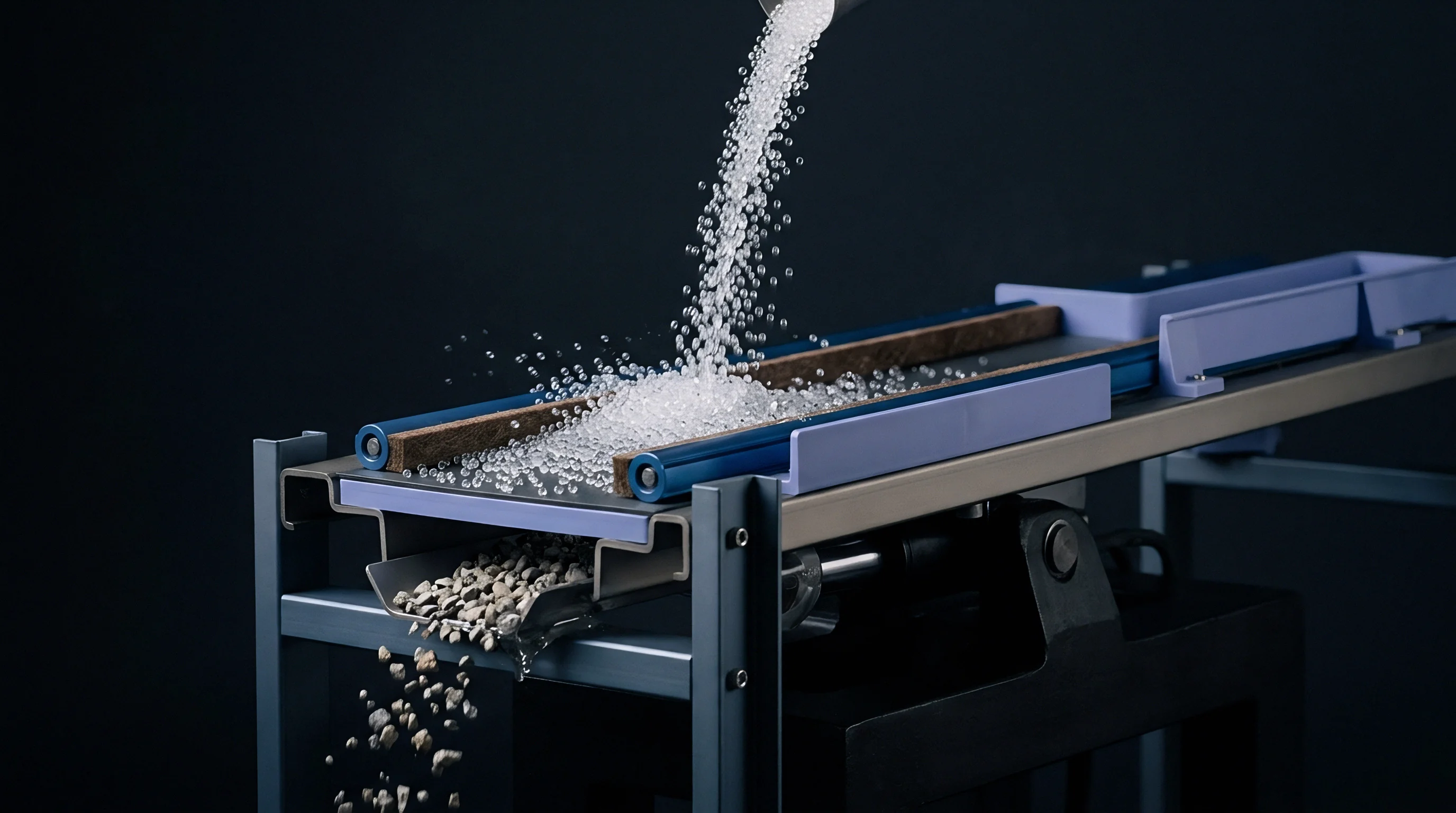
Density in high density polyethylene ranges from 0.941 g/cm³ to 0.965 g/cm³, reflecting a highly crystalline backbone with low chain branching. That high crystallinity slows small molecule diffusion compared to low density or linear low density variants, but volatile organic compounds and non-intentionally added substances still move through amorphous inter-crystalline regions readily enough to migrate into contact media. Primary sampling follows ISO 5667-13 and ASTM D1898 principles, using multi-zone thief samplers to take increments from top, middle, and bottom strata of bulk containers.
Composite samples built from these increments undergo initial physical characterization before analytical extraction begins. Residual oxidation byproduct concentrations can vary three-fold between surface-level samples and core samples within a single twenty-tonne ocean consignment.
Thermal history during compounding leaves distinct molecular markers in the polymer matrix. Peroxides generated through thermo-mechanical stress react with primary antioxidants, yielding specific transformation products that act as early indicators of resin stress. Checking these markers before conversion avoids processing unstabilized resin that would release excessive migration species at final conversion temperatures.
| Resin Polymer Grade | Melt Flow Index (g/10 min, 190°C/2.16 kg) | Density Range (g/cm³) | Critical Screening Indicator Parameter | Upper Acceptance Threshold |
|---|---|---|---|---|
| Blow Molding Unimodal | 0.25 ~ 0.45 | 0.952 ~ 0.956 | Residual Hexane Volatiles | 12 mg/kg resin |
| Blow Molding Bimodal | 0.05 ~ 0.15 | 0.957 ~ 0.960 | Low Oligomer Fraction (| 150 mg/kg resin | |
| Film Extrusion High Molecular Weight | 0.03 ~ 0.08 | 0.948 ~ 0.952 | Primary Antioxidant Depletion | 35% original dose |
| Injection Molding Rigid | 4.0 ~ 12.0 | 0.960 ~ 0.965 | Volatile Oxidation Markers | 5 mg/kg resin |
Physical inspection includes measuring bulk density, particle size distribution, and dust content. Polymer fines generated during pneumatic transport absorb higher relative amounts of liquid additives and contaminants per unit mass because of their higher surface-area-to-volume ratio. Fines separated by sieving often yield volatile screening values five times higher than intact granules from the same composite batch.
Screening protocols isolate fines for separate chromatographic evaluation whenever total dust exceeds 0.2 percent by weight.
Heterogeneous additive dispersion inside bulk resin containers produces erratic migration values across finished production runs.
Chain structure dictates how volatile compounds move through the solid phase during storage. Unimodal resins synthesized with chromium-based catalyst systems yield broader molecular weight distributions, carrying higher fractions of short-chain oligomers than bimodal materials produced in cascaded Ziegler-Natta or metallocene reactors. These low-molecular-weight polyolefin oligomeric hydrocarbons migrate rapidly even at room temperature.
Screening protocols quantify this low mass fraction before accepting shipments destined for sensitive food contact applications, such as infant formula packaging or fatty food containers.
Resin stored at elevated ambient temperatures undergoes accelerated solid-state mass transfer. Volatiles migrate toward granule surfaces, building a concentration gradient between the core and the outer shell. Extraction protocols using mild surface washing distinguish surface-adsorbed volatiles from internal matrix residues, providing practical data for downstream settings like vacuum degasification in extrusion barrels.
Testing protocols set sampling frequencies based on lot size and supplier qualification status. Unqualified supplier shipments require mandatory ten-point sampling per lot, while audited sources run under reduced three-point composite plans. Acceptance criteria tie physical parameters directly to analytical screening triggers, routing any lot with anomalous melt flow variation straight to full chromatographic profiling.
Thorough physical characterization establishes the baseline for subsequent solvent extractions. Sampling errors made at the bulk container level ruin downstream high-resolution mass spectrometry results, regardless of instrument precision. Representative sampling remains the foundation of reliable food contact compliance screening.
A bulk container showing localized discoloration or dusting warrants immediate segregation and full analytical screening, regardless of supplier documentation.

Solvent
Extraction fluids interact directly with the semi-crystalline matrix of high density polyethylene, swelling amorphous regions and dissolving low-molecular-weight species. Direct compliance testing under Regulation EU 10/2011 or US FDA 21 CFR 177.1520 requires long exposure times in official food simulants like vegetable oil, ten percent ethanol, or three percent acetic acid. Screening protocols use fast-acting organic solvents instead to compress testing timelines from ten days down to a few hours.
Selecting the right extraction medium requires balancing matrix swelling against polymer dissolution, since structural collapse traps target analytes or introduces heavy gel fractions onto chromatographic columns.
Iso-octane and ninety-five percent ethanol serve as primary substitute media for fatty food contact simulation. High density polyethylene resists polar liquids like water or ethanol, showing minimal swelling and negligible diffusion acceleration. Non-polar media like iso-octane penetrate amorphous inter-lamellar zones, expanding free volume and boosting diffusion coefficients for low-molecular-weight compounds by several orders of magnitude.
Exposure to iso-octane at 60°C for one hour yields extraction profiles comparable to ten days in olive oil at 40°C, making it practical for rapid receiving inspection.

Headspace and Extraction Workflow Execution
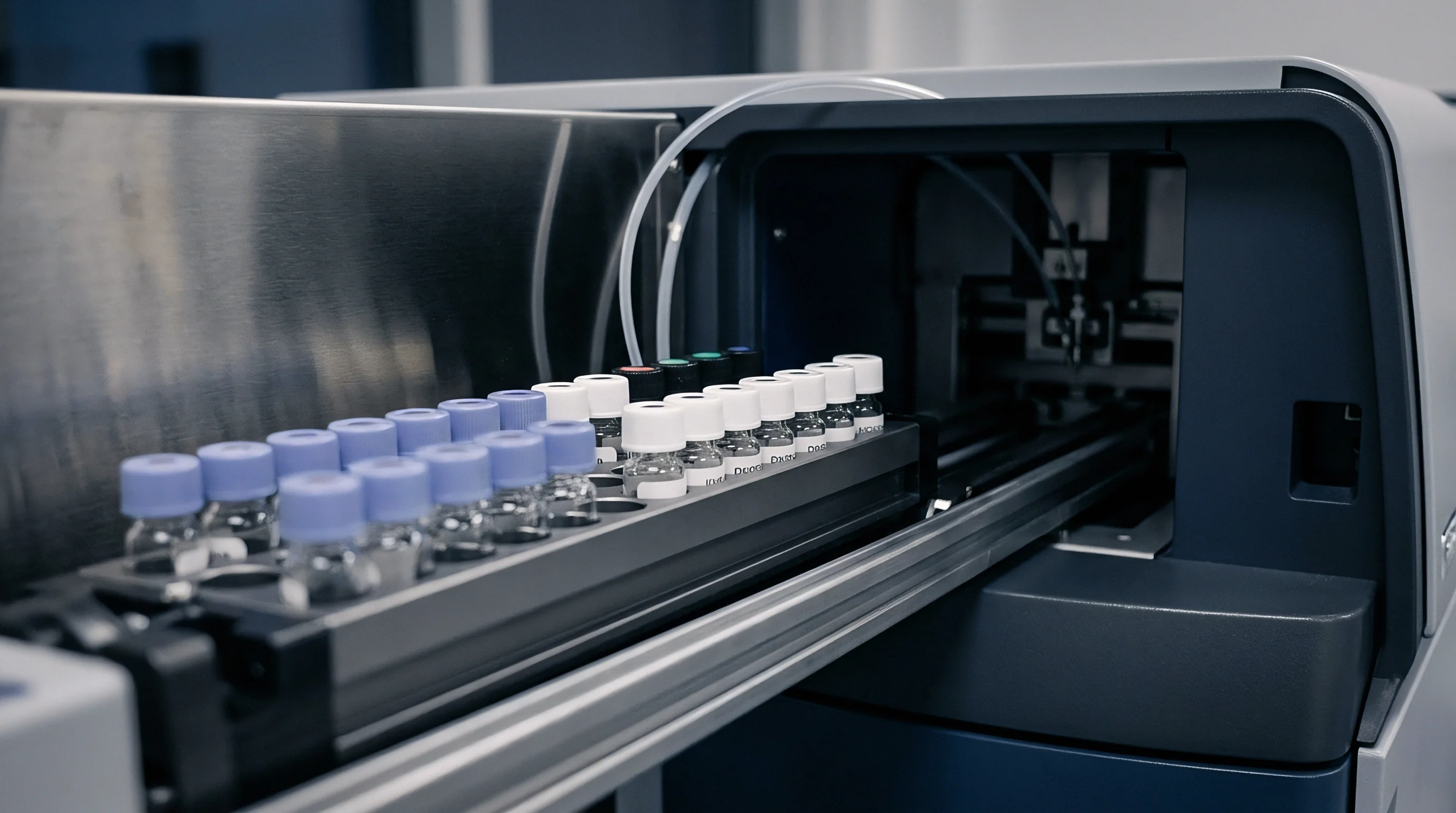
Automated static headspace paired with gas chromatography and mass spectrometry screens directly for volatile organic compounds without liquid solvent extraction. Sample preparation involves sealing chopped granules in standard twenty-milliliter vials, heating them to 120°C for forty-five minutes, and injecting the equilibrated headspace gas directly onto an apolar capillary column. This technique isolates volatile residual monomers like hexene, butane, or octane alongside thermal degradation products such as acrolein, formaldehyde, and aliphatic aldehydes.
Semi-volatile organic compounds, including synthetic antioxidants, slip agents, and mid-range oligomers, require solvent extraction before liquid or gas chromatographic analysis. Microwave-assisted extraction and pressurized liquid extraction use elevated temperatures and pressures to force solvent into the polymer matrix. Pressurized liquid extraction with dichloromethane at 100°C under 1500 psi extracts full additive packages within twenty minutes, leaving clean extracts after filtering insoluble polyolefin fines through 0.2-micron polytetrafluoroethylene membranes.
- Sample Preparation Cut resin granules into uniform fragments between 1 mm and 2 mm using a cryogenic mill to standardise surface area.
- Extraction Loading Weigh precisely 2.0 grams of milled polymer into a solvent-resistant extraction vessel and add 20 mL of iso-octane or dichloromethane.
- Thermal Acceleration Heat the sealed vessel inside a microwave-assisted extraction system at 60°C for thirty minutes under continuous agitation.
- Filtration Separation Filter the liquid extract through a 0.22-micron PTFE syringe filter directly into an amber autosampler vial to remove insoluble micro-particles.
- Concentration Adjustment Evaporate the filtrate under a gentle nitrogen stream at 40°C to a final volume of 1.0 mL for trace-level target analyte enrichment.
- Chromatographic Injection Inject 1.0 microliter of the concentrated extract into a GC-MS/FID system configured with a 30-meter non-polar capillary column.
Total immersion extraction methods must maintain strict surface-area-to-solvent-volume ratios. Standard screening protocols specify two square decimeters of polymer surface per one hundred milliliters of extraction medium. Excessive solvent dilutes trace analytes below quantification limits, while insufficient solvent leads to thermodynamic saturation, underestimating true mobile compound concentrations in the sample.
Quantifying non-volatile species requires liquid chromatography paired with tandem mass spectrometry or high-resolution time-of-flight instruments. Primary antioxidants such as pentaerythritol tetrakis(3-(3,5-di-tert-butyl-4-hydroxyphenyl)propionate), commercially known as Irganox 1010, and tris(2,4-di-tert-butylphenyl)phosphite, known as Irgafos 168, have high molecular weights and low volatility. Direct chromatographic analysis of liquid extracts isolates intact parent additives alongside active transformation products, such as oxidized Irgafos 168 phosphate, giving a clear picture of polymer stabilization status.
Iso-octane extraction at 60°C for one hour yields migration figures equivalent to extended fatty food simulant contact protocols.
Temperature selection during extractions dictates data accuracy. Operating below the glass transition temperature yields slow, unrepresentative extraction kinetics. Exceeding the melting range of high density polyethylene, typically 125°C to 135°C, causes complete matrix collapse and polymer dissolution.
Dissolved polymer precipitates upon cooling or column injection, clogging inlet liners, dirtying mass spectrometer source lenses, and distorting chromatographic baselines. Screening extractions operate strictly below 80°C to preserve solid-phase polymer geometry during contact.
Quantification relies on internal standard calibration. Adding known quantities of deuterated analogs, such as d34-hexadecane or d10-anthracene, directly to the solvent before extraction compensates for volatile losses, solvent evaporation, and instrument drift. Chromatographic responses normalized against these internal standards yield quantitative accuracy within five percent relative standard deviation across routine screening runs.
System blank evaluations eliminate false positives from laboratory contamination. Solvents, filter membranes, and glass containers can introduce phthalates, silicone oils, or plasticizers that mimic polymer additive signals. Running automated blank extractions with every batch of ten polymer samples verifies solvent purity and equipment cleanliness before reporting numbers.
Inter-laboratory reproducibility studies show that minor variances in extraction solvent purity significantly alter recovery rates for polar additive degradants. Reagent-grade solvents containing trace peroxides react with phosphite antioxidants during heated extractions, artificially skewing degradation product ratios. Ultra-pure chromatography-grade solvents without stabilization agents prevent sample modification during extraction.
Aggressive organic screening extractions can overstate real-world migration by altering polymer structure and dissolving substances that remain trapped under standard food contact conditions.


Matrix
High density polyethylene relies on specific formulations to maintain oxidative stability during high-shear melt processing and storage. A typical package combines primary hindered phenolic antioxidants, secondary organophosphites, internal lubricants like calcium stearate, and processing aids such as fluoroelastomers. These components create dynamic chemistry inside the solid polymer matrix.
Primary antioxidants scavenge alkylperoxy radicals, converting them into hydroperoxides while forming quinone transformation products. Secondary antioxidants then reduce these hydroperoxides into stable alcohols and oxidize into phosphates. Screening must track both parent compounds and these continuous reaction products to verify resin safety.
Non-intentionally added substances originate from several pathways in the matrix. Thermal degradation during compounding produces short-chain unsaturated hydrocarbons, aliphatic carboxylic acids, and cyclic oligomers. Unneutralized catalyst residues, including titanium and aluminum alkoxides from Ziegler-Natta systems, accelerate post-extrusion degradation.
Secondary reactions between functional additives, printing inks, or adhesives form complex adducts that never appear on technical data sheets. Detecting these unexpected migrants requires non-targeted high-resolution workflows that identify unknown molecular structures through accurate mass data and fragmentation patterns.
Polyolefin oligomeric hydrocarbons represent the largest number of non-intentionally added substances in high density polyethylene. They divide into polyolefin saturated hydrocarbons (linear, branched, and cyclic alkanes) and polyolefin aromatic hydrocarbons (alkylated polycyclic aromatic systems). Saturated hydrocarbons below 1000 Daltons accumulate in human tissue, with particular concern centered on the C16 to C35 range.
Aromatic hydrocarbons present potential genotoxic risks, requiring strict analytical screening down to detection limits below 0.01 mg/kg resin.
| Substance Identification | Compound Classification | Primary Screening Method | Target Quantifying Ion (m/z) | Regulatory Reference Limit |
|---|---|---|---|---|
| Irganox 1010 | Hindered Phenol Primary Antioxidant | HPLC-MS/MS | 1177.8 + | SML 6.0 mg/kg |
| Irgafos 168 (Oxidized) | Secondary Phosphite Transformation | GC-MS / HPLC-UV | 662.5 + | SML 60.0 mg/kg (as parent) |
| Erucamide | Primary Fatty Acid Amide Slip Agent | GC-FID / GC-MS | 338.3 + | SML 60.0 mg/kg |
| 2,4-Di-tert-butylphenol | Antioxidant Degradation Byproduct | HS-GC-MS | 191.1 + | SML 0.05 mg/kg |
| POSH Oligomers (C10 ~ C30) | Saturated Polyolefin Oligomers | GCxGC-FID / MS | Unresolved Complex Mixture Signal | Screening Threshold 0.5 mg/kg |
| MOAH Oligomers (1 ~ 3 rings) | Aromatic Polyolefin Oligomers | HPLC-GC-FID | Unresolved Aromatic Signal | Screening Threshold 0.01 mg/kg |
Comprehensive two-dimensional gas chromatography paired with time-of-flight mass spectrometry separates complex oligomeric mixtures that form unresolved humps on conventional single-column instruments. The primary non-polar column separates species by boiling point; the secondary polar column separates them by polarity and aromaticity. This two-dimensional separation separates polyolefin saturated hydrocarbons from polyolefin aromatic hydrocarbons, allowing clear quantification of both fractions against calibrated mineral oil standards.
Slip additives like erucamide and oleamide migrate rapidly to the polymer surface to reduce friction during high-speed converting. Excess slip loading leads to heavy surface accumulation, creating blooming that interferes with heat sealing, ink adhesion, and surface wetting. Screening measures free surface slip concentrations against internal matrix levels using attenuated total reflectance Fourier-transform infrared spectroscopy to keep surface levels in the working window without exceeding migration limits in finished food packaging.
Failure Modes in Polyethylene Matrix Formulations
Additive depletion and matrix breakdown leave distinct analytical signatures during consignment screening. Catching these early allows technical teams to reject unstable lots before processing.
- Antioxidant Exhaustion Rapid consumption of primary hindered phenols during polymer compounding leaves high concentrations of quinone transformation products alongside minimal residual parent antioxidant, rendering the resin susceptible to immediate oxidation during final conversion.
- Thermal Oligomerization Excessive shear heating in compounding extruders splits high molecular weight polyethylene chains into low molecular weight volatile oligomers, elevating low-carbon hydrocarbon fractions between C10 and C25.
- Catalyst Remnant Acidification Un-neutralized acidic catalyst residues trigger secondary degradation of phosphite antioxidants into corrosive alkyl phosphites, accelerating internal corrosion of conversion equipment and generating off-odours.
- Cross-Contamination via Regrind Incorporating post-industrial or post-consumer regrind introduces legacy additives, printing ink resins, and illegal heavy metal pigments into prime high density polyethylene virgin lots.
Screening for heavy metal catalyst residues and colorant pigments uses inductively coupled plasma mass spectrometry after closed-vessel microwave acid digestion. Titanium, aluminum, and chromium levels reveal the catalyst system used during synthesis. Combined concentrations of lead, cadmium, mercury, and hexavalent chromium must stay below 100 mg/kg to meet European Packaging and Packaging Waste directives and US CONEG rules.
Consignments with unexpected metal profiles often contain undeclared recycled resin.
Specific migration screening for 2,4-di-tert-butylphenol requires detection capabilities down to 0.05 mg/kg in food contact simulants.
Degradation in high density polyethylene produces volatile organic acids ~ mostly formic and acetic acid ~ alongside aldehydes like hexanal and octanal. These compounds give packaged foods off-odors and off-tastes, particularly in water and dairy items. Gas chromatography-olfactometry combined with mass spectrometry isolates odor-active peaks, allowing chemists to match specific chromatographic signals to sensory failures before running resin lots on production lines.
Using post-consumer recycled content adds complexity to matrix screening. Recycled polyethylene retains volatile contaminants, detergent fragrances, and degradation products from previous use cycles. Screening recycled blends requires non-targeted volatilome profiling to confirm hazardous legacy substances, like halogenated flame retardants or soft plasticizers, remain below regulatory limits.
Fluoropolymer processing aids improve surface finish and eliminate melt fracture during film blowing. With regulations tightening on per- and polyfluoroalkyl substances, these masterbatches require careful screening. Total fluorine analysis via combustion ion chromatography verifies whether processing aid levels stay under restricted thresholds, distinguishing permitted polymeric processing aids from banned low-molecular-weight fluorinated surfactants.
Skipping non-targeted screening for matrix degradation products risks sending uncharacterized migrants into finished packaging, leading to product recalls and regulatory action once discovered on the market.


Partition
Mass transfer of chemical substances from high density polyethylene into contact media follows standard physical chemistry. The thermodynamic driving force behind migration depends on the migrant concentration gradient, its solubility in the polymer versus the contact medium, and system temperature. Fick’s second law of diffusion models this transfer, describing concentration changes over time and space.
Diffusivity in high density polyethylene depends heavily on polymer density, crystallinity, temperature, and the molecular volume of the migrating compound.
Mathematical modeling is an accepted screening tool under European regulation EU 10/2011 to estimate upper-bound migration values without immediate laboratory testing. The diffusion coefficient, DP, is calculated using semi-empirical equations derived by Piringer. These calculations incorporate polymer-specific parameters, absolute temperature, and migrant molecular mass to predict maximum theoretical migration.
High density polyethylene uses a specific polymer parameter, AP, set to 14.5 under standard worst-case models, reflecting its semi-crystalline structure and moderate diffusion resistance compared to rigid unplasticized polyvinyl chloride or polyethylene terephthalate.

Kinetic Modeling Mechanics and Screening Thresholds
Calculating estimated specific migration requires applying the standard European food contact assumption of six square decimeters of polymer surface contacting one kilogram of food. The formula for migrant diffusion is:
DP = D0 · expleft(AP – τ · frac1000T – α · Mr2/3right)
Where D0 represents the reference diffusion coefficient, T is absolute temperature in Kelvin, Mr is the relative molecular mass of the migrating molecule, and AP , τ, and α are polymer matrix parameters. For high density polyethylene, the conservative setting of AP = 14.5 ensures calculated migration figures consistently exceed bench test results, making mathematical modeling an effective initial screen.
When calculated conservative values fall safely below regulatory limits, physical migration testing can be bypassed. If modeling indicates a potential issue, physical screening using iso-octane or 95% ethanol solvent extractions must verify actual kinetic behavior. Physical testing frequently shows real migration values five to ten times lower than Piringer model predictions due to local crystalline tortuosity effects that theoretical equations intentionally overestimate.
Saturated hydrocarbon oligomers move quickly into fatty media. Low-molecular-weight fractions below 500 Daltons diffuse freely through inter-lamellar amorphous channels, reaching equilibrium within twenty-four hours at 40°C. Fractions above 1000 Daltons show near-zero migration under the same conditions because of molecular entanglement in the matrix. Screening protocols exploit these kinetic differences by focusing quantitative analysis specifically on the sub-800 Dalton fraction.
Conservative diffusion models using standard polyolefin parameter values yield estimated migration figures that systematically overestimate real-world bench results.
Contact temperature strongly affects diffusion coefficients. Operating above the polymer glass transition temperature (≈ -120circC for polyethylene) keeps amorphous chain segments rubbery, allowing rapid movement. Raising exposure temperature from 20°C to 60°C increases the diffusion coefficient of a mid-sized antioxidant like Irganox 1076 by more than two orders of magnitude.
Screening extractions use elevated temperatures to simulate long-term shelf migration within short lab testing windows.
Changes in surface-to-volume ratio alter actual migrant intake in packaged products. Small containers, such as 50 mL pharmaceutical bottles or single-serve food pouches, present surface-to-volume ratios up to three times higher than the standard six square decimeter per kilogram reference. Screening resin for small-format packaging requires adjusting compliance thresholds downward to account for higher relative contact exposure.
Functional barriers reduce migrant transfer into packaged products. An internal unpigmented virgin polyethylene layer or a buried aluminum foil barrier stops chemical migration from outer recycled or heavily stabilized structural layers. Screening multi-layer films involves measuring the lag time needed for a migrant to pass through the barrier layer, calculated using Fickian time-lag equations:
tl = fracL26 · DP
Where tl is lag time in seconds, L is functional barrier thickness in meters, and DP is the migrant diffusion coefficient through the barrier layer. If calculated lag time exceeds the intended shelf life, the inner layer qualifies as an effective functional barrier, relaxing screening limits on outer layer additives.
A ten-micron virgin ethylene vinyl alcohol barrier increases migrant lag time for low-molecular-weight slip agents from four hours to over eight hundred days, completely suppressing downstream migration.
Partition thermodynamics between polyolefins and water-based media strongly favor retention in the polymer phase. Non-polar additives exhibit high partition coefficients (KP,F), remaining in hydrophobic polyethylene rather than moving into water or acidic food simulants. Fatty food simulants like vegetable oil, ethanol mixtures, and iso-octane break this retention, drawing non-polar additives into the liquid phase.
Screening routines must match extraction polarity to the intended food contact category.
Uncertainties remain around how branched chain structures in high density polyethylene alter local crystal tortuosity, leaving open whether current mathematical models accurately predict oligomer migration across high-density bimodal matrices without bench validation.


Dossier
Analytical migration data carries commercial and legal weight only when backed by a structured compliance dossier. A Declaration of Conformity standardizes information transfer along the packaging supply chain, linking resin synthesis chemistry to final packaging use. Downstream packagers and regulatory authorities require clear documentary evidence showing every resin lot meets specific migration limits, overall migration limits, and restrictions on dual-use food additives.
A raw resin supplier certificate of analysis showing basic physical specifications does not satisfy European Regulation EU 10/2011 Annex IV requirements without detailed analytical support files.
A complete conformity file traces compliance from raw material inputs to finished resin lot delivery. The file must contain safety datasheets, monomer and additive compliance certificates, physical test reports, screening chromatograms, and mathematical migration modeling documentation. When dual-use additives ~ substances approved both as plastic additives and direct food additives, like silicon dioxide (E551) or calcium carbonate (E170) ~ are present, the dossier must state their exact concentrations so downstream food manufacturers can manage final food additive limits.

What Information Belongs in Raw Polyolefin Test Certificates?
A legally defensible raw material certificate must explicitly detail the scope and boundaries of the underlying laboratory testing. It opens with precise resin identification, trade name, grade designation, and manufacturing lot numbers, establishing physical traceability to the delivered shipment. It lists every restricted additive subject to a Specific Migration Limit (SML) under regional regulations, reporting both total content from analytical extraction and predicted worst-case migration calculated through mathematical modeling.
The certificate details testing parameters used during screening, exact solvent media, exposure times, contact temperatures, and surface-area-to-volume ratios. Non-intentionally added substance screening results must state detection limits, quantification limits, and structural assignments for identified volatile and semi-volatile species. The document closes with a clear statement of food contact suitability, defining permitted food categories, maximum operating temperatures, single or repeat-use conditions, and functional barrier specifications.
- Grade and Lot Identifiers State exact trade names, polymer grade codes, manufacturing facility identifiers, and specific production lot numbers covered by the certificate.
- Regulatory Compliance Statements Confirm compliance with specific regional regulatory frameworks, explicitly citing Regulation EU 10/2011, US FDA 21 CFR 177.1520, or China GB 4806.6.
- Restricted Additive Inventory Itemize all authorized additives subject to specific migration limits, listing chemical name, CAS number, and EU substance number.
- Dual-Use Additive Disclosure Quantify concentrations of any dual-use additives present in the resin matrix, referencing corresponding food additive E-numbers.
- Analytical Screening Conditions Document testing parameters used for screening, including solvent types, extraction temperatures, contact durations, and analytical technique limits.
- Conditions of Intended Use Define explicit boundaries for end-use application, detailing permitted food types, contact time limits, thermal exposure ranges, and storage conditions.
Discrepancies between declared additive packages and measured analytical profiles represent major compliance failures. Suppliers occasionally alter stabilization formulations during raw material shortages without updating technical datasheets or notifying buyers. Analytical screening compares incoming lot chromatograms against baseline reference spectra in the compliance dossier.
Unmapped peaks or missing additive signals indicate formulation changes, triggering immediate quarantine of the affected resin lot.
Declarations of conformity must explicitly state dual-use food additive concentrations to allow downstream compliance calculations by food packagers.
Auditing third-party lab test reports requires checking accreditation under ISO/IEC 17025 standards. Testing conducted by non-accredited facilities or unverified supplier labs lacks standing during regulatory audits or product recalls. The technical scope of accreditation must explicitly list food contact migration testing, gas chromatography-mass spectrometry, and liquid chromatography-mass spectrometry procedures for polyolefins.
A solid compliance dossier includes a decision matrix mapping analytical screening results directly to commercial release protocols. This system ensures non-compliant lots are identified and isolated before entering conversion processes.
Verification workflows ensure raw resin shipments meet every documentary and analytical requirement before release into production hoppers. The following checklist sets the audit sequence for technical compliance managers:
- Documentary Scope Alignment Verify that the Declaration of Conformity explicitly covers the specific resin grade, batch sequence, and manufacturing plant printed on the bill of lading.
- Substance List Screening Cross-reference listed additives against current regulatory positive lists, REACH Candidate Lists of Substances of Very High Concern, and regional restriction updates.
- Analytical Limit Verification Confirm that reported analytical limits of detection for non-intentionally added substances sit at or below 0.01 mg/kg matrix threshold.
- Thermal Exposure Compatibility Match the certificate’s tested thermal limits against maximum processing temperatures encountered during converting operations.
- Mathematical Model Validity Audit Piringer diffusion model parameter inputs, ensuring polymer parameters match actual high density polyethylene resin density and structure.
Standard purchase agreements should include strict compliance indemnification clauses linking consignment acceptance directly to analytical screening outcomes. A practical contractual specification reads: “Supplier guarantees that each resin consignment delivered under this agreement conforms strictly to the chemical additive profile detailed in the compliance dossier; any lot demonstrating un-declared non-intentionally added substances exceeding 0.01 mg/kg or primary additive variances greater than ten percent relative to baseline chromatograms shall be subject to immediate rejection at Supplier’s sole expense.”

Dock
Commercial accountability centers on the receiving dock, where ocean containers, bulk railcars, or octabins clear customs and factory gate acceptance. Importers of record hold legal liability for ensuring imported high density polyethylene resin complies with food contact regulations in the destination market. Sanitary authorities and customs officials conduct targeted import checks, taking random samples directly from containers for independent testing.
A consignment held at port for non-compliant volatile emissions or missing analytical documentation incurs daily demurrage charges, storage fees, and potential border rejection orders.
Port border inspections use rapid handheld tools to screen shipments before granting release. Handheld Fourier-transform infrared spectrometers verify basic polymer identity, distinguishing high density polyethylene from low density variants or polypropylenes in seconds. Portable X-ray fluorescence analyzers screen for heavy metal catalyst residues, brominated flame retardants, and restricted colorant elements directly through container sampling ports.
A positive hit on restricted heavy metals triggers immediate detention and formal lab verification using inductively coupled plasma mass spectrometry.
| Failure Mode Identified at Import | Primary Enforcement Action Taken | Immediate Landed Cost Exposure | Secondary Commercial Impact |
|---|---|---|---|
| Un-declared Heavy Metal Trace (>100 mg/kg) | Container Detention and Customs Rejection | Demurrage fees ($250 ~ $400/day) plus destruction costs | Supply chain shutdown, brand damage |
| Volatile Off-Odour / Aldehyde Exceedance | Factory Gate Quarantine and Sample Re-test | Laboratory re-testing fees ($1,500 ~ $3,000 per lot) | Delayed conversion schedule, line downtime |
| Missing/Incomplete Declaration Dossier | Customs Administrative Hold | Port storage fees ($150 ~ $300/day) | Customs administrative fines, audit escalation |
| Specific Migration Exceedance (Irgafos degradant) | Formally Ordered Mandatory Re-export | Return freight costs plus re-export duty penalties | Loss of customer contracts, legal disputes |
Factory gate routines run fast-screening protocols before offloading bulk railcars into silos. Rapid headspace gas chromatography measures volatile total organic carbon emissions within thirty minutes of arrival. If volatile emissions stay below baseline thresholds, offloading begins immediately into prime silos.
Exceeding volatile limits triggers immediate automated valve closure, locking the consignment inside the delivery vehicle while chromatographic extraction quantifies specific volatile identities.
Dispute resolution relies entirely on chain-of-custody protocols established during receiving sampling. When a converter rejects a resin lot based on internal screening data, the manufacturer typically sends an auditor to supervise joint re-sampling. Sampling follows agreed standards, using sealed, inert glass containers to hold referee samples for independent testing at an accredited lab.
If the lab confirms non-compliance, contract terms require the supplier to collect the rejected resin, pay for return logistics, and replace the lot within a fixed window.
Landed cost calculations need to include compliance risk buffers. Purchasing spot market resin without full analytical dossiers introduces hidden financial risk. The landed cost of a twenty-tonne shipment increases sharply when accounting for potential demurrage, lab testing fees, container handling charges, and factory downtime from border holds or quarantines.
Rigorous front-end analytical screening converts unquantifiable regulatory exposure into predictable operating expense.
Receiving inspection provides the final defense against processing non-compliant polyolefin raw materials. Systematic physical sampling, rapid chromatographic screening, and thorough dossier auditing preserve plant efficiency, protect consumer health, and maintain compliance across global packaging supply chains.