Commercial Supply Contract Guarantees for Delivered Resin Moisture Thresholds and Scrap Penalties
Delivered resin moisture guarantees require coulometric Karl Fischer verification under ISO 15512 Method B1 paired with machine downtime chargeback clauses.


Foil
Pellet moisture at delivery determines downstream polymer integrity, process stability, and final part performance. Polyamides, polyesters, polycarbonates, and polybutylene terephthalate undergo rapid hydrolytic cleavage when heated in an injection molding barrel or extruder with uncomplexed water present. At processing temperatures, water acts as an aggressive nucleophile, breaking the polymer backbone, lowering molecular weight, and degrading impact strength long before surface blemishes show up on the line.
Standard packaging uses multi-layer barrier bags with an internal aluminum layer to retard water vapor transmission during ocean transit and storage. While the moisture vapor transmission rate of these multi-wall structures is low, vapor still ingresses over long transit times if seals suffer mechanical damage, pinhole micro-fractures, or poor heat welding at the bag valve.
Hygroscopic polymers continuously exchange moisture with ambient air until they reach thermodynamic equilibrium. In typical ambient air, polyamide equilibrium moisture content can hit 2.5 percent by weight. By contrast, the acceptable processing threshold for injection molding polyamide 66 is below 0.15 percent, with structural applications demanding limits under 0.08 percent.
For polyethylene terephthalate, the ceiling drops to 0.005 percent (50 parts per million). Processing PET above that level triggers chain scission, degrading intrinsic viscosity within seconds inside the heating zone, shortening chain length and cutting into tensile yield strength, elongation at break, and environmental stress crack resistance in the finished part.
Suppliers routinely present certificates of analysis quoting moisture measured at the extruder head right after compounding and underwater pelletizing. That figure does not reflect the delivered state after thirty days of maritime transit, customs holds, and warehouse handling. Even inside an intact barrier container, pellets can absorb moisture if packaged above the ambient dew point: warm air trapped inside the sealed bag cools during transit, condensing water directly onto pellet surfaces, and the resin draws this moisture into the amorphous polymer matrix before the container reaches the destination dock.
Contracts defining moisture limits must specify delivered testing conditions rather than compounding plant exit values to isolate transit degradation from processing faults.
Packaging design is the baseline defense against environmental moisture. Polyethylene single-layer sacks lack adequate barrier capabilities for hydrolytically sensitive resins, showing moisture vapor transmission rates above one gram per square meter per twenty-four hours under tropical test conditions. Laminated barrier films ~ combining outer polyethylene terephthalate, an aluminum foil core, and an inner heat-sealable polyethylene layer ~ drop transmission below 0.01 grams per square meter per day under ISO 15106-2.
Punctures sustained during pallet handling or container stuffing negate those properties immediately, letting ambient air in and driving rapid moisture uptake in dry resin.
| Polymer Matrix | Equilibrium Moisture at 23C 50% RH (%) | Max Processing Moisture Threshold (%) | Primary Hydrolytic Degradation Mode | Required Packaging Barrier Specification |
|---|---|---|---|---|
| Polyamide 66 (PA66) | 2.50 | 0.08 | Amide bond cleavage, intrinsic viscosity loss | Aluminum foil laminate, MVTR < 0.05 g/m2/day |
| Polyethylene Terephthalate (PET) | 0.40 | 0.005 | Ester link scission, carboxylic end-group growth | Hermetic aluminum liner, MVTR < 0.01 g/m2/day |
| Polycarbonate (PC) | 0.20 | 0.02 | Carbonate link hydrolysis, severe impact loss | Aluminum composite barrier bag with desiccant |
| Polybutylene Terephthalate (PBT) | 0.30 | 0.02 | Ester cleavage, melt flow rate spike | Multi-layer foil barrier octabin liner |
| High-Density Polyethylene (HDPE) | 0.01 | 0.05 | Surface voiding, process instability | Standard heavy-duty polyethylene bag |
Hydrolytic degradation accelerates sharply with water concentration in the melt. Above 280 degrees Celsius, water reacts with amide bonds in polyamides to produce carboxyl and amine end-groups, broadening and lowering the molecular weight distribution. A polyamide 66 batch processed at 0.30 percent moisture loses over forty percent of its virgin notched Izod impact strength while showing little outward change in color or surface finish.
Processors often mistake this hidden damage for tooling or thermal profile issues, running thousands of parts before mechanical testing reveals embrittlement. Resin arriving above moisture limits also forces processors to extend drying cycles, running up electrical demand and choking hopper throughput.

Moisture Ingression Mechanisms across Package Architectures
Bulk shipments in octabins or flexible intermediate bulk containers expose wide surface areas to moisture whenever inner liners fail. These liners have to withstand transport vibration, stacking pressure, and temperature swings without splitting. Micro-pinholes along heat-sealed seams under transport stress become direct ingress routes for humid air, creating localized pockets of wet resin near the package walls.
For that reason, sampling procedures must probe multiple depths within an octabin to catch moisture gradients caused by liner breaches.
Desiccant packets inside sealed packaging absorb small amounts of headspace moisture, but their capacity is nowhere near enough to handle continuous vapor ingress through liner punctures. Sourcing contracts need to specify maximum allowable moisture vapor transmission rates for all secondary packaging tiers alongside physical package integrity inspections at receiving. Tracking of sealed aluminum-barrier sacks over six months of tropical transit shows that resin degrades severely whenever heat seals show micro-creasing or uneven clamping pressure.
- Hydrolytic Backbone Cleavage occurs in polyamides, polyesters, and polycarbonates when water molecules react with functional groups at melt temperatures, directly reducing molecular weight and mechanical toughness.
- Melt Viscosity Collapse manifests as an uncontrolled increase in melt flow rate during processing, causing mold flash, dimensional instability, and erratic cavity filling pressures.
- Surface Splay Defect Generation results from steam formation within the heating barrel, driving gaseous water to the cavity surface during injection, producing silver streaks and cosmetic rejections.
- Uncontrolled Volatile Generation occurs when hydrolytic degradation byproducts lower the thermal stability of the polymer matrix, clogging mold vents and causing localized thermal burning.
Plant dryers extract surface and bound internal moisture through continuous dry-air recirculation. Dehumidifying desiccant dryers operating at dew points of minus forty degrees Celsius need hours to bring a wet polyamide batch down to safe molding levels. Shifting that burden to the plant raises unit manufacturing costs through added energy draw and cycle delays.
Clear delivered moisture specifications in supply contracts prevent compounders from offloading their drying responsibilities onto molders downstream.
Suppliers frequently try to explain away high delivered moisture by pointing to customer storage conditions or ambient air exposure during sampling.
Titration
Verifying water content in incoming shipments requires test methods that isolate pure water from other volatiles released during heating. Standard loss-on-drying balances simply heat the resin and record mass loss on the assumption that all lost weight is water. That assumption falls apart on engineering compounds containing low-boiling additives, plasticizers, flame retardants, residual monomers, or processing aids.
Those compounds volatilize alongside water at elevated temperatures, yielding artificially high readings that lead to false lot rejections or unsupportable supplier claims.
Karl Fischer titration is the recognized reference standard for measuring water in hygroscopic polymers under ISO 15512 and ASTM D6869. In coulometric titration paired with a thermal vaporization oven, water is driven out of the resin inside a sealed chamber swept with dry carrier gas. The gas routes the water vapor into a reaction cell containing an electrolyte solution of iodide ions, sulfur dioxide, and a base.
An electric current oxidizes iodide to iodine at the anode, which then reacts quantitatively with water via the Karl Fischer reaction. The total current required yields an exact mass measurement of water down to single-microgram precision.
| Standard Designation | Test Method Principle | Sample Size Range | Detection Limit | Interference Factors |
|---|---|---|---|---|
| ISO 15512 Method A | Loss on Drying (Gravimetric Oven) | 10 g to 50 g | 0.05% (500 ppm) | Volatile additives, plasticizers, flame retardants |
| ISO 15512 Method B1 | Water Extraction by Vaporization (Coulometric) | 0.5 g to 5.0 g | 0.001% (10 ppm) | Decomposition products at excessive oven temperatures |
| ISO 15512 Method B2 | Water Extraction by Manometric Pressure | 1.0 g to 10.0 g | 0.002% (20 ppm) | Uncondensable gases generated by thermal decomposition |
| ASTM D6869 | Coulometric Karl Fischer with Oven Vaporization | 1.0 g to 5.0 g | 0.001% (10 ppm) | Volatile organic compounds reacting with iodine reagent |
| ASTM D7191 | Relative Humidity Sensor Extraction | 2.0 g to 15.0 g | 0.005% (50 ppm) | Sensor fouling by condensed plasticizer vapors |
Vaporization temperatures require precise calibration by polymer family to avoid thermal decomposition during testing. Heating polyamide 66 past 180 degrees Celsius for too long can trigger post-condensation, creating synthetic water as a byproduct and artificially inflating the result. Conversely, heating below target leaves bound water trapped in crystalline domains, generating misleadingly low numbers.
Testing protocols must record the exact heating temperature, carrier gas flow rate, background drift, and extraction duration used for every sample.
Carrier gas purity is equally critical. Nitrogen or dry air supplied to the oven must carry a dew point of minus forty degrees Celsius or lower so ambient moisture does not enter the titration cell. Atmospheric humidity leaking past syringe septa or loose fittings introduces constant drift; systems must achieve background drift rates below ten micrograms of water per minute before injection to remain reliable at low moisture ranges, such as with PET or polycarbonate.
ISO 15512 Method B2 coulometric determination requires precise carrier gas dew point control below minus forty degrees Celsius to eliminate background drift in high-sensitivity resin testing.
Sampling protocols must capture the true moisture state at delivery. Slitting a barrier bag on a humid receiving dock exposes dry pellets to air, starting surface adsorption in minutes. Technicians should use hermetically sealed glass vials or laminated foil pouches flushed with dry nitrogen immediately upon pulling material.
A proper procedure draws core samples across multiple container depths with a clean, dry thief sampler to represent the full volume accurately.
- Inspect shipping packaging for external punctures, torn heat seals, or compromised barrier layers immediately upon arrival at the receiving dock.
- Select random containers across the shipment lot following ISO 2859-1 sampling tables to establish statistically valid lot representation.
- Clean external surface of the packaging surrounding the insertion point to eliminate dust, debris, or standing surface water.
- Insert a multi-zone clean thief sampler diagonally through the package wall to capture core material across top, middle, and bottom strata.
- Transfer collected pellets immediately into pre-dried glass vials containing dry nitrogen headspace and seal with septum caps.
- Record ambient receiving dock temperature, relative humidity, lot identification code, container number, and exact sampling timestamp.
- Transport sealed sample vials directly to the analytical laboratory for immediate coulometric moisture determination within two hours.
A reliable moisture assessment depends heavily on sampling frequency and volume. A single five-gram sample taken from a twenty-tonne delivery offers zero visibility into variation across the shipment. A sound incoming QC protocol pulls triplicate samples from at least five locations per lot.
Calculating the mean and standard deviation across those replicates highlights localized moisture issues caused by transit damage. Contracts should clearly state that any single replicate exceeding the contractual maximum is grounds for a formal supplier review of the entire lot.
Dispute Settlement through Standardized Laboratory Testing
Disagreements over moisture levels usually come down to mismatched test equipment, handling differences, or inconsistent vaporization temperatures. If a buyer rejects a lot using a loss-on-drying balance and the supplier counters with a clean CoA based on coulometric titration, the supplier wins technically every time. Supply contracts must designate a single, binding method ~ specifically ISO 15512 Method B1 or ASTM D6869 ~ as the baseline for rejections and commercial penalties.
Inter-laboratory round-robin studies show that coulometric Karl Fischer systems maintain repeatability within ten percent of the target value at 0.05 percent moisture. Achieving that consistency requires strict sample prep, regular calibration against certified sodium tartrate dihydrate standards, and constant monitoring of background titrator drift. One molder took a $42,000 loss on a single shipment of polybutylene terephthalate because receiving protocols failed to isolate surface condensation from core moisture, invalidating the claim against the compounder.
Technicians must handle samples with clean forceps and use pre-conditioned glassware kept in desiccators. Skin oils and humidity transferred during weighing cause real errors in micro-scale titration. Autosamplers with sealed vial-punch mechanisms remove air exposure during loading and give far more consistent results than manual injection.
Supply agreements should require third-party arbitration labs to use automated injection for referee analyses.
Carrier gas dew points should be specified below minus forty degrees Celsius for all coulometric Karl Fischer testing tied to contract enforcement.

Scrap
Molding wet resin converts absorbed water into high-pressure steam in the barrel, causing surface, structural, and dimensional defects that shut down production. The cost of wet-resin scrap goes well beyond the price of the plastic itself: it wastes machine hours, labor, tooling cycles, drying energy, and downstream assembly time. Plants running high-cavitation molds accumulate heavy losses very quickly when unverified material enters the feed throat.
Visual defects show up as splay marks, silver streaks, micro-voids, blisters, and splay fans radiating from gates. Splay happens when steam bubbles in the melt hit cold cavity walls during injection; as the resin freezes, those bubbles collapse into microscopic channels and silvery blemishes. While splay ruins appearance, the accompanying chemical breakdown does far worse damage to internal part strength.

How Does Excess Moisture Translate into Quantifiable Scrap Losses?
Hydrolysis breaks polymer chains, lowering average molecular weight and shifting the material’s viscosity and mechanical properties. Lower molecular weight drops melt viscosity, causing the plastic to bleed past parting lines and ejector pins into heavy flash. Trying to correct flash by lowering injection pressure or barrel temperature often produces short shots, sink marks, or weak weld lines instead.
The operating window closes entirely on wet resin, making tight dimensional tolerances impossible to maintain.
Structural failures in wet-molded parts frequently show up during assembly or drop testing. Lower molecular weight directly cuts into impact strength, strain at break, and fatigue resistance. Polyamide parts molded at 0.25 percent moisture become brittle and fail snap-fit operations at high rates.
Mechanical testing on parts molded from damp lots shows sharp drops in notched Izod impact resistance even when the surface shows no visual splay at all.
Regrind economics also fall apart with moisture-degraded material. Parts scrapped due to hydrolytic cleavage cannot simply be ground up and fed back into production without worsening the problem. Re-melting already-degraded plastic causes secondary thermal and hydrolytic chain scission, degrading properties even further.
As a result, the regrind loses its prime utility, leaving molders to scrap it outright or sell it off to utility compounders at steep discounts.
Regrind produced from hydrolytically degraded resin cannot be reused in prime production streams due to cumulative chain scission across re-melting cycles.
Machine downtime multiplies scrap costs during moisture incidents. Purging the barrel, clearing feed lines, drying replacement resin, and resetting thermal profiles burns several hours of press time. Large injection presses carry hourly rates between eighty and three hundred dollars, before factoring in direct labor and lost capacity.
If wet resin leads to vent fouling or tool contamination from volatilized additives, the mold has to be pulled for manual cleaning, driving downtime costs even higher.
Yield calculations must track every financial loss tied to resin moisture. True scrap cost includes virgin material, colorant and additive packages, lost press hours, auxiliary drying energy, and sorting labor. Purchase agreements that ignore these factors leave molders absorbing broad operational losses while suppliers offer credit for raw pellet weight alone.
What proportion of downstream assembly failures can be cleanly traced back to delivered resin wetness rather than mold heating errors during initial startup cycles?
Chargeback
Supply contracts for engineering resins must include explicit scrap penalty and financial chargeback mechanisms to protect buyers from defective material. Standard terms from resin suppliers usually attempt to limit liability to replacement of non-conforming resin or a credit for pellet weight. That provision ignores the substantial operational losses molders incur when processing wet material.
Commercial agreements should shift that cost back to the compounder through structured recovery clauses.
Direct scrap claims combine raw material costs, machine rates, energy expenditures, and the labor required for sorting and handling. Standard recovery formulas calculate liability by multiplying press hours lost by the full machine rate, then adding the value of all scrapped virgin resin, masterbatch, and packaging consumed. If non-conforming material causes physical damage ~ such as vent corrosion or hot-runner clogging ~ repair costs should fall under the chargeback scope as well.
| Moisture Exceedance Band (Above Contract Max) | Lot Material Disposition | Direct Scrap Penalty (% of Delivered Lot Value) | Downtime & Operational Chargeback Multiplier | Administrative Fee per Claim Incident |
|---|---|---|---|---|
| 0.001% to 0.020% | Accept with inline drying adjustment | 0% (Supplier pays added drying energy cost) | 1.0x (Direct energy differential recovery) | $250 fixed fee |
| 0.021% to 0.050% | Conditional processing or return lot | 25% penalty fee plus credit for scrap | 1.5x Machine hourly rate for lost press time | $750 fixed fee |
| 0.051% to 0.100% | Mandatory lot rejection and replacement | 50% penalty fee plus full lot credit | 2.0x Machine hourly rate plus labor costs | $1,500 fixed fee |
| > 0.100% | Full lot rejection, emergency sourcing escalation | 100% full credit plus 30% liquidated damages | Full press downtime, tooling cleaning, shift cover | $3,000 fixed fee |
Consequential damages clauses are the main point of contention in supply negotiations. Suppliers routinely insert broad disclaimers to shield themselves from downtime costs, schedule disruptions, and customer delivery penalties. Buyers with leverage should negotiate clear exceptions, adding liquidated damages tied directly to delivered moisture non-conformance.
These clauses establish pre-agreed hourly downtime rates, avoiding the need to litigate complex damage calculations later.
Tiered penalty schedules scale remedies to the severity of the issue. Small moisture overages that can be fixed with standard plant drying incur modest penalties covering extra power and dryer time. Major exceedances that leave resin unprocessable trigger lot rejections, return freight at supplier expense, expedited replacement SLAs, and full press downtime recovery.
Defining clear numerical moisture bands removes ambiguity when a lot is rejected.
- Delivered Moisture Upper Specification Limits must define maximum allowable moisture percentages measured strictly at the buyer receiving dock using ISO 15512 Method B1 coulometric titration.
- Binding Reference Laboratory Assignment must designate an accredited independent testing facility whose analytical findings bind both parties during quality disputes.
- Mandatory Claim Notification Windows must allow the buyer at least thirty calendar days from receipt to conduct sampling, perform testing, and file formal claims.
- Direct Financial Downtime Compensation Rates must stipulate specific hourly machine credit rates applied when damp resin causespress operational downtime or tool cleaning interruptions.
- Expedited Lot Replacement SLAs must obligate the supplier to ship replacement prime resin within five business days of claim notification via expedited freight at supplier expense.
- Regrind Credit Deductions must specify that scrap material generated by hydrolytic degradation carries zero regrind value credit in penalty offsets.
Scrap recovery formulas must reflect actual finished-part losses rather than raw pellet weight. In a twelve-cavity mold making automotive connectors, wet resin ruins thousands of precision parts before automated vision or visual inspection catches the problem. The molder loses raw resin, colorants, additives, stamped terminals, and the labor spent sorting parts.
Chargeback terms must include a multiplier that covers these total component costs.
Contracts should also set firm deadlines for filing, investigating, and settling claims. Suppliers often use extended technical reviews to drag out credit memos while keeping invoices active. Agreements should give buyers the right to hold payment on disputed invoices or offset verified scrap charges directly against outstanding payables if the supplier fails to resolve a claim within thirty business days.
Including independent laboratory arbitration in multi-year supply agreements establishes a clear route for resolving technical disputes without litigation.
In Section 14.3 of the Master Resin Supply Agreement, the inclusion of text stating that supplier liability for delivered moisture non-conformance shall include direct press downtime costs calculated at pre-agreed hourly machine rates fundamentally shifts financial risk from buyer to compounder.
Audit
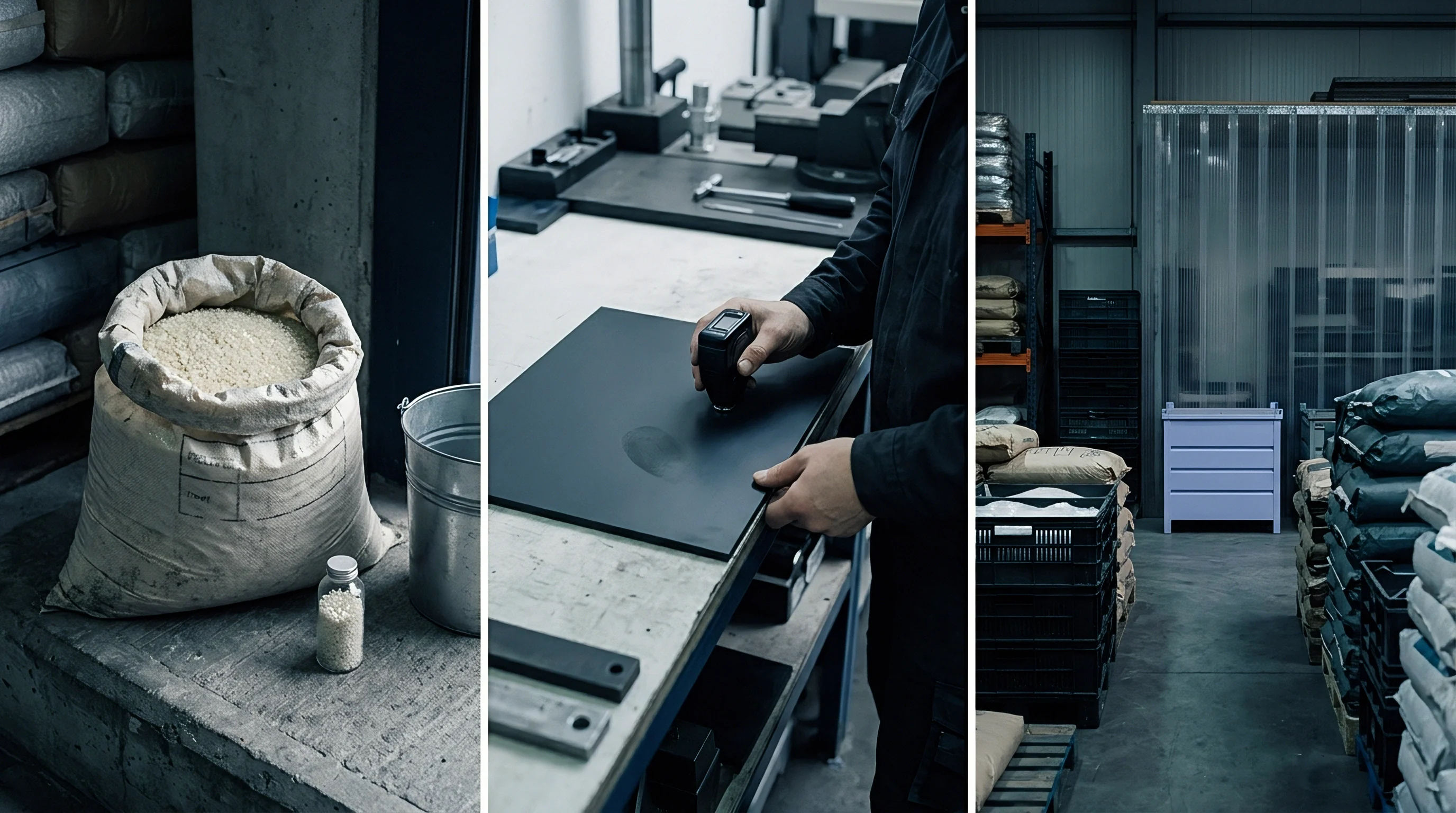
Collecting on moisture claims and scrap penalties requires a solid evidentiary trail starting the moment resin arrives at the dock. Missing logs, sloppy chain of custody, or uncalibrated test gear make it easy for supplier risk teams to reject claims. Compounders routinely push back by claiming moisture climbed due to poor warehouse storage, punctured packaging on-site, or improper sampling at receiving.
Receiving audits should compare lot-specific CoA values against actual dockside test results for every shipment. Compounders often issue standard CoAs with nominal target metrics or batch averages run days before bagging and shipping. Tracking CoA data against internal Karl Fischer titration results exposes systemic CoA drift ~ where reported moisture figures consistently understate delivered moisture.
Documenting this pattern gives buyers real leverage during contract renewals and quality audits.
- Package Seal Visual Inspections require capturing high-resolution date-stamped photographs of container condition, tamper-evident seals, valve condition, and pallet wrapping before unloading.
- Receiving Dock Environmental Logs record ambient temperature, dew point, relative humidity, atmospheric pressure, and weather conditions present during trailer unloading operations.
- Thief Sampling Chain of Custody Records detail the exact sampling depth, container numbers, sampler operator identity, and time elapsed between package unsealing and laboratory testing.
- Analytical Instrument Calibration Logs maintain daily calibration records using certified water standards, background drift logs, reagent change history, and carrier gas purity verifications.
- Retention Sample Storage Protocols mandate preserving duplicate resin samples in sealed nitrogen-purged glass vials for at least ninety days to permit independent third-party laboratory verification.
Warehouse storage must strictly adhere to the compounder’s environmental guidelines to eliminate claims of post-delivery mishandling. Storing octabins or pallets outside ~ exposed to rain, pooling water, or temperature swings ~ damages secondary packaging and causes condensation inside sealed bags. Receiving facilities should maintain climate-controlled storage with logged environmental data to prove material was stored properly before molding.
Traceability systems must tie raw resin lot numbers directly to press hours, mold cavities, shift records, and scrap logs. If wet resin gets into a central feeding system, it can foul multiple presses and drying hoppers at once. Barcode-driven material handling systems log the precise minute a non-conforming lot enters the system, letting quality teams isolate affected presses quickly and define the exact scope of the scrap claim.
Arbitration requires an unbroken handling record from the moment trailer seals are broken to the time material hits the press hopper. If a plant skips recording receiving humidity or uses unsealed sampling containers, arbitrators often dismiss claims over potential contamination. Standard operating procedures should treat incoming resin testing like evidence collection, producing data that holds up against supplier technical scrutiny.
Rigorous dockside sampling protocols paired with binding coulometric testing limits provide the only absolute defense against moisture-related scrap losses in engineering resin procurement.