Coulometric Moisture Determination in Recycled Engineering Thermoplastics under Thermal Desorption
Coulometric Karl Fischer titration paired with thermal desorption measures water down to 10 ppm while preventing matrix degradation in recycled polymers.

Interference
Recycled engineering thermoplastics carry variable concentrations of thermal decomposition products, residual monomers, and degraded additives that volatilize during heating. When processing post-consumer or post-industrial regrind from polyamide 6, polyamide 66, polybutylene terephthalate, polyethylene terephthalate, and polycarbonate, thermal desorption ovens sweep these volatile species directly into the Karl Fischer titration cell. Moisture determination relies on the quantitative reaction between water, sulfur dioxide, iodine, and an amine buffer in an alcoholic solution.
Volatile organic compounds carried alongside desorbed moisture alter this electrochemical process through side reactions, electrode passivating deposits, and stoichiometry shifts.
Direct volumetric Karl Fischer titration, which dissolves the resin directly in halogenated solvents, fails with engineering thermoplastics due to incomplete solubility and severe chemical matrix interference. Thermal desorption isolates the heating chamber from the titration cell, but volatile compounds desorbing at or near the target water release temperature still enter the anolyte. Identifying these side reactions is necessary for separating genuine moisture signals from chemical side reactions.

Matrix Breakdown Mechanisms in Regrind
Chain scission in post-consumer polyamides releases caprolactam monomers along with low-molecular-weight oligomers. Caprolactam sublimates at temperatures above 120 °C and enters the carrier gas stream as an aerosol or vapor. Upon reaching the anolyte, caprolactam alters the local pH and reacts with iodine, creating an artificial moisture consumption signal.
In recycled polybutylene terephthalate and polyethylene terephthalate, unreacted carboxyl end groups and cyclic oligomers desorb at temperatures above 160 °C. Thermal esterification can occur inside the desorption vessel during testing, generating secondary condensation water that was not present in the solid pellet.
Contamination from polyolefin fractions in recycled engineering resin streams introduces additional volatile degradation products. Oxidized polyethylene or polypropylene contaminants yield peroxides, aldehydes, and ketones when heated past 150 °C in oxygen-bearing or non-purged environments. Aldehydes and ketones react with the methanol present in standard coulometric reagents, forming acetals or ketals and releasing free water.
This chemical pathway inflates the recorded moisture content well past the physical baseline.
Additive packages in recycled compounds present further analytical obstacles. Hindered phenol antioxidants, phosphite heat stabilizers, and stearate lubricants undergo partial pyrolytic decomposition under thermal desorption conditions. Phosphite stabilizers consume iodine through direct oxidation in the anolyte, registered by the titrator as false water.
Thioesters and amine light stabilizers alter the oxidation-reduction potential of the cell, causing severe baseline drift that delays titration termination or leads to premature run termination.
Replacing methanol-based anolyte solutions with ethanol formulations eliminates false water generation from aldehyde acetalization during thermal desorption testing.
The table below summarizes primary off-gassing species, their desorption temperature thresholds, their specific chemical impacts on Karl Fischer reagents, and operational mitigation strategies for recycled resin testing.
| Resin Type | Off-Gassing Volatiles | Temperature Onset (°C) | Karl Fischer Reagent Impact | Mitigation Strategy |
|---|---|---|---|---|
| Recycled Polyamide 6 (rPA6) | Caprolactam monomer, cyclic dimers | 130 – 150 | Consumes iodine via amine oxidation; causes positive moisture bias | Caprolactam cold trap at 80 °C; maximum desorption temp 170 °C |
| Recycled Polyethylene Terephthalate (rPET) | Acetaldehyde, ethylene glycol, cyclic oligomers | 150 – 175 | Acetalization with methanol releases secondary H₂O; iodine consumption | Methanol-free ethanol reagents; step-heating profile |
| Recycled Polybutylene Terephthalate (rPBT) | Tetrahydrofuran (THF), butadiene, carboxylic acids | 160 – 180 | Esterification condensation water; acidic buffer suppression | Isothermal hold at 160 °C; imidazole-buffered anolyte |
| Recycled Polycarbonate (rPC) | Bisphenol A residues, diphenyl carbonate, phenol | 180 – 210 | Electrode passivation; slow baseline drift escalation | PTFE inline particle filter; diaphragm generator cell configuration |
| Polyolefin Contaminated Blends | Aliphatic aldehydes, alkyl hydroperoxides | 140 – 160 | Ketalization producing water; direct electrochemical reduction | Keto-reactive specific reagents; high-purity dry N₂ purge |
Chemical Side Reactions with Karl Fischer Reagents
Methanol desorbed or present in standard titration cell solutions reacts with carbonyl groups desorbed from oxidized polyolefin contaminants. This reaction proceeds according to the classic acetalization equilibrium:
R-CHO + 2 CH₃OH ⇌ R-CH(OCH₃)₂ + H₂O
Every mole of aldehyde passing into the anolyte generates one mole of stoichiometric water. In post-consumer recycled engineering blends containing as little as 0.5 percent by weight of degraded polyethylene, acetalization water can exceed the true absorbed moisture of the engineering matrix by two hundred percent. Utilizing methanol-free Coulomat reagents containing ethanol, 1-propanol, or ethylene glycol monoethyl ether halts this reaction pathway entirely.
Standard Karl Fischer coulometry relies on Bunsen stoichiometry in the presence of an organic base:
H₂O + I₂ + SO₂ + 3 RN + CH₃OH → 2 RN·HI + RN·HSO₄CH₃
When volatile organic acids desorb from degraded recycled PET or PBT, they neutralize the amine buffer (RN), lowering the anolyte pH below the optimal range of 5.5 to 7.0. At pH levels below 4.0, the electrochemical generation of iodine slows dramatically, extending titration times and creating an artificial upward drift in the baseline measurement. Conversely, volatile basic contaminants like free triamines from curing agents or degradation products from recycled polyamides elevate the anolyte pH above 8.0.
High pH triggers dark-side reactions where iodine reacts directly with hydroxide ions or amine species without consuming water, resulting in falsely low moisture readings.
Interference from phosphite antioxidants, widely added to recycled compounds during re-compounding to preserve melt flow rate, occurs through direct chemical reduction of iodine:
R₃P + I₂ + H₂O → R₃PO + 2 HI
This reaction consumes iodine independently of the electrochemical cell driver, causing the titrator to count current pulses that do not correspond to moisture desorbed from the polymer matrix. Distinguishing between physical water desorption and chemical iodine consumption requires evaluating the rate curve of the titration signal.
- Caprolactam Sublimation deposits white solid residues inside transfer tubing, restricting carrier gas flow and absorbing desorbed water before it reaches the cell.
- Aldehyde Acetalization creates a secondary water generation curve that manifests as a continuous elevated baseline tail rather than a clean exponential return to drift equilibrium.
- Phosphite Oxidation produces an immediate, sharp iodine consumption spike upon initial heating that distorts peak integration algorithms.
- Acidic Gas Emission depletes anolyte amine buffers across multiple consecutive sample runs, causing progressive baseline degradation.
Elevated moisture titrations can stem from volatile additives or from residual water in the resin matrix.

Trap
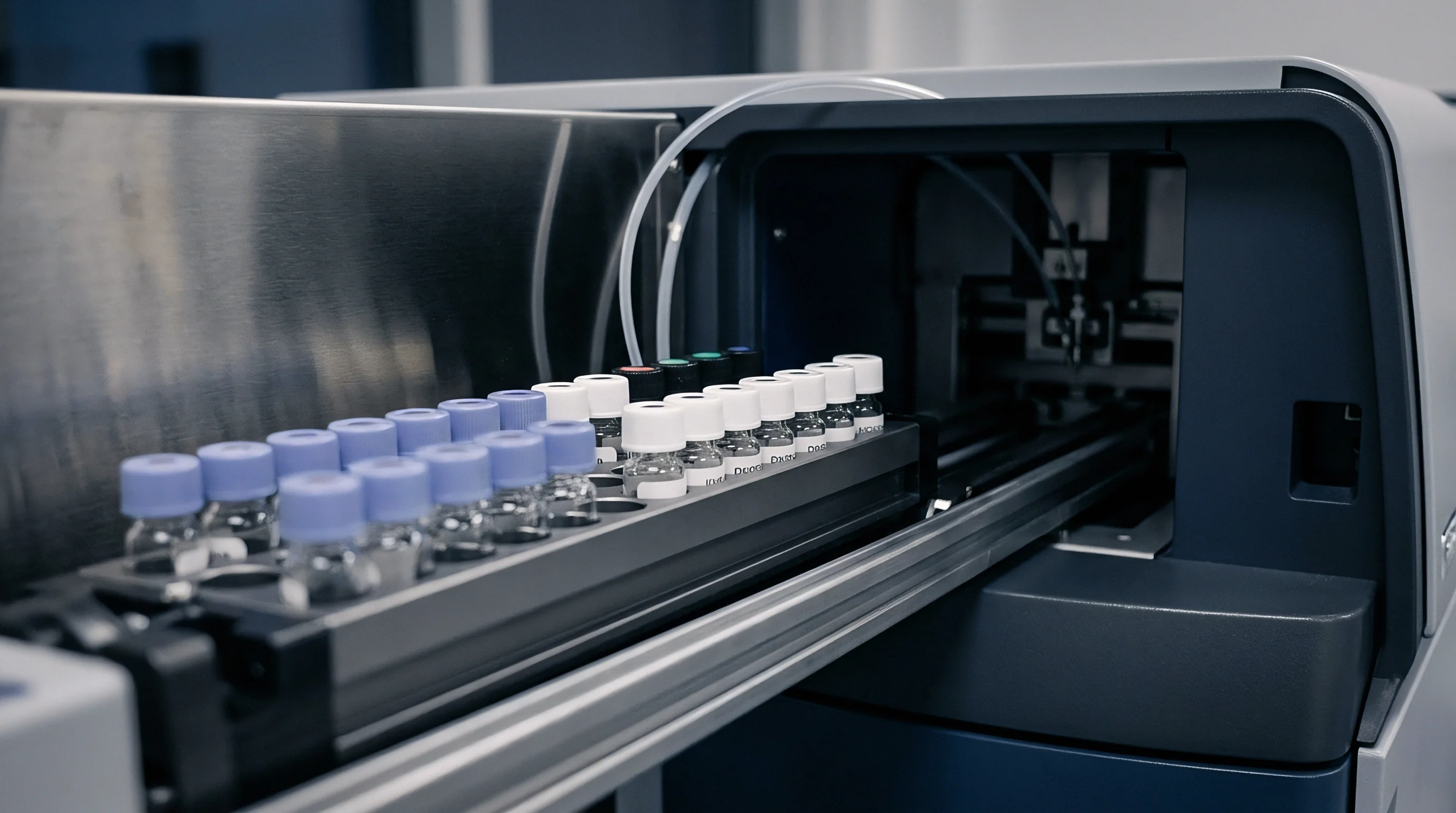
Analytical ovens paired with coulometric titrators utilize specialized filtration assemblies positioned along the vapor transport path. The desorbed gas stream emerging from a thermal desorption chamber carries gaseous water alongside micro-droplets of molten oligomers, vaporized plasticizers, and sublimated monomer species. Allowing these non-aqueous vapors into the titration vessel fouls the platinum indicator electrodes, coats the generator electrode diaphragm, and alters the dielectric constant of the anolyte solution.
Volatile oils and sublimated solids must be condensed or scrubbed out selective to water vapor. Transporting water gas requires maintaining carrier lines above 100 °C, while trapping volatile organic species demands localized cooling or high-surface-area physical adsorption. Balancing vapor transport temperatures prevents moisture loss inside filtration media while removing matrix contaminants.
Particle Filters and Aerosol Removal
Sintered stainless steel discs and PTFE membrane media block polymer micro-particulates swept out of the heating chamber by the carrier gas stream. Sintered discs with 2.0 µm pore sizes capture large flakes and char particles generated during rapid heating of regrind. Downstream 0.2 µm hydrophobic PTFE membrane filters stop aerosol droplets of molten wax and low-molecular-weight oligomers.
Cold traps collect volatile oil before it enters the glass cell manifold. Operating a cooling loop between 40 °C and 70 °C condenses heavy organic vapors like caprolactam, phthalate plasticizers, and lubricant waxes while maintaining water in the gas phase. Lowering trap temperatures below 30 °C risks condensing water vapor, causing severe negative analytical bias.
Heating transport tubing between the oven outlet and the trap inlet to 130 °C prevents premature wall condensation.
Hydrophobic silica gel and molecular sieve scrubbers present alternative options, but their selection demands rigorous evaluation. Specialized glass wool plugs coated with high-boiling silicone oils trap caprolactam vapors through physical absorption. These plugs require replacement after every ten to fifteen sample runs with recycled polyamide 6 to prevent saturation and subsequent carryover.
Selective Condensation and Sorption Scrubbing
Maintaining carrier gas transport conduits at controlled temperatures prevents condensation of water vapor while enabling high-boiling organic species to drop out into dedicated catch vessels. The diagrammatic representation below illustrates the spatial arrangement and temperature gradients required for a thermal desorption carrier gas line configured for recycled engineering resin analysis.
–(Heated Line: 130 °C)–> –(Heated Line: 110 °C)–> –>
Carrier gas selection influences aerosol formation and thermal transport efficiency. Ultra-high purity nitrogen with a dew point below -60 °C (< 10.6 p±v H2O) serves as the standard carrier medium. Gas flow rates must remain tightly regulated.
Flow rates below 30 mL/min result in excessive residence time inside transport tubing, increasing water loss onto glass surface silanol groups. Flow rates above 150 mL/min carry aerosol particles directly through filters and cause incomplete absorption of desorbed water inside the titration cell.
When testing recycled polycarbonate containing brominated flame retardants or organophosphate additives, thermal desorption liberates trace corrosive gases, including hydrogen bromide and phosphoric acid derivatives. Unfiltered corrosive vapors enter the anolyte and attack the platinum wire mesh of the generator electrode. Incorporating an inline sodium carbonate or activated alumina scrubber neutralizes acid gases without stripping moisture from the gas stream, provided the scrubber media is pre-conditioned to equilibrium at the ambient carrier gas relative humidity.
When inspecting incoming recycled pellet lots, purging transfer lines with dry nitrogen for thirty minutes clears residual moisture. Cold traps collect volatile oil efficiently when maintained at precise temperature offsets.
Carrier gas flow rates held between 50 and 80 mL/min at a line temperature of 120 °C ensure complete water vapor transfer into the titration cell without pushing aerosol oligomers through 0.2 µm PTFE filter membranes.
Neglecting secondary aerosol filtration causes rapid degradation of the anode frit, resulting in baseline drift instability that invalidates consecutive testing sequences and forces premature reagent replacement.

Electrolyte
Anodic and cathodic solutions form the active chemical environment where electrochemical generation of iodine converts dissolved water into iodide ions. Coulometric Karl Fischer instruments generate iodine directly at an anode mesh through the oxidation of iodide ions present in the anolyte:
2 I⁻ → I₂ + 2 e⁻
Faraday’s Law governs this reaction. Exactly 10.71 Coulombs of electrical charge correspond to 1.0 milligram of water reacted. Determining moisture in recycled engineering thermoplastics requires selecting chemical reagents capable of maintaining strict 100 percent current efficiency in the presence of desorbed organic species.
Diaphragm and Diaphragm-Free Cell Architecture
Titration vessels featuring a porous ceramic barrier isolate the cathode compartment from the main anode chamber. The diaphragm prevents hydrogen gas generated at the cathode from migrating to the anode and re-reducing free iodine back to iodide, which would lead to overestimation of water content. For clean samples, diaphragm cells provide highest analytical accuracy and fast drift recovery.
Recycled thermoplastics introduce organic contaminants that pass through aerosol traps and settle into the porous ceramic diaphragm. Monomer residues and fine particulates carbonize or precipitate inside the microscopic ceramic pores, creating electrical resistance spikes across the generator cell. Increased resistance causes the titrator power supply to reach its voltage limit, resulting in generation current loss and unstable drift baselines.
Diaphragm-free cells utilize modified generator electrode geometry to prevent hydrogen re-oxidation without requiring a ceramic separator, rendering them immune to pore clogging from recycled resin off-gassing.
The table below provides a detailed comparison between diaphragm and diaphragm-free cell configurations specifically evaluated for thermal desorption testing of recycled engineering thermoplastics.
| Performance Parameter | Diaphragm Cell | Diaphragm-Free Cell |
|---|---|---|
| Sensitivity & Detection Limit | 1 µg H₂O (0.1 ppm relative) | 10 µg H₂O (1.0 ppm relative) |
| Baseline Drift Stability | High stability (< 2 µg/min) | Moderate stability (3 – 8 µg/min) |
| Susceptibility to Matrix Fouling | High (ceramic frit clogs with caprolactam/oils) | Extremely Low (no porous frit present) |
| Cleaning & Maintenance Frequency | Frequent (ultrasonic cleaning required weekly) | Low (rinse with solvent during reagent change) |
| Anolyte/Catholyte Requirement | Requires two separate solutions | Single anolyte solution required |
| Suitability for High-Volatile Regrind | Requires intense pre-filtration steps | Directly handles mild volatile carryover |

Reagent Formulations for Volatile Matrix Compounds
Replacing short-chain aliphatic alcohols in the cell solution eliminates the acetalization pathway that generates artificial water signals. Formulations based on long-chain alcohols or glycol ethers, such as 2-methoxyethanol or ethanol, slow down side reactions with aldehydes while retaining sufficient solubility for iodine and organic sulfur intermediates.
In laboratory testing, aligning thermal desorption temperatures with thermogravimetric decomposition curves prevents matrix breakdown. Carrier nitrogen must be dry, as buffer capacity in the anolyte degrades when acidic desorptive products accumulate. Formulations buffered with imidazole or diethanolamine maintain stable pH levels even when analyzing degraded recycled PET compounds containing high concentrations of free terephthalic acid residues.
Regular monitoring of anolyte pH prevents silent loss of titration efficiency.
Baseline drift determination establishes the baseline rate of ambient moisture ingress and background reagent consumption prior to sample introduction. Measured in micrograms of water per minute (µg H₂O/min), baseline drift is subtracted continuously from the total water generated during a thermal desorption run. A stable baseline drift reading stays below 10 µg H₂O/min, with values under 3 µg H₂O/min preferred for high-precision measurement of dry pellets.
When testing recycled resins containing persistent trace volatiles, the drift baseline often fails to return to its initial resting state after sample completion, indicating reagent contamination or ongoing chemical side reactions inside the cell.
It remains unclear how long-term accumulation of fluorinated surfactant additives from recycled electronic housing compounds alters the electrochemical stoichiometry at the generator electrode over extended operating shifts.

Thermodynamics
Water molecules inside engineering resins exist in distinct physical states depending on their binding energy to the polymer backbone. Unbound surface water resides on pellet exteriors or within macro-voids, exhibiting minimal binding energy. Absorbed bulk moisture forms hydrogen bonds with polar functional groups, such as the amide linkages in polyamides or the carbonyl groups in esters.
Chemically bound water includes water of hydration associated with residual filler salts or hydrolysis products formed at elevated temperatures.
Desorbing water out of a solid polymer matrix requires supplying thermal energy sufficient to overcome these binding forces and drive molecular diffusion from the core to the surface of the pellet. Raising the heating temperature increases the diffusion coefficient (D) according to the Arrhenius relationship:
D = D₀ exp(-E_a / R T)
Higher temperatures shorten analytical cycle times. Setting the heating chamber temperature too high initiates thermal degradation of the polymer matrix, generating pyrolytic water, monomers, and volatile organic species that corrupt the titration signal.
Water Binding States in Hydrolytic Polymers
Surface moisture desorbs rapidly at temperatures slightly above the boiling point of water. Absorbed bulk moisture requires temperatures approaching or exceeding the glass transition temperature (Tg) of amorphous resins, or the softening point of semi-crystalline polymers, to expand free volume and enable rapid vapor transport out of the matrix.
In recycled polyamides, hydrogen bonding between water molecules and polar amide groups (-CO-NH-) requires heating temperatures between 160 °C and 180 °C to break physical bonds within acceptable measurement windows (10 to 20 minutes). In recycled PET and PBT, ester linkages display lower polarity, allowing complete desorptive release at 150 °C to 170 °C. Recycled polycarbonate holds water weakly within its amorphous structure, releasing internal moisture at 170 °C to 190 °C without matrix breakdown.
What Thermal Desorption Temperature Prevents Polymer Matrix Decomposition in Recycled Polyamide Compounds?
Operating the heating chamber between 170 °C and 180 °C desorbs internal moisture from recycled polyamide 66 without inducing thermal degradation of the polymer chains. Polyamide 6 melts near 220 °C, but caprolactam monomer sublimation accelerates above 180 °C. Maintaining PA6 desorption at 165 °C to 170 °C desorbs water within 15 minutes while limiting monomer volatilization into the gas manifold.
Thermal desorption optimization requires generating stepped thermogravimetric or desorptive rate curves. Plotting water release rate (µg H₂O/min) against temperature identifies the specific activation peaks for surface water, bulk water, and degradation-induced water. The graph below conceptualizes the rate of moisture desorbed from a contaminated recycled polyamide sample as a function of heating temperature.
Peak A (105 °C): Unbound Surface Moisture (Rapid release curve) Peak B (170 °C): Absorbed Matrix Water (Broad diffusion-controlled curve) Peak C (> 220 °C): Matrix Degradation Water + Pyrolytic Monomers (Sharp escalating baseline)
Target desorption temperatures must sit firmly between Peak B and Peak C. Selecting a temperature within this window captures full matrix moisture without initiating pyrolytic decomposition.
The numbered procedure below details the protocol for optimizing thermal desorption oven temperatures when establishing moisture determination methods for unknown recycled resin grades.
- Load an analytical sample vial with approximately 1.0 gram of dry, unground recycled pellets using clean forceps.
- Insert the sample vial into the desorption oven pre-set to an initial baseline temperature of 100 °C under a dry carrier gas purge.
- Increase the oven temperature in 10 °C increments every 5 minutes while recording the real-time moisture generation rate from the coulometer output.
- Identify the first desorption plateau where the rate of water release drops back toward baseline levels.
- Continue incremental heating until a secondary continuous rise in baseline drift appears, marking the onset of polymer thermal degradation.
- Select the optimal isothermal test temperature at 15 °C below the secondary baseline escalation point.
- Validate the chosen temperature by performing five consecutive replicate analyses to verify complete water recovery without reagent discolouration.
Recycled thermoplastics carry heat histories from prior conversion cycles and re-compounding steps. Repeated thermal processing reduces molecular weight, increases carboxyl end-group concentrations, and lowers the thermal decomposition onset temperature (Tdeg). A thermal desorption temperature that was appropriate for prime virgin resin can trigger degradation and false water release in a heavily re-processed regrind lot.
Testing recycled materials requires periodic re-validation of desorption profiles.
Oven temperature selection controls analytical accuracy, as uncalibrated heating induces hydrolysis; thermal analysis isolates these specific binding energies to find the safe operating range.
According to ISO 15512-3, optimal thermal desorption temperatures for polyamides must remain below the polymer melting point to prevent caprolactam sublimation and matrix degradation from skewing moisture measurements.
Comparing thermal desorption curves against raw thermogravimetric weight-loss signatures isolates true moisture signals. Replacing methanol with ethanol reduces baseline drift spikes to 1.2 micrograms of water per minute.
Set oven temperatures just below the softening point of the polymer matrix to release bound moisture without liberating volatile degradation products into the carrier gas stream.
Protocol
Sample handling from the storage container to the analytical oven dictates the precision of coulometric measurements. Dry engineering thermoplastics absorb atmospheric moisture within minutes of exposure to ambient humidity. Recycled resin pellets, which often possess higher surface roughness, micro-cracks, and pore volume than virgin pellets, display accelerated moisture absorption kinetics.
A dry sample of recycled polyamide 66 exposed to 50 percent relative humidity at 23 °C absorbs 0.05 percent by weight of water in less than six minutes. In high-precision moisture determination, where acceptable processing limits for hydrolytically sensitive resins range between 0.01 and 0.08 percent (100 to 800 ppm), sample transfer delays compromise data integrity before thermal heating begins.
Sample Preparation and Ambient Moisture Uptake
Dry pellets must be stored in vapor-tight, aluminium-laminated foil bags or sealed glass septum vials immediately upon sampling from drying hoppers or sealed shipping containers. Sampling tools must be clean and completely dry. Plastic sampling scoops must be avoided due to static charge generation that attracts ambient dust and moisture droplets.
Determining optimum sample mass involves balancing analytical balance resolution against the expected moisture content of the polymer. Coulometric cell accuracy is highest when total water desorbed during a single analysis falls between 100 and 1000 micrograms (µg H₂O). The required sample weight (m) in grams can be calculated from the anticipated moisture concentration (C, in percent by weight):
m = W_{target} / (C × 10000)
Where Wtarget represents the desired target water mass in micrograms (typically 300 µg). For a dry recycled PET lot with an estimated moisture level of 0.02 percent (200 ppm), the optimum sample mass is 1.5 grams. For a wet regrind sample containing 0.5 percent moisture, sample mass must be reduced to 0.06 grams to prevent overwhelming the electrolyte generation capacity.
The checklist below outlines operational steps for baseline drift stabilization, blank determination, and sample execution during incoming inspection of recycled pellet shipments.
- Vessel Condition Verification ensures all glass tubing, carrier gas connections, and oven septa are free of moisture leaks before starting analytical runs.
- Carrier Gas Purification Check confirms that supply cylinder pressure exceeds 20 bar and inline drying filters show no color-change saturation indicators.
- Cell Pre-Conditioning executes an initial electrochemical sweep to neutralize residual cell moisture until drift drops below 5 µg H₂O/min.
- Blank Value Determination measures empty sample vial moisture contributions by running identical thermal profiles with empty pre-baked glass vials.
- Rapid Sample Transfer limits pellet air exposure to under fifteen seconds between opening storage bags and sealing sample oven vials.
- Balance Mass Recording logs sample mass to 0.1 milligram precision on a calibrated analytical balance immediately following vial sealing.
Carrier Gas Quality and Baseline Drift Determination
Ultra-high purity nitrogen containing less than one part per million of water ensures stable electrochemical cell conditions. Using commercial-grade nitrogen introduces background moisture that elevates baseline drift, reducing measurement sensitivity and shortening reagent lifespan. Synthetic air must be avoided because oxygen promotes thermal oxidation of recycled resin samples inside the oven, yielding pyrolytic water.
Auditing compounder laboratories involves verifying whether drift correction calculations run automatically or manually. Analytical balances require daily calibration, and insufficiently dried pellets cause surface splay during molding.
The worked calculation table below demonstrates the landed monetary impact of moisture determination errors on component processing success, mechanical integrity, and warranty liability across three recycled engineering thermoplastic shipments.
| Parameter / Metric | Recycled PA66 (Automotive) | Recycled PBT (Electrical) | Recycled PC (Optical) |
|---|---|---|---|
| Shipment Volume & Delivered Price | 22 tonnes @ €2,850/tonne | 18 tonnes @ €3,100/tonne | 15 tonnes @ €3,400/tonne |
| Target Processing Moisture Limit | < 0.08 wt% (800 ppm) | < 0.02 wt% (200 ppm) | < 0.02 wt% (200 ppm) |
| Inaccurate Method Result (LOD/Fouled KF) | Reported: 0.06 wt% (Pass) | Reported: 0.015 wt% (Pass) | Reported: 0.018 wt% (Pass) |
| True Moisture Level (Corrected Coulometric) | Actual: 0.18 wt% (Severe Wet) | Actual: 0.055 wt% (Wet) | Actual: 0.042 wt% (Wet) |
| Melt Processing Failure Mode | Severe hydrolytic chain scission | Transesterification & brittle parts | Silver splay, molecular weight drop |
| Retained Mechanical Property Loss | -42% Notched Izod Impact Strength | -35% Tensile Strength at Break | -60% Charpy Impact Resistance |
| Direct Financial Loss (Scrap + Tooling Wear) | €62,700 (Full lot scrap) | €55,800 (Part failure at testing) | €51,000 (Optical rejection) |
Incorporating ISO 15512 Method B testing conditions into resin supply agreements shifts financial liability for hydrolytic moulding defects back to the compounder whenever incoming pellet shipments exceed specified moisture limits.

Validation
Method accuracy requires regular verification against certified reference materials of known water content. Coulometric titrators carry no intrinsic calibration factor because current measurement directly reflects Faraday’s Law. System performance must be validated to confirm carrier gas transfer efficiency, oven heating accuracy, and reagent reactivity.
Liquid water standards sealed in glass capillaries provide direct verification of titrator current integration. For thermal desorption systems, solid standards that release water at defined temperatures mimic polymer desorptive behavior more effectively than liquid injections.
Primary Standards and Recovery Rate Verification
Sodium tartrate dihydrate (Na₂C₄H₄O₆·2H₂O) provides a stable stoichiometric water content of 15.66 percent by mass under controlled thermal heating. When heated between 150 °C and 180 °C, sodium tartrate dihydrate releases its two crystal water molecules smoothly without decomposing its organic anion structure. Weighing approximately 10 to 20 milligrams of sodium tartrate dihydrate yields roughly 1.5 to 3.1 milligrams of water, ideal for checking instrument accuracy.
Calculated recovery (Rrec, in percent) compares desorbed water mass (Wmeas) to theoretical water mass (Wtheo):
R_{rec} = (W_{meas} / W_{theo}) × 100
Acceptable recovery rates for coulometric thermal desorption systems range between 97.0 percent and 103.0 percent. Recovery rates below 97 percent indicate condensation leaks in gas transfer tubing, exhausted reagents, or low oven temperatures. Recovery rates above 103 percent signal side reactions, contaminated carrier gas, or thermal decomposition of reference materials.
Certified pure water standards embedded in capillary tubes or liquid oil matrices offer secondary validation options. Pure micro-capillary tubes containing precisely 1000 micrograms of pure H₂O are placed inside sample vials and crushed immediately before oven insertion. Capillary standards isolate transport line efficiency from solid-state diffusion variables.
Method Comparison across Analytical Techniques
Loss on drying instruments measure total mass loss during heating without distinguishing between water and volatile organic compounds. In recycled engineering thermoplastics containing residual solvents, monomers, or low-boiling additives, loss on drying overestimates moisture content by hundreds of percent. High-temperature loss on drying can also induce thermal oxidation, adding sample mass via oxygen pickup and masking water loss entirely.
Volumetric Karl Fischer titration dissolves polymers directly in solvents such as chloroform, phenol, or tetrachloroethane. Handling toxic halogenated solvents presents health and environmental hazards, while incomplete polymer dissolution yields under-reporting of internal moisture. Thermal desorption coulometry isolates the polymer matrix entirely inside the heating chamber, preventing solvent hazards and eliminating matrix solubility requirements.
In routine laboratory operations, purging sample glass vials with dry argon before sealing prevents atmospheric moisture ingress, ensuring coulometric signals reflect true sample moisture.
The list below defines the minimum documentation required inside a Certificate of Analysis (CoA) to validate moisture compliance on recycled engineering resin shipments.
- Analytical Standard Specification cites exact adherence to ISO 15512-3 or ASTM D6869 test methods.
- Desorption Temperature Record states the precise isothermal oven setting used during pellet heating.
- Carrier Gas Flow Specification records carrier gas type, dew point, and flow rate through the oven.
- Sample Mass Documentation lists individual sample weights and corresponding total microgram water counts.
- Drift Subtraction Value explicitly states background baseline drift rates subtracted during titration calculation.
- System Recovery Proof attaches sodium tartrate dihydrate recovery percentages recorded on the testing date.
Direct volumetric titration fails on insoluble thermoplastic matrices.
Combining automated thermal desorption with coulometric titration creates a robust analytical framework capable of verifying moisture levels in recycled engineering plastics down to single-digit parts per million.