Cross Border Mass Balance Credit Reconciliation under Differing European Union Member State Plastic Tax Directives
Cross-border mass balance plastic credit transfers require local physical resin matching to survive Member State plastic tax audits.

Scale

Pyrolysis Oil Conversions and Attribution Losses
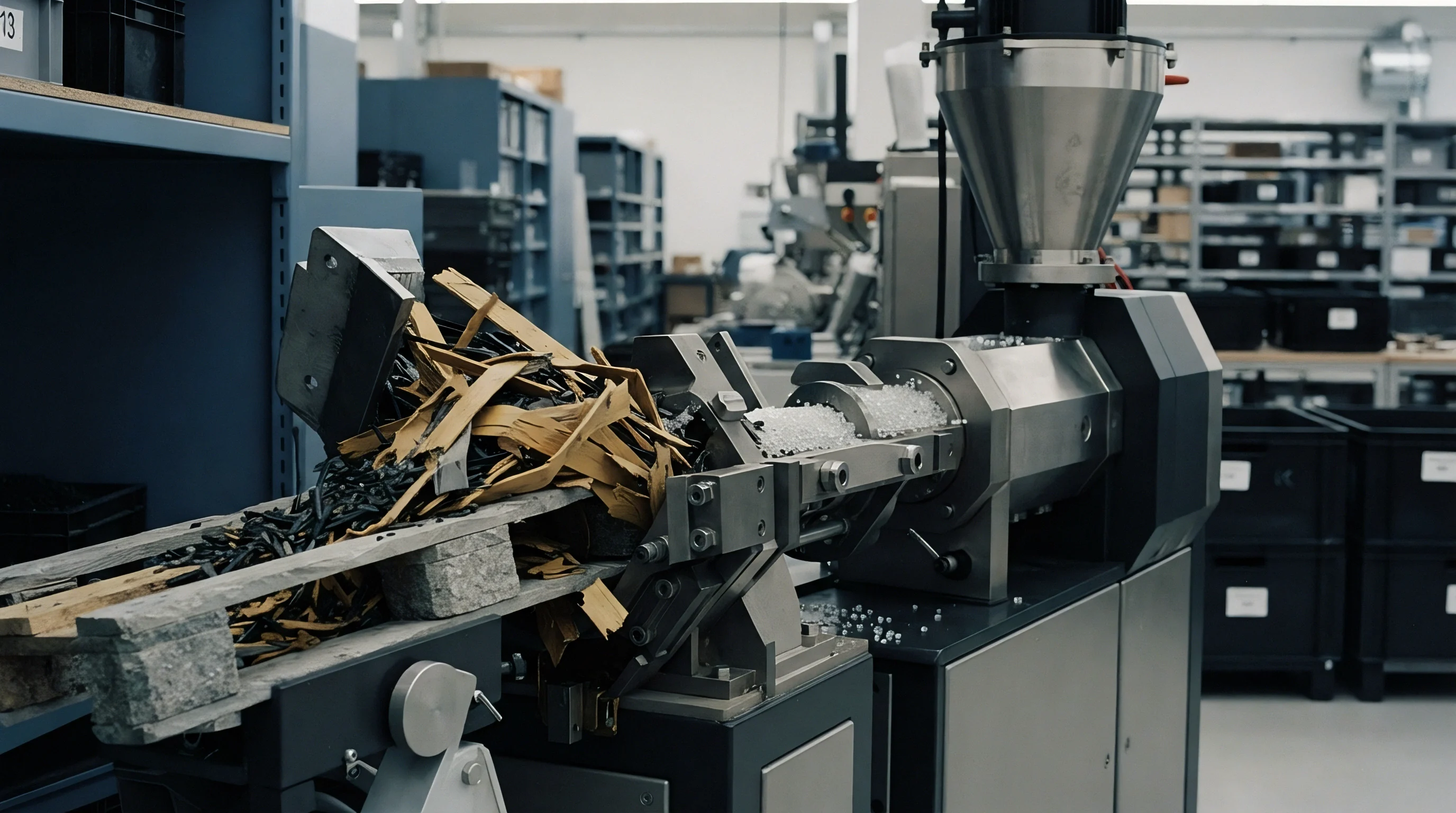
Pyrolysis reactors converting mixed post-consumer polyolefins yield approximately 65 to 75 percent liquid pyrolysis oil, 15 to 25 percent heavy synthetic gas, and 5 to 10 percent solid char depending on thermal cracking temperatures between 450 degrees Celsius and 520 degrees Celsius. The resulting hydrocarbon stream undergoes hydrotreating to remove chlorine, nitrogen, and oxygen heteroatoms before feeding into a steam cracker alongside virgin naphtha. When steam cracking this secondary feedstock at furnace coil outlet temperatures of 820 degrees Celsius, mass balance models allocate the output yields across ethylene, propylene, butadiene, and aromatic co-products based on stoichiometry and thermal cracking kinetics.
Chemical recycling yields drop by 30 to 45 percent between raw pyrolysis oil input and final polymer output during steam cracking operations.
Attribution models under international sustainability schemes allow producers to assign these recycled carbon credits to specific output polymer batches. A steam cracker consuming 100 tonnes of hydrotreated pyrolysis oil does not yield 100 tonnes of circular polyethylene. Process fuel combustion inside the cracking furnace consumes roughly 35 percent of the hydrocarbon intake energy.
Light olefins yield approximately 30 percent ethylene and 15 percent propylene from a pyrolysis oil feed, while the remainder converts to methane, hydrogen, pyrolysis gasoline, and heavy residue. Assigning 100 percent of the recycled input weight to a single polymer product line requires proportional credit subtraction to account for energy recovery losses and non-polymer co-products.

Mass Credit Conservation across Processing Units
Mass balance accounting maintains credit inventories across distinct chemical transformation steps. The transfer of mass balance credits from chemical recyclers to monomer producers, polymerizers, and packaging converters requires tracking batch-level allocation factors through standard carbon balance metrics. System boundaries dictate whether physical mixing must occur within the same production line, the same facility, or across multi-site corporate networks.
| Process Stage | Physical Feedstock Input | Process Yield Efficiency | Attributable Mass Credit Ratio |
|---|---|---|---|
| Sorting and Washing | 1000 kg Mixed Post-Consumer Plastic | 78% Clean Dry Flake | 0.78 kg Credit / kg Waste |
| Thermal Pyrolysis | 780 kg Clean Polyolefin Flake | 71% Raw Pyrolysis Oil | 0.55 kg Credit / kg Waste |
| Hydrotreating and Purification | 554 kg Raw Pyrolysis Oil | 92% Hydrotreated Naphtha Equivalent | 0.51 kg Credit / kg Waste |
| Steam Cracking | 510 kg Hydrotreated Feedstock | 42% Target Olefins (Ethylene/Propylene) | 0.21 kg Credit / kg Waste |
| Polymerization | 214 kg Olefin Monomers | 98% Polymer Resin | 0.21 kg Credit / kg Waste |
Chemical plant operators frequently attempt to justify full credit transfers without deducting process fuel combustion losses, relying on internal mass balance allocation rules that pool credits across all cracking co-products to protect margins.


Divergence

National Implementation of Plastic Tax Directives
European Member States enforce conflicting criteria regarding the tax deductibility of mass-balance-attributed recycled plastic content. Spain enforces a national plastic packaging tax under Ley 7/2022 at a flat rate of 0.45 Euros per kilogram of non-recycled virgin plastic packaging. Spanish tax authorities accept mechanical recycling certified under UNE-EN 15343, but demand strict evidence for chemically recycled material.
To claim exemption under Ley 7/2022, chemically recycled content requires certification under ISCC PLUS or equivalent schemes with explicit site-level mass balance tracing within Spanish territory.
The United Kingdom charges Plastic Packaging Tax at 217.85 Pounds Sterling per tonne on packaging components containing less than 30 percent recycled plastic. HM Revenue and Customs permits mass balance attribution only when physical post-consumer waste inputs directly connect to the manufacturing run. In contrast, Italy’s postponed plastic tax framework under Law 160/2019 sets a levy of 0.45 Euros per kilogram, excluding recycled plastics but leaving the administrative mechanism for chemical mass balance credit recognition subject to secondary decrees.

Which National Directives Disallow Chemical Mass Balance Credits?
Tax agencies in several jurisdictions reject the free allocation of mass balance credits across distinct polymer product lines. Spanish tax inspectors demand a physical link between the chemical recycled feedstock and the specific manufacturing site producing the finished packaging. If a multinational resin distributor imports polyolefin pellets carrying mass balance credits generated at an overseas steam cracker, the Spanish Tax Agency rejects the tax credit unless the physical batch imported contains the secondary feedstock within the site’s balance period.
- Spanish Ley 7/2022 Mandate requires UNE-EN 15343 audit reports for mechanical plastic and accredited third-party mass balance certificates for chemical recycled content.
- UK PPT Deduction Rules restrict credit claims to packaging where the mass balance calculation aligns with physical chemical recycling inputs at the site of chemical conversion.
- EU Own Resource Contribution calculates the 0.80 Euros per kilogram levy on non-recycled plastic packaging waste at the national level, leaving Member States room to draft disparate domestic tax definitions.
- Italian Imposta Plastica Framework exempts recycled polymers but leaves cross-border credit recognition criteria exposed to domestic tax agency enforcement guidance.
The divergence between Member State tax laws creates structural double-taxation risk for packaging traded across internal European borders. Packaging manufactured in Belgium using ISCC PLUS mass balance credits faces full taxation upon import into Spain if the local tax office rejects the credit attribution methodology used by the Belgian converter. Legal uncertainty persists while the European Commission delays finalizing harmonized rules for mass balance attribution under the Packaging and Packaging Waste Regulation.


Friction
Cross-Border Accounting Boundaries
Corporate mass balance netting across national borders breaches tax compliance laws in jurisdictions requiring local physical ledger balancing. A resin producer operating cracking facilities in Germany and converting sites in France cannot balance negative credit accounts in one Member State against surplus credit reserves in another. Tax authority auditors view cross-border credit transfers without corresponding physical shipment of secondary feedstock as synthetic financial offset arrangements.
Physical movement of material dictates credit transfer validity. Shipping 50 tonnes of virgin polypropylene from a Belgian site alongside an electronic transfer of 50 tonnes of chemical recycling credits earned at a Dutch refinery triggers tax audits in destination markets. The customs clearing party in the destination country bears strict tax liability for the non-recycled plastic fee if the domestic authority refuses to recognize the Dutch credit ledger.
Cross-border transfers of mass balance credits without concurrent physical resin delivery face immediate disqualification by national tax agencies.
Storage facilities and intermediate distribution hubs add administrative exposure. Distributing resin through third-party logistics warehouses in the Netherlands disrupts the chain of custody unless the warehouse operator holds independent mass balance certification. When virgin resin and mass-balance certified resin co-mingle in silent storage silos, paper credit allocations detach from physical inventory movements.

Reconciliation Delays and Tax Filing Windows
National tax filing deadlines mismatch the certification balancing windows established by voluntary standards. ISCC PLUS allows a maximum balance period of twelve calendar months for site-level credit balancing. Spanish tax returns for plastic packaging levies require monthly or quarterly filings matched to customs import declarations.
- Quarterly Tax Reconciliation requires closing mass balance ledgers every ninety days to match domestic packaging tax return filings.
- Credit Inventory Adjustment forces immediate write-downs of expired chemical recycling credits that were not drawn down within the local tax authority’s recognized tax year.
- Customs Audit Rectification triggers supplemental tax assessments plus interest charges when an annual ISCC audit invalidates credits claimed on previous monthly import filings.
Non-compliance with national credit balance timing causes immediate forfeiture of tax exemptions and exposes the importer of record to administrative penalties reaching 150 percent of the unpaid packaging levy.


Proof

Auditing Frameworks and Standard Systems
Verification of mass balance claims depends on accredited third-party auditing under defined standard frameworks. ISCC PLUS, REDcert2, and ISO 22095 establish rules for mass balance chain of custody management. ISO 22095 defines four distinct chain of custody models: identity preserved, segregated, mass balance, and book and claim.
European tax directives almost universally disallow book and claim models that disconnect credit trading from physical material supply chains.
Certificates must explicitly cover the specific manufacturing site, the chemical conversion process, and the exact trade name of the resin delivered. A generic corporate ISCC PLUS certificate covering a parent company’s headquarters provides zero compliance protection for a packaging converting line operating in another country.
| Chain of Custody Model | Physical Feedstock Trajectory | Credit / Material Separation | EU Member State Tax Status |
|---|---|---|---|
| Identity Preserved | Strictly segregated single source | No separation permitted | Fully accepted across all Member States |
| Segregated | Batch-blended recycled streams | No virgin credit substitution | Fully accepted across all Member States |
| Controlled Mass Balance | Co-processed with virgin inputs | Attributed within site balance limits | Conditionally accepted based on national directive |
| Book and Claim | No physical connection required | Complete decoupling of credits | Rejected by all national plastic tax authorities |

Conformity File Assembly for Tax Authorities
Constructing a defendable plastic tax compliance file requires assembling end-to-end documentation proving material origin and audit history. The importer or packaging producer must collect and maintain specific records for a minimum of five years to satisfy national tax revenue audits.
- ISCC PLUS Sustainability Declaration showing valid certificate numbers, physical dispatch weight, and exact percentage of mass balance attributed credit content.
- UNE-EN 15343 Audit Summary for mechanically recycled content verifying post-consumer waste origin and trace audit trails from recycler to converter.
- Proof of Physical Delivery including bills of lading, consignment notes, and warehouse receiving logs matching the material batch codes listed on the sustainability declaration.
- Mass Balance Yield Reconciliation Ledger displaying chemical conversion efficiency factors applied during pyrolysis and steam cracking operations.
Incomplete conformity files default to virgin plastic status during a tax audit. A missing bill of lading or an unaccredited warehouse link invalidates the entire credit chain.

Arithmetic

Cross-Border Reconciliation Calculation
Evaluating the financial impact of divergent plastic tax directives requires tracing a cross-border supply chain involving chemical recycling. Take a packaging converter located in Belgium purchasing 40 tonnes of polypropylene resin carrying a 50 percent mass balance credit derived from pyrolysis oil. The converter produces 100,000 food packaging containers weighing 400 grams each, resulting in 40 tonnes of finished packaging goods containing 20 tonnes of certified mass balance recycled plastic and 20 tonnes of virgin polypropylene.
The converter ships the entire batch of finished packaging to a distributor in Spain. The Spanish importer faces the Ley 7/2022 tax rate of 0.45 Euros per kilogram on the non-recycled plastic component. The imported shipment consists of 40,000 kilograms total net plastic weight.
If the Spanish tax agency accepts the Belgian converter’s ISCC PLUS mass balance credit documentation, the taxable weight drops from 40,000 kilograms to 20,000 kilograms.
Cross-border plastic tax exposure doubles when destination tax agencies reject origin-state mass balance credit attributions.
Under a full acceptance scenario, Spanish plastic tax liability equals 20,000 kilograms multiplied by 0.45 Euros per kilogram, yielding 9,000 Euros. If the Spanish Tax Agency rejects the cross-border chemical mass balance attribution due to lack of local physical feedstock connection, the taxable base reverts to the full shipment weight of 40,000 kilograms. The resulting tax charge rises to 18,000 Euros, generating an unexpected 9,000 Euro tax deficit on a single 40-tonne consignment.

Financial Risk and Margin Sensitivity
The gross margin on food-grade packaging converting ranges between 8 percent and 14 percent. A sudden tax reassessment of 0.45 Euros per kilogram represents 15 to 25 percent of the total wholesale value of standard polyolefin packaging containers priced at 2.20 Euros per kilogram. Unhedged plastic tax liabilities entirely erase converting margins on cross-border transactions.
Assume a contract selling 200 tonnes of film per year into Spain with an assumed 30 percent mass balance credit exemption. The annual tax exemption expected by the buyer equals 27,000 Euros. If a post-import tax audit disallows the mass balance scheme used by the resin manufacturer, the buyer receives a retrospective assessment for 27,000 Euros in unpaid duty, plus a mandatory administrative penalty of 50 percent, totaling 40,500 Euros in cash exposure.
Tax assessment adjustments pass directly to the importer of record unless explicit tax indemnity clauses redirect financial liability back to the resin supplier or converter.


Drafting

Supply Agreement Indemnity Clauses
Commercial packaging contracts must address regulatory uncertainty surrounding mass balance credit validity across European borders. Standard purchase orders lacking explicit plastic tax indemnity terms leave buyers fully exposed to local tax authority assessments. Procurement contracts require robust clauses defining credit certification standards, audit rights, and financial remedies for disallowed tax exemptions.
Contracts must specify the exact standard system required for credit validation. Specifying generic recycled content without defining the chain of custody framework creates immediate disputes when tax auditors reject the documentation. Supply agreements should enforce seller liability for domestic tax assessments caused by invalid, expired, or rejected sustainability certificates.

Standard Contractual Language for Mass Balance Resin Procurement
The following standard contractual clause places strict compliance obligations and tax indemnification covenants on the seller of mass-balance attributed polymer resins.
The seller warrants that all mass balance recycled plastic content delivered under this agreement strictly conforms to ISCC PLUS certification rules and satisfies the legal definitions of recycled plastic under the applicable laws of the destination Member State specified in the delivery schedule. The seller shall provide a valid, fully completed Sustainability Declaration matching the exact batch codes and net weight of each resin consignment at the time of dispatch. Should any competent tax authority in the destination country reject, disallow, or invalidate the mass balance credit claim due to deficiencies in the seller’s chain of custody, certification status, or conversion allocation methodology, the seller agrees to fully indemnify, defend, and hold harmless the buyer against all resulting plastic tax assessments, back taxes, administrative fines, interest charges, and legal expenses incurred within thirty days of written demand.
Including this clause transfers regulatory risk back to the resin manufacturer or converter who controls the mass balance accounting ledger, securing the buyer’s landed cost model against cross-border regulatory divergence.