Analytical Calibration Drift from Solid Phase Transesterification in Vaporization Coulometry
Solid-phase transesterification releases stoichiometric reaction water during vaporization coulometry, creating analytical bias that requires linear baseline deconvolution.

Bias
Karl Fischer vaporization coulometry assumes that thermal desorption volatilizes only pre-existing, physically bound water from a polymer matrix. In polyester, polyamide, and polycarbonate resins, that assumption breaks down inside the heating tube. Heating a polyester pellet containing free hydroxyl and carboxylic acid end groups past its glass transition temperature triggers solid-phase esterification and transesterification.
These condensation reactions release stoichiometric water alongside the actual desorbed moisture. The titration cell cannot distinguish between water molecules residing in the amorphous inter-spherulitic channels and those generated in situ by condensing chain ends. The current integrates both, producing a progressive positive drift and inflating the final moisture calculation.
Karl Fischer oven coulometry relies on Faraday’s law: 10.71 Coulombs of charge correspond to exactly one milligram of titrated water. When analyzing polyethylene or polypropylene under ASTM D6980, thermal desorption stays purely physical across the 150 to 200 degrees Celsius extraction window because polyolefins lack reactive end groups capable of condensing below their decomposition thresholds. Saturated linear polyesters like polyethylene terephthalate (PET), polybutylene terephthalate (PBT), and polylactic acid (PLA) present a very different chemistry.
Industrial PET carries carboxyl end group (CEG) concentrations of 15 to 40 equivalents per metric ton and hydroxyl end group (HEG) concentrations of 30 to 60 equivalents per metric ton. Heated between 160 and 220 degrees Celsius under dry carrier gas, these end groups collide in the amorphous phase. Direct esterification yields one mole of water for every ester linkage formed.
At the same time, transesterification between hydroxyl end groups and existing ester linkages generates volatile diols like ethylene glycol, which enter the coulometric cell and trigger secondary side reactions with the Karl Fischer reagent.
This drift appears as an elevated, non-decaying baseline current during extraction. In a typical cell, the generator electrode produces iodine at the anode to consume incoming moisture, maintaining a background drift below 5 micrograms of water per minute ~ or under 2 micrograms per minute with ultra-pure nitrogen at an ambient dew point below minus 60 degrees Celsius. Once solid-phase condensation starts in the sample, the baseline never returns to that initial plateau.
Instead, the cell registers a steady release of 0.15 to 0.85 micrograms of water per gram of sample per minute at 180 degrees Celsius. Over a ten-minute extraction of a one-gram PBT sample, this parasitic baseline adds 35 to 85 parts per million of apparent moisture. For injection molding grades specified strictly below 200 parts per million, a phantom 60 parts per million forces operators to over-dry pellets, wasting energy and degrading resin in the desiccant hopper.
A true analytical baseline returns to within two micrograms of water per minute of the initial carrier gas drift value within twelve minutes of sample introduction.
Quality control labs often misinterpret this ongoing condensation current as slow desorption. Analysts bump extraction times from ten minutes out to twenty to hit a predefined endpoint, which only compounds the error. Longer oven residence at high temperatures drives higher conversion of the solid-phase reactions, feeding even more reaction water into the cell.
The resulting titration curve shows a telltale linear slope in the charge-versus-time plot long after the desorption peak has cleared. When automated carousels rely on fixed endpoint criteria that ignore this slope, every polyester lot gets miscalculated, producing an analytical dossier that completely misrepresents the resin’s true moisture level.
Where Does Parasitic Water Generation Originate?
The driving force behind this parasitic water release lies in polycondensation thermodynamics. During melt polymerization in a reactor, building high molecular weight requires deep vacuum to draw condensation byproducts out of the melt. The vaporization oven of a Karl Fischer coulometer mimics that environment.
Dry carrier nitrogen or air sweeps over the pellets at 100 to 300 milliliters per minute, maintaining a near-zero partial pressure of water vapor above the sample. That zero-moisture boundary shifts the equilibrium straight toward the product side, forcing chain ends to condense in the solid state well below the melting point.
Residual catalysts in prime virgin resins accelerate the reaction. Melt-polymerized PET carries 150 to 300 parts per million of antimony trioxide or antimony triacetate, or titanium alkoxides at 5 to 25 parts per million of elemental titanium. PBT resins typically retain 50 to 150 parts per million of tetrabutyl titanate.
These organometallic catalysts stay active in the solid matrix. Once heated above the glass transition temperature, chain mobility in the amorphous domains lets the catalyst coordinate with carboxyl and hydroxyl chain ends. By lowering the activation energy for esterification and transesterification, the catalyst drops the onset temperature for water generation.
While an uncatalyzed model polyester releases minimal transesterification water below 210 degrees Celsius, a titanium-catalyzed PBT grade starts generating water as low as 145 degrees Celsius.
The table below details the thermal, chemical, and catalytic characteristics governing parasitic water generation across five commercial resin grades during vaporization coulometry.
| Resin Grade | Catalyst System | CEG (eq/ton) | HEG (eq/ton) | Onset Temp (C) | Drift Rate at 180 C (ug H2O/g-min) |
|---|---|---|---|---|---|
| PET Bottle Grade (IV 0.82 dl/g) | Antimony (220 ppm) | 22.4 | 38.1 | 172 | 0.38 |
| PET Film Grade (IV 0.64 dl/g) | Antimony (260 ppm) | 34.1 | 52.6 | 165 | 0.54 |
| PBT Injection Grade (IV 1.15 dl/g) | Titanium (85 ppm) | 18.7 | 44.2 | 148 | 0.72 |
| PBT Extrusion Grade (IV 1.30 dl/g) | Titanium (60 ppm) | 12.1 | 28.5 | 158 | 0.41 |
| PLA Extrusion Grade (Mn 85k) | Tin Octoate (120 ppm) | 28.0 | 31.5 | 135 | 0.89 |
Inspection certificates routinely report moisture values completely out of step with how the resin actually flows in the molding barrel. An unadjusted measurement of 380 parts per million on a virgin PBT lot might prompt an engineer to reject the shipment. In reality, the physically dissolved moisture is only 140 parts per million, with the other 240 parts per million produced during a 20-minute run at 190 degrees Celsius.
That misinterpretation leads to unnecessary material holds, vendor disputes, and wasted dryer capacity.
Carboxyl and hydroxyl end groups are not the only culprits. Moisture readings in polycarbonates and polyamide-imides suffer similar interferences from carbamate decomposition, solid-phase imidization, and cyclic oligomer formation. In polyamides, terminal amines react with carboxylic acid chain ends to form water via solid-phase amidation.
Because nylon 6 and nylon 6,6 carry high concentrations of reactive end groups (40 to 80 equivalents per metric ton), vaporization runs above 160 degrees Celsius yield a steady amidation current. The cell registers this reaction product as moisture, obscuring how dry the virgin feed actually is.
Standard instrument procedures often allow titrations to end automatically once drift reaches factory baseline settings, obscuring continuous reaction water generation.
Condensation
Solid-phase polycondensation kinetics determine how fast parasitic water generates inside the heating tube. The reaction between a carboxylic acid end group and a hydroxyl end group is an equilibrium governed by forward rate and equilibrium constants. In the melt at 280 degrees Celsius, the equilibrium constant for PET ranges from 1.5 to 4.0.
In the solid state between 160 and 220 degrees Celsius, molecular motion is confined to the amorphous domains of the polymer. Condensation rates then depend on how quickly chain ends diffuse together, the activity of residual transition metal catalysts, and how fast evolved water escapes the pellet into the carrier gas.
Modeling this process couples second-order reaction kinetics with Fickian diffusion through the polymer matrix. Water generation per unit volume equals the product of the forward rate constant and the concentrations of carboxyl and hydroxyl end groups. As oven temperature increases, the rate constant follows an Arrhenius relationship, with an apparent activation energy between 85 and 125 kilojoules per mole depending on catalyst loading.
At 150 degrees Celsius, PET generates negligible reaction water during a standard run. By 200 degrees Celsius, the rate constant jumps by over an order of magnitude ~ reaching a point where reaction water forms as fast as physical moisture desorbs, tangling the two signals beyond easy recognition.
Transesterification adds another layer of analytical error through concurrent alcoholysis and acidolysis. In alcoholysis, a terminal hydroxyl group attacks an internal ester linkage on an adjacent chain, cleaving the backbone into shorter segments and generating new end groups. In PET, this exchange produces free ethylene glycol or cyclic oligomers like the cyclic trimer.
When ethylene glycol enters the coulometric cell ~ which contains an organic solvent base, sulfur dioxide, and electrogenerated iodine ~ the diols undergo slow esterification with solvent components or form sulfite esters. This non-stoichiometric iodine consumption causes continuous drift at the indicator electrode.
An analytical extraction temperature set above the crystalline annealing threshold converts the measurement cell from a physical moisture sensor into a chemical reaction monitor.
Excessive oven temperatures also trigger non-condensation degradation pathways. Polyesters with aliphatic segments undergo thermal scission through a six-membered cyclic transition state, producing an olefinic end group and a terminal carboxylic acid. In PBT, this beta-elimination generates 1,3-butadiene gas, which sweeps straight into the titration cell.
Unsaturated hydrocarbons react directly with iodine across their double bonds, driving a steady, irreversible drift that looks like massive moisture ingress. Without recognizing beta-elimination, an analyst will misread this iodine consumption as severe wetness in the resin.
Additive packages in commercial compounds further complicate these solid-phase reactions. Hydrolytic stabilizers, chain extenders, and flame retardants introduce distinct interferences during heating:
- Epoxy-Functional Chain Extenders react with carboxylic acid chain ends and residual moisture during heating, competing with physical desorption and artificially depressing measured moisture by consuming water before it volatilizes.
- Polycarbodiimide Stabilizers scavenge carboxyl end groups above 140 degrees Celsius, suppressing esterification but releasing volatile amine by-products that drive the cell electrolyte pH past its buffered limit.
- Organophosphite Antioxidants hydrolyze rapidly in trace moisture between 160 and 200 degrees Celsius, generating phosphorous acid derivatives that reduce iodine electrochemically and create high positive drift.
- Brominated Flame Retardants paired with antimony trioxide promote radical cleavage at lower temperatures, liberating volatile hydrogen bromide that reacts with the basic buffer and precipitates insoluble salts onto the platinum sensing pins.
Chain extenders cause major headaches when testing recycled PET (rPET) or post-consumer PBT. Recycled feedstocks often contain polymeric extenders like styrene-acrylic-glycidyl methacrylate copolymers. Heated to 180 degrees Celsius in the oven, epoxide rings on the extender react with terminal carboxyl and hydroxyl groups.
This cross-linking consumes end groups that would normally produce condensation water, while trapping physical moisture inside a tight network. As diffusion slows down, the instrument outputs a truncated desorption curve, making regrind look much drier than it is. Once that material enters a compounding extruder at 270 degrees Celsius, the trapped moisture cleaves the polymer chains, dropping intrinsic viscosity below the cutoff for structural blow molding.
Sorting out these competing effects requires mathematical deconvolution of the coulometric signal. Physical desorption follows Fickian diffusion kinetics, marked by an early peak in moisture release that decays exponentially as the concentration gradient inside the pellet collapses. Solid-phase esterification, by contrast, follows zero-order or pseudo-first-order kinetics during typical test windows, releasing water at a constant, non-decaying rate.
Taking the derivative of the titration current over time separates the physical desorption peak from the steady chemical baseline. Standard laboratory software rarely includes this deconvolution step, reporting only the raw integrated area under the curve.
Compounding facilities that base polyester moisture specifications on uncorrected integration data risk heavy losses from rejected parts and scrap.
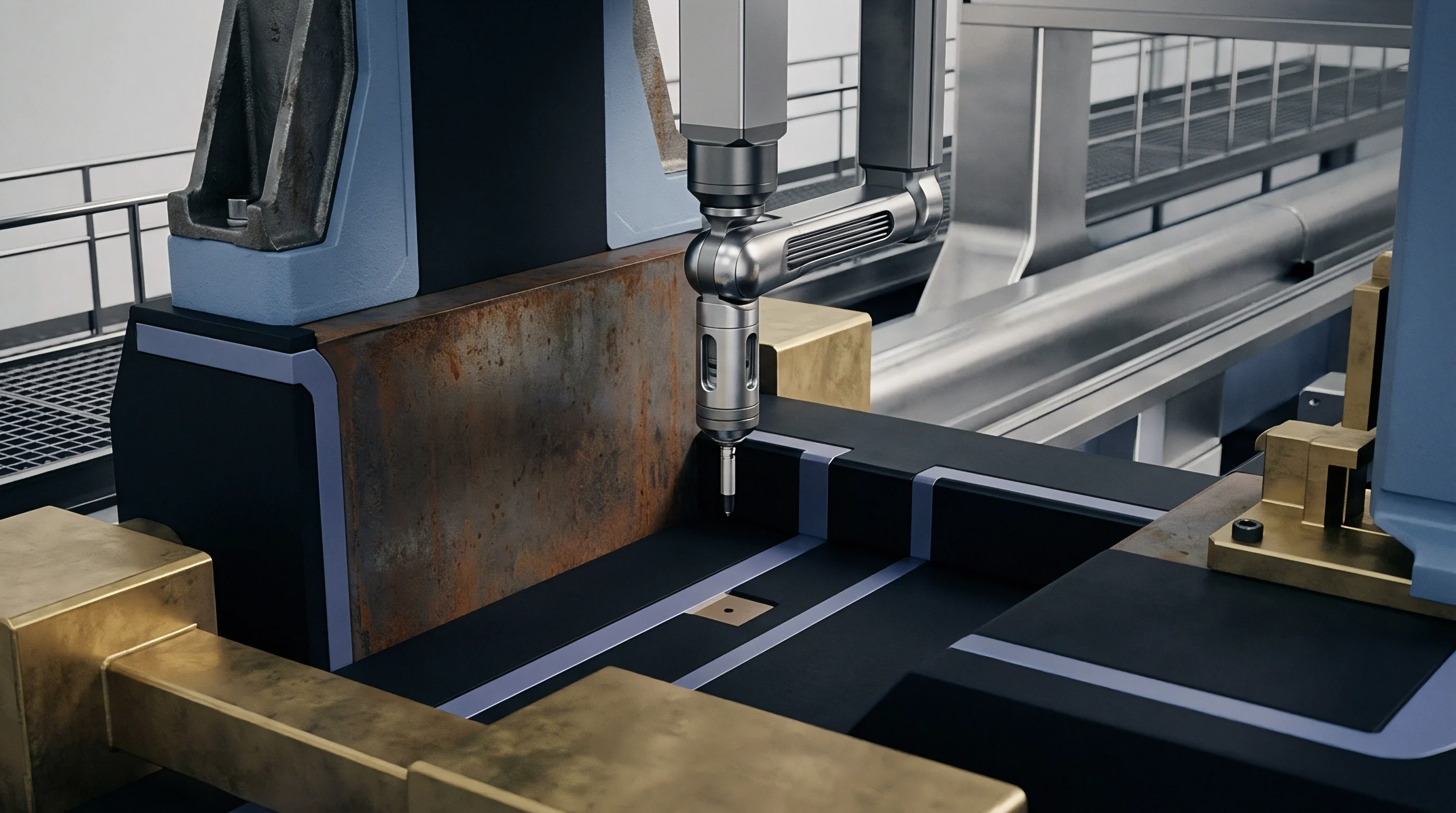
Oven
Vaporization coulometry requires precise hardware to isolate the sample from ambient humidity and transfer desorbed volatiles into the cell. The setup consists of four core components: a sample introduction lock, a tubular resistance or induction furnace, a heated transfer line, and a sealed titration cell fitted with platinum electrodes. Samples are loaded in quartz or borosilicate glass boats, or crimped aluminum vials.
Carrier gas from a cylinder or dry air generator passes through molecular sieves (type 3A or 4A) and phosphorus pentoxide to pull residual moisture below 0.5 micrograms per liter, keeping background drift under 1.0 microgram of water per minute.
Sample loading must block room air completely. Opening an entry port exposes the chamber to lab air holding 5,000 to 15,000 parts per million of absolute humidity. Sealed vials with motorized septum-piercing needles offer the best protection.
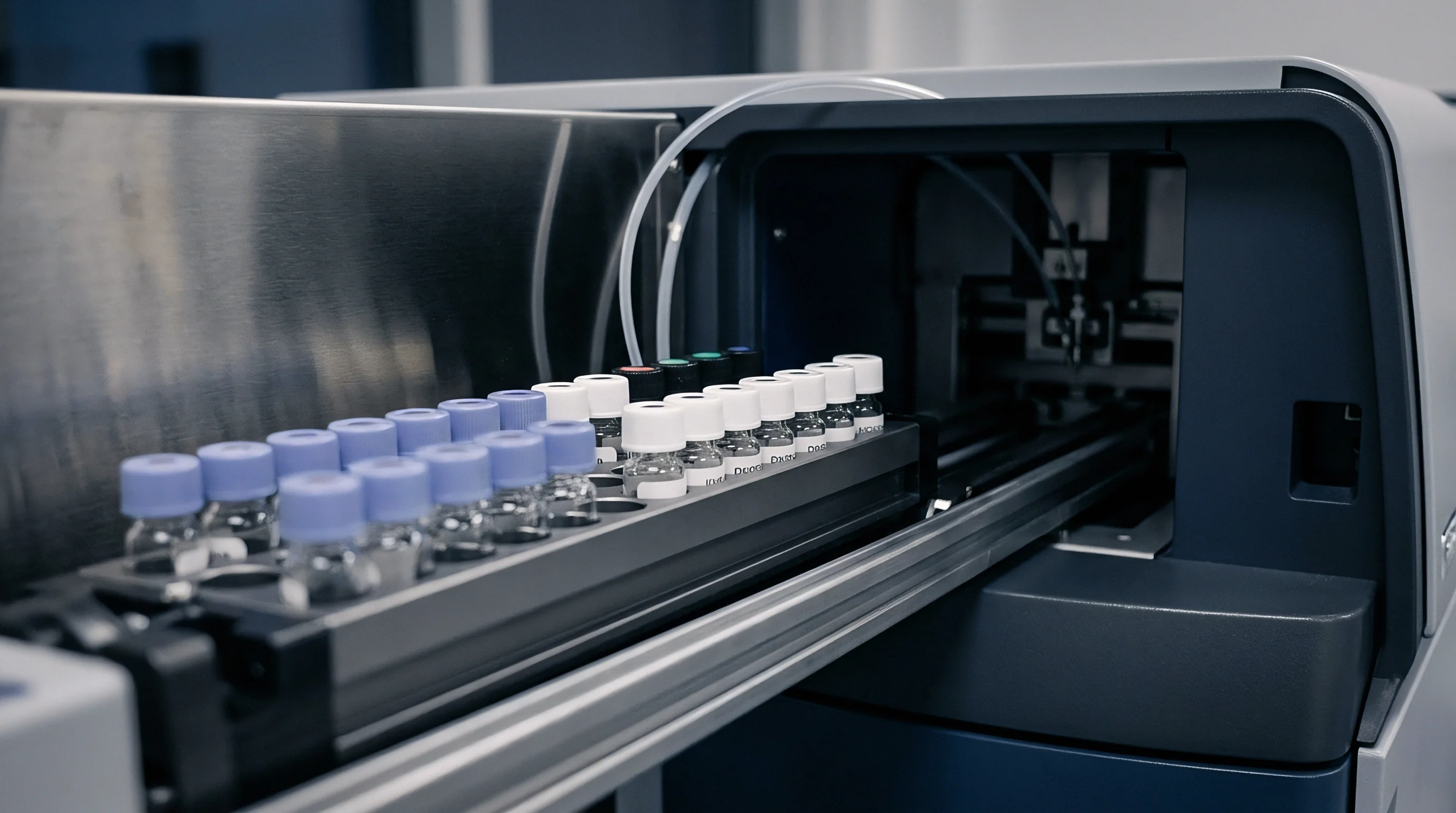
Pellets are weighed into 10- or 20-milliliter glass vials inside a dry box or right at the desiccant hopper, then sealed and placed on the autosampler rack. A hollow coaxial needle pierces the PTFE-faced butyl rubber septum, introducing dry carrier gas through an outer sheath to pressurize and sweep the headspace before exiting through the inner bore to the cell. A septum leak or needle misalignment of just 0.5 millimeters allows carrier gas to bypass the vial, causing incomplete recovery and wild baseline swings.
Furnace geometry dictates the thermal ramp felt by the polymer. In tubular designs, the central ten centimeters of the quartz tube must stay uniform within plus or minus 1.0 degree Celsius. Localized hot spots accelerate transesterification in nearby pellets while others lag below the desorption setpoint.
Because a 10-gram glass boat introduces substantial thermal mass, its temperature lags by three to six minutes upon insertion into a 180-degree furnace. The sensor must sit right next to the boat rather than on the outer casing; otherwise, gradual heating broadens the desorption peak until it overlaps the start of solid-phase esterification.
The transfer line between furnace and titration vessel is a frequent source of error. Made of high-purity PFA or deactivated fused silica (1.0 to 2.0 millimeter internal diameter), this line must be heated along its entire length to at least 20 degrees Celsius above the highest-boiling volatile, and never below 110 degrees Celsius. Cold spots at fittings or entry ports cause water and high-boiling diols to condense on the inner walls.
Adsorbed moisture then bleeds off slowly over hours, causing elevated blank drift rates and tailing peaks that fail endpoint detection.
The table below outlines operational targets for oven sub-systems needed to maintain baseline stability and suppress solid-phase transesterification.
| Sub-System | Critical Parameter | Target Specification | Analytical Failure Mode |
|---|---|---|---|
| Carrier Gas Delivery | Inlet Dew Point | Below -70 C at 2.0 bar | Excessive initial drift baseline (>10 ug/min) |
| Flow Controller | Mass Flow Stability | 150 +/- 2 ml/min N2 | Cell pressure fluctuations; unstable electrochemical signal |
| Furnace Zone | Thermal Uniformity | +/- 1.0 C across 100 mm | Localized thermal degradation and erratic esterification onset |
| Transfer Tubing | Wall Temperature | 130 +/- 2 C throughout | Cold-spot condensation of moisture and volatile diols |
| Sample Chamber | Dead Volume | Less than 15 ml | Peak broadening; extended sweep times; increased parasitic integration |
| Titration Cell | Generator Electrode | Diaphragm-less type | Diaphragm clogging by sublimed oligomers and diol degradation salts |
Electrode design directly affects calibration stability when testing polyesters. Diaphragm cells rely on a fine glass frit to separate anolyte and catholyte solutions. At high oven temperatures, volatile cyclic oligomers and additives sublime from the pellets and enter the cell, accumulating inside the micro-pores of the frit.
Over twenty to thirty runs, electrical resistance across the frit can surge from 100 ohms to over 5,000 ohms. This drives the generator circuit to its voltage limit, distorting current pulses and shifting the calibration factor.
Electrode frit fouling by sublimed cyclic oligomers increases generator electrical resistance, corrupting current integration during coulometric endpoint detection.
Diaphragm-less electrodes skip the ceramic frit, using a single chamber with cathode geometry designed to prevent iodine re-oxidation. They resist oligomer buildup and require far less cleaning in compounding applications. However, diaphragm-less cells react poorly to reducing species formed during thermal degradation.
If oven temperatures cause thermal cracking, gaseous reducing agents enter the cell and react at the cathode, producing a negative charge bias. Operators have to balance electrode selection against the thermal limits of the resin.
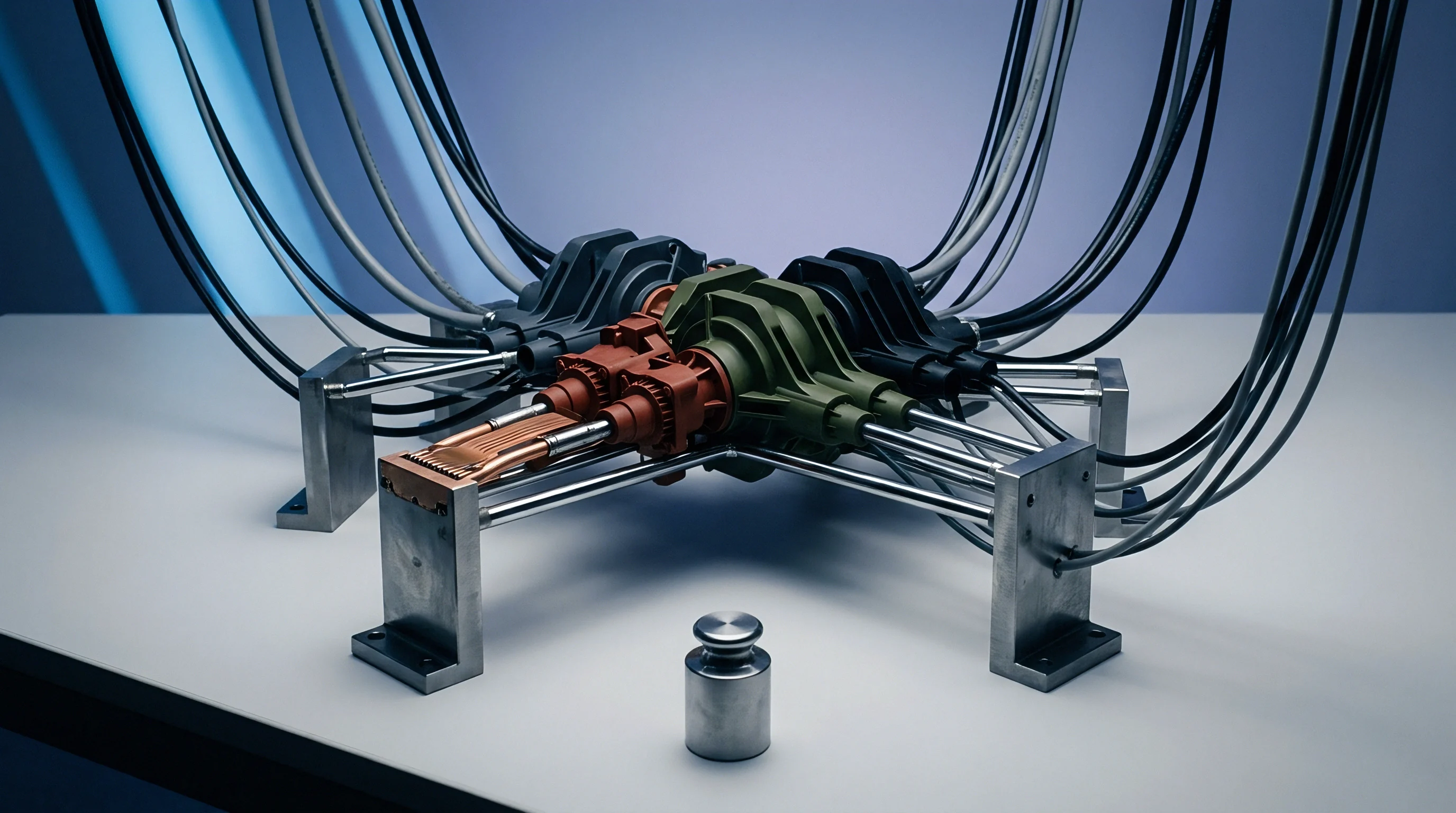
What Carrier Gas Dew Point Prevents Baseline Drift?
Carrier gas dew point dictates the lowest background drift rate an instrument can achieve. Grade 5.0 nitrogen contains up to 3.0 parts per million moisture by volume (an atmospheric dew point around minus 67 degrees Celsius), delivering 0.48 micrograms of water per minute into the cell at 200 milliliters per minute flow. Unpurified industrial nitrogen creates a background drift of 5 to 10 micrograms per minute.
While software attempts to subtract baseline drift, pressure swings in the gas manifold cause baseline fluctuations that translate to errors of plus or minus 20 parts per million on a one-gram sample.
Eliminating gas interference requires a two-stage drying station just before the mass flow controller. A regenerated 13X or 4A molecular sieve bed removes bulk water and hydrocarbons, followed by phosphorus pentoxide on an inert matrix. This setup pushes the gas dew point below minus 85 degrees Celsius (under 0.1 parts per million moisture), pulling cell baseline drift down to 0.2 ~ 0.5 micrograms of water per minute.
At that baseline, the onset of solid-phase esterification becomes clearly visible, marking the exact moment chemical condensation overtakes physical desorption.
Gas composition also alters transesterification rates. Synthetic air with 20 percent oxygen accelerates oxidative scission in polyether segments of thermoplastic copolyester elastomers (TPC-ET) and polyamides, generating carboxylic acid chain ends and organic peroxides as low as 130 degrees Celsius. These oxidation products distort titration readings.
Grade 6.0 nitrogen (oxygen under 0.5 parts per million) suppresses oxidative scission, limiting water evolution strictly to anaerobic solid-phase esterification. Ultra-pure nitrogen is mandatory for quantitative moisture audits on hydrolytically sensitive resins.
Lax carrier gas drying ruins the credibility of any analytical certificate issued by the lab.
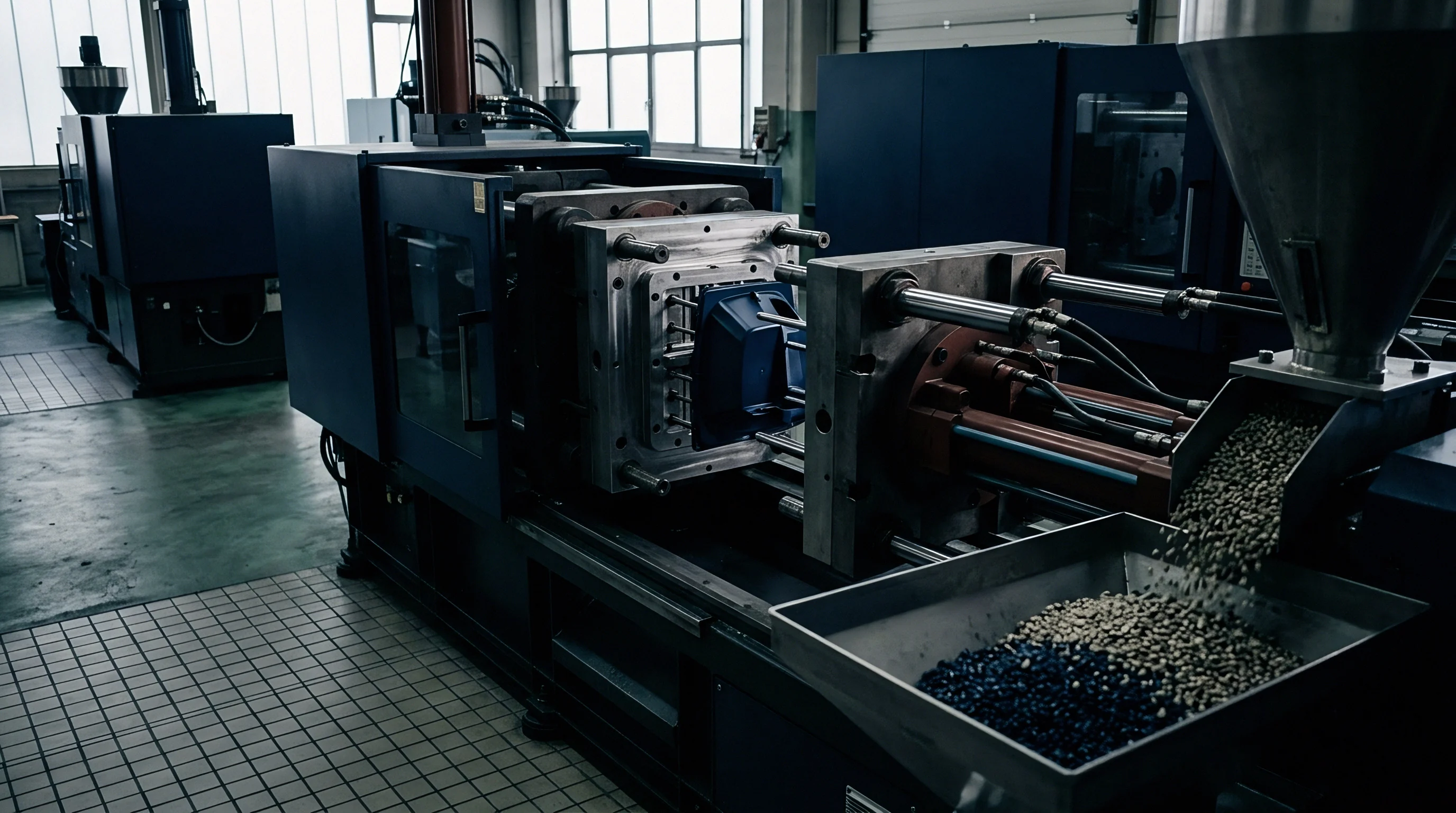
Isotherm
Isothermal profiling separates physical desorption kinetics from solid-phase condensation. Single-temperature runs heat the sample to a set point and hold until drift drops below a threshold or a timer runs out. For resins undergoing solid-phase esterification, single isothermal holds are analytically blind ~ they blend the exponential decay of desorbed moisture with the linear or rising signal of condensation water.
Reliable protocols require stepped isothermal extraction curves across temperatures leading up to the polymer melting point.
Plotting water evolution rate (micrograms per minute) against time (minutes) for semi-crystalline polyester pellets reveals two kinetic regimes. During the first one to six minutes, physically dissolved moisture diffuses out of the amorphous domains, producing a rapid peak followed by an exponential Fickian decay. Between seven and ten minutes, the decay flattens into a horizontal or gently sloping plateau.
This plateau marks steady-state water production from solid-phase esterification, with its height determined by sample mass, catalyst activity, chain-end concentration squared, and furnace temperature.
To establish the true moisture content of a resin lot without transesterification bias, the analyst must execute a two-step temperature extraction or apply a linear baseline subtraction method:
- Establish the Initial Drift by purging the empty sample chamber at the extraction temperature until background drift stays below 1.0 microgram per minute for at least five minutes.
- Introduce the Sample Boat into the furnace, recording coulometric current at intervals of 1.0 second or faster to capture the rising edge of the desorption peak.
- Monitor the Desorption Decay until exponential decay flattens into the linear reaction regime, usually between eight and twelve minutes for standard 3.0-millimeter pellets.
- Fit a Linear Regression to steady-state data collected between twelve and twenty minutes, extrapolating the reaction line back to time zero.
- Integrate the Peak Area above the extrapolated reaction line, calculating physically bound moisture while excluding charge beneath the reaction baseline.
Isolating physical moisture mathematically requires separating the diffusion equation solution from zero-order reaction kinetics. Total water evolution is treated as the sum of physical flux (a Fourier series for diffusion from a sphere or cylinder with an Arrhenius diffusion coefficient) and reaction flux (a constant rate parameter at isothermal hold). When testing a lot across 140, 160, 180, and 200 degrees Celsius, true physical moisture values stay identical while the reaction rate parameter increases exponentially.
If reported physical moisture climbs with temperature, the baseline correction failed and reaction water is still inflating the peak.
A trial from a compounding line qualification shows how much this correction matters. Prime PBT extrusion resin (1.30 dl/g intrinsic viscosity) was sampled from a desiccant dryer running at a minus 45 degrees Celsius dew point. Target moisture for this grade is capped at 150 parts per million to avoid IV loss during sheet extrusion.
A 2.00-gram sample loaded into a coulometer at 190 degrees Celsius under 150 ml/min nitrogen flow yielded 560 micrograms of water over 18 minutes ~ an apparent reading of 280 parts per million. Uncorrected, this result would cause a supervisor to halt production and extend drying cycles.
Time-resolved current data tells a different story. From zero to eight minutes, the physical desorption peak peaked at 68 micrograms per minute (at 2.5 minutes) before decaying to 14 micrograms per minute at 8.0 minutes. Between 10.0 and 18.0 minutes, moisture release flattens to 11.2 micrograms per minute (5.60 micrograms per gram per minute).
With a carrier gas blank of 0.8 micrograms per minute, net parasitic condensation accounts for 10.4 micrograms of reaction water per minute.
The math makes the bias obvious. Total integrated water was 560 micrograms. The carrier blank contributed 14.4 micrograms (0.8 micrograms per minute over 18 minutes), while solid-phase esterification generated 187.2 micrograms (10.4 micrograms per minute over 18 minutes).
Subtracting both leaves 358.4 micrograms of actual physical moisture in the 2.00-gram sample, or 179.2 parts per million. While slightly over the 150 parts per million limit, the true moisture is more than 100 parts per million lower than the raw reading. Correcting the baseline shows an overshoot of just 29 parts per million, not the massive 130 parts per million spike indicated by the raw data.
The table below shows comparative test data for three industrial polyesters across four isothermal temperatures, illustrating how parasitic water generation spikes near the melting point.
| Polymer Type | Oven Temp (C) | Uncorrected Moisture (ppm) | Reaction Rate (ug H2O/min) | Corrected Moisture (ppm) | Analytical Error (%) |
|---|---|---|---|---|---|
| PET Bottle Resin | 150 | 112 | 0.15 | 108 | +3.7 |
| PET Bottle Resin | 170 | 134 | 0.82 | 110 | +21.8 |
| PET Bottle Resin | 190 | 188 | 2.45 | 109 | +72.5 |
| PET Bottle Resin | 210 | 295 | 6.10 | 112 | +163.4 |
| PBT Molding Grade | 140 | 85 | 0.22 | 81 | +4.9 |
| PBT Molding Grade | 160 | 108 | 1.15 | 83 | +30.1 |
| PBT Molding Grade | 180 | 162 | 3.40 | 82 | +97.5 |
| PBT Molding Grade | 200 | 278 | 8.90 | 84 | +230.9 |
| PLA Biopolymer | 120 | 245 | 0.45 | 238 | +2.9 |
| PLA Biopolymer | 140 | 310 | 2.80 | 241 | +28.6 |
| PLA Biopolymer | 160 | 520 | 11.40 | 244 | +113.1 |
Every resin grade has a threshold temperature below which analytical error stays under five percent: 150 to 160 degrees Celsius for PET, 140 to 150 degrees Celsius for PBT, and 120 to 125 degrees Celsius for PLA (given its low thermal stability and high catalyst activity). Testing PLA at 160 degrees Celsius more than doubles apparent moisture, making uncorrected readings useless for quality control.
Choosing an isothermal setpoint requires balancing reaction suppression against test duration. Lowering oven temperatures reduces water diffusion through pellets, extending run times. At 110 degrees Celsius, a 3.0-millimeter PET pellet takes over 45 minutes to desorb 95 percent of its water ~ a window so long that drift integration and baseline instability introduce major errors.
The ideal setpoint is the highest temperature where solid-phase reaction rates stay under 0.3 micrograms of water per gram per minute, using enough sample mass that physical desorption accounts for at least 80 percent of total charge.
Testing incoming pellets with a stepped isothermal protocol quickly flags lots carrying abnormal catalyst residues or degraded end-group balances.
Single-point certificates run at 200 degrees Celsius bury the desorption peak under a wave of condensation water, making wet material appear to meet specifications. Time-resolved current profiles expose this artifact and reveal the true moisture content.
While ASTM D6869 covers moisture determination in plastics via coulometric regeneration, it lacks specific baseline subtraction rules for reactive polyesters. Section 10.4 allows endpoint selection based on time or drift rate, leaving room for labs to count condensation water as moisture. Until standards mandate linear reaction baseline subtraction for reactive polymers, buyers must enforce strict temperature limits and deconvolution methods directly in purchase contracts.

Specification
Commercial contracts for moisture-sensitive resins hinge on parts-per-million limits that decide whether shipments pass receiving inspection. An automotive-grade PBT data sheet might guarantee incoming moisture below 0.05 percent by weight (500 parts per million) and recommend a processing limit of 0.02 percent (200 parts per million). If buyer and supplier test under different temperatures, gas flows, or endpoint algorithms, reported moisture on the exact same gaylord can differ by 100 to 300 parts per million.
That discrepancy turns routine QC into disputes over hundreds of thousands of dollars in resin shipments.
To prevent disputes, procurement contracts for polyesters, polyamides, or polycarbonates must define exact test parameters alongside numerical moisture limits. Simply citing ISO 15512 or ASTM D6869 is not enough: both allow multiple extraction methods (manometric, vaporization coulometric, calcium hydride) and grant broad flexibility on oven temperatures. ISO 15512 Method B2 (Vaporization Coulometry) permits temperatures from 120 to 220 degrees Celsius depending on resin type, yet fails to standardize baseline corrections for transesterification drift.
Contract specifications must define testing protocols with precise operational limits. The table below outlines mandatory parameters that should accompany moisture guarantees on Certificates of Analysis (COA) for polyesters.
| Contract Parameter | Mandated Value | Permissible Tolerance | Commercial Consequence of Omission |
|---|---|---|---|
| Extraction Temperature | 155.0 C (PET) / 145.0 C (PBT) | +/- 2.0 C | Oven overheating causes false rejection via condensation bias |
| Carrier Gas Specification | UHP Nitrogen (Grade 5.5) | Dew point < -70 C | High ambient baseline obscures low-ppm moisture differences |
| Carrier Gas Flow Rate | 150 ml/min | +/- 5 ml/min | Variable sweep rates shift desorption peak kinetics |
| Sample Mass | 2.50 grams | +/- 0.20 grams | Small samples amplify tare and background drift errors |
| Endpoint Algorithm | Linear reaction drift subtraction | Mandatory math fit | Uncorrected integration over-reports moisture by 50 to 250 ppm |
| Maximum Extraction Time | 12.0 minutes | + 1.0 / – 0.0 min | Extended runs integrate excessive solid phase reaction charge |
| Vial Handling Protocol | Pre-conditioned, crimped septum | Dry-box filled | Atmospheric moisture contamination during sample transfer |
Supply agreements should include an analytical reconciliation clause for incoming inspection disputes. If a buyer finds moisture above COA limits, referee testing proceeds under the exact parameter schedule in the contract. Samples must be drawn from unbreached barrier packaging using a sealed probe, transferred to dry-nitrogen-purged vials, and crimped within fifteen seconds.
Referee instruments must be calibrated against certified standards ~ like sodium tartrate dihydrate (15.66 percent water by weight) or certified capillaries ~ with ovens held strictly at contract temperature ceilings.
Analytical discrepancies carry direct financial consequences in production. Processing wet polyester causes hydrolytic degradation in the barrel, where water cleaves ester linkages at 250 to 290 degrees Celsius and reduces molecular weight. For PBT structural parts, dropping intrinsic viscosity from 1.20 dl/g to 0.95 dl/g cuts notched Izod impact strength from 55 Joules per meter down to 25 Joules per meter, triggering brittle failures during cold-temperature impact tests.
Conversely, over-drying resin due to false positives causes thermal oxidation, increases yellowness index (CIE b ), wastes up to 0.15 kilowatt-hours per kilogram in dryer energy, and bottlenecks compounding lines with unnecessary eight-hour drying cycles.
In PET preform molding for carbonated soft drinks, moisture control directly impacts acetaldehyde (AA) formation. Acetaldehyde forms when PET chains break down during melting. Over-drying PET to chase raw Karl Fischer readings below 30 parts per million requires running dryers at 175 degrees Celsius for six to eight hours, depleting stabilizers and elevating carboxyl end groups.
In the molding screw, this degraded polymer generates over 8.0 parts per million of acetaldehyde in the preform wall ~ exceeding sensory thresholds for bottled water and triggering lot rejections.
ISO 15512 Method B2 establishes the framework for vaporization coulometry, but the contract line fixes the temperature ceiling and the baseline subtraction method that protect the invoice.
Rigorous inspection dossiers protect both parties by grounding quality control in real physical data rather than testing artifacts. Mandating identical instrument files, baseline deconvolution scripts, and calibration standards for both sides when structuring supply agreements for engineering polyesters prevents standoffs where railcars sit idle while quality managers argue over phantom moisture generated inside testing ovens.
Section 8.2 of the standard supply contract specifies that drift exceeding 2.0 micrograms of water per minute after ten minutes of extraction must be subtracted as reaction background before calculating compliance moisture.