Transient Entanglement Disentanglement Kinetics in Deep Draw Thermoforming under Multiaxial Strain Gradients
Matching plug speed to polymer disentanglement kinetics prevents corner thinning and optimizes wall thickness in deep draw thermoforming.

Web
Radiant heaters drive thermal energy into high-impact polystyrene or polypropylene sheet stock until core temperatures clear the glass transition point. Because heat enters through the surfaces, a thermal gradient develops across the sheet thickness. Molten polymer chains stay bound within a dense physical network where neighboring molecules tangle together.
These entanglements function as temporary crosslinks, giving the softened sheet the melt strength and elasticity needed to survive early mechanical handling.
Deformation accelerates the moment the plug assist drives into the sheet, pulling the stock in three directions under complex boundary constraints. Initial tool contact chills the plastic at the plug tip, locking that orientation in place while the surrounding material continues drawing under combined biaxial tension and shear. On high-speed deep draw packaging lines, extensional strain rates reach between one and ten per second.
At that speed, the pace of deformation outstrips the natural relaxation rate of the polymer chains.
| Polymer Grade | Glass Transition Temp (°C) | Rouse Time tau_R (s) | Reptation Time tau_d (s) | Critical Strain Rate (s^-1) |
|---|---|---|---|---|
| High-Impact Polystyrene (HIPS) | 102 | 0.08 | 2.40 | 0.42 |
| Amorphous PET (A-PET) | 78 | 0.12 | 4.10 | 0.24 |
| Polypropylene Homopolymer (PP-H) | -10 (Tm = 165) | 0.03 | 0.85 | 1.18 |
| Polycarbonate (PC) | 145 | 0.25 | 8.50 | 0.12 |
Further into the cavity, tensile forces align the entangled chains along the draw path. When applied shear and extensional loads overcome intermolecular friction, the entanglement junctions slip. That sudden drop in network density alters local viscosity across the forming profile.
Zones absorbing the highest strain rates disentangle quickly and soften under load, while cooler, stiffer sheet centers resist the draw and force hotter adjacent areas to take up excess deformation.
Edge cracking and unexpected corner thinning trace less to resin moisture or ambient heater drift than to non-linear entanglement loss under aggressive plug descent speeds.

Reptation
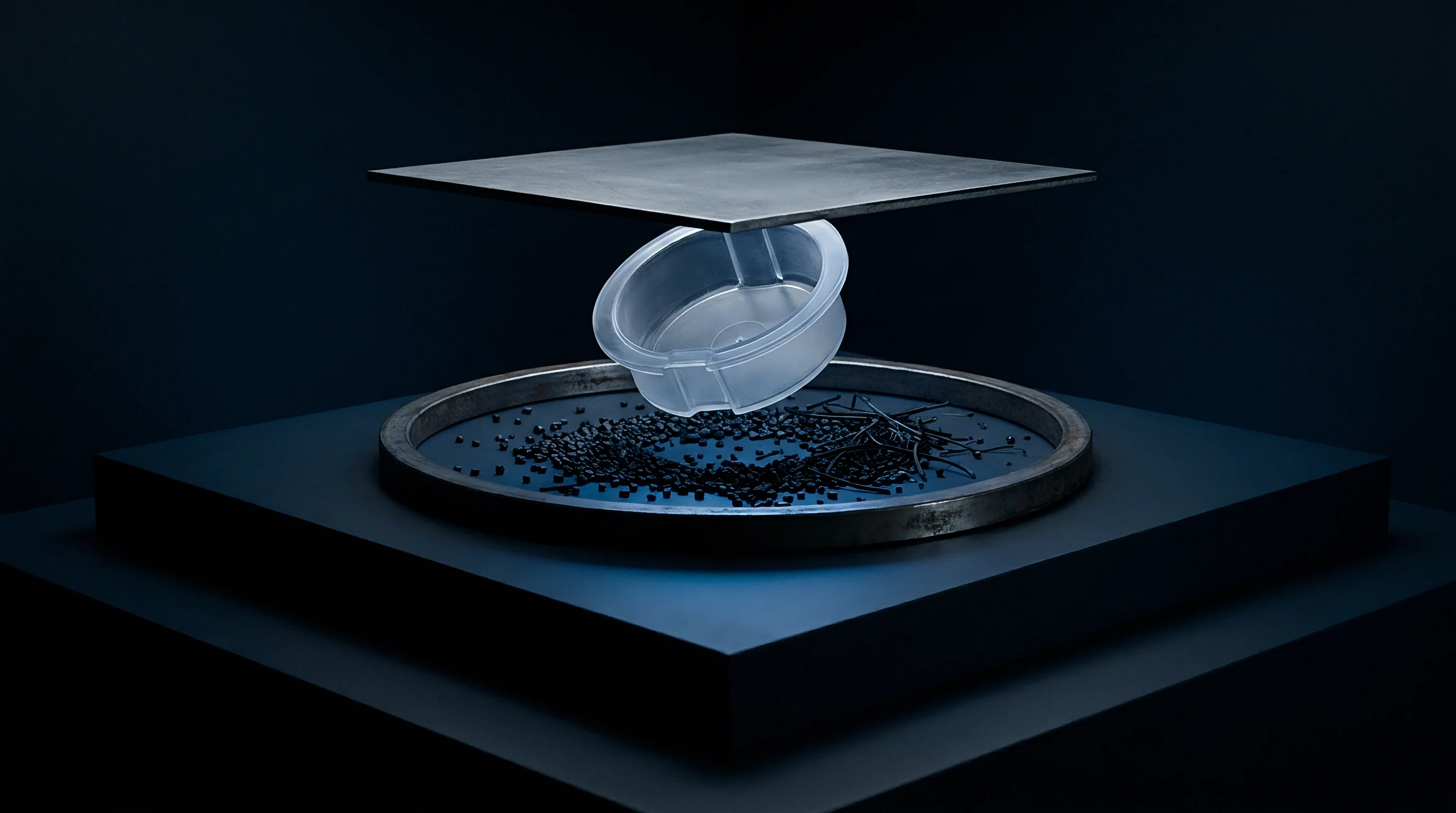
In polymer dynamics, entangled molecular chains are treated as confined within an idealized tube defined by surrounding molecules. Under equilibrium conditions, thermal motion drives the random, snake-like diffusion of chains through these constraints across a characteristic duration termed the reptation or disengagement time. If external forces pull the polymer faster than this disengagement threshold, stress builds directly inside the molecular network.
Transient Network Destruction Mechanics
Extensional deformation during plug travel pulls polymer chains into alignment with the principal strain axes. How fast entanglements disengage depends on the local strain rate tensor alongside the molecular weight distribution of the resin. At low forming speeds, chains slide past each other while keeping their equilibrium network intact.
Higher speeds drag chains straight out of their confinement tubes, triggering a sharp drop in active topological entanglements.
- Initial Elastic Network Alignment occurs on first plug contact, stretching entangled chains between topological nodes while retaining initial network density.
- Critical Strain Rate Crossing takes place once deformation speed outpaces tube disengagement, pulling chains free of their original confines.
- Transient Viscosity Drop accelerates localized strain rates within zones bearing the sharpest shear and extensional stress gradients.
- Network Destruction Limit marks extensive disentanglement where the material ceases rubbery strain hardening and transitions into unrecoverable plastic flow.
Disentanglement kinetics determine whether a polymer strain hardens or softens during forming. Strain hardening protects wall consistency by raising flow resistance as the sheet stretches; fast disentanglement drops extensional viscosity and triggers localized necking. Managing this balance sets the ceiling on achievable draw ratios in deep packaging cavities.
Sheet regions subjected to deformation rates faster than molecular disengagement exhibit momentary strain hardening, whereas slower strain rates yield localized wall thinning.
When forming speeds push chains past their disengagement threshold, lowering sheet temperature controls localized necking far better than accelerating the plug.

Multiaxis
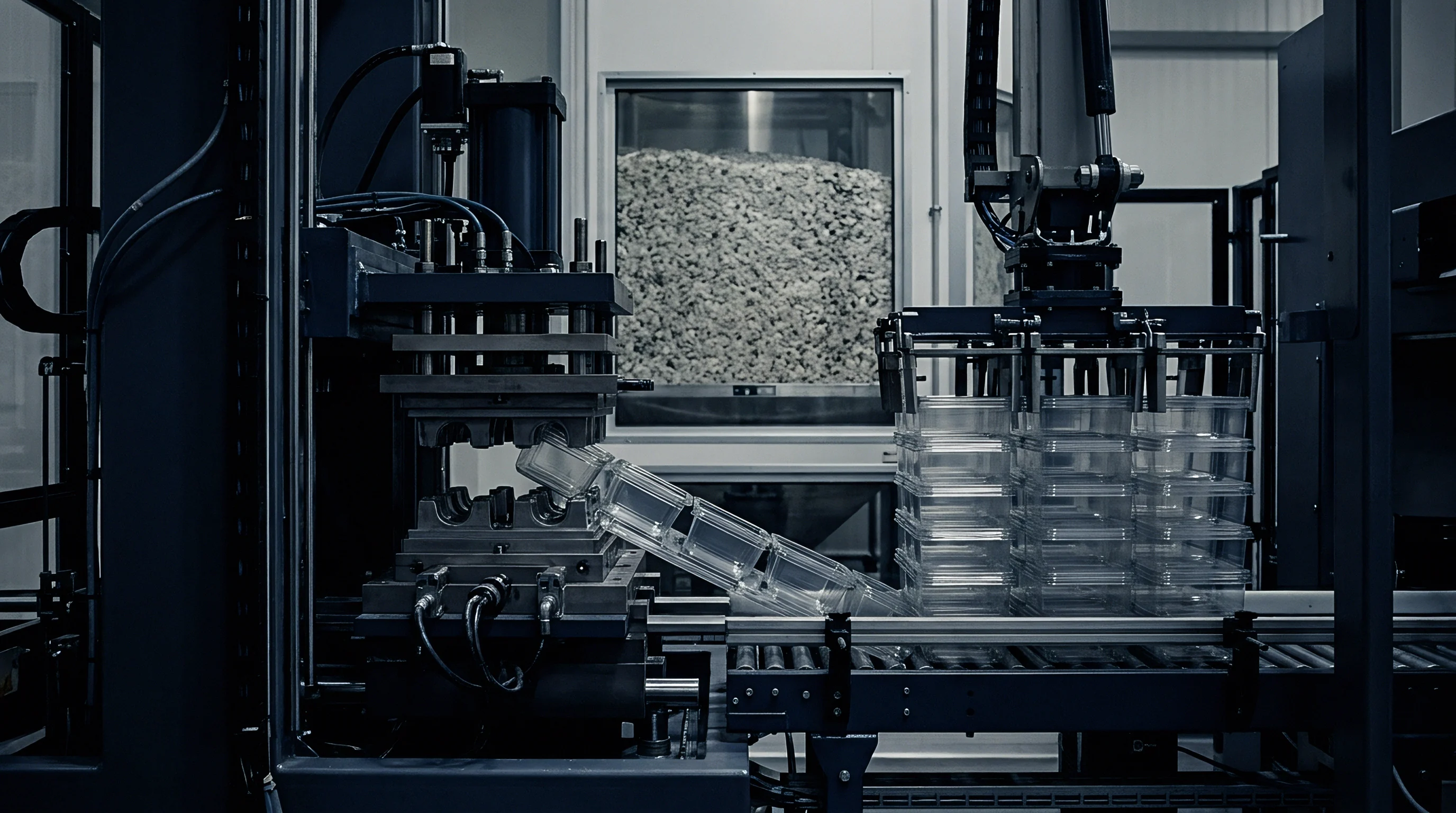
Deep draw cup forming exposes heated sheet to an uneven multiaxial stress field that shifts across the cavity geometry. Pre-blow air pressure subjects the bottom face to balanced biaxial extension, the corner radii carry planar shear, and sidewalls draw under mixed uniaxial and asymmetric biaxial tension. Dynamic entanglement density drops unevenly across these zones in response to the local strain rate tensors.
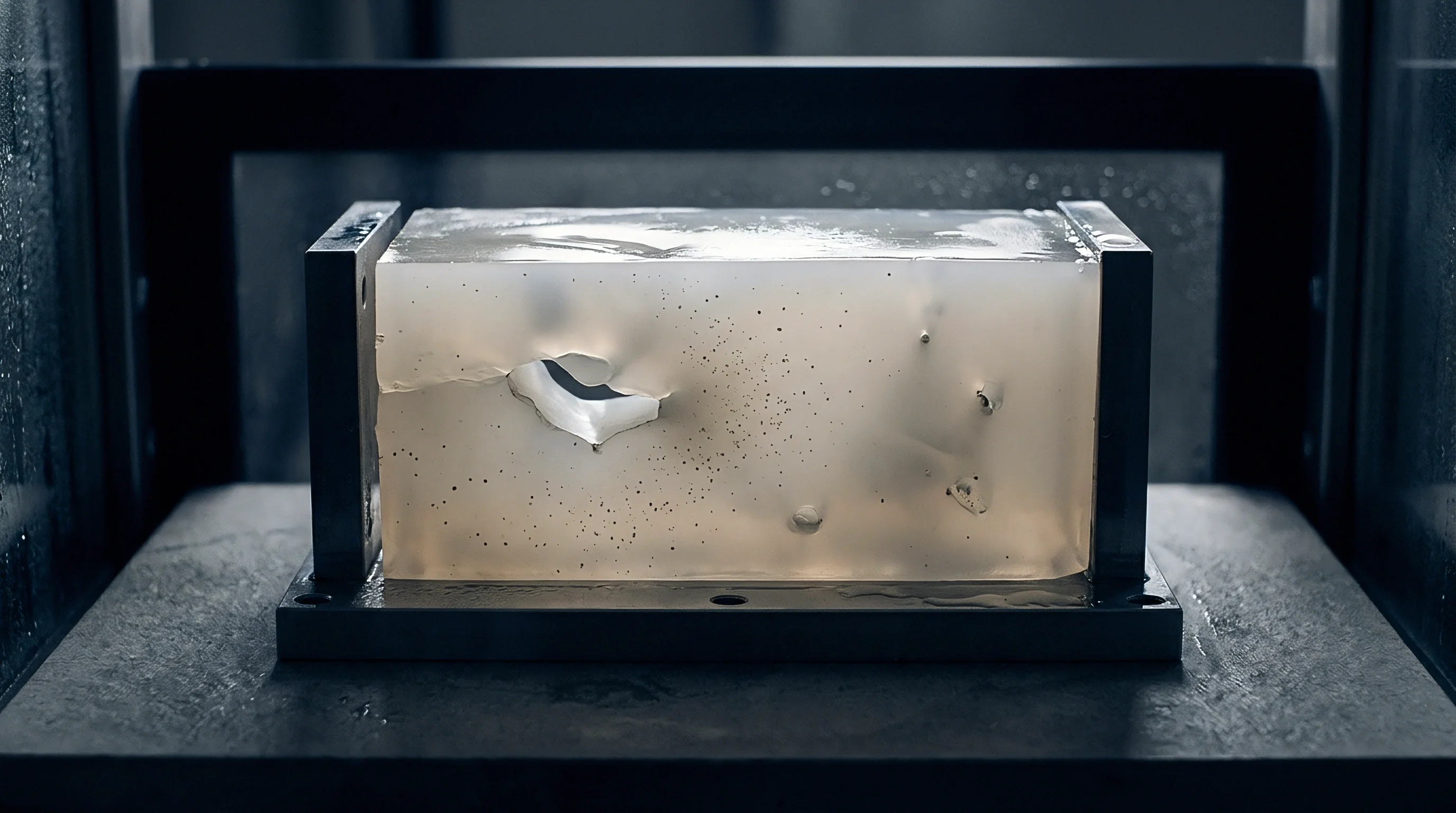
How Does Strain Rate Hardening Prevent Corner Necking?
Container corners carry the highest risk of thinning out and tearing. As plastic stretches over the tool radius, extensional strain accelerates. If the local draw rate exceeds the Rouse relaxation rate of the resin, chains cannot disengage fast enough to relieve tension, preserving high network stress.
That temporary stress rise pushes deformation out into adjacent stock, distributing the draw rather than concentrating necking across a narrow strip.
Take a 150 mm deep cup formed from 2.0 mm high-impact polystyrene sheet at a 3.0:1 draw ratio, with a 50 mm bottom diameter and a 5 mm corner radius. With the plug moving at a steady 200 mm per second, the extensional strain rate near the corner radius reaches roughly 1.2 per second. The Deborah number relative to Rouse relaxation stays below unity.
Entanglements disengage quickly during the stroke, prompting severe localized strain softening. Corner thickness falls to 0.22 mm, leaving the container prone to collapse under vertical stacking loads.
Pushing plug velocity to 600 mm per second on that same tooling changes the dynamic completely. Strain rates climb to 3.6 per second, driving the Deborah number well above unity. Chains remain oriented without immediate disentanglement, producing strong transient strain hardening.
The corner holds at 0.41 mm thickness ~ an eighty-six percent increase in retained corner stock that preserves structural integrity through the bottom transition.
- Corner Radius Dimensioning demands minimum inner radii equal to twice sheet thickness to smooth multiaxial stress spikes across the transition zone.
- Plug Velocity Calibration sets initial penetration speed high enough to exceed the material Rouse disengagement threshold during early contact.
- Differential Pre-Blow Pressure matches pre-stretching bubble height to cavity depth to minimize planar strain concentration on the bottom face.
- Thermal Profile Zoning establishes cooler sheet temperatures over central plug contact areas while maintaining elevated heat at outer boundary zones.
Mismatched strain rates across multiaxial deformation zones lead to localized necking, uneven wall distribution, and structural collapse during top-load testing.


Rupture
Stretching past critical strain limits produces macroscopic sheet tears. When severe disentanglement reduces network density below the level required to transmit tensile stress through the melt, microscopic voids open in high-stress areas and coalesce into visible tears along primary strain vectors. This failure boundary sets practical limits on part depth and corner sharpness in multi-cavity tooling.

Strain Rate Boundaries and Sheet Rupture
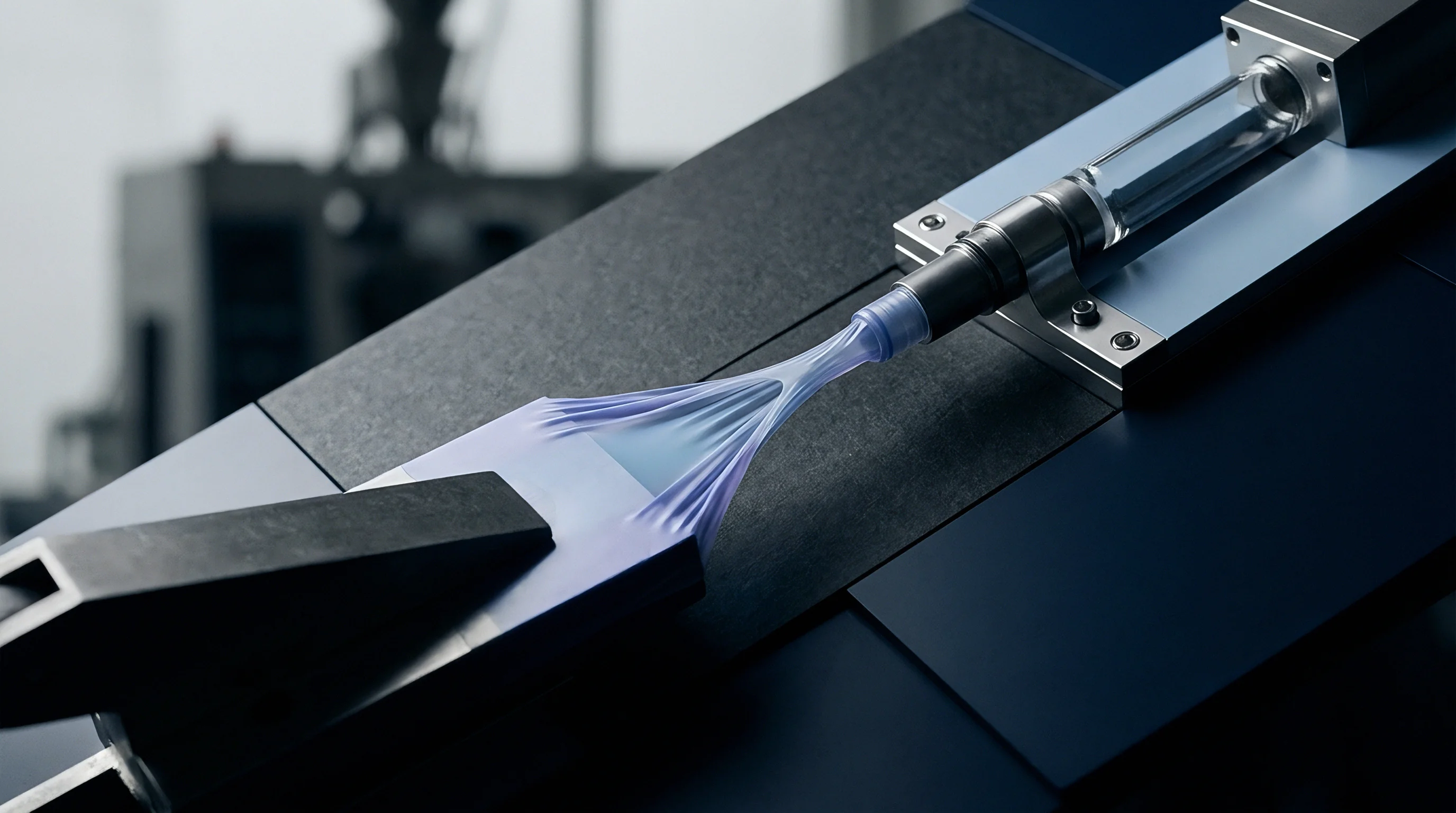
Core temperature largely governs where stable disentanglement turns into web failure. Warmer sheet cores shorten molecular disengagement times, bringing on disentanglement at lower strain rates. A cold core resists stretch but risks brittle melt rupture if localized stresses cross resin yield limits.
Keeping the process inside a stable thermal window prevents this shift into catastrophic tearing.
| Forming Temperature (°C) | Plug Speed (mm/s) | Peak Strain Rate (s^-1) | Corner Wall Thickness (mm) | Failure Mode Observed |
|---|---|---|---|---|
| 145 | 150 | 0.90 | 0.18 | Brittle Corner Tear |
| 155 | 300 | 1.85 | 0.38 | Stable Ductile Draw |
| 155 | 600 | 3.70 | 0.44 | Stable Strain Hardened |
| 165 | 600 | 3.75 | 0.15 | Localized Softening Necking |
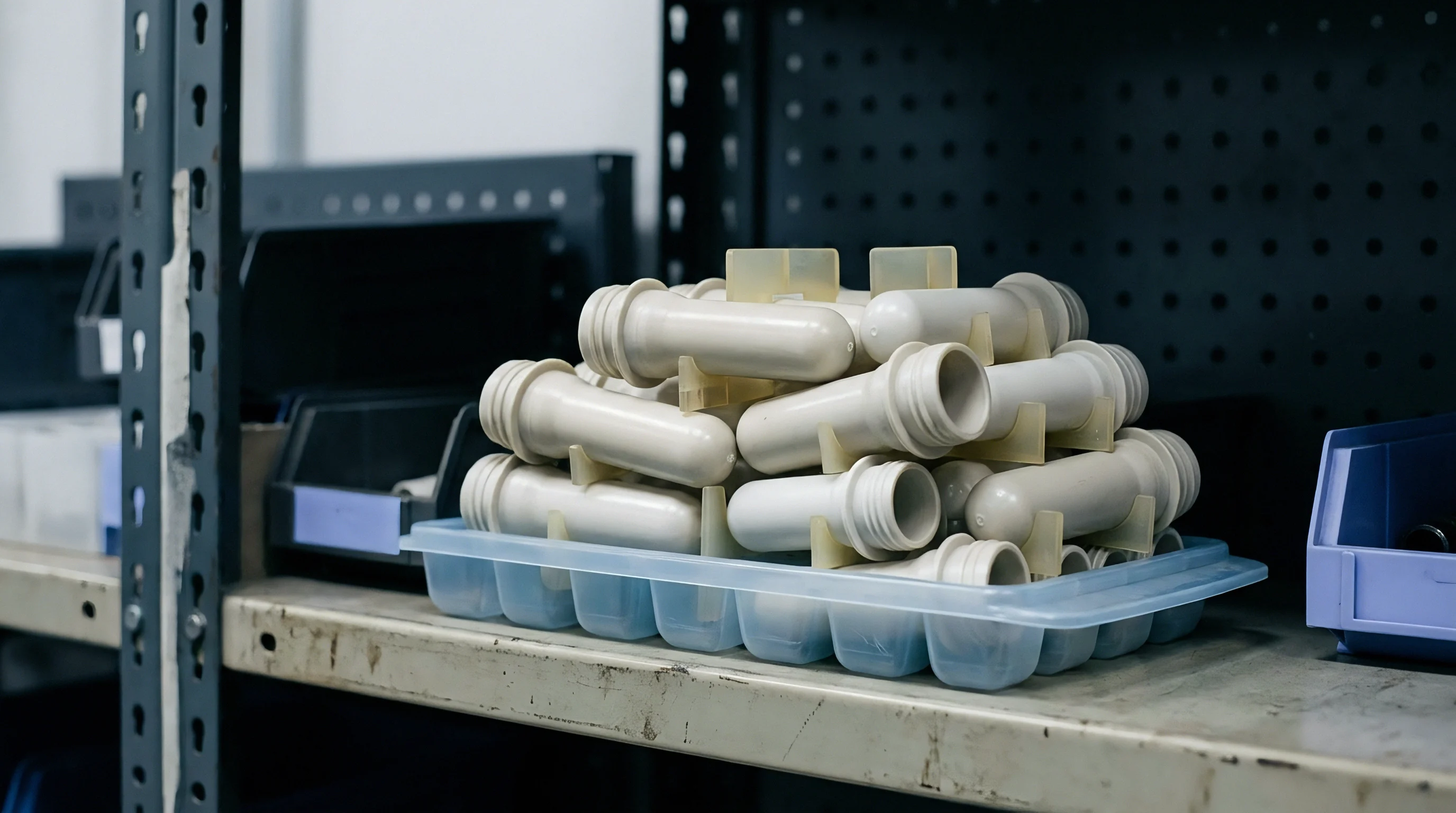
Contact with the cold mold steel halts disentanglement immediately. Heat dumps into the tool at rates up to five hundred watts per square meter kelvin, vitrifying the polymer and locking the remaining network into final part dimensions. If cavity contact is delayed, unquenched disentanglement continues, thinning out the lower sidewalls.
A fifty degree drop in sheet core temperature elevates Rouse disengagement time by a factor of four, shifting the rupture boundary to significantly lower strain rates.
Standard supply specifications following DIN 16742 Group 140 enforce maximum allowable corner thinning limits of thirty percent from nominal wall thickness, reallocating part rejection risk to the moulder when thermal profiling fails.
Window
Keeping thermoforming stable requires containing deformation inside a predictable viscoelastic envelope. Tool builders select plug materials with specific thermal properties to control heat transfer during the initial stroke. Low-conductivity syntactic foams prevent the plug from chilling the sheet face, preserving slip across the tool nose, whereas aluminum plugs depend on internal electric heaters to avoid quenching the web on contact.

Thermal and Kinetic Process Boundaries
Operating windows tighten fast when draw ratios exceed 2.5:1. Radiant heater banks need zoned output control to tailor surface temperature across the web and offset frame heat losses around the sheet edges. Servo-driven plug strokes allow velocity profiling throughout the stroke, matching tool speed to resin relaxation kinetics across every millimeter of stroke distance.
- Syntactic foam surface deglazing increases friction on sheet surfaces, triggering premature local disentanglement and thin wall spots near plug apexes.
- Heater bank zone drift alters radial sheet temperature profiles, shifting local deformation modes from uniform stretch to asymmetric wall drag.
- Pre-blow timing latency delays pre-stretch bubble formation, forcing mechanical plug forces to bear unassisted strain loads that rupture corners.
- Chilled cavity contact boundary quenches thin outer layers prematurely while hot interior cores continue sliding, creating severe interlaminar residual shear stress.
Shorter cycle times introduce fresh operating sensitivities. Trimming preheat dwell widens the thermal gradient between sheet skin and core; outer plies reach forming temperature while the center remains stiff, distorting disentanglement behavior during plug penetration. Servo velocity profiles must adapt to counter these temperature variations.
Under ISO 18882 specifications, failure to log sheet surface temperature across nine heating grid zones invalidates process stability compliance for high-draw packaging runs.
Whether real-time ultrasonic wall thickness monitoring can dynamically adjust plug assist servo motion rapidly enough to arrest local disentanglement necking remains unproven at production line speeds exceeding forty cycles per minute.

Dossier
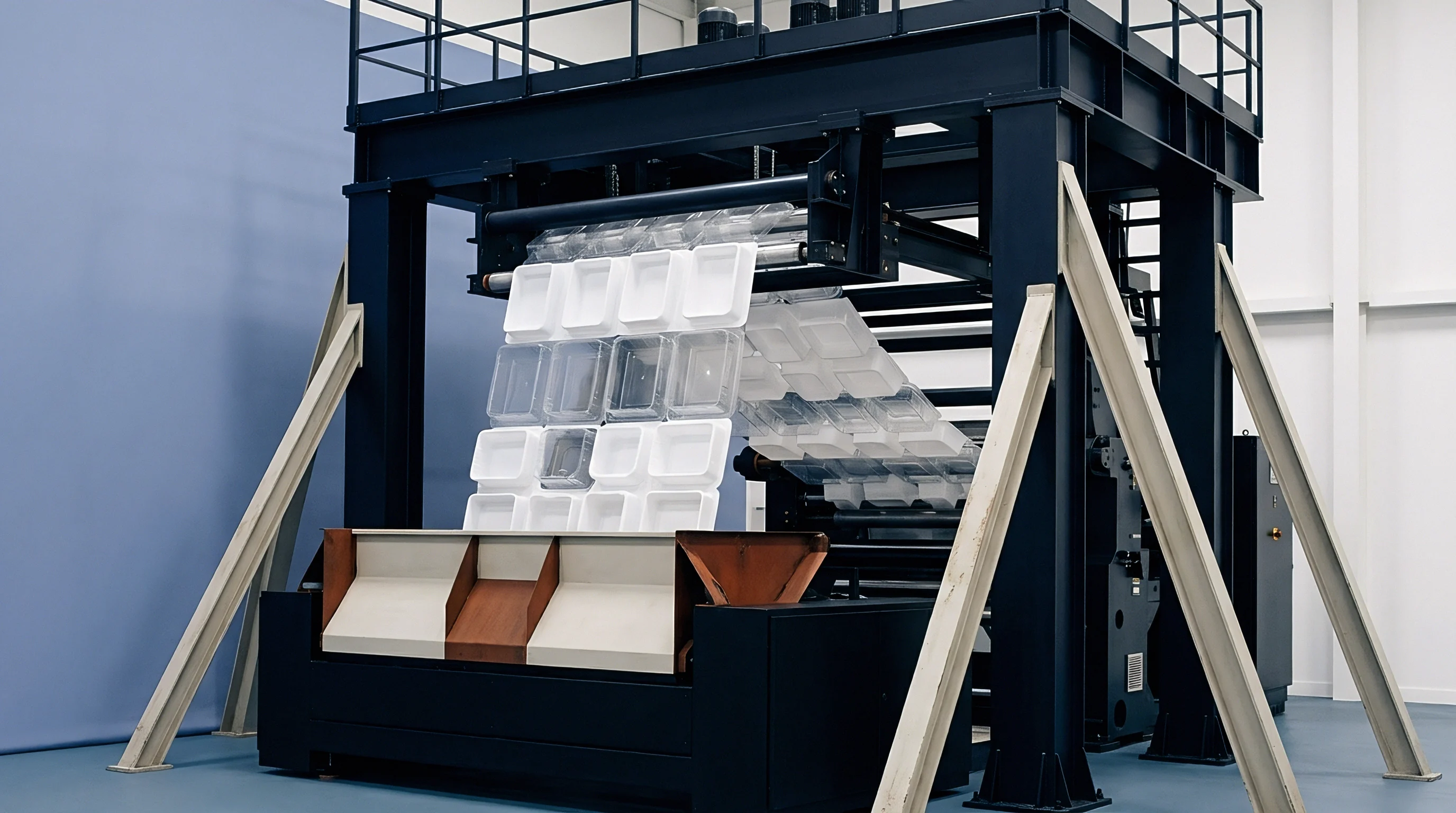
Validating deep-draw production tooling requires thorough rheological data alongside part-distribution records. Dynamic mechanical analysis defines storage and loss moduli across the operating thermal window, while capillary extensional rheology confirms strain-hardening factors at specified extension rates. Final tool sign-off depends on proving consistent wall thickness across all cavities under full production speeds.
Commercial Mechanics and Tooling Amortization
Managing disentanglement pays off directly on the balance sheet by allowing thinner starting gauge. Cutting incoming sheet thickness by ten percent lowers raw material costs and trims heater energy demand. Syntactic foam plug sets carry higher upfront tooling bills than basic aluminum hardware, but reduced scrap and shorter cycles offset that investment on high-volume runs.
| Process Configuration | Tooling Capital Expense (USD) | Cycle Time (s) | Scrap Rate (%) | Amortized Unit Cost (USD) |
|---|---|---|---|---|
| Unassisted Vacuum Draw | 18,000 | 4.8 | 8.5 | 0.084 |
| Aluminum Plug Assist | 32,000 | 3.6 | 3.2 | 0.068 |
| Syntactic Foam Servo Plug Assist | 48,000 | 2.8 | 0.8 | 0.059 |
| Multi-Zone Temp Servo Assist | 65,000 | 2.4 | 0.4 | 0.055 |
A production dossier requires non-destructive thickness measurements mapped across designated part coordinates. Magnetic Hall-effect probes verify that localized thinning stays within drawing limits, while top-load compression testing confirms stack strength and proves corner disentanglement remained under control throughout the cycle.
High syntactic foam plug costs amortize within fifty thousand production cycles through reduced sheet gauge requirements and shortened heating times.
Establishing verified material strain spectra prior to cutting aluminum tooling eliminates secondary machining iterations and guarantees cavity yield on initial production trials.