Quantifying Non-Isothermal Molecular Entanglement Slip Rates during Rapid Multiaxial Thermoforming Pre Stretch
Quantifying non-isothermal entanglement slip rates prevents localized wall thinning and thermal rupture during rapid plug assisted thermoforming pre stretch.
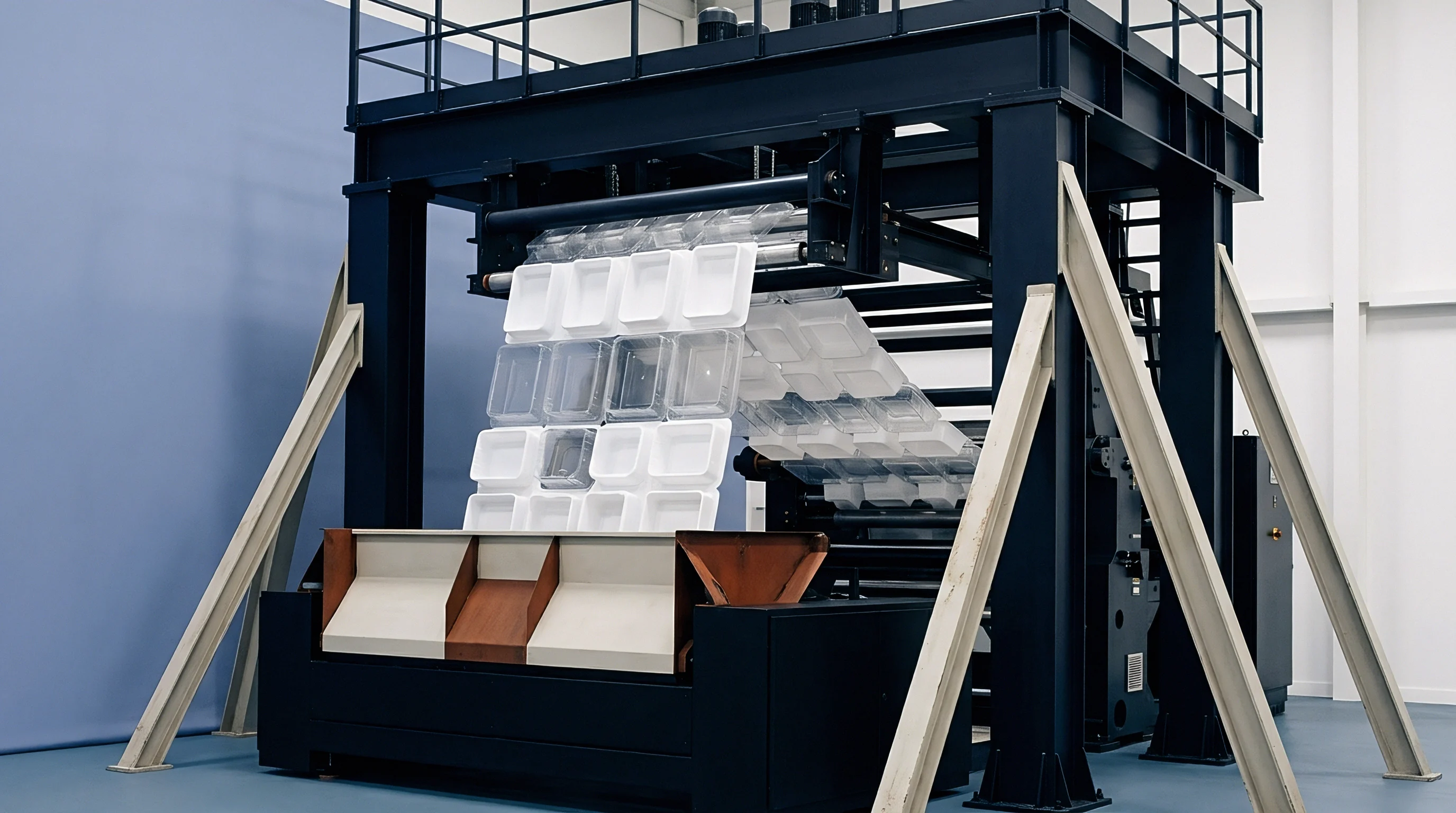

Kinematics
In rapid bubble inflation, sheet deformation occurs over a window of 150 to 450 milliseconds, pushing local strain rates past 80 reciprocal seconds while surface temperature drops at 120 Kelvin per second. Pre-stretch air pressure forces the heated thermoplastic disk into a three-dimensional dome. As it expands, wall thickness decreases unevenly across the profile, setting up steep gradients in deformation velocity and local thermal energy.
Laboratory measurements on high-density polyethylene sheet stretched at 60 reciprocal seconds show a temperature drop of 28 Kelvin before plug contact. Mapping how the molecular network absorbs and dissipates mechanical work depends entirely on tracking this coupled thermal and mechanical history.
Deformation modes during inflation transition continuously from equibiaxial extension at the dome apex to planar extension along the clamped perimeter. Near the clamping ring, material motion is constrained circumferentially, channeling deformation into the radial and thickness directions. At the apex, the sheet stretches uniformly along all tangential axes.
The local strain tensor evolves across spatial coordinates and time, dictating how rapidly macromolecular chains align along principal flow lines.
Thermal loss to the surroundings proceeds through natural convection, forced convection from pre-stretch air injection, and infrared radiation. Because the thermal conductivity of a polymer melt is low ~ typically 0.15 to 0.25 Watts per meter-Kelvin ~ pronounced temperature profiles develop through the sheet thickness. The outer skin chills rapidly upon exposure to cold inflation air, creating a stiff boundary layer that resists further stretch, while the warmer core continues deforming under pressure, compounding wall thickness variations across the profile.
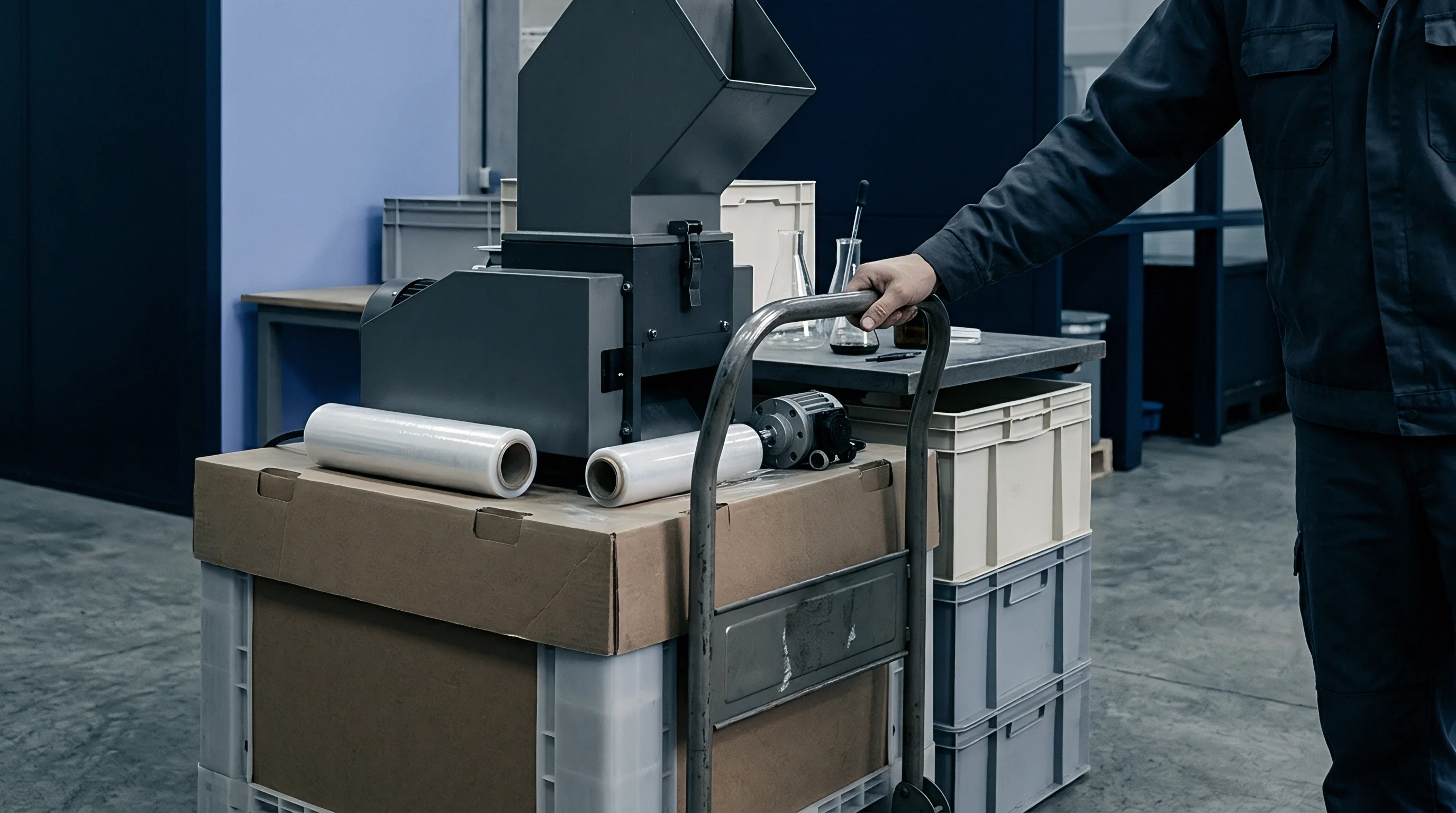
Multiaxial Strain Field Dynamics in Pre Stretch
Local velocity gradients within the inflating sheet determine the instantaneous extension rate experienced by individual polymer coils. At speeds typical of industrial rotary thermoforming machinery, where sheet velocity reaches several meters per second, the tangential Hencky strain hits values between 1.2 and 2.5. The principal extension ratios in the radial and circumferential directions dictate the local area stretch factor, which directly governs sheet thinning under applied pneumatic pressure.
Unbalanced strain fields produce marked stress anisotropy across the material matrix. Along the sidewalls of deep-draw containers, planar extension dominates, causing polymer chains to align preferentially along the draw direction. This anisotropic orientation alters finished container performance, boosting axial stiffness at the expense of hoop strength.
Calculating these strain tensor components requires continuous tracking of material marker grids using ultra-high-speed stereoscopic imaging paired with digital image correlation systems operating at ten thousand frames per second.
Cooling sheet surfaces prior to maximum extension forces entanglement slip into the warmer core layer.
Extensional strain rate profiles exhibit sharp spikes rather than steady plateau regions during rapid pneumatic pre-stretch. As inflation pressure builds, the rate of surface expansion accelerates until the sheet contacts the mold cavity or plug tool. This peak strain rate frequently exceeds the inverse of the material’s relaxation time, driving polymer entanglements out of thermodynamic equilibrium and triggering transient molecular chain pull-out.

Thermal Energy Transport and Transient Temperature Gradients
Heat conduction through the sheet thickness obeys the non-isothermal heat equation for moving media undergoing large deformations. As the polymer sheet thins during inflation, the shortened conduction path accelerates internal temperature equilibration between core and skin. Dissipated mechanical work acts as an internal heat source, partially offsetting convective surface cooling through viscous dissipation.
The balance between conductive loss, surface convection, and internal viscous heating sets the local temperature field across every plane of the sheet.
Convective heat transfer coefficients during pre-stretch air injection vary with nozzle geometry, supply pressure, and jet impingement angles. Ambient air injected at 20 degrees Celsius into a sheet heated to 160 degrees Celsius generates a steep thermal boundary layer, with local heat transfer coefficients reaching 45 to 110 Watts per square meter-Kelvin on initial jet impact. This localized chilling elevates the regional yield stress of the polymer skin, diverting subsequent strain into warmer adjacent areas.
Infrared radiation losses depend on polymer chemical composition and internal temperature distributions. Polypropylene and polyethylene exhibit specific absorption bands in the mid-infrared spectrum corresponding to carbon-hydrogen stretching and bending vibrations. Radiant cooling rapidly depletes thermal energy from surface layers, reinforcing the temperature differential between the core and skin.
Accurate thermal modeling requires accounting for wavelength-dependent spectral emissivity and internal radiative transport within semi-transparent polymer melts.
- Skin Shell Stiffening localized thermal drop raises skin viscosity, concentrating strain into core material and causing severe wall variation.
- Asymmetric Bubble Creep non-uniform temperature profiles across heater zones cause the inflation dome to drift off center, producing uneven wall distribution.
- Corner Thinning Strain excessive local extensional strain rates at corner radii induce molecular disentanglement, leading to structural failure during service.
- Extensional Resonance Wrinkling rapid pressure pulses excite structural wave modes across thin sheet sections, freezing surface ripples into the part.
Biaxial deformation rates govern ultimate failure. Modeling thermal loss as a simple volumetric average introduces severe errors into final thickness predictions, since mechanical response tracks local layer temperatures through non-linear shift factors. Overestimating core temperature by five degrees leads to a twenty percent underestimation of local stretch rate, invalidating wall thickness predictions in structural finite element simulations.
Resolving transient strain rates and thermal histories across all coordinates provides the boundary conditions needed to evaluate molecular network deformation. Process adjustments that alter sheet velocity or air temperature shift the local deformation profile across the viscoelastic spectrum. Attempting to balance wall distribution by simply increasing overall heater power often compounds localized thinning by pushing core temperatures past the point of stable network extension.

Slip
Entanglement physics dictates how long-chain polymers sustain mechanical stress under rapid extensional deformation. In an undisturbed melt, polymer molecules form an entangled network characterized by an equilibrium entanglement density and a specific molecular weight between entanglements. When deformed faster than their intrinsic disengagement time, individual chains cannot relax through standard reptation.
Stress accumulates across the network until reaching a critical threshold where entanglements begin to slip, disengage, or pull out from their confining tubes.
Molecular disentanglement kinetics under multiaxial stress depart significantly from linear viscoelastic predictions. Transient extensional viscosity initially climbs the linear viscoelastic envelope before exhibiting a sharp stress overshoot followed by severe strain softening. This strain softening originates from the physical loss of network constraints as high tension forces chain ends to slip through entanglement nodes.
Effective entanglement density drops sharply once local extensional rates cross the inverse Rouse time.
Convective constraint release accelerates disentanglement when surrounding chains deform rapidly past one another. During high-speed thermoforming pre-stretch, elevated strain rates strip away neighboring constraints much faster than thermal motion alone permits. The effective tube diameter expands dynamically, reducing the friction coefficient along the central chain contour and triggering rapid molecular slip alongside an immediate drop in extensional viscosity.
Entanglement Density Decay under High Extensional Rates
The rate of entanglement slip depends directly on the ratio of local extensional strain rate to the characteristic Rouse relaxation time of the polymer species. When this ratio exceeds unity, chain segments between entanglements stretch toward their maximum extensible length. Stress within the chain backbone increases non-linearly according to inverse Langevin statistics.
Once local segment tension crosses the critical threshold for node destruction, entanglements begin to slip at a rate proportional to the excess mechanical energy stored in the network.
Mathematical modeling of this transient network breakdown utilizes modified Rolie-Poly equations incorporating a dedicated entanglement slip function. Scalar entanglement density evolves under competing rates of stress-induced disentanglement and thermally driven re-entanglement. At strain rates above 50 reciprocal seconds, disentanglement outpaces re-entanglement by orders of magnitude, driving the effective network density down to less than forty percent of its equilibrium value within 200 milliseconds and dropping network stress accordingly.
| Polymer Grade | Melt Temperature (deg C) | Extensional Strain Rate (1/s) | Equilibrium Entanglement Density (10^26 /m^3) | Transient Slip Rate (%/s) | Peak Extensional Viscosity (kPa s) |
|---|---|---|---|---|---|
| Polypropylene Homopolymer (MFR 2.0) | 165 | 20 | 3.12 | 12.4 | 145 |
| Polypropylene Homopolymer (MFR 2.0) | 165 | 80 | 3.12 | 41.8 | 62 |
| High-Density Polyethylene (PE100) | 155 | 50 | 5.85 | 28.6 | 98 |
| Polyethylene Terephthalate (IV 0.80) | 210 | 100 | 2.45 | 64.2 | 24 |
| Polycarbonate / ABS Alloy | 230 | 40 | 1.88 | 19.5 | 185 |
| Data measured using high-speed filament stretching extensional rheometry coupled with optical birefringence verification under non-isothermal cooling conditions. | |||||
The physical breakdown of network nodes reduces the material strain hardening coefficient during pre-stretch. Without sufficient strain hardening, deforming sheet areas cannot redistribute stress to adjacent thicker regions, leading to localized necking and catastrophic wall collapse. Materials with broad molecular weight distributions or long-chain branching resist rapid slip because high molecular weight tails retain entanglements longer, sustaining stress transfer across deforming zones.
Non Isothermal Shift Functions and Stress Relaxation Coupled Kinetics
Temperature variation across the sheet alters both the monomeric friction coefficient and the intrinsic relaxation spectrum of the polymer matrix. Time-temperature superposition principles apply through the Williams-Landel-Ferry equation above glass transition or through Arrhenius relationships above melt temperatures. These shifts modify the characteristic Rouse and disengagement times dynamically throughout the deformation sequence as cold sheet surfaces resist flow.
Coupling temperature decay directly into the entanglement slip rate equation requires adjusting relaxation times continuously at every time step. As the sheet surface cools during inflation, local relaxation times lengthen, increasing the effective ratio of strain rate to relaxation time. Paradoxically, this thermal cooling increases segment tension and accelerates mechanical disentanglement right at the cooling surface, while suppressing thermal re-entanglement and freezing orientation upon contact.
At a strain rate of 50 reciprocal seconds and 155 degrees Celsius, high-density polyethylene exhibits an entanglement slip rate exceeding 18 percent per second.
Transient stress relaxation occurring concurrently with large-scale extensional deformation creates residual stress concentrations within the sheet volume. Regions that undergo high entanglement slip release stored elastic energy as thermal dissipation, causing micro-scale temperature spikes within the core. Conversely, regions that maintain intact entanglement networks store elastic strain energy, driving post-forming dimensional recovery and part warp if frozen into place prior to relaxation.
- Mount sheet specimen into temperature-controlled high-speed biaxial test chamber and establish uniform baseline thermal equilibrium across all measurement zones.
- Execute pneumatic or mechanical pre-stretch pulse to generate targeted multiaxial strain rate profiles between 10 and 150 reciprocal seconds.
- Capture transient stress tensor components simultaneously using multi-axis piezoelectric force transducers placed along the clamping perimeter.
- Record spatial surface temperature decay profiles using high-speed calibrated infrared thermography running at a minimum frame rate of 500 Hertz.
- Compute instantaneous entanglement slip rate by fitting transient stress and thermal decay curves against non-isothermal Rolie-Poly constitutive equations.
Molecular slip rates cannot be measured directly using steady-state shear rheometers because high-speed shear flows generate edge fracture and secondary flow instabilities that destroy test samples long before thermoforming strain rates are achieved. Extensional rheometry methods must be modified specifically to incorporate transient thermal decay profiles matching production conditions. Failure to account for non-isothermal slip dynamics results in finite element simulations predicting uniform container wall distributions that completely fail to materialize on the shop floor.
Setting up production process windows without quantitative slip rate data forces process engineers to rely on trial-and-error adjustment of heater zones and pressure timing. When material batches vary slightly in molecular weight distribution, pre-stretch behavior shifts unexpectedly, producing excessive scrap rates that destroy job profitability.

Relaxation
Quantifying transient network relaxation under rapid non-isothermal conditions requires experimental setups capable of isolating thermal effects from mechanical deformation dynamics. Standard laboratory test instruments operate under strict isothermal conditions, masking the strong coupling between cooling rate, strain rate, and molecular entanglement destruction. Specialized test benches combine high-speed mechanical actuation with optical polarimetry and precision thermal control to measure real-time birefringence and force responses during deformation.
Optical birefringence tracks net molecular orientation within transparent and semi-transparent polymer sheets during rapid extension. The stress-optical law relates optical birefringence directly to the principal stress difference within the linear viscoelastic regime. When entanglement slip occurs at elevated strain rates, the stress-optical coefficient breaks down due to finite chain extensibility and localized network disentanglement.
Measuring deviations from stress-optical linearity provides a quantitative method to identify the exact onset of molecular slip during pre-stretch.
High-speed polarimetry tracks birefringence phase shifts to record transient chain orientation during bubble expansion. High-frame-rate monochromatic cameras equipped with polarization state generators capture full-field retardance maps at sub-millisecond intervals. Comparing these retardance maps against transient force transducer outputs allows direct calculation of orientation evolution and network relaxation rates across varying thermal gradients.
High Speed Biaxial Testing and Transient Inflation Benchmarking
High-speed biaxial stretch test frames use synchronized linear motor drives to pull square sheet specimens along orthogonal axes at velocities up to five meters per second. Independent servo control on each axis enables execution of equibiaxial, planar, and non-equibiaxial strain trajectories matching exact thermoforming pre-stretch geometries. Force sensors mounted on each grip record transient loads, while high-speed infrared cameras track surface temperature decay caused by surrounding air currents.
Transient bubble inflation test rigs offer a direct physical simulation of pneumatic pre-stretch by expanding a circular clamped sheet with compressed gas pulses. High-speed stereoscopic vision systems track three-dimensional surface coordinates, calculating instantaneous local strain tensors across the expanding dome. Pressure transducers record cavity pressure dynamics, while high-speed optical pyrometers record temperature profiles at the apex and sidewalls throughout the inflation event.
Birefringence retardation measurements under rapid inflation reveal distinct relaxation peaks for high molecular weight polymer tails.
Data reduction from inflation testing requires solving the inverse problem to extract extensional stress from measured bubble curvature, wall thickness, and internal pressure. Combining this calculated stress history with non-isothermal temperature profiles yields the transient extensional viscosity spectrum. Matching these curves against theoretical constitutive models isolates the explicit contribution of entanglement slip rate from ordinary viscoelastic relaxation.
Can Optical Birefringence Isolate Entanglement Disentanglement Online?
In-situ optical measurements on production thermoforming equipment present severe technical challenges due to space constraints, mold motion, and machine vibrations. Polarization-resolved laser sensing systems focused on the inflating pre-stretch bubble can collect continuous retardance data without physical contact, though the measurement window remains extremely short.
Online polarimetry systems utilize high-frequency modulated laser diodes to measure phase shift through the sheet thickness during the 300-millisecond pre-stretch phase. Changes in phase angle correspond directly to changes in molecular alignment within the optical path. When chain slip occurs, the rate of phase angle increase flattens despite continued mechanical extension, signaling network breakdown in real time.
Interpreting real-time birefringence data requires simultaneous tracking of local sheet thickness and local thermal gradients. Surface cooling creates a refractive index gradient through the thickness, generating optical phase errors that must be corrected using real-time thermal calibration matrices. Integrating online birefringence sensors into closed-loop control systems allows automated adjustment of pre-stretch air pressure timing to keep molecular slip rates within optimal processing windows.
Characterizing opaque polymer formulations filled with talc, calcium carbonate, or carbon black prevents the use of optical birefringence techniques. For these filled systems, testing relies on high-speed X-ray scattering or ultra-fast mechanical quench testing, where deformed sheets are frozen instantly in liquid nitrogen at specific strain increments and analyzed post-process. What remains unresolved is whether inline ultrasound velocity tracking can provide equivalent real-time network slip quantification for highly filled polyolefin sheets under production conditions.
Plug
Mechanical contact between the assist plug tool and the pre-stretched polymer sheet alters heat transfer rates and local strain distributions by orders of magnitude. Prior to plug engagement, the sheet deforms solely under pneumatic pressure and convective cooling. Once the plug contacts the warm polymer skin, rapid heat conduction from sheet to plug freezes the contacting material layer, abruptly halting further local stretch in that zone.
The remaining un-contacted sheet material must then absorb all subsequent mechanical displacement, resulting in drastic localized wall thinning along the un-plugged sidewalls and bottom corners.
Heat transfer across the sheet-plug interface is governed by interfacial thermal contact conductance, which varies as a function of contact pressure, surface roughness, and tool material thermal diffusivity. Anodized aluminum plugs conduct heat rapidly out of the sheet skin, creating a rigid polymer shell that sticks to the plug face. Syntactic foam plugs, composed of hollow glass microspheres embedded in an epoxy matrix, exhibit extremely low thermal conductivity (0.10 to 0.18 Watts per meter-Kelvin), minimizing thermal extraction and allowing polymer chains to continue stretching across the plug surface.
Interfacial friction between plug and polymer controls whether material slips across the plug radius or locks firmly in place. Friction coefficients depend strongly on plug surface finish, temperature, material composition, and local normal force. Evaluating syntactic foam formulations against anodized aluminum measures contact conductance variations.
Friction forces generate shear stresses along the contact interface, combining with extensional stresses to produce complex multiaxial strain states that accelerate local molecular disentanglement in regions adjacent to the plug edge.
Surface Contact Thermal Transients and Interfacial Friction
Contact pressure between plug and sheet ramps sharply during initial impact, reaching peak values between 0.2 and 1.5 Megapascals depending on plug velocity and pneumatic pre-stretch pressure. This pressure surge flattens microscopic surface asperities, driving interfacial thermal contact conductance up to values of 2500 Watts per square meter-Kelvin for metal tooling. High contact conductance drops the polymer skin temperature by 30 to 60 Kelvin within 50 milliseconds of contact.
Slippage across the plug corner radius determines how much material transfers from the sheet core into the deep-draw sidewalls. Polished tool surfaces encourage material slip, distributing strain over a broader region, while textured or coated surfaces increase friction and restrict movement. Fluoropolymer or micro-textured plug coatings reduce friction coefficients to below 0.15 at forming temperatures, allowing controlled material movement without inducing surface scuffing or optical haze.
| Plug Tool Material | Thermal Conductivity (W/m K) | Specific Heat Capacity (J/kg K) | Thermal Diffusivity (10^-6 m^2/s) | Interfacial Heat Transfer Coefficient (W/m^2 K) | Friction Coefficient vs Warm Polypropylene |
|---|---|---|---|---|---|
| Anodized Aluminum 6061-T6 | 167.0 | 896 | 68.5 | 2200 | 0.55 |
| Syntactic Foam (Standard Epoxy Matrix) | 0.12 | 1050 | 0.11 | 180 | 0.22 |
| Syntactic Foam (High-Temp Thermoplastic Matrix) | 0.15 | 1120 | 0.13 | 210 | 0.18 |
| Porous Aluminum (20% Open Porosity) | 85.0 | 840 | 42.1 | 1400 | 0.38 |
| PTFE-Coated Tool Steel | 46.0 | 460 | 12.8 | 950 | 0.12 |
Thermal diffusivity differences among plug materials alter the steady-state operating temperature of the tooling during continuous production runs. Metal plugs accumulate heat slowly if uncooled, gradually increasing in temperature over thousands of machine cycles and shifting the thermal boundary conditions experienced by the sheet. Syntactic foam plugs maintain stable surface temperature profiles because their low thermal diffusivity prevents heat penetration deep into the tool body.
Material Selection for Plug Tooling and Local Thermal Management
Selecting plug tooling materials requires balancing local heat transfer control against mechanical durability and machining cost. Syntactic foam tools eliminate cold-mark defects and improve wall thickness uniformity in polyolefin containers, but suffer from mechanical wear and impact damage under high-speed production conditions. Aluminum tools offer infinite mechanical life and easy integration of internal liquid cooling channels, but require aggressive temperature control systems to prevent premature sheet freezing.
Engineered composite plugs combining a metal core with a synthetic foam outer shell provide structural rigidity while maintaining low surface thermal conductivity. Micro-channel cooling paths machined into the metal core extract residual thermal energy, maintaining a precise plug surface temperature profile across continuous 24-hour manufacturing shifts. Controlling plug temperature within a narrow 2-degree window stabilizes interfacial heat transfer rates and keeps material slip behavior reproducible.
- Syntactic Foam Micro-Pores uniform low-density hollow spheres minimize heat extraction to prevent cold-spot stress concentrations during sheet contact.
- Fluoropolymer Barrier Sprays low-surface-energy coatings lower interfacial shear friction, permitting smooth sheet travel across complex plug radii.
- Internal Fluid Passages high-flow temperated water loops stabilize aluminum plug temperatures against heat buildup during continuous fast-cycling runs.
- Micro-Textured Contact Zones laser-etched surface patterns control local mechanical grip, directing sheet stretch into specific container features.
Friction and heat transfer at the plug face cannot be treated as independent variables in thermoforming process development. High contact pressure increases both heat transfer rates and friction forces simultaneously, coupling thermal cooling directly to mechanical restraint. Process engineers who ignore this coupling find that minor adjustments to plug penetration speed generate unpredictable shifts in container wall thickness profiles.
Attributing night-shift corner thinning to changes in resin molecular weight distribution often masks the true cause: uncooled aluminum plugs drifting 40 degrees higher in temperature over eight hours of operation.

Disparity
Translating theoretical molecular entanglement slip models into reliable production tooling requires addressing the gap between idealized simulation inputs and commercial manufacturing tolerances. In finite element simulation packages, material properties are frequently modeled assuming isothermal conditions or simplified single-relaxation-time viscoelastic models. These simplified assumptions fail to capture the severe localized wall thinning caused by non-isothermal entanglement slip, leading to tooling designs that require costly physical modifications after steel is cut.
Wall thickness variations directly dictate part weight, structural top-load strength, thermal processing speed in downstream filling lines, and raw material cost per unit. Under DIN 16742 tolerance standard rules, thermoformed structural components fall into specific tolerance groups depending on material choice and process capability. Achieving tight tolerance classes such as TG6 requires holding local wall thickness variations within plus or minus eight percent across complex deep-draw geometries.
Local wall thinning caused by unpredicted molecular disentanglement forces tool designers to increase baseline sheet gauge to meet minimum wall thickness requirements on critical structural ribs. Increasing baseline sheet thickness by just 50 micrometers adds millions of dollars in material costs across high-volume production runs. Accurately quantifying non-isothermal slip rates during initial tool design allows precise targeting of wall distribution, enabling material gauge reductions that land straight on the bottom line.
Tolerancing and Wall Thickness Variation Stack Ups
Dimensional stack-up analysis in thermoformed assemblies must account for both initial mold-conformed geometry and post-moulding thermal shrinkage combined with residual stress relaxation. Sheet areas that undergo extreme extensional stretching experience higher post-moulding shrinkage due to frozen-in molecular orientation. If molecular slip occurs during pre-stretch, residual orientation stress is partially relieved, altering the final shrink factor of that specific zone.
Variations in pre-stretch air pressure timing, sheet temperature distribution, and plug assist velocity create a cumulative distribution of local wall thickness across production lots. Statistical process control metrics, such as process capability index Cp and Cpk, degrade rapidly when non-isothermal slip behavior shifts unexpectedly due to batch-to-batch resin variations.
| Pre-Stretch Strain Rate Target (1/s) | Plug Surface Temperature (deg C) | Minimum Wall Thickness Held (mm) | Thickness Standard Deviation (mm) | DIN 16742 Tolerance Class Achieved | Scrap Rate Penalty (% of Run) |
|---|---|---|---|---|---|
| 15 | 25 (Cold Aluminum) | 0.28 | 0.042 | TG8 (Broad) | 8.4 |
| 40 | 25 (Cold Aluminum) | 0.21 | 0.058 | TG8 (Broad) | 14.2 |
| 40 | 110 (Syntactic Foam) | 0.38 | 0.018 | TG6 (Tight) | 1.1 |
| 80 | 110 (Syntactic Foam) | 0.32 | 0.026 | TG7 (Medium) | 3.8 |
| 120 | 130 (Heated Composite) | 0.36 | 0.015 | TG6 (Tight) | 0.8 |
Process capability degradation stems directly from the non-linear relationship between strain rate and entanglement slip. Small fluctuations in sheet heater temperatures, on the order of two degrees Celsius, cause localized strain rates to cross critical disentanglement thresholds, producing sudden step-changes in local thinning rather than smooth linear variations. Controlling thermoforming processes requires tight thermal management across every square centimeter of the sheet heating zone.
Contractual Specifications for Sheet Stretch Qualification
Procurement contracts for high-volume thermoformed packaging or structural components must define explicit verification protocols for sheet stretch performance beyond standard melt flow index metrics. Melt flow index measures shear viscosity at low strain rates under isothermal conditions, providing zero actionable information regarding high-speed non-isothermal extensional slip behavior. Specifications must mandate extensional strain-hardening characterization and non-isothermal slip rate testing for all incoming resin lots.
Tooling sign-off agreements should tie final financial milestone payments to objective wall thickness distribution matrices measured under full production cycle speeds. Requiring suppliers to demonstrate process capability indices above 1.33 across all critical container dimensions ensures that non-isothermal slip dynamics were correctly accounted for during mold design. Tooling contracts that lack explicit wall thickness capability metrics expose buyers to endless debates over whether out-of-tolerance parts stem from poor tool design or unstable resin supply.
DIN 16742 TG6 enforcement on thermoformed wall sections rejects containers whose local draw-induced thinning exceeds 0.35 millimeters.
Establishing clear commercial protocols requires integrating non-isothermal characterization data directly into the tool sign-off specification sheet. Procurement teams that mandate high-speed extensional characterization before cutting steel eliminate the risk of commissioning tools that fail basic wall thickness capability audits. Raw material savings achieved through optimized wall thickness control pay for advanced rheological testing and simulation within the first production month.
A standard procurement clause must state that tooling acceptance rests on holding minimum sidewall thickness within plus or minus 0.02 millimeters across a continuous 5000-part validation run at design cycle rate, shifting all financial risk of unpredicted entanglement slip back onto the tooling manufacturer.